John Cleese Revisits His 20 Years as an Ivy League Professor in His New Book, Professor at Large: The Cornell Years

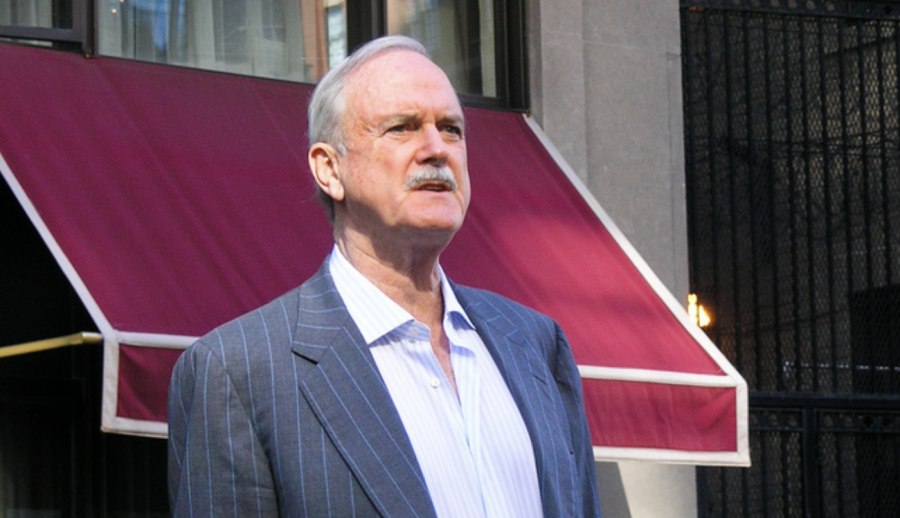
Cre­ative Com­mons image by Paul Box­ley

It takes real intel­li­gence to suc­cess­ful­ly make dumb com­e­dy. John Cleese and his Mon­ty Python col­leagues are a pre­mi­um exam­ple. You can call sketch­es like the “Min­istry of Sil­ly Walks” and “Dead Par­rot” sur­re­al­ist, and they are com­pa­ra­ble to the absur­dist stunts favored by cer­tain ear­ly 20th cen­tu­ry mod­ern artists. But you can also call them very smart kinds of stu­pid, a descrip­tion of some of the high­est forms of com­e­dy, I’d say, and one that applies to so much of Cleese’s best work, from the Pythons, to Fawl­ty Tow­ers, to A Fish Called Wan­da. We are moved by stu­pid­i­ty, Cleese believes, and silli­ness is the engine of good com­e­dy. “Some­times very, very sil­ly things,” he says in the inter­view with Cor­nell Uni­ver­si­ty Press direc­tor Dean Smith below, “have the pow­er to touch us deeply.” Then he tells the old joke about a grasshop­per named Nor­man.

Is Cleese still fun­ny? Depends. Many lis­ten­ers of a recent BBC Radio 4 show found his act a lit­tle stale. He has also come off late­ly as a “clas­sic old man yelling at a cloud,” writes Fiona Sturges at The Guardian. (He called, sure­ly in jest, for the hang­ing of EU pres­i­dent Jean Claude Junck­er, for exam­ple, dur­ing the Brex­it cam­paign).

In cur­mud­geon­ly inter­views, he com­plains about hyper­sen­si­tiv­i­ty with exam­ples of jokes con­tem­po­rary audi­ences sim­ply don’t find amus­ing, or at least not com­ing from him. Cleese has railed about the evils of polit­i­cal cor­rect­ness, espe­cial­ly on col­lege cam­pus­es, while spend­ing the past 20 years as a “pro­fes­sor-at-large” on the pres­ti­gious cam­pus of Cor­nell Uni­ver­si­ty, where he has deliv­ered “incred­i­bly pop­u­lar events and classes—including talks, work­shops, and an analy­sis of A Fish Called Wan­da and The Life of Bri­an.”

These appear­ances draw hun­dreds of peo­ple, and their enor­mous pop­u­lar­i­ty should offer Cleese some reas­sur­ance that he may not need to fear cen­sor­ship, and that his wit—while it might not be as well appre­ci­at­ed in today’s mass entertainment—still has plen­ty of cur­ren­cy in places where smart peo­ple gath­er. From sem­i­nars on script writ­ing to lec­tures on psy­chol­o­gy and human devel­op­ment, Cleese’s appear­ances at Cor­nell lead to riv­et­ing, some­times hilar­i­ous, and often con­tro­ver­sial con­ver­sa­tions.

In the episodes here from the Cor­nell Uni­ver­si­ty Press pod­cast, you can hear Cleese’s full con­ver­sa­tion with Smith, part of the pro­mo­tion of his 2018 book Pro­fes­sor at Large: The Cor­nell Years, in which he includes an inter­view with Princess Bride screen­writer William Gold­man, a lec­ture about cre­ativ­i­ty called “Hare Brain, Tor­toise Mind,” a dis­cus­sion of facial recog­ni­tion tech­nol­o­gy, and a talk on group dynam­ics with busi­ness stu­dents and fac­ul­ty. Like Cleese’s mind, these lec­tures and dis­cus­sions range far and wide, demon­strat­ing, once again in his long career, that it takes real smarts to not only speak with ease on sev­er­al aca­d­e­m­ic sub­jects, but to under­stand the mechan­ics of stu­pid­i­ty. You can pick up a copy of Pro­fes­sor at Large: The Cor­nell Years here.

Relat­ed Con­tent:

John Cleese on How “Stu­pid Peo­ple Have No Idea How Stu­pid They Are” (a.k.a. the Dun­ning-Kruger Effect)

John Cleese Explains the Brain — and the Plea­sures of DirecTV

John Cleese’s Phi­los­o­phy of Cre­ativ­i­ty: Cre­at­ing Oases for Child­like Play

Josh Jones is a writer and musi­cian based in Durham, NC. Fol­low him at @jdmagness

Monty Python’s Best Philosophy Sketches: “The Philosophers’ Football Match,” “Philosopher’s Drinking Song” & More

From dead par­rots to The Mean­ing of Life, Mon­ty Python cov­ered a lot of ter­ri­to­ry. Edu­cat­ed at Oxford and Cam­bridge, the Pythons made a habit of weav­ing arcane intel­lec­tu­al ref­er­ences into the sil­li­est of sketch­es. A clas­sic exam­ple is “Mrs. Premise and Mrs. Con­clu­sion Vis­it Jean-Paul Sartre,” (above) from episode 27 of Mon­ty Python’s Fly­ing Cir­cus.

The sketch fea­tures writ­ing part­ners John Cleese as Mrs. Premise and Gra­ham Chap­man as Mrs. Con­clu­sion, gab­bing away in a laun­derette about how best to put down a budgie. Mrs. Premise sug­gests flush­ing it down the loo. “Ooh! No!” protests Mrs. Con­clu­sion. “You should­n’t do that. No that’s dan­ger­ous. Yes, they breed in the sew­ers, and even­tu­al­ly you get evil-smelling flocks of huge soiled bud­gies fly­ing out of peo­ple’s lava­to­ries infring­ing their per­son­al free­dom.”

From there the con­ver­sa­tion veers straight into Jean-Paul Sartre’s The Roads to Free­dom. It’s a clas­sic sketch–vintage Python–and you can read a tran­script here while watch­ing it above.

Anoth­er clas­sic is the “Philoso­pher’s Drink­ing Song,” shown above in a scene from Mon­ty Python Live at the Hol­ly­wood Bowl. The song was writ­ten and sung by Eric Idle. In the sketch, mem­bers of the phi­los­o­phy depart­ment at the “Uni­ver­si­ty of Wool­loomooloo” lead the audi­ence in singing, “Immanuel Kant was a real pis­sant who was very rarely sta­ble; Hei­deg­ger, Hei­deg­ger was a boozy beg­gar who could think you under the table…”

And one of our favorites: “The Philoso­phers’ Foot­ball Match” (above), a filmed sequence from Mon­ty Python Live at the Hol­ly­wood Bowl, pit­ting the Ancient Greeks against the Ger­mans, with Con­fu­cius as ref­er­ee. The sketch was orig­i­nal­ly broad­cast in 1972 in a two-part West Ger­man tele­vi­sion spe­cial, Mon­ty Python’s Fliegen­der Zirkus.

When you’re done laugh­ing, you can dive deep into phi­los­o­phy here with our col­lec­tion of 75 Free Phi­los­o­phy Cours­es online.

If you would like to sign up for Open Culture’s free email newslet­ter, please find it here. It’s a great way to see our new posts, all bun­dled in one email, each day.

If you would like to sup­port the mis­sion of Open Cul­ture, con­sid­er mak­ing a dona­tion to our site. It’s hard to rely 100% on ads, and your con­tri­bu­tions will help us con­tin­ue pro­vid­ing the best free cul­tur­al and edu­ca­tion­al mate­ri­als to learn­ers every­where. You can con­tribute through Pay­Pal, Patre­on, and Ven­mo (@openculture). Thanks!

Note: An ear­li­er ver­sion of this post appeared on our site in Novem­ber 2011.

Relat­ed Con­tent:

Mon­ty Python’s “Argu­ment Clin­ic” Sketch Reen­act­ed by Two Vin­tage Voice Syn­the­siz­ers (One Is Stephen Hawking’s Voice)

John Cleese’s Phi­los­o­phy of Cre­ativ­i­ty: Cre­at­ing Oases for Child­like Play

John Cleese on How “Stu­pid Peo­ple Have No Idea How Stu­pid They Are” (a.k.a. the Dun­ning-Kruger Effect)

Lin-Manuel Miranda & Emily Blunt Take You Through 22 Classic Musicals in 12 Minutes

Watch­ing James Cor­den, Lin-Manuel Miran­da, and Emi­ly Blunt don­ning bad wigs to mug their way through a 12-minute salute to 22 movie musi­cal “clas­sics” is a bit rem­i­nis­cent of watch­ing the three most pop­u­lar coun­selors ham it up dur­ing an over­long sum­mer camp skit.

Their one-take per­for­mance was part of Role Call, a reg­u­lar fea­ture of the Late Late Show with James Cor­den. Usu­al­ly, this fan favorite is an excuse for Cor­den and a megas­tar guest—Tom Han­ks, Julia Roberts, Samuel L. Jack­son—to bum­ble through the most icon­ic moments of their career.

These kinds of larks are more fun for being a mess, and the live stu­dio audi­ence screams like besot­ted campers at every goofy quick change and wink­ing inside ref­er­ence. Blunt and Miran­da are def­i­nite­ly game, though one won­ders if they felt a bit cha­grinned that the film they are pro­mot­ing, Mary Pop­pins Returns, is giv­en pride of place­ment, while the orig­i­nal 1964 film star­ring Julie Andrews and Dick Van Dyke is strange­ly absent.

As is Thor­ough­ly Mod­ern Mil­lie, Victor/Victoria, and even The Sound of Music.

Maybe Corden’s sav­ing up for a Julia Andrews-cen­tric Role Call.

What did make the cut points to how few orig­i­nal movie musi­cals there are to res­onate with mod­ern audi­ences.

Of the 22, over 2/3 start­ed out as Broad­way plays.

And “You Can’t Stop the Beat” from 2007’s Hair­spray was born of the 2002 stage adap­ta­tion, not the grit­ty 1988 orig­i­nal star­ring John Waters’ main­stay, Divine.

Is it wrong to hope that most view­ers hear­ing “Your Song” will think, Elton John! not Moulin Rouge”?

And Beau­ty and The Beast is per­haps not so much a movie musi­cal as a children’s fea­ture-length ani­ma­tion, so why not The Lit­tle Mer­maid, The Lion  King, or hell, Snow White or Pinoc­chio?

Alas, 1953’s Gen­tle­men Pre­fer Blondes is as far back as this skit’s mem­o­ry goes, pre­sum­ably because the audi­ence has a greater like­li­hood of rec­og­niz­ing Mar­i­lyn Mon­roe than say, Howard Keel.

More inter­est­ing than the jokey horse­play with Into the Woods and The Mup­pet Movie is the choice to blithe­ly cast white actors in roles that were writ­ten for black women (Dream­girls, Lit­tle Shop of Hor­rors). I don’t think any­one would try to get away with that on Broad­way these days, even in in a spoofy char­i­ta­ble event like Broad­way Bares or East­er Bon­net… though if they did, get­ting Lin-Manuel Miran­da on board would be a very good idea.

As to why Hamil­ton isn’t one of the titles below … it’s not a movie musi­cal—yet!

Readers—what glar­ing omis­sions leap out at you?

Cabaret

Chica­go

La La Land

Beau­ty and the Beast

Guys and Dolls

Evi­ta

Sin­gin’ in the Rain

Mary Pop­pins Returns

The Mup­pet Movie

The Wiz­ard of Oz 

Hair­spray

Dream­girls

Annie

Fid­dler on the Roof

Into the Woods 

Lit­tle Shop of Hor­rors

Les Mis­er­ables

Moulin Rouge 

Once

Fame 

Gen­tle­men Pre­fer Blondes

Mama Mia

Relat­ed Con­tent:

Hair: The Amer­i­can Trib­al Love-Rock Musi­cal Debuted on Broad­way 50 Years Ago: Watch Footage of the Cast Per­form­ing in 1968

David Bowie Dreamed of Turn­ing George Orwell’s 1984 Into a Musi­cal: Hear the Songs That Sur­vived the Aban­doned Project

Alexan­der Hamil­ton: Hip-Hop Hero at the White House Poet­ry Evening

Ayun Hal­l­i­day is an author, illus­tra­tor, the­ater mak­er and Chief Pri­ma­tol­o­gist of the East Vil­lage Inky zine.  See her onstage in New York City this Jan­u­ary as host of  The­ater of the Apes book-based vari­ety show, Necro­mancers of the Pub­lic Domain. Fol­low her @AyunHalliday.


Andy Kaufman Reads Earnestly from The Great Gatsby and Enrages His Audience

In a 1980 appear­ance on David Let­ter­man, a dead­pan Andy Kauf­man tells a sob sto­ry about his nonex­is­tent fam­i­ly leav­ing him. He then “admon­ish­es the audi­ence for laugh­ing,” writes William Hugh­es at the AV Club, and pan­han­dles for their spare change. “The genius of the bit, as always, is that Kauf­man nev­er blinks. Even as he’s led away by the show’s staff, there’s noth­ing about his unemo­tion­al entreaties that sug­gests that what he’s doing isn’t any­thing but the sober-cold truth.”

He pulled a sim­i­lar stunt the fol­low­ing year, in a guest appear­ance on a short-lived SNL knock­off called Fri­days. After bel­liger­ent­ly break­ing char­ac­ter dur­ing a sketch, he appeared the fol­low­ing week to deliv­er an apol­o­gy, which became a bit­ter, sad sack appeal for sym­pa­thy, while he stared blankly at the cam­era in what his writ­ing part­ner Bob Zmu­da called his “glazed-over hostage look.” Kauf­man was “more of an antag­o­nist of his audi­ence than an ally,” Jake Rossen com­ments at Men­tal Floss.

Rather than punch­ing up or down, he punched out, open­ly exploit­ing our trust and abus­ing our patience. Kauf­man invit­ed us to mock him, only to reroute our respons­es into empa­thy, anger, con­fu­sion, or bore­dom. “Many crowds had streamed into com­e­dy clubs only to endure Kauf­man nap­ping in a sleep­ing bag,” writes Rossen, “or read­ing earnest­ly from The Great Gats­by, threat­en­ing to start all over again if they inter­rupt­ed.” Once giv­en a choice between him read­ing or play­ing a record, a night­club chose the record. “It was the sound of Kauf­man read­ing.”

Just what is the prop­er response to this? The emo­tion­al mis­di­rec­tion works so well because we know we should react a cer­tain way, for exam­ple, to a bro­ken man in great distress—whether he’s ask­ing for spare change or look­ing for all the world like a kid­nap vic­tim. In his Gats­by read­ing, Kauf­man pulls a dif­fer­ent lever—drawing on our innate sense of deco­rum dur­ing a lit­er­ary event, one con­duct­ed by a vague­ly Euro­pean-sound­ing man in a tuxe­do, no less. He incites his audi­ence by mak­ing them laugh at a sit­u­a­tion they would, in its prop­er con­text, try to take seri­ous­ly.

In the clip of Kauf­man read­ing Gats­by at the top, he begins with a cou­ple rus­es and feints: play­ing a snip­pet of a record that makes us think we might be in for a Mighty Mouse-like rou­tine, intro­duc­ing him­self as an actor who plays a screw­ball Amer­i­can com­ic named Andy Kauf­man. Once he launch­es into Gats­by, how­ev­er, and it becomes clear he isn’t going to stop, that the read­ing is the act, the audi­ence becomes incensed, express­ing a pal­pa­ble sense of betray­al.

You came for com­e­dy, he tells them in his Let­ter­man and Fri­days bits; I’m going to give you human­i­ty. You came for com­e­dy, he announces in the Gats­by read­ing; I’m going to give you cul­ture, whether you want it or not. But it’s not me who’s mis­be­hav­ing, he says (in dia­bol­i­cal ver­sions of “stop hit­ting your­self”), it’s you. In the clip above from Man on the Moon, Jim Car­rey draws out the pas­sive aggres­sive impuls­es inher­ent in these maneu­vers, show­ing Andy break­ing out Gats­by as an act of retal­i­a­tion against a crowd who demands that he enter­tain them on their terms.

Relat­ed Con­tent:

Andy Kauf­man Cre­ates May­hem on Late Night TV: When Com­e­dy Becomes Per­for­mance Art (1981)

The Improb­a­ble Time When Orson Welles Inter­viewed Andy Kauf­man (1982)

A Look Back at Andy Kauf­man: Absurd Com­ic Per­for­mance Artist and Endear­ing Weirdo

Josh Jones is a writer and musi­cian based in Durham, NC. Fol­low him at @jdmagness

Andy Kaufman Creates Mayhem on Late Night TV: When Comedy Becomes Performance Art (1981)

While there are many styles of com­e­dy, the con­tract between come­di­an and audi­ence is a fair­ly stan­dard one. The come­di­an endeav­ors to get laughs. The audi­ence under­stands that sort of cur­ren­cy, and is eager to lav­ish it on deserv­ing can­di­dates.

The late Andy Kauf­man wasn’t much inter­est­ed in that sort of exchange.

His com­e­dy was exper­i­men­tal to the point of per­for­mance art, and often felt exper­i­men­tal in a sci­en­tif­ic sense as well. When he read long pas­sages from The Great Gats­by to com­e­dy club audi­ences, went after pro­fes­sion­al wrestlers twice his size, or insist­ed he’d found Jesus and got­ten engaged to a Lawrence Welk Show singer, it was as if he was con­duct­ing a stress test. How much dis­ori­en­ta­tion would an audi­ence put up with?

He was a gen­uine weirdo. The genius kid who seems hell­bent on win­ning the ani­mos­i­ty of his class­mates with his cryp­tic remarks and odd behav­ior.

Know­ing young com­e­dy fans who idol­ize prankster Sacha Baron Cohen’s shapeshift­ing stunts may find it hard to appre­ci­ate just how unset­tling the off-kil­ter Kauf­man could be.

Wit­ness his 1981 guest spot on Fri­days, a rival network’s short-lived attempt to dupli­cate Sat­ur­day Night Live’s suc­cess.

In the sketch above, Kauf­man wan­ders pret­ty egre­gious­ly afield of expect­ed con­duct. In an era where guest stars appeared not infre­quent­ly bombed out of their gourds, it wasn’t entire­ly sur­pris­ing that one might appear con­fused, or have trou­ble read­ing cue cards. But Kauf­man seemed to be mak­ing a delib­er­ate choice to scup­per his career, or at the very least, the good­will of Fri­days’ cast and crew, by refus­ing to play along in a sketch about restau­rant patrons sneak­ing off to the bath­room to get high.

“I can’t play stoned,” he breaks char­ac­ter to announce, mid-scene. Hmm. Seems like the kind of thing one might bring up dur­ing the table read. An a‑hole would wait till dress rehearsal, when such a move would for sure inspire the enmi­ty of cast and crew. Kauf­man wait­ed till the sketch was being taped in front of a live stu­dio audi­ence.

But then, Kaufman’s exper­i­ments need­ed an audi­ence to suc­ceed.

As with Sacha Baron Cohen’s elab­o­rate rus­es, it helped to lim­it the num­ber of peo­ple who were in on the joke.

Actor Melanie Chartoff recalled how she and Kaufman’s oth­er two scene part­ners, Mary Edith Bur­rell and Seinfeld’s Michael Richards, were tipped off fair­ly late in the process by producer/announcer Jack Burns, who was thrilled to snap up the live wire whose antics had per­ma­nent­ly burned his bridges with Sat­ur­day Night Live:

Andy’s gonna bust out of the show tonight,” he gleamed. “He’s gonna mess up and break the fourth wall from the top of the mono­logue. It’s gonna be great. It’s gonna kick our rat­ings through the ROOF!

And so it did, abet­ted by benight­ed crew mem­bers who sprang to pro­vide back up, when a furi­ous-seem­ing Burns stormed the set as if to kick the ornery guest star’s ass.

But the piece de resis­tance came the fol­low­ing week, when pro­duc­er John Mof­fitt went on air to sat­is­fy the public’s need to know, con­fess­ing that the stunt was indeed a fake and pious­ly sug­gest­ing they should take it as a reminder of the “spon­tane­ity of live tele­vi­sion, some­thing that rarely hap­pens in this basi­cal­ly pas­sive medi­um today.”

Then Kaufman—who gen­uine­ly hat­ed that his sleight of hand had been revealed—turned on Mof­fitt for the halt­ing, mis­er­able, and seem­ing­ly forced 4 minute apol­o­gy below.

When the live audi­ence laughed delight­ed­ly, he lashed out, insist­ing that his pre­vi­ous week’s actions were about to cost him his gig on the hit sit­com Taxi, all future roles, a num­ber of friend­ships, and his mar­riage.

Nev­er mind that he was unmar­ried.

This come­di­an played a long game, and easy laughs were nev­er the goal.

Relat­ed Con­tent:

A Look Back at Andy Kauf­man: Absurd Com­ic Per­for­mance Artist and Endear­ing Weirdo

The Improb­a­ble Time When Orson Welles Inter­viewed Andy Kauf­man (1982)

The Night John Belushi Booked the Punk Band Fear on Sat­ur­day Night Live, And They Got Banned from the Show

Ayun Hal­l­i­day is an author, illus­tra­tor, the­ater mak­er and Chief Pri­ma­tol­o­gist of the East Vil­lage Inky zine.  Join her in NYC this Decem­ber for the 10th anniver­sary pro­duc­tion of Greg Kotis’ apoc­a­lyp­tic hol­i­day tale, The Truth About San­ta, and the next month­ly install­ment of her book-based vari­ety show, Necro­mancers of the Pub­lic Domain. Fol­low her @AyunHalliday.

Two Cats Keep Trying to Get Into a Japanese Art Museum … and Keep Getting Turned Away: Meet the Thwarted Felines, Ken-chan and Go-chan

Pag­ing direc­tor Hayao Miyaza­ki.

A com­pelling sub­ject for a fea­ture length ani­ma­tion is hang­ing around the slid­ing glass doors of Hiroshi­ma Prefecture’s Onomichi City Muse­um of Art.

In June of 2016, a black tom­cat start­ed show­ing up at the muse­um on the reg­u­lar, for rea­sons unknown.

Those open to the sort of nar­ra­tive whim­sy at which Miyaza­ki excels might choose to believe that the beast was drawn by a cat-themed exhib­it of work by not­ed wildlife pho­tog­ra­ph­er and film­mak­er Mit­sua­ki Iwa­go, a por­tion of which would have been vis­i­ble to him through the mod­ern building’s large glass win­dows.

What­ev­er his rea­sons, the cat, Ken-chan, whose own­ers run a near­by restau­rant, was refused entry by a white-gloved secu­ri­ty guard and oth­er staffers, whose efforts to send him on his way start­ed blow­ing up the Inter­net short­ly after his first appear­ance.

Even­tu­al­ly, Ken-chan start­ed bring­ing back-up in the form of a well-man­nered orange tom­cat the muse­um staff dubbed Go-chan.

Their vis­its have proved to be a boon for both the small muse­um and the city they call home.

The New York Pub­lic Library has its lions.

Boston’s Pub­lic Gar­den has its ducks.

Onomichi and its small art muse­um have Ken-chan and Go-chan, whose Inter­net fame is quick­ly out­pac­ing the sup­ply of com­mem­o­ra­tive tote bags, below.

Ten­der heart­ed fans bom­bard the museum’s Twit­ter account with requests to grant the feline pair entry, but the muse­um brass is wise­ly pri­or­i­tiz­ing dra­mat­ic ten­sion over con­sum­ma­tion.

Mean­while, offi­cials in Zelenograd­sk, a Russ­ian resort town boast­ing both a cat muse­um and giant cat street mon­u­ment have invit­ed Ken-chan, Go-chan, and muse­um staff to be their guests in March, for a cat-cen­tric hol­i­day cel­e­bra­tion.

For now, Ken-chan and Go-chan are stick­ing close to home, alter­nate­ly enter­tain­ing and dis­ap­point­ing vis­i­tors who show up, cam­era in hand, hop­ing to catch them in the act.

Arm­chair trav­el­ers can enjoy a cat’s eye view tour of Onomichi, thanks to Google Street View-style 360-degree cam­era tech­nol­o­gy.

And pho­tog­ra­ph­er Iwa­go shares some pro advice for any­one seek­ing to cap­ture feline sub­jects:

…male cats are eas­i­er to pho­to­graph. Male cats seem to have more lat­i­tude and leisure in their lives. Because females do things such as raise the kit­tens, they con­cen­trate more on what goes on around them. Because males are out on patrol, it is more like­ly that you will encounter them. Because they have the free time, they’ll let you hang out and pho­to­graph them.

Depend­ing on the cat, there are a num­ber of ways to get a cat’s atten­tion. For exam­ple, when it’s start­ing to get dark out, you need to use a low­er shut­ter speed. How­ev­er, this means that the cat will be blur­ry if it moves. To avoid this, in such sit­u­a­tions, I say to the cat, ‘Stop, hold your breath!’ At that instant, when the cat is frozen, I snap the pic­ture. When you speak out to a cat, they get the mes­sage. That said, you can also get shots of good cat body lan­guage by let­ting them roam freely. They don’t need to be look­ing at the cam­era.

Even a cell­phone cam­era is enough. How­ev­er, if you don’t have a tele­pho­to lens, you’re going to have to get close to the cat you’re pho­tograph­ing. Due to this, it might be good to use a sin­gle-lens reflex (SLR) cam­era if you are pho­tograph­ing out­side. How­ev­er, if you are pho­tograph­ing the cat you live at home with, a big cam­era may prove intim­i­dat­ing. To avoid this prob­lem, it is nec­es­sary to reg­u­lar­ly put your cam­era in a place that the cat can see. It is good to start snap­ping pic­tures only after your cat has got­ten over its fear of cam­eras. If you use a flash to pho­to­graph cats indoors, their hair will look spiky and lose its soft­ness. There­fore, I rec­om­mend avoid­ing a flash. I also rec­om­mend not using a tri­pod, con­sid­er­ing the line of sight will become too high. When I am pho­tograph­ing cats, I kneel down so that I am at the same eye line as they are. It’s as if I’m crawl­ing for­ward into bat­tle.

Fol­low the Onomichi City Muse­um of Art on Twit­ter to keep up with Ken-chan and Go-chan.

via The Guardian/Hyper­al­ler­gic

Relat­ed Con­tent:

Insane­ly Cute Cat Com­mer­cials from Stu­dio Ghi­b­li, Hayao Miyazaki’s Leg­endary Ani­ma­tion Shop

Medieval Cats Behav­ing Bad­ly: Kit­ties That Left Paw Prints … and Peed … on 15th Cen­tu­ry Man­u­scripts

Free Enter­tain­ment for Cats and Dogs: Videos of Birds, Squir­rels & Oth­er Thrills

Ayun Hal­l­i­day is an author, illus­tra­tor, the­ater mak­er and Chief Pri­ma­tol­o­gist of the East Vil­lage Inky zine.  Join her in NYC this Decem­ber for the 10th anniver­sary pro­duc­tion of Greg Kotis’ apoc­a­lyp­tic hol­i­day tale, The Truth About San­ta, and the next month­ly install­ment of her book-based vari­ety show, Necro­mancers of the Pub­lic Domain. Fol­low her @AyunHalliday.

Pachelbel’s Chicken: Your Favorite Classical Pieces Played Masterfully on a Rubber Chicken

Music lovers brac­ing against the annu­al onslaught of the Singing Dogs’ “Jin­gle Bells” may find their sav­age beasts soothed some­what by Eddy Chen’s per­for­mance of Pachelbel’s Canon, above.

Nev­er mind that the instru­ment on which he plays four dif­fer­ent tracks is a rub­ber chick­en… or more accu­rate­ly, as per Ama­zon, a Scream­ing Yel­low Rub­ber Chick­en Non Tox­ic Bite-resis­tant Squeaky Toy.

It retains its relax­ing musi­cal­i­ty. Chen, one half of Aus­tralian duo TwoSetVi­o­lin, plays that bird like the dis­ci­plined, clas­si­cal­ly-trained pro he is.

Clas­si­cal chick­en cov­ers became a sur­prise hit for Chen and his part­ner, Brett Yang, vet­er­ans of the Syd­ney and Queens­land Sym­pho­ny Orches­tras, whose vir­tu­al­ly sold out world tour was the first of its kind to be entire­ly financed by Kick­starter dona­tions.

The duo describes its mis­sion as “uphold­ing the integri­ty of clas­si­cal music” while mak­ing it “rel­e­vant to the mod­ern gen­er­a­tion through fun, humour and sim­plic­i­ty,” not­ing, in a joint inter­view with Violinist.com:

There are peo­ple out there who are ready to love clas­si­cal music, and we have to active­ly find them. It is the way clas­si­cal music has been pre­sent­ed so far that makes it so aus­tere. We were lucky that we learned the instru­ment for 20 years; if we were not musi­cians, it would be very hard to get into.

Every­one has the poten­tial to like it, but some­times musi­cians alien­ate and scare poten­tial lis­ten­ers with our pride.

Back when clas­si­cal music was new, it was not ‘clas­si­cal’; it was just music.

Today our (clas­si­cal music audi­ence) is very small, but there are many great musi­cians

 Grant­ed, the stan­dards for clas­si­cal music are there for a good rea­son: peo­ple want the best art, and that is a stan­dard we should uphold. At the same time, some­times we see peo­ple break­ing down and freak­ing out because of those stan­dards. It is sad to think of all that lost poten­tial and love for music. We feel we are los­ing audi­ences; we are los­ing peo­ple who used to love music.

The chick­en def­i­nite­ly appeals to young lis­ten­ers, though sure­ly there’s no age lim­it for enjoy­ing its take on Erik Satie’s Gymnopédie No.1

Or Johann Strauss’ “The Blue Danube” Waltz, where­in Yang squeezes a chick­en in each fist whilst Chen mans the vio­lin…

Or the open­ing trum­pet solo of Gus­tav Mahler ‘s Sym­pho­ny No. 5

Or Beethoven’s “Für Elise,” a favorite first clas­si­cal piece for pianists and chick­en play­ers alike…

Oth­ers on TwoSetViolin’s clas­si­cal chick­en playlist include Handel’s “Hal­lelu­jah” cho­rus and the “Waltz of the Flow­ers” from Tchaikovsky’s Nut­crack­er Suite.

Catch up with TwoSetVi­o­lin on the final leg of their Amer­i­can tour and sub­scribe to their YouTube chan­nel for their insights into the clas­si­cal musi­cian’s life and the impor­tance of prac­tice.

Relat­ed Con­tent:

Watch the World’s Old­est Vio­lin in Action: Mar­co Rizzi Per­forms Schumann’s Sonata No. 2 on a 1566 Amati Vio­lin

Behold the “3Dvarius,” the World’s First 3‑D Print­ed Vio­lin

New Order’s “Blue Mon­day” Played with Obso­lete 1930s Instru­ments

Ayun Hal­l­i­day is an author, illus­tra­tor, the­ater mak­er and Chief Pri­ma­tol­o­gist of the East Vil­lage Inky zine.  Join her in NYC this Decem­ber for the 10th anniver­sary pro­duc­tion of Greg Kotis’ apoc­a­lyp­tic hol­i­day tale, The Truth About San­ta, and the next month­ly install­ment of her book-based vari­ety show, Necro­mancers of the Pub­lic Domain. Fol­low her @AyunHalliday.

Hear How Queen’s “Bohemian Rhapsody” Would Sound If Sung by Johnny Cash, David Bowie, Janis Joplin, Frank Sinatra & 38 Other Artists

I con­sid­er Fred­dy Mer­cury and Michael Jack­son as the great­est per­form­ers of all time. Their vocal abil­i­ties are what I look up to as a vocal­ist.  — Antho­ny Vin­cent

Antho­ny Vin­cent, the cre­ator of Ten Sec­ond Songs, has a flow­ing mane, a lean physique, and the cock­sure man­ner of a 20th cen­tu­ry rock god.

He also spends hours in his home stu­dio, peer­ing at a com­put­er mon­i­tor through read­ing glass­es.

His lat­est effort, above, Queen’s “Bohemi­an Rhap­sody” in the style of 42 oth­er artists, could seem like a gim­mick at first glance.

Con­sid­er, how­ev­er, all the research, time, and musi­cian­ship that went into it.

The YouTube star dis­ap­peared from the inter­net for a month in order to tack­le the beast that fans had long been beg­ging him for.

He emerged from this self-imposed sab­bat­i­cal refreshed, rec­om­mend­ing that per­haps “every­one should start pro­duc­ing songs in mul­ti­ple styles just so they too could take a vaca­tion from social media.”

Good idea, though I doubt many of us can mim­ic the wide range of vocal styles the large­ly self taught Vin­cent does, from  Muse’s lead singer Matt Belamy’s fabled high notes to the late Joe Strummer’s extreme­ly Eng­lish punk atti­tude to Janis Joplin at her most unfet­tered.

He also dis­plays an impres­sive facil­i­ty with a vari­ety of arrange­ments and instru­ments, though a cou­ple of off-hand­ed com­ments in the Mak­ing Of video, below, may not endear him to drum­mers, despite his obvi­ous respect for the essen­tial role per­cus­sion plays in struc­tur­ing his projects.

Var­i­ous ele­ments sug­gest­ed which artist to pair with each bite-sized sec­tion of “Bohemi­an Rhap­sody,” includ­ing sim­i­lar­i­ty of lyrics, notes, and arrange­ments. (“Mama mia” was a no brain­er…as was “Mama, didn’t mean to make you cry.”)

By def­i­n­i­tion, the mul­ti-style “Bohemi­an Rhap­sody” required him to look beyond his own per­son­al favorites for artists to high­light, a process he applies to all of his mash ups. As he said in a 2015 inter­view with Radio Met­al:

Obvi­ous­ly I don’t lis­ten to Enya in my free time, I don’t go and put on a Gre­go­ri­an chant and lis­ten to it to relax. If I’m going to put an artist in there, it’s because I have some kind of respect for them in some way… At first my inten­tion was to pro­mote my busi­ness and now my inten­tions are to show that there are dif­fer­ent ways that a song can be heard and that there’s noth­ing wrong with lik­ing dif­fer­ent things. You shouldn’t be afraid of what you don’t under­stand. Just because some­one is growl­ing doesn’t mean it’s bad. It’s just a way of express­ing a song, there is real­ly noth­ing else to it.

His “Bohemi­an Rhap­sody” trib­ute is com­prised of over 1800 care­ful­ly labelled tracks, an inspir­ing dis­play of dig­i­tal orga­ni­za­tion as well as tech­ni­cal prowess.

While some of Vincent’s cho­sen 42—David Bowie, Dream The­ater—did cov­er “Bohemi­an Rhap­sody” in its entire­ty, an unfor­tu­nate side effect of his imper­son­ations are the way they whet our appetite for full cov­ers we’ll nev­er get to enjoy from the likes of John­ny Cash, Prince, Frank Sina­tra, Aretha Franklin….

Ulti­mate­ly, no one can hold a can­dle to the orig­i­nal, but there’s no harm in try­ing.

Read­ers, do you have a favorite from the line up below? Any­one you wish you could add to the list?

01. Queen

02. Me

03. The Chordettes

04. John­ny Cash

05. David Bowie

06. Ozzy Osbourne

07. Frank Sina­tra

08. Sam Cooke

09. Boyz II Men

10. Daft Punk

11. Janis Joplin

12. Scott Joplin (King Of Rag­time)

13. Skrillex

14. Hen­drix (Michael Winslow Ver­sion)

15. Ken­ny G

16. Bob­by McFer­rin

17. Star Wars

18. N.W.A.

19. Kendrick Lamar

20. Sys­tem Of A Down

21. Elvis Pres­ley

22. BOLLYWOOD

23. Bad Reli­gion

24. Bruno Mars

25. Death Grips

26. Chuck Berry

27. Michael jack­son

28. The Clash

29. Ray Charles

30. Aretha Franklin

31. Sog­gy Bot­tom Boys

32. Death

33. ABBA

34. Ghost

35. Muse

36. Vitas

37. Medieval Music

38. Frankie Val­li and the Four Sea­sons

39. Tool

40. Prince

41. Nir­vana

42. Dream The­ater

via Con­se­quence of Sound

Relat­ed Con­tent:

The Joy of Expe­ri­enc­ing Queen’s Bohemi­an Rhap­sody for the Very First Time: Watch Three Reac­tion Videos

Queen’s “Bohemi­an Rhap­sody” Played by 28 Trom­bone Play­ers

Watch the Brand New Trail­er for Bohemi­an Rhap­sody, the Long-Await­ed Biopic on Fred­die Mer­cury & Queen

Ayun Hal­l­i­day is an author, illus­tra­tor, the­ater mak­er and Chief Pri­ma­tol­o­gist of the East Vil­lage Inky zine.  Join her in NYC on Mon­day, Novem­ber 12 for anoth­er month­ly install­ment of her book-based vari­ety show, Necro­mancers of the Pub­lic Domain. Fol­low her @AyunHalliday.

« Go BackMore in this category... »
Quantcast