Imagined Medieval Comics Illuminate the Absurdities of Modern Life

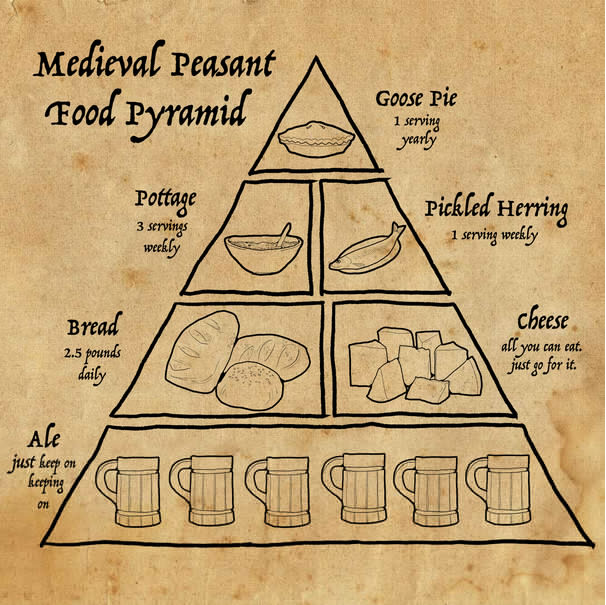
In 2005, the U.S. Depart­ment of Agri­cul­ture revised its famous food pyra­mid, jet­ti­son­ing the famil­iar hier­ar­chi­cal graph­ic in favor of ver­ti­cal rain­bow stripes rep­re­sent­ing the var­i­ous nutri­tion­al groups. A stick fig­ure bound­ed up a stair­case built into one side, to rein­force the idea of adding reg­u­lar phys­i­cal activ­i­ty to all those whole grains and veg­gies.

The dietary infor­ma­tion it pro­mot­ed was an improve­ment on the orig­i­nal, but nutri­tion­al sci­en­tists were skep­ti­cal that the pub­lic would be able to parse the con­fus­ing graph­ic, and by and large this proved to be the case.

Artist Tyler Gun­ther, how­ev­er, was inspired:

I start­ed think­ing about the mes­sag­ing school chil­dren in 1308 were force fed to believe was part of a heart healthy diet, only to have the rug pulled out from under them 15 years lat­er when some monk rearranged the whole thing.

In oth­er words, you’d bet­ter dig into that annu­al goose pie, kids, while you’ve still got 6 glass­es of ale to wash it down.

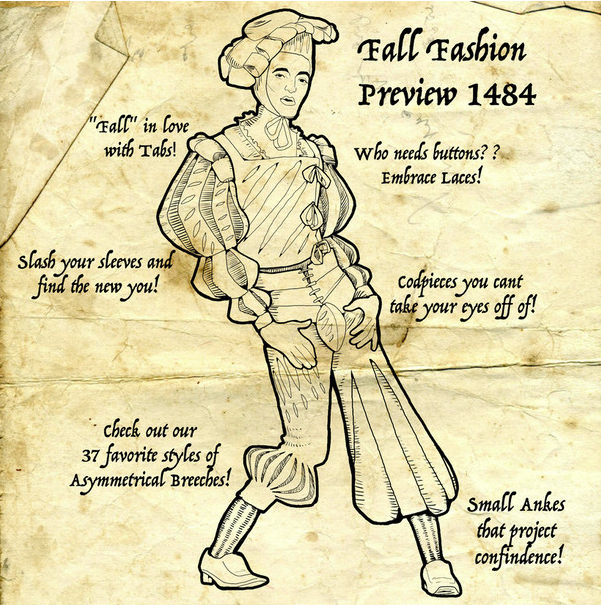
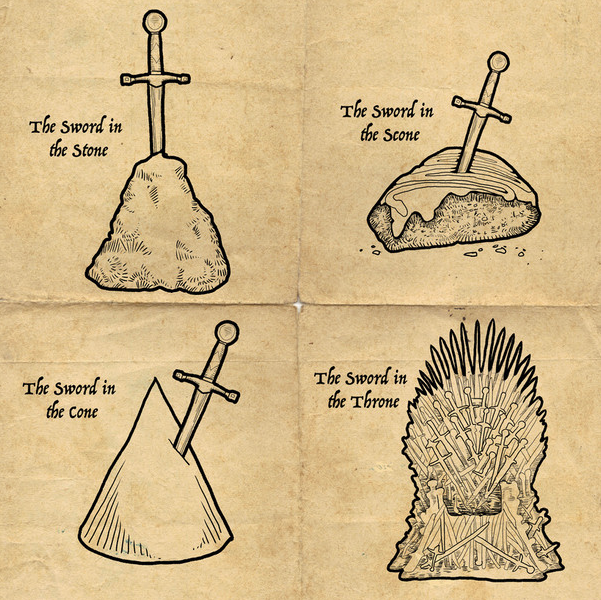
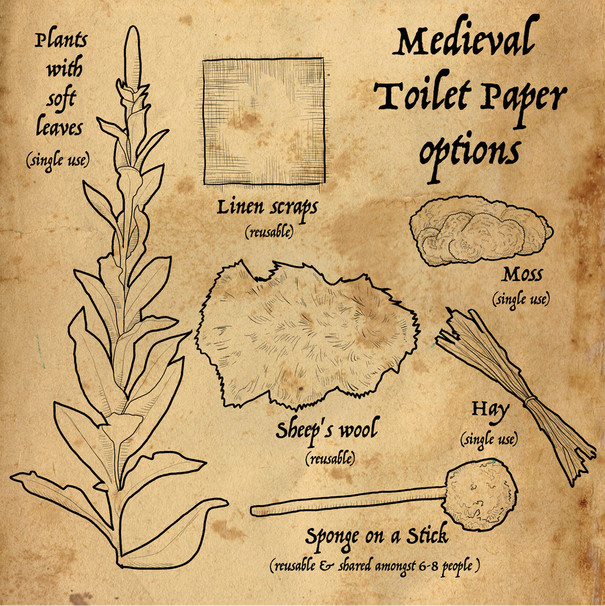
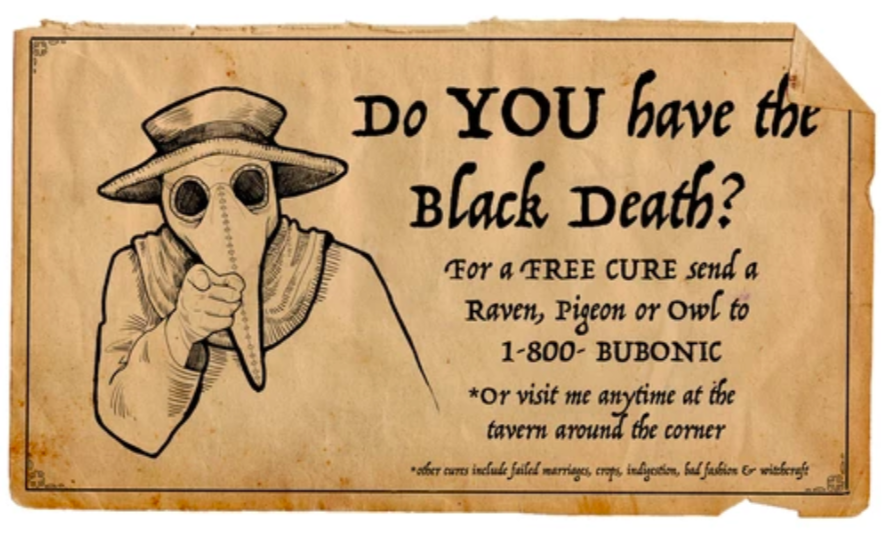
The imag­ined over­lap between the mod­ern and the medieval is a fer­tile vein for Gunter, whose MFA in Cos­tume Design is often put to good use in his hilar­i­ous his­tor­i­cal comics:


Mod­ern men’s fash­ion is so incred­i­bly bor­ing. A guy wears a pat­tered shirt with a suit and he gets laud­ed as though he won the super bowl of fash­ion. But back in the Mid­dle Ages men made bold, brave fash­ion choic­es and I admire them great­ly for this. It’s so excit­ing to me to think of these inven­tive, strange, fan­tas­tic cre­ations being a part of the every­day mas­cu­line aes­thet­ic.

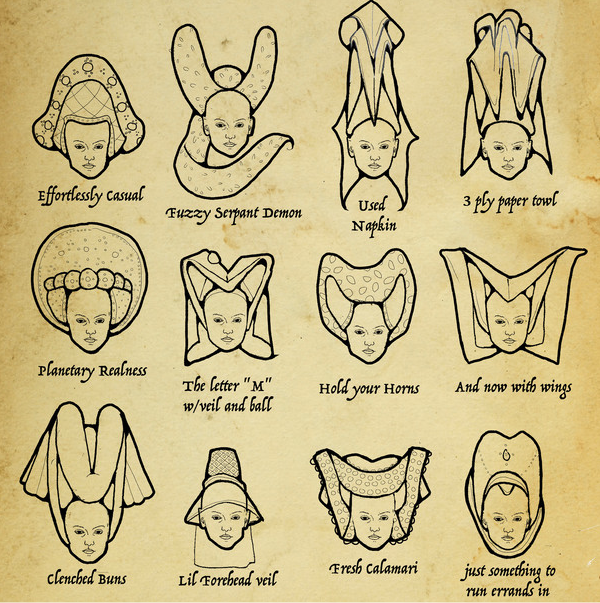
The shapes and struc­tures of women’s head­wear in the dark ages are tru­ly inspir­ing. Where were these milliners draw­ing inspi­ra­tion from? How were they engi­neered? How com­fort­able were they to wear? How did they fit through the major­i­ty of door­ways? What was it like to sit behind a par­tic­u­lar­ly large one in church? I’m still scrolling through many an inter­net his­to­ry blog to find the answers. 

Kathryn Warner’s Edward II blog has proved a help­ful resource, as has Anne H. van Buren’s book Illu­mi­nat­ing Fash­ion: Dress in the Art of Medieval France and the Nether­lands.

The Brook­lyn-based, Arkansas-born artist also makes peri­od­ic pil­grim­ages to the Clois­ters, where the Met­ro­pol­i­tan Muse­um hous­es a vast num­ber illu­mi­nat­ed man­u­scripts, pan­el paint­ings, altar pieces, and the famed Uni­corn Tapes­tries:

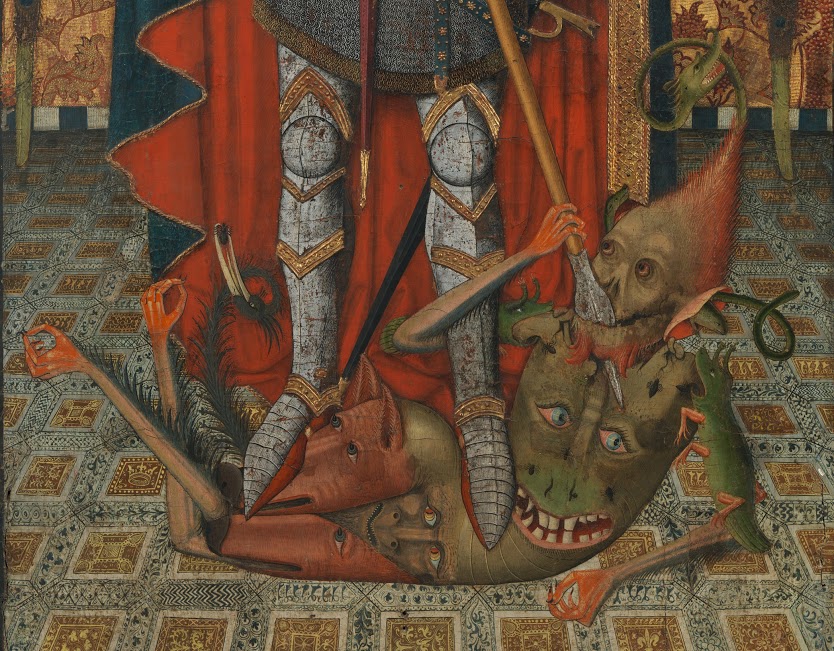
On my first trip to The Clois­ters I saw a paint­ing of St. Michael and the dev­il almost imme­di­ate­ly. I don’t think my life or art has been the same since. None of us know what the dev­il looks like. But you wouldn’t know that based on how con­fi­dent­ly this artist por­trays his like­ness. After gaz­ing at this paint­ing for an extend­ed peri­od of time I want­ed so bad­ly to under­stand the imag­i­na­tion of who­ev­er could imag­ine an alli­ga­tor arms/face crotch/dragon pony­tail com­bo. I don’t think I’ve come close to scratch­ing the sur­face.

Every time I go to that muse­um I think, “Wow it’s like I’m on Game of Thrones” and then I have to remind myself kind­ly that this was real life. Almost every­thing there was an object that peo­ple inter­act­ed with as part of their aver­age dai­ly life and that fas­ci­nates me as some­one who lives in a world filled with mass pro­duced, plas­tic objects. 

Gunther’s draw­ings and comics are cre­at­ed (and aged) on that most mod­ern of conveniences—the iPad.

The British monar­chy and the First Ladies are also sources of fas­ci­na­tion, but the mid­dle ages are his pri­ma­ry pas­sion, to the point where he recent­ly cos­tumed him­self as a page to tell the sto­ry of Piers Gave­ston, 1st Earl of Corn­wall and Edward II’s dar­ling, aid­ed by a gar­ment rack he’d retooled as a medieval pageant cart-cum-pup­pet the­ater.

See the rest of Tyler Gunther’s Medieval Comics on his web­site and don’t for­get to sur­prise your favorite hygien­ist or oral sur­geon with his Medieval Den­tist print this hol­i­day sea­son.

All images used with per­mis­sion of artist Tyler Gun­ther

Relat­ed Con­tent:

How to Make a Medieval Man­u­script: An Intro­duc­tion in 7 Videos

Medieval Monks Com­plained About Con­stant Dis­trac­tions: Learn How They Worked to Over­come Them

Why Knights Fought Snails in Illu­mi­nat­ed Medieval Man­u­scripts

Ayun Hal­l­i­day is an author, illus­tra­tor, the­ater mak­er and Chief Pri­ma­tol­o­gist of the East Vil­lage Inkyzine.  Join her in NYC on Mon­day, Octo­ber 7 when her month­ly book-based vari­ety show, Necro­mancers of the Pub­lic Domaincel­e­brates the art of Aubrey Beard­s­ley, with a spe­cial appear­ance by Tyler Gun­ther. Fol­low her @AyunHalliday.

Bob Odenkirk & Errol Morris Create Comedic Shorts to Help You Take Action Against Global Warming: Watch Them Online

My beach house must be some­where around here. I used to be able to see the ocean from it. I should be able to see it from the ocean. Ooo, that looks famil­iar. Lady Lib­er­ty. Ha ha! Hel­looo! All the best to you.     —Admi­ral Hor­a­tio Horn­tow­er

Are there any Bet­ter Call Saul fans among the glob­al warm­ing deniers?

A sce­nario in which one can simul­ta­ne­ous­ly pooh pooh the melt­ing of the polar ice caps and embrace The Thin Blue Line?

Direc­tor Errol Mor­ris and his star, Bob Odenkirk, may not change any minds with their Glob­al Melt­down spots they pro­duced in part­ner­ship with the Insti­tute for the Future, but hope­ful­ly the emphat­ic end cards will stir some fans to action.

The absur­dist 30-sec­ond shorts fea­ture Odenkirk, encrust­ed in epaulets and naval insignia, as the fic­tion­al Horn­tow­er, “an admi­ral of a fleet of one and per­haps the last man on Earth.” Marooned on a small block of ice, he rails against the inex­pert­ly ani­mat­ed wildlife encroach­ing on his domain.

(“You don’t even have the facil­i­ty of lan­guage!” he tells a pen­guin, and lat­er threat­ens a wal­rus that it will “get paint­ed out” of the final cut for “com­plain­ing all the time…”)

Cer­tain­ly a doc­u­men­tar­i­an of Mor­ris’ stature could have tak­en a length­i­er, more seri­ous approach to the sub­ject, but as he notes:

Log­ic rarely con­vinces any­body of any­thing. Cli­mate change has become yet anoth­er vehi­cle for polit­i­cal polar­iza­tion. If Al Gore said the Earth was round there would be polit­i­cal oppo­si­tion insist­ing that the Earth was flat. It’s all so pre­pos­ter­ous, so con­temptible.

Odenkirk also has some out-of-uni­form con­cerns about cli­mate change, as expressed in “Where I Got These Abs,” a 2011 Shouts & Mur­murs piece for The New York­er:

The mid­dle ab on the left (not my left, your left, if you are look­ing at me) is called Ter­rence. It’s a dig­ni­fied ab. It tens­es each time I read an op-ed arti­cle about glob­al warm­ing. The article’s point of view is imma­te­r­i­al; sim­ply being remind­ed that I can do noth­ing to stop the hor­rif­ic future of floods and cat­a­stro­phe gives this ab a taut yank that lingers, burn­ing calo­ries in my well-creased fore­head at the same time. 

Watch all of Mor­ris and Odenkirk’s Admi­ral Horn­tow­er spots, cur­rent­ly total­ing nine, with ten more to come, on Glob­al Melt­down’s YouTube chan­nel.

via Kot­tke

Relat­ed Con­tent:

Cli­mate Change Gets Strik­ing­ly Visu­al­ized by a Scot­tish Art Instal­la­tion

Glob­al Warm­ing: A Free Course from UChica­go Explains Cli­mate Change

NASA Cap­tures the World on Fire

Ayun Hal­l­i­day is an author, illus­tra­tor, the­ater mak­er and Chief Pri­ma­tol­o­gist of the East Vil­lage Inkyzine.  Join her in NYC this Mon­day, Sep­tem­ber 9 for the new season’s kick­off of her book-based vari­ety show, Necro­mancers of the Pub­lic Domain. Fol­low her @AyunHalliday.

Songs by Joni Mitchell Re-Imagined as Pulp Fiction Book Covers & Vintage Movie Posters

I wish I had more sense of humor

Keep­ing the sad­ness at bay

Throw­ing the light­ness on these things

Laugh­ing it all away 

                           — Joni Mitchell, “Peo­ple’s Par­ties”

Joni Mitchell has been show­ered with trib­utes of late, many of them con­nect­ed to her all-star 75th birth­day con­cert last Novem­ber.

The silky voiced Seal, who cred­its Mitchell with inspir­ing him to become a musi­cian, soar­ing toward heav­en on “Both Sides Now”…

“A Case Of You” as a duet for fel­low New­port Folk Fes­ti­val alums Kris Kristof­fer­son and Bran­di Carlile….

Cha­ka Khan inject­ing a bit of funk into “Help Me,” a tune she’s been cov­er­ing for 20 some years

They’re mov­ing and beau­ti­ful and sen­si­tive, but giv­en that Mitchel­l’s the one behind the immor­tal lyric “laugh­ing and cry­ing, you know it’s the same release…,” shouldn’t some­one aim for the fun­ny bone? Mix things up a lit­tle?

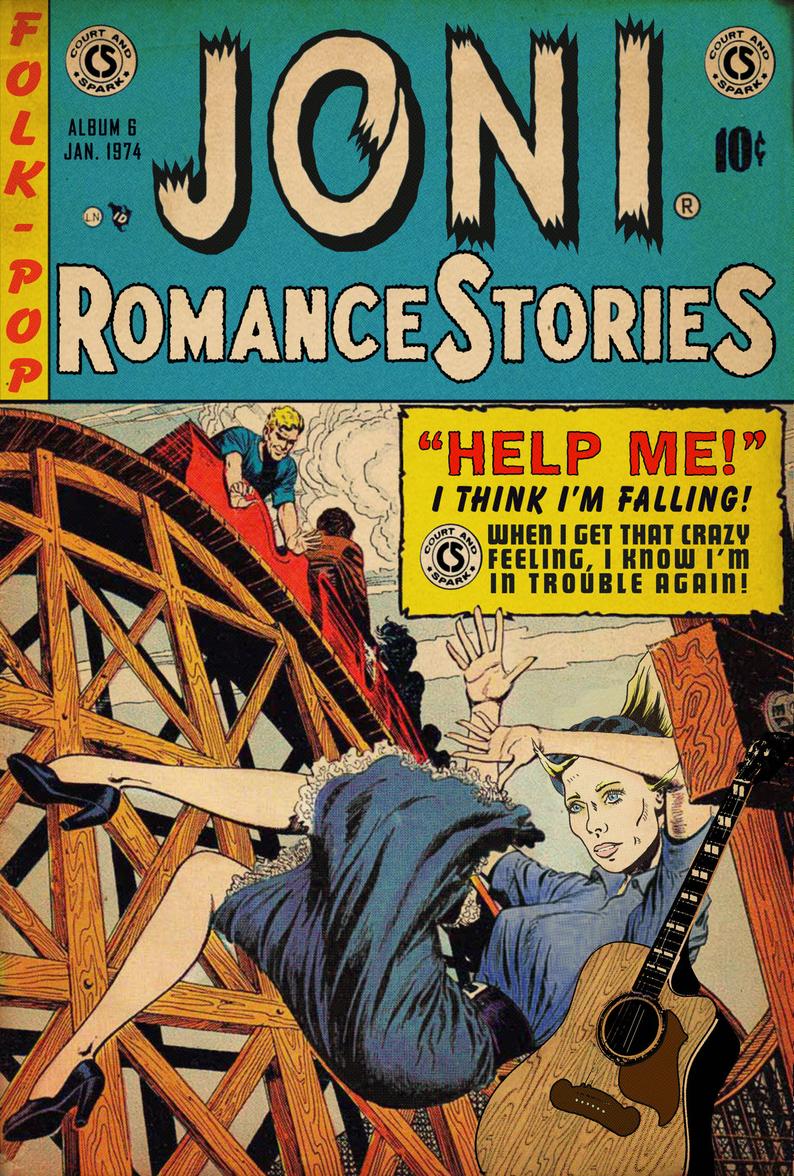
Enter Todd Alcott, who’s been delight­ing us all year with his “mid-cen­tu­ry mashups,” an irre­sistible com­bi­na­tion of vin­tage paper­back cov­ers, celebri­ty per­son­ae, and icon­ic lyrics from the annals of rock and pop.

His homage to “Help Me,” above, is decid­ed­ly on brand. The lurid 1950s EC hor­ror com­ic-style graph­ics con­fer a dishy naugh­ti­ness that was—no disrespect—rather lack­ing in the orig­i­nal.

Per­haps Mitchell would approve of these mon­keyshines?

A 1991 inter­view with Rolling Stone’s David Wild sug­gests that she would have at some point in her life:

When I was a kid, I was a real good-time Char­lie. As a mat­ter of fact, that was my nick­name. So when I first start­ed mak­ing all this sen­si­tive music, my old friends back home could not believe it. They didn’t know – where did this depressed per­son come from? Along the way, I had gone through some pret­ty hard deals, and it did intro­vert me. But it just so hap­pened that my most intro­vert­ed peri­od coin­cid­ed with the peak of my suc­cess.

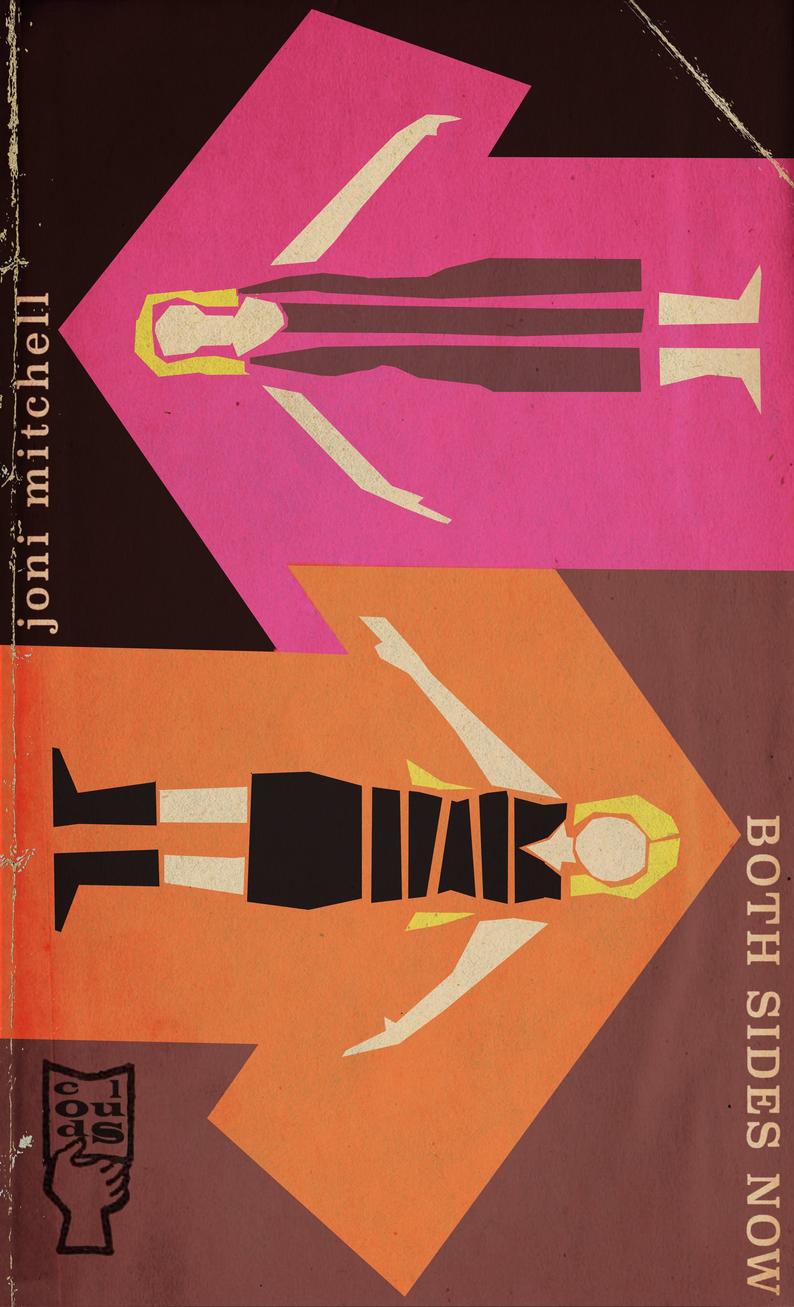
Alcott hon­ors the intro­vert by ren­der­ing “Both Sides Now” as an angsty-look­ing vol­ume of 60s-era poet­ry from the imag­i­nary pub­lish­ing house Clouds.

Big Yel­low Taxi” car­ries Alcott from the book­shelf to the realm of the movie poster.

The lyrics are def­i­nite­ly the star here, but it’s fun to note just how much mileage he gets out of the float­ing text box­es that were a strange­ly ran­dom-feel­ing fea­ture of the orig­i­nal.

Also “Ladies of the Canyon” is a great pro­duc­er’s cred­it. Giv­en Alcott’s own screen­writ­ing cred­its on IMDB, per­haps we could con­vince him to mash a bit of Joni’s sen­si­bil­i­ty into some of Paul Schrader’s grimmest Taxi Dri­ver scenes…

That said, it’s worth remem­ber­ing that Alcot­t’s cre­ations are lov­ing trib­utes to the artists who mat­ter most to him. As he told Open Cul­ture:

Joni Mitchell is one of the most crim­i­nal­ly under­val­ued Amer­i­can song­writ­ers of the 20th cen­tu­ry, and that now that I live in LA, every time I dri­ve through Lau­rel Canyon I think about her and that whole absurd­ly fer­tile scene in the late 1960s, when artists could afford to live in Lau­rel Canyon and Joni Mitchell was hang­ing out with Neil Young and Charles Man­son.

See all of Todd Alcott’s work here. (Please note that this is his offi­cial sales site… beware of imposters sell­ing quick­ie knock-offs of his designs on eBay and Face­book.) Find oth­er posts fea­tur­ing his work in the Relat­eds below.

Relat­ed Con­tent:

See Clas­sic Per­for­mances of Joni Mitchell from the Very Ear­ly Years–Before She Was Even Named Joni Mitchell (1965/66)

Bea­t­les Songs Re-Imag­ined as Vin­tage Book Cov­ers and Mag­a­zine Pages: “Dri­ve My Car,” “Lucy in the Sky with Dia­monds” & More

Clas­sic Songs by Bob Dylan Re-Imag­ined as Pulp Fic­tion Book Cov­ers: “Like a Rolling Stone,” “A Hard Rain’s A‑Gonna Fall” & More

Songs by David Bowie, Elvis Costel­lo, Talk­ing Heads & More Re-Imag­ined as Pulp Fic­tion Book Cov­ers

Ayun Hal­l­i­day is an author, illus­tra­tor, the­ater mak­er and Chief Pri­ma­tol­o­gist of the East Vil­lage Inkyzine.  Join her in NYC on Mon­day, Sep­tem­ber 9 for a new sea­son of her book-based vari­ety show, Necro­mancers of the Pub­lic Domain. Fol­low her @AyunHalliday.


When MAD Magazine Ruffled the Feathers of the FBI, Not Once But Three Times

Many of us grew up read­ing MAD, the soon-to-be-late illus­trat­ed satir­i­cal mag­a­zine. But only the gen­er­a­tions who went through their MAD peri­ods in the pub­li­ca­tion’s first cou­ple of decades, from the 1950s through the 1970s, enjoyed it at the height of its sub­ver­sive pow­ers. As hard as it may be to imag­ine in the 21st cen­tu­ry, there was even a time when MAD came under scruti­ny by no less pow­er­ful an orga­ni­za­tion than the Unit­ed States Fed­er­al Bureau of Inves­ti­ga­tion, and faced the wrath of its first and most feared direc­tor J. Edgar Hoover at that. But did the heat stop its cre­ators from doing their nec­es­sary work of irrev­er­ence? Most cer­tain­ly not.

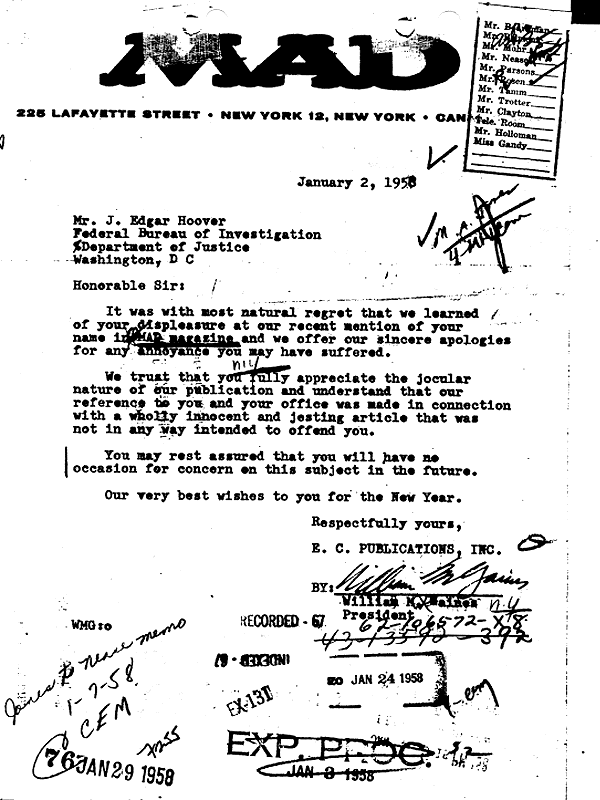
“In a memo dat­ed Novem­ber 30, 1957,” writes Men­tal Floss’ Jake Rossen, “an agent with the Fed­er­al Bureau of Inves­ti­ga­tion iden­ti­fied as ‘A. Jones.’ raised an issue of crit­i­cal impor­tance.” That issue had to do with what the FBI file on the case described as sev­er­al com­plaints made “con­cern­ing the ‘Mad’ com­ic book,” and specif­i­cal­ly “a tongue-in-cheek game about draft dodg­ing. Play­ers who earned such sta­tus were advised to write to FBI Direc­tor J. Edgar Hoover and request a mem­ber­ship card cer­ti­fy­ing them­selves as a ‘full-fledged draft dodger.’ At least three read­ers, the agent report­ed, did exact­ly that.” Agent Jones also weighed in with a judg­ment of MAD itself: “It is rather unfun­ny.”

You can see all this for your­self in the doc­u­ments from the FBI file, excerpts of which are avail­able to down­load at thesmokinggun.com. “Crit­i­ciz­ing or lam­poon­ing the FBI has become stan­dard media fare,” says that site, “but when J. Edgar Hoover ran the joint, the bureau would­n’t stand for such swipes — and often retal­i­at­ed by inves­ti­gat­ing its foes. So that’s why it’s great to see that MAD mag­a­zine was­n’t intim­i­dat­ed by Hoover and seemed to take plea­sure in needling the Direc­tor.” It did it again in 1960, two years after pub­lish­er William Gaines promised nev­er to men­tion Hoover’s name in the pages of MAD, when it made fun of the FBI’s top man twice in a sin­gle issue, once in a faux adver­tise­ment for a vac­u­um clean­er called “The Hon­or­able J. Edgar Elec­trolux.”

The exchanges that ensued, says thesmokinggun.com, reveal the FBI’s pos­ses­sion of “one lousy sense of humor.” But they also reveal no small degree of courage on the part of a still-new humor mag­a­zine in the face of an intel­li­gence orga­ni­za­tion more than empow­ered to seri­ous­ly dis­rupt lives and careers. Not long there­after, MAD would become a rec­og­nized Amer­i­can insti­tu­tion in its own way, pok­ing fun at seem­ing­ly every phe­nom­e­non to pass, how­ev­er ephemer­al­ly, through the nation­al zeit­geist. But now that its own run, which adds up to a high­ly non-ephemer­al 67 years, has come to an end, we’d do well to reflect on what its his­to­ry tells us about satire and the state. The con­di­tion of that dynam­ic today may cause some of us to do just what MAD mas­cot Alfred E. Neu­man nev­er did — wor­ry.

via Men­tal Floss

Relat­ed Con­tent:

The End of an Era: MAD Mag­a­zine Will Pub­lish Its Last Issue With Orig­i­nal Con­tent This Fall

Every Cov­er of MAD Mag­a­zine, from 1952 to the Present: Behold 553 Cov­ers from the Satir­i­cal Pub­li­ca­tion

FBI’s “Vault” Web Site Reveals Declas­si­fied Files on Hem­ing­way, Ein­stein, Mar­i­lyn & Oth­er Icons

Read 113 Pages of Charles Bukowski’s FBI File From 1968

The Exis­ten­tial­ism Files: How the FBI Tar­get­ed Camus, and Then Sartre After the JFK Assas­si­na­tion

Who Was Afraid of Ray Brad­bury & Sci­ence Fic­tion? The FBI, It Turns Out (1959)

Based in Seoul, Col­in Mar­shall writes and broad­casts on cities, lan­guage, and cul­ture. His projects include the book The State­less City: a Walk through 21st-Cen­tu­ry Los Ange­les and the video series The City in Cin­e­ma. Fol­low him on Twit­ter at @colinmarshall, on Face­book, or on Insta­gram.

Watch a Star-Studded Cast Read The Mueller Report: John Lithgow, Kevin Kline, Sigourney Weaver, Annette Bening & More

Laugh­ter is good med­i­cine, but I’ve found lit­tle gen­uine humor in satire of the 2016 elec­tion and sub­se­quent events. Polit­i­cal real­i­ty defies par­o­dy. So, I guess I wasn’t par­tic­u­lar­ly amused by the idea of a com­ic stag­ing of the Mueller Report. But aside from whether or not the report has com­ic poten­tial, the exer­cise rais­es a more seri­ous ques­tion: Should ordi­nary cit­i­zens read the report?

Giv­en the snowjob sum­ma­ry offered by the Attor­ney General—and cer­tain press out­fits who repeat­ed claims that it exon­er­at­ed the president—probably. Espe­cial­ly (good luck) if they can score an unredact­ed copy. Yet, this rais­es yet anoth­er ques­tion: Does any­one actu­al­ly want to read it? The answer appears to be a resound­ing yes. Even though it’s free, the [redact­ed] report is a best­seller.

And yet, “the pub­lished ver­sion is as dry as a [redact­ed] saltine,” writes James Poniewozik at The New York Times. “Robert Mueller him­self has the sto­ic G‑man bear­ing of some­one who would laugh by writ­ing ‘ha ha’ on a memo pad.” (Now that’s a fun­ny image.) One won­ders how many peo­ple duti­ful­ly down­load­ing it have stayed up late by the light of their tablets com­pelled to read it all.

But of course, one does not approach any gov­ern­ment doc­u­ment with the hopes of being enter­tained, though unin­ten­tion­al hilar­i­ty can leap from the page at any time. How should we approach The Inves­ti­ga­tion: A Search for the Truth in 10 Acts? Script­ed by Pulitzer Prize-win­ning  play­wright Robert Schenkkan from the Mueller Report’s tran­scripts, the pro­duc­tion is “part old-time pub­lic recita­tion,” writes Ponei­wozik, and “part Hol­ly­wood table read.”

The stag­ing above at New York’s River­side Church was host­ed by Law Works and per­formed live by a cast includ­ing Annette Ben­ing, Kevin Kline, John Lith­gow (as “Indi­vid­ual 1” him­self), Michael Shan­non, Justin Long, Jason Alexan­der, Wil­son Cruz, Joel Gray, Kyra Sedg­wick, Alfre Woodard, Zachary Quin­to, Mark Ruf­fa­lo, Bob Bal­a­ban, Alyssa Milano, Sigour­ney Weaver, Julia Louis-Drey­fus, Mark Hamill, and more. Bill Moy­ers serves as emcee.

Can this dark­ly com­ic pro­duc­tion deliv­er some com­ic balm for hav­ing lived through the sor­did real­i­ty of the events in ques­tion? It has its moments. Can it offer us some­thing resem­bling truth? You be the judge. Or you be the pro­duc­er, direc­tor, actor, etcetera. If you find value—civic, enter­tain­ment, or otherwise—in the exer­cise, Schenkkan encour­ages you to put on your own ver­sion of The Inves­ti­ga­tion. “Your pro­duc­tion can be as mod­est or extrav­a­gant as you like,” he writes at Law Works, fol­lowed by a list of fur­ther instruc­tions for a pos­si­ble stag­ing.

If, like maybe mil­lions of oth­er peo­ple, you’ve got an unread copy of the Mueller Report on your night­stand, maybe watching—or per­form­ing—The Inves­ti­ga­tion is the best way to get your­self to final­ly read it. Or the most grim­ly humor­ous, moron­ic, pathet­ic, and sur­re­al parts of it, any­way.

Relat­ed Con­tent:

The Mueller Report Released as a Free Well-For­mat­ted eBook (by The Dig­i­tal Pub­lic Library of Amer­i­ca)

Sat­ur­day Night Live: Putin Mocks Trump’s Poor­ly Attend­ed Inau­gu­ra­tion 

The Mueller Report Is #1, #2 and #3 on the Ama­zon Best­seller List: You Can Get It Free Online

Josh Jones is a writer and musi­cian based in Durham, NC. Fol­low him at @jdmagness

Killer Rabbits in Medieval Manuscripts: Why So Many Drawings in the Margins Depict Bunnies Going Bad

In all the king­dom of nature, does any crea­ture threat­en us less than the gen­tle rab­bit? Though the ques­tion may sound entire­ly rhetor­i­cal today, our medieval ances­tors took it more seri­ous­ly — espe­cial­ly if they could read illu­mi­nat­ed man­u­scripts, and even more so if they drew in the mar­gins of those man­u­scripts them­selves. “Often, in medieval man­u­scripts’ mar­gin­a­lia we find odd images with all sorts of mon­sters, half man-beasts, mon­keys, and more,” writes Sexy Cod­i­col­o­gy’s Mar­jolein de Vos. “Even in reli­gious books the mar­gins some­times have draw­ings that sim­ply are mak­ing fun of monks, nuns and bish­ops.” And then there are the killer bun­nies.

Hunt­ing scenes, de Vos adds, also com­mon­ly appear in medieval mar­gin­a­lia, and “this usu­al­ly means that the bun­ny is the hunt­ed; how­ev­er, as we dis­cov­ered, often the illu­mi­na­tors decid­ed to change the roles around.”

Jon Kaneko-James explains fur­ther: “The usu­al imagery of the rab­bit in Medieval art is that of puri­ty and help­less­ness – that’s why some Medieval por­tray­als of Christ have mar­gin­al art por­tray­ing a ver­i­ta­ble pet­ting zoo of inno­cent, non­vi­o­lent, lit­tle white and brown bun­nies going about their busi­ness in a field.” But the cre­ators of this par­tic­u­lar type of humor­ous mar­gin­a­lia, known as drollery, saw things dif­fer­ent­ly.

“Drol­leries some­times also depict­ed comedic scenes, like a bar­ber with a wood­en leg (which, for rea­sons that escape me, was the height of medieval com­e­dy) or a man saw­ing a branch out from under him­self,” writes Kaneko-James.

This enjoy­ment of the “world turned upside down” pro­duced the drollery genre of “the rab­bit’s revenge,” one “often used to show the cow­ardice or stu­pid­i­ty of the per­son illus­trat­ed. We see this in the Mid­dle Eng­lish nick­name Stick­hare, a name for cow­ards” — and in all the draw­ings of “tough hunters cow­er­ing in the face of rab­bits with big sticks.”

Then, of course, we have the bun­nies mak­ing their attacks while mount­ed on snails, snail com­bats being “anoth­er pop­u­lar sta­ple of Drol­leries, with groups of peas­ants seen fight­ing snails with sticks, or sad­dling them and attempt­ing to ride them.”

Giv­en how often we denizens of the 21st cen­tu­ry have trou­ble get­ting humor from less than a cen­tu­ry ago, it feels sat­is­fy­ing indeed to laugh just as hard at these drol­leries as our medieval fore­bears must have — though many more of us sure­ly get to see them today, cir­cu­lat­ing as rapid­ly on social media as they did­n’t when con­fined to the pages of illu­mi­nat­ed man­u­scripts owned only by wealthy indi­vid­u­als and insti­tu­tions.

You can see more mar­gin­al scenes of the rab­bit’s revenge at Sexy Cod­i­col­o­gy, Colos­sal, and Kaneko-James’ blog. But one his­tor­i­cal ques­tion remains unan­swered: to what extent did they influ­ence that pil­lar of mod­ern cin­e­mat­ic com­e­dy, Mon­ty Python and the Holy Grail?

Relat­ed Con­tent:

800 Illu­mi­nat­ed Medieval Man­u­scripts Are Now Online: Browse & Down­load Them Cour­tesy of the British Library and Bib­lio­thèque Nationale de France

The Aberdeen Bes­tiary, One of the Great Medieval Illu­mi­nat­ed Man­u­scripts, Now Dig­i­tized in High Res­o­lu­tion & Made Avail­able Online

Medieval Cats Behav­ing Bad­ly: Kit­ties That Left Paw Prints … and Peed … on 15th Cen­tu­ry Man­u­scripts

Explo­sive Cats Imag­ined in a Strange, 16th Cen­tu­ry Mil­i­tary Man­u­al

David Lynch Made a Dis­turb­ing Web Sit­com Called “Rab­bits”: It’s Now Used by Psy­chol­o­gists to Induce a Sense of Exis­ten­tial Cri­sis in Research Sub­jects

Mon­ty Python and the Holy Grail Cen­sor­ship Let­ter: We Want to Retain “Fart in Your Gen­er­al Direc­tion”

Based in Seoul, Col­in Mar­shall writes and broad­casts on cities, lan­guage, and cul­ture. His projects include the book The State­less City: a Walk through 21st-Cen­tu­ry Los Ange­les and the video series The City in Cin­e­ma. Fol­low him on Twit­ter at @colinmarshall or on Face­book.

An Archive of Animations/Cartoons of Ancient Greece & Rome: From the 1920s Through Today

Ancient Greece and Rome have pro­vid­ed fer­tile hunt­ing grounds for ani­mat­ed sub­ject mat­ter since the very incep­tion of the form.

So what if the results wind up doing lit­tle more than frol­ic in the pas­toral set­ting? Wit­ness 1930’s Play­ful Pan, above, which can basi­cal­ly be summed up as Sil­ly Sym­pho­ny in a toga (with a cute bear cub who looks a lot like Mick­ey Mouse and some flame play that pre­fig­ures The Sorcerer’s Appren­tice…)

Oth­ers are packed with his­to­ry, myth­ic nar­ra­tive, and peri­od details, though be fore­warned that not all are as visu­al­ly appeal­ing as Steve Simons’ Hoplites! Greeks at War, part of the Panoply Vase Ani­ma­tion Project.

Some series, such as the Aster­ix movies and Aesop and Sona sta­ple of The Rocky and Bull­win­kle Show from 1959 to 1962have been the gate­ways through which many his­to­ry lovers’ curios­i­ty was first roused.

(Russ­ian ani­ma­tor Ana­toly Petrov’s erot­ic shorts for Soyuz­mult­film may rouse oth­er, er, curiosi­ties, and are def­i­nite­ly NSFW.)

And then there are instant clas­sics like 2004’s It’s All Greek to Scoo­by in which “Shag­gy’s pur­chase of a mys­te­ri­ous amulet only serves to cause a pes­ter­ing archae­ol­o­gist and cen­taur to chase him.”  (Ye gods…)

Senior Lec­tur­er of Clas­si­cal and Mediter­ranean Stud­ies at Van­der­bilt, Chiara Sul­prizio, has col­lect­ed all of these and more on her blog, Ani­mat­ed Antiq­ui­ty.

Begin­ning with the 2‑minute frag­ment that’s all we have left of Win­sor McCay’s 1921 The Cen­taurs, Sul­prizio shares some of her favorite car­toon rep­re­sen­ta­tions of ancient Greece, Rome, and beyond. Her areas of pro­fes­sion­al spe­cial­iza­tiongen­der and sex­u­al­i­ty, Greek com­e­dy, and Roman satireare well suit­ed to her cho­sen hob­by, and her com­men­tary dou­bles down on his­tor­i­cal con­text to include the his­to­ry of ani­ma­tion.

The appear­ance of car­toon stars like Daffy Duck, Tom and Jer­ry, and Pop­eye fur­ther demon­strates this antique sub­ject matter’s stur­di­ness. TED-Ed and the BBC may view the genre as an excel­lent teach­ing tool, but there’s noth­ing stop­ping the ani­ma­tor from shoe­horn­ing some fab­ri­ca­tions in amongst the bux­om nymphs and buff glad­i­a­tors.

(Raise your hand if your moth­er ever sac­ri­ficed you on the altar to Spinachia, god­dess of spinach, in hopes that she might unleash a mush­room cloud of super-atom­ic pow­er in your puny bicep.)

You’ll find a num­ber of entries fea­tur­ing the work of Japan­ese and Russ­ian ani­ma­tors, includ­ing Ther­mae Romae, part of the jug­ger­naut that’s sprung from Mari Yamazaki’s pop­u­lar graph­ic nov­el series and Icarus and the Wise Men from the leg­endary Fyo­dor Khitruk, whose retelling of the myth sent a mes­sage about free­dom from the Sovi­et Union, cir­ca 1976.

Begin your decade-by-decade explo­rations of Chiara Sulprizio’s ani­mat­ed antiq­ui­ties here or sug­gest that a miss­ing favorite be added to the col­lec­tion. (We vote for this one!)

Relat­ed Con­tent:

Watch Art on Ancient Greek Vas­es Come to Life with 21st Cen­tu­ry Ani­ma­tion

18 Clas­sic Myths Explained with Ani­ma­tion: Pandora’s Box, Sisy­phus & More

An Ani­mat­ed Recon­struc­tion of Ancient Rome: Take A 30-Minute Stroll Through the City’s Vir­tu­al­ly-Recre­at­ed Streets

25 Ani­ma­tions of Great Lit­er­ary Works: From Pla­to, Dos­to­evsky & Dick­in­son, to Kaf­ka, Hem­ing­way & Brad­bury

Ayun Hal­l­i­day is an author, illus­tra­tor, the­ater mak­er and Chief Pri­ma­tol­o­gist of the East Vil­lage Inky zine.  Join her in New York City for the next install­ment of her book-based vari­ety show, Necro­mancers of the Pub­lic Domain, this April. Fol­low her @AyunHalliday.

The Cringe-Inducing Humor of The Office Explained with Philosophical Theories of Mind

“I’m a friend first and a boss sec­ond,” says David Brent, mid­dle man­ag­er at the Slough branch of paper com­pa­ny Wern­ham-Hogg. “Prob­a­bly an enter­tain­er third.” Those of us who’ve watched the orig­i­nal British run of The Office — and espe­cial­ly those of us who still watch it reg­u­lar­ly — will remem­ber that and many oth­er of Bren­t’s pitiable dec­la­ra­tions besides. As por­trayed by the show’s co-cre­ator Ricky Ger­vais, Brent con­sti­tutes both The Office’s comedic and emo­tion­al core, at once a ful­ly real­ized char­ac­ter and some­one we’ve all known in real life. His dis­tinc­tive com­bi­na­tion of social incom­pe­tence and an aggres­sive des­per­a­tion to be liked pro­vokes in us not just laugh­ter but a more com­plex set of emo­tions as well, result­ing in one expres­sion above all oth­ers: the cringe.

“In David Brent, we have a char­ac­ter so invest­ed in the per­for­mance of him­self that he’s blocked his own access to oth­ers’ feel­ings.” So goes the analy­sis of Evan Puschak, a.k.a. the Nerd­writer, in his video inter­pret­ing the humor of The Office through philo­soph­i­cal the­o­ries of mind.

The elab­o­rate friend-boss-enter­tain­er song-and-dance Brent con­stant­ly puts on for his co-work­ers so occu­pies him that he lacks the abil­i­ty or even the incli­na­tion to have any sense of what they’re think­ing. “The irony is that Brent can’t see that a weak the­o­ry of mind always makes for a weak self-per­for­mance. You can’t brute force your pre­ferred per­son­al­i­ty onto anoth­er’s con­scious­ness: it takes two to build an iden­ti­ty.”

Cen­tral though Brent is to The Office, we laugh not just at what he says and does, but how the oth­er char­ac­ters (which Puschak places across a spec­trum of abil­i­ty to under­stand the minds of oth­ers) react — or fail to react — to what he says and does, how he reacts to their reac­tions, and so on. Mas­tery of the comedic effects of all this has kept the orig­i­nal Office effec­tive more than fif­teen years lat­er, though its effect may not be entire­ly plea­sur­able: “A lot of peo­ple say that cringe humor like this is hard to watch,” says Puschak, “but in the same way that under our con­fi­dence, in the­o­ry of mind, lies an anx­i­ety, I think that under our cring­ing there’s actu­al­ly a deep feel­ing of relief.” When Brent and oth­ers fail to con­nect, their “body lan­guage speaks in a way that is total­ly trans­par­ent: in that moment the embar­rass­ment is not only pal­pa­ble, it’s pal­pa­bly hon­est.” And it reminds us that — if we’re being hon­est — none of us are exact­ly mind-read­ers our­selves.

You can get the com­plete British run of The Office on Ama­zon here.

Relat­ed Con­tent:

Ricky Ger­vais Presents “Learn Gui­tar with David Brent”

The Phi­los­o­phy of Bill Mur­ray: The Intel­lec­tu­al Foun­da­tions of His Comedic Per­sona

A Romp Through the Phi­los­o­phy of Mind: A Free Online Course from Oxford

Based in Seoul, Col­in Mar­shall writes and broad­casts on cities, lan­guage, and cul­ture. His projects include the book The State­less City: a Walk through 21st-Cen­tu­ry Los Ange­les and the video series The City in Cin­e­ma. Fol­low him on Twit­ter at @colinmarshall or on Face­book.

« Go BackMore in this category... »
Quantcast