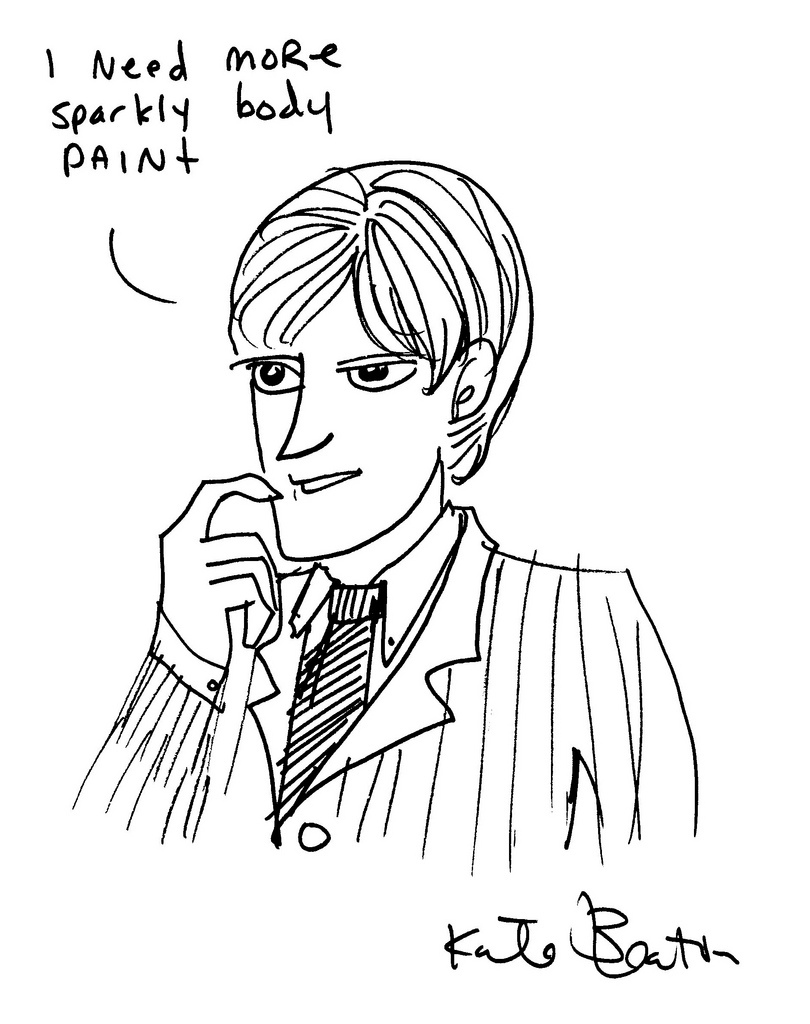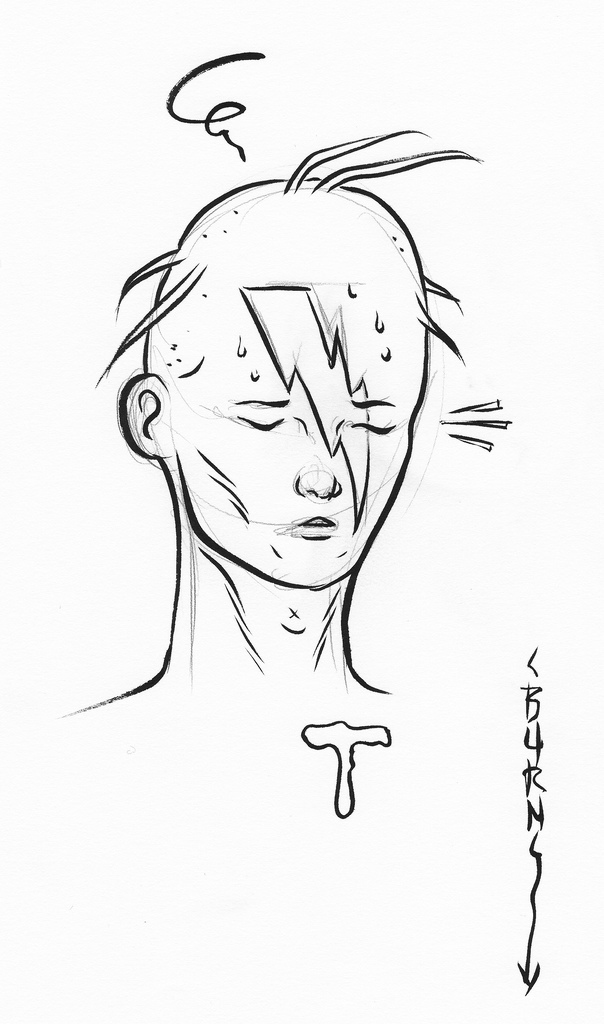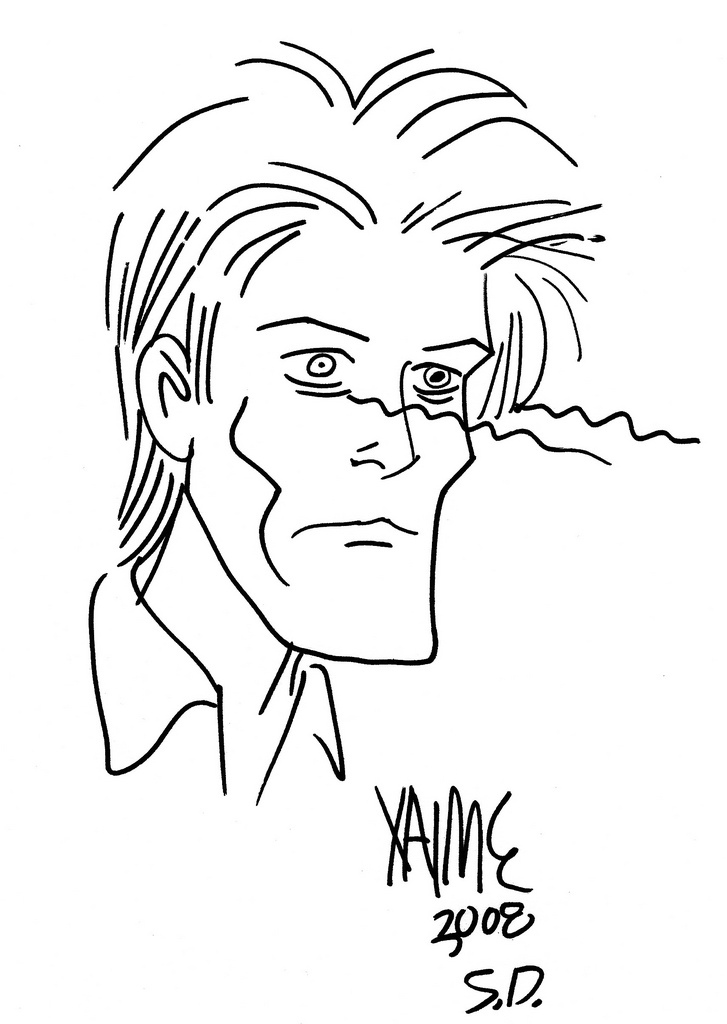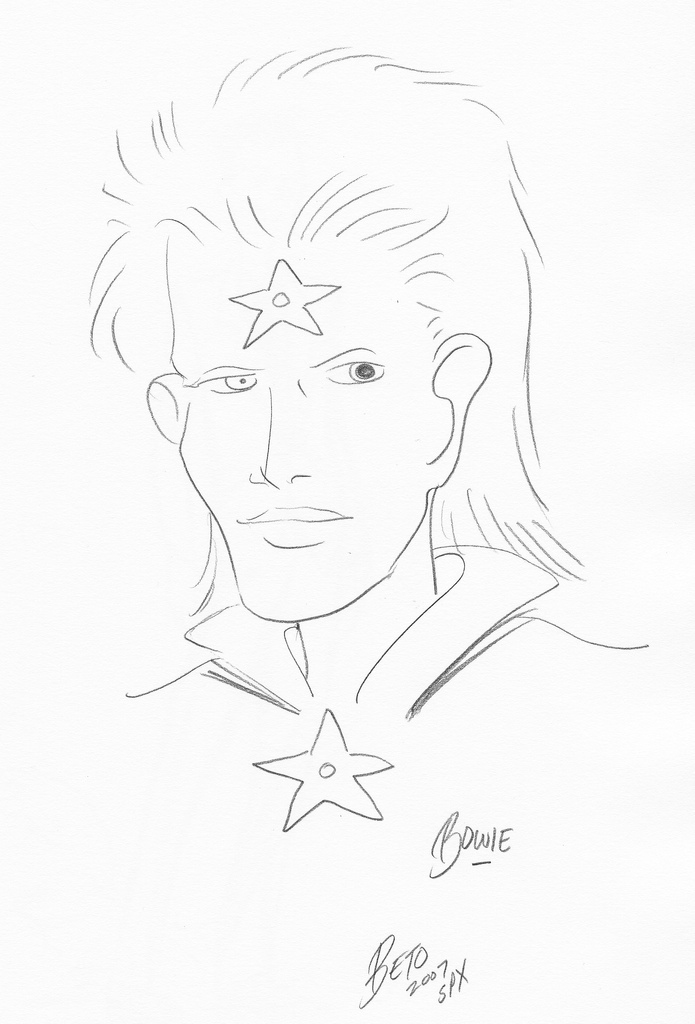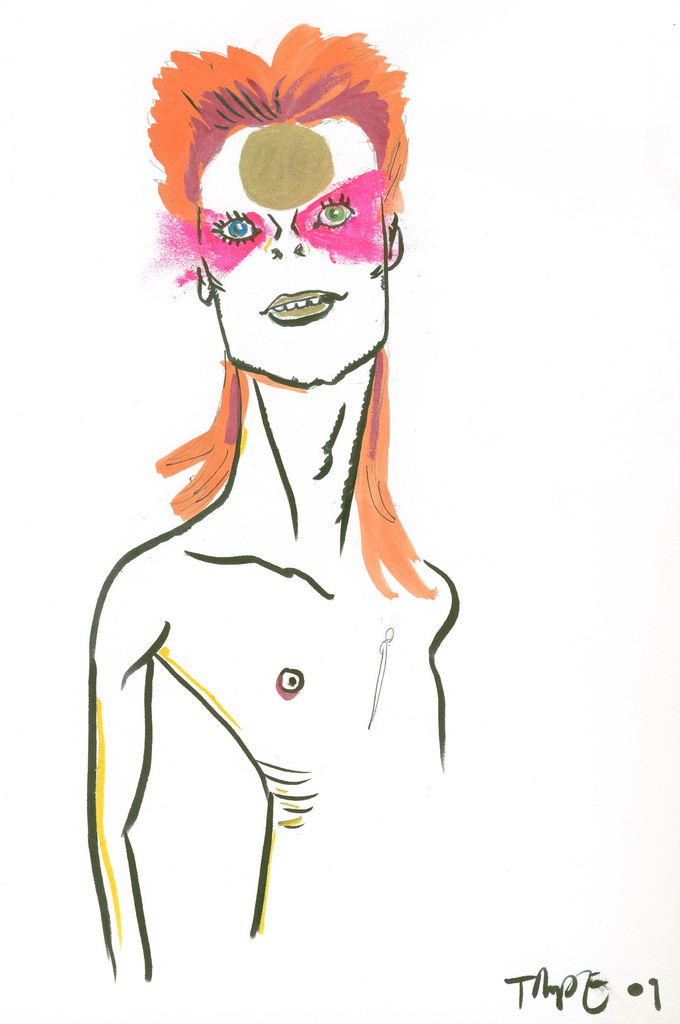
Josh Weltman, a 25 year veteran of the advertising business, has been a part of Mad Men since the show’s first season. He has worked closely, he tells us on his web site, “with Matthew Weiner and the show’s writers and producers to help ensure that Mad Men accurately depicts the process of creating ads and servicing clients, and that the show’s advertising and business stories play true to life, true to character and true to period. He also creates most of the original ads seen on the show.”
On his Vimeo channel, you can find just one video. But it’s an essential one — a short quick primer on how to draw Don Draper. Start practicing. The final season of Mad Men kicks off on Sunday, April 5, at 10 p.m. on AMC.
Follow us on Facebook, Twitter and Google Plus and share intelligent media with your friends. Or better yet, sign up for our daily email and get a daily dose of Open Culture in your inbox. Also, if you know of any great media we should share with your fellow readers, please send it our way.
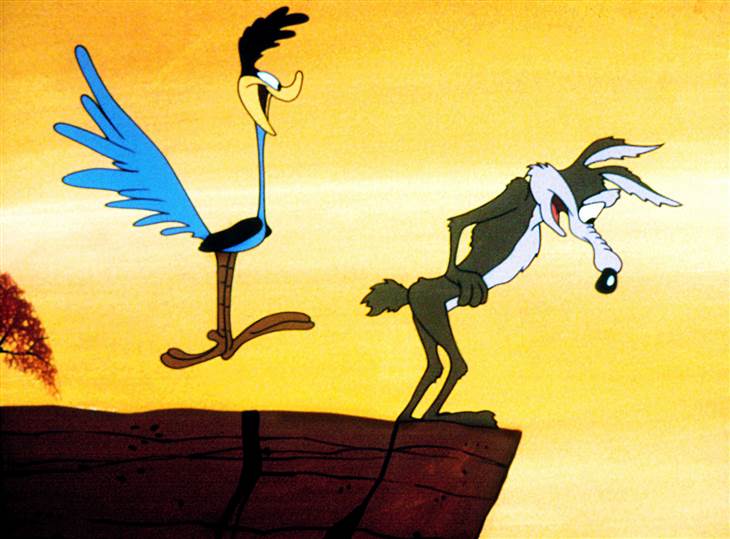
Google the keywords “art” and “limits” (or “boundaries”) and you will find thousands of results with titles like “art without limits” or “art without boundaries.” Without dissecting any of them in particular, the general idea strikes me as a fantasy. Art cannot exist without limits: the limitations of particular media, the limitations of the artist’s vision, the limitations of space and time. We always work within limits, and often those creators who are most deliberate about setting limitations for themselves produce some of the most profound and unusual works. One could name minimalists like Samuel Beckett, or Lars Van Trier, or Erik Satie. Or Chuck Jones, American animator of such classic Warner Brother’s characters as Bugs Bunny, Daffy Duck, Porky Pig, and, of course, the Road Runner and Wile E. Coyote. Hey, why not? He’s a genius.
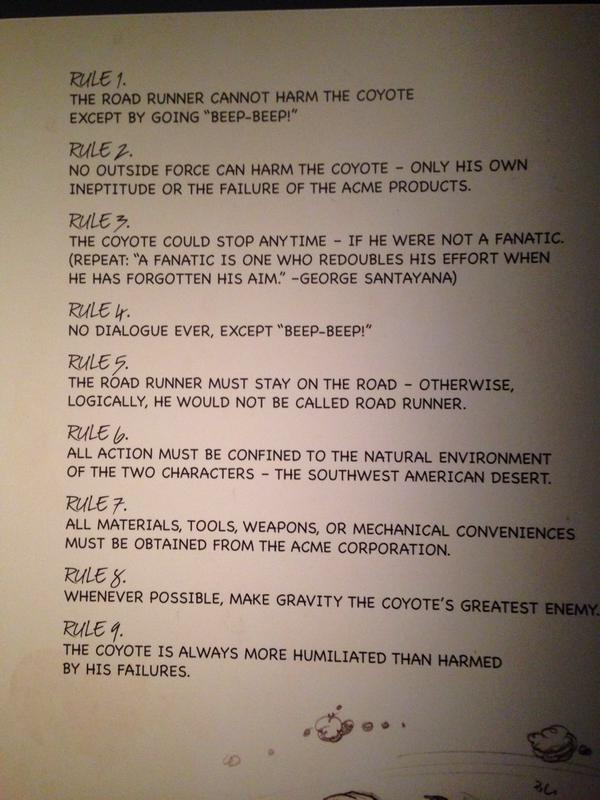
Jones had a keen ear for wisecracks, a satirical bent, and perfect comic timing; his verbal humor is as deft as his slapstick; and perhaps most importantly, he recognized the importance of setting strict limits on his cartoon universe, so as to make its rapid-fire jokes physically intelligible and wring from them the maximum amount of tension and irony. Take the list of rules above for the Road Runner/Wile E. Coyote cartoons. These have been circulating widely on the internet, and I’d guess people find them intriguing not only because they pull back the curtain on the inner workings of a fictive world as familiar as the back of our hands, but also because they reveal how Jones’ cartoon series functions as a minimalist thought experiment. What happens when you restrict two cartoon characters to the barest of expressions, movements, and setting, and to the oddball consumer products of one megacorporation?
We all know the answer: A perpetual motion machine of physical comedy, with loads of near-mythic subtext underlying Wile E.‘s tragicomic folly. The list of rules is on display at New York’s Museum of the Moving Image in an exhibit called What’s Up Doc? The Animation Art of Chuck Jones. The story has a twist. Apparently, writes Kottke—who shared a slightly different version of the rules—“long-time Jones collaborator Michael Maltese said he’d never heard of the rules.” Whether this means that Jones kept them secret and never shared them with his team, or whether he formulated them after the fact, we may never know. In any case, I imagine that if we sat down and watched all of the Road Runner cartoons with a copy of the rules in front of us, we’d find that they apply in almost every case.
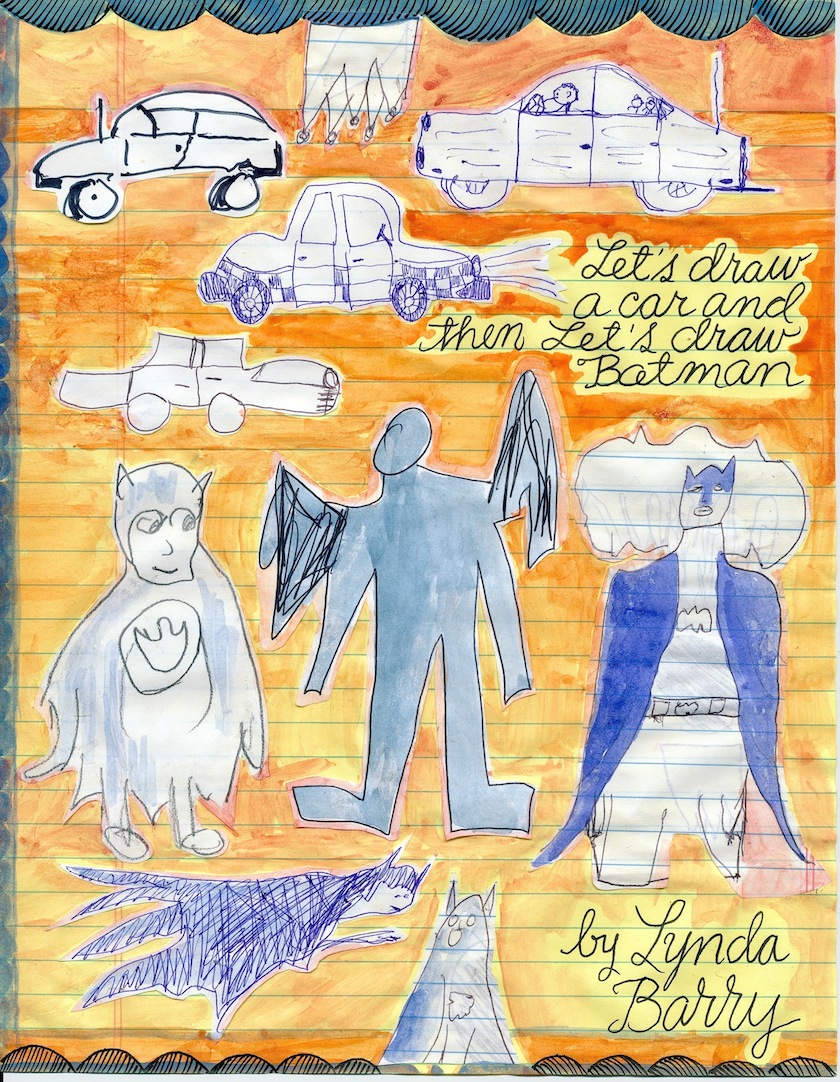
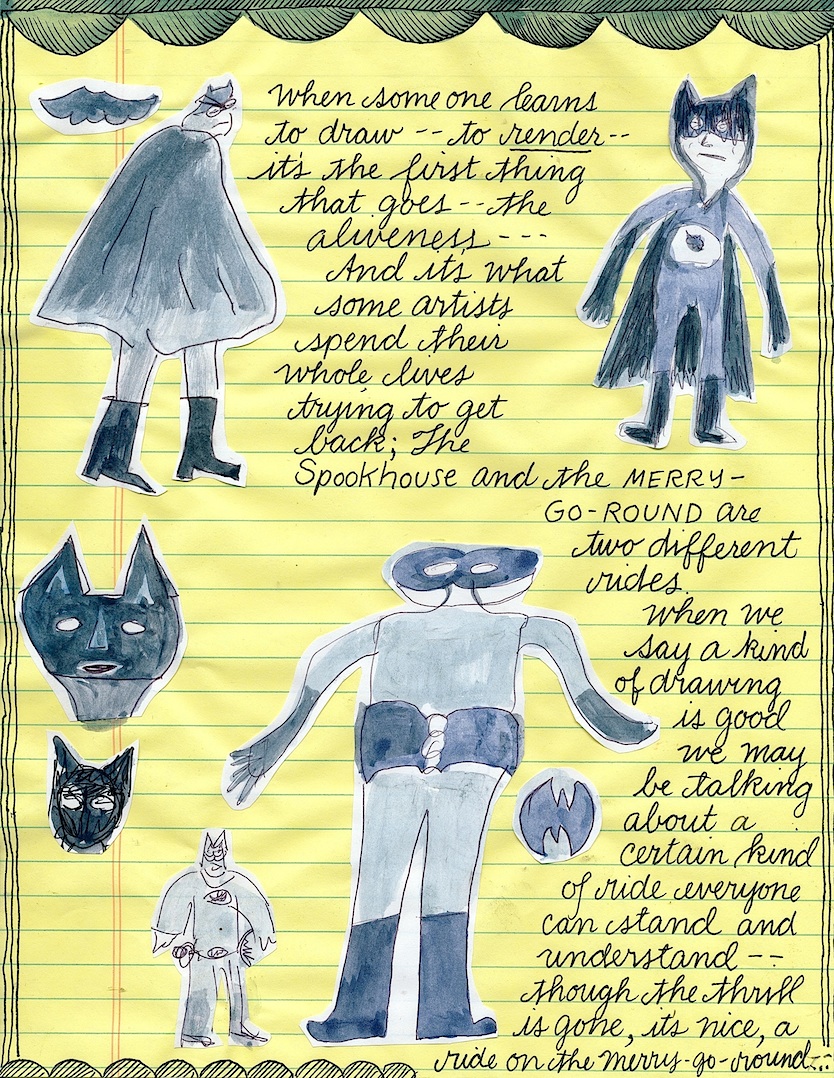
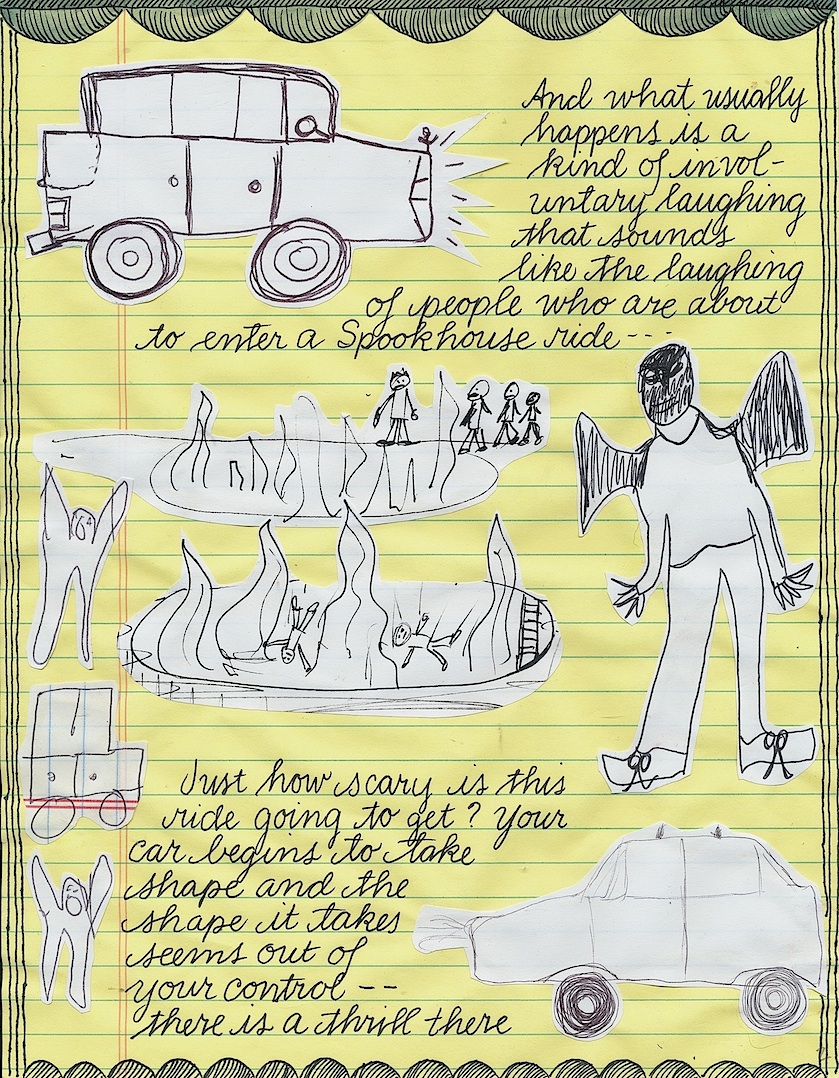
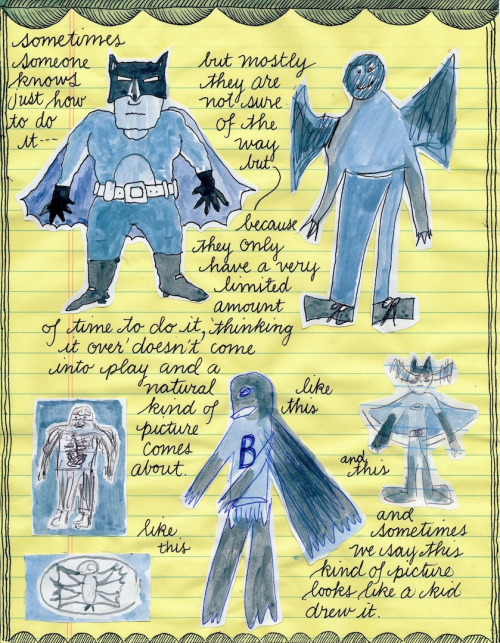
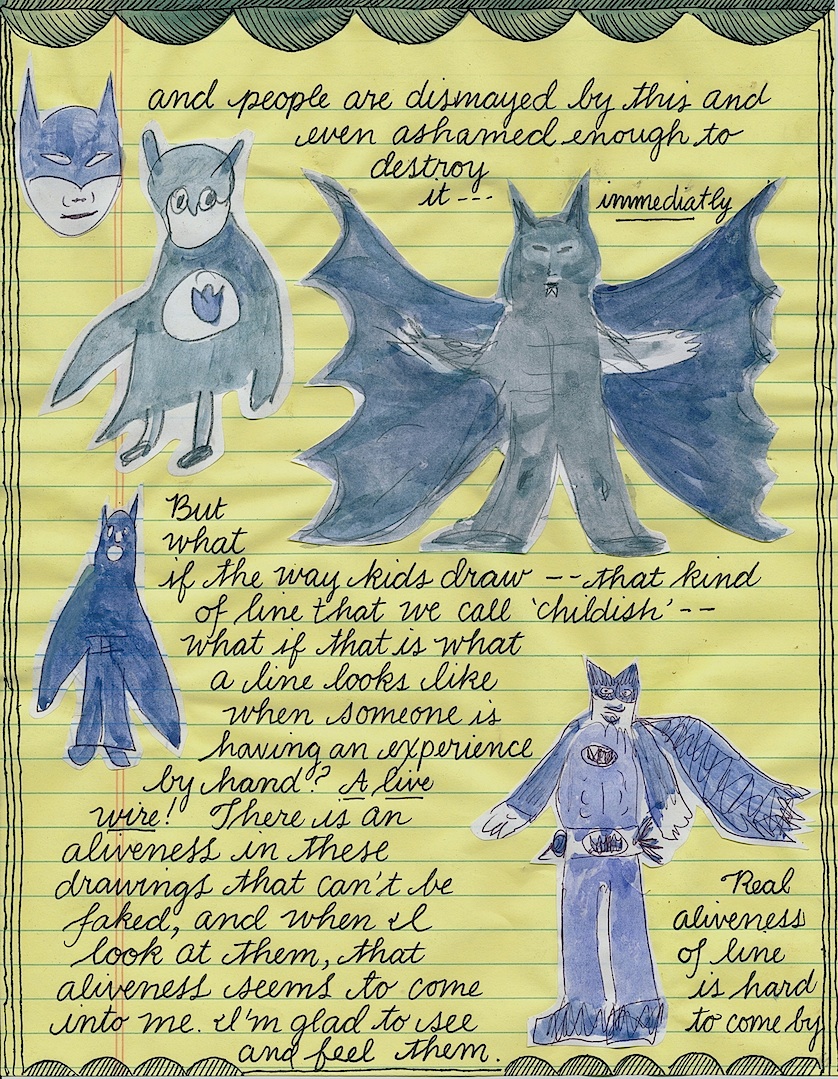
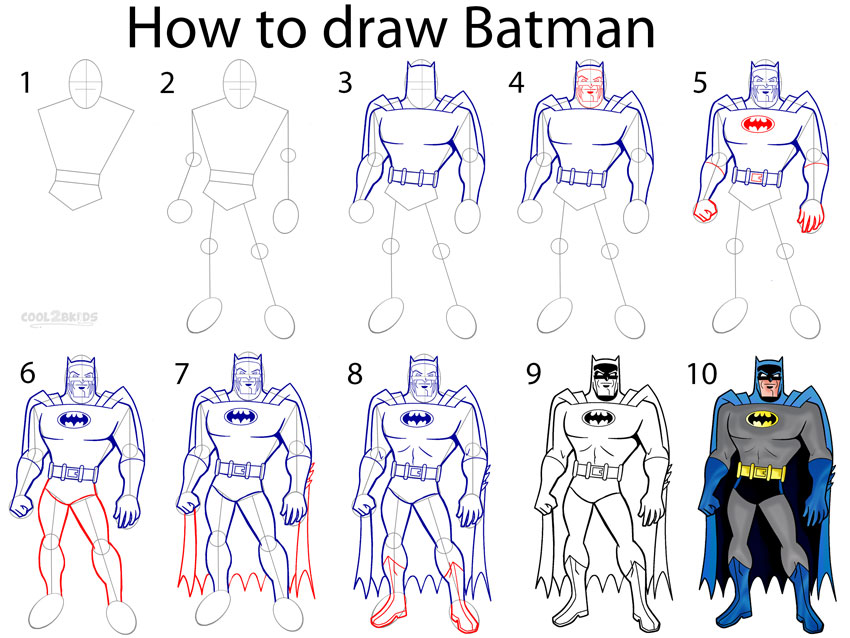
Don’t say you don’t, or that you can’t. According to cartoonist and educator Lynda Barry, we’re all capable of getting Batman down on paper in one form or another.
You have the ability to create a recognizable Batman because Batman’s basic shape is universally agreed upon, much like that of a car or a cat. Whether you know it or not, you have internalized that basic shape. This alone confers a degree of proficiency.
As proof of that, Barry would ask you to draw him in 15 seconds. A time constraint of that order has no room for fretting and self doubt. Only frenzied scribbling.
It also levels the playing field a bit. At 15 seconds, a novice’s Batman can hold his own against that of a skilled draftsperson.
Try it. Did you get pointy ears? A cape? A mask of some sort? Legs?
I’ll bet you did.
Once you’ve proved to yourself that you can draw Batman, you’re ready to tackle a more complex assignment: perhaps a four panel strip in which Batman throws up and screams.
This is probably a lot easier than drawing him scaling the side of a building or battling the Joker. Why? Personal experience. Anybody who’s ever lost his or her lunch can draw on the cellular memory of that event.
Fold a piece of paper into quarters and give it a whirl.
Then reward yourself with the video up top, a collection of student-created work from the Making Comics class Barry taught last fall at the great University of Wisconsin.
With everyone’s Batman rocking a Charlie Brown-sized noggin and simple rubber hose style limbs, there’s less temptation to get bogged down in comparisons.
Okay, so maybe some people are better than others when it comes to drawing toilets. No biggie. Keep at it. We improve through practice, and you can’t practice if you don’t start.
Once you’ve drawn Batman throwing up and screaming, there’s no end to the possibilities. Barry has an even bigger collection of student work (second video above), in which you’ll find the Caped Crusader doing laundry, using a laptop, calling in sick to work, reading Understanding Comics, eating Saltines… all the stuff one would expect given that part of the original assignment was to envision oneself as Batman.
More of Lynda Barry’s Batman-related drawing philosophy from Syllabus can be found above and down below:
No matter what anyone tells you (see below), there’s no right way to draw Batman!
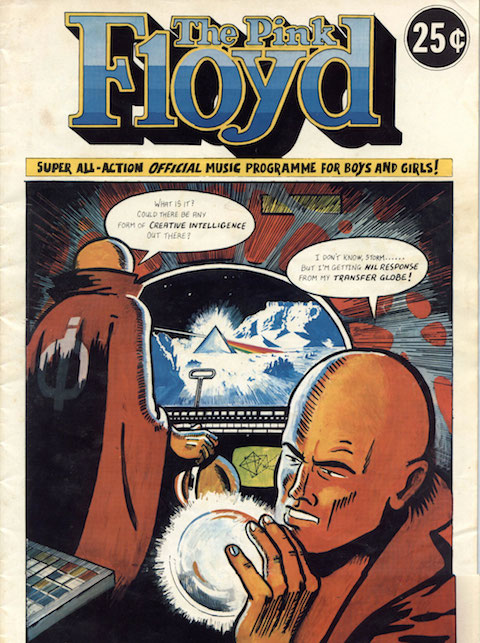
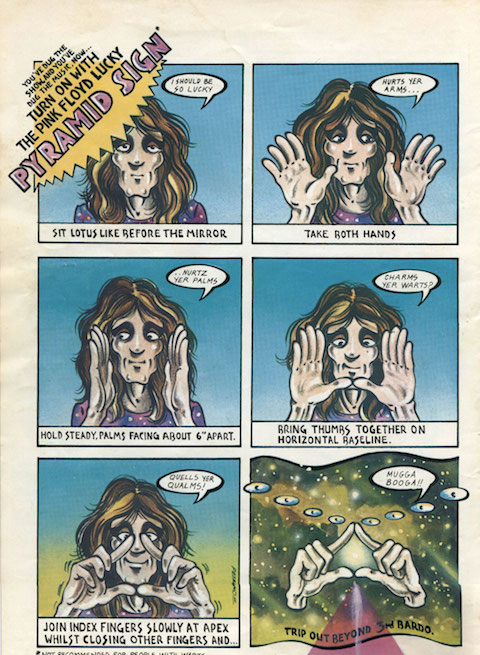
For all their serious brooding and biting digs at the establishment, the members of Pink Floyd were not above having a little fun with their image. Take this 1975 comic book, created by their record cover designer Storm Thorgerson’s company Hipgnosis for the Dark Side of the Moon tour. A “Super, All-Action Official Music Programme for Boys and Girls,” the 15-page oddity—pitched, writes Dangerous Minds, “somewhere halfway between ‘professional promotional item’ and ‘schoolboy’s notebook scribbling’”—includes several short comic stories: Roger (“Rog”) Waters is an “ace goal-scorer” for the “Grantchester Rovers” football club. Floyd drummer Nick Mason becomes “Captain Mason, R.N.,” a “courageous and smart” WWII naval hero, and David Gilmour gets cast as stunt cyclist “Dave Derring.” The juiciest part goes to keyboardist Richard Wright, whose salacious exploits as high roller “Rich Right” complete the proto-Heavy Metal vibe of the whole thing.
Perhaps most fun is a silly questionnaire called “Life Lines” that asks each band member about such trivia as age, weight, height, “philosophical beliefs,” “sexual proclivities,” “political leanings,” and “musical hates.” Most of the answers are of the flippant, smartass variety, but I think they’re all sincere when they name their favorite movies: Beyond the Valley of the Dolls, The Seventh Seal, Cool Hand Luke, and El Topo. I’ll let you figure out who chose which one. (Click the image above, then click again, to enlarge.) The penultimate page includes the lyrics to three new songs the band was working on at the time and playing live during the Dark Side of the Moon Tour: “Shine on You Crazy Diamond,” and two unreleased tracks, “Raving and Drooling” and “Gotta Be Crazy”—which later turned into “Sheep” and “Dogs,” respectively, on the Animals album.
The comic takes the goofiness of Beatlemania-like merch to a much farther out place—somewhere “beyond the 3rd Bardo.” One member of the International Roger Waters Fanclub, who kept his program comic book for decades after seeing the Dark Side show in San Francisco, writes “I was so wasted on acid at the show, I don’t know how I held on to anything.” Hipgnosis, and Floyd, surely knew their audience. You can download the whole thing here, in high resolution images. See much more Pink Floyd tour memorabilia at the fansite Pinfloydz.com.
No one is surprised when authors mine their personal experiences. If they’re lucky enough to strike gold, other miners may be brought on to bring the stories to the silver screen. Here’s where things get tricky (if lucrative). No one wants to see his or her important life details getting royally botched, especially when the results are blown up 70 feet across.
Cartoonist Alison Bechdel’s path to letting others take the reins as her story is immortalized in front of a live audience is not the usual model. The family history she shared in the Pulitzer Prize-winning Fun Home: A Family Tragicomic has been turned into a Broadway musical.
Now that would be a nail biter, especially if the non-fictional source material includes a graphically awkward first sexual encounter and your closeted father’s suicide.
In the wrong hands, it could have been an excruciating evening, but Fun Home, the musical, has had excellent pedigree from the get go.
It’s also worth noting that this show passes the infamous Bechdel Test (below) both onstage and off, with a book and lyrics by Lisa Kron and music by Jeanine Tesori.
Sure, we all enjoyed the adaptation of 2001: A Space Odyssey presented on the Howard Johnson’s children’s menu from 1968 that we featured last May. But would you believe that, when you swap out the name Howard Johnson for that of Jack Kirby, you get a work of higher artistic merit? In his long career, the widely respected comic book artist, writer, and editor put in time on both the DC and Marvel sides of the fence. 1976’s 2001: A Space Odyssey comic book, a meeting of Kirby’s mind with those of Stanley Kubrick and Arthur C. Clarke, marked his return to Marvel after spending the early 70s at DC.
Kubrickonia, which calls the commission “a match made in bizarro world heaven,” describes the product: “The adaptation was written & penciled by Kirby with inking duties carried out by Frank Giacoia. The almost 2 times larger than the regular comic-book format suited Kirby’s outlandish pop style, but this was a great talent merely going through the motions.” The Sequart Organization’s Julian Darius calls it “surely one of the strangest sci-fi franchise comics ever published,” a stuffy marriage between Kirby’s “bombastic,” “action-oriented,” “in-your-face” art and the style of Kubrick’s film, one “all about the subtle. No one ever accused Kirby of being subtle. Indeed, his almost complete lack of subtlety is part of his charm, but it’s not a charm one could possibly imagine fitting 2001.”
At The Dissolve, Noel Murray includes an examination of Kirby’s 2001 in the site’s “Adventures in Licensing” column. Kirby’s description of Kubrick’s immortal millennia-spanning match cut, which the article quotes as an opener, tells you everything you need to know:
As the surge of elation sweeps through him, Moonwatcher shouts in victory and throws his weapon at the sky!! Higher and higher, it sails — aimed at the infinite where the countless stars wait for the coming of man… And, man comes to space!! Across the agonizing ages he follows the destiny bequeathed to him by the monolith.
2001: A Space Odyssey incomics, which comprises not just the oversized book but ten monthly issues that expanded upon the film — taking it in, shall we say, a different direction than either Kubrick or Clarke might have envisioned — has, as you can see, inspired no small amount of discussion among science fiction and comic book enthusiasts. Darius wrote a whole book called The Weirdest Sci-Fi Comic Ever Made. At SciFiDimensons, Robert L. Bryant Jr. and Robert B. Cooke offer two more analyses of this unusual chapter in the history of American sequential art. Whatever its merits as reading material, it shows us that genius plus genius doesn’t always produce genius — but it never fails to produce something fascinating.
Comic books, as any enthusiast of comics books won’t hesitate to tell you, have a long and robust history, one that extends far wider and deeper than the 20th-century caped musclemen, carousing teenagers, and wisecracking animals so many associate with the medium. The scholarship on comic-book history — still a relatively young field, you understand — has more than once revised its conclusions on exactly how far back its roots go, but as of now, the earliest acknowledged comic book dates to 1837.
The Adventures of Obadiah Oldbuck, according to thecomicbooks.com’s page on early comic-book history, “was done by Switzerland’s Rudolphe Töpffer, who has been considered in Europe (and starting to become here in America) as the creator of the picture story. He created the comic strip in 1827,” going on to create comic books “that were extremely successful and reprinted in many different languages; several of them had English versions in America in 1846. The books remained in print in America until 1877.”
Also known as Histoire de M. Vieux Bois, Les amours de Mr. Vieux Bois, or simply Monsieur Vieuxbois, the original 1837 Adventures of Obadiah Oldbuck earned Töpffer the designation of “the father of the modern comic” from no less an authority on the matter than Understanding Comics author Scott McCloud, who cites the series’ pioneering use of bordered panels and “the interdependent combination of words and pictures.” You can see for yourself at the web site of Dartmouth College’s Library.
Alas, contemporary critics — and to an extent Töpffer himself, who considered it a work targeted at children and “the lower classes” — couldn’t see the innovation in all this. They wrote off Obadiah Oldbuck’s harrowing yet strangely lighthearted pictorial stories of failed courtship, dueling, attempted suicide, robbery, drag, elopement, ghosts, stray bullets, attack dogs, double-crossing, and the threat of execution as mere trifles by an otherwise capable artist. So the next time anyone gets on your case about reading comic books, just tell ’em they said the same thing about Obadiah Oldbuck. Then send them this way so they can figure out what you mean. You can read TheAdventures of Obadiah Oldbuck in its totality here.
Portraits taken by Sacha Goldberger at Super Flemish
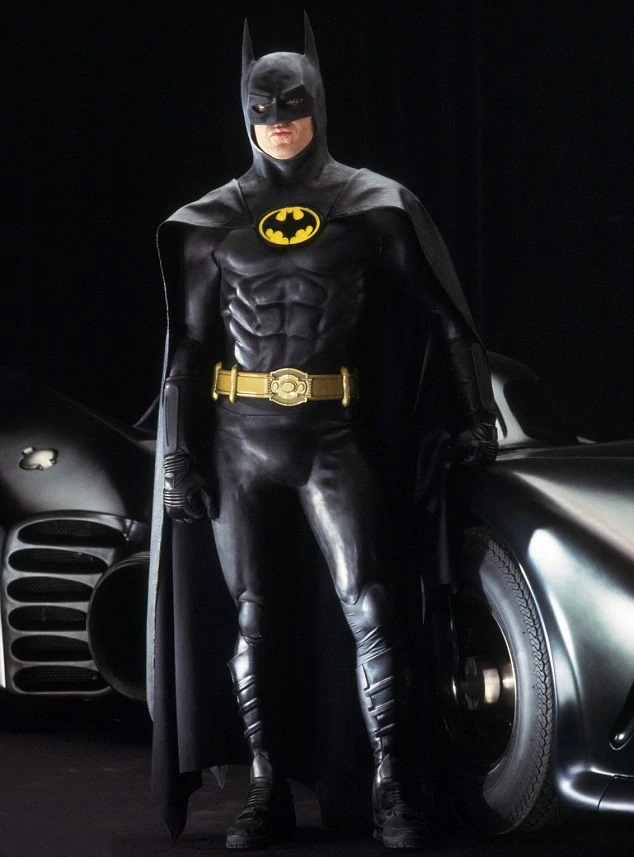
Superheroes, as you may have noticed, are serious moneymakers these days. It started when Tim Burton rescued Batman from Adam West’s campy clutches, pouring him into a butch black rubber suit that is of a piece with a leaner, meaner Batmobile. Previously unthinkable digital special effects quickly replaced all trace of Biff! Pow!! Whammo!!! Franchise opportunities abounded as the entire Justice League went on the block.
Having looked at it from both sides now, I can only conclude that something’s lost…
…but something’s gained in the portraits of Sacha Goldberger, a photographer who harnesses the power of 17th century Flemish school portraiture to restore, nay, reveal these icons’ humanity.
The softer fabrics and Vermeer-worthy lighting of his Super Flemish project give his powerful subjects room to breathe and reflect.
Same goes for us, the viewers.
It’s much easier to dwell on the existential nature of these mythic beings when the White House isn’t exploding in the background. There are times when tights need the ballast that only a pair of pumpkin pants can provide.
Goldberger — whose previous forays into both superheroes and Flemish portraiture feature his ever-game granny — helps things along by casting models who closely resemble their cinematic counterparts. But it’s not just the bone structure. All of his sitters display a knack for looking thoughtful in a ruff. In the artist’s vision, they are “tired of having to save the world without respite, promised to a destiny of endless immortality, forever trapped in their character.”
We're hoping to rely on loyal readers, rather than erratic ads. Please click the Donate button and support Open Culture. You can use Paypal, Venmo, Patreon, even Crypto! We thank you!
Open Culture scours the web for the best educational media. We find the free courses and audio books you need, the language lessons & educational videos you want, and plenty of enlightenment in between.