The 10 Rules for Students and Teachers Popularized by John Cage: “Nothing Is a Mistake,” “Consider Everything an Experiment” & More

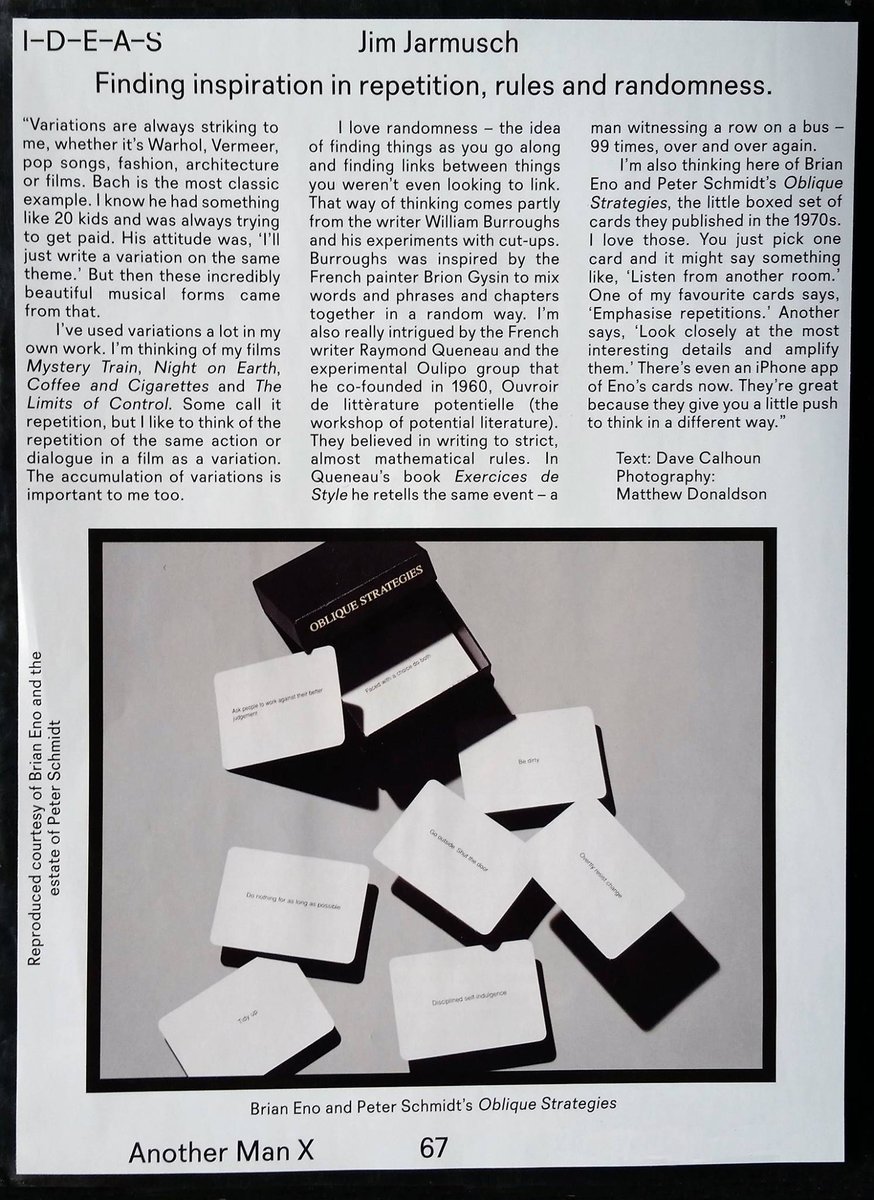
The Bri­an Eno archive More Dark than Shark recent­ly post­ed on its Twit­ter account a list of twelve rules for stu­dents and teach­ers used by John Cage. Though much has been writ­ten about the artis­tic affini­ties between Eno and Cage, both of whose com­po­si­tions have pushed the bound­aries of how we think about music itself, they also both have a deep con­nec­tion to the idea of using rules to enhance the expe­ri­ence of cre­ation. Where Eno has his deck of cre­ative process-enhanc­ing Oblique Strate­gies cards, Cage had this list of rules first com­posed by an edu­ca­tor, silkscreen artist, and nun named Sis­ter Cori­ta Kent.

Kent came up with the list, writes Brain­pick­ings’ Maria Popo­va, “as part of a project for a class she taught in 1967–1968. It was sub­se­quent­ly appro­pri­at­ed as the offi­cial art depart­ment rules at the col­lege of LA’s Immac­u­late Heart Con­vent, her alma mater, but was com­mon­ly pop­u­lar­ized by Cage, whom the tenth rule cites direct­ly.”

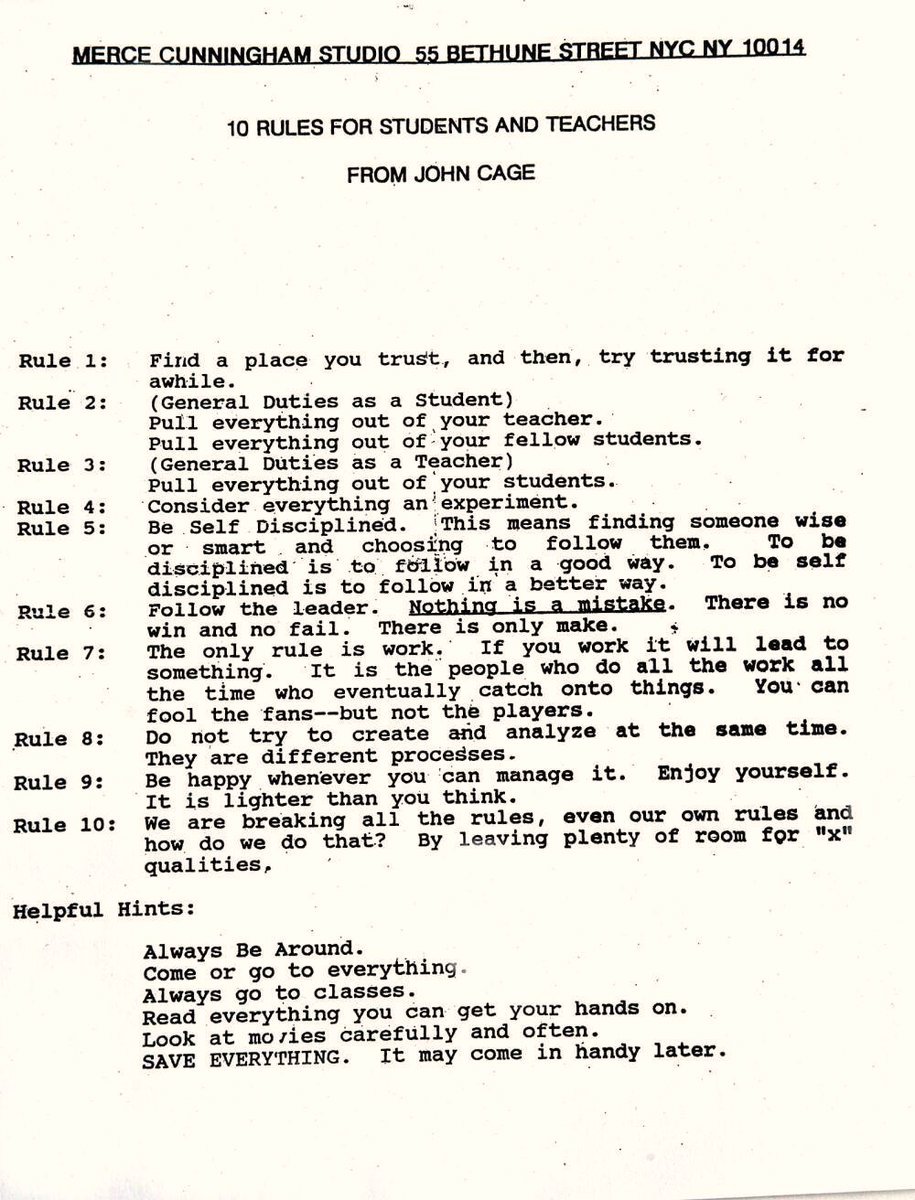
That tenth rule, more of a meta-rule, reminds the read­er that “we’re break­ing all the rules” by “leav­ing plen­ty of room for X quan­ti­ties.” But one can eas­i­ly imag­ine how the pre­vi­ous nine, hav­ing as much to do with the enjoy­ment of the work of learn­ing, teach­ing, and cre­at­ing as with its rig­or­ous per­for­mance, might appeal to Cage as well. The com­plete list runs as fol­lows:

RULE ONE: Find a place you trust, and then try trust­ing it for a while.

RULE TWO: Gen­er­al duties of a stu­dent: Pull every­thing out of your teacher; pull every­thing out of your fel­low stu­dents.

RULE THREE: Gen­er­al duties of a teacher: Pull every­thing out of your stu­dents.

RULE FOUR: Con­sid­er every­thing an exper­i­ment.

RULE FIVE: Be self-dis­ci­plined: this means find­ing some­one wise or smart and choos­ing to fol­low them. To be dis­ci­plined is to fol­low in a good way. To be self-dis­ci­plined is to fol­low in a bet­ter way.

RULE SIX: Noth­ing is a mis­take. There’s no win and no fail, there’s only make.

RULE SEVEN: The only rule is work. If you work it will lead to some­thing. It’s the peo­ple who do all of the work all of the time who even­tu­al­ly catch on to things.

RULE EIGHT: Don’t try to cre­ate and ana­lyze at the same time. They’re dif­fer­ent process­es.

RULE NINE: Be hap­py when­ev­er you can man­age it. Enjoy your­self. It’s lighter than you think.

RULE TEN: We’re break­ing all the rules. Even our own rules. And how do we do that? By leav­ing plen­ty of room for X quan­ti­ties.

HINTS: Always be around. Come or go to every­thing. Always go to class­es. Read any­thing you can get your hands on. Look at movies care­ful­ly, often. Save every­thing. It might come in handy lat­er.

Some of the rules on Ken­t’s list, which has now exert­ed its influ­ence for half a cen­tu­ry, sound faint­ly like the Oblique Strate­gies Eno and the painter Peter Schmidt would come up with in the 1970s. Take rule num­ber six, “Noth­ing is a mis­take,” which brings to mind the Oblique Strat­e­gy “Hon­or thy error as a hid­den inten­tion.” But we’re all on the same field when it comes to tech­niques to move our minds in worth­while new direc­tions, as Cage, Kent, Eno, Schmidt, and most oth­er seri­ous stu­dents, teach­ers, and cre­ators might agree. They’d cer­tain­ly agree that, all rules aside, every­thing ulti­mate­ly comes down to doing the work itself, day in and day out. “Craft,” as Eno once said,” is what enables you to be suc­cess­ful when you’re not inspired.”

Relat­ed Con­tent:

An Impres­sive Audio Archive of John Cage Lec­tures & Inter­views: Hear Record­ings from 1963–1991

How to Get Start­ed: John Cage’s Approach to Start­ing the Dif­fi­cult Cre­ative Process

Lis­ten to John Cage’s 5 Hour Art Piece: Diary: How To Improve The World (You Will Only Make Mat­ters Worse)

Nota­tions: John Cage Pub­lish­es a Book of Graph­ic Musi­cal Scores, Fea­tur­ing Visu­al­iza­tions of Works by Leonard Bern­stein, Igor Stravin­sky, The Bea­t­les & More (1969)

Jump Start Your Cre­ative Process with Bri­an Eno’s “Oblique Strate­gies” Deck of Cards (1975)

Based in Seoul, Col­in Mar­shall writes and broad­casts on cities and cul­ture. His projects include the book The State­less City: a Walk through 21st-Cen­tu­ry Los Ange­les and the video series The City in Cin­e­ma. Fol­low him on Twit­ter at @colinmarshall or on Face­book.

Behold the Art-o-Mat: Vintage Cigarette Vending Machines Get Repurposed & Dispense Works of Art

It’s a well known fact that any­one who’s quit­ting smok­ing will need to find some­thing to occu­py their hands.

Many experts sug­gest hold­ing a pen­cil or anoth­er vague­ly-cig­a­rette-shaped object.

Oth­ers pre­scribe busy work—cracking nuts and peel­ing oranges.

Hard­core cas­es are advised to keep those paws busy with a hob­by such as paint­ing or wood­work­ing.

But from where we sit, the most spir­i­tu­al­ly reward­ing, sym­bol­ic activ­i­ty for some­one in this ten­der sit­u­a­tion would be cre­at­ing a tiny art­work pro­to­type to sell in an Art-o-Mat®, one of over 100 vin­tage cig­a­rette vend­ing machines specif­i­cal­ly repur­posed to dis­pense art.

Locat­ed pri­mar­i­ly in the US, the machines are the brain­child of artist Clark Whit­ting­ton, who loaded the first one with black & white, block-mount­ed pho­tos for a 1997 solo show in a Win­ston-Salem cafe.

These days, there are a hun­dred or so Art-o-Mats, stocked with the work of artists both pro­fes­sion­al and ama­teur, who have suc­cess­ful­ly nav­i­gat­ed the sub­mis­sion process.

A vari­ety of medi­ums is represented—painting, sculp­ture, fine art prints, jew­el­ry, assem­blages, cut paper, and tiny bound books.

Wor­thing­ton encour­ages would-be par­tic­i­pants to avoid the ease of mass pro­duc­tion in favor of unique items that bear evi­dence of the human hand:

The vend­ing process is only the begin­ning of your Art-o-Mat® art. Once pur­chased and two steps away from the machine, your work is sole­ly a reflec­tion of you and your art. Many pieces have been car­ried around the globe. So, think of approach­es that do not con­vey “a Sun­day after­noon at the copy shop” and con­sid­er ways that your art will be appre­ci­at­ed for years to come.

The guide­lines are under­stand­ably strict with regard to dimen­sions. Wouldn’t want to kill the blind box thrill by jam­ming a vin­tage vend­ing machine’s inner work­ings.

Edi­bles, mag­nets, bal­loons, glit­ter, con­fet­ti, and any­thing processed along­side peanuts are ver­boten mate­ri­als.

A cer­tain pop­u­lar decoupage medi­um is anoth­er no-no, as it adheres to the man­dat­ed pro­tec­tive wrap.

And just as cig­a­rettes car­ry stern­ly word­ed warn­ings from the Sur­geon Gen­er­al, artists are advised to include a label if their sub­mis­sion could be con­sid­ered unsuit­able for under­age col­lec­tors.

If you need a hand to walk you through the process, have a look at crafter Shan­non Greene’s video, above.

Greene became enthralled with the Art-o-Mat expe­ri­ence on a heav­i­ly doc­u­ment­ed trip to Las Vegas, when she put $5 in the Cos­mopoli­tan Hotel’s machine, and received a box of string and paint­ed can­vas scrap book­marks cre­at­ed by Kelsey Huck­a­by.

(Wit­ness artist Huck­a­by treat­ing her­self to one of her own cre­ations from an Austin, Texas Art-o-Mat on her birth­day, below, to see a machine in action. Par­tic­u­lar­ly rec­om­mend­ed for those who came of age after these once-stan­dard fix­tures were banned from the lob­bies of bars and din­ers.)

Oth­er repur­posed machines in the Art-o-Mat sta­ble include the zip­py red num­ber in Ocala, Florida’s Apple­ton Muse­um of Art, a cool blue cus­tomer resid­ing in Stan­ford University’s Lan­tana House, and a 6‑knob mod­el that peri­od­i­cal­ly pops up in var­i­ous arts-friend­ly New York City venues.

As the jol­ly and self-dep­re­cat­ing crafter Greene observes, at $5 a “yank,” no one is get­ting rich off this project, though the artists get 50% of the pro­ceeds.

It’s also worth not­ing that these orig­i­nal art­works cost less than a pack of cig­a­rettes in all but six states.

We agree with Greene that the expe­ri­ence more than jus­ti­fies the price. What­ev­er art one winds up with is but added val­ue.

Greene does not regret the con­sid­er­able labor that went into the 100 tiny jour­nals cov­ered in retired bill­board vinyl she was required to crank out after her pro­to­types were green­lit.

To deter­mine whether or not you’re pre­pared to do the time, have a peek at Katharine Miele’s labor-inten­sive process, below. Even though the artist’s con­tact infor­ma­tion is includ­ed along with every Art-o-Mat sur­prise, there’s no guar­an­tee that she’ll hear back from any­one who wound up with one of the geo­met­ric chair linocuts she spent a week mak­ing.

Oth­er Art-o-Mat artists, like Susan Rossiter, have fig­ured out how to play by the rules while also real­iz­ing a bit of return beyond the Pip­pi Long­stock­ing-like sat­is­fac­tion of cre­at­ing a nifty expe­ri­ence for ran­dom strangers. The machines are stocked with orig­i­nals of her tiny mul­ti-media chick­en por­traits, and she sells prints on her web­site.

Or per­haps, you, like monony­mous physi­cist Colleen, find a med­i­ta­tive plea­sure in the act of cre­ation. To date, she’s paint­ed 1150 cig­a­rette-pack-sized blocks for inclu­sion in the machines.

Still game? Get start­ed with an Art-o-Mat pro­to­type kit for $19.99 here.

(As Greene joy­ful­ly points out, it comes with such good­ies as a lit­tle jour­nal, a pen­cil, and an offi­cial Art-o-Mat eras­er.)

Take inspi­ra­tion — or dream about what $5 might get you — in the collector’s show and tell, above.

Feel­ing flush and far from the near­est Art-o-Mat loca­tion?  Sup­port the project by drop­ping a Ben­jamin on an Art-o-Car­ton con­tain­ing 10 tiny art­works, cus­tom select­ed in response to a short, per­son­al­i­ty-based ques­tion­naire.

Relat­ed Con­tent:

A Vend­ing Machine Now Dis­trib­utes Free Short Sto­ries at Fran­cis Ford Coppola’s Café Zoetrope

Haru­ki Muraka­mi Nov­els Sold in Pol­ish Vend­ing Machines

Sup­port “Green Reads,” a Pro­gram That Finances Libraries by Dis­trib­ut­ing Used Books in Eco-Friend­ly Vend­ing Machines

Ayun Hal­l­i­day is an author, illus­tra­tor, the­ater mak­er and Chief Pri­ma­tol­o­gist of the East Vil­lage Inky zine. Fol­low her @AyunHalliday.

Eleven Rules for Writing from Eight Contemporary Playwrights 

Chances are most of us won’t be imme­di­ate­ly famil­iar with the eight most­ly British play­wrights reflect­ing on their process in the Nation­al The­atre’s video, above.

That’s a good thing.

It’s eas­i­er to choose which pieces of inspir­ing, occa­sion­al­ly con­flict­ing writ­ing advice to fol­low when the scale’s not weight­ed down by the thumb of celebri­ty.

(Though rest assured that there’s no short­age of peo­ple who do know their work, if the Nation­al The­ater is plac­ing them in the hot seat.)

It’s impos­si­ble to fol­low all of their sug­ges­tions on any giv­en project, so go with your gut.

Or try your hand at one that doesn’t come nat­u­ral­ly, espe­cial­ly if you’ve been feel­ing stuck.

These approach­es are equal­ly valid for those writ­ing fic­tion, and pos­si­bly even cer­tain types of poet­ry and song.

The Nation­al wins points for assem­bling a diverse group—there are four women and four men, three of whom are peo­ple of col­or.

With­in this crew, it’s the women who over­whelm­ing­ly bring up the notions of per­mis­sion and per­fec­tion, as in it’s okay to let your first draft be absolute­ly dread­ful.

Most of the males are prone to plot­ting things out in advance.

And no one seems entire­ly at home marooned against a seam­less white back­ground on a plain wood­en stool.

Jew­ish iden­ti­ty, school shoot­ings, immi­gra­tion, race, cli­mate change, and homo­pho­bia are just some of the top­ics they have con­sid­ered in their plays.

Some have worked in film and TV, adapt­ed the clas­sics, or writ­ten for young audi­ences.

They have won pres­ti­gious awards, seen their plays staged ‘round the globe, and had suc­cess with oth­er artis­tic pur­suits, includ­ing poet­ry, per­for­mance, and dance.

Clear­ly, you’ll find some great advice below, though it’s not a one-size-fits-all propo­si­tion. Let us know in the com­ments which rules you per­son­al­ly con­sid­er worth fol­low­ing.

Eleven Rules for Writ­ing from Eight Con­tem­po­rary Play­wrights

1. Start

or

2. Don’t start. Let your idea mar­i­nate for a min­i­mum of six months, then start.

3.. Have some sort of out­line or plan before you start

4. Do some research

5. Don’t be judg­men­tal of your writ­ing while you’re writ­ing

6. Embrace the ter­ri­ble first draft 

7. Don’t show any­one your first draft, unless you want to.

8. Know how it’s going to end

or

9. Don’t know how it’s going end

10. Work with oth­ers

11. Print it, and read it like some­one expe­ri­enc­ing it for the first time. No edit­ing aloud. Get that pen out of your hand.

And now, it’s time to dis­cov­er the work of the par­tic­i­pat­ing play­wrights. Go see a show, or at least read about one in the links:

In-Sook Chap­pell

Ryan Craig

Suhay­la El-Bushra

Inua Ellams

Lucy Kirk­wood

Evan Placey

Tanya Ron­der

Simon Stephens

The Nation­al The­atre has sev­er­al fas­ci­nat­ing playlists devot­ed to play­writ­ing. Find them here.

Relat­ed Con­tent:

An Ani­mat­ed Intro­duc­tion to Samuel Beck­ett, Absur­dist Play­wright, Nov­el­ist & Poet

How the Russ­ian The­atre Direc­tor Con­stan­tin Stanislavs­ki Rev­o­lu­tion­ized the Craft of Act­ing: A New Video Essay

Ayun Hal­l­i­day is an author, illus­tra­tor, the­ater mak­er and Chief Pri­ma­tol­o­gist of the East Vil­lage Inky zine.  Join her in NYC on Wednes­day, May 16 for anoth­er month­ly install­ment of her book-based vari­ety show, Necro­mancers of the Pub­lic Domain. Fol­low her @AyunHalliday.

Malcolm Gladwell Explains Where His Ideas Come From

For many read­ers out there, the pub­li­ca­tion of a new Mal­colm Glad­well arti­cle ranks as an event demand­ing imme­di­ate atten­tion. They’ll read what­ev­er he writes, not just because they enjoy his style but because they trust his instinct for find­ing fas­ci­nat­ing sub­jects, from cof­fee to health care, col­lege rank­ings to dog train­ing, shop­ping malls to school shoot­ings. How did he devel­op that instinct? He reveals aspects of his idea-gen­er­at­ing process in the sev­en­teen-minute inter­view with New York­er edi­tor David Rem­nick just above. It turns out that, just as with most of us — or as it would ide­al­ly go with most of us — Glad­well’s ideas sprout organ­i­cal­ly from his strengths.

But those strengths, in turn, sprout organ­i­cal­ly from his weak­ness­es. An ear­ly New York­er assign­ment, hand­ed down by then-edi­tor Tina Brown, had Glad­well cov­er­ing the 1989 attack on the woman referred to, at the time, as the Cen­tral Park Jog­ger. Instead of doing the kind of pro­longed, emo­tion­al inter­views many reporters would have done with the vic­tim’s friends and fam­i­ly, he instead con­tact­ed the sur­geon who oper­at­ed on her, end­ing up with a piece on “prac­tice vari­a­tion in med­i­cine,” the phe­nom­e­non where­by dif­fer­ent med­ical prac­ti­tion­ers in dif­fer­ent regions of the coun­try end up going about their job in per­sis­tent­ly dif­fer­ent ways. “They can’t seem to get every­one on the same page,” as Glad­well frames the prob­lem.


The inter­sec­tion of the New York­er’s tra­di­tion of and expec­ta­tion for long-form pieces with his own inabil­i­ty to per­form tra­di­tion­al reportage gave Glad­well a sense of where he should look for promis­ing leads. Reject­ing char­ac­ter as a hook, he instead goes look­ing for intrigu­ing the­o­ries, oper­at­ing on the con­cep­tion of most writ­ers as “expe­ri­ence-rich and the­o­ry-poor.” Instead of sim­ply report­ing on the lat­est school shoot­ing, for instance, he wrote about a Stan­ford soci­ol­o­gist’s the­o­ry of riots that he could apply to the phe­nom­e­non of school shoot­ings them­selves. His next book, about which he reveals a thing or two in this inter­view, deals in part with a dif­fer­ent kind of shoot­ing: that com­mit­ted by police.

“I have the advan­tage of com­ing to it late,” Glad­well says to Rem­nick, explain­ing how his per­spec­tive and thus his writ­ing on the sub­ject might dif­fer from those of oth­ers. That sim­ple state­ment may hold the key to Glad­well’s vault of ideas: with no oblig­a­tion to give a run­down of the facts as they emerge, he can step back for a moment (be it a few months or a few decades) and get a sense of which sto­ries will ulti­mate­ly take the right shape to con­nect to the many broad, intrigu­ing ideas, in the form of aca­d­e­m­ic the­o­ry or oth­er­wise, with which he’s already famil­iar­ized him­self. As much as Glad­well seems like a writer of the moment (and here he describes his “ur-read­er” as a fortysome­thing Trad­er Joe’s exec­u­tive who only has time for three books a year, plus pod­casts), he gets a fair bit of mileage out of one of the most old-fash­ioned assets of them all: a well-stocked mind.

Relat­ed Con­tent:

The Case for Writ­ing in Cof­fee Shops: Why Mal­colm Glad­well Does It, and You Should Too

Mal­colm Glad­well to Teach His First Online Course: A Mas­ter Class on How to Turn Big Ideas into Pow­er­ful Sto­ries

Where Do Ideas Come From? David Lynch, Robert Krul­wich, Susan Orlean, Chuck Close & Oth­ers Reveal Their Cre­ative Sources

John Cleese on the Ori­gin of Cre­ativ­i­ty

Kurt Von­negut: Where Do I Get My Ideas From? My Dis­gust with Civ­i­liza­tion

Based in Seoul, Col­in Mar­shall writes and broad­casts on cities and cul­ture. His projects include the book The State­less City: a Walk through 21st-Cen­tu­ry Los Ange­les and the video series The City in Cin­e­ma. Fol­low him on Twit­ter at @colinmarshall or on Face­book.

Elton John Proves He Can Turn any Text into a Song: Watch Him Improvise with Lines from Henrik Ibsen’s Play, Peer Gynt

I’m not a lyric writer. I get all my inspi­ra­tion from look­ing at the writ­ten page. — Elton John

Inspi­ra­tion is one thing. Act­ing on it is anoth­er. Sir Elton’s out­put seems to go beyond his mag­i­cal com­bi­na­tion of tal­ent, work eth­ic, and train­ing. He claims to have tak­en all of 30 min­utes to com­plete “Your Song.” In his 2005 appear­ance on Inside the Actor’s Stu­dio, excerpt­ed above, he passed his genius off as some­thing akin to a par­ty trick, call­ing on the audi­ence to pass up a book—any book—as source mate­r­i­al for an ins­ta-song.

Giv­en the num­ber of stu­dent actors in the audi­ence, it’s real­ly not so sur­pris­ing that the first vol­ume to hit the stage was Hen­rik Ibsen’s 1867 verse play Peer Gynt.

Magi­cians height­en the dra­ma by demand­ing absolute silence pri­or to a dif­fi­cult trick.

John swings the oth­er way. The result­ing impro­vised tune is all the more impres­sive for his off the cuff, raunchy text-based pat­ter. It’s hard to imag­ine Ibsen play­ing so fast and loose with lines like:

Every­thing spites me with a vengeance

Sky and water and those wicked moun­tains

Fog pour­ing out of the sky to con­found him

The water hurl­ing in to drown him

The moun­tains point­ing their rocks to fall-

And those peo­ple, all of them out for the kill!

Oh no, not to die!

I mustn’t lose him. The lout!

Why’s the dev­il have to tease him?

What might Metal­li­ca or Iron Maid­en have con­jured from such mate­r­i­al? In John’s hands, it becomes a lush, emo­tion­al­ly charged bal­lad, the moun­tains and fog apt metaphors.

In his book Inside Inside, host James Lip­ton names this as one of “the two most astound­ing impro­vi­sa­tions in the his­to­ry of Inside the Actors Stu­dio.” The oth­er was Robin Williams mak­ing mer­ry with a pink pash­mi­na shawl.

In a 2012 inter­view with NPR, John went into the nature of his col­lab­o­ra­tion with his long­time word man, Bernie Taupin. Unlike oth­er lyri­cists, Taupin does not think in terms of verse and cho­rus, leav­ing it to John to free the song from a wall of text:

It’s just a blank—well, not a blank, but it’s a piece of paper. In the old days, it was hand­writ­ten. Then it got typed. Then it got faxed. Now it gets emailed. And it’s no sug­ges­tions, noth­ing. And we’ve nev­er writ­ten in the same room. I don’t know if peo­ple know that. But he gives me the lyric, and I go away and write the song, and then come back and play it to him. And I’ve nev­er lost the enjoy­ment or the thrill of play­ing him the song that I’ve just writ­ten to his lyric.

If you’d like to fin­ish what John start­ed by fur­ther musi­cal­iz­ing Ibsen’s Peer Gynt, the com­plete script can be read here. Or lis­ten to the 1946 radio adap­ta­tion star­ring Ralph Richard­son as Peer Gynt and Lau­rence Olivi­er as the Troll King and a but­ton-moul­der, below. Also above, you can watch John turn instruc­tions for using an oven (yes, that dai­ly appli­ance) into song.

via metafil­ter

Relat­ed Con­tent:

Elton John Sings His Clas­sic Hit ‘Your Song’ Through the Years

Tom Pet­ty Takes You Inside His Song­writ­ing Craft

Enjoy a Blue­grass Per­for­mance of Elton John’s 1972 Hit, “Rock­et Man”

Ayun Hal­l­i­day is an author, illus­tra­tor, the­ater mak­er and Chief Pri­ma­tol­o­gist of the East Vil­lage Inky zine.  Join her in NYC on March 20 for the sec­ond install­ment of Necro­mancers of the Pub­lic Domain at The Tank. Fol­low her @AyunHalliday.

Meet Mandy Harvey, the Deaf Singer Songwriter Who Performs Barefoot & Feels the Music Through Vibrations in the Ground

Attrac­tive young female singer-song­writ­ers who shuck their shoes onstage some­times find that this small attempt to pass them­selves off as folksy and “real” has the oppo­site effect.

Mandy Har­vey, how­ev­er, is above reproach. The deaf singer-song­writer per­forms bare­foot out of neces­si­ty, using her unclad soles to pick up on the vibra­tions of var­i­ous instru­ments through the floor­boards. It allows her to keep time and, in so doing, helps her to stay emo­tion­al­ly con­nect­ed to the oth­er musi­cians with whom she’s per­form­ing, as she told NPR ear­li­er this year, when she was one of 10 final­ists on Amer­i­ca’s Got Tal­ent.

“I’ll feel and con­cen­trate on the drums through the floor, through my feet and then the bass through your chest,” she said in an inter­view with Col­orado Pub­lic Radio. “And then if a sax­o­phone play­er is next to me then it will be on my arm. So you just des­ig­nate dif­fer­ent parts of your body so you can con­cen­trate on who’s play­ing what and when.”

Born with near per­fect pitch and a con­nec­tive tis­sue dis­or­der that impaired her hear­ing, she was able to pur­sue her love of music by rely­ing on hear­ing aids and lip read­ing until 18, when she final­ly lost her hear­ing for good, as a fresh­man Vocal Music Edu­ca­tion major at Col­orado State Uni­ver­si­ty.

While she has nev­er heard fel­low song­birds Adele or Tay­lor Swift, she has got­ten over the stage fright that plagued her when she still retained some hear­ing. Vocal­ly, she turns to mus­cle mem­o­ry and visu­al tuners to see her through.

Her tal­ent is such that some lis­ten­ers are con­vinced her deaf­ness is a pub­lic­i­ty stunt, a mis­per­cep­tion that eats at Wayne Con­nell, founder of the Invis­i­ble Dis­abil­i­ties Asso­ci­a­tion, a non-prof­it with whom Har­vey is active:

We’ve cre­at­ed an idea [of] how peo­ple are sup­posed to look when they’re bro­ken and so when you don’t fit that imag­i­nary mold, then it’s a trick, or you’re a liar — or you’re not real­ly bro­ken, so you should­n’t be doing cer­tain things.

See Har­vey per­form­ing bare­foot at the Kennedy Cen­ter on the 23rd anniver­sary of the Amer­i­cans with Dis­abil­i­ties Act, below.

Relat­ed Con­tent:

Eve­lyn Glen­nie (a Musi­cian Who Hap­pens to Be Deaf) Shows How We Can Lis­ten to Music with Our Entire Bod­ies

How Inge­nious Sign Lan­guage Inter­preters Are Bring­ing Music to Life for the Deaf: Visu­al­iz­ing the Sound of Rhythm, Har­mo­ny & Melody

How Did Beethoven Com­pose His 9th Sym­pho­ny After He Went Com­plete­ly Deaf?

Ayun Hal­l­i­day is an author, illus­tra­tor, the­ater mak­er and Chief Pri­ma­tol­o­gist of the East Vil­lage Inky zine.  Fol­low her @AyunHalliday.

The “Humans of New York” Photo Project Becomes a 13-Part Video Documentary Series: Watch It Free Online


New York, New York—there are many ways of assess­ing whether or not you’ve “made” it here—these days it includes an appear­ance on pho­tog­ra­ph­er Bran­don Stan­ton’s wild­ly pop­u­lar blog, Humans of New York, in which a spon­ta­neous street por­trait is anchored by a per­son­al quote or longer anec­dote.

Fol­low­ing sev­er­al books and a UN-spon­sored world tour to doc­u­ment humans in over twen­ty coun­tries, the project has mor­phed into a 13-episode docu-series as part of Facebook’s orig­i­nal video con­tent plat­form.

Aid­ed by cin­e­matog­ra­ph­er Michael Crom­mett, Stan­ton elic­its his cus­tom­ary blend of uni­ver­sal and spe­cif­ic truths from his inter­view sub­jects. Extend­ing the moment into the video realm affords view­ers a larg­er win­dow onto the com­plex­i­ties of each human’s sit­u­a­tion.

Take episode four, “Rela­tion­ships,” above:

An ample, unadorned woman in late-mid­dle age recalls being swept off her feet by a pas­sion that still burns bright…

An NYU grad stares uncom­fort­ably in her pur­ple cap and gown as her divorced par­ents air var­i­ous regrets…

A cou­ple with mis­matched views on mar­riage are upstaged by a spon­ta­neous pro­pos­al unfold­ing a few feet away…

La Vie en Rose holds deep mean­ing for two cou­ples, despite rad­i­cal­ly dif­fer­ent loca­tions, pre­sen­ta­tions, and ori­en­ta­tions.

A lit­tle girl has no prob­lem call­ing the shots around her spe­cial fel­la…

I love you, New York!!!

Oth­er themes include Mon­ey, Time, Pur­pose, and Par­ent­ing.

One of the great plea­sures of both series and blog is Stanton’s open-mind­ed­ness as to what con­sti­tutes New York and New York­ers.

Some inter­views take place near such tourist-friend­ly locales as Bethes­da Foun­tain and the Wash­ing­ton Square Arch, but just as many tran­spire along­side notice­ably Out­er Bor­ough archi­tec­ture or the blast­ed cement heaths apron­ing its less sought after pub­lic schools.

Those who live here will nod with recog­ni­tion at the cher­ry blos­som self­ies, “show­time” in the sub­way, and the Bush­wick vibe of the groom who pro­posed to his bride at Coney Island, under the Nathan’s Famous Hot Dog Eat­ing Con­test Wall of Fame.

Dit­to the appear­ance of such local celebri­ties as Jim­my Webb, emer­i­tus man­ag­er of the punk bou­tique, Trash and Vaude­ville and Black­wolf the Drag­on­mas­ter, the city’s unof­fi­cial wiz­ard.

Below, Stan­ton explains his goal when con­duct­ing inter­views and demon­strates how a non-threat­en­ing approach can soft­en strangers to the point of can­dor.

It’s well know ’round these parts that cer­tain seg­ments of the local pop­u­lace would gnaw off limbs to be immor­tal­ized by Stan­ton, but he cleaves to the pure serendip­i­ty of his selec­tion process. Ask­ing to have your pic­ture tak­en ensures that it won’t be. Luck puts you in front of his lens. Shar­ing your truth is what makes you human.

Watch Humans of New York: The Series here.

Relat­ed Con­tent:

Humans of New York: Street Pho­tog­ra­phy as a Cel­e­bra­tion of Life

Inter­act with The New York Times Four-Part Doc­u­men­tary, “A Short His­to­ry of the High­rise”

New York City: A Social His­to­ry (A Free Online Course from N.Y.U.) 

Ayun Hal­l­i­day is an author, illus­tra­tor, the­ater mak­er and Chief Pri­ma­tol­o­gist of the East Vil­lage Inky zine.  Fol­low her @AyunHalliday.

Watch “Alike,” a Poignant Short Animated Film About the Enduring Conflict Between Creativity and Conformity

From Barcelona comes “Alike,” a short ani­mat­ed film by Daniel Martínez Lara and Rafa Cano Mén­dez. Made with Blender, an open-source 3D ren­der­ing pro­gram, “Alike” has won a heap of awards and clocked an impres­sive 10 mil­lion views on Youtube and Vimeo. A labor of love made over four years, the film revolves around this ques­tion: “In a busy life, Copi is a father who tries to teach the right way to his son, Paste. But … What is the cor­rect path?” To find the answer, they have to let a dra­ma play out. Which will pre­vail? Cre­ativ­i­ty? Or con­for­mi­ty? It’s an inter­nal con­flict we’re all famil­iar with. 

Watch the film when you’re not in a rush, when you have sev­en unbur­dened min­utes to take it in. “Alike” will be added to our list of Free Ani­ma­tions, a sub­set of our col­lec­tion, 4,000+ Free Movies Online: Great Clas­sics, Indies, Noir, West­erns, Doc­u­men­taries & More.

If you would like to sign up for Open Culture’s free email newslet­ter, please find it here. It’s a great way to see our new posts, all bun­dled in one email, each day.

If you would like to sup­port the mis­sion of Open Cul­ture, con­sid­er mak­ing a dona­tion to our site. It’s hard to rely 100% on ads, and your con­tri­bu­tions will help us con­tin­ue pro­vid­ing the best free cul­tur­al and edu­ca­tion­al mate­ri­als to learn­ers every­where. You can con­tribute through Pay­Pal, Patre­on, and Ven­mo (@openculture). Thanks!

via Design Taxi

Relat­ed Con­tent:

The Employ­ment: A Prize-Win­ning Ani­ma­tion About Why We’re So Dis­en­chant­ed with Work Today

Bertrand Rus­sell & Buck­min­ster Fuller on Why We Should Work Less, and Live & Learn More

Charles Bukows­ki Rails Against 9‑to‑5 Jobs in a Bru­tal­ly Hon­est Let­ter (1986)

William Faulkn­er Resigns From His Post Office Job With a Spec­tac­u­lar Let­ter (1924)

« Go BackMore in this category... »
Quantcast