How Famous Writers Deal With Writer’s Block: Their Tips & Tricks

Near­ly everyone—from the most min­i­mal­ly edu­cat­ed to the most aca­d­e­m­i­cal­ly accomplished—has expe­ri­enced at least once that pan­icked loss for words col­lo­qui­al­ly known as “writer’s block.” Faced with the glacial expanse of a blank page, or screen, the fin­gers fum­ble, heart races, and the brain seizes up. And, for those who write for a liv­ing, for whom writ­ing is a defin­ing char­ac­ter­is­tic of their very exis­tence, it can seem like one’s very soul becomes imper­iled, aban­doned by the mus­es or what­ev­er fick­le per­son­i­fi­ca­tion of cre­ative inspi­ra­tion.

The mal­a­dy is seem­ing­ly uni­ver­sal, even, writes The Inde­pen­dent, among “some of history’s most famous, and prodi­gious­ly flu­ent, authors,” like Leo Tol­stoy, Vir­ginia Woolf, Ernest Hem­ing­way, and Joseph Con­rad. One par­tic­u­lar­ly per­fec­tion­is­tic strain of writer’s block—the search for le mot juste—is for­ev­er asso­ci­at­ed with Madame Bovary author Gus­tave Flaubert, who described the sick­ness to a friend as “stay[ing] a whole day with your head in your hands, try­ing to squeeze your unfor­tu­nate brain so as to find a word.” Clear­ly, such illus­tri­ous names as the above found some sort of cure for the block, or we may not know their names at all.

Some writ­ers deny the very exis­tence of writer’s block. Nov­el­ist Kathy Lette belit­tles the notion as sound­ing like a “prison wing for authors who make too many puns—a puni­ten­tiary,” and she claims that “women writ­ers don’t have time for writer’s block.” Jef­frey Archer says he has nev­er had writer’s block, even though he named his Major­ca home “Writer’s Block.” I diag­nose these authors with a severe form of psy­cho­log­i­cal repres­sion, per­haps brought on by extreme and trau­mat­ic bouts of writer’s block.

From even a cur­so­ry sur­vey of those who open­ly admit to the pain of run­ning out of things to say from time to time, it seems there are as many ways to get going again as there are writ­ers. The Inde­pen­dent quotes nov­el­ists like Philip Hen­sh­er, who takes “the Tube to the end of the line,” then walks back into cen­tral London—a very geo­graph­i­cal­ly exclu­sive fix, to be sure. A Fla­vor­wire list brings us reme­dies from Maya Angelou, who would “write for two weeks ‘the cat sat on the mat, that is that, not a rat’” until the muse returned to save her from insan­i­ty. Neil Gaiman takes an entire­ly dif­fer­ent approach—he gets up and walks away to “do oth­er things.” Though it may seem in moments of severe writer’s block that noth­ing else could pos­si­bly mat­ter, his tac­tic—research sug­gests—may be just the thing to get the cre­ative uncon­scious going again.

Speak­ing of the uncon­scious, Anne Lam­ott rec­om­mends to her stu­dents that they com­mit to writ­ing three hun­dred words on how much they hate writ­ing, then “on bad days and weeks, let things go at that… Your uncon­scious can’t work when you are breath­ing down its neck. You’ll sit there going, ‘Are you done in there yet, are you done in there yet?’” Not help­ful. In the videos above, see how pop­u­lar best-sell­ing nov­el­ist Dan Brown deals with a lag­gard­ly uncon­scious. Love, hate, or be indif­fer­ent to his work, but you must admit, his is a very nov­el method: Every hour, Brown gets up and does some pushups and sit-ups to “get the blood mov­ing,” since it’s very hard to write the kind of “fast-paced plots” he does “if your blood pressure’s dropped too far.” Brown also gives his brain a dai­ly sup­ply of fresh blood by hang­ing upside down each day, either in grav­i­ty boots or, as The Tele­graph video direct­ly above details, an “inver­sion table.”

Strange, but no more so than many oth­er writ­ers’ rit­u­als. Lau­rence Sterne, the eigh­teenth cen­tu­ry author of Tris­tram Shandy, had what may be my favorite design for con­quer­ing writer’s block: he would shave his beard, change his shirt and coat, send for a “bet­ter wig,” put on a topaz ring, and dress “after his best fash­ion.” Mock if you must, but it seems to me that no method of com­bat­ing writer’s block is too out­landish for those whose lives and liveli­hoods depend upon turn­ing out the words. We may not always like what we write—some days we may pos­i­tive­ly hate it—but there may be no worse, more use­less, feel­ing for a writer than being unable to write any­thing at all.

If you have your own sug­ges­tions for get­ting over writer’s block, please let us know in the com­ments below. We’d love to try them out.

Relat­ed Con­tent:

Why You Do Your Best Think­ing In The Show­er: Cre­ativ­i­ty & the “Incu­ba­tion Peri­od”

Writ­ing Tips by Hen­ry Miller, Elmore Leonard, Mar­garet Atwood, Neil Gaiman & George Orwell

Ray Brad­bury Gives 12 Pieces of Writ­ing Advice to Young Authors (2001)

Sev­en Tips From Ernest Hem­ing­way on How to Write Fic­tion

Josh Jones is a writer and musi­cian based in Durham, NC. Fol­low him at @jdmagness

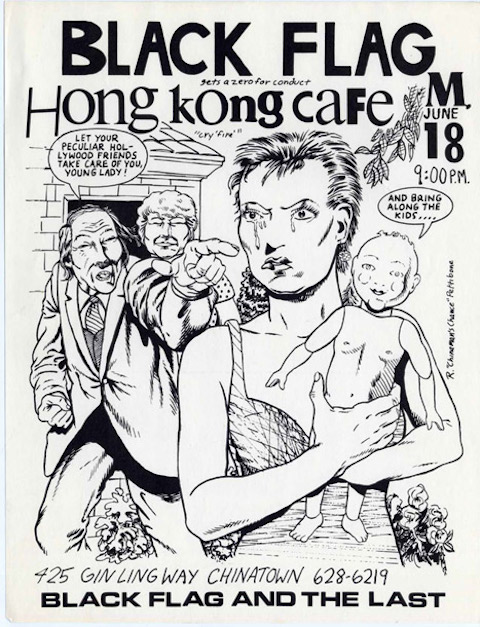
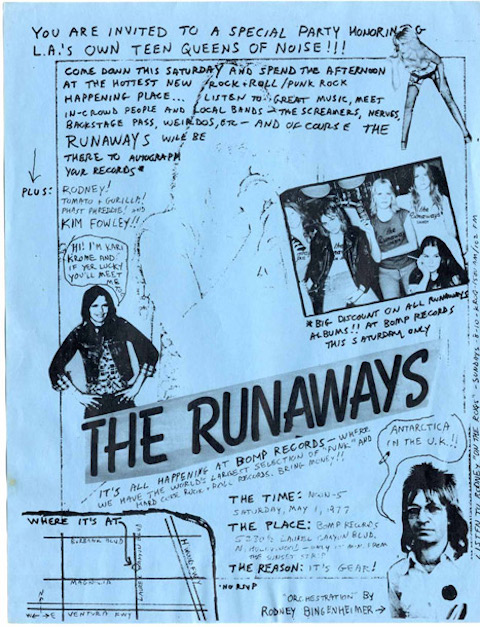
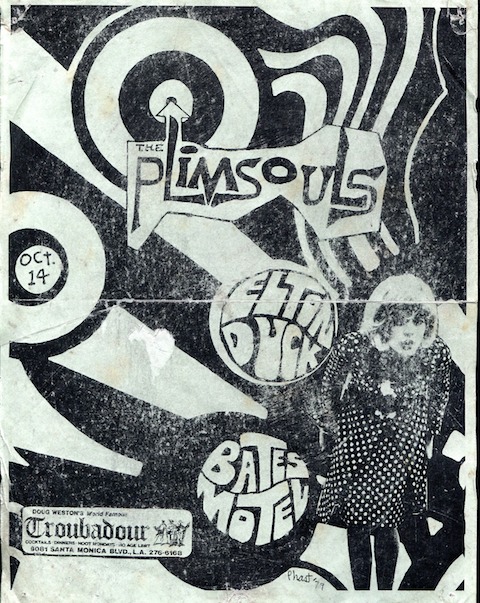
Posters Promoting the 1970s L.A. Punk Scene: Black Flag, The Plimsouls, The Runaways & More

blackflag4

Fred Pat­ter­son, aka Phast Phred­die, Senior Archivist of the ARChive of Con­tem­po­rary Music, DJ, music jour­nal­ist and for­mer punk rock zinester has unde­ni­able street cred.

He also has a hand­ful of fly­ers doc­u­ment­ing the late ‘70s LA punk scene.

Talk about ephemera!

Man, psy­che­del­ic con­cert posters of the peri­od were suit­able for fram­ing, and the util­i­tar­i­an box­ing style win­dow cards’ cool quo­tient ensured their longevi­ty. Ama­teur whip outs (such as those Pat­ter­son man­aged to pre­serve) rarely sur­vived beyond a sea­son or two on a fan’s fridge door.

runaways1

His rag­tag col­lec­tion is what self-pro­mo­tion looked like in the predig­i­tal age. The Plim­souls, the Run­aways, and Black Flag except­ing, few of these bands achieved the sort of sta­tus that would have allowed them to move away from the realm of the murky pho­to­copy.

The ama­teur­ish aes­thet­ic of these home­made efforts was anchored with a spiky humor that went nice­ly with the out­ra­geous band names. Sketchy loca­tions were her­ald­ed as the sorts of places where the pop­u­lar teen set gath­ered. Word bub­bles abound­ed.

plimsouls79

Cut and paste col­lage, Letraset, and scratchy hand let­ter­ing were the hall­mark of neces­si­ty. Nowa­days, these obso­lete ele­ments are co-opt­ed for their implied authen­tic­i­ty, even if the final prod­uct is like­ly assem­bled in Pho­to­shop.

See more of Phast Preddie’s col­lec­tion here.

Relat­ed Con­tent:

The Art of Punk, MOCA’s Series of Punk Doc­u­men­taries, Begins with Black Flag

CBGB’s: The Roots of Punk Lets You Watch Vin­tage Footage from the Hey­day of NYC’s Great Music Scene

Four Female Punk Bands That Changed Women’s Role in Rock

Ayun Hal­l­i­day is an author, home­school­er, and Chief Pri­ma­tol­o­gist of the East Vil­lage Inky zine. Fol­low her @AyunHalliday

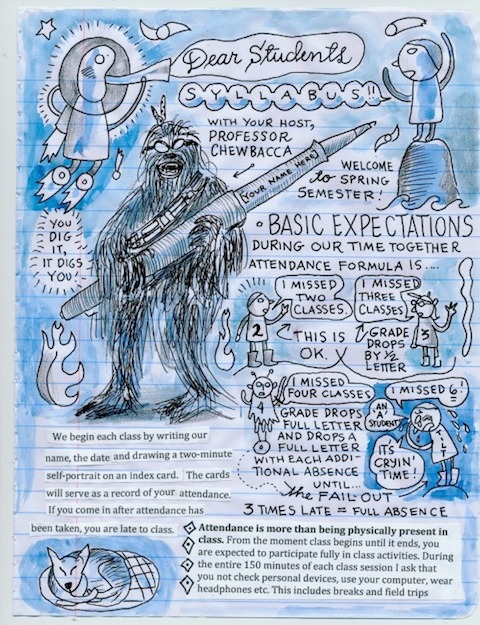
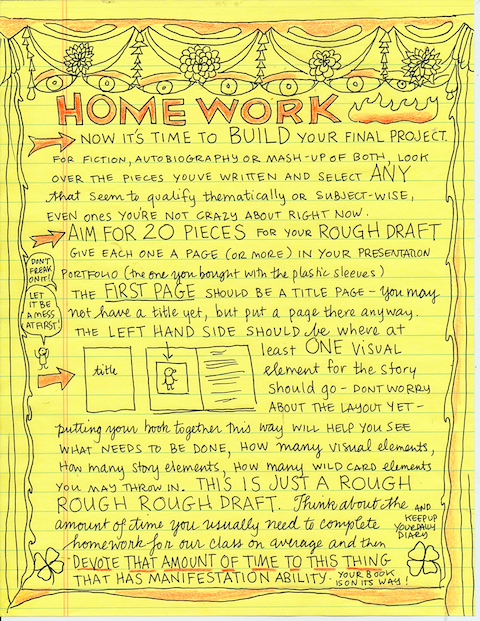
Lynda Barry’s Wonderfully Illustrated Syllabus & Homework Assignments from Her UW-Madison Class, “The Unthinkable Mind”

Lynda Barry Syllabus

Our rev­er­ence for car­toon­ist Lyn­da Bar­ry, aka Pro­fes­sor Chew­bac­ca, aka The Near Sight­ed Mon­key is no secret. We hope some­day to expe­ri­ence the plea­sure of her live teach­ings. ’Til then, we creep on her Tum­blr page, fol­low­ing with home­work assign­ments, writ­ing exer­cis­es and les­son plans intend­ed for stu­dents who take her class, “The Unthink­able Mind,” at the Uni­ver­si­ty of Wis­con­sin.

And now, those course mate­ri­als have been col­lect­ed as Syl­labus: Notes from an Acci­den­tal Pro­fes­sor, an old fash­ioned, tan­gi­ble book. It’s like a paper MOOC!

(Yes, we know, MOOCs are free. This will be too, if you add it to your hol­i­day wish list, or insist that your local library orders a copy.)

Barry 2

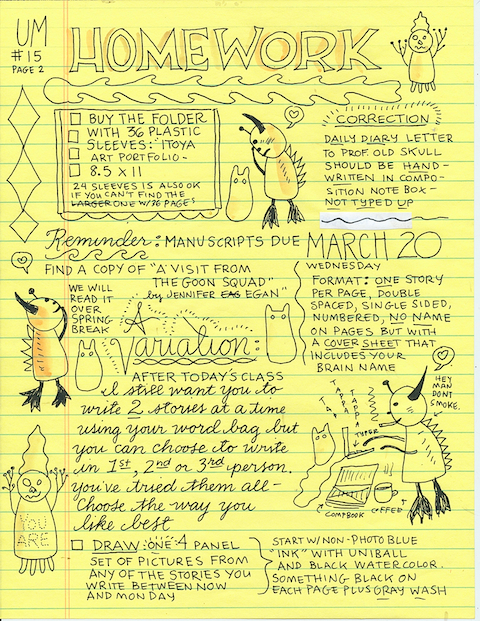
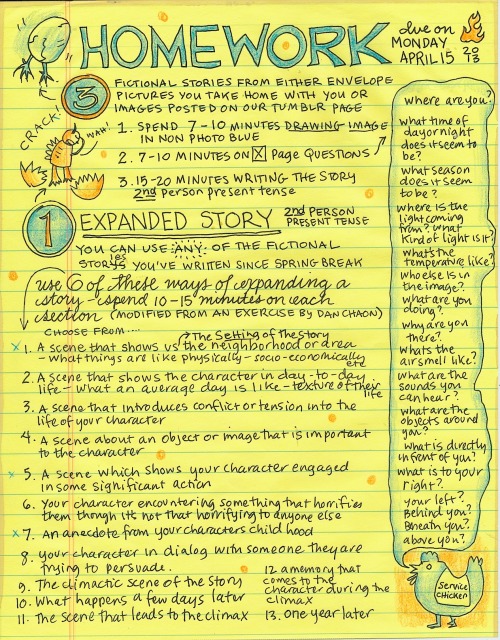
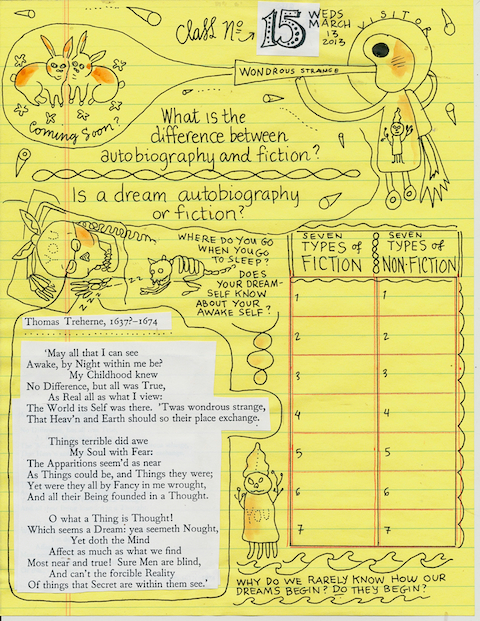
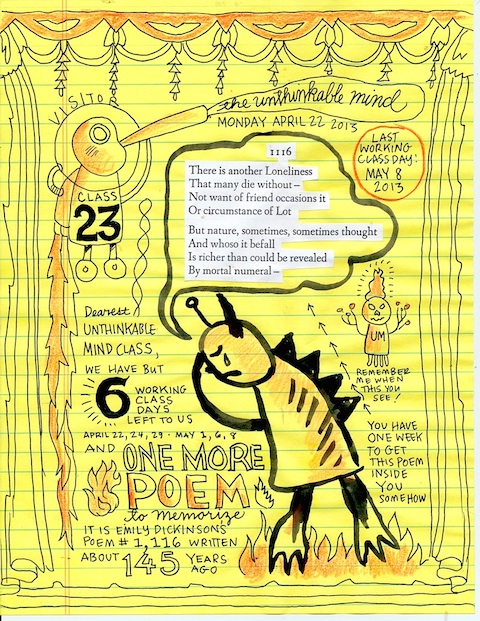
Barry’s march­ing orders are always to be exe­cut­ed on paper, even when they have been retrieved on smart­phones, tablets, and a vari­ety of oth­er screens. They are the antithe­sis of dry. A less acci­den­tal pro­fes­sor might have dis­pensed with the doo­dle encrust­ed, lined yel­low legal paper, after pri­vate­ly out­lin­ing her game plan. Barry’s choice to pre­serve and share the method behind her mad­ness is a gift to stu­dents, and to her­self.

barry homework

As Hillary L. Chute notes in Graph­ic Women: Life Nar­ra­tive and Con­tem­po­rary Comics:

 The decon­tex­tu­al­iza­tion of cheap, com­mon, or util­i­tar­i­an paper (which also harkens back to the his­tor­i­cal avant-garde) may be under­stood as a trans­val­u­a­tion of the idea of work­ing on “waste” –a know­ing, iron­ic acknowl­edg­ment on Barry’s part that her life nar­ra­tive, itself per­haps con­sid­ered insignif­i­cant, is visu­al­ized in an acces­si­ble pop­u­lar medi­um, comics, that is still large­ly viewed as “garbage.”

Work­ing on “garbage” must come as a relief for some­one like Bar­ry, who has talked about grow­ing up under a hos­tile moth­er who saw her daughter’s cre­ative impuls­es as a “waste” of paper:

I got screamed at a lot for using up paper. The only blank paper in the house was hers, and if she found out I touched it she’d go crazy. I some­times stole paper from school and even that made her mad. I think it’s why I hoard paper to this day. I have so much blank paper every­where, in every draw­er, on every shelf, and still when I need a sheet I look in the garbage first. I ago­nize over using a “good” sheet of paper for any­thing. I have good draw­ing paper I’ve been drag­ging around for twen­ty years because I’m not good enough to use it yet. Yes, I know this is insane.

Sam­ple assign­ments from “The Unthink­able Mind” are above and below, and you will find many more in Syl­labus: Notes from an Acci­den­tal Pro­fes­sor. Let us know if Pro­fes­sor Chew­bac­ca’s neu­ro­log­i­cal assump­tions are cor­rect. Does draw­ing and writ­ing by hand release the mon­sters from the id and squelch the inter­nal edi­tor who is the ene­my of art?

Barry 1

Barry 3

Barry 4

Relat­ed Con­tent:

Join Car­toon­ist Lyn­da Bar­ry for a Uni­ver­si­ty-Lev­el Course on Doo­dling and Neu­ro­science

Car­toon­ist Lyn­da Bar­ry Reveals the Best Way to Mem­o­rize Poet­ry

Lyn­da Bar­ry, Car­toon­ist Turned Pro­fes­sor, Gives Her Old Fash­ioned Take on the Future of Edu­ca­tion

1,700 Free Online Cours­es from Top Uni­ver­si­ties

Ayun Hal­l­i­day is an author, home­school­er, and Chief Pri­ma­tol­o­gist of the East Vil­lage Inky zine. Fol­low her @AyunHalliday

Turkish Musician Shows How to Play the Yaybahar, His Mesmerizing, Newly-Invented Instrument

Once upon a time, a hand­some man was trapped in a tow­er over­look­ing the sea. To amuse him­self, he built a mag­i­cal instru­ment. It was con­struct­ed of wood and met­al, but sound­ed like some­thing one might hear over loud­speak­ers at the Tate, or per­haps an avant-garde sound instal­la­tion in Bush­wick. The instru­ment was love­ly, but so cum­ber­some, it was impos­si­ble to imag­ine pack­ing it into a taxi. And so the man gigged alone in the tow­er over­look­ing the sea.

Wait. This is no fairy tale. The musi­cian, Görkem Şen, is real, as is his instru­ment, the Yay­ba­har. (Its name remains a mys­tery to your non-Turk­ish-speak­ing cor­re­spon­dent. Google Trans­late was no help. Per­haps Şen explains the name in the pat­ter pre­ced­ing his recent TEDxRe­set per­for­mance…music is the only uni­ver­sal here.)

The Yay­ba­har looks like min­i­mal­ist sculp­ture, or a piece of vin­tage play­ground equip­ment. It has fret­ted strings, coiled springs and drum skins. Şen plays it with a bow, or a wrapped mal­let, nim­bly switch­ing between spaced out explo­rations, folk music and Beethoven’s “Ode to Joy”.

After many years, a pass­ing prince or princess was bewitched by the beau­ti­ful music that reached his or her ears from the tow­er. He or she braved the bram­bles to free Şen and his instru­ment. 

It’s also pos­si­ble that Şen enlist­ed a cou­ple of pals to help him mus­cle the Yay­ba­har down the steps, cry­ing out when they bumped the pre­cious instru­ment into the walls, strug­gling to get a decent grip. No good deed goes unre­ward­ed.

At last, they left the con­fines of the tow­er. Görkem Şen lift­ed his face toward the Turk­ish sun­shine. The Yay­ba­har stood in the sand. A noble­woman whom an evil sor­cer­ess had turned into a dog hung out for a while before los­ing inter­est. The instru­ment rever­ber­at­ed as pas­sion­ate­ly as ever. The spell was both bro­ken and not.

You can hear more sound clips of Şen play­ing the Yay­ba­har below:

Relat­ed Con­tent:

Ayun Hal­l­i­day is an author, home­school­er, and Chief Pri­ma­tol­o­gist of the East Vil­lage Inky zine. Fol­low her @AyunHalliday

On the Importance of the Creative Brief: Frank Gehry, Maira Kalman & Others Explain its Essential Role

Every project starts with a brief. 

From the layman’s per­spec­tive, the project above starts with a bit of self-mythol­o­giz­ing.

Bas­sett & Part­ners, the “award-win­ning, dis­rup­tive brand and design strat­e­gy firm” and mak­er of the video above, seems not to sub­scribe to TED-Ed’s prac­tice of edu­cat­ing view­ers from the get-go.

A cou­ple of min­utes in, I hit pause in order to do a lit­tle research on the word “brief.”

I’m famil­iar with male under­pants (though tech­ni­cal­ly those are plur­al, even if the gar­ment is sin­gu­lar).

I have the aver­age movie­go­ers han­dle on the mean­ing of legal briefs.

And now I know what the not­ed archi­tects, illus­tra­tor, design­er, and ad execs are talk­ing about above! If only they’d referred to it as an ele­va­tor pitch, I’d have been on board from the start. Of course, why would they? Only those of us who want to sound all Hol­ly­wood call it that.

What­ev­er you call it, it’s a con­cise state­ment that gets right to the heart of what you—or your project—are about. No his­to­ry. No cam­paign plans or cita­tions. Just a whole lot of pas­sion and truth tight­ly packed into a small ves­sel.

Archi­tect David Rock­well defines a brief as a short-form com­mu­ni­ca­tion tool from a client.

Art Direc­tor John Jay says its pur­pose is to inspire the cre­atives…

…with­out (as per ad exec John Boil­er) dic­tat­ing cre­ative terms. Of all the inter­vie­wees, the truck­er hat­ted Boil­er exudes the schmoozi­est, most off-putting Hol­ly­wood vibe. I’d rather do lunch with Frank Gehry. Does this make me guilty of com­par­ing apples to oranges, when direc­tor (and “dis­rup­tive brand and design” strate­gist) Tom Bas­sett lev­eled the play­ing field by giv­ing them equal time?

Per­haps if Boil­er had hum­bled him­self by shar­ing an expe­ri­ence as heart­break­ing as Gehry’s ill-fat­ed Eisen­how­er Memo­r­i­al. (Skip ahead to the 16:16 mark if you want to hear how out­side opin­ion can pound con­text, research, poet­ry, and many months of thought­ful work to a heap of rub­ble.)

I love Maira Kalman, but remain unclear as to whether she’s field­ing or sub­mit­ting briefs. If the lat­ter, how do those dif­fer from book pro­pos­als?

What if the emo­tion, cre­ativ­i­ty, and enthu­si­as­tic research that went into Nike’s 1996 Olympics ads result­ed in an equal­ly fierce cam­paign to end hunger in a coun­try with no Olympic teams?

What if the clien­t’s prob­lem was can­cer? Could the brief demand a cure? That sounds sim­ple.

Let us acknowl­edge that most grand scale visions require a fleet of under­lings to come to fruition. I won­der what plumbers and elec­tri­cians would make of see­ing their con­tri­bu­tions described in such poet­ic terms.  Nev­er under­es­ti­mate the pow­er of a sound­track.

Relat­ed Con­tent:

David Byrne: How Archi­tec­ture Helped Music Evolve

Bauhaus, Mod­ernism & Oth­er Design Move­ments Explained by New Ani­mat­ed Video Series

Ayun Hal­l­i­day is an author, home­school­er, and Chief Pri­ma­tol­o­gist of the East Vil­lage Inky zine. Fol­low her @AyunHalliday


Isaac Asimov Explains the Origins of Good Ideas & Creativity in Never-Before-Published Essay

Rochester Insti­tute of Tech­nol­o­gy, via Wiki­me­dia Com­mons

Where do ideas come from? The ques­tion has always had the poten­tial to plague any­one try­ing to do any­thing worth­while at any time in human his­to­ry. But Isaac Asi­mov, the mas­sive­ly pro­lif­ic and even more mas­sive­ly influ­en­tial writer of sci­ence fic­tion and sci­ence fact, had an answer. He even, in one 1959 essay, laid out a method, though we, the gen­er­al pub­lic, haven’t had the chance to read it until now. The MIT Tech­nol­o­gy Review has just pub­lished his essay on cre­ativ­i­ty in full, while pro­vid­ing a few con­tex­tu­al­iz­ing remarks from the author’s friend Arthur Ober­may­er, a sci­en­tist who invit­ed Asi­mov on board an “out of the box” mis­sile-defense research project at an MIT spin­off called Allied Research Asso­ciates.

“He expressed his will­ing­ness and came to a few meet­ings,” remem­bers Ober­may­er, but “he even­tu­al­ly decid­ed not to con­tin­ue, because he did not want to have access to any secret clas­si­fied infor­ma­tion; it would lim­it his free­dom of expres­sion. Before he left, how­ev­er, he wrote this essay on cre­ativ­i­ty as his sin­gle for­mal input.” When Ober­may­er found it among his old files, he “rec­og­nized that its con­tents are as broad­ly rel­e­vant today as when [Asi­mov] wrote it” in 1959, describ­ing as they do “not only the cre­ative process and the nature of cre­ative peo­ple but also the kind of envi­ron­ment that pro­motes cre­ativ­i­ty.” Whether you write sci-fi nov­els or do mil­i­tary research, make a web series, or work on cur­ing Ebo­la, you can put Asi­mov’s meth­ods to use.

Asi­mov first inves­ti­gates the ori­gin of ideas by look­ing to The Ori­gin of Species. Or rather, he looks to what you find with­in it, “the the­o­ry of evo­lu­tion by nat­ur­al selec­tion, inde­pen­dent­ly cre­at­ed by Charles Dar­win and Alfred Wal­lace,” two men who “both trav­eled to far places, observ­ing strange species of plants and ani­mals and the man­ner in which they var­ied from place to place,” both “keen­ly inter­est­ed in find­ing an expla­na­tion for this,” and both of whom “failed until each hap­pened to read Malthus’s ‘Essay on Pop­u­la­tion.’ ” He finds that “what is need­ed is not only peo­ple with a good back­ground in a par­tic­u­lar field, but also peo­ple capa­ble of mak­ing a con­nec­tion between item 1 and item 2 which might not ordi­nar­i­ly seem con­nect­ed.” Evo­lu­tion­ary the­o­ry seems obvi­ous only in ret­ro­spect, he con­tin­ues, as

The his­to­ry of human thought would make it seem that there is dif­fi­cul­ty in think­ing of an idea even when all the facts are on the table. Mak­ing the cross-con­nec­tion requires a cer­tain dar­ing. It must, for any cross-con­nec­tion that does not require dar­ing is per­formed at once by many and devel­ops not as a “new idea,” but as a mere “corol­lary of an old idea.”

It is only after­ward that a new idea seems rea­son­able. To begin with, it usu­al­ly seems unrea­son­able. It seems the height of unrea­son to sup­pose the earth was round instead of flat, or that it moved instead of the sun, or that objects required a force to stop them when in motion, instead of a force to keep them mov­ing, and so on.

A per­son will­ing to fly in the face of rea­son, author­i­ty, and com­mon sense must be a per­son of con­sid­er­able self-assur­ance. Since he occurs only rarely, he must seem eccen­tric (in at least that respect) to the rest of us. A per­son eccen­tric in one respect is often eccen­tric in oth­ers.

Con­se­quent­ly, the per­son who is most like­ly to get new ideas is a per­son of good back­ground in the field of inter­est and one who is uncon­ven­tion­al in his habits. (To be a crack­pot is not, how­ev­er, enough in itself.)

Once you have the peo­ple you want, the next ques­tion is: Do you want to bring them togeth­er so that they may dis­cuss the prob­lem mutu­al­ly, or should you inform each of the prob­lem and allow them to work in iso­la­tion?

The essay puts forth an argu­ment for iso­la­tion (“Cre­ation is embar­rass­ing. For every new good idea you have, there are a hun­dred, ten thou­sand fool­ish ones, which you nat­u­ral­ly do not care to dis­play”) and a set of best prac­tices for group idea gen­er­a­tion, as imple­mentable in the Allied Research Asso­ciates of the 1950s as in any orga­ni­za­tion today. If you can’t trust Asi­mov on this sub­ject, I don’t know who you can trust, but con­sid­er sup­ple­ment­ing this new­found essay with Ze Frank’s the­mat­i­cal­ly relat­ed video “Brain Crack” (lin­guis­ti­cal­ly NSFW, though you can watch the PG ver­sion instead), which deals, in an entire­ly dif­fer­ent sen­si­bil­i­ty, with the ques­tion of where ideas come from:

via io9

Relat­ed Con­tent:

David Lynch Explains How Med­i­ta­tion Enhances Our Cre­ativ­i­ty

Mal­colm McLaren: The Quest for Authen­tic Cre­ativ­i­ty

Isaac Asi­mov Pre­dicts in 1964 What the World Will Look Like Today — in 2014

John Cleese’s Phi­los­o­phy of Cre­ativ­i­ty: Cre­at­ing Oases for Child­like Play

Free: Isaac Asimov’s Epic Foun­da­tion Tril­o­gy Dra­ma­tized in Clas­sic Audio

Col­in Mar­shall hosts and pro­duces Note­book on Cities and Cul­ture and writes essays on cities, lan­guage, Asia, and men’s style. He’s at work on a book about Los Ange­les, A Los Ange­les Primer. Fol­low him on Twit­ter at @colinmarshall or on Face­book.

Lynda Barry, Cartoonist Turned Professor, Gives Her Old Fashioned Take on the Future of Education

With col­lege tuitions bal­loon­ing to the point of implo­sion, and free edu­ca­tion­al con­tent pro­lif­er­at­ing online, the future of edu­ca­tion is a scorch­ing hot top­ic.

So where are we head­ing?

Cours­era and Khan Acad­e­myVideo game-based cur­ric­u­la? Expe­ri­ence-dri­ven microlearn­ing?

Or school build­ings that moon­light as can­dy?

So sug­gest­ed one of the younger par­tic­i­pants in a work­shop led by the Uni­ver­si­ty of Wisconsin’s Assis­tant Pro­fes­sor of Inter­dis­ci­pli­nary Cre­ativ­i­ty, car­toon­ist and author Lyn­da Bar­ry (aka Pro­fes­sor Long-Title).

Barry’s mes­sian­ic embrace of the arts has proved pop­u­lar with stu­dents of all ages. When the university’s Coun­ter­fac­tu­al Draw­ing Board Project invit­ed fac­ul­ty, staff, and oth­ers to con­sid­er what the “appear­ance, pur­pose, atmos­phere and com­mu­ni­ty of the cam­pus” would be like in 100 years time, Bar­ry delib­er­ate­ly widened the pool to include chil­dren.

Yes, their inno­va­tions tend­ed toward vol­cano schools that erupt at dis­missal, but pre­sum­ably some of those same chil­dren will be in the van­guard when it’s time for ini­tia­tives that seem unimag­in­able now to be imple­ment­ed. Rome wasn’t built in a day, and all that.

Or as one gim­let-eyed youth put it, in a hun­dred years “the teach­ers will all be dead.”

No won­der few adult par­tic­i­pants can see past a but­ton-dri­ven, her­met­i­cal­ly sealed, dig­i­tal future where­in every stu­dent has a chip implant­ed in his or her head.

Bar­ry, no stranger to depres­sion, man­ages to laugh such gloomy fore­casts off, despite what they por­tend for the tac­tile, hand­made ephemera she reveres. A sense of humor—and humanity—is at the core of every edu­ca­tion­al reform she prac­tices.

Rather than rip each other’s writ­ing to shreds dur­ing in-class cri­tiques, her stu­dents call each oth­er by out­landish pseu­do­nyms and draw med­i­ta­tive spi­rals as each oth­ers’ work is read aloud. Every read­er is assured of a hearty “good!” from the teacher. She wants them to keep going, you see.

Sure­ly there are insti­tu­tions where this approach might not fly, but why poo-poo it? Isn’t fuel­ing the cre­ative spir­it a prac­ti­cal invest­ment in the future?

“It’s there in every­body,” Bar­ry believes. “You have to give peo­ple an expe­ri­ence of it, a repeat­ed expe­ri­ence of it that they gen­er­ate them­selves.”

Maybe some­day, some kid who hasn’t had the love of learn­ing squelched out of him or her will apply all that cre­ativ­i­ty toward cur­ing can­cer. That’d be great, huh? At worst, that care­ful­ly tend­ed spark can give solace in the dark days ahead. As fans of Barry’s work well know, art exists to car­ry us through times of “sor­row and grief and trou­ble.”

Relat­ed Con­tent:

Car­toon­ist Lyn­da Bar­ry Reveals the Best Way to Mem­o­rize Poet­ry

Join Car­toon­ist Lyn­da Bar­ry for a Uni­ver­si­ty-Lev­el Course on Doo­dling and Neu­ro­science

Stephen Colbert Explains How The Colbert Report Is Made in a New Podcast

Stephen_Colbert_Work

“I do the show in char­ac­ter, he’s an idiot, he’s will­ful­ly igno­rant of what you know and care about, please hon­est­ly dis­abuse me of my igno­rance and we’ll have a great time.” 

This secret speaks to the heart of come­di­an and fake-pun­dit Stephen Colbert’s wild­ly pop­u­lar Col­bert Report. But how exact­ly does he man­age to pull this rab­bit from his hat, night after night gru­el­ing night?

The nuts and bolts of Colbert’s work­ing day make for a fas­ci­nat­ing inau­gur­al episode of Work­ing, a new Slate pod­cast host­ed by David Plotz. It shares a title with radio per­son­al­i­ty Studs Terkel’s famous non-fic­tion­al exam­i­na­tion, but Plotz’s project is more process ori­ent­ed. Soup-to-nuts-and-bolts, if you will.

Col­bert is hap­py to oblige with a Lit­tle Red Hen-like corn metaphor in which alco­hol, not bread, is the ulti­mate goal.

His morn­ing begins with a deep rum­mage through the headlines—Google News, Red­dit, Slate, The Drudge Report, Fox News, Buz­zfeed, The Huff­in­g­ton Post… imag­ine if this stack was made of paper. When does he have the time to google ex-girl­friends?

When­ev­er pat­terns and trends emerge, Col­bert and his hard work­ing team fer­ret out ways to impose his char­ac­ter onto them. Occa­sion­al­ly some lucky non-sto­ry will find itself ele­vat­ed to Queen for a Day, if it speaks to some­thing Col­bert-the-char­ac­ter would care about pas­sion­ate­ly. The pro­posed ban on horse car­riages in Cen­tral Park, the Col­orado VA’s mar­i­jua­na stance, and the self-declared les­bian trou­ple are three that have borne fruit of late.

From pitch meet­ing through read-aloud and rewrites, the school hours por­tion of Colbert’s day resem­bles that of oth­er dead­line-dri­ven shows. He’s quick to acknowl­edge the con­tri­bu­tions of a ded­i­cat­ed and like-mind­ed staff, includ­ing exec­u­tive pro­duc­er Tom Pur­cell and head writer Opus—as in Bloom Coun­ty—Moreschi.

As show­time approach­es, Col­bert swaps his jeans for a Brooks Broth­ers suit, and leaves the homey, dog-friend­ly town­house where the bulk of the writ­ing takes place for the stu­dio next door.

There are last minute rewrites, a guest to greet, a Bic pen to be nib­bled

Ide­al­ly, he’ll get at least 10 min­utes of head­space to become the mon­ster of his own mak­ing, lib­er­al America’s favorite will­ful­ly igno­rant idiot. (Most of lib­er­al Amer­i­ca, any­way. My late-moth­er-in-law refused to believe it was an act, but it is.)

A bit of schtick with the make­up artist serves as a lit­mus test for audi­ence respon­sive­ness.

When the cam­eras roll, Col­bert sticks close to his prompter, fur­ther proof that the char­ac­ter is a con­struct. Any impro­vi­sa­tion­al impuls­es are unleashed dur­ing one-on-one inter­ac­tions with the guest. With some 10,000 hours of com­e­dy under his belt, his instincts tend toward the unerr­ing.

At days end, he thanks the audi­ence, the guest and every­one back­stage except for one guy who gets a mere wave. The show is then edit­ed at a zip squeal pace, and will hope­ful­ly fall into the “yay!” cat­e­go­ry. (The oth­er choic­es are “sol­id” or “wrench to the head.”)

Col­bert will only watch the show if there was a prob­lem.

And then? The day begins again.

After peer­ing through this win­dow onto Colbert’s world, we’re stoked for future episodes of Work­ing, when guests as var­ied as a rock musi­cian, a hos­pice nurse, and porn star Jes­si­ca Drake walk Plotz through a typ­i­cal day.

Relat­ed Con­tent:

Stephen Col­bert & Louis CK Recite The Get­tys­burg Address, With Some Help from Jer­ry Sein­feld

Stephen Col­bert Tries to Make Sense of MOOCs with the Head of edX

A Seri­ous Stephen Col­bert Gives Advice on Love & Life to Teenage Girls

Ayun Hal­l­i­day is the cre­ator of The Mermaid’s Legs, a trau­ma-filled Hans Chris­t­ian Ander­sen reboot pre­mier­ing this week in NYC. See it! And fol­low her @AyunHalliday

« Go BackMore in this category... »
Quantcast