Three Strikingly Different Views of North Korea, the Most Secretive Country in the World

I once asked a friend based in Seoul, South Korea who used to write for a pres­ti­gious news mag­a­zine what that mag­a­zine want­ed to hear from the Korea beat. “Let’s see… North Korea, North Korea, and more North Korea,” he replied. “Oh, and did I men­tion North Korea?” Since the cre­ation of two Kore­as after the Sec­ond World War, North Korea, the far less pop­u­lat­ed and infi­nite­ly more secre­tive sib­ling of the land of all-you-can-eat bar­be­cue and “Gang­nam Style,” has inspired deep and fear­ful fas­ci­na­tion in its observers. This has held truer and truer as time goes on; South and North Korea looked sur­pris­ing­ly sim­i­lar in the twen­ty years or so right after they put the Kore­an War on pause, but now they’ve diverged so far that one can scarce­ly believe that so lit­tle time, and even less dis­tance, sep­a­rates the two.

The world’s inter­est in North Korea has run espe­cial­ly strong in the 21st cen­tu­ry, dur­ing the reigns of the late (and cinephilic) Kim Jong-Il and now his son, the even high­er-pro­file (and seem­ing­ly unap­pre­cia­tive of the upcom­ing North Korea-themed James Fran­co-Seth Rogen com­e­dy The Inter­view) Kim Jong-Un. Vice catered straight to it when they pro­duced the doc­u­men­tary The Vice Guide to North Korea at the top, which pro­vides a wise­crack­ing first-per­son per­spec­tive on what you get when you sign up for a tour of the place. (Shoot­ing pool with a lone­ly tea-shop girl ranks not low­est among the attrac­tions.) If you sign up for one your­self, you’ll prob­a­bly go with Koryo Tours, the firm with whose aid city-­bran­der JT Singh and video­g­ra­ph­er Rob Whit­worth put togeth­er “Enter Pyongyang,” the time-bend­ing com­pos­ite flight through the North Kore­an cap­i­tal just above.

prison-sinuiju

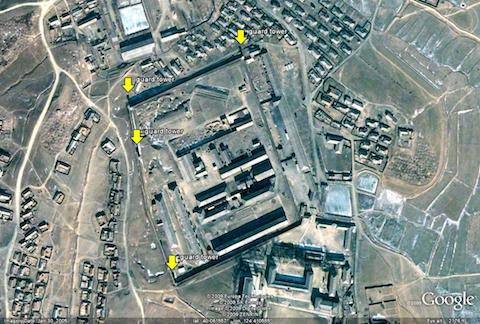
Pyon­gang shows up on illu­mi­na­tion maps as the sole point of light in an oth­er­wise dark coun­try. So what goes on in the rest of it? Accord­ing to One Free Korea, “the Com­mit­tee for Human Rights in North Korea esti­mates that North Korea holds as many as 120,000 peo­ple in its sys­tem of con­cen­tra­tion and deten­tion camps, and that 400,000 peo­ple have died in these camps from tor­ture, star­va­tion, dis­ease, and exe­cu­tion.” On that page, they’ve assem­bled Google Earth satel­lite images doc­u­ment­ing the prob­a­ble loca­tions and ele­ments of these camps. For more on these least-known parts of this least-known nation, see also Vice’s 40-minute pro­gram on North Kore­an Labor Camps below:

If all this does­n’t sati­ate your curios­i­ty about North Korea — and what amount of infor­ma­tion ever could? — have a look at Nation­al Geo­graph­ic’s Inside North Koreaa slow-motion film of an intense­ly chore­o­graphed North Kore­an mil­i­tary parade, and of course, our guide to the five best North Kore­an movies, all free to watch online.

Relat­ed Con­tent:

Read Dic­ta­tor Kim Jong-il’s Writ­ings on Cin­e­ma, Art & Opera: Cour­tesy of North Korea’s Free E‑Library

Orches­tral Manoeu­vres in North Korea Prove Yet Again That Music is Uni­ver­sal

A Slo-Mo Look Inside North Korea

The Five Best North Kore­an Movies: Watch Them Free Online

Col­in Mar­shall hosts and pro­duces Note­book on Cities and Cul­ture and writes essays on cities, lan­guage, Asia, and men’s style. He’s at work on a book about Los Ange­les, A Los Ange­les Primer. Fol­low him on Twit­ter at @colinmarshall or on Face­book.

A Haunting Drone’s-Eye View of Chernobyl

Back in August, Col­in Mar­shall remarked that drones “have drawn bad press in recent years: as the intru­sive tools of the com­ing sur­veil­lance state, as deliv­er­ers of death from above in a host of war zones, as the pur­chase-deliv­er­ing har­bin­gers of world dom­i­na­tion by Amazon.com.” “But as with any tech­nol­o­gy,” Col­in went on to note, “you can also use drones for the good, or at least for the inter­est­ing.” Like cap­tur­ing mes­mer­iz­ing aer­i­al footage of major cities around the world, cities such as Los Ange­les, New York, Lon­don, Bangkok & Mex­i­co City. Now let’s add Cher­nobyl to the list.

While work­ing on a recent 60 Min­utes episode, film­mak­er Dan­ny Cooke vis­it­ed Cher­nobyl, and, using a drone (a DJI Phan­tom 2 and GoPro 3+, to be pre­cise), he cap­tured haunt­ing footage of the city dev­as­tat­ed by the nuclear melt­down of April 26, 1986. Cher­nobyl has cooled off enough that jour­nal­ists and sci­en­tists can now vis­it the area for short peri­ods of time. (Biol­o­gists, for exam­ple, are active­ly study­ing the crip­pling effects radi­a­tion has had on Cher­nobyl’s ani­mal life, and pro­duc­ing dis­turb­ing videos show­ing how birds are devel­op­ing tumors, and spi­ders are spin­ning asym­met­ri­cal webs.) As for when Cher­nobyl will be tru­ly hab­it­able again, the best guess is anoth­er 20,000 years. By that time, the detri­tus will have ful­ly giv­en way to nature, and, if peo­ple still roam the earth, they’ll get some­thing close to a fresh start.

If you would like to sign up for Open Culture’s free email newslet­ter, please find it here. It’s a great way to see our new posts, all bun­dled in one email, each day.

If you would like to sup­port the mis­sion of Open Cul­ture, con­sid­er mak­ing a dona­tion to our site. It’s hard to rely 100% on ads, and your con­tri­bu­tions will help us con­tin­ue pro­vid­ing the best free cul­tur­al and edu­ca­tion­al mate­ri­als to learn­ers every­where. You can con­tribute through Pay­Pal, Patre­on, and Ven­mo (@openculture). Thanks!


Read Online Key Documents from the Ferguson Grand Jury: Witness Testimony, Forensic Evidence & More

ferguson testimonyTonight, a St. Louis Coun­ty grand jury decid­ed not to bring crim­i­nal charges against Dar­ren Wil­son, the white police offi­cer who shot to death Michael Brown, an unarmed African-Amer­i­can teenag­er, in Fer­gu­son, Mis­souri this past sum­mer. Fol­low­ing the con­tro­ver­sial deci­sion, St. Louis Pub­lic Radio start­ed to upload key doc­u­ments from the grand jury pro­ceed­ings to its web­siteThe doc­u­ments include grand jury tes­ti­mo­ny, foren­sic evi­dence, med­ical reports, and law enforce­ment inter­views. View it all here and be sure to check back for updates.

via Gawk­er

by | Permalink | Make a Comment ( 10 ) |

Edward Snowden Explains Why He Blew the Whistle on the NSA in Video Interview with Lawrence Lessig

Most like­ly every­thing you know about Edward Snow­den’s unmask­ing of gov­ern­ment sur­veil­lance pro­grams has come through an indi­rect source — mean­ing, you haven’t had the chance to learn about Snow­den’s moti­va­tions, thought process­es, goals, etc. from Snow­den him­self. Here’s a chance to change that.

In the video inter­view record­ed on Octo­ber 20th at Har­vard Law School, Lawrence Lessig spent an hour talk­ing with Snow­den on a Google Hang­out. Lessig, a law pro­fes­sor with dual inter­ests in keep­ing infor­ma­tion open and lim­it­ing gov­ern­ment cor­rup­tion, was a nat­ur­al choice to con­duct the inter­view. How­ev­er, I would­n’t say that he gives Snow­den a soft inter­view. He asks some good ques­tions, which gives Snow­den the chance to spell out his think­ing — to explain the prob­lem he observed while work­ing in the NSA and how he went about address­ing it.

One thing that comes across is that Snow­den has thought things through. Snow­den might not have the cre­den­tials of the Har­vard Law stu­dents in the audi­ence — he got a GED and took a few com­mu­ni­ty col­lege cours­es, after all — but you get the sense that he could teach a pret­ty good Intro­duc­tion to Amer­i­can Gov­ern­ment course, if not a thought-pro­vok­ing sem­i­nar on con­sti­tu­tion­al law. Regard­less of what posi­tion you take on Snow­den, it’s worth watch­ing this inter­view before you declare final judge­ment.

via Boing­Bo­ing

Fol­low us on Face­bookTwit­ter and Google Plus and share intel­li­gent media with your friends. Or bet­ter yet, sign up for our dai­ly email and get a dai­ly dose of Open Cul­ture in your inbox.


Stephen Colbert & Neil Young in a Comic Duet: “Who’s Gonna Stand Up? (and Save the Earth)”

Neil Young has a new book out — Spe­cial Deluxe: A Mem­oir of Life & Cars — which means he’s doing a quick media blitz. Tues­day morn­ing, Young paid a 90 minute vis­it to the Stern Show, where they talked about, well, every­thing: polio, the rift with David Cros­by, how he writes his music, the time he spent with Charles Man­son, what went wrong at Wood­stock, what’s gone wrong with music (and how the Pono­Play­er will fix it), and how we’re trash­ing the envi­ron­ment. Young takes the envi­ron­ment and pol­i­tics seri­ous­ly. No doubt. But he could also work it all into a good joke. Just wit­ness his per­for­mance lat­er that day with Stephen Col­bert.

Relat­ed Con­tent:

Great Sto­ry: How Neil Young Intro­duced His Clas­sic 1972 Album Har­vest to Gra­ham Nash

Neil Young Busk­ing in Glas­gow, 1976: The Sto­ry Behind the Footage

‘The Nee­dle and the Dam­age Done’: Neil Young Plays Two Songs on The John­ny Cash Show, 1971

The Time Neil Young Met Charles Man­son, Liked His Music, and Tried to Score Him a Record Deal

by | Permalink | Make a Comment ( 2 ) |

Free Stanford Course: 18 Experts Assess What’s Ailing America in 2014

In my day job, I have the priv­i­lege of over­see­ing Stan­ford’s Con­tin­u­ing Stud­ies pro­gram where we bring Stan­ford cours­es to the San Fran­cis­co Bay Area com­mu­ni­ty, and increas­ing­ly the larg­er world. This fall, we’re pre­sent­ing a pret­ty spe­cial course called The State of the Union 2014. Taught by Rob Reich (Polit­i­cal Sci­ence, Stan­ford), David Kennedy (His­to­ry, Stan­ford), and James Stey­er (CEO, Com­mon Sense Media), the course exam­ines “the abun­dant chal­lenges and oppor­tu­ni­ties of major themes con­tribut­ing to the health, or dis­ease, of the Unit­ed States body politic: inequal­i­ty, ener­gy and the envi­ron­ment, media and tech­nol­o­gy, the econ­o­my, and the 2014 midterm elec­tions.” And to help sort through these com­plex ques­tions, the pro­fes­sors will be joined by 18 dis­tin­guished guests, includ­ing Steven Chu (for­mer Sec­re­tary of Ener­gy), Reed Hast­ings (CEO of Net­flix), Janet Napoli­tano (for­mer Sec­re­tary of Home­land Secu­ri­ty), Ruth Mar­cus (colum­nist for the Wash­ing­ton Post), Karl Eiken­ber­ry (for­mer US Ambas­sador to Afghanistan) and Joel Benen­son (chief poll­ster for Pres­i­dent Barack Oba­ma).

We’re film­ing the class ses­sions of this sev­en-week course and mak­ing them avail­able on YouTube and iTunes. The first two ses­sions (each last­ing about 90 min­utes) can be viewed in the playlist above. The first ses­sion focus­es on the Midterm elec­tions; the sec­ond on the state of Cal­i­for­nia. New ses­sions will be added each week, gen­er­al­ly on Thurs­day or Fri­day.

Edu­ca­tion

Tech­nol­o­gy and Social Change

If you live in the San Fran­cis­co Bay Area, make sure you check out the Con­tin­u­ing Stud­ies pro­gram. It’s a tremen­dous resource for life­long learn­ers.

Relat­ed Con­tent:

1,700 Free Online Cours­es from Top Uni­ver­si­ties

Start Your Start­up with Free Stan­ford Cours­es and Lec­tures

The Art of Liv­ing: A Free Stan­ford Course Explores Time­less Ques­tions

Stanford’s Robert Sapol­sky Demys­ti­fies Depres­sion

Peter Thiel’s Stan­ford Course on Star­tups: Read the Lec­ture Notes Free Online

by | Permalink | Make a Comment ( 1 ) |

Brian Eno’s Take on the Gaza Conflict Appears on David Byrne’s Web Site

Brian_Eno_2008

On his web site, for­mer Talk­ing Heads front­man David Byrne writes:

I received this email last Fri­day morn­ing from my friend, Bri­an Eno. I shared it with my office and we all felt a great respon­si­bil­i­ty to pub­lish Bri­an’s heavy, wor­thy note. In response, Bri­an’s friend, Peter Schwartz, replied with an eye-open­ing his­tor­i­cal expla­na­tion of how we got here. What’s clear is that no one has the moral high ground.

First comes Eno’s clear­ly heart­felt con­dem­na­tion of civil­ian deaths in Gaza (par­tic­u­lar­ly the death of chil­dren) and Amer­i­ca’s appar­ent indif­fer­ence to what’s hap­pen­ing there:

Today I saw a pic­ture of a weep­ing Pales­tin­ian man hold­ing a plas­tic car­ri­er bag of meat. It was his son. He’d been shred­ded (the hos­pi­tal’s word) by an Israeli mis­sile attack — appar­ent­ly using their fab new weapon, flechette bombs. You prob­a­bly know what those are — hun­dreds of small steel darts packed around explo­sive which tear the flesh off humans. The boy was Mohammed Kha­laf al-Nawas­ra. He was 4 years old.

I sud­den­ly found myself think­ing that it could have been one of my kids in that bag, and that thought upset me more than any­thing has for a long time.

Then I read that the UN had said that Israel might be guilty of war crimes in Gaza, and they want­ed to launch a com­mis­sion into that. Amer­i­ca won’t sign up to it.

What is going on in Amer­i­ca? I know from my own expe­ri­ence how slant­ed your news is, and how lit­tle you get to hear about the oth­er side of this sto­ry. But — for Christ’s sake! — it’s not that hard to find out. Why does Amer­i­ca con­tin­ue its blind sup­port of this one-sided exer­cise in eth­nic cleans­ing? WHY?

What fol­lows is part of futur­ist Peter Schwartz’s response, which, rich in his­tor­i­cal detail, splits the blame some­where down the mid­dle. Echo­ing Byrne’s sense that the two sides have lost their moral posi­tions, Schwartz notes:

Even though I have no sup­port for the Israeli posi­tion I find the oppo­si­tion to Israel ques­tion­able in its fail­ure to be sim­i­lar­ly out­raged by a vast num­ber of oth­er moral hor­rors in the recent past and cur­rent­ly active. Just to name a few; Cam­bo­dia, Tibet, Sudan, Soma­lia, Nicaragua, Mex­i­co, Argenti­na, Liberia, Cen­tral African Repub­lic, Ugan­da, North Korea, Bosnia, Koso­vo, Venezuela, Syr­ia, Egypt, Libya, Zim­bab­we and espe­cial­ly right now Nige­ria. The Arab Spring, which has become a dark win­ter for most Arabs and the large scale slaugh­ter now under­way along the bor­ders of Iraq and Syr­ia are good exam­ples of what they do to them­selves. And our nations, the US, the Brits, the Dutch, the Rus­sians and the French have all played their parts in these oth­er moral out­rages. The grue­some body count and social destruc­tion left behind dwarfs any­thing that the Israelis have done. The only dif­fer­ence with the Israeli’s is their claim to a moral high ground, which they long ago left behind in the refugee camps of Lebanon. They are now just a nation, like any oth­er, try­ing to sur­vive in a hos­tile sea of hate.

We should be clear, that giv­en the oppor­tu­ni­ty, the Arabs would dri­ve the Jews into the sea and that was true from day one. There was no way back from war once a reli­gious state was declared. So Israel, once com­mit­ted to a nation state in that loca­tion and grant­ed that right by oth­er nations have had no choice but to fight. In my view there­fore, nei­ther side has any shred of moral stand­ing left, nor have the nations that sup­port­ed both sides…

I don’t think there is any hon­or to go around here. Israel has lost its way and com­mits hor­rors in the inter­est of their own sur­vival. And the Arabs and Per­sians per­pet­u­ate a con­flict rid­den neigh­bor­hood with almost no excep­tions, fight­ing against each oth­er and with hate of Israel the only thing that they share.

To read the com­plete exchange, head over to Byrne’s site and read Gaza and the Loss of Civ­i­liza­tion.

Relat­ed Con­tent:

How David Byrne and Bri­an Eno Make Music Togeth­er: A Short Doc­u­men­tary

Lis­ten to “Bri­an Eno Day,” a 12-Hour Radio Show Spent With Eno & His Music (Record­ed in 1988)

Jump Start Your Cre­ative Process with Bri­an Eno’s “Oblique Strate­gies”

David Byrne: How Archi­tec­ture Helped Music Evolve

by | Permalink | Make a Comment ( 9 ) |

Did the Wayback Machine Catch Russian-Backed Rebels Claiming Responsibility for Malaysian Airlines Flight MH17?

Screen Shot 2014-07-19 at 11.16.42 AM

If you’re a long-time read­er of Open Cul­ture, you know all about Archive.org — a non-prof­it that hous­es all kinds of fas­ci­nat­ing textsaudiomov­ing images, and soft­ware. And don’t for­get archived web pages. Since 1996, Archive’s “Way­back Machine” has been tak­ing snap­shots of web­sites, pro­duc­ing a his­tor­i­cal record of this still fair­ly new thing called “the web.” Right now, the Way­back Machine holds 417 bil­lion snap­shots of web sites, includ­ing one page show­ing that “Igor Girkin, a Ukrain­ian sep­a­ratist leader also known as Strelkov, claimed respon­si­bil­i­ty on a pop­u­lar Russ­ian social-net­work­ing site for the down­ing of what he thought was a Ukrain­ian mil­i­tary trans­port plane short­ly before reports that Malaysian Air­lines Flight MH17 had crashed near the rebel held Ukrain­ian city of Donet­sk.” (This quote comes from The Chris­t­ian Sci­ence Mon­i­tor, which has more on the sto­ry.) Girk­in’s post was cap­tured by the Way­back Machine at 15:22:22 on July 17. By 16:56, Girk­in’s post was tak­en offline — but not before Archive.org had its copy.

To keep tabs on this sto­ry, fol­low Archive’s Twit­ter and Face­book pages.

by | Permalink | Make a Comment ( 3 ) |

« Go BackMore in this category... »
Quantcast