A quick note: Rudy Rucker, one of the founders of the cyberpunk movement, put himself on the literary map with the Prize-Winning Ware Tetralogy. In the spirit of openness, Rucker has long made the Tetralogyfreely available online. Now comes his latest work, The Big Aha, which you can read online in an illustrated format at right this very moment. Released just days ago, the novel (also available in ebook and paperback formats) was funded by 331 backers through a Kickstarter campaign launched earlier this year. For more free sci-fi, please see our rich 2012 post: Free Science Fiction Classics on the Web: Huxley, Orwell, Asimov, Gaiman & Beyond.
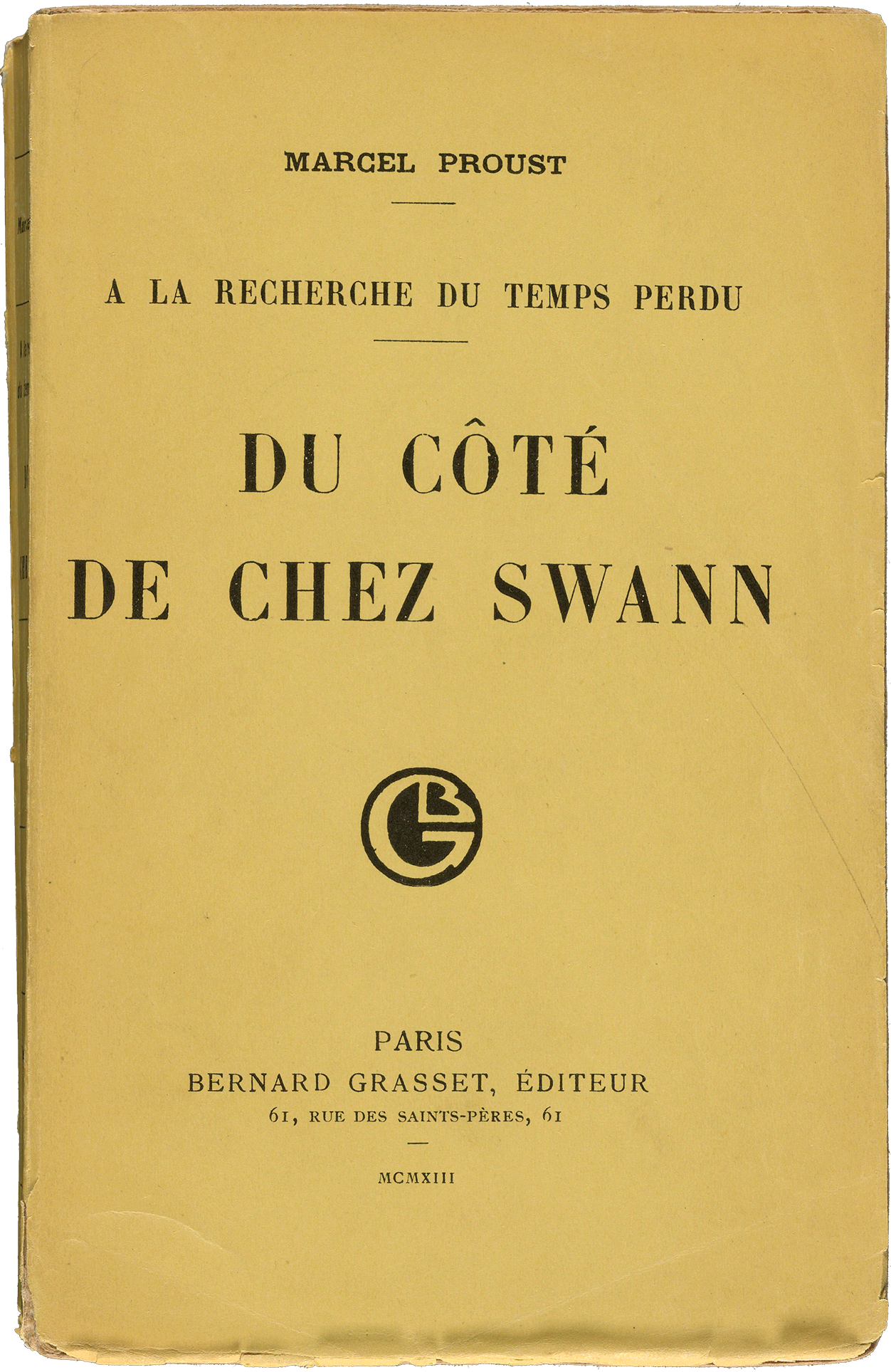
“We seem to be reaching a point in history where Ulysses (1922) is talked or written about more than read,” writes Wayne Wolfson at Outsideleft in an essay on James Joyce and Marcel Proust, whose Swann’s Way, the first in his seven-volume cycle Remembrance of Things Past (À la recherche du temps perdu), turns 100 today. This observation might have applied to Proust’s enormous modernist feat at all times in its history. Though Proust was fêted by high culture patrons and writers like Violet and Sydney Schiff, it’s hard to imagine these busy socialites secluding themselves for several months to catch up with a 4,000-page modernist masterwork. As French crime novelist Frédérique Molay glibly observes, “[Remembrance of Things Past] corresponds to a lot of lost time.”
Molay also points out that Proust’s friend and rival André Gide “didn’t like the manuscript, calling it ‘incomprehensible.’” Gide only saw volume one, Swann’s Way, though whether he actually read it or not is in some dispute. In any case, after Gide’s rejection, Proust’s publishing options narrowed to Bernard Grasset (Proust footed the bill for printing), with whom, notes The Independent, the author “engaged in a tortuous pas de deux… for most of 1913.” The back and forth included the “elaborate to-and-fro of his labyrinthine galley-proofs” (see an example above, and more here). And yet, The Independent goes on,
Swann’s Way at last appeared on 14 November in an edition of 1,750 copies (for which Proust paid more than 1,000 francs). A familiar kind of literary myth would suggest that, after a difficult birth, such a groundbreaking work must sink without trace. On the contrary.
Indeed. As a young grad student, I once walked in shame because—gasp—I had read no Proust. Not a word. I vaguely associated the name with French modernism, with a languorous, self-indulgent kind of writing that a reader like myself at the time, with a taste for the knotty, gnarled, and grotesque—for Faulkner and O’Connor, Hardy, Melville, and yes, Joyce—found disagreeable. I’d avoided Proust thus far, I reasoned, no need to rend my veil of ignorance now. Later, I defaulted to Molay’s glibness. Shrug, who has the time?
But today I feel I should revise that conclusion, at the very least because a bandwagon full of highly respected names has turned up to celebrate Proust’s achievement—or its nominal birthdate—including Ira Glass, pastry chef Dominique Ansel, who will bake madeleines (and who invented the Cronut), and novelist Rick Moody. These are but three of a cloud of “Proust fans of all kinds” participating in a “nomadic reading” of Swann’s Way in New York. It’s a showy affair, with readers gathering “over madeleines and champagne, in hotel rooms, gardens and nightclubs, from the Bronx to Brooklyn.”
By contrast, Antonin Baudry, one of the event’s organizers tells us, “In France, ordinary people are more likely just to read Proust at home.” (You can see clips of everyday French people reading Proust here, in fact.) Given the famously hypochondriac and reclusive author’s penchant, I may also spend the day at home, reading Proust, in bed, inspired also by Rick Moody’s observation: “As a young writer, I felt there were two kinds of people: Joyce people and Proust people.… For a long time, I would’ve asserted my allegiance to Joycean qualities. But in my galloping middle age, Proust calls to me more fervently.”
If you feel likewise inspired today, you can read all of Proust’s literary feast—or just sample it in bites. Find links to all seven volumes of Remembrance of Things Past below. They’re otherwise housed in our collection, 800 Free eBooks for iPad, Kindle & Other Devices.
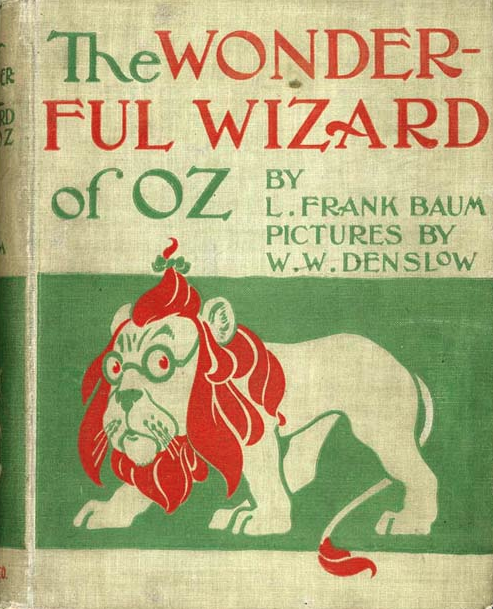
The classic Wizard of Oz series was written by L. Frank Baum between 1900 and 1920. There are 14 volumes in total, starting with the most well-known book, The Wonderful Wizard of Oz. Below we’ve gathered every volume in the series, in both text and audio formats. If you have questions about how to load files onto your Kindle, please see this instructional video. You can find early film adaptations of The Wizard of Oz in our collection of Free Movies Online. Plus elsewhere on our site we have the complete Chronicles of Narnia(in audio)by CS Lewis, another enduring children’s classic.
Note: If you want to read online a first edition copy of The Wonderful Wizard of Oz, you can do so thanks to The Library of Congress. Click here: Page Turner -PDF
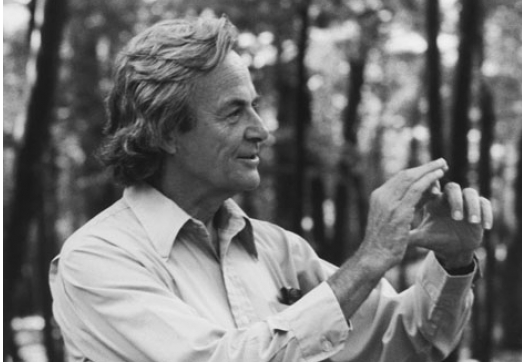
Caltech and The Feynman Lectures Website have joined forces to create an online edition of Richard Feynman’s famous lectures on physics. First presented in the early 1960s as part of a two-year introductory physics course given at Caltech, the lectures were eventually turned into a book that became a classic reference work for physics students, teachers and researchers. You can still purchase the 560 page book online, or enjoy a new web edition for free.
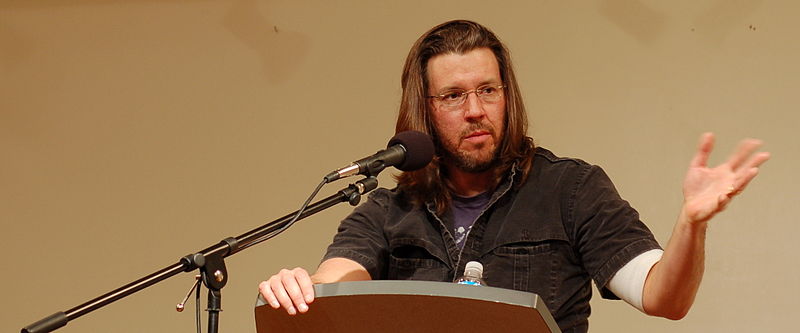
Let me start with the first lines that appeared in The New York Times five years ago: “David Foster Wallace, whose prodigiously observant, exuberantly plotted, grammatically and etymologically challenging, philosophically probing and culturally hyper-contemporary novels, stories and essays made him an heir to modern virtuosos like Thomas Pynchon and Don DeLillo, an experimental contemporary of William T. Vollmann, Mark Leyner and Nicholson Baker and a clear influence on younger tour-de-force stylists like Dave Eggers and Jonathan Safran Foer, died on Friday at his home in Claremont, Calif. He was 46.” It’s not your conventional obituary. No, it has a literary style befitting the writer we lost on September 12, 2008. And five years after DFW’s death, we might want to pause and revisit his many stories and essays still available on the web. To mark this mournful occasion, we’ve updated and expanded our list, 30 Free Essays & Stories by David Foster Wallace on the Web, which features some timely and memorable pieces — “9/11: The View From the Midwest,”“Consider the Lobster,” and Federer as Religious Experience,” just to name just a few. Below we’ve also highlighted some of our favorite David Foster Wallace posts published over the years. Hope you enjoy visiting or revisiting this material as much as I have.
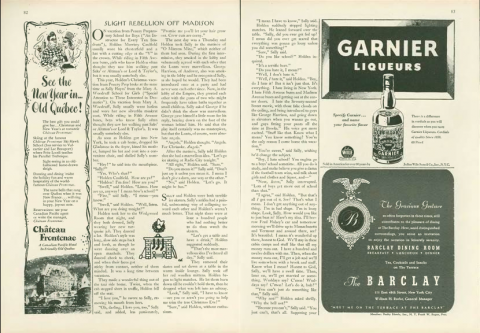
“Slight Rebellion Off Madison” — The first story J.D. Salinger ever published in The New Yorker was also a story that introduced readers to his most famous character, Holden Caulfield, long before the publication of The Catcher in the Rye. According to Paul Alexander’s biography of Salinger, the editors of The New Yorker accepted “Slight Rebellion Off Madison” back in 1941, but delayed publishing it when the US entered World War II. The time just didn’t feel right for a story about jaded, cynical youth. Eventually the war ended and the story appeared in the magazine on December 21, 1946. The Catcher in the Rye came out five years later, in July, 1951.
In the story, Holden Caulfield, “on vacation from Pencey Preparatory School for Boys,” meets up in New York City with Sally Hayes, also on vacation from prep school, and together they go to the movies, smoke in the lobby, drink, complain about the tedium of school, dream of leaving the big city for Vermont, and maybe getting married one day. Other characters who later appear in Salinger’s generation-defining novel — for example, Carl Luce — also make appearances too.
You can read “Slight Rebellion Off Madison” in the New Yorker archive. Clickhere to see a facsimile of how the story originally appeared in the magazine. When you click through, please click on the image/page to zoom into the text.
Note: Another story story featuring Holden Caulfield — “I’m Crazy” — appeared in the December, 22 1945 edition of Collier’s. It starts here and ends here.
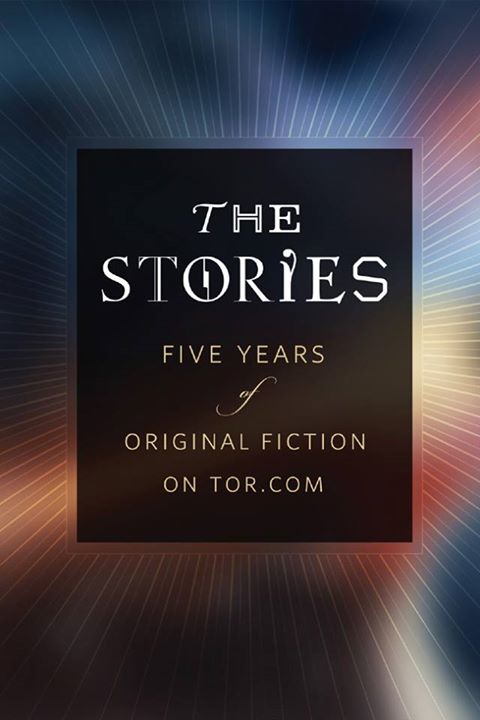
A quick note: If you’re not already familiar with it, Tor.com is a web site dedicated to “science fiction, fantasy, and all the things that interest SF and fantasy readers.” And, among other things, the site regularly publishes original sci-fi stories. To celebrate its 5th birthday, Tor has decided to assemble the last five years of its original fiction and make it available as downloadable ebook files. You will need to register with the site beforehand, and then you can download the texts in various formats — PDF, Mobi, and ePub — all of which can be loaded onto ebook readers. And, yes, it’s all free.
If you’re a sci-fan, we’d encourage you to see our post from earlier this week, 100 Great Sci-Fi Stories by Women Writers and then some of the great related material below.
Earlier this month NASA announced that the Hubble Space Telescope found evidence of a planet forming 7.5 billion miles from its star. This astonishing discovery challenges all of our current theories about how planets develop.
A few days later, Hubble captured images of two galaxies merging.
Hubble has been in orbit since 1990, collecting images with one of the largest and most versatile telescopes designed for deep space. No single tool has done as much to advance astronomical public relations in recent years.
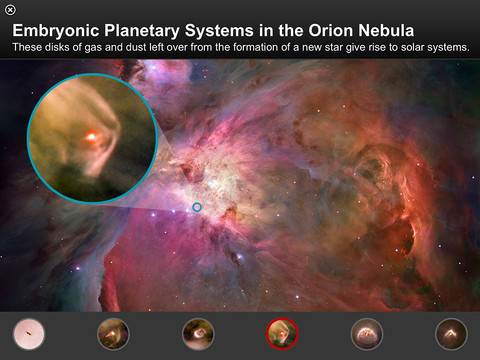
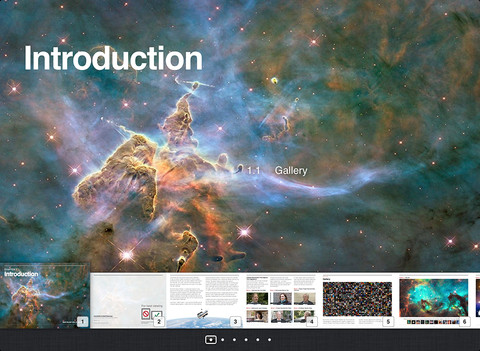
Hubble’s development, launch and discoveries are the subject of a new, free interactive e‑book (best viewed on the iPad) that brings to life Hubble’s distinguished service as our eye on the universe.
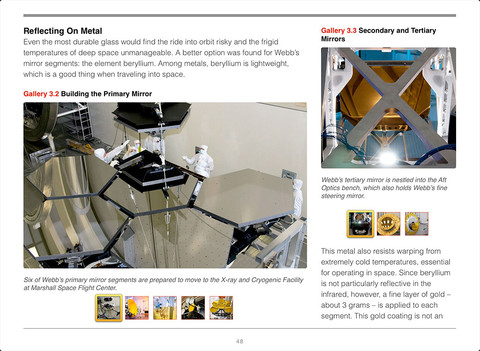
For almost as long as Hubble has been in space, NASA has been working on the next generation space telescope. The James Webb Space Telescope will feature a mirror three times the size of Hubble’s. Once launched, the telescope will travel far beyond our Moon. NASA’s free e‑book about the Webb Telescope reveals the preparation going on to get the new tool ready for take-off.
Its large mirror and distant viewing position are expected to give Webb’s images higher resolution and sensitivity, allowing scientists to study the birth and evolution of galaxies as well as the formation of stars and planets.
The e‑books are written at a high school level and can be viewed on an iPad using a free iBooks app. If you don’t have an iPad, no need to worry. A non-interactive version of the Hubble eBooks is also available, as is one about the Webb Telescope.
We're hoping to rely on loyal readers, rather than erratic ads. Please click the Donate button and support Open Culture. You can use Paypal, Venmo, Patreon, even Crypto! We thank you!
Open Culture scours the web for the best educational media. We find the free courses and audio books you need, the language lessons & educational videos you want, and plenty of enlightenment in between.
 A quick note: Rudy Rucker, one of the founders of the cyberpunk movement, put himself on the literary map with the Prize-Winning Ware Tetralogy. In the spirit of openness, Rucker has long made the Tetralogy freely available online. Now comes his latest work, The Big Aha, which you can read online in an illustrated format at right this very moment. Released just days ago, the novel (also available in ebook and paperback formats) was funded by 331 backers through a Kickstarter campaign launched earlier this year. For more free sci-fi, please see our rich 2012 post: Free Science Fiction Classics on the Web: Huxley, Orwell, Asimov, Gaiman & Beyond.