For his latest essay, Kogonada takes on perhaps film’s most famous formalist working today – Wes Anderson. As you can see from the video above, Anderson loves to compose his shots with perfect symmetry. From his breakout hit Rushmore,to his stop-motion animated movie The Fantastic Mr. Fox, to his most recent movie The Grand Budapest Hotel, Anderson consistently organizes the elements in his frame so that the most important thing is smack in the middle.
Directors are taught in film school to avoid symmetry as it feels stagey. An asymmetrically framed shot has a natural visual dynamism to it. It also makes for a more seamless edit to the next shot, especially if that shot is another asymmetrically framed shot. But if you’ve watched anything by Anderson, you know that seeming stagey has never been one of his concerns. Instead, Anderson has developed his own quirky, immediately identifiable visual style.
When critics complained about Ozu’s proclivity for essentially making the same movie over and over again, he famously responded by saying, “I only know how to make tofu. I can make fried tofu, boiled tofu, stuffed tofu. Cutlets and other fancy stuff, that’s for other directors.” Anderson would probably not consider himself a tofu maker, but he would most likely appreciate Ozu’s sentiment.
Check out another Kogonada essay below about Anderson’s tendency for composing shots from directly overhead.
For their annual Lifetime Achievement Awards, the folks over at the Society of Camera Operators put together a lovely, surprisingly rousing video about the evolution of the movie camera over the course of the past century or so of cinema. And, as you can see above, it has changed quite a bit.
Then in the ‘80s, things started to change with the release of analog video. Suddenly, you could capture movement in a manner that didn’t involve exposing frame by frame an unspooling reel of light-sensitive celluloid. And with the digital revolution that started in the ‘90s, cameras, and the very nature of cinema, changed. Dazzling spectacles like Avatarand Gravity could be created almost entirely within a computer, while at the same time the cameras themselves grew smaller and more portable.
To underscore just how democratized the technology of movie making has become, the end of the video shows Hollywood cameramen shooting movies with iPhones. The piece ends with what could only be seen as an ominous technological development for the Society of Camera Operators: Google Glass, which has the potential to turn every single person into a perpetual camera operator.
Jonathan Crow is a Los Angeles-based writer and filmmaker whose work has appeared in Yahoo!, The Hollywood Reporter, and other publications. You can follow him at @jonccrow.
A film that began its life as a script called Who Killed Bambi?, written by Roger Ebert and Russ Meyer, The Great Rock and Roll Swindle (trailer below) became a farcical caper starring the Sex Pistols minus their lead singer. Johnny Rotten had quit the band at this point and appears only in archival footage. Mostly The Great Rock and Roll Swindle was a vehicle for Malcolm McLaren to sell himself as the guru of punk and the driving force behind the band. Directed by Julien Temple (who also made the far superior Sex Pistols doc, The Filth and the Fury), Swindle is also notable for almost launching a Sid Vicious solo career, and it might have worked, were it not for his epically destructive flame-out in 1978.
The film saw release two years later, and produced a soundtrack album, which I remember finding in a used record bin—pre-Google—and thinking I’d discovered some long lost Sex Pistols album. One listen disabused me of the notion. Some of album is a snapshot of the band’s shambolic final days, but most of it is devoted to “jokey material” from the movie and most of that is pretty terrible. The sole exception is Sid’s version of Paul Anka’s “My Way” (top), a sneering piss take on the song Sinatra made famous. After some obnoxious faux-crooning, Sid tears through song with punk aplomb. Allmusic aptly describes the performance as “inarguably remarkable” yet showing that Sid was “incapable of comprehending the irony of his situation.”
The moment of the performance itself is bathed in sad irony. I’ve always thought it showed that—had he just a little more instinct for self-preservation—we might have someday seen Sid Vicious recording an album’s worth of bratty takes on the American Songbook, but probably at McLaren’s behest. What more he might have had in him is anyone’s guess; in life he seemed unable to rise above the role McLaren assigned him in the film “Gimmick.” But he made it look good. Those familiar with Alex Cox’s definitive portrait Sid and Nancy will of course remember Gary Oldman’s recreation of Sid’s “My Way” (above). Convincing stuff, but no substitute for the real thing.
After the infant Herzog survived a bombing that covered him in rubble, his mother, understandably fearing for her children’s safety, fled to the mountains. The remoteness of his upbringing sheltered him in some ways (“I did not even know that cinema existed until I was 11”) and not, in others. (“At age four, I was in possession of a functioning submachine gun and my brother had a hand grenade.”)
When he says that hunger was a prevailing theme, I dare you to disagree.
Dire predictions, and yet he fills me with cheer every time he opens his mouth. I swear it’s not just that marvelous, much imitated voice. It’s also a comfort to know we’ve got a prolific artist remaining at his outpost from a sense of duty, gloomy yet stout as a child in his belief that an ecstasy of truth lies within human grasp.
In 2012, the Los Angeles County Museum of Art (LACMA) unveiled a sprawling, exhaustive exhibit on Stanley Kubrick. And it had just about everything you might want on the great director. Early photographs he took for Look magazine in the 1940s? Check. The blood soaked dresses of those creepy twins from The Shining? You got it! Sketches, notes and documents about Napoleon, the greatest movie he never made? They had a whole room for that. For those cinephiles who worship at Kubrick’s altar, LACMA’s exhibit was akin to a visit to the Vatican. There were more holy relics there than you could shake a monolith at—oh, and they had one of those there too.
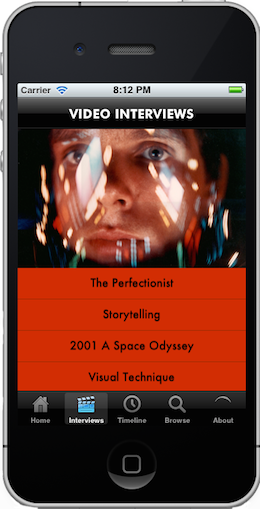
The exhibit wrapped up in June 2013. If you missed it and you are jonesing for more Kubrick memorabilia, take heart — LACMA designed an app in conjunction with the exhibit for the iPhone, iPad and Android and you can download it right now. For free. The app is about as sprawling as the exhibit (and it will take a bit of time to download) but it features hand drawn notes from Kubrick, behind-the-scenes pictures from all of his movies, and interviews with the director, plus ones with the likes of Elvis Mitchell, Christopher Nolan and Douglas Trumbull.
The only thing that the app and the exhibit didn’t cover is the ever-growing number of insane conspiracy theories surrounding his work. Want something about how The Shining is really about a faked moon landing or how Eyes Wide Shut is really about the Illuminati? Look somewhere else.
Jonathan Crow is a Los Angeles-based writer and filmmaker whose work has appeared in Yahoo!, The Hollywood Reporter, and other publications. You can follow him at @jonccrow.
Since Vivian Kubrick was in grade school, she worked as a collaborator with her famous filmmaker father. She had cameos in a number of his movies including 2001: A Space Odyssey and Barry Lyndon. She shot the behind-the-scenes documentary about the making of The Shining at the age of 24. And she composed the score for Full Metal Jacket under the pseudonym of Abigail Mead. Kubrick seemed to groom his daughter to be his cinematic heir. And then in the late 90s, that all stopped. She cut off all contact with her family.
Kubrick’s family was initially cagey about what happened to her, saying simply that she was living in LA. But then in 2010, Kubrick’s stepdaughter Katharina opened up. “We weren’t lying, we were just being economical with the truth,” she told The Daily Beast. “Because if you say, ‘My sister has become a Scientologist,’ where do you go from that?”
The Church of Scientology’s policy of disconnection is one of its most controversial practices. It’s not clear if Vivian formerly disconnected with her family but she did reportedly attend her father’s funeral in 1999 with a Scientologist minder. When her sister Anya died of cancer in 2009, she did not attend that funeral even though they were, by all accounts, inseparable growing up.
The rift between Kubrick and his daughter became final when he asked her to score Eyes Wide Shut and she refused, as “They had a huge fight. He was very unhappy,” recalled Kubrick’s wife and Vivian’s mother. “He wrote her a 40-page letter trying to win her back. He begged her endlessly to come home from California. I’m glad he didn’t live to see what happened.”
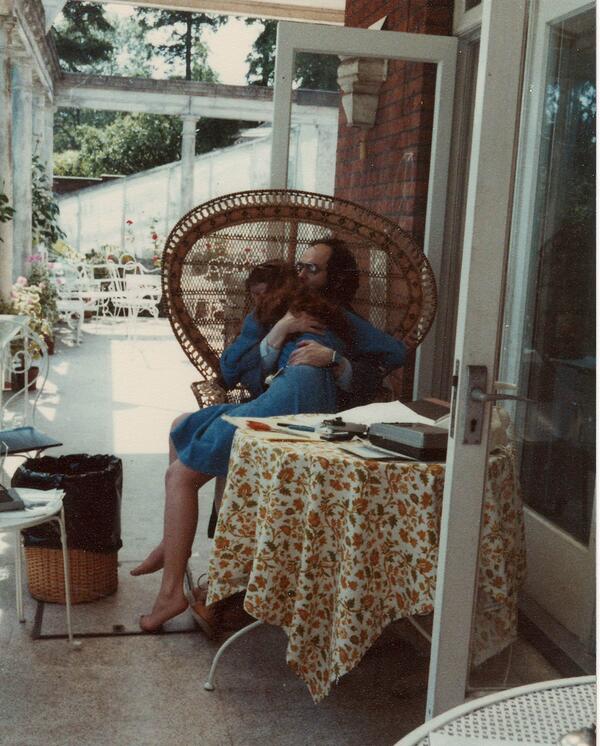
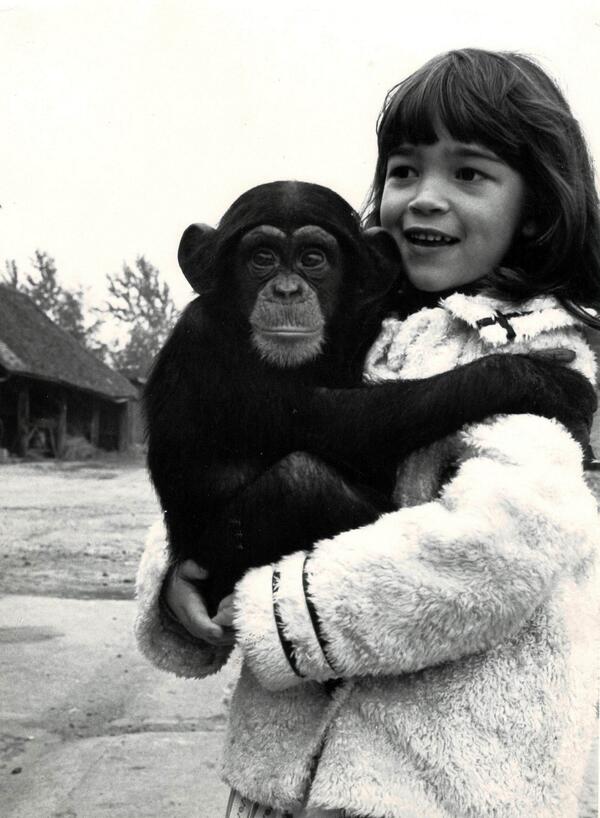
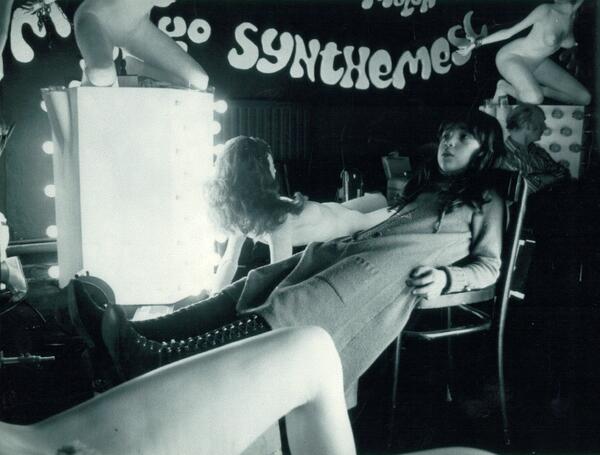
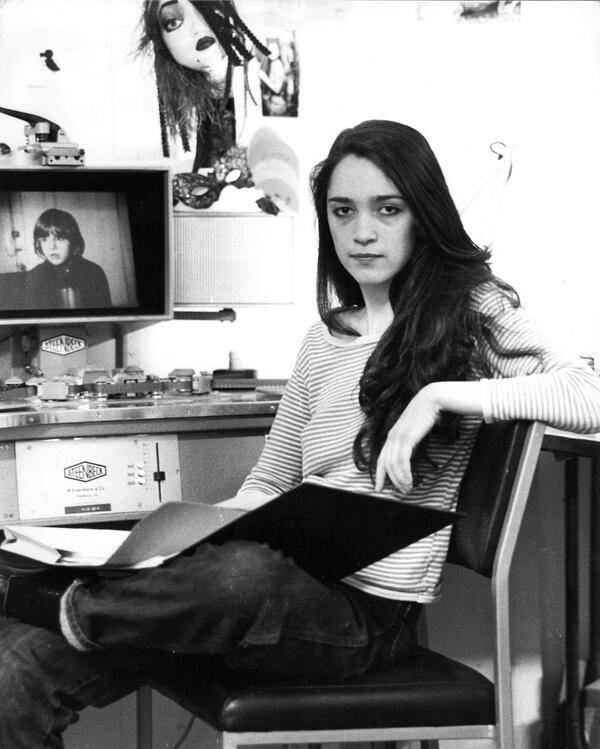
Recently on her Twitter feed, Vivian posted a series of photos of herself on the set of her father’s movies. One picture shows an eight-year old Vivian clutching a baby chimp used on 2001. Another shows her hanging out on the milk bar set of A Clockwork Orange. “I helped cut out those Styrofoam letters on the wall,” she writes. Another picture shows Vivian sitting before a 16mm Steenbeck, editing her documentary on The Shining. And, most poignantly, one of her picture’s shows Vivian and Kubrick embracing on a deck chair.
“In Memory of my Dad,” she writes. “Who I loved with all my heart and soul… Dad and Me on the back veranda of Abbots Mead.”
Jonathan Crow is a Los Angeles-based writer and filmmaker whose work has appeared in Yahoo!, The Hollywood Reporter, and other publications. You can follow him at @jonccrow.
Since 1994’s Clerks turned him from a proud New Jersey slacker into a leading light of the 1990s’ American independent film boom, cinephiles have energetically debated Kevin Smith’s abilities as a filmmaker. Even Smith admits that he considers himself more a writer who happens to direct than a director per se, and his fans and detractors alike seem to consider his scripts more a vehicle for his entertaining way with speech — with jokes, with cultural references, with elaborate foulmouthedness — than anything else. It certainly doesn’t surprise me that so much of his 21st-century output consists of podcasts, nor that, when you go all the way back in his filmmaking career, even before Clerks, you find a short but talkative, jocular, by turns placid and vitriolic, only seemingly improvisational piece like Mae Day: The Crumbling of a Documentary, his first and only student film, made while enrolled for just four months at the technically oriented Vancouver Film School.
Having come up with the idea for a documentary on a local transsexual named Emelda Mae, Smith and classmate Scott Mosier, who would go on to become Smith’s longtime producing partner, found themselves unprepared to follow through on the project as they’d (vaguely) envisioned it. To make matters worse, Mae herself then skipped town, leaving behind not a hint as to her whereabouts. But amid this film-school crisis, Smith’s true filmmaking talent flowered: instead of a “serious” profile of his absent subject, he made a satirical examination of how that idea ran so quickly and unsalvageably aground, consisting not just of his and Mosier’s parodically confident reflections on the nature of the “failure,” but also their irate instructors’ and collaborators’ earnestly detailed accounts of how they couldn’t get their act together. But just two years later, Clerks would slouch its way to game-changing prominence in American cinema. Whatever you think of everything Smith and Mosier have put out since, you have to admit that this lazy-student gambit worked out pretty well for them.
The whole category of cult movies is a slippery one. Everyone knows what a horror flick or a Western looks like but describing a cult movie is much more subjective. Cult movies can be any genre. They tend to be campy or kitschy or in some other way very strange. Often they are either movies that are so weirdly and intensely personal that they alienate and baffle mainstreams audiences, or films that are such utter and complete train wrecks that somehow they push through the merely mediocre into the sublime. Or, in the best cases, both.
Danny Peary, in his seminal 1981 book Cult Movies, put such high art movies as Citizen Kane alongside midnight movie staples like Freaks(watch it free online) and El Topo. Somehow that doesn’t feel right. Having the supposed best (or second best) movie ever made in the same category as a hapless mess like Troll 2 seems to be a disservice to both movies, no matter how rabid the fanbase is.
We debated a lot what we would consider a “cult movie” for the purposes of this list, and we mostly stuck to films that were not huge box-office hits and didn’t get massive mainstream exposure when they were first released. The films on this list mostly either flew under the radar or were considered massive flops when they came out originally.
Like any such list, there is plenty to be quibbled with — Donnie Darko is ranked higher than Eraserhead? Really? – but that’s really just part of the fun. Below are a few cult movies that you can watch right now for free – two of which are on the io9 list.
Plan 9 from Outer Space – There’s a great scene in Tim Burton’s biopic Ed Wood where a cross-dressing Wood runs into Orson Welles at a bar. They share a drink and commiserate about the difficulties of being a visionary in Hollywood. By all definitions, Wood was as much of an auteur as Welles. His movies were a prism through which he worked through some very personal issues.
It’s just that, unlike Welles, Wood was a comically inept and lazy filmmaker. Critic Michael Medved once dubbed his Plan 9 from Outer Space as the worst movie ever made. And it’s a hard to argue with that assertion. Shots in the movie alternate disorientingly between day and night in the middle of the same scene. The acting isn’t so much as wooden as somnambulistic. The special effects are laughably childish –a flaming spacecraft at one point of the movie was accomplished by setting a hubcap alight with some gasoline. Yet throughout the entire film, Wood’s boyish enthusiasm shines through. Plan 9 might be terrible, but it’s also a lot of fun.
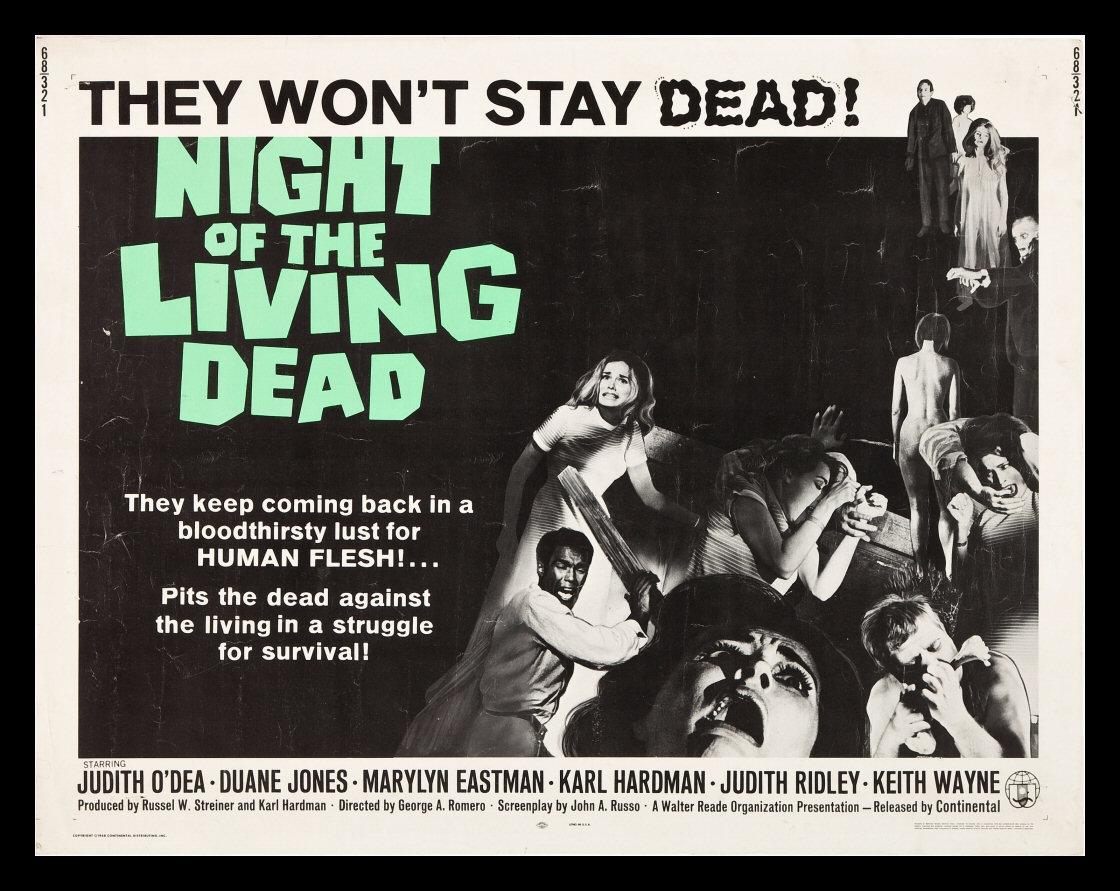
Night of the Living Dead– Though George A. Romero’s Night of the Living Dead was made for next to nothing, all of the production’s limitations somehow turned into assets. The film’s grainy black-and-white cinematography and hand-held camera gave Romero’s zombie gore-fest a level of realism that was unseen in horror movies up to that point — like a newsreel from the apocalypse. The Living Dead wound up being one of the most profitable movies of all time, which for investors proved to be unfortunate. In what has to be one of the costliest clerical errors in movie history, the distributors forgot to include a copyright statement in credits. As a result, the movie quickly fell into the public domain. Check it out.
Detour — Edgar G. Ulmer’s hastily produced film noir bears all the marks of a movie made on a shoestring. The direction is ham handed. The acting is often shrill. A tale about toxic love and ill-gotten gains, Detour should have by all rights been another forgotten, disposable B‑movie. Yet somehow Ulmer managed to capture lighining in a bottle. “Haunting and creepy,” writes Roger Ebert. “An embodiment of the guilty soul of film noir. No one who has seen it has easily forgotten it.”
Jonathan Crow is a Los Angeles-based writer and filmmaker whose work has appeared in Yahoo!, The Hollywood Reporter, and other publications. You can follow him at @jonccrow.
We're hoping to rely on loyal readers, rather than erratic ads. Please click the Donate button and support Open Culture. You can use Paypal, Venmo, Patreon, even Crypto! We thank you!
Open Culture scours the web for the best educational media. We find the free courses and audio books you need, the language lessons & educational videos you want, and plenty of enlightenment in between.
 In 2012, the