We all know the stages of cinema’s early development: first came the pictures, second came the motion, and third came the sound. But many of us, even reasonably active film buffs, don’t realize how much the art form took its shape between steps two and three. Most of the visual language we instinctively recognize as standard in the movies today came together before their characters ever spoke an audible word. Hence the importance of not just watching the films of today, and not just catching up with important works back to the the “golden age” of Hollywood, but going even farther back, to the early 1930s, even all the way to the 1910s — deep, in other words, into the silent era. Outside a university film-studies program, you couldn’t always do this easily. But now, to free you from the need to haunt specialist video stores (if your city has them) and hope for silent screenings at the nearest repertory cinema (if your city has one), we give you our collection of 101 free silent films online, part of our collection 4,000+ Free Movies Online: Great Classics, Indies, Noir, Westerns, Documentaries & More.
Kudos to cartoonist Flash Rosenberg for having the huevos to illustrate cult film icon John Waters’ remarks at the New York Public Library in real time before a live audience. The first half minute of this animated Conversation Portrait had me worried on her behalf. What a relief when the the coiled lump she was swabbing with brown watercolor turned out to be a cinnamon roll, and not the substance Divine (the director’s muse) famously ate—for real—in 1972’s Pink Flamingos.
It’s a very free associative process. The topic under discussion turns out to be not baked goods, but rather role models. (Roll models, get it?)
As to who the Sire of Sleaze chooses to elevate in this capacity:
Crooner Johnny Mathis, whose heavenly pipes Waters prescribes as a potential remedy for bipartisan ugliness.
And, touchingly, his parents, whom Rosenberg draws with arms encircling their pencil-mustached tot, a sweet Three Is a Magic Number tableau. (In non-animated life, Waters is one of four children.)
The Prince of Puke modestly deflects interviewer Paul Holdengräber’s assertion that he himself is a role model, advising his fans to pick ten flawed individuals from whom they’ve learned something and “let them know how much you mean to them.” (He may have meant “let them know how much they mean to you,” but it might be a fun sort of exercise to follow his instructions as uttered.)
And if on some far off evening, you’re moved to have sex on his grave, know that this role model’s ghost will rest content.
If you are a movie maven, you know about the Criterion Collection. Since the days of Laserdiscs, Criterion has made a name for itself by amassing a vast and thorough catalog of indie films, art house flicks and the occasional blockbuster. They distribute DVDs of directors as diverse as Akira Kurosawa, Jane Campion, and Stan Brakhage.
For their website, Criterion has asked a number of filmmakers, writers and other cultural figures to come up with their Top 10 Criterion movies ever. They are fascinating, illuminating and often surprising.
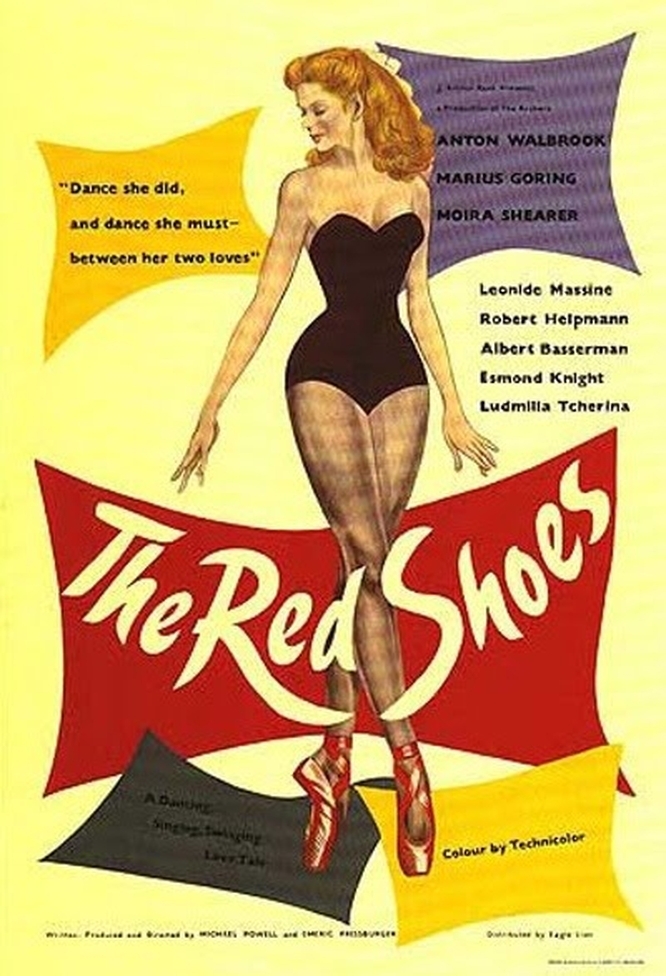
Less surprising are Martin Scorsese’s picks. He puts Roberto Rossellini’s Paisan at number one and Michael Powell and Emeric Pressburger’s Technicolor marvel The Red Shoes at number two. Scorsese has on multipleoccasions declared his love of the former and was central to getting the latter restored.
I’ve seen Marienbad at least twenty times over the past fifty years, and I don’t understand one scene of it, but what a fantastic experience. I don’t understand the Grand Canyon or Schoenberg’s Transfigured Night, either, but they continue to move me.
Jonathan Crow is a Los Angeles-based writer and filmmaker whose work has appeared in Yahoo!, The Hollywood Reporter, and other publications. You can follow him at @jonccrow.
I’ve often called documentary my favorite kind of film, knowing full well that the label designates less a defined genre than a usefully malleable description. What does a documentary have? An unscripted, nonfictional story; interviews; footage candidly shot — maybe. It may also include scripted, staged, fictional material, and may treat real events in a fictionalized manner or search for the reality in events clouded by fiction. For fine examples of the last, see the works of Errol Morris, four of which — A Brief History of Timeon Stephen Hawking (above), November 22, 1963on JFK, They Were Thereon IBM, and Werner Herzog Eats His Shoe on, well, subject obvious– you can see right here in our collection of 200 free documentaries online. And speaking of Herzog, the other living filmmaker doing the most to push outward the boundaries of documentary, we have From One Second to theNext, on the dangers of texting while driving, and Portrait Werner Herzog, on his own life and work.
But cinema had the documentary long before it had the likes of Morris and Herzog, and our collection includes a diversity of such pictures from all over the past century. 1958’s Ansel Adams: Photographer, for instance, profiles in motion the practice of the man whose work in still imagery anticipated, in many ways, the modern nature documentary. Documentary films have arguably provided the richest means of viewing every kind of creative mind at work, from Alfred Hitchcock (The Men Who Made the Movies: Hitchcock, Dial H for Hitchcock) to James Joyce (The Trials of Ulysses) to Joni Mitchell (Woman of Heart and Mind) to Charles Bukowski (Born Into This). Some of them even came as early entries from not-yet famous directors, including Stanley Kubrick (Day of the Flight, Flying Padre, The Seafarers), Jean-Luc Godard (Operation Concrete), and Kevin Smith (Mae Day: The Crumbling of a Documentary). Nobody can ever say where the documentary form will go next, but watch these 200 and you’ll have a pretty fair idea of all the exciting places — geographical, intellectual, personal, and artistic — it’s gone already.
French New Wave filmmaker Alain Resnais, who died at the age of 91 last week, changed cinema forever with a string of intellectually rigorous, nonlinear masterpieces like Hiroshima Mon Amour (1959) and Last Year at Marienbad (1961). Both films are about Resnais’s two obsessions – time and memory. Hiroshima is about a doomed relationship between a French actress and a Japanese architect who are both haunted by the war. Marienbad is an enigmatic puzzle of a movie that sharply divided audiences – either you were mesmerized by the movie or you were bored and infuriated by it. For better or worse, Marienbad influenced generations of fashion photographers; Calvin Klein’s Obsession ads were directly influenced by the film.
Resnais got his start just after the war making short documentaries. His best known is Night and Fog (1955), a meditation on both the Holocaust and the memory of the Holocaust. And above you can see another one of his documentaries – his 1956 short Toute la mémoire du monde (All the World’s Memories). It was put online by Criterion.
While the movie beautifully shows off the labyrinthine expanse of the Bibliothèque nationale de France – its vast collection of books, manuscripts and documents along with herculean efforts to compile and organize all of its information – the film becomes a rumination on the lengths that humanity will go to keep from forgetting. The film features some gorgeous cinematography by Ghislain Cloquet and a soundtrack by Maurice Jarre. Check it out.
Jonathan Crow is a Los Angeles-based writer and filmmaker whose work has appeared in Yahoo!, The Hollywood Reporter, and other publications. You can follow him at @jonccrow.
Surely you’ve seen Stanley Kubrick’s version of A Clockwork Orange. But have you seen Andy Warhol’s? Anthony Burgess’ 1962 novel of the robust culture of teenage violence in our freakish dystopian future caught the eye of not just the man who had previously made 2001: A Space Odyssey, but that of the man who had previously made the eight-hour still shot Empireas well. Warhol and Kubrick’s sensibilities differed, you might say, as did the means of production to which they had access, and a comparison of their Clockwork Orange adaptations highlights both. Using three shots in this 70-minute film instead of Empire’s one, Warhol creates, in the words of Ed Howard at Only the Cinema, “a strange and intriguing film which, like most of Warhol’s movies, often toes the line between slow and downright boring, a piece of “alienating, attitude-based cinema” that “provides no easy pleasures,” “replacing the conventional narrative drive with a cluttered mise-en-scene of bodies.” For all its cheapness, Warhol’s lo-fi cinematic rendition did at least come first, in 1965 to Kubrick’s 1971 — plus, you can watch it free on Youtube above.
“Vinyl is such a loose adaptation of the source novel that even people who have seen it should be forgiven for not realising that it is built on Burgess’s literary scaffold,” says the web site of the International Anthony Burgess Foundation. “The film is presented as a series of images of brutality, beatings, torture and masochism all performed by a group of men under the gaze of a glamorous woman. In its preoccupations with pornography and violence, it bears many of the oblique hallmarks of Warhol’s work, along with a familiar cast of Factory regulars such as Gerard Malanga, Edie Sedgwick and Ondine. The finished film is disturbing, contains unsimulated violent acts and is not very audience-friendly.” Either a strong disrecommendation or a strong recommendation, depending on your proclivities. And if none of that draws you, maybe the soundtrack including Martha and the Vandellas, The Kinks, The Rolling Stones, and the The Isley Brothers will. Did Warhol pay to license their songs? Given that he certainly didn’t look into obtaining the rights even to A Clockwork Orange, something inside me doubts it.
Wes Anderson’s latest, The Grand Budapest Hotel, opens this week and next in selected theaters, and reviews of the film seem to follow what at this point in the director’s career almost feels like a template: discuss the oddities and perfections of Anderson’s stalwart band of actors (always Bill Murray, natch, and often a standout young newcomer); dissect the use of music as a kind of mood ring for the deadpan dialogue; marvel at the intricate scenery and costuming; frost with a thesaurus’s worth of variations on the word “quirky.”
The Guardian gives us descriptors like “nostalgia-tinted” and “gently charming.” NPR writes “weird and wonderful,” “a tumble down a rabbit hole,” and “like a trio of Russian nesting dolls.” And Dave Itzkoff in The New York Times refers to the film’s “pastel color schemes, baroque costumes and delicate pastries.” Itzkoff goes further and wonders what we might find if we opened up Anderson’s head. Among other options, he imagines “a junk drawer crammed with kite string, Swiss Army knives, and remote-controlled toys” and “a well-organized tackle box.”
The Times review comes closest to evoking the tactile and hyper-specific Andersonian mise-en-scène, but few of his reviewers, it seems, dare attempt the difficult task of fitting the filmmaker into cinema history. Were we to chart the aesthetic interconnections of a few-hundred well-known auteurs, just where, exactly, would we put Wes Anderson? It’s a little hard to say—the worlds he creates feel sui generis, sprung fully formed from his “junk drawer, tackle box” of a mind. While his work has certain affinities with contemporary stylists like Spike Jonze and Michel Gondry, it also seems to emerge, like an isolated only child, from (writes Itzkoff) “a memory palace assembled ad hoc from brownstone apartments, underground caves and submarine compartments.”
But of course, like every artist, Anderson has many connections to history and tradition, and works through his influences to make them his own. And he hasn’t been shy about naming his favorite films and directors. In fact, the Texas-born filmmaker has compiled several lists of favorites in the past couple years. Below, find excerpts culled from three such lists.
Asked about his five favorite movies, Anderson quipped, “you may have to call it ‘The five movies that I just say, for whatever reason’… the five I manage to think up right now.” Here are the “top three” of that arbitrary list:
Rosemary’s Baby (Roman Polanski, 1968): “This has always been a big influence on me, or a source of ideas; and it’s always been one of my favorites.”
A Clockwork Orange (Stanley Kubrick, 1971): “It’s a movie that’s very particularly designed and, you know, conjures up this world that you’ve never seen quite this way in a movie before.”
Trouble in Paradise (Ernst Lubitsch, 1932): “I don’t know if anybody can make a movie like that anymore—that perfect tone, like a “soufflé”-type of move. A confection, I guess.”
Anderson, says the Daily News, “always fancied himself a New Yorker” even before he’d set foot in Manhattan. Below are a few of his top films set in his adopted city (Rosemary’s Baby is number 7).
4. Moonstruck (Norman Jewison, 1987): “I’ve always loved this script. It’s a very well-done Hollywood take on New York.”
6.Sweet Smell of Success (Alexander Mackendrick, 1957): “Here’s a classic staple of New York movies. The look of it is this distilled black-and-white New York and Clifford Odets writes great dialogue.”
8. Next Stop, Greenwich Village (Paul Mazursky, 1976): “I saw the movie many years ago and I don’t really remember much other than loving it. I love Paul Mazursky’s films. He’s a New Yorker who is a great writer-director.”
Anderson prefaces this list with: “I thought my take on a top-ten list might be to simply quote myself from the brief fan letters I periodically write to the Criterion Collection team.” Here are a few of his picks:
4. The Taking of Power by Louis XIV (Roberto Rossellini, 1966): “The man who plays Louis cannot give a convincing line reading, even to the ears of someone who can’t speak French—and yet he is fascinating…. What does good acting actually mean? Who is this Tag Gallagher?”
7. Classe tous risques (Claude Sautet, 1960): “I am a great fan of Claude Sautet, especially Un coeur en hiver.”
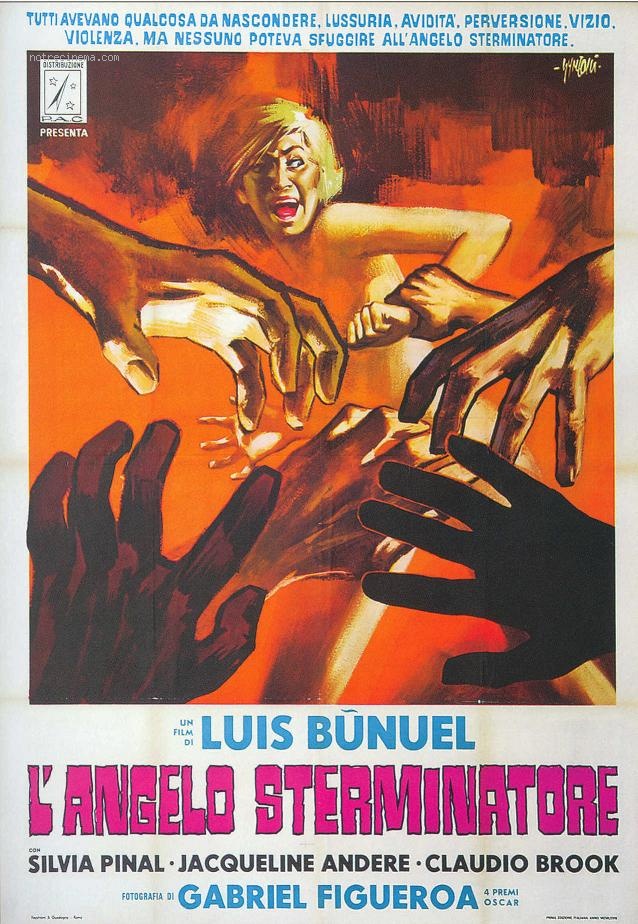
10. The Exterminating Angel(Luis Buñuel, 1962): “He is my hero. Mike Nichols said in the newspaper he thinks of Buñuel every day, which I believe I do, too, or at least every other.”
So there you have… at least some of it (I am surprised to find no Georges Méliès). Depending on your familiarity with Anderson’s choices, a perusal of his favorites’ lists may give you some special appreciation of The Grand Budapest Hotel. Then again, it may just be the case that the only real context for any Wes Anderson film is other Wes Anderson films.
Last year, I had a chance to interviewSteven Soderbergh for Side Effect, his final theatrical feature before his supposed retirement. During our discussion, he mused on the future of cinema.
There’s a new grammar of cinema out there. I’m convinced that there’s another sort of iteration to be had, and I don’t know what it is … I feel like we’re not taking advantage of how sophisticated we’ve gotten at reading the images. It’s not about the number of images or how fast those images come. It’s about loading each one with so many preexisting associations that the audience is doing a lot of work. No one has really challenged them before to mine all of these associations they have from seeing the images their whole lives.
When he was saying this, I confess that I had a hard time imagining what he was describing. But last week, Soderbergh uploaded a video to his website that might be what he had in mind – a mashup of Alfred Hitchcock’s masterpiece Psycho (1960) and Gus Van Sant’s shot-by-shot remake (1998). (You can watch a fragment above and the long, complete mashup here.)
For much of the piece, Soderbergh alternates between a scene from the original and one from the remake – Anne Heche, who plays Marion Crane in Van Sant’s version leaves her apartment for work and in the next scene, Janet Leigh shows up at the office. At other moments, he cuts back and forth within the scene; at one point the Marion from the remake is at a traffic light and sees her boss from the original movie. And during a few key points in the film — like the famed shower scene, which you can see above — Soderbergh does something different. That sequence opens with Heche disrobing and lathering up. But when the killer starts stabbing, Soderbergh jarringly overlays the original movie over top the remake, creating a disconcerting kaleidoscopic effect.
If there were any movie laden with “many preexisting associations,” it would be Psycho. All of Hitchcock’s simmering voyeurism, fetishism and general psychosexual weirdness come to a boil in this movie. Ever since it came out, filmmakers from Douglas Gordon to Brian De Palma have been trying to unpack its power.
When Van Sant unveiled his movie in 1998, audiences and critics alike were baffled. “Why bother,” seemed the general consensus. Indeed, Van Sant seems to have pulled off the enviable feat of snookering a Hollywood studio into funding a big-budget conceptual art film.
By intercutting the original with the copy, Soderbergh forces the audience to reappraise both by casting the greatness of Hitchcock’s movie and the oddness of Van Sant’s effort in a new light. You can watch the entire mashup here.
Jonathan Crow is a Los Angeles-based writer and filmmaker whose work has appeared in Yahoo!, The Hollywood Reporter, and other publications. You can follow him at @jonccrow.
We're hoping to rely on loyal readers, rather than erratic ads. Please click the Donate button and support Open Culture. You can use Paypal, Venmo, Patreon, even Crypto! We thank you!
Open Culture scours the web for the best educational media. We find the free courses and audio books you need, the language lessons & educational videos you want, and plenty of enlightenment in between.