Kepler, Galileo & Nostradamus in Color, on Google


To date, Google Books has scanned 50,000 books from the 16th and 17th cen­turies. And by work­ing with great Euro­pean libraries (Oxford Uni­ver­si­ty Library and the Nation­al Libraries of Flo­rence and Rome, to name a few), the Moun­tain View-based com­pa­ny expects to index hun­dreds of thou­sands of pre-1800 titles in the com­ing years.

Tra­di­tion­al­ly, most his­tor­i­cal texts have been scanned in black & white. But these new­fan­gled scans are being made in col­or, giv­ing read­ers any­where the chance to read old­er books “as they actu­al­ly appear” and to appre­ci­ate the “great flow­er­ing of exper­i­men­ta­tion in typog­ra­phy that took place in the 16th and 17th cen­turies.”

Some of the foun­da­tion­al texts now avail­able in col­or include Nos­tradamus’ Prog­nos­ti­ca­tion nou­velle et pre­dic­tion por­ten­teuse (1554), Johannes Kepler’s Epit­o­me Astrono­mi­ae Coper­ni­canae from 1635, and Galileo’s Sys­tema cos­micum from 1641. All texts can be viewed online, or down­loaded as a PDF (although the PDF’s lack col­or)…

Relat­ed Con­tent:

Google “Art Project” Brings Great Paint­ings & Muse­ums to You

Google Lit Trips

Google to Pro­vide Vir­tu­al Tours of 19 World Her­itage Sites

via Inside Google Books

by | Permalink | Make a Comment ( 6 ) |

Kasparov Talks Chess, Technology and a Little Life at Google

Gar­ry Kas­parov, still the high­est-rat­ed play­er in the his­to­ry of chess, pulled through Google late last year and field­ed ques­tions from the Googlers. (Don’t miss Conan O’Brien’s hilar­i­ous riff on that term.) As you might expect, the ques­tions often drift­ed back to Kas­parov’s famous 1996–97 match­es against IBM’s Deep Blue (a pre­cur­sor to Wat­son) and more recent bat­tles between humans and com­put­ers. The 65 minute Q&A includes a lot more good chess talk, but it also gets into the cur­rent state of Russ­ian pol­i­tics (Kas­parov has opposed Vladimir Putin and ran for pres­i­dent in 2008), plus the chess mas­ter’s var­i­ous the­o­ries about lead­er­ship and strate­gic think­ing…

PS Be sure to read Kas­parov’s thoughts on Wat­son writ­ten imme­di­ate­ly after watch­ing the much pub­li­cized Jeop­ardy! pro­grams last week.

by | Permalink | Make a Comment ( 1 ) |

Google “Art Project” Brings Great Paintings & Museums to You

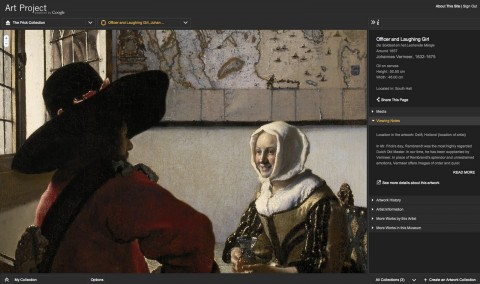
More good­ness out of Google­plex. Today, Google is rolling out a new tool called “Art Project,” which gives you access to more than 1,000 works of art appear­ing in 17 great muse­ums across the world. Using Google’s Street View tech­nol­o­gy, you can now tour col­lec­tions at the MoMA and Met in New York City, the Uffizi Gallery in Flo­rence, the Her­mitage in St. Peters­burg, the Van Gogh Muse­um and Rijksmu­se­um in Ams­ter­dam, the Nation­al Gallery in Lon­don â€“ just to name a few muse­ums now vir­tu­al­ly open to you. And you can vis­it count­less paint­ings, some ren­dered in super high res­o­lu­tion. (We’re talk­ing 7 bil­lion pix­els!) Take for exam­ple, Ver­meer’s Offi­cer and Laugh­ing Girl (see above) or Van Gogh’s The Bed­room. When you view Van Gogh’s paint­ing, make sure you zoom in and look at the brush­work.

Although you won’t have access to the entire­ty of every muse­um (actu­al­ly the selec­tions are rather lim­it­ed in many cas­es), Google’s Art Project does put 385 rooms on dis­play. Not a bad start.  You can read more about the new ini­tia­tive on Google’s blog here. H/T to @eugenphoto

by | Permalink | Make a Comment ( 6 ) |

What Technology Wants: Kevin Kelly @ Google

Kevin Kel­ly, the co-founder of Wired mag­a­zine and for­mer editor/publisher of the Whole Earth Cat­a­log (now free online), pub­lished a new book this past Octo­ber: What Tech­nol­o­gy Wants. Review­ing his own book on Boing­Bo­ing, Kel­ly sum­ma­rizes a few key points. “Tech­nol­o­gy is the most pow­er­ful force on the plan­et.” In fact, human­i­ty is a tool itself, and, like all liv­ing things, tech­nol­o­gy evolves, demon­strat­ing cer­tain uncon­scious “urges” and “wants” in the process. Tech­nol­o­gy can­not be held back. But we can try to opti­mize its ben­e­fits for human cul­ture, even while poten­tial­ly try­ing to lim­it the amount of tech­nol­o­gy in our own lives. It’s a heady book, and, per­haps fit­ting­ly, Kevin Kel­ly pulled through Google in Novem­ber and dis­tilled his new the­o­ry of tech­nol­o­gy in a 40 minute talk. Watch it above…

Bonus: You might also want to check out this con­ver­sa­tion record­ed at the New York Pub­lic Library. It fea­tures Kevin Kel­ly and Steven John­son (author of Where Good Ideas Come From) in con­ver­sa­tion with Robert Krul­wich, co-host of Radio Lab.

by | Permalink | Make a Comment ( 1 ) |

Google Visualizes Words & Culture

Since 2004, Google has dig­i­tized more than 15 mil­lion books, most­ly to build its Google Books ser­vice. But yes­ter­day Google Labs released a nice lit­tle spin­off prod­uct, the Ngram View­er, that pro­vides a win­dow into how we have his­tor­i­cal­ly used words, and what these usages say about our cul­ture.

This new visu­al­iza­tion tool lets you map out the usage of a giv­en word, or series of words, over a 200 year peri­od (1800 — 2008). For exam­ple, the Ngram View­er shows us that we think less about  â€śwar” these days, as com­pared to the 1940s and 1960s, and more about “ter­ror­ism.” (Click the links to “war” and “ter­ror­ism” and you will see what I mean.) Sim­i­lar­ly, the Eng­lish speak­ing world has recent­ly renewed its love affair with the dog vis-a-vis cats. And if you invest­ed in sal­sa and bailed on ketchup in 1980, you would be a pret­ty wealthy per­son right now.

Over­all, the Ngram data­base con­tains rough­ly 5.2 mil­lion books (a sub­set of the larg­er Google Books data­base), with some 500 bil­lion words, and it fea­tures texts in Chi­nese, Eng­lish, French, Ger­man, Russ­ian, and Span­ish. Get more details here.

via @webacion and @eugenephoto

Relat­ed Con­tent:

Intro­duc­ing the New Google eBook­store (with Free Clas­sics)

by | Permalink | Make a Comment ( 2 ) |

Google Teaches Your Parents Tech

Yes­ter­day, Google launched TeachParentsTech.org, a lit­tle spin-off web site that fea­tures 50 how-to videos, all designed to answer your par­ents’ basic tech ques­tions. Your father wants to know how to share a big file? Your moth­er is try­ing to fig­ure out how to book­mark a web page? Sim­ply head to TeachParentsTech.org, find the appro­pri­ate how-to video, send it via email, then free up time to teach your­self more heavy-duty tech.

Many of these videos show­case Google soft­ware. A coin­ci­dence? Hard­ly. Think of this as soft Google mar­ket­ing to the Boomers.

via The Offi­cial Google Blog

by | Permalink | Make a Comment ( 2 ) |

Introducing the New Google eBookstore (with Free Classics)

This morn­ing, Google offi­cial­ly opened up the new Google eBook­store, which gives con­sumers access to three mil­lion ebooks, includ­ing many free clas­sics. Tak­ing a page out of Ama­zon’s play­book, Google now lets you pur­chase books at com­pet­i­tive ebook prices and read them across mul­ti­ple plat­forms – mean­ing you can start read­ing a nov­el on your com­put­er’s web brows­er, then seam­less­ly switch to the iPad, Kin­dle, or smart­phone. And the con­tent will stay in sync, all in the cloud. (Get instruc­tions and apps here.) Anoth­er plus: you’re not forced to buy books from just Google. The new book­store is open to inde­pen­dent book­sellers and retail part­ners, which gives these small­er play­ers a chance to play (and per­haps even thrive) in the ebook mar­ket. You can get more infor­ma­tion on the new book­store on the Google Books blog, and don’t miss our Free eBooks col­lec­tion, which comes packed with many clas­sics.

Note: the Google eBook­store is cur­rent­ly lim­it­ed to the US mar­ket.

by | Permalink | Make a Comment ( 7 ) |

Bob Dylan in a Google Instant

Google Instant rolled out this week, backed by a pro­mo­tion­al adver­tise­ment (right above). Fans of Bob Dylan will instant­ly rec­og­nize the footage: A young Dylan flip­ping hand-drawn cards to the tune of “Sub­ter­ranean Home­sick Blues,” an icon­ic scene from D.A. Pen­nebak­er’s 1967 doc­u­men­tary, Don’t Look Back. This isn’t the first time the famous scene (watch it here) has been used in a mar­ket­ing cam­paign. Just a few years ago, while pro­mot­ing his new great­est hits album, Dylan let fans rework their own ver­sions of the scene. The gim­mick is still avail­able online. So have some fun with it.

Final­ly, don’t miss the new book Bob Dylan in Amer­i­ca by Sean Wilentz, an emi­nent Amer­i­can his­to­ri­an at Prince­ton who is also the his­to­ri­an-in-res­i­dence for Dylan’s offi­cial Web site, bobdylan.com. The book is now out and reviewed by The New York Times.

« Go BackMore in this category... »
Quantcast