Where Did the Monk’s Haircut Come From? A Look at the Rich and Contentious History of the Tonsure

One might assume from a mod­ern view­point that the hair­styles worn by monks arose to deal with male pat­tern bald­ness anx­i­ety. As in the school uni­form approach, you can’t sin­gle out one person’s bald­ness when every­one is bald. But this, again, would be a mod­ern view, full of the van­i­ty the tonsured—those with reli­gious­ly shaven heads—ostensibly vowed to renounce. Accord­ing to the Catholic Ency­clo­pe­dia, the ton­sure (from the Latin verb for “to shear”) began as a “badge of slav­ery” among Greeks and Romans. It was adopt­ed “on this very account” by ear­ly monas­tic orders, to mark the total sur­ren­der of the will.

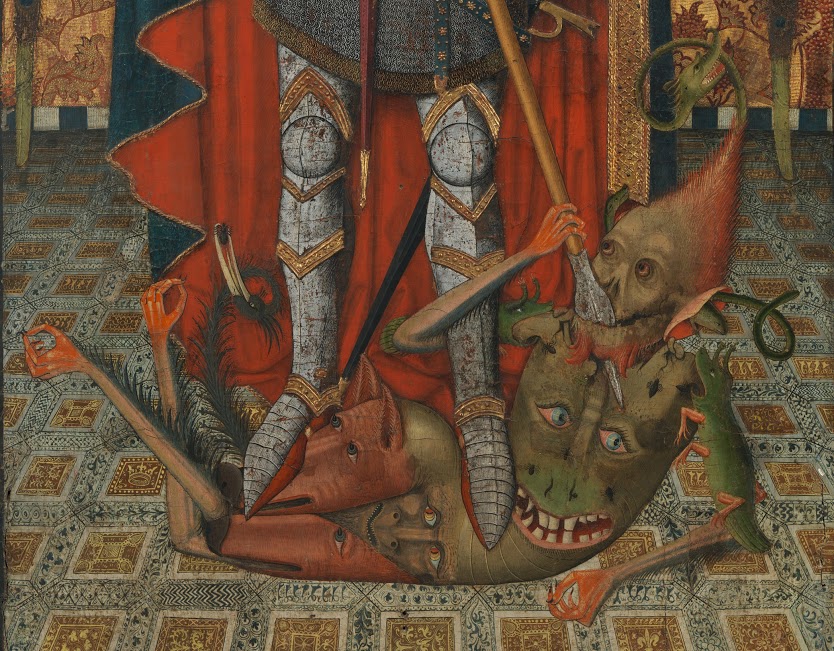
Would it sur­prise you, then, to learn that there were ton­sure wars? Prob­a­bly not if you know any­thing about church his­to­ry. Every arti­cle of cloth­ing and of faith has sparked some major con­tro­ver­sy at one time or anoth­er. So too with the ton­sure, of which—we learn in the Vox video above—there were three styles. The first, the coro­nal (or Roman or Petrine) ton­sure, is the one we see in count­less Medieval and Renais­sance paint­ings: a bald pate at the crown sur­round­ed by a fringe of hair, pos­si­bly meant to evoke the crown of thorns. Next is the Pauline, a ful­ly shaved head, seen much less in West­ern art since it was “used more com­mon­ly in East­ern Ortho­doxy.”

The third style of ton­sure caused all the trou­ble. Or rather, it was this style that served as a vis­i­ble sign of reli­gious dif­fer­ences between the Roman Catholic Church and the church­es in Britain and Ire­land. “Celtic Catholi­cism was ‘out of sync’ with the Roman Catholic Church,” notes Vox. “Roman Catholics would use the dif­fer­ences between them to por­tray Celtic Catholi­cism as pagan, or even as an off­shoot, cel­e­brat­ing the pow­er-hun­gry magi­cian, Simon Magus.” The Celtic ton­sure fell under a cloud, but how exact­ly did it dif­fer from the oth­ers? Since it dis­ap­peared in the ear­ly Mid­dle Ages and few images seem to have sur­vived, no one seems sure.

Daniel McCarthy, fel­low emer­i­tus at Trin­i­ty Col­lege, Dublin set out to solve the mys­tery. He spec­u­lates the Celtic ton­sure, as you’ll see on a com­put­er-sim­u­lat­ed monk’s head, was a tri­an­gu­lar shape, with the apex at the front. When the Roman Catholics took over Ire­land, all of the vest­ments, dates, and hair­cuts were slow­ly brought into line with the dom­i­nant view. The prac­tice of ton­sure offi­cial­ly end­ed in 1972, and fell out of favor in Eng­lish-speak­ing coun­tries cen­turies ear­li­er, accord­ing to the Catholic Ency­clo­pe­dia. But in any case, McCarthy sees the ton­sure not as a spurn­ing of fash­ion, but as a cult-like devo­tion to style. In that sense, we can see peo­ple who adopt sim­i­lar hair­cuts around the world as still visu­al­ly sig­nal­ing their mem­ber­ship in some kind of order, reli­gious or oth­er­wise.

Relat­ed Con­tent:

How a Bal­ti­more Hair­dress­er Became a World-Renowned “Hair Archae­ol­o­gist” of Ancient Rome

Ani­mat­ed: Stephen Fry & Ann Wid­de­combe Debate the Catholic Church

50 Years of Chang­ing David Bowie Hair Styles in One Ani­mat­ed GIF

Josh Jones is a writer and musi­cian based in Durham, NC. Fol­low him at @jdmagness.

Earthrise, Apollo 8’s Photo of Earth from Space, Turns 50: Download the Iconic Photograph from NASA

Just a lit­tle over fifty years ago, we did­n’t know what Earth looked like from space. Or rather, we had a decent idea what it looked like, but no clear col­or images of the sight exist­ed. 2001: A Space Odyssey pre­sent­ed a par­tic­u­lar­ly strik­ing vision of Earth from space in the spring of 1968, but it used visu­al effects and imag­i­na­tion (both to a still-impres­sive degree) to do so. Only on Christ­mas Eve of that year would Earth be gen­uine­ly pho­tographed from that kind of dis­tance, cap­tured with a Has­sel­blad by Bill Anders, lunar mod­ule pilot of NASA’s Apol­lo 8 mis­sion.

“Two days lat­er, the film was processed,” writes The Wash­ing­ton Post’s Chris­t­ian Dav­en­port, “and NASA released pho­to num­ber 68-H-1401 to the pub­lic with a news release that said: “This view of the ris­ing earth greet­ed the Apol­lo 8 astro­nauts as they came from behind the moon after the lunar orbit inser­tion burn.”

The image, called Earth­rise, went “as viral as any­thing could in 1968, a time that saw all sorts of pho­tographs leave their mark on the nation­al con­scious­ness, most of them scars.” Life mag­a­zine ran it with lines from U.S. poet lau­re­ate James Dick­ey: “Behold/ The blue plan­et steeped in its dream/ Of real­i­ty.”

It’s often said of icon­ic pho­tographs that they make their view­ers see their sub­jects in a new way, an effect Earth­rise must exem­pli­fy more clear­ly than any oth­er pic­ture. “The vast lone­li­ness is awe-inspir­ing,” said Apol­lo 8 com­mand mod­ule pilot Jim Lovell at the time, “and it makes you real­ize just what you have back there on Earth.” At the recent cel­e­bra­tion of the mis­sion’s 50th anniver­sary at the Wash­ing­ton Nation­al Cathe­dral, Anders remem­bered, “As I looked down at the Earth, which is about the size of your fist at arm’s length, I’m think­ing this is not a very big place. Why can’t we get along?”

You can down­load Earth­rise from NASA’s web site and learn more about the tak­ing of the pho­to from the video above, made for its 45th anniver­sary. Using all avail­able data on the mis­sion, includ­ing audio record­ings of the astro­nauts them­selves, the video pre­cise­ly re-cre­ates the cir­cum­stances under which Anders shot Earth­rise, for­ev­er pre­serv­ing a view made pos­si­ble by a roll of the space­craft exe­cut­ed by Apol­lo 8 com­man­der Frank Bor­man. To what extent their pho­to­graph­ic achieve­ment has con­vinced us all to get along remains debat­able, but has human­i­ty, since the day after Christ­mas 1968, ever thought about its blue plan­et in quite the same way as before?

Relat­ed Con­tent:

The Won­der, Thrill & Mean­ing of See­ing Earth from Space. Astro­nauts Reflect on The Big Blue Mar­ble

Coun­tries and Coast­lines: A Dra­mat­ic View of Earth from Out­er Space

What It Feels Like to Fly Over Plan­et Earth

The Beau­ty of Space Pho­tog­ra­phy

The Cap­ti­vat­ing Sto­ry Behind the Mak­ing of Ansel Adams’ Most Famous Pho­to­graph, Moon­rise, Her­nan­dez, New Mex­i­co

Based in Seoul, Col­in Mar­shall writes and broad­casts on cities, lan­guage, and cul­ture. His projects include the book The State­less City: a Walk through 21st-Cen­tu­ry Los Ange­les and the video series The City in Cin­e­ma. Fol­low him on Twit­ter at @colinmarshall or on Face­book.

Napoleon’s English Lessons: How the Military Leader Studied English to Escape the Boredom of Life in Exile

When we talk about coun­try club prison sen­tences, we tend to imag­ine a mar­gin­al amount of time spent on the inside, though the phrase sounds like an extend­ed vaca­tion. Napoleon Bona­parte—exiled to the island of St. Hele­na for his crimes against Europe—got the full treat­ment, what some might even call a sweet­heart deal. As the Pub­lic Domain Review notes, “the British had agreed to pro­vide Le Petit Capo­ral with plen­ti­ful wine, meat, and musi­cal instru­ments.” He was giv­en his own com­fort­able lodg­ings, a spa­cious coun­try house, though it’s said to have been draughty and full of rats.

On the oth­er hand, Napoleon had to foreswear “what he most craved—family, pow­er, Europe,” for a con­di­tion of extreme iso­la­tion. The loss weighed heav­i­ly. After spend­ing six years 1200 miles from shore, he died, some say of poi­son­ing, but oth­ers say of bore­dom. Of his few amuse­ments, con­vers­ing with Count Emmanuel de Las Cases—“historian and loy­al sup­port­er who had been allowed to voy­age with him to Saint Helena”—proved most stim­u­lat­ing. Pre­vent­ed from receiv­ing news­pa­pers in French, he longed to read the few he found in Eng­lish.

Las Cas­es endeav­ored to teach Napoleon the lan­guage of his jail­ers, and the for­mer Emper­or strug­gled might­i­ly to learn it. After three months on the island, he spent the fol­low­ing three study­ing every day, even­tu­al­ly pro­duc­ing trans­la­tions from his French like that below:

When will you be wise
Nev­er as long as j should be in this isle
But j shall become wise after hav­ing passed the line
When j shall land in France j shall be very con­tent…

My wife shall come near to me, my son shall be great and strong if he will be able to trink a bot­tle of wine at din­ner j shall [toast] with him… / The women believe they [are] ever pre­ty / The time has not wings / When you shall come, you shall see that j have ever loved you.

Eight pages in Napoleon’s own hand remain from his time as a stu­dent of Eng­lish on St. Hele­na in the first few months of 1816. They are “some of the most evoca­tive doc­u­ments we have from Napoleon’s time” on the island, the Fon­da­tion Napoleon writes, bear­ing “poignant wit­ness to the frus­tra­tion Napoleon felt in exile…. It is tempt­ing to read a refusal of exile in these sheets, both in the sen­tences them­selves, and in Napoleon’s insis­tent use of ‘j’ (as in the French ‘je’) rather than the Eng­lish ‘I.’”

In one let­ter that sur­vives from March 7, 1816 (see it scanned above), writ­ten for Las Cas­es to cor­rect the fol­low­ing day, Napoleon takes stock of his progress, or lack there­of.

Count las­cas­es — Since sixt week j learn the Englich and j do not any progress. Six week do four­ty and two day. If might have learn fiv­i­ty word four day I could know it two thu­sands and two hun­dred. It is in the dic­tio­nary more of four­ty thou­sand; even he could must twin­ty bout much of tems for know it our hun­dred and twen­ty week, which do more two yars. After this you shall agrée that to study one tongue is a great labour who it must do into the young aged.

Las Cas­es reports that his stu­dent “had an extra­or­di­nary intel­li­gence but a very bad mem­o­ry.” Gram­mar came much more eas­i­ly than vocab­u­lary. His frus­tra­tion over being “impris­oned in the mid­dle of this lan­guage” is record­ed in Las Cas­es’ Mémo­r­i­al de Sainte-Hélène, a record of his fif­teen months on the island with Napoleon. The book became “a pub­lish­ing sen­sa­tion” and would “do much,” the Pub­lic Domain Review writes, “to turn the per­cep­tion of Napoleon from a dic­ta­tor into a lib­er­a­tor.”

via Pub­lic Domain Review

Relat­ed Con­tent:

Napoleon’s Kin­dle: See the Minia­tur­ized Trav­el­ing Library He Took on Mil­i­tary Cam­paigns

Vin­tage Pho­tos of Vet­er­ans of the Napoleon­ic Wars, Tak­en Cir­ca 1858

Napoleon: The Great­est Movie Stan­ley Kubrick Nev­er Made

Josh Jones is a writer and musi­cian based in Durham, NC. Fol­low him at @jdmagness.

Buckminster Fuller Documented His Life Every 15 Minutes, from 1920 Until 1983

If you’ve heard of Buck­min­ster Fuller, you’ve almost cer­tain­ly heard the word “Dymax­ion.” Despite its strong pre-Space Age redo­lence, the term has some­how remained com­pelling into the 21st cen­tu­ry. But what does it mean? When Fuller, a self-described “com­pre­hen­sive, antic­i­pa­to­ry design sci­en­tist,” first invent­ed a house meant prac­ti­cal­ly to rein­vent domes­tic liv­ing, Chicago’s Mar­shall Field and Com­pa­ny depart­ment store put a mod­el on dis­play. The com­pa­ny “want­ed a catchy label, so it hired a con­sul­tant, who fash­ioned ‘dymax­ion’ out of bits of ‘dynam­ic,’ ‘max­i­mum,’ and ‘ion,’ ” writes The New York­er’s Eliz­a­beth Kol­bert in a piece on Fuller’s lega­cy. “Fuller was so tak­en with the word, which had no known mean­ing, that he adopt­ed it as a sort of brand name.” After the Dymax­ion House came the Dymax­ion Vehi­cle, the Dymax­ion Map, and even the two-hour-a-day Dymax­ion Sleep Plan.

“As a child, Fuller had assem­bled scrap­books of let­ters and news­pa­per arti­cles on sub­jects that inter­est­ed him,” Kol­bert writes. “When, lat­er, he decid­ed to keep a more sys­tem­at­ic record of his life, includ­ing every­thing from his cor­re­spon­dence to his dry-clean­ing bills, it became the Dymax­ion Chronofile.” The Dymax­ion Chronofile now resides in the R. Buck­min­ster Fuller Col­lec­tion at Stan­ford Uni­ver­si­ty, a place that has mer­it­ed the atten­tion of no less a guide to the fas­ci­nat­ing cor­ners of the world than Atlas Obscu­ra.

“The files go back to when he was four-years-old, but he only seri­ous­ly start­ed the archive in 1917,” writes that site’s Alli­son C. Meier. “From then until his death in 1983 he col­lect­ed every­thing from each day, with ingo­ing and out­go­ing cor­re­spon­dence, news­pa­per clip­pings, draw­ings, blue­prints, mod­els, and even the mun­dane ephemera like dry clean­ing bills.” Fuller added to the Dymax­ion Chronofile not just every day but, from the year 1920 until his death in 1983, every fif­teen min­utes.

In 1962 Fuller described the Dymax­ion Chronofile as what would hap­pen “if some­body kept a very accu­rate record of a human being, going through the era from the Gay ’90s, from a very dif­fer­ent kind of world through the turn of the cen­tu­ry — as far into the twen­ti­eth cen­tu­ry as you might live.” Using him­self as the case sub­ject for the project (as he did for many projects, which led him to nick­name him­self “Guinea Pig B”) meant that “I could not be judge of what was valid to put in or not. I must put every­thing in, so I start­ed a very rig­or­ous record.” Open Cul­ture’s own Ted Mills has writ­ten else­where about the rig­ors of stor­ing and main­tain­ing that record in archive form over the decades since Fuller’s death, and now, as with so much Fuller did, the Dymax­ion Chronofile stands as both a com­pelling odd­i­ty and proof of real, if askew, pre­science. After all, how many of us have tak­en to doc­u­ment­ing our own lives online with near­ly equal inten­si­ty — and how many of us do it even more often than every fif­teen min­utes?

Relat­ed Con­tent:

Buck­min­ster Fuller’s Dymax­ion Sleep Plan: He Slept Two Hours a Day for Two Years & Felt “Vig­or­ous” and “Alert”

Buck­min­ster Fuller’s Map of the World: The Inno­va­tion that Rev­o­lu­tion­ized Map Design (1943)

Watch the Mak­ing of the Dymax­ion Globe: A 3‑D Ren­der­ing of Buck­min­ster Fuller’s Rev­o­lu­tion­ary Map

A Har­row­ing Test Dri­ve of Buck­min­ster Fuller’s 1933 Dymax­ion Car: Art That Is Scary to Ride

Bet­ter Liv­ing Through Buck­min­ster Fuller’s Utopi­an Designs: Revis­it the Dymax­ion Car, House, and Map

Every­thing I Know: 42 Hours of Buck­min­ster Fuller’s Vision­ary Lec­tures Free Online (1975)

Based in Seoul, Col­in Mar­shall writes and broad­casts on cities, lan­guage, and cul­ture. His projects include the book The State­less City: a Walk through 21st-Cen­tu­ry Los Ange­les and the video series The City in Cin­e­ma. Fol­low him on Twit­ter at @colinmarshall or on Face­book.

Researchers Recreate the Sounds Worshippers Heard in the Mosque of Cordoba Over 1,200 Years Ago

As we know from con­ver­sa­tions in sub­way tun­nels or singing in the show­er, dif­fer­ent kinds of spaces and build­ing mate­ri­als alter the qual­i­ty of a sound. It’s a sub­ject near and dear to archi­tectsmusi­cians, and com­posers. The rela­tion­ship between space and sound also cen­tral­ly occu­pies the field of “Acoustic Arche­ol­o­gy.” But here, an unusu­al prob­lem presents itself. How can we know how music, voice, and envi­ron­men­tal sound behaves in spaces that no longer exist?

More specif­i­cal­ly, writes EurekAltert!, the ques­tion that faced researchers at the Uni­ver­si­ty of Seville was “how did words or the rain sound inside the Mosque of Cor­do­ba in the time of Abd al-Rah­man I?” The founder of an Iber­ian Mus­lim dynasty began con­struc­tion on the Mosque of Cor­do­ba in the 780s. In the hun­dreds of years since, it under­went sev­er­al expan­sions and, lat­er, major ren­o­va­tions after it became the Cathe­dral of Cor­do­ba in the 13th cen­tu­ry.

The archi­tec­ture of the 8th cen­tu­ry build­ing is lost to his­to­ry, and so, it would seem, is its care­ful sound design. “Unlike frag­ments of tools or shards of pot­tery,” Atlas Obscu­ra’s Jes­si­ca Leigh Hes­ter notes, “sounds don’t lodge them­selves in the soil.” Archeo-acousti­cians do not have recourse to the mate­r­i­al arti­facts arche­ol­o­gists rely on in their recon­struc­tions of the past. But, giv­en the tech­no­log­i­cal devel­op­ments in reverb sim­u­la­tion and audio soft­ware, these sci­en­tists can nonethe­less approx­i­mate the sounds of ancient spaces.

In this case, Uni­ver­si­ty of Seville’s Rafael Suárez and his col­lab­o­ra­tors in the research group “Archi­tec­ture, Her­itage and Sus­tain­abil­i­ty” col­lect­ed impulse responses—recordings of reverberation—from the cur­rent cathe­dral. “From there, they used soft­ware to recon­struct the inter­nal archi­tec­ture of the mosque dur­ing four dif­fer­ent phas­es of con­struc­tion and ren­o­va­tion.… Next, they pro­duced aural­iza­tions, or sound files repli­cat­ing what wor­ship­pers would have heard.”

To hear what late-8th cen­tu­ry Span­ish Mus­lims would have, “researchers used soft­ware to mod­el how the archi­tec­ture would change the same snip­pet of a record­ed salat, or dai­ly prayer. In the first con­fig­u­ra­tion, the prayer sounds full-bod­ied and sonorous; in the mod­el that reflects the mosque’s last ren­o­va­tion, the same prayer echoes as though it was recit­ed deep inside a cave.” All of those ren­o­va­tions, in oth­er words, destroyed the son­ic engi­neer­ing of the mosque.

As the authors write in a paper recent­ly pub­lished in Applied Acoustics, “the enlarge­ment inter­ven­tions failed to take the func­tion­al aspect of the mosque and gave the high­est pri­or­i­ty to main­ly the aes­thet­ic aspect.” In the sim­u­la­tion of the mosque as it sound­ed in the 780s, sound was intel­li­gi­ble all over the build­ing. Lat­er con­struc­tion added what the researchers call “acoustic shad­ow zones” where lit­tle can be heard but echo.

Unlike Hagia Sofia, the Byzan­tine cathe­dral-turned-mosque, which retained its basic design over the course of almost 1500 years, and thus its basic sound design, the Mosque-Cathe­dral of Cor­do­ba was so altered archi­tec­tural­ly that a “sig­nif­i­cant dete­ri­o­ra­tion of the acoustic con­di­tions” result­ed, the authors claim. The mosque’s many remain­ing visu­al ele­ments would be famil­iar to 8th cen­tu­ry atten­dees, writes Hes­ter, includ­ing “gilt cal­lig­ra­phy and intri­cate tiles… and hun­dreds of columns—made from jasper, onyx, mar­ble, and oth­er stones sal­vaged from Roman ruins.” But the “acoustic land­scape” of the space would be unrec­og­niz­able.

The spe­cif­ic sounds of a space are essen­tial to mak­ing “a place feel like itself.” Some­thing to con­sid­er the next time you’re plan­ning a major home ren­o­va­tion.

via Atlas Obscu­ra

Relat­ed Con­tent:

Hear the Hagia Sophia’s Awe-Inspir­ing Acoustics Get Recre­at­ed with Com­put­er Sim­u­la­tions, and Let Your­self Get Trans­port­ed Back to the Mid­dle Ages

The Same Song Sung in 15 Places: A Won­der­ful Case Study of How Land­scape & Archi­tec­ture Shape the Sounds of Music

David Byrne: How Archi­tec­ture Helped Music Evolve

Josh Jones is a writer and musi­cian based in Durham, NC. Fol­low him at @jdmagness.

Discover Isotype, the 1920s Attempt to Create a Universal Language with Stylish Icons & Graphic Design

How long has mankind dreamed of an inter­na­tion­al lan­guage? The first answer that comes to mind, of course, dates that dream to the time of the Bib­li­cal sto­ry of the Tow­er of Babel. If you don’t hap­pen to believe that human­i­ty was made to speak a vari­ety of mutu­al­ly incom­pre­hen­si­ble tongues as pun­ish­ment for dar­ing to build a tow­er tall enough to reach heav­en, maybe you’d pre­fer a date some­where around the much lat­er devel­op­ment of Esperan­to, the best-known lan­guage invent­ed specif­i­cal­ly to attain uni­ver­sal­i­ty, in the late 19th cen­tu­ry. But look ahead a few decades past that and you find an intrigu­ing exam­ple of a lan­guage cre­at­ed to unite the world with­out using words at all: Inter­na­tion­al Sys­tem Of Typo­graph­ic Pic­ture Edu­ca­tion, or Iso­type.

“Near­ly a cen­tu­ry before info­graph­ics and data visu­al­iza­tion became the cul­tur­al ubiq­ui­ty they are today,” writes Brain Pick­ings’ Maria Popo­va, “the pio­neer­ing Aus­tri­an soci­ol­o­gist, philoso­pher of sci­ence, social reformer, and cura­tor Otto Neu­rath (Decem­ber 10, 1882–December 22, 1945), togeth­er with his not-yet-wife Marie, invent­ed ISOTYPE — the vision­ary pic­togram lan­guage that fur­nished the vocab­u­lary of mod­ern info­graph­ics.”

First known as the Vien­na Method of Pic­to­r­i­al Sta­tis­tics, Iso­type­’s ini­tial devel­op­ment began in 1926 at Vien­na’s Gesellschafts- und Wirtschaftsmu­se­um (or Social and Eco­nom­ic Muse­um), of which Neu­rath was the found­ing direc­tor. There he began to assem­ble some­thing like a design stu­dio team, with the mis­sion of cre­at­ing a set of pic­to­r­i­al sym­bols that could ren­der dense social, sci­en­tif­ic tech­no­log­i­cal, bio­log­i­cal, and his­tor­i­cal infor­ma­tion leg­i­ble at a glance.

Neu­rath’s most impor­tant ear­ly col­lab­o­ra­tor on Iso­type was sure­ly the wood­cut artist Gerd Arntz, at whose site you can see the more than 4000 pic­tograms he cre­at­ed to sym­bol­ize “key data from indus­try, demo­graph­ics, pol­i­tics and econ­o­my.” Arntz designed them all in accor­dance with Neu­rat’s belief that even then the long “vir­tu­al­ly illit­er­ate” pro­le­tari­at “need­ed knowl­edge of the world around them. This knowl­edge should not be shrined in opaque sci­en­tif­ic lan­guage, but direct­ly illus­trat­ed in straight­for­ward images and a clear struc­ture, also for peo­ple who could not, or hard­ly, read. Anoth­er out­spo­ken goal of this method of visu­al sta­tis­tics was to over­come bar­ri­ers of lan­guage and cul­ture, and to be uni­ver­sal­ly under­stood.”

By the mid-1930s, writes The Atlantic’s Steven Heller in an arti­cle on the book Iso­type: Design and Con­texts 1925–1971, “with the Nazi march into Aus­tria, Neu­rath fled Vien­na for Hol­land. He met his future wife Marie Rei­de­meis­ter there and after the Ger­man bomb­ing of Rot­ter­dam the pair escaped to Eng­land, where they were interned on the Isle of Man. Fol­low­ing their release they estab­lished the Iso­type Insti­tute in Oxford. From this base they con­tin­ued to devel­op their unique strat­e­gy, which influ­enced design­ers world­wide.” Today, even those who have nev­er laid eyes on Iso­type itself have exten­sive­ly “read” the visu­al lan­guages it has influ­enced: Giz­mod­o’s Alis­sa Walk­er points to the stan­dard­ized icons cre­at­ed in the 70s by the U.S. Depart­ment of Trans­porta­tion and the Amer­i­can Insti­tute of Graph­ic Arts as well as today’s emo­ji — prob­a­bly not exact­ly what Neu­rath had in mind as the lan­guage of Utopia back when he was co-found­ing the Vien­na Cir­cle, but nev­er­the­less a dis­tant cousin of Iso­type in “its own adorable way.”

via Brain Pick­ings

Relat­ed Con­tent:

The Art of Data Visu­al­iza­tion: How to Tell Com­plex Sto­ries Through Smart Design

You Could Soon Be Able to Text with 2,000 Ancient Egypt­ian Hiero­glyphs

Say What You Real­ly Mean with Down­load­able Cindy Sher­man Emoti­cons

The Hobo Code: An Intro­duc­tion to the Hiero­glyph­ic Lan­guage of Ear­ly 1900s Train-Hop­pers

Based in Seoul, Col­in Mar­shall writes and broad­casts on cities, lan­guage, and cul­ture. His projects include the book The State­less City: a Walk through 21st-Cen­tu­ry Los Ange­les and the video series The City in Cin­e­ma. Fol­low him on Twit­ter at @colinmarshall or on Face­book.

Watch a Playthrough of the Oldest Board Game in the World, the Sumerian Royal Game of Ur, Circa 2500 BC

They may not sur­prise the aver­age mar­ket ana­lyst, but the gam­ing industry’s fig­ures tell a pret­ty com­pelling sto­ry. New­zoo esti­mates that “2.3 bil­lion gamers across the globe will spend $137. 9 bil­lion on games in 2018.” Ven­ture­Beat reports that mobile games account for over 50 per­cent of the total. Cur­rent­ly, “about 91 per­cent of the glob­al mar­ket is dig­i­tal, mean­ing that $125.3 bil­lion worth of games flows through dig­i­tal­ly con­nect­ed chan­nels as opposed to phys­i­cal retail.”

That’s a lot of vir­tu­al dough float­ing around in vir­tu­al worlds. But this vast and rapid growth in dig­i­tal gam­ing does not mean phys­i­cal games are going away any­time soon—and that includes cards, board games, and oth­er table­top games, a mar­ket that has “surged as play­ers have grown jad­ed with the dig­i­tal screens they toil over dur­ing the work day,” wrote Joon Ian Wong in 2016.

Ven­ture cap­i­tal is flow­ing into board game devel­op­ment. Table­top bars and cafes are pop­ping up all over the world, encour­ag­ing peo­ple to min­gle over Scrab­ble and Cards Against Human­i­ty. It seems the time is just right to revive the old­est playable board game in the world. If some­one hasn’t already launched a Kick­starter to bankroll a new Roy­al Game of Ur, I sus­pect we’ll see one any day now. At least four-and-a-half-thou­sand years old, accord­ing to British Muse­um Cura­tor Irv­ing Finkel, the Roy­al Game of Ur was prob­a­bly invent­ed by the Sume­ri­ans. And it seems like it might still be a blast, and a con­sid­er­able chal­lenge, to play.

“You might think it’s so old that it’s irre­triev­able to us, that we’ve got no idea what it was like play­ing, what the rules were like,” Finkel says in the video at the top, “but all sorts of evi­dence has come to light so that we know how this game was played.” He promis­es, in no uncer­tain terms, to wipe the floor with YouTu­ber Tom Scott in a Roy­al Game of Ur show­down, and Scott, who has nev­er played the game before, seems at a decid­ed dis­ad­van­tage. But watch their con­test to see how the game is played and whether Finkel makes good on his threat. Along the way, he lib­er­al­ly shares his knowl­edge.

For a short­er course on the Roy­al Game of Ur, see Finkel’s video above. It takes him a cou­ple min­utes to get around to intro­duc­ing his sub­ject, the dis­cov­ery and deci­pher­ing of the “world’s old­est rule book.” A con­sum­mate ancient his­to­ry detec­tive, Finkel describes how he decod­ed an ancient tablet that explained a game, but which game, no one knew. So, the ded­i­cat­ed cura­tor tried the rules on every mys­te­ri­ous ancient game he could find, till he land­ed on the “game of twen­ty squares” from Mesopotamia. “It fit­ted per­fect­ly,” he says with rel­ish. See the orig­i­nal board, pieces, and dice from about 2500 BC, and learn how Finkel had been search­ing for its rules of play since he was 9 years old.

For more of Finkel’s pas­sion­ate pub­lic schol­ar­ship, see him demon­strate how to write in cuneiform and read about how his work on cuneiform tablets led to him dis­cov­er­ing the old­est ref­er­ence to the Noah’s Ark myth.

Relat­ed Con­tent:

How to Write in Cuneiform, the Old­est Writ­ing Sys­tem in the World: A Short, Charm­ing Intro­duc­tion

Hear the “Seik­i­los Epi­taph,” the Old­est Com­plete Song in the World: An Inspir­ing Tune from 100 BC

The British Muse­um Is Now Open To Every­one: Take a Vir­tu­al Tour and See 4,737 Arti­facts, Includ­ing the Roset­ta Stone

Josh Jones is a writer and musi­cian based in Durham, NC. Fol­low him at @jdmagness.

Meet the Hurdy Gurdy, the Hand-Cranked Medieval Instrument with 80 Moving Parts

Donovan’s “Hur­dy Gur­dy Man” may be the creepi­est song ever writ­ten about an obscure medieval instru­ment (made all the more so by its use in David Fincher’s Zodi­ac), but the Hur­dy Gur­dy did not give his record­ing its omi­nous sound. Those dron­ing notes come from an Indi­an tan­pu­ra. Yet they evoke the title instru­ment, an inge­nious musi­cal inven­tion “set up pri­mar­i­ly for the pur­pose of mak­ing drones,” Case West­ern Reserve’s Col­lege of Art and Sci­ences explains. “In the Mid­dle Ages, it was known in Latin as the organ­istrum and the sym­pho­nia, and in French as the vielle à roue (the vielle with the wheel).”

With a sound pro­duced by a “rosined wood­en wheel, turned by a crank” that set “a num­ber of strings in con­tin­u­ous dron­ing vibra­tion,” the hur­dy gur­dy can, it’s true, give off a bit of a folk hor­ror vibe. From its very ear­ly, maybe 10th or 11th cen­tu­ry ori­gins in litur­gi­cal music, hur­dy gur­dy expert Jim Kendros tells us in the video above, the instru­ment became asso­ci­at­ed with Euro­pean folk music, shrink­ing from a beast played by two peo­ple to more portable dimen­sions, about the size of a large gui­tar and resem­bling a hand-cranked vio­lin with keys for play­ing melodies on cer­tain strings.

Though it grew small­er and more maneu­ver­able, how­ev­er, the instru­ment grew no less com­pli­cat­ed. Kendros calls it “the equiv­a­lent of a medieval space­ship,” with its more than 80 mov­ing parts.

The hur­dy gur­dy, or “wheel fid­dle,” played in the TED Talk above by Car­o­line Phillips looks less like a fid­dle, or a space­ship, and more like a medieval keytar—just one of the many shapes the instru­ment could take. All of them, how­ev­er, had one impor­tant fea­ture in com­mon: the hur­dy gur­dy is “the only musi­cal instru­ment that uses a crank to turn a wheel to rub strings like the bow of a vio­lin to pro­duce music.” His­tor­i­cal­ly, it was used in medieval dance music “because of the unique­ness of the melody com­bined with the acoustic boom box” of its large body. Try not to shake your body, or to shiv­er, when Phillips plays a haunt­ing, dron­ing Basque folk song.

The Hur­dy Gur­dy spread all over Europe, from Britain to France, Spain, Italy, Ger­many, Hun­gary, and Swe­den, where stringed-instru­ment enthu­si­asts The String­dom caught up with vir­tu­oso Hur­dy Gur­dy play­er Johannes Geworkian Hell­man. He tells us how the hur­dy gur­dy and its dron­ing son­ic cousin, the bag­pipes, set off “an ear­ly folk revival” as com­posers took inspi­ra­tion from peas­ant music. The inter­est from medieval upper class­es meant bet­ter luthiers and high­er-qual­i­ty hur­dy gur­dies. Now mod­ern inter­est in the Hur­dy Gur­dy is grow­ing. While it may take two to three years to hand­craft one, “a lot of new instru­ments are get­ting made,” says Hell­man.

Should you doubt that the 1000-year old hur­dy gur­dy can still sound hip, lis­ten to Hell­man play an elec­tri­fied ver­sion in his hur­dy gurdy/accordion duo, Sym­bio, or hur­dy gurdy/dulcimer two-piece, Mai­ja & Johannes. He coax­es from the instru­ment such a range of rhythms and tim­bres that it’s easy to see why it was so immense­ly pop­u­lar for so long. Yet for all its musi­cal appeal, it is a com­plex machine, dif­fi­cult to tune and sub­ject to any num­ber of mechan­i­cal prob­lems. Not for the casu­al ama­teur, the instru­ment still requires a ded­i­cat­ed Hur­dy Gur­dy man or woman to make it sing—a much more com­mon sight than in Dono­van’s day but an exceed­ing­ly rare one com­pared to the many cen­turies of the hur­dy gur­dy’s hey­day. See more hur­dy gur­dies at the Vin­tage News.

Relat­ed Con­tent:

How an 18th-Cen­tu­ry Monk Invent­ed the First Elec­tron­ic Instru­ment

Vis­it an Online Col­lec­tion of 61,761 Musi­cal Instru­ments from Across the World

Watch a Musi­cian Impro­vise on a 500-Year-Old Music Instru­ment, The Car­il­lon

New Order’s “Blue Mon­day” Played with Obso­lete 1930s Instru­ments

Josh Jones is a writer and musi­cian based in Durham, NC. Fol­low him at @jdmagness

« Go BackMore in this category... »
Quantcast