The pairing’s not as odd as you might think. The Khan Academy’s mission is in many ways quite similar to that of Sesame Street—free education for the people, distributed on a global scale. Both are non-profit. The Khan Academy uses whiteboard screencasting where Sesame Street uses Muppets, but the goal is the same.
The energetic and highly distractible Grover would be a challenging pupil in any setting. Khan, whose teacher-student interactions are rarely so face-to-face, handles him like a pro, wisely paring down a standard issue Khan Academy lesson on the Electoral College to an easily digestible three-and-a-half minutes.
The takeaway?
The United States is an indirect democracy.
Each state awards its electoral votes to the candidate who wins the popular vote in that state.
The number of electoral votes in any given state is equal to its number of congresspeople plus its two Senators.
There are a total of 538 electoral votes. In order to win the presidential election, a candidate must win at least 270 of those votes.
Simple enough, but this measured explanation does not compute with Grover.
So Khan employs an educational Ninja technique. “How can I explain it in a way that you might understand?” he asks.
It turns out Grover is something of a visual learner, who’s not at all shy about the workings of his own personal brain. He’s probably not ready for 8th grade algebra, but the Khan Academy substitution method provides a watershed moment, when Khan replaces electoral votes with chickens.
(If your fragile grasp of the Electoral College process would be muddled by the introduction of chickens, stop watching at the two minute mark. As the proliferating comments on the Khan Academy’s fifth American Civics lesson prove, sometimes the simple approach creates more questions than it answers.)
Ayun Halliday is an author, illustrator, theater maker and Chief Primatologist of the East Village Inky zine. Her play Zamboni Godot is opening in New York City in March 2017. Follow her @AyunHalliday.
Adam Grant, a professor at The Wharton School of the University of Pennsylvania, has been “recognized as Wharton’s top-rated teacher for five straight years, and as one of the world’s 25 most influential management thinkers.” He’s also the author of the bestselling book Originals: How Non-Conformists Move the World, a study that examines “what it takes to be creative and champion new ideas.”
Speaking at the 2016 Aspen Ideas Festival earlier this year, Grant asks the question: What do Nobel Prize-winning scientists do differently than their more ordinary peers? The answer: They’re twice as likely to play musical instruments. Seven times more likely to draw or paint. 12 times more likely to write fiction or poetry. And 22 times more likely to perform as dancers, actors or magicians.
For Grant, it’s never too early to cultivate creativity. So above, he outlines three things parents can do to encourage their children’s creative development.
1. Focus on values over rules.
2. Praise their character, not their behavior. Get them to see themselves as creative at heart.
3. Help them draw creative lessons from the books they read.
This all presumably gets covered in greater depth in Chapter 6 of Originals: How Non-Conformists Move the World. The chapter is entitled “Rebel with a Cause: How Siblings, Parents and Mentors Nurture Originality.”
Below you can watch Grant’s TED Talk, “The surprising habits of original thinkers.” The video above was shot by The Atlantic.
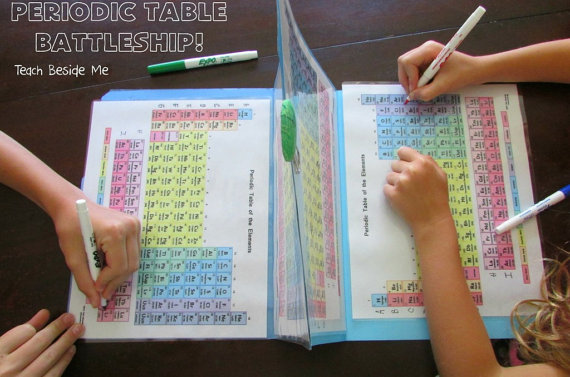
Karyn Tripp, a homeschooling mother of four, was inspired by her eldest’s love of science to create Periodic Table Battleship. I might suggest that the game is of even greater value to those who don’t naturally gravitate toward the subject.
Rules of engagement are very similar to the original. Rather than calling out positions on a grid, players set their torpedoes for specific element names, abbreviations or coordinates. Advanced players might go for the atomic number. the lingo is the same: “hit,” “miss” and—say it with me—“you sunk my battleship!”
The winner is the player who wipes out the other’s fleet, though I might toss the loser a couple of reinforcement vessels, should he or she demonstrate passing familiarity with various metals, halogens, and noble gases.
To make your own Periodic Table Battleship set you will need:
4 copies of the Periodic Table (laminate them for reuse)
2 file folders
paper clips, tape or glue
2 markers (dry erase markers if playing with laminated tables
To Assemble and Play:
As you know, the Periodic Table is already numbered along the top. Label each of the four tables’ vertical rows alphabetically (to help younger players and those inclined to fruitless searching for the elements designated by their opponent)
Fasten two Periodic Tables to each folder, facing the same direction.
Uses markers to circle the position of your ships on the lower Table:
5 consecutive spaces: aircraft carrier
4 consecutive spaces: battleship
3 consecutive spaces: destroyer or submarine
2 consecutive spaces: patrol boat
Prop the folders up with books or some other method to prevent opponents from sneaking peeks at your maritime strategy.
Take turns calling out coordinates, element names, abbreviations or atomic numbers:
When a turn results in a miss, put an X on the corresponding spot on the upper table.
When a turn results in a hit, circle the corresponding spot on the upper table.
Continue play until the battle is won.
Repeat until the Table of Elements is mastered.
Supplement liberally with Tom Lehrer’s Elements song.
Those not inclined toward arts and crafts can purchase a pre-made Periodic Table Battleship set from Tripp’s Etsy shop.
Ayun Halliday is an author, illustrator, theater maker, secular homeschooler and Chief Primatologist of the East Village Inky zine. Her play Zamboni Godot is opening in New York City in March 2017. Follow her @AyunHalliday.
We’ve reached the final stretch of the most infuriating, unsettling election I’ve ever experienced. And we find the U.S. so polarized that—as The Wall Street Journal chillingly demonstrates in their “Blue Feed Red Feed” feature—the left and right seem to live in two entirely different realities. Still, one would have to work very hard on either side, I think, to deny the role sexism has played. One candidate, a known and well-documented misogynist, leads millions of supporters calling for his opponent’s death, imprisonment, and humiliation. That opponent, of course, happens to be the first woman to run on a major party ticket in a general election.
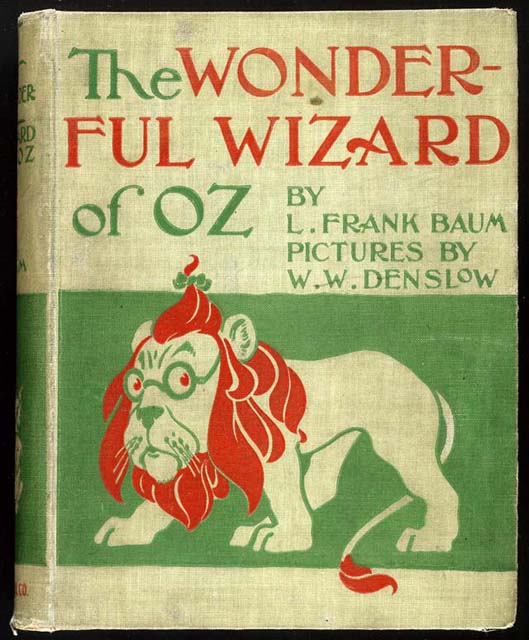
Do many Americans still have a problem with accepting women as leaders? I personally don’t think there’s much of an argument there, and people who see the question as redundant marvel at how long archaic attitudes about women in power have persisted. At least these days we can openly have the—often highly inflamed—conversation about sexism in business, entertainment, and government. And we can support a cultural industry thriving on strong female characters in fiction, film, and television. Not so much in 1928, when the Chicago Public Library banned The Wizard of Oz,writes Kristina Rosenthal at the University of Tulsa Department of Special Collections, “arguing that the story was ungodly for ‘depicting women in strong leadership roles.’”
First published in 1900, L. Frank Baum’s fantasy novel initiated a series of 13 Oz-themed sequels, all of which became immensely popular after MGM’s 1939 film adaptation. (You can find them all in text and audio format here.) And yet, “throughout the years the books have been opposed for their positive portrayals of femininity.” Various libraries used similar excuses to ban the books throughout the 50s and 60s. The Detroit public library banned the Oz books in 1957, stating they had “no value for children of today.” The ban remained in place until 1972. One Florida librarian circulated a memo to her colleagues calling the books “unwholesome,” among other things, and causing a run on local bookstores as children desperately tried to find them.
Other groups decided that the books promoted witchcraft in charges similar to those levied at the Harry Potter series. In 1986, a group of Fundamentalist Christian families in Tennessee came together to remove the The Wizard of Oz from their schools’ curriculum, protesting “the novel’s depiction of benevolent witches.” They argued, writes Rosenthal, “that all witches are bad, therefore it is ‘theologically impossible ‘for good witches to exist.” Many seeking to ban the books since have similarly referred to their positive depictions of magic and “godless supernaturalism,” but the Tennessee case stands as a landmark in the Religious Right’s litigious crusade against the government. The attorney who represented plaintiff Vicki Frost called on “every born-again Christian to get their children out of public schools.”
It’s odd to think of whimsical children’s literature so seemingly innocuous as The Wizard of Oz books as territory in the long culture wars of the 20th century. But as we are reminded every year during Banned Books Week (September 25 − October 1, 2016), literature often arouses the ire of those incensed by change and difference. Yet their attempts to suppress certain books have always backfired, making the targets of their censorship even more popular and sought-after. If you’d like to read Baum’s Oz books now, you needn’t confront a gatekeeping librarian; simply head over to our post on the complete Wizard of Oz series, with free eBooks and audio books of all 14 female-centric fantasy classics.
We can learn much about how a historical period viewed the abilities of its children by studying its children’s literature. Occupying a space somewhere between the purely didactic and the nonsensical, most children’s books published in the past few hundred years have attempted to find a line between the two poles, seeking a balance between entertainment and instruction. However, that line seems to move closer to one pole or another depending on the prevailing cultural sentiments of the time. And the very fact that children’s books were hardly published at all before the early 18th century tells us a lot about when and how modern ideas of childhood as a separate category of existence began.
Grenby notes that “the reasons for this sudden rise of children’s literature” and its rapid expansion into a booming market by the early 1800s “have never been fully explained.” We are free to speculate about the social and pedagogical winds that pushed this historical change.
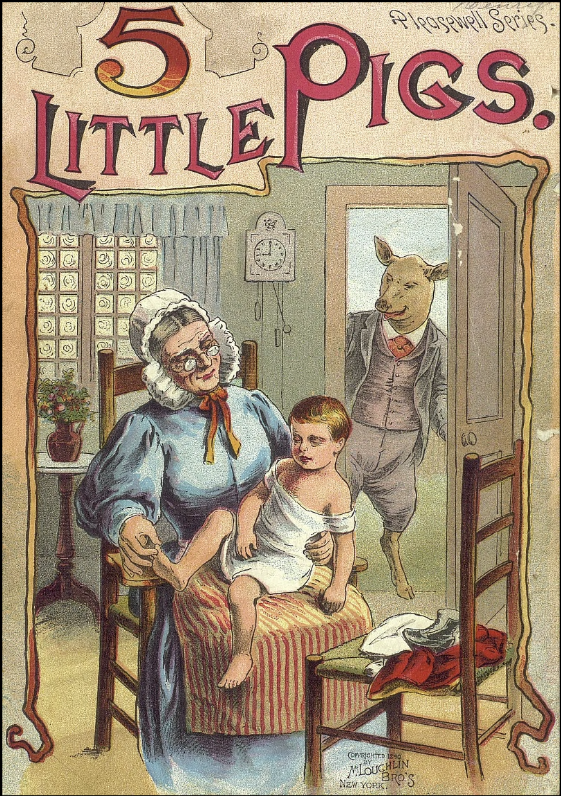
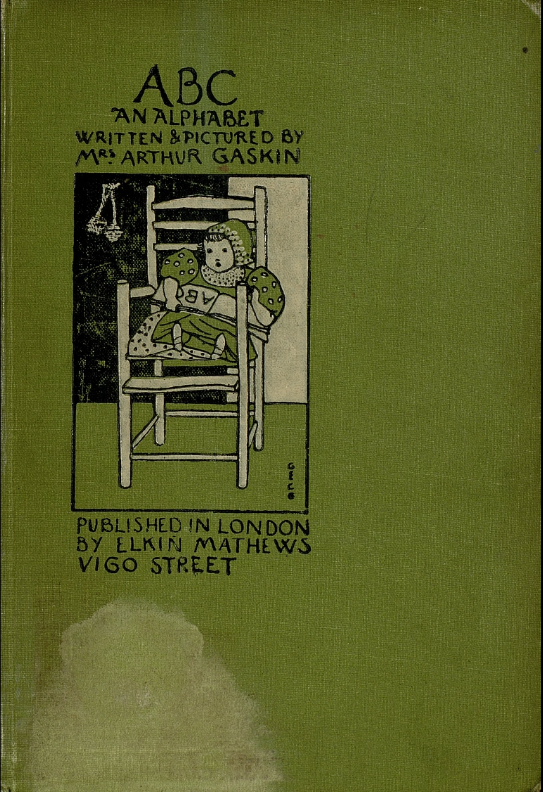
Or we might do so, at least, by examining the children’s literature of the Victorian era, perhaps the most innovative and diverse period for children’s literature thus far by the standards of the time. And we can do so most thoroughly by surveying the thousands of mid- to late 19th century titles at the University of Florida’s Baldwin Library of Historical Children’s Literature. Their digitized collectioncurrently holds over 6,000 books free to read online from cover to cover, allowing you to get a sense of what adults in Britain and the U.S. wanted children to know and believe.
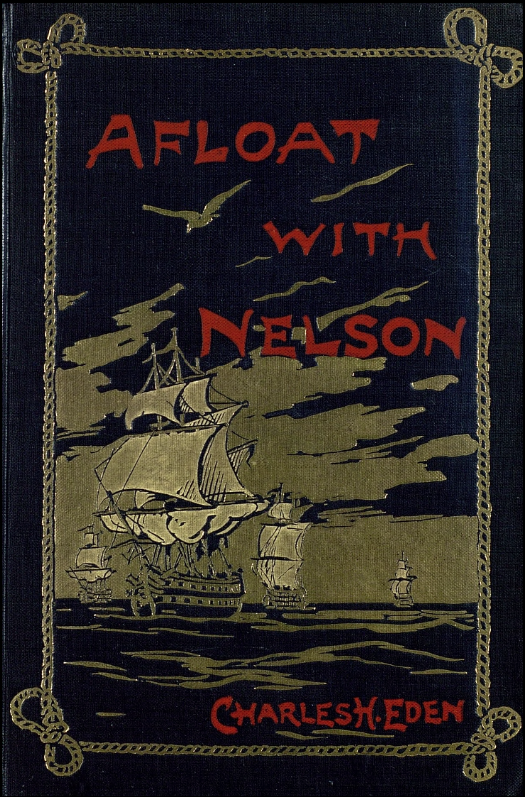
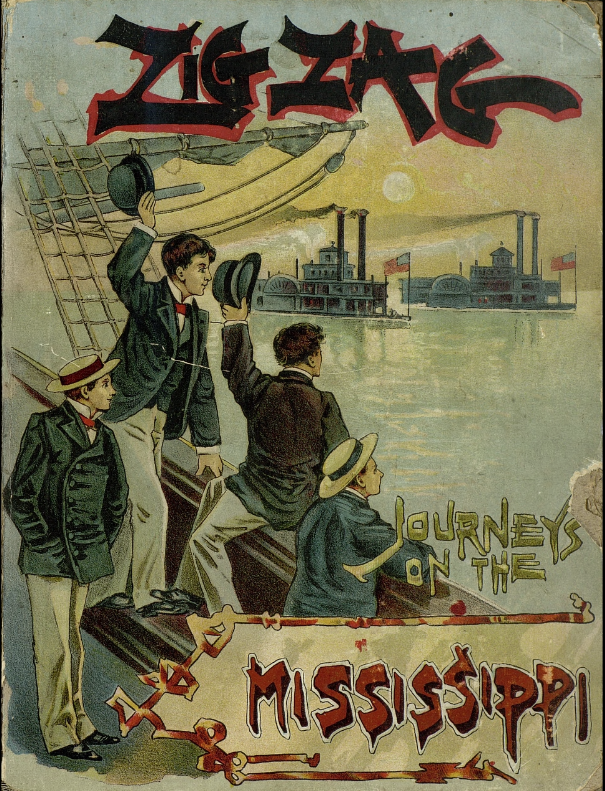
Several genres flourished at the time: religious instruction, naturally, but also language and spelling books, fairy tales, codes of conduct, and, especially, adventure stories—pre-Hardy Boys and Nancy Drew examples of what we would call young adult fiction, these published principally for boys. Adventure stories offered a (very colonialist) view of the wide world; in series like the Boston-published Zig Zag and English books like Afloat with Nelson, both from the 1890s, fact mingled with fiction, natural history and science with battle and travel accounts. But there is another distinctive strain in the children’s literature of the time, one which to us—but not necessarily to the Victorians—would seem contrary to the imperialist young adult novel.
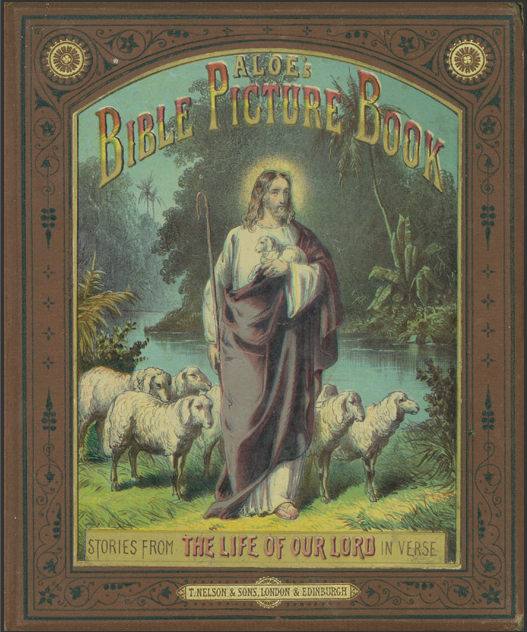
For most Victorian students and readers, poetry was a daily part of life, and it was a central instructional and storytelling form in children’s lit. The A.L.O.E.’s Bible Picture Book from 1871, above, presents “Stories from the Life of Our Lord in Verse,” written “simply for the Lord’s lambs, rhymes more readily than prose attracting the attention of children, and fastening themselves on their memories.” Children and adults regularly memorized poetry, after all. Yet after the explosion in children’s publishing the former readers were often given inferior examples of it. The author of the Bible Picture Book admits as much, begging the indulgence of older readers in the preface for “defects in my work,” given that “the verses were made for the pictures, not the pictures for the verses.”
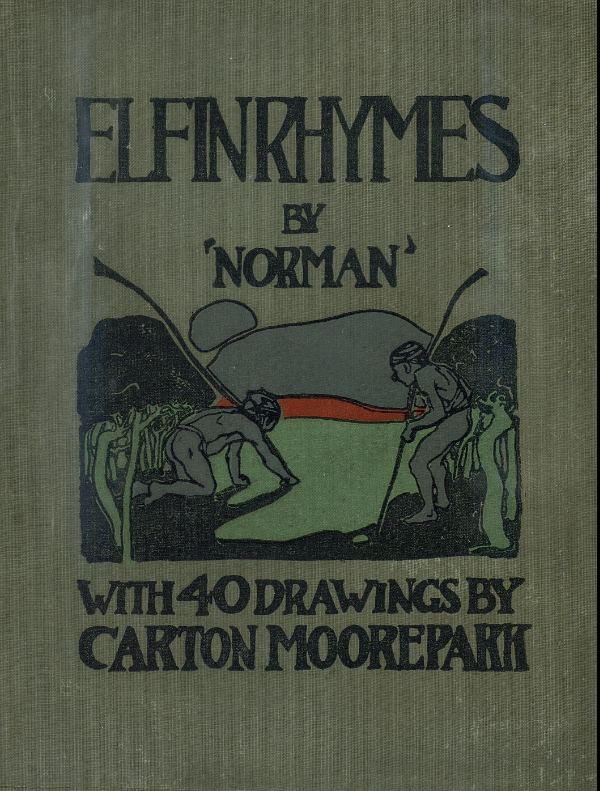
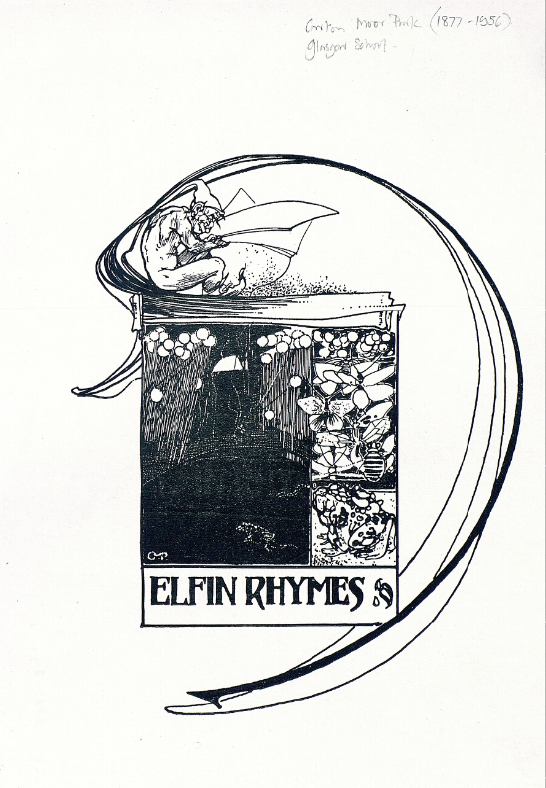
This is not an author, or perhaps a type of literature, one might suspect, that thinks highly of children’s aesthetic sensibilities. We find precisely the opposite to be the case in the wonderful Elfin Rhymes from 1900, written by the mysterious “Norman” with “40 drawings by Carton Moorepark.” Whoever “Norman” may be (or why his one-word name appears in quotation marks), he gives his readers poems that might be mistaken at first glance for unpublished Christina Rossetti verses; and Mr. Moorepark’s illustrations rival those of the finest book illustrators of the time, presaging the high quality of Caldecott Medal-winning books of later decades. Elfin Rhymes seems like a rare oddity, likely published in a small print run; the care and attention of its layout and design shows a very high opinion of its readers’ imaginative capabilities.
This title is representative of an emerging genre of late Victorian children’s literature, which still tended on the whole, as it does now, to fall into the trite and formulaic. Elfin Rhymes sits astride the fantasy boom at the turn of the century, heralded by hugely popular books like Frank L. Baum’s Wizard of Oz series and J.M. Barrie’s Peter Pan. These, the Harry Potters of their day, made millions of young people passionate readers of modern fairy tales, representing a slide even further away from the once quite narrow, “remorselessly instructional… or deeply pious” categories available in early writing for children, as Grenby points out.
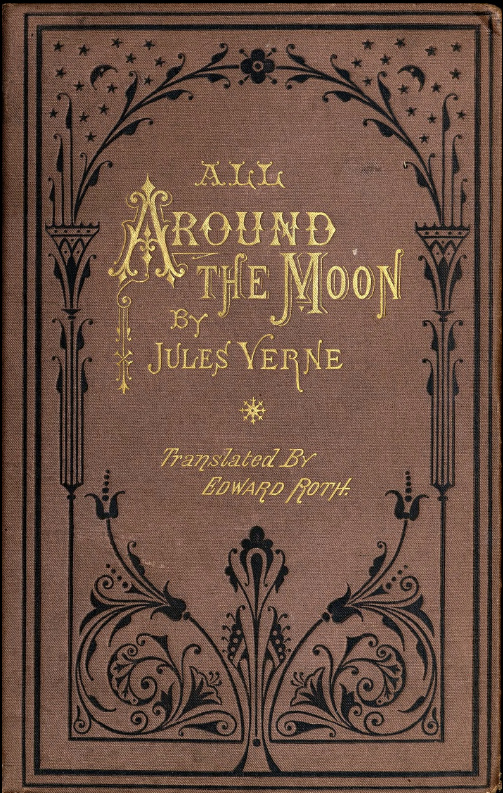
Where the boundaries for kids’ literature had once been narrowly fixed by Latin grammar books and Pilgrim’s Progress, by the end of the 19th century, the influence of science fiction like Jules Verne’s, and of popular supernatural tales and poems, prepared the ground for comic books, YA dystopias, magician fiction, and dozens of other children’s literature genres we now take for granted, or—in increasingly large numbers—we buy to read for ourselves. Enter the Baldwin Library of Historical Children’s Literature here, where you can browse several categories, search for subjects, authors, titles, etc, see full-screen, zoomable images of book covers, download XML versions, and read all of the over 6,000 books in the collection with comfortable reader views. Find more classics in our collection, 800 Free eBooks for iPad, Kindle & Other Devices.
Is your family hot and cranky? Crammed together in a car for the long ride home? Has boredom set in, despite the thousands of Pokémon still at large?
Uncle Shelby himself kicks things off with an invitation to all dreamers, wishers, liars, hopers, pray-ers, magic-bean-buyers, and pretenders.
That net seems sufficiently wide to encompass just about everyone, even (especially!) the sullen teen who wasn’t allowed to stay home by him or herself.
Silverstein did not subscribe to the dry narrative style that E.B.White used to such great effect on the audiobook of Charlotte’s Web.
Instead, he cracks himself up, hissing, yipping and howling his way through Where the Sidewalk Ends and A Light in the Attic. A veteran of Off-Broadway and the author of over a hundred one-act plays, Silverstein clearly relished performing his own work.
(As evidence, we submit “Warning,” an instructional poem concerning the sharp-toothed snail dwelling inside every human nose.)
My only regret is the absence of my personal favorite Silverstein poem …it seems unlikely that such a track exists, but I do love imagining the havoc it could wreak in the family car. Children, don’t forget your eggs.
Ayun Halliday is an author, illustrator, theater maker and Chief Primatologist of the East Village Inky zine. Her latest script, Fawnbook, is available in a digital edition from Indie Theater Now. Follow her @AyunHalliday.
Zombies, alien overlords, sharks, a mad dictator…math is a dangerous proposition in the hands of TED Ed script writer Alex Gendler.
The recreational mathematics puzzles he retrofits for TED’s educational initiative have been around for hundreds, even thousands of years. In the past, storylines tended to rely on biases 21st-century puzzle solvers would find objectionable. As mathematician David Singmaster told Science News:
One must be a little careful with some of these problems, as past cultures were often blatantly sexist or racist. But such problems also show what the culture was like.… The river crossing problem of the jealous husbands is quite sexist and transforms into masters and servants, which is classist, then into missionaries and cannibals, which is racist. With such problems, you can offend everybody!
Gendler’s updates, animated by Artrake studio, derive their narrative urgency from the sort of crowd pleasing sci fi predicaments that fuel summer blockbusters.
And fortunately for those of us whose brains are permanently stuck in beach mode, he never fails to explain how the characters prevail, outwitting or outrunning the aforementioned zombies, aliens, sharks, and mad dictator.
(No worries if you’re determined to find the solution on your own. Gendler gives plenty of fair warning before each reveal.)
Put your brain in gear, pull the skull-embossed lever, and remember, teamwork — and inductive logic — carry the day!
The prisoner hat riddle, above, hinges on a hierarchy of beliefs and the alien overlord’s willingness to give its nine captives a few minutes to come up with a game plan.
Go deeper into this age old puzzle by viewing the full lesson.
Gendler’s spin on the green-eyed logic puzzle, above, contains two brain teasers, one for the hive mind, and one for an individual acting alone, with a strategy culled from philosopher David Lewis’ Common Knowledge playbook. Here’s the full lesson.
Raring for more? You’ll find a playlist of TED-Ed puzzles by Gendler and others here. The full lesson for the bridge problem at the top of the post is here.
Ayun Halliday, author, illustrator, and Chief Primatologist of the East Village Inky zine, will be leading a free collaborative zine workshop at the Gluestick Fest in Indianapolis Saturday, July 9. Follow her @AyunHalliday
A quick heads up on a new open educational resource (OER) initiative…
Last week, Amazon announced that it will launch Amazon Inspire, “a free service for the search, discovery, and sharing of digital educational resources.” Once up and running this fall, Inspire will help educators quickly find resources they need in the classroom–for example, free lesson plans, teaching modules, worksheets, digital texts, and more. In large part, much of the content will be provided by schools and educators themselves. Then Amazon will use its services to organize–or even curate–the content, allowing instructors to find appropriate materials in an efficient way. In a press release, Amazon enumerated some of the services the platform will provide. It reads:
Smart search — With smart search, teachers can explore resources by grade level, standard or even from a particular district. Educators can filter search results using more than 10 criteria to find great resources that best fit their needs.
Collections — Educators can group resources into collections. They can describe the collection, curate the resources in it, recommend an order for going through the resources and share the collection with other teachers.
Simple upload — Amazon Inspire offers an easy to use and intuitive upload interface. Educators can drag and drop files they want to share, add basic metadata such as title, description, grade and subject, and publish the content on the service, all in a few minutes.
Customer reviews — Teachers can rate and review resources on Amazon Inspire, helping their colleagues around the country select the best resources for their needs.
Accessibility support — Amazon Inspire has built in accessibility features. For example, educators can navigate Amazon Inspire using popular screen readers and users are also able to indicate the accessibility features of resources they upload.
If you would like to support the mission of Open Culture, consider making a donation to our site. It’s hard to rely 100% on ads, and your contributions will help us continue providing the best free cultural and educational materials to learners everywhere. You can contribute through PayPal, Patreon, and Venmo (@openculture). Thanks!
We're hoping to rely on loyal readers, rather than erratic ads. Please click the Donate button and support Open Culture. You can use Paypal, Venmo, Patreon, even Crypto! We thank you!
Open Culture scours the web for the best educational media. We find the free courses and audio books you need, the language lessons & educational videos you want, and plenty of enlightenment in between.