100 Novels All Kids Should Read Before Leaving High School

to-kill-a-mockingbird-book-cover1

Last year, a Slate essay called “Against YA” by Ruth Gra­ham irked thou­sands of read­ers who took offense at her argu­ment that although grown-ups “bran­dish their copies of teen nov­els with pride…. [a]dults should feel embar­rassed about read­ing lit­er­a­ture writ­ten for chil­dren.” Whether we label her arti­cle an instance of sham­ing, trolling, or just the expres­sion of a not-espe­cial­ly con­se­quen­tial, “fud­dy-dud­dy opin­ion,” what it also served to highlight—as so many oth­er thought­ful and not-so-thought­ful online essays have done—is the huge sales num­bers of so-called YA, a lit­er­ary boom that shows no signs of slow­ing. Young adult fic­tion, along with children’s books in gen­er­al, saw dou­ble dig­it growth in 2014, a phe­nom­e­non in part dri­ven by those sup­pos­ed­ly self-infan­tiliz­ing adults Gra­ham faults.

The grown-ups read­ing teen books do so, Gra­ham writes, because “today’s YA, we are con­stant­ly remind­ed, is world­ly and adult-wor­thy.” Maybe, maybe not, but there is anoth­er ques­tion to ask here as well, whol­ly apart from whether the age 30–44 cohort who account for 28 per­cent of YA sales “should” be buy­ing and read­ing YA books. And that ques­tion is: should young adults read Young Adult fic­tion? And what counts as Young Adult fic­tion any­way? A 2012 NPR list of the “100 Best-Ever Teen Nov­els” includes the expect­ed Har­ry Pot­ter and Hunger Games series (at num­bers one and two, respec­tive­ly), as well as more “lit­er­ary,” but still obvi­ous, choic­es like John Green’s The Fault in Our Stars and S.E. Hinton’s clas­sic The Out­siders.

It also includes Dou­glas Adams’ The Hitchhiker’s Guide to the Galaxy series, William Golding’s Lord of the Flies, Frank Herbert’s Dune, Ursu­la K. Le Guin’s Earth­sea series, and Ray Bradbury’s Fahren­heit 451. It what sense do all of these very dif­fer­ent kinds of books—some very com­plex and chal­leng­ing, some very much less so—qualify as “teen nov­els”? Per­haps some of the fuzzi­ness about qual­i­ty and appro­pri­ate­ness comes from the fact that many “Top-what­ev­er” lists like NPR’s are com­piled by read­ers, of all ages. And enjoy­ment, not edi­fi­ca­tion, usu­al­ly tops a gen­er­al read­er­ship’s list of cri­te­ri­on for “top”-ness. How­ev­er, what would such a list look like if strict­ly com­piled by edu­ca­tors?

You can find out in anoth­er top 100 list: the 100 Fic­tion Books All Chil­dren Should Read Before Leav­ing Sec­ondary School – Accord­ing to 500 Eng­lish Teach­ers (cre­at­ed at the request of Britain’s Nation­al Asso­ci­a­tion for the Teach­ing of Eng­lish and TES mag­a­zine). There’s a good bit of crossover with the read­er-cho­sen NPR list; the Har­ry Pot­ter books come in at sixth place. Both lists fea­ture clas­sics like Harp­er Lee’s To Kill a Mock­ing­bird. But the teacher-cho­sen list also includes more “adult” writ­ers like Jane Austen, Thomas Hardy, and Toni Mor­ri­son. One teacher quot­ed in an Express arti­cle describes his own cri­te­ria: “It’s always a bal­anc­ing act in the books that teach­ers select. Do you go for some­thing that stu­dents will enjoy and lap up and read, or do you go for some­thing that will help them cut their teeth?”

There seems to be a good bal­ance of both here. You can see the first ten titles below, with links to free online ver­sions where avail­able. The com­plete list of 100 books for teenagers is here.

1 Nine­teen Eighty-Four, by George Orwell (Ama­zon)

2 To Kill A Mock­ing­bird, by Harp­er Lee (free eBook)

3 Ani­mal Farm, by George Orwell (free eBook)

4 Lord Of The Flies, by William Gold­ing (Ama­zon)

5 Of Mice And Men, by John Stein­beck (Ama­zon)

6 The Har­ry Pot­ter series, by J K Rowl­ing (Ama­zon)

7 A Christ­mas Car­ol, by Charles Dick­ens (free eBook)

8 The Catch­er In The Rye, by J D Salinger (Ama­zon)

9 Great Expec­ta­tions, by Charles Dick­ens (free eBook)

10 Pride And Prej­u­dice, by Jane Austen (free eBook)

Relat­ed Con­tent:

Down­load 20 Pop­u­lar High School Books Avail­able as Free eBooks & Audio Books

The Best Books of 2012: Lists by The New York Times, NPR, The Guardian and More

74 Essen­tial Books for Your Per­son­al Library: A List Curat­ed by Female Cre­atives

Josh Jones is a writer and musi­cian based in Durham, NC. Fol­low him at @jdmagness

Gravity Visualized by High School Teacher in an Amazingly Elegant & Simple Way

Just a few miles down the high­way from Open Cul­ture’s gleam­ing head­quar­ters you will find Los Gatos High School, where Dan Burns, an AP Physics Teacher, has fig­ured out a sim­ple but clever way to visu­al­ize grav­i­ty, as it was explained by Ein­stein’s 1915 Gen­er­al The­o­ry of Rel­a­tiv­i­ty. Get $20 of span­dex, some mar­bles, a cou­ple of weights, and you’re all good to go. Using these read­i­ly-avail­able objects, you can demon­strate how mat­ter warps space-time, how objects grav­i­tate towards one anoth­er, and why objects orbit in the way they do. My favorite part comes at the 2:15 mark, where Burns demon­strates the answer to a ques­tion you’ve maybe pon­dered before: why do all plan­ets hap­pen to orbit the sun mov­ing in a clock­wise (rather than counter-clock­wise) fash­ion? Now you can find out why.

If you would like to sign up for Open Culture’s free email newslet­ter, please find it here. It’s a great way to see our new posts, all bun­dled in one email, each day.

If you would like to sup­port the mis­sion of Open Cul­ture, con­sid­er mak­ing a dona­tion to our site. It’s hard to rely 100% on ads, and your con­tri­bu­tions will help us con­tin­ue pro­vid­ing the best free cul­tur­al and edu­ca­tion­al mate­ri­als to learn­ers every­where. You can con­tribute through Pay­Pal, Patre­on, and Ven­mo (@openculture). Thanks!

via Coudal

Relat­ed Con­tent

Free Online Physics Cours­es

The Feyn­man Lec­tures on Physics, The Most Pop­u­lar Physics Book Ever Writ­ten, Now Com­plete­ly Online

Bertrand Russell’s ABC of Rel­a­tiv­i­ty: The Clas­sic Intro­duc­tion to Ein­stein (Free Audio)

Free Physics Text­books

by | Permalink | Make a Comment ( 5 ) |

Hear All of C.S. Lewis’ Chronicles of Narnia Novels as Free Audio Books

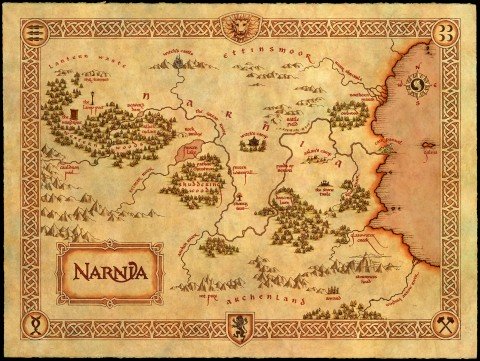
NarniaMap-e1324285473899

I have not seen the sec­ond two of a promised sev­en films based on the nov­els in C.S. Lewis’ The Chron­i­cles of Nar­nia series. But I tend to agree with sev­er­al crit­ics of the first filmed adap­ta­tion, The Lion, the Witch and the Wardrobe: “The PG-rat­ed movie feels safe and con­strict­ed,” Peter Tra­vers observed, “in a way the sto­ry nev­er does on the page.” Although Lewis “did noth­ing to hide his devout Chris­tian­i­ty” in his alle­gor­i­cal Nar­nia books for young adults, nor in his grown-up sci-fi fan­ta­sy series, The Space Tril­o­gy, Lewis on the page comes across as a rig­or­ous writer first and a Chris­t­ian apol­o­gist sec­ond. Except, I’d argue, for his work of explic­it­ly pop­ulist, and rather facile, apolo­get­ics, Mere Chris­tian­i­ty (orig­i­nal­ly a series of radio lec­tures), his fic­tion and pop­u­lar non-fic­tion alike present readers—whatever their beliefs—with chal­leng­ing, inven­tive, wit­ty, and mov­ing ways to think about the human con­di­tion.

Lewis’ immer­sion in Euro­pean Medieval and Renais­sance lit­er­a­ture in his day-job role as an Oxford don—and his ecu­meni­cal, almost Jun­gian, approach to lit­er­a­ture generally—gives his fic­tion a seri­ous arche­typ­al depth that most mod­ern reli­gious nov­el­ists lack, mak­ing him, along with fel­low “Inkling” J.R.R. Tolkien, some­thing of a lit­er­ary saint in mod­ern Chris­tian­i­ty. Though it may offend the ortho­dox to say so, Lewis’ nov­els cap­ture a “deep mag­ic” at the heart of all mytho­log­i­cal and lit­er­ary tra­di­tions. And they do so in a way that makes explor­ing heavy, grown-up themes excit­ing for both chil­dren and adults. Though I’ve per­son­al­ly left behind the beliefs that ani­mat­ed my first read­ings of his books, I can still return to The Chron­i­cles of Nar­nia and find in them deep mag­ic and mys­tery.

There’s no deny­ing the enor­mous influ­ence these books have had on children’s fan­ta­sy lit­er­a­ture, from Har­ry Pot­ter to Lewis’ athe­ist antag­o­nist Philip Pull­man. I look for­ward to shar­ing his books with my daugh­ter, what­ev­er she ends up mak­ing of their reli­gios­i­ty. I’ve still got my tat­tered paper­back copies, and I’ll glad­ly read them to her before she can tack­le them her­self, but I’m also grate­ful for the com­plete audio record­ings of The Chron­i­cles of Nar­nia, avail­able free online and read by Eng­lish child psy­chol­o­gist and author Chris­si Hart. In install­ments of two chap­ters at a time, Hart reads all sev­en of the Nar­nia books, The Lion, the Witch and the Wardrobe, Prince Caspi­an, The Voy­age of the Dawn Tread­er, The Sil­ver Chair, The Horse and His Boy, The Magician’s Nephew, and The Last Bat­tle.

You can hear the first two chap­ters of The Lion, the Witch and the Wardrobe above, and stream or down­load the remain­ing chap­ters, and the remain­ing six books, at Ancientfaith.com. Although Hart and the Ancient Faith site who host her read­ings clear­ly approach the nov­els from an explic­it­ly Ortho­dox per­spec­tive, I don’t think read­ers need to share their beliefs, or Lewis’, to enjoy and appre­ci­ate the sto­ry­telling mag­ic of The Chron­i­cles of Nar­nia.

And it should be not­ed that CS Lewis Pte. Ltd. grant­ed per­mis­sion to put these record­ings online, accord­ing to the Ancient Faith web site. The record­ings are there­fore list­ed in our col­lec­tion, 1,000 Free Audio Books: Down­load Great Books for Free. Enjoy.

Relat­ed Con­tent:

C.S. Lewis’ Pre­scient 1937 Review of The Hob­bit by J.R.R. Tolkien: It “May Well Prove a Clas­sic”

Watch Hand-Drawn Ani­ma­tions of 7 Sto­ries & Essays by C.S. LewisWatch Hand-Drawn Ani­ma­tions of 7 Sto­ries & Essays by C.S. LewisWatch Hand-Drawn Ani­ma­tions of 7 Sto­ries & Essays by C.S. Lewis

The Only Known Record­ings of C.S. Lewis (1944–1948)

Josh Jones is a writer and musi­cian based in Durham, NC. Fol­low him at @jdmagness

Mr. Rogers Goes to Congress and Saves PBS: Heartwarming Video from 1969

What kind of delu­sion­al self-aggran­diz­er, called to tes­ti­fy before a Unit­ed States Sen­ate Sub­com­mit­tee, uses it as an oppor­tu­ni­ty to quote the lyrics of a song he’s writ­ten… in their entire­ty!?

Sounds like the work of a cer­tain rapper/prospective polit­i­cal can­di­date or per­haps some daffy buf­foon as brought to life by Ben Stiller or Will Fer­rell.

Only children’s tele­vi­sion host Fred Rogers could pull such a stunt and emerge unscathed, nay, even more beloved, as he does above in doc­u­men­tary footage from 1969.

Mis­ter Rogers’ impulse to recite What Do You Do With the Mad That You Feel to then-chair­man of the Sub­com­mit­tee on Com­mu­ni­ca­tions, Sen­a­tor John Pas­tore, was ulti­mate­ly an act of ser­vice to the Cor­po­ra­tion for Pub­lic Broad­cast­ing and its child view­ers.

New­ly elect­ed Pres­i­dent Richard Nixon opposed pub­lic tele­vi­sion, believ­ing that its lib­er­al bent could only under­mine his admin­is­tra­tion. Deter­mined to strike first, he pro­posed cuts equal to half its $20 mil­lion annu­al oper­at­ing bud­get, a mea­sure that would have seri­ous­ly hob­bled the fledg­ling insti­tu­tion.

Mr. Rogers appeared before the Com­mit­tee armed with a “philo­soph­i­cal state­ment” that he refrained from read­ing aloud, not wish­ing to monop­o­lize ten min­utes of the Committee’s time. Instead, he sought Pas­tore’s promise that he would give it a close read lat­er, speak­ing so slow­ly and with such lit­tle out­ward guile, that the tough nut Sen­a­tor was moved to crack, “Would it make you hap­py if you did read it?”

Rather than tak­ing the bait, Rogers touched on the ways his show’s bud­get had grown thanks to the pub­lic broad­cast­ing mod­el. He also hipped Pas­tore to the qual­i­ta­tive dif­fer­ence between fre­net­ic kid­die car­toons and the vast­ly more thought­ful and emo­tion­al­ly healthy con­tent of pro­gram­ming such as his. Mr. Roger’s Neigh­bor­hood was a place where such top­ics as hair­cuts, sib­ling rela­tion­ships, and angry feel­ings could be dis­cussed in depth.

Rogers’ emo­tion­al intel­li­gence seems to hyp­no­tize Pas­tore, whose chal­leng­ing front was soon dropped in favor of a more respect­ful line of ques­tion­ing. By the end of Rogers’ heart­felt, non-musi­cal ren­di­tion of What Do You Do… (it’s much pep­pi­er in the orig­i­nal), Pas­tore has goose­bumps, and the Cor­po­ra­tion for Pub­lic Broad­cast­ing has its 2 mil’ back in the bag.

What do you do with the mad that you feel

When you feel so mad you could bite?

When the whole wide world seems oh, so wrong…

And noth­ing you do seems very right?

What do you do? Do you punch a bag?

Do you pound some clay or some dough?

Do you round up friends for a game of tag?

Or see how fast you go?

It’s great to be able to stop

When you’ve planned a thing that’s wrong,

And be able to do some­thing else instead

And think this song:

I can stop when I want to

Can stop when I wish.

I can stop, stop, stop any time.

And what a good feel­ing to feel like this

And know that the feel­ing is real­ly mine.

Know that there’s some­thing deep inside

That helps us become what we can.

For a girl can be some­day a woman

And a boy can be some­day a man.

Relat­ed Con­tent:

Mr. Rogers Intro­duces Kids to Exper­i­men­tal Elec­tron­ic Music by Bruce Haack & Esther Nel­son (1968)

Mr. Rogers Takes Break­danc­ing Lessons from a 12-Year-Old (1985)

Pup­pet Mak­ing with Jim Hen­son: A Price­less Primer from 1969

Ayun Hal­l­i­day’s new play, Fawn­book, debuts as part of the Bad The­ater Fes­ti­val in NYC tomor­row night. Fol­low her @AyunHalliday

James Baldwin’s One & Only, Delightfully-Illustrated Children’s Book, Little Man Little Man: A Story of Childhood (1976)

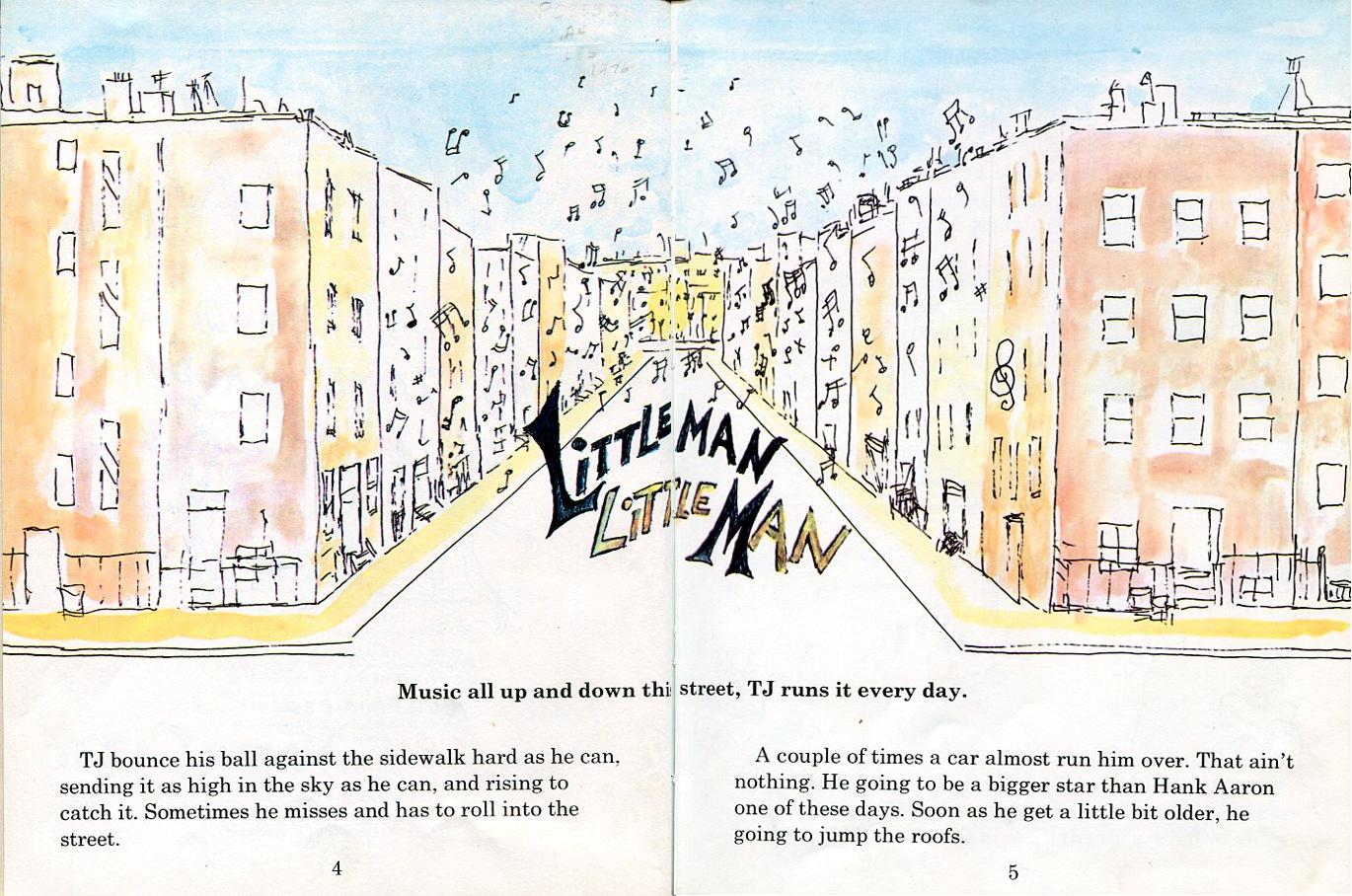
Baldwin - Little Man Little Man005

As a writer, a thinker, and a human being, James Bald­win knew few bound­aries. The black, gay, expa­tri­ate author of such still-read books as Go Tell it on the Moun­tain and The Fire Next Time set an exam­ple for all who have since sought to break free of the stric­tures imposed upon them by their soci­ety, their his­to­ry, or even their craft. Bald­win wrote not just nov­els but essays, plays, poet­ry, and even a chil­dren’s book, which you see a bit of here today.

Lit­tle Man Lit­tle Man: A Sto­ry of Child­hood came out in 1976, a pro­duc­tive year for Bald­win which also saw the pub­li­ca­tion of The Dev­il Finds Work, a book of writ­ing on film (yet anoth­er form on which he exert­ed his own kind of social­ly crit­i­cal mas­tery). In Lit­tle Man, he writes not about a high­ly visu­al medi­um, but in a high­ly visu­al medi­um: young chil­dren delight in live­ly illus­tra­tions, and they must have espe­cial­ly delight­ed in the ones here (more of which you can see in this gallery), drawn by French artist Yoran Cazac with a kind of mature child­ish­ness.

Those same adjec­tives might apply to Bald­win’s writ­ing here as well, since he aims his sto­ry toward chil­dren, talk­ing not down at them but straight at them, in their very own lan­guage: “TJ bounce his ball as hard as he can, send­ing it as high in the sky as he can, and ris­ing to catch it.” So goes the intro­duc­tion to the main char­ac­ter, a four-year-old boy liv­ing in Harlem whom Bald­win based on his nephew. “Some­times he miss­es and has to roll into the street. A cou­ple of times a car almost run him over. That ain’t noth­ing.”

TJ and WT, his old­er pal from the neigh­bor­hood, take their scrapes through­out the course of this short book, but they also have a rich expe­ri­ence — and thus pro­vide, for their read­ers young and old, a rich expe­ri­ence — of the unique time and place in which they find them­selves grow­ing up. Their work­ing-class Harlem child­hood obvi­ous­ly has its pains, but it has its joys too. “TJ’s Dad­dy try to act mean, but he ain’t mean,” Bald­win writes. “Some­time take TJ to the movies and he take him to the beach and he took him to the Apol­lo The­atre, so he could see blind Ste­vie Won­der. ‘I want you to be proud of your peo­ple,’ TJ’s Dad­dy always say.”

At We Too Were Chil­dren, Ariel S. Win­ter high­lights the book’s ded­i­ca­tion “to the emi­nent African-Amer­i­can artist Beau­ford Delaney. Bald­win met Delaney when he was four­teen, the first self-sup­port­ing artist he had ever met, and like Bald­win, Delaney was black and homo­sex­u­al. Delaney became a men­tor to Bald­win, who often spoke of him as a ‘spir­i­tu­al father,’ ” and “it was Delaney who intro­duced Bald­win to Yoran Cazac in Paris.” Bald­win became god­fa­ther to Caza­c’s third child, and Cazac, of course, became the man who gave artis­tic life to Bald­win’s vision of child­hood itself.

You can pick up your own copy of Lit­tle Man Lit­tle Man: A Sto­ry of Child­hood on Ama­zon.

Relat­ed Con­tent:

Langston Hugh­es Presents the His­to­ry of Jazz in an Illus­trat­ed Children’s Book (1955)

Langston Hugh­es Reveals the Rhythms in Art & Life in a Won­der­ful Illus­trat­ed Book for Kids (1954)

A Child’s Intro­duc­tion to Jazz by Can­non­ball Adder­ley (with Louis Arm­strong & Thelo­nious Monk)

Watch Langston Hugh­es Read Poet­ry from His First Col­lec­tion, The Weary Blues (1958)

James Bald­win Debates Mal­colm X (1963) and William F. Buck­ley (1965): Vin­tage Video & Audio

James Bald­win: Wit­ty, Fiery in Berke­ley, 1979

Col­in Mar­shall writes else­where on cities, lan­guage, Asia, and men’s style. He’s at work on a book about Los Ange­les, A Los Ange­les Primer, the video series The City in Cin­e­maand the crowd­fund­ed jour­nal­ism project Where Is the City of the Future? Fol­low him on Twit­ter at @colinmarshall or on Face­book.

Mick Jagger Acts in The Nightingale, a Televised Play from 1983

Pity the man who has every­thing. Sat­is­fac­tion is but fleet­ing.

One won­ders if rock god Mick Jag­ger might know a thing or two about the con­di­tion. He does­n’t seem to know all that much about act­ing, as evi­denced by his turn in The Nightin­gale episode of Shel­ley Duvall’s Faerie Tale The­atre series.

No mat­ter. His art­less­ness is part of the charm. As the spoiled emper­or of Cathay, he makes no effort to alter his Mock­ney accent. He also keeps his famous strut under wraps, weight­ed down by his roy­al robes (and top knot!).

The 1983 episode cleaves close­ly to the Hans Chris­t­ian Ander­sen orig­i­nal that inspired it. To sum­ma­rize the plot:

The emper­or demands an audi­ence with a nightin­gale, after hear­ing tell of its song, but the toad­ies who com­prise his court are too rar­i­fied to locate one in the for­est.

A low­ly kitchen maid (Bar­bara Her­shey, on the brink of star­dom) is the only one with the know how to deliv­er.

But the emper­or is fick­le — it isn’t long before his head is turned by a jew­el encrust­ed, mechan­ics facsimile…a com­mon enough rock n’ roll pit­fall.

A large part of Faerie Tale The­ater’s mag­ic was the jux­ta­po­si­tion of high wattage stars and extreme­ly low pro­duc­tion bud­gets. There’s an ele­ment of stu­dent film to the pro­ceed­ings. The video­tape on which it was shot flat­tens rather than flat­ters. This is not a crit­i­cism. It makes me awful­ly fond of the big shots who agreed to par­tic­i­pate.

In addi­tion to Jag­ger and Her­shey, look for Angel­i­ca Hus­ton, Edward James Olmos, and Jagger’s then girl­friend, Jer­ry Hall, in small­er roles. There’s also Bud Cort of Harold and Maude, flap­ping around the sparse­ly dec­o­rat­ed for­est like a vis­i­tor from an entire­ly dif­fer­ent sto­ry, nay, plan­et.

A curi­ous enter­prise indeed.

Relat­ed Con­tent:

Stephen Fry Reads Oscar Wilde’s Children’s Sto­ry “The Hap­py Prince”

Mr. Rogers Intro­duces Kids to Exper­i­men­tal Elec­tron­ic Music by Bruce Haack & Esther Nel­son (1968)

Andy Warhol’s 85 Polaroid Por­traits: Mick Jag­ger, Yoko Ono, O.J. Simp­son & Many Oth­ers (1970–1987)

Ayun Hal­l­i­day will be appear­ing at the Brook­lyn Book Fes­ti­val in New York City this week­end.. Fol­low her @AyunHalliday

An Animated Introduction to Virginia Woolf

It’s a pity writer Vir­ginia Woolf (1882–1941) drowned her­self before the advent of the Inter­net.

Indus­tri­al­iza­tion did not faze her.

It’s less clear how the great observ­er of “the Mod­ern Age” would’ve respond­ed to the pro­lif­er­a­tion of Mom­my blog­gers.

Their sheer num­bers sug­gest that per­haps female writ­ers do not need a “room of one’s own” (though pre­sum­ably all of them would be in favor of such a devel­op­ment.)

Woolf’s name is an endur­ing one, inspir­ing both the title of a clas­sic Amer­i­can play and a dog­gy day care facil­i­ty. Its own­er passed away near­ly 75 years ago, yet she remains a peren­ni­al on Women’s Stud­ies’ syl­labi.

Ergo, it’s pos­si­ble for the gen­er­al pub­lic to know of her, with­out know­ing much of any­thing about her and her work. (Find her major works on our lists of Free eBooks and Free Audio Books).

The lat­est ani­mat­ed install­ment in The School of Life human­i­ties series seeks to rem­e­dy that sit­u­a­tion in ten min­utes with the video above, which offers insight into her place in both the West­ern canon and the ever-glam­orous Blooms­bury Group, and cel­e­brates her as a keen observ­er of life’s dai­ly rou­tine. And that by-now-famil­iar cut-out ani­ma­tion style takes full advan­tage of the author’s best known head shots.

Arrange what­ev­er pieces come your way.

- Vir­ginia Woolf

Relat­ed Con­tent:

Down­load 55 Free Online Lit­er­a­ture Cours­es: From Dante and Mil­ton to Ker­ouac and Tolkien

Watch Pat­ti Smith Read from Vir­ginia Woolf, and Hear the Only Sur­viv­ing Record­ing of Woolf’s Voice

Vir­ginia Woolf and Friends Dress Up as “Abyssin­ian Princes” and Fool the British Roy­al Navy (1910)

Vir­ginia Woolf’s Hand­writ­ten Sui­cide Note: A Painful and Poignant Farewell (1941)

Ayun Hal­l­i­day is an author, illus­tra­tor, and Chief Pri­ma­tol­o­gist of the East Vil­lage Inky zine. Fol­low her @AyunHalliday

Alice’s Adventures in Wonderland Read by Sir John Gielgud

gielgud reads alice

I nev­er thought I could love an audio record­ing of Lewis Carroll’s Alice in Won­der­land (tech­ni­cal­ly Alice’s Adven­tures in Won­der­land and its sequel, Through the Look­ing-Glass) more than I love the unabridged ver­sion nar­rat­ed by Christo­pher Plum­mer. His won­der­ful­ly ham­my char­ac­ter­i­za­tions and its six hour run­ning time made it the per­fect sound­track for pick­ing nits from the foot long tress­es of a first-grad­er who’d been sent home with lice.

By the time she got the all clear, both of us had large por­tions of it com­mit­ted to mem­o­ry.

Christo­pher, I trea­sure the mem­o­ries of those long hours spent togeth­er on cas­sette, but I’m afraid I’ll be spend­ing the 150th anniver­sary of Alice with Sir John Giel­gud, below.

All in the gold­en after­noon

Full leisure­ly we glide;

For both our oars, with lit­tle skill,

By lit­tle arms are plied,

While lit­tle hands make vain pre­tense

Our wan­der­ings to guide.

He makes Lewis Car­roll sound like Shake­speare!

The cel­e­brat­ed dry wit that served him so well through­out his illus­tri­ous career keeps this 1989 Alice very easy on the ears. He takes the oppo­site approach from Plum­mer, under­play­ing the char­ac­ter voic­es. It’s rare to find a gen­tle­man of 85 who can play a 7‑year-old girl so con­vinc­ing­ly, and with so lit­tle fuss.

In an extreme­ly civ­i­lized bit of audio engi­neer­ing, Giel­gud record­ed the tracks in the ball­room of Wya­s­tone Leys, the Vic­to­ri­an coun­try estate that is home to the audiobook’s label. Also? The Eng­lish String Orches­tra ush­ers lis­ten­ers from scene to scene with excerpts from Mendelssohn’s String Sym­phonies. Ah…

Giel­gud’s read­ing of Alice has been made avail­able on Spo­ti­fy. Find it here. Or embed­ded here. You can also find it on Youtube as well. Com­pletists might also enjoy Gielgud’s turn as the Mock Tur­tle in Jonathan Miller’s superbly dark, black & white adap­ta­tion from 1966, here. (Giel­gud makes his entrance at the 13:55 mark.)

To lis­ten to Giel­gud on Spo­ti­fy, you will of course need Spotify’s soft­ware and account, both easy to come by: you just down­load and reg­is­ter.

Oth­er read­ings of Alice can be found in our col­lec­tion, 1,000 Free Audio Books: Down­load Great Books for Free.

Relat­ed Con­tent

The Orig­i­nal Alice’s Adven­tures In Won­der­land Man­u­script, Hand­writ­ten & Illus­trat­ed By Lewis Car­roll (1864)

Free Audio: Alice In Won­der­land Read by Cory Doc­torow

Lewis Carroll’s Pho­tographs of Alice Lid­dell, the Inspi­ra­tion for Alice in Won­der­land

Lewis Carroll’s Clas­sic Sto­ry, Alice’s Adven­tures in Won­der­land, Told in Sand Ani­ma­tion

A 68 Hour Playlist of Shakespeare’s Plays Being Per­formed by Great Actors: Giel­gud, McK­ellen & More

Ayun Hal­l­i­day will be appear­ing at the Brook­lyn Book Fes­ti­val in New York City next week­end.. Fol­low her @AyunHalliday

« Go BackMore in this category... »
Quantcast