Download Images From Rad American Women A‑Z: A New Picture Book on the History of Feminism

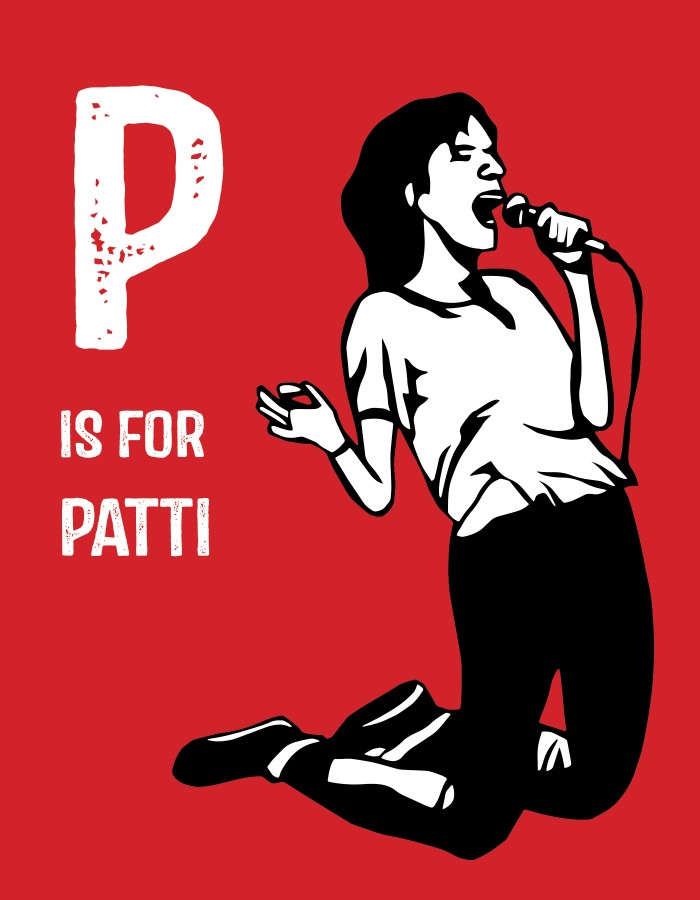
patti smith letter

The next time sto­ry hour rolls around, you can give a mouse a cook­ie or you can awak­en pre-read­ers (and your­self) to some key fig­ures in wom­en’s his­to­ry. 26 of them, to be pre­cise. It’s no acci­dent that that num­ber cor­re­sponds to the exact num­ber of let­ters in the alpha­bet.

Author Kate Schatz and illus­tra­tor Miri­am Klein Stahl active­ly sought to include women of col­or and a vari­ety of sex­u­al ori­en­ta­tions when choos­ing whom to fea­ture in Rad Amer­i­can Women A To Z, a pro­gres­sive fem­i­nist text cum ABC primer. (Illus­tra­tions from the book, like the ones fea­tured on this page, can be down­loaded here for free.)

odetta letter

Hope­ful­ly Glo­ria Steinem was not too upset to learn that G is for the Grimke sis­ters. Actu­al­ly, I sus­pect that the sec­ond wave’s most rec­og­niz­able super­star would be pleased if read­ers are moved to edu­cate them­selves as to some of the book’s more obscure ref­er­ences.

ursula letter

B is for Bil­lie Jean King who whooped male chau­vin­ist pig Bob­by Rig­gs on the court in 1973’s Bat­tle of the Sex­es. I remem­ber her! A Bil­lie and Bob­by-themed pump­kin took top hon­ors in my school’s Hal­loween carv­ing con­test that year.

It’s fun­ny how when a woman does some­thing they always think we only affect half of the pop­u­la­tion, and peo­ple will come up to me and say thanks for what you did for wom­en’s ten­nis all the time, and I know they’d nev­er say that to a guy.

E is for civ­il rights activist Ella Bak­er, a sec­re­tary who rose through the ranks of the NAACP to become direc­tor of branch­es. She rec­og­nized the press often over­looked her role, as did his­to­ry.

You did­n’t see me on tele­vi­sion, you did­n’t see news sto­ries about me. The kind of role that I tried to play was to pick up pieces or put togeth­er pieces out of which I hoped orga­ni­za­tion might come. My the­o­ry is, strong peo­ple don’t need strong lead­ers.

J is for Jovi­ta Idar, edu­ca­tor and cofounder of the Mex­i­can Fem­i­nist League.

Mex­i­can chil­dren in Texas need an edu­ca­tion…. There is no oth­er means to do it but our­selves, so that we are not deval­ued and humil­i­at­ed by the strangers who sur­round us. 

God­moth­er of Punk Pat­ti Smith, author Ursu­la K. La Guin, and Odet­ta, leg­endary blues singer and “Voice of the Civ­il Rights Move­ment,” are among the mar­quee names to be can­on­ized. See their illus­tra­tions above.

To get all 26 illus­tra­tions in a down­load­able for­mat, click here. To order your own copy of the book, go here.

via Good

Relat­ed Con­tent:

74 Essen­tial Books for Your Per­son­al Library: A List Curat­ed by Female Cre­atives

Simone de Beau­voir Explains “Why I’m a Fem­i­nist” in a Rare TV Inter­view (1975)

Chrissie Hynde’s 10 Pieces of Advice for “Chick Rock­ers” (1994)

Simone de Beau­voir Tells Studs Terkel How She Became an Intel­lec­tu­al and Fem­i­nist (1960)

Ayun Hal­l­i­day is an author, illus­tra­tor, and Chief Pri­ma­tol­o­gist of the East Vil­lage Inky zine. Fol­low her @AyunHalliday

Hysterical Literature: Art & Sexuality Collide in Readings of Whitman, Emerson & Other Greats (NSFW)

With­out shame the man I like knows and avows the deli­cious­ness of his sex, 

With­out shame the woman I like knows and avows hers.

Thus spaketh Walt Whit­man in Leaves of Grass. 160 years after that poem’s pub­li­ca­tion, how might that most Amer­i­can of Amer­i­can Roman­tics react to the spec­ta­cle of an attrac­tive young woman plea­sur­ing her­self with his work, as an unseen hand beneath the table sur­rep­ti­tious­ly plea­sures her with the Cadil­lac of vibra­tors?

The peep­hole is much larg­er than it would’ve been in 1855. Hys­ter­i­cal Lit­er­a­ture was con­ceived as an online project in which each session’s fea­tured female par­tic­i­pant choos­es a res­o­nant text, then reads it aloud until a Hitachi Mag­ic Wand puts an end to her abil­i­ty to form coher­ent sen­tences.

Cre­ator Clay­ton Cubitt has com­plained that the orgas­mic ele­ment and the sta­tus of cer­tain celebri­ty par­tic­i­pants like come­di­an Mar­garet Cho  have pre­oc­cu­pied the press. His pref­er­ence is for view­ers to take a more holis­tic approach, view­ing the expe­ri­ence with some “mys­tery and mag­ic and ‘WTF.’”

Accord­ing­ly, let us focus upon some of the select­ed works:

Beloved by Toni Mor­ri­son

Sex­ing the Cher­ry by Jeanette Win­ter­son

The Necrophil­ia Vari­a­tions by Super­vert

Real­ly, no Anaïs Nin? I would’ve thought…

The most recent con­trib­u­tor to the series is also its old­est, 60-year-old Janet, below, who had to take leave of Whitman’s pal, Ralph Wal­do Emer­son, not once but twice in eight min­utes.

Cumu­la­tive­ly, these ses­sions make a mar­velous­ly frank primer for actors or direc­tors charged with cre­at­ing real­is­tic sex scenes. The dichoto­my of Hys­ter­i­cal Lit’s stag­ing ensures that things are fair­ly respectable above the waist, thus sat­is­fy­ing YouTube’s Com­mu­ni­ty Guide­lines.

Dar­ing female lovers of lit­er­a­ture should be advised that Cubitt seeks to include more women of col­or, old­er par­tic­i­pants, and non-Eng­lish texts. No word on who exact­ly is under that table. Drain your pent-up rivers by apply­ing here.

via Kot­tke

Relat­ed Con­tent:

Read Fan­ny Hill, the 18th-Cen­tu­ry Erot­ic Nov­el That Went to the Supreme Court in the 20th Cen­tu­ry

This is Your Brain on Sex and Reli­gion: Exper­i­ments in Neu­ro­science

An Intro­duc­tion to World Lit­er­a­ture by a Cast Of Lit­er­ary & Aca­d­e­m­ic Stars (Free Course)

Ayun Hal­l­i­day is an author, illus­tra­tor, and Chief Pri­ma­tol­o­gist of the East Vil­lage Inky zine. Fol­low her @AyunHalliday

What Happens When a Cheap Ikea Print Gets Presented as Fine Art in a Museum

The enti­ty to whom Dutch group, Life­hunters, attrib­ut­es the muse­um qual­i­ty art­work in the video prank above doesn’t exist. The “famous” Swedish artist’s han­dle –IKE Andrews –is but a puck­ish ref­er­ence to IKEA, the pur­vey­or of the 10€ print (oh snap, it’s not even an orig­i­nal!) var­i­ous unnamed “art experts” are asked to eval­u­ate, hav­ing been led to believe it’s some­thing rare and won­der­ful. IKE Andrews’ fel­low fic­tion­al enti­ty, Borat, would be grat­i­fied by how read­i­ly these experts accept pre­sen­ter Boris Lange’s sug­ges­tions as to the val­ue of this work.

So how bad is this “paint­ing”? Wal­ter Keane bad? Mar­garet Keane bad? Is it a Velvis? A sad clown? The sort of crum­my land­scape artist Wayne White might snap up in a thrift store?

Only if you think IKEA achieved glob­al dom­i­nance by choos­ing designs, pat­terns, and images in order for snot­ty hip­sters to buy them iron­i­cal­ly…

As sev­er­al YouTube, Twit­ter, and blog com­menters have men­tioned, the print itself is pret­ty cool.

It’s a media fren­zy, but inter­est­ing­ly, the artist is not com­ing for­ward to her­ald his or her role in the hoax.

Make that artists. Turns out IKE Andrews is a pair of Swiss street artists, Chris­t­ian Rebec­chi and Pablo Tog­ni, who col­lab­o­rate as NEVERCREW.

They have a fas­ci­na­tion with cross sec­tions. As their web­site some­what murk­i­ly explains [all sic]:

These mod­els, as such, from time to time actu­al­ly con­tain more or less exten­sive real­i­ties, rep­re­sent­ed as autonomous sys­tems of which the real­i­ty of the view­er becomes a part. This then the rap­port becomes the very sub­ject, main­ly high­light­ed as the rela­tion­ship between man and nature (between human being and its nature), but auto­mat­i­cal­ly extend­ed to a vision of total and inevitable rela­tion­ship between every­thing, between every part, where it is only the point of view, the posi­tion with­in a sys­tem, to define a selec­tion.

IKEA stream­lines the artists’ phi­los­o­phy for the mass­es thus­ly:

We call the theme “liv­ing struc­tures” and we like to see them as mod­els of liv­ing sys­tems. We would like our art to gen­er­ate inter­est and curios­i­ty, and the view­er to become a part of the mech­a­nism with his or her thoughts, per­spec­tive and emo­tions.

never-crew-message-in-a-bottle


Philosophy’s all well and good, but what’s it actu­al­ly look like, this “Mes­sage in a Bot­tle”?

Well, it seems to me to be a bot­tle, implau­si­bly halved length­wise to reveal a bunch of steam­punk stuff bal­anced atop robot spi­der legs, form­ing a cage around an ancient-look­ing whale. Also, a cloud rain­ing yel­low liq­uid, or pos­si­bly light. (Hope­ful­ly the lat­ter). Oh! And it appears to have been paint­ed on a brown paper bag.

I can think of plen­ty of peo­ple who’d not only like it, but find mean­ing in it, as the experts do. The only dif­fer­ence is the experts do so on cam­era, a fact not all of them are will­ing to laugh at, when host Lange informs them they’ve been punked.

The artists aren’t the only ones play­ing it cool. The inter­net may be explod­ing, but so far, nei­ther IKEA, nor the Nether­lands’ Arn­hem Muse­um, where the prank was staged, have made men­tion of this busi­ness.

via Hyper­al­ler­gic

Relat­ed Con­tent:

F for Fake: Orson Welles’ Short Film & Trail­er That Was Nev­er Released in Amer­i­ca

The Great Dr. Fox Lec­ture: A Vin­tage Aca­d­e­m­ic Hoax (1970)

How the “Paul McCart­ney is Dead” Hoax Start­ed at an Amer­i­can Col­lege News­pa­per and Went Viral (1969)

Ayun Hal­l­i­day is an author, illus­tra­tor, and moth­er of a teen film­mak­er whose best known work was shot guer­ril­la style in a Red Hook, Brook­lyn Ikea. Fol­low her @AyunHalliday

The Touching Story Behind Paraguay’s Landfill Orchestra: Now Told in Film, and Soon a Book

Back in 2012, I first told you about the amaz­ing youth cham­ber orches­tra from Cateu­ra, Paraguay. The fam­i­lies from this small impov­er­ished town, locat­ed along­side a vast land­fill, can’t afford many lux­u­ries — like buy­ing instru­ments for their kids. But what they lack in mon­ey, they make up for in inge­nu­ity and good spir­it. The short doc­u­men­tary above gives you a glimpse of their touch­ing sto­ry, show­ing how cre­ative lead­ers in the com­mu­ni­ty fash­ioned instru­ments with their own hands, turn­ing oil cans into cel­los, and alu­minum bowls into vio­lins. Watch them in action:

But why stop with the short sto­ry, when you can get the longer sto­ry. Last week, a full blown film called Land­fill Har­mon­ic pre­miered at the SXSW Film Fes­ti­val 2015. And now the film (see a short trail­er here) will be screened at select­ed film fes­ti­vals while the pro­duc­ers try to find a dis­trib­u­tor who can bring the pro­duc­tion to a wider audi­ence. And, in anoth­er piece of good news, Simon & Schus­ter announced that it plans to pub­lish a pic­ture book about the Recy­cled Orches­tra. Look for Ada’s Vio­lin: The Sto­ry of the Recy­cled Orches­tra of Paraguay in March 2016.

You can watch Land­fill Har­mon­ic at the fes­ti­vals men­tioned below. To keep tabs on future show­ings, fol­low this Face­book page.

  • New York Children’s Film Fes­ti­val March 21, 2015
  • Envi­ron­men­tal Film Fes­ti­val DC March 25, 2015
  • TIFF Kid’s Film Fes­ti­val April 10 – 17, 2015

Cookie Monster, Life Coach, Shows Why Cookies Are the Key to Happiness

You can look for answers to life’s big ques­tions in the Zen teach­ings of Alan Watts, in the exis­ten­tial­ist mus­ings of Hunter S. Thomp­son, or some­where in our col­lec­tion of 130 Free Online Phi­los­o­phy Cours­es. But maybe that’s over-think­ing things — pro­vid­ing com­pli­cat­ed answers when the key to life is real­ly quite sim­ple. Eat­ing cook­ies. Ladies and gen­tle­man, your favorite life coach and mine, Cook­ie Mon­ster.

Relat­ed Con­tent:

The Zen Teach­ings of Alan Watts: A Free Audio Archive of His Enlight­en­ing Lec­tures

Down­load 100 Free Phi­los­o­phy Cours­es and Start Liv­ing the Exam­ined Life

Hunter S. Thomp­son, Exis­ten­tial­ist Life Coach, Gives Tips for Find­ing Mean­ing in Life

The Keys to Happiness: The Emerging Science and the Upcoming MOOC by Raj Raghunathan

Psy­chol­o­gy has made many advances in the past few decades, notably in cog­ni­tive sci­ence, neu­ro­science, and behav­ioral psy­chol­o­gy. A major new focus area in psy­chol­o­gy that draws upon these dis­ci­plines start­ed in 1998 when Mar­tin Selig­man, then pres­i­dent of the Amer­i­can Psy­cho­log­i­cal Asso­ci­a­tion, called on his col­leagues to start study­ing hap­pi­ness, rather than ill­ness­es, the tra­di­tion­al focus of psy­chol­o­gy. The result was an explo­sion of research, aca­d­e­m­ic depart­ments, and pop­u­lar books and the cre­ation of a new field of ‘pos­i­tive psy­chol­o­gy’. It is this field that Dr. Raj Raghu­nathan stud­ies, and he pas­sion­ate­ly teach­es his stu­dents about the sci­ence of hap­pi­ness at the McCombs School of Busi­ness  at the Uni­ver­si­ty of Texas at Austin. He also writes a blog col­umn for Psy­chol­o­gy Today. This sum­mer, Raghu­nathan, who is cur­rent­ly vis­it­ing pro­fes­sor at the Indi­an School of Busi­ness, will be offer­ing his MOOC, A Life of Hap­pi­ness and Ful­fill­ment, to the pub­lic on the Cours­era plat­form.

It may be sur­pris­ing that a course on hap­pi­ness is being offered in busi­ness school, the sup­posed fac­to­ry of bud­ding ruth­less cap­i­tal­ists. How­ev­er, times are chang­ing, and enlight­ened busi­ness schools can be a good set­ting to think about the social and eco­nom­ic means and ends in our cur­rent soci­ety. In fact, it was a busi­ness con­text which steered Raghu­nathan towards study­ing hap­pi­ness in the first place:

When I vis­it­ed India in 2007 I met up with my class­mates from 15 years ago and I dis­cov­ered two things. One, there’s very lit­tle cor­re­la­tion between aca­d­e­m­ic suc­cess and career suc­cess. The peo­ple who were at the top weren’t nec­es­sar­i­ly the ones who were doing well in their careers, which is, of course, quite well known in the research. But sec­ond, there was an even small­er cor­re­la­tion between career suc­cess and life suc­cess. The guys who were real­ly suc­cess­ful weren’t able to main­tain a con­ver­sa­tion with me and weren’t able to be present, they were con­stant­ly dis­tract­ed. They had bags under their eyes, had put on weight, and it was clear that they weren’t very hap­py.

Fast for­ward and you find Raghu­nathan, after obtain­ing a PhD at New York Uni­ver­si­ty, a tenured fac­ul­ty mem­ber at the McCombs School of Busi­ness, a top-20 U.S. busi­ness school, teach­ing stu­dents about hap­pi­ness. There are only a few tenure-track pro­fes­sors in the coun­try teach­ing a whole course on hap­pi­ness in U.S. busi­ness schools, so Raghu­nathan has been a trail­blaz­er. It is also a great tes­ta­ment to the Indi­an School of Busi­ness, a pre­mier busi­ness pro­gram in a rapid­ly indus­tri­al­iz­ing coun­try, that this sub­ject was cho­sen to be their first MOOC offer­ing in its new part­ner­ship with Cours­era.

Hap­pi­ness Sci­ence vs. the Wis­dom Lit­er­a­ture

As peo­ple have been con­cerned with hap­pi­ness from before the dawn of civ­i­liza­tion, we’ve had many sources to turn to with regard to hap­pi­ness: intu­ition, tra­di­tion, rea­son, but most­ly, reli­gious and spir­i­tu­al wis­dom. Now sci­ence has recent­ly added a new dimen­sion to our under­stand­ing. We can see, for exam­ple, which parts of the brain are active dur­ing dif­fer­ent emo­tion­al states, and under­stand bet­ter the role of neu­ro­trans­mit­ters, such as sero­tonin and dopamine. One very con­ve­nient, prac­ti­cal result for psy­chol­o­gy is that these changes in brain states are large­ly cor­re­lat­ed with self-report­ed answers of how hap­py peo­ple feel—so hap­pi­ness is fair­ly straight­for­ward to mea­sure (you can take a 20-minute hap­pi­ness test here if you are inter­est­ed). So what have we found out about hap­pi­ness? It turns out that many of the find­ings sup­port the religious/spiritual view­points. For exam­ple:

  • Mon­ey can­not buy you hap­pi­ness, unless you’re poor. Robust sur­veys among a broad array of peo­ple across coun­tries indi­cate that beyond a cer­tain thresh­old, peo­ple do not report being hap­pi­er. Specif­i­cal­ly, in the U.S., Daniel Kah­ne­man and Angus Deaton found through a robust sur­vey of 450,000 Amer­i­cans that once peo­ple reach an income thresh­old of around $75,000 per year, they tend not to be any hap­pi­er.
  •  Car­ing for oth­ers is one of the most impor­tant things you can do. Anoth­er spe­cif­ic find­ing that the sci­ence brings us is the val­ue of altru­ism. Stud­ies have shown, for exam­ple, that when giv­en a small sum of mon­ey, the peo­ple who give it to oth­ers, rather than spend­ing it on them­selves, actu­al­ly report being hap­pi­er. Raghu­nathan also adds that being altru­is­tic does­n’t have to mean being bor­ing, and he has his class­es exper­i­ment with fun ways to be altru­is­tic.

These find­ings are sim­i­lar to the teach­ings of many wis­dom tra­di­tions, but they also give more specifics and pro­vide insight into the under­ly­ing mech­a­nisms involved. These can result in prac­ti­cal sug­ges­tions and tips for man­ag­ing our­selves bet­ter through set­ting up help­ful habits, mind­sets, and trig­gers. But a puz­zling ques­tion has emerged: why do we often not pur­sue what we sup­pos­ed­ly want?

The Fun­da­men­tal Hap­pi­ness Para­dox

There is a phe­nom­e­non that most of us will prob­a­bly rec­og­nize, which Raghu­nathan calls the Fun­da­men­tal Hap­pi­ness Para­dox: we want to achieve hap­pi­ness, but often pur­sue things that clear­ly don’t lead to it. Raghu­nathan elab­o­rates:

On the one hand peo­ple think hap­pi­ness is very, very impor­tant to them, so there­fore you would think that they ought to be mak­ing deci­sions are con­sis­tent with that, but when we observe their deci­sions, a good 50–60 per­cent of the time they are sac­ri­fic­ing hap­pi­ness for the sake of oth­er things as they go about their dai­ly lives, in lit­tle small ways, and even in big ways.

The prob­lem is that we pur­sue hap­pi­ness through var­i­ous means, such as mon­ey, sta­tus, esteem, or health, but we some­times over­ly fix­ate on these means rather than the ends. As a soci­ety we do rec­og­nize this on some level—think of all the movies and tele­vi­sion shows that end with the pro­tag­o­nists real­iz­ing what’s real­ly impor­tant to them. Yet, it tells you some­thing if we keep hav­ing to remind our­selves about this con­stant­ly and repet­i­tive­ly in our cul­tur­al sto­ries. Psy­chol­o­gy has already explained why we eat the last few Chee­tos in a bowl, and in the future may help explain this mys­tery of why we don’t pur­sue our hap­pi­ness as direct­ly as we could.

Hap­pi­ness Comes in Threes

The Three Pil­lars of Hap­pi­ness

So what should we do to pur­sue hap­pi­ness? Raghu­nathan groups the research find­ings into three main pil­lars:

  1. Pur­sue mean­ing­ful work – Try to spend your ener­gy in ways that are mean­ing­ful to you, at work or at home. Mihaly Csik­szent­mi­haly has pop­u­lar­ized the notion of “flow”, those times when we are doing some­thing that so ful­ly absorbs our atten­tion that we lose track of time (I guess I must be in “flow” when­ev­er I’m watch­ing Grey’s Anato­my…). From a career stand­point, Raghu­nathan rec­om­mends mak­ing pas­sion a cri­te­ri­on for choos­ing your work: “you spend so much time at work you might as well make that a mean­ing­ful thing that you are doing in your life”. Per­haps this is not fea­si­ble for every­one at every point in their career, but it is sure­ly a sound guid­ing prin­ci­ple, as it has been echoed by Steve Jobs, Thore­au, Glo­ria Este­fan, and oth­ers.
  2. Main­tain close rela­tion­ships – Most peo­ple, upon reflec­tion, con­sid­er the rela­tion­ships they’ve devel­oped with fam­i­ly, friends, col­leagues, and oth­ers to be the most mean­ing­ful part of their lives. How­ev­er, we often don’t place a high pri­or­i­ty on build­ing or main­tain­ing these. Rela­tion­ships are like invest­ments that require time and atten­tion, and they are bonds that rep­re­sent com­mit­ments and expec­ta­tions, yet we are quick to down­play or dis­miss them. Social sci­ence offers tips and prac­ti­cal sug­ges­tions for improv­ing rela­tion­ships, such as: giv­ing your brain a cool­ing off peri­od when you are angry, see­ing for­give­ness as an inte­gral part of free­ing up your own mind, and cul­ti­vat­ing face-to-face time in our mobile con­nect­ed world.
  3. Have a spir­i­tu­al atti­tude – A strong sense of spir­i­tu­al­i­ty, whether reli­gious­ly or oth­er­wise sourced, has been asso­ci­at­ed with reduced stress lev­els, and we know we can’t be hap­py when we are over-stressed. There is also grow­ing evi­dence that med­i­ta­tion prac­tices have ben­e­fi­cial effects. In fact, in the MOOC, Raghu­nathan will have a cou­ple of experts lead­ing par­tic­i­pants through the steps of the med­i­ta­tion process.

Do these three pil­lars reveal any shock­ing sur­pris­es? No, and thank­ful­ly not–otherwise it would be a dec­la­ra­tion that pre­vi­ous gen­er­a­tions had missed the boat on under­stand­ing hap­pi­ness (though Raghu­nathan points out that few spir­i­tu­al tra­di­tions empha­size the first pil­lar –pur­su­ing mean­ing­ful work). Rather, the con­tri­bu­tion of sci­ence is in the details. We start to see what cog­ni­tive dri­vers and bar­ri­ers to hap­pi­ness are. From this under­stand­ing comes evi­dence-based tech­niques and frame­works we can use to help our­selves con­struct hap­pi­er lives.

There is some seri­ous research on hap­pi­ness, and it has the poten­tial to direct­ly impact our lives. Whether you are in busi­ness school or high school, on the farm or in city hall, in a cubi­cle or at a retire­ment home—why wouldn’t you want to know more about what makes us hap­py? And you have the oppor­tu­ni­ty to be guid­ed by Dr. Raghu­nathan by sign­ing up for his free MOOC: A Life of Hap­pi­ness and Ful­fill­ment, which starts this sum­mer.

Char­lie Chung is pas­sion­ate about the inter­sec­tion of learn­ing and tech­nol­o­gy. He is Chief Edi­tor at Class Cen­tral, a MOOC search engine and reviews site. Spe­cial thanks to Raj Raghu­nathan, who agreed to be inter­viewed for this arti­cle, the Indi­an School of Busi­ness, and Cours­era.

Alan Alda Uses Improv to Teach Scientists How to Communicate Their Ideas

Woe to the famous actor who dares to write a nov­el or start a band or design a line of cloth­ing. The pub­lic can be awful­ly snob­by about such extracur­ric­u­lar pur­suits. We reward our chil­dren for cul­ti­vat­ing a wide range of inter­ests, but heav­en for­fend a celebri­ty who wan­ders away from the accept­ed script.

Hacks! Poseurs! Wannabes!

There are excep­tions, of course. I don’t see too many peo­ple tak­ing pot­shots at Leonard Nimoy’s pas­sion for pho­tog­ra­phy, Ed Beg­ley Jr.’s com­mit­ment to the envi­ron­ment, or the Won­der Years’ Dan­i­ca McKel­lar’s devo­tion to math.

(Per­son­al­ly, I will brook no unkind words toward ani­mal lov­ing TV dad Dick Van Pat­ten, not after he fathered the only cat food the small mam­mal with whom I live a lie will deign to eat.)

If there’s a for­mu­la to be gleaned from these exam­ples, it’s like­ly a syn­the­sis of icon­ic role, num­ber of years spent on the pas­time of choice, and a rabid curios­i­ty of the sort that dri­ves ordi­nary mor­tals to become edu­ca­tors. Once a pub­lic fig­ure is in pos­ses­sion of that for­mu­la, the pub­lic he or she serves will grant a pass to pur­sue a side inter­est.

I’m not sure that sci­ence could be called a side inter­est of Alan Alda’s.

Not when he ranks host­ing Sci­en­tif­ic Amer­i­can Fron­tiers  as the pin­na­cle of his TV career.

He played physi­cist Richard Feyn­man onstage, and has writ­ten plays about Albert Ein­stein and Marie Curie. He’s one of the annu­al World Sci­ence Fes­ti­val’s MVPs. At this rate, his love of sci­ence seems des­tined to car­ry him from cra­dle to grave.

By now, he’s prob­a­bly met more sci­en­tists than M*A*S*H fans—enough to sug­gest a trou­bling gap between the sci­en­tif­ic  mes­sage and the man­ner in which it’s deliv­ered. To put it anoth­er way, if you think sci­ence is bor­ing, per­haps the trou­ble is with the sci­en­tist.

The solu­tion? Improv train­ing.

Uh oh. Is there a dan­ger this knife could cut both ways? Will some emi­nent biol­o­gist or astronomer be pil­lo­ried for play­ing freeze tag a bit too zest­ful­ly or join­ing a lev­el 1 team at the Annoy­ance or UCB East? Like, how dare Stephen Hawk­ing think he can make a machine?

It’s worth the risk (tech­ni­cal­ly, Alda espous­es Vio­la Spolin’s explorato­ry impro­vi­sa­tion form over the kind with a strict­ly comedic goal, but c’mon. I know a gate­way drug when I see one…)

His belief is that sci­en­tists who study improv are bet­ter equipped to com­mu­ni­cate the com­pli­cat­ed nature of their work to pub­lic offi­cials, the media, and for­mer the­ater majors such as myself. The lev­el of engage­ment, flex­i­bil­i­ty, and aware­ness that impro­vi­sa­tion requires of its prac­ti­tion­ers are also the stuff of good TED talks.

Watch the “before and after” pre­sen­ta­tions of par­tic­i­pants in his improv work­shop at the Alan Alda Cen­ter for Com­mu­ni­cat­ing Sci­ence at Stony Brook Uni­ver­si­ty, above. His the­sis holds water, it would seem. Improv hones the sens­es and helps one to clar­i­fy what is essen­tial in any scene. Even the solo scene where­in one explains wave par­ti­cle dual­i­ty or spe­cial­ized leaf forms to one’s fel­low adults.

I’ll bet those same improv-based skills could help a TV star to per­suade his stu­dents that he’s just as approach­able and sup­port­ive as any old teacher. (Maybe even more so, to judge by his han­dling of an invis­i­ble jar of jel­ly­fish that slips through one sci­en­tist’s fin­gers.)

Relat­ed Con­tent:

What Is a Flame?: The First Prize-Win­ner at Alan Alda’s Sci­ence Video Com­pe­ti­tion

Adam Sav­age (Host of Myth­Busters) Explains How Sim­ple Ideas Become Great Sci­en­tif­ic Dis­cov­er­ies

Charles & Ray Eames’ A Com­mu­ni­ca­tions Primer Explains the Key to Clear Com­mu­ni­ca­tion in the Mod­ern Age (1953)

Ayun Hal­l­i­day is an author and illus­tra­tor who teach­es improv to teenage girls. Fol­low her @AyunHalliday

The Prado Museum Creates the First Art Exhibition for the Visually Impaired, Using 3D Printing

prado1

Image cour­tesy of The Pra­do

Are you one of the mil­lions of sight­ed vis­i­tors who’ll vis­it a world class insti­tu­tion this year only to find your­self suf­fer­ing from muse­um fatigue a cou­ple of hours in? You know, that moment when all the paint­ings start to look alike, still lifes, cru­ci­fix­ions, and teenage noble­women swim­ming before your eyes?

If so, may we rec­om­mend clos­ing your eyes and lim­it­ing your­self to an in-depth study of a half dozen paint­ings? That’s the num­ber of works on dis­play in Hoy toca el Pra­do, Madrid’s Museo del Pra­do’s land­mark exhi­bi­tion aimed at peo­ple with visu­al dis­abil­i­ties.

The Lou­vre, New York’s Met­ro­pol­i­tan Muse­um of Art, and London’s Nation­al Gallery all have touch-friend­ly pro­gram­ming that allows blind vis­i­tors to expe­ri­ence sculp­tur­al works with their hands. The Prado’s ini­tia­tive is unique in that it applies 3D print­ing tech­niques to repro­duc­tions of painted—i.e. flat—work.

Cer­tain aspects of each paint­ing, includ­ing tex­tures, were select­ed for show­cas­ing in the 3D repro­duc­tions. A chem­i­cal process involv­ing ultra­vi­o­let light and spe­cial ink result­ed in a few mil­lime­ters of added vol­ume. The repro­duc­tions retained the orig­i­nals’ col­or, for visu­al­ly impaired vis­i­tors with the abil­i­ty to per­ceive it.

prado

Image cour­tesy of The Pra­do

Sight­ed patrons can try their hands at expe­ri­enc­ing such works as The Para­sol by Goya and Velazquez’s Vul­can’s Forge in a non-visu­al way by don­ning opaque glass­es. Texts are in braille. Audio­gu­ides are acces­si­ble to all.

Accord­ing to the original’s record in the museum’s cat­a­log, El Gre­co’s The Noble­man with His Hand on His Chest is notable for the “expres­sive gaze its sit­ter directs at the view­er.” The exhibit’s cura­tor report­ed that one of the first blind vis­i­tors to come through want­ed to know the subject’s eye col­or. He found that he could not con­fi­dent­ly respond with­out dou­ble check­ing.

classic-paintings-3D-visual-impaired-prado-museum-madrid-3

Image cour­tesy of ABC News

Oth­er paint­ings in the col­lec­tion include: Leonar­do da Vin­ci’s  “Mona Lisa;” “Don’t touch me” (Noli me tan­gere) by Anto­nio da Cor­reg­gio; and “Still life with Arti­chokes, Flow­ers and Glass Ves­sels” by Juan Van Der Hamen. See an online gallery of the exhib­it, which will be up through June, here.

via The New York Times

Relat­ed Con­tent:

Art Lovers Rejoice! New Goya and Rem­brandt Data­bas­es Now Online

100 Met­ro­pol­i­tan Muse­um Cura­tors Talk About 100 Works of Art That Changed How They See the World

The Met­ro­pol­i­tan Muse­um of Art Puts 400,000 High-Res Images Online & Makes Them Free to Use

Ayun Hal­l­i­day is an author, illus­tra­tor, and Chief Pri­ma­tol­o­gist of the East Vil­lage Inky zine. Fol­low her @AyunHalliday

« Go BackMore in this category... »
Quantcast