In 1971, a year before Last Tango in Paris was released in the US, Bette Davis went on The Dick Cavett Show to dish on a career’s worth of onscreen kisses. Four decades on, when access to Netflix is all that’s required to enjoy a visual intimacy bordering on the gynecological with Halle Berry or Maria Bello, Davis still captivates. Watch the above excerpt and don’t feel ashamed if you spend the rest of the day trying to guess the identity of the actor who—in Cavett’s words—“was so repulsive that you just couldn’t stand to do it.”
Whoever he was, she cashed her paycheck and took one for the team, just as she did in 1930, when under contract to Universal, the self-described “Yankee-ist, modest virgin that ever walked the earth” was pressed into service as a “test girl.” This involved lying on a couch as a succession of 15 auditioning actors demonstrated their passionate kissing abilities.
That session was filmed, but evidence has yet to surface on the Internet. Fans will just have to content themselves with sneaking onto a three-acre private arboretum in Massachusetts for a glimpse of an Anna Colman Ladd fountain featuring four frolicsome nudes. Word has it a certain modest virgin Yankee served as the model for one of these figures while still in her teens. Or so a legendary actress revealed to Playboy at the age of 74.
When a 96-year-old man becomes a social media sensation, it’s usually not too hard to see why.
Fred Stobaugh, the gent featured above, ran across a call for entries for Green Shoe Studio’s Singer Songwriter Contest and used it as an excuse to write a love song for his wife, Lorraine. That’s plenty sweet, especially when one does the math—Fred and Lorraine were together for 75 years, and married for all but three. When one learns that Fred buried his bride just six weeks before hearing about the contest, the story takes on a sort of romantic urgency. We need him to win this contest.
Rather than uploading a video of his “Oh Sweet Lorraine” to YouTube as instructed, Stobaugh slipped the lyrics into a manila envelope and mailed them off along with an explanatory note. Green Shoe’s Jake Colgan was open to the transgression, as befits a record producer who made the conscious decision to set up shop in Peoria, Illinois.
It’s safe to assume most of the entrants approached the contest with their eyes on the prize, a professionally recorded demo CD and photo shoot, and laurels with which to adorn their developing careers. No disrespect to them—they were following the rules in good faith—but the purity of Strobaugh’s motives no doubt set him apart as much, if not more than his longevity.
Speaking of which, it was just announced that Stobaugh has toppled the-then-85-year-old Tony Bennett to become the oldest artist ever appearing in Billboard’s Hot 100.
With all the attention being paid to the endearingly modest Mr. Strobaugh, let’s do take a moment to acknowledge this year’s actual contest winner Graham Cowger, as well as the runners up. A class act can be a difficult act to follow. To quote Lou Reed entirely out of context, “always back to Lorraine.”
What to do if someone one around you goes into cardiac arrest? The American Heart Association has two simple tips. Over at their web site, they write: “If you see a teen or adult suddenly collapse, call 9–1‑1 and push hard and fast in the center of the chest to the beat of the classic disco song ‘Stayin’ Alive.’ CPR can more than double a person’s chances of survival, and ‘Stayin’ Alive’ has the right beat for Hands-Only CPR.” The song also has the right title for the job at hand.
To help spread the word, the AHA produced a series of videos available on YouTube, including this one starring Ken Jeong, an actor and comedian who is also a licensed physician in California. You may well recognize him from Judd Apatow’s film Knocked Up, where, like here, he exhorts people to “focus, pay attention.”
A study by the University of Illinois College of Medicine has found that the Bee Gees’ “Stayin’ Alive” has the utterly perfect beat for performing cardiopulmonary resuscitation. The 1977 disco hit contains 103 beats per minute. That’s close to the recommended chest compression rate of 100 beats every 60 seconds.
Below, you can find a very different version of the same campaign that aired in the UK. And thanks to this ad campaign, at least one life was actually saved.
Note: Another song to keep in mind in these life or death situations is Queen’s “Another One Bites the Dust.” It has the right beat. But not so much the right title.
Demos for Hands-Only CPR can be found at the AHA web site.
What would you do if you crossed paths with a jingling lost thing whose oven-shaped body, crustaceous claws, and fleshy tentacles would seem right at home in Hieronymus Bosch’s Garden of Earthly Delights?
Scream? Run? Release your bowels?
The anonymous narrator ofThe Lost Thing, a fifteen-minute animation born of Shaun Tan’s all-ages picture book, attempts, instead, to identify it empirically through careful observation, calibrated measurement, and controlled experimentation. When the scientific approach fails, he assumes responsibility for his strange find, leading it through a clanking, grimy landscape where sanitation crews deflate beach balls with pointy sticks after the joyless holiday crowds are dismissed—a vision of steampunk in defeat.
We’re loathe to hit you with any more spoilers. Suffice it to say that this is a fine example of innovatively adapted source material, and that eventually our stoic hero—voiced by British-born Australian comic Tim Minchin—and his charge arrive in a landscape that should cause the inhabitants of the Island of Misfit Toys to stop mooning over Santa.
One of my favorite songs comes from the Quiet Beatle, George Harrison. A tune that can rival anything from the Lennon/McCartney songbook, Here Comes the Sun was written in 1969, during a fairly bleak time. Harrison sets the scene is his 1980 book, I, Me, Mine. He recalls:
“Here Comes the Sun” was written at the time when Apple [the Beatles’ record label] was getting like school, where we had to go and be businessmen: ‘Sign this’ and ‘sign that’. Anyway, it seems as if winter in England goes on forever, by the time spring comes you really deserve it. So one day I decided I was going to sag off Apple and I went over to Eric Clapton’s house. The relief of not having to go see all those dopey accountants was wonderful, and I walked around the garden with one of Eric’s acoustic guitars and wrote “Here Comes the Sun.”
It’s a song about getting through the darkness — personal, professional, seasonal, etc. And it’s simply a perfect pick for the flashmob performance you’ll witness above. Unlike so many other feel-good flashmob performances staged in Europe (see below), this one takes place in a dreary unemployment office in Spain (Madrid, to be precise) where unemployment hovers around 26% and homelessness is on the rise. It doesn’t try to sugarcoat life in Spain. It just provides a little ray of hope.
(Shots of muscular, heavily tattooed gang-bangers glowering, fighting, smoking pot, and enjoying super-hot twice-weekly conjugal visits)
“In a hellish, overstuffed maximum security prison in Peru…”
(Close up of Vin Diesel or Vin Diesel-type wiping away a tear as he bids goodbye to a neatly dressed, bespectacled teenage girl)
“One man will do whatever it takes to win the respect of his daughter…”
(Cut to Vin in a colorful, coordinated outfit, leading hundreds of fellow inmates in an aerobics class as they attempt to break a Guinness World Record)
No doubt it would be godawful. That’s not to say convicted kidnapper Alejandro Nuñez del Arco’s story isn’t inspiring in the original.
Colonel Tomas Garay, who greenlighted del Arco’s Full Body aerobics class back in November, is pleased by the changes in attitude he’s noticed at Lurigancho, “a branch of hell” where drugs, alcohol, and violence were previously the norm. Although the sport, a cardiovascular workout combining dance, boxing, and Tae Bo was invented by a Peruvian man, macho inmates were standoffish at first. A mere eight attended del Arco’s first class. By June 14, the date he attempted to best the Philippines’ Cebu Prison’s world record for the most people dancing behind bars, at least 1179 of his fellow inmates were raging with dance fever. Talk about transformative effects…
Hopefully not coming soon to a theater near you, unless it’s as an expansion of the five-minute documentary above.
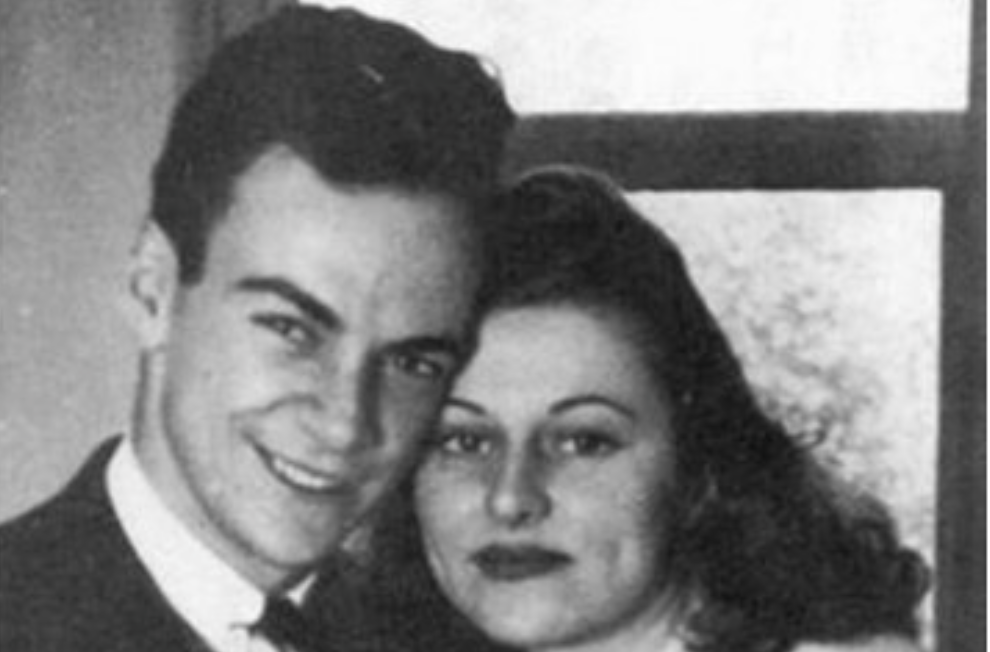
In June 1945, the 27-year-old physicist Richard Feynman lost his wife, Arline Feynman, to tuberculosis. Only 25 years old, she was Richard’s high-school sweetheart. And yet she was much more. As Lawrence Krauss writes in 2012 biography on Feynman:
Richard and Arline were soul mates. They were not clones of each other, but symbiotic opposites — each completed the other. Arline admired Richard’s obvious scientific brilliance, and Richard clearly adored the fact that she loved and understood things he could barely appreciate at the time. But what they shared, most of all, was a love of life and a spirit of adventure.
I know how much you like to hear that — but I don’t only write it because you like it — I write it because it makes me warm all over inside to write it to you.
It is such a terribly long time since I last wrote to you — almost two years but I know you’ll excuse me because you understand how I am, stubborn and realistic; and I thought there was no sense to writing.
But now I know my darling wife that it is right to do what I have delayed in doing, and that I have done so much in the past. I want to tell you I love you. I want to love you. I always will love you.
I find it hard to understand in my mind what it means to love you after you are dead — but I still want to comfort and take care of you — and I want you to love me and care for me. I want to have problems to discuss with you — I want to do little projects with you. I never thought until just now that we can do that. What should we do. We started to learn to make clothes together — or learn Chinese — or getting a movie projector. Can’t I do something now? No. I am alone without you and you were the “idea-woman” and general instigator of all our wild adventures.
When you were sick you worried because you could not give me something that you wanted to and thought I needed. You needn’t have worried. Just as I told you then there was no real need because I loved you in so many ways so much. And now it is clearly even more true — you can give me nothing now yet I love you so that you stand in my way of loving anyone else — but I want you to stand there. You, dead, are so much better than anyone else alive.
I know you will assure me that I am foolish and that you want me to have full happiness and don’t want to be in my way. I’ll bet you are surprised that I don’t even have a girlfriend (except you, sweetheart) after two years. But you can’t help it, darling, nor can I — I don’t understand it, for I have met many girls and very nice ones and I don’t want to remain alone — but in two or three meetings they all seem ashes. You only are left to me. You are real.
My darling wife, I do adore you.
I love my wife. My wife is dead.
Rich.
PS Please excuse my not mailing this — but I don’t know your new address.
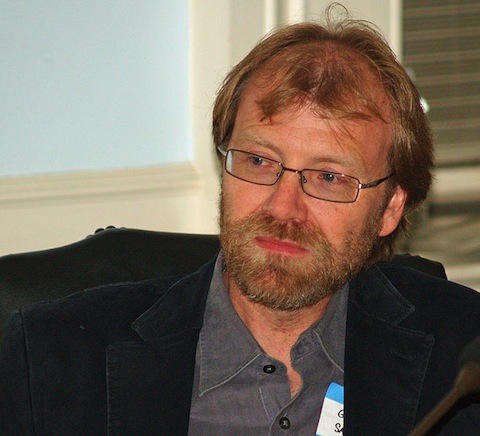
Full disclosure: I love George Saunders. Can I say that? Can I say that George Saunders rekindled my faith in contemporary fiction? Is that too fawning? Obsequious, but true! Oh, how bored I had become with fourth-hand derivative Carver, cheapened Cheever, sometimes the sad approximations of Chuck Palahniuk. So boring. It had gotten so all I could read was Philip K. Dick, over and over and over. And Alice Walker. And Wuthering Heights. And Thomas Hardy. Do you see the pass I’d come to? Then Saunders. In a writing class I took, with one of Gordon Lish’s acolytes (no names), I read Saunders. I read Wells Towers, Padgett Powell, Aimee Bender—a host of modern writers who were doing something new, in short, sometimes very short, forms, but explosive!
What is it about George Saunders that grips? He has mastered frivolity, turned it into an art of diamond-like compression. And for this, he gets a MacArthur Fellowship? Well, yes. Because what he does is brilliant, in its shockingly unaffected observations of humanity. George Saunders is an accomplished writer who puts little store in his accomplishments. Instead, he values kindness most of all, and generosity. These are the qualities he extols, in his typically droll manner, in a graduation speech he delivered to the 2013 graduating class at Syracuse University. Kindness: a little virtue, you might say. The New York Timeshas published his speech, and I urge you to read it in full. I’m going to give you half, below, and challenge you to find George Saunders wanting.
Down through the ages, a traditional form has evolved for this type of speech, which is: Some old fart, his best years behind him, who, over the course of his life, has made a series of dreadful mistakes (that would be me), gives heartfelt advice to a group of shining, energetic young people, with all of their best years ahead of them (that would be you).
And I intend to respect that tradition.
Now, one useful thing you can do with an old person, in addition to borrowing money from them, or asking them to do one of their old-time “dances,” so you can watch, while laughing, is ask: “Looking back, what do you regret?” And they’ll tell you. Sometimes, as you know, they’ll tell you even if you haven’t asked. Sometimes, even when you’ve specifically requested they not tell you, they’ll tell you.
So: What do I regret? Being poor from time to time? Not really. Working terrible jobs, like “knuckle-puller in a slaughterhouse?” (And don’t even ASK what that entails.) No. I don’t regret that. Skinny-dipping in a river in Sumatra, a little buzzed, and looking up and seeing like 300 monkeys sitting on a pipeline, pooping down into the river, the river in which I was swimming, with my mouth open, naked? And getting deathly ill afterwards, and staying sick for the next seven months? Not so much. Do I regret the occasional humiliation? Like once, playing hockey in front of a big crowd, including this girl I really liked, I somehow managed, while falling and emitting this weird whooping noise, to score on my own goalie, while also sending my stick flying into the crowd, nearly hitting that girl? No. I don’t even regret that.
But here’s something I do regret:
In seventh grade, this new kid joined our class. In the interest of confidentiality, her Convocation Speech name will be “ELLEN.” ELLEN was small, shy. She wore these blue cat’s‑eye glasses that, at the time, only old ladies wore. When nervous, which was pretty much always, she had a habit of taking a strand of hair into her mouth and chewing on it.
So she came to our school and our neighborhood, and was mostly ignored, occasionally teased (“Your hair taste good?” – that sort of thing). I could see this hurt her. I still remember the way she’d look after such an insult: eyes cast down, a little gut-kicked, as if, having just been reminded of her place in things, she was trying, as much as possible, to disappear. After awhile she’d drift away, hair-strand still in her mouth. At home, I imagined, after school, her mother would say, you know: “How was your day, sweetie?” and she’d say, “Oh, fine.” And her mother would say, “Making any friends?” and she’d go, “Sure, lots.”
Sometimes I’d see her hanging around alone in her front yard, as if afraid to leave it.
And then – they moved. That was it. No tragedy, no big final hazing.
One day she was there, next day she wasn’t.
End of story.
Now, why do I regret that? Why, forty-two years later, am I still thinking about it? Relative to most of the other kids, I was actually pretty nice to her. I never said an unkind word to her. In fact, I sometimes even (mildly) defended her.
But still. It bothers me. So here’s something I know to be true, although it’s a little corny, and I don’t quite know what to do with it:
What I regret most in my life are failures of kindness.
Those moments when another human being was there, in front of me, suffering, and I responded…sensibly. Reservedly. Mildly.
Or, to look at it from the other end of the telescope: Who, in your life, do you remember most fondly, with the most undeniable feelings of warmth?
Those who were kindest to you, I bet.
It’s a little facile, maybe, and certainly hard to implement, but I’d say, as a goal in life, you could do worse than: Try to be kinder.
We're hoping to rely on loyal readers, rather than erratic ads. Please click the Donate button and support Open Culture. You can use Paypal, Venmo, Patreon, even Crypto! We thank you!
Open Culture scours the web for the best educational media. We find the free courses and audio books you need, the language lessons & educational videos you want, and plenty of enlightenment in between.