Soviet-Era Illustrations Of J. R. R. Tolkien’s The Hobbit (1976)

Hobbit1

Until I read J. R. R. Tolkien’s The Lord of The Rings, my favorite book grow­ing up was, by far, The Hob­bit. Grow­ing up in Rus­sia, how­ev­er, meant that instead of Tolkien’s Eng­lish ver­sion, my par­ents read me a Russ­ian trans­la­tion. To me, the trans­la­tion eas­i­ly matched the pace and won­der of Tolkien’s orig­i­nal. Look­ing back, The Hob­bit prob­a­bly made such an indeli­ble impres­sion on me because Tolkien’s tale was alto­geth­er dif­fer­ent than the Russ­ian fairy tales and children’s sto­ries that I had pre­vi­ous­ly been exposed to. There were no child­ish hijinks, no young pro­tag­o­nists, no par­ents to res­cue you when you got into trou­ble. I con­sid­ered it an epic in the truest lit­er­ary sense.

As with many Russ­ian trans­la­tions dur­ing the Cold War, the book came with a com­plete­ly dif­fer­ent set of illus­tra­tions. Mine, I remem­ber regret­ting slight­ly, lacked pic­tures alto­geth­er. A friend’s edi­tion, how­ev­er, was illus­trat­ed in the typ­i­cal Russ­ian style: much more tra­di­tion­al­ly styl­ized than Tolkien’s own draw­ings, they were more angu­lar, friend­lier, almost car­toon­ish. In this post, we include a num­ber of these images from the 1976 print­ing. The cov­er, above, depicts a grin­ning Bil­bo Bag­gins hold­ing a gem. Below, Gan­dalf, an osten­si­bly harm­less soul, pays Bil­bo a vis­it.

2

Next, we have the three trolls, argu­ing about their var­i­ous eat­ing arrange­ments, with Bil­bo hid­ing to the side.

3

Here, Gol­lum, née Smeagol, pad­dles his raft in the depths of the moun­tains.

4

Final­ly, here’s Bil­bo, ful­fill­ing his role as a bur­glar in Smaug’s lair.

5

For more of the Sovi­et illus­tra­tions of The Hob­bit, head on over to Retro­naut.

For anoth­er Sovi­et take on The Hob­bit, watch this 1985 TV adap­ta­tion.

Ilia Blin­d­er­man is a Mon­tre­al-based cul­ture and sci­ence writer. Fol­low him at @iliablinderman, or read more of his writ­ing at the Huff­in­g­ton Post.

Relat­ed Con­tent:

Lis­ten to J.R.R. Tolkien Read a Lengthy Excerpt from The Hob­bit (1952)

Down­load a Free Course on The Hob­bit by “The Tolkien Pro­fes­sor,” Corey Olsen

Dis­cov­er J.R.R. Tolkien’s Per­son­al Book Cov­er Designs for The Lord of the Rings Tril­o­gy

The Only Draw­ing from Mau­rice Sendak’s Short-Lived Attempt to Illus­trate The Hob­bit

William S. Burroughs Reads From Naked Lunch, His Controversial 1959 Novel

burroughs reading

Pub­lished in 1959, Williams S. Bur­roughs’ Naked Lunch ranks with oth­er mid-twen­ti­eth cen­tu­ry books like Hen­ry Miller’s Trop­ic of Can­cer and the works of Jean Genet as lit­er­a­ture that sharply divid­ed both crit­i­cal and legal opin­ion in argu­ments over style and in ques­tions of obscen­i­ty. Among its dis­turb­ing and sub­ver­sive char­ac­ters is the socio­path­ic sur­geon Dr. Ben­way, who inspired the med­ical hor­rors of J.G. Bal­lard and was inspired in turn by Aldous Huxley’s Brave New WorldBen­way pro­vides some of the more satir­i­cal moments in the book, as you can hear in the sec­tion below, which Bur­roughs reads straight with his dis­tinc­tive nasal­ly Mid­west­ern twang. A short film of the scene (sad­ly unem­bed­d­a­ble), called “Dr. Ben­way Oper­ates,” has Bur­roughs him­self play­ing the doc­tor, in a drama­ti­za­tion that looks like low rent farce as direct­ed by John Waters.

A series of loose­ly con­nect­ed chap­ters that Bur­roughs said could be read in any order, Naked Lunch seems both fas­ci­nat­ed and repelled by the gris­ly med­ical­ized vio­lence in scenes like those above (one vignette, for exam­ple, presents “a tract against cap­i­tal pun­ish­ment”). This ambiva­lence was not lost on writ­ers like Nor­man Mail­er. The high­est praise of the nov­el prob­a­bly came from Mail­er dur­ing the novel’s 1966 obscen­i­ty tri­al before the Mass­a­chu­setts Supreme Court. In one among a hand­ful of lit­er­ary depo­si­tions, includ­ing one from Allen Gins­berg, Mail­er described Bur­roughs’ “extra­or­di­nary style,” and “exquis­ite poet­ic sense.” Despite the fact that its images were “often dis­gust­ing,” Mail­er called the book “a deep work, a cal­cu­lat­ed work” that “cap­tures that speech [‘gut­ter talk’] like no Amer­i­can writer I know.”

Per­haps one of the work’s most damn­ing pieces of crit­i­cism comes from the Judi­cial Offi­cer for the U.S. Postal Ser­vice, who called for the book’s ban­ning, apprais­ing the writ­ing as “undis­ci­plined prose, far more akin to the ear­ly work of exper­i­men­tal ado­les­cents than to any­thing of lit­er­ary mer­it.” Mail­er, Gins­berg, and the book’s oth­er sup­port­ers won out, a fact beat essay­ist Jed Birm­ing­ham laments, for a sur­pris­ing rea­son: The unban­ning of Naked Lunch led to the book’s tam­ing, its gen­tri­fi­ca­tion, as it were: “The wild, exu­ber­ant offen­sive­ness of the nov­el fades,” he writes, “in the face of all the legal argu­ments and the process of can­on­iza­tion.” In fact, the full nov­el may nev­er have been pub­lished at all had it not been for the Post Office in Chica­go seiz­ing sev­er­al hun­dred copies of The Chica­go Review, which con­tained some few Naked Lunch sec­tions. Hear­ing of the con­tro­ver­sy, French pub­lish­er Mau­rice Giro­dias hasti­ly threw togeth­er a man­u­script of the first 1959 text.

And yet, pri­or to the mid-six­ties, the deci­sion to ban Naked Lunch, “even before it was pub­lished in book form,” meant “that ques­tions of obscen­i­ty and cen­sor­ship dic­tat­ed the aca­d­e­m­ic and pub­lic recep­tion” of the book. Bur­roughs  com­ment­ed on the effects of such censorship—using an anal­o­gy to “the junk virus”—in part of a new pref­ace to the 50th edi­tion called “After­thoughts on a Depo­si­tion.” The heath risks of opi­ates “in con­trolled dos­es,” he writes,“maybe be min­i­mal,” yet the effects of crim­i­nal­iza­tion are out­sized “anti-drug hys­te­ria,” which “pos­es a threat to per­son­al free­doms and due-process pro­tec­tions of the law every­where.”

Since the novel’s vin­di­ca­tion, crit­i­cal con­sen­sus has cen­tered around sober, rev­er­ent judg­ments like Mailer’s—and to some less­er extent Ginsberg’s terse, irri­ta­ble tes­ti­mo­ny. While there are still those who despise the book, it’s sig­nif­i­cant that Bur­roughs’ work—which the Wash­ing­ton Post called the first of his “homo­sex­u­al planet-operas”—has achieved such wide­spread admi­ra­tion amidst the noto­ri­ety. The nov­el deals in themes we’re still adju­di­cat­ing dai­ly in courts legal and pub­lic some 55 years lat­er, point­ing per­haps to the con­tin­ued gulf between the thoughts and aims of the read­ing pub­lic and those of hys­ter­i­cal author­i­tar­i­ans and “the media and nar­cotics offi­cials,” as Bur­roughs has it. After all, at its 50th anniver­sary in 2009, Naked Lunch was pro­nounced “still fresh” by such main­stream out­lets as NPR and The Guardian, evi­dence of its per­sis­tent pow­er, and maybe also of its domes­ti­ca­tion.

Clips of Bur­roughs read­ing Naked Lunch can also be found on this Colum­bia Uni­ver­si­ty site.

Relat­ed Con­tent:

William S. Bur­roughs Reads His First Nov­el, Junky

William S. Bur­roughs on the Art of Cut-up Writ­ing

William S. Bur­roughs Explains What Artists & Cre­ative Thinkers Do for Human­i­ty: From Galileo to Cézanne and James Joyce

550 Free Audio Books: Down­load Great Books for Free

Josh Jones is a writer and musi­cian based in Durham, NC. Fol­low him at @jdmagness

Read The Coming of Jap Herron, the Novel Mark Twain “Wrote” Through a Ouija Board After His Death (1917)

“You’re mov­ing it!” “No I’m not; you’re mov­ing it!” Thus spake the excit­ed­ly anx­ious pre­teen voic­es of an-ear­ly 1990s Park­er Broth­ers Oui­ja board com­mer­cial I must have seen a hun­dred times in child­hood. Though by then such devices had scant import out­side the realm of  sleep­over par­ties, peo­ple took them more seri­ous­ly in the ear­ly twen­ti­eth cen­tu­ry, espe­cial­ly around the time of the First World War. While some must, alas, have regard­ed them as func­tion­al chan­nels to the great beyond, oth­ers saw in them the poten­tial to gin up major pub­lish­ing events. Here we have one of the most curi­ous, 1917’s small-town Mis­souri bil­dungsro­man The Com­ing of Jap Her­ron, alleged­ly writ­ten Mark Twain, at that point sev­en years dead. A mis­placed man­u­script the execu­tors of Twain’s estate found amid his papers, per­haps? Noth­ing of the sort: he began writ­ing the book in 1915, as a dis­em­bod­ied spir­it, through a Oui­ja board. So claimed, at least, one Emi­ly Grant Hutch­ings, who brought Jap Her­ron to pub­li­ca­tion, pre­sent­ing her­self as a mere scribe tak­ing dic­ta­tion from the deceased icon of Amer­i­can lit­er­ary humor.

She’d even had some con­tact, albeit through the mail, with the liv­ing one: “In their exchange of let­ters he had giv­en her advice and, inter­est­ing­ly, also marked one of her let­ters with the words: ‘Idiot! Must pre­serve.’ ” That price­less find comes from The Pub­lic Domain Review’s post on Jap Her­ron, where you can read the short book in full, a much eas­i­er option than strug­gling to find a copy that sur­vived the ceas­ing of pub­li­ca­tion and sub­se­quent pulp­ing ordered by Twain’s daugh­ter. (You can also access it by click­ing on the image above.)  And how does this “final work,” whether com­posed as a pas­tiche or para­nor­mal­ly, hold up? “The humor impress­es as a fee­ble attempt at imi­ta­tion,” said a con­tem­po­rary New York Times review, “and while there is now and then a strong sure touch of pathos or a swift and true rev­e­la­tion of human nature, the ‘sob stuff’ that oozes through many of the scenes, and the over­drawn emo­tions are too much for creduli­ty. If this is the best that ‘Mark Twain’ can do by reach­ing across the bar­ri­er, the army of admir­ers that his works have won for him will all hope that he will here­after respect that bound­ary.”

via The Pub­lic Domain Review

Relat­ed Con­tent:

Mark Twain Plays With Elec­tric­i­ty in Niko­la Tesla’s Lab (Pho­to, 1894)

Mark Twain Wrote the First Book Ever Writ­ten With a Type­writer

Mark Twain Shirt­less in 1883 Pho­to

Find Major Works by Twain in our Col­lec­tion of Free eBooks and Free Audio Books

Col­in Mar­shall hosts and pro­duces Note­book on Cities and Cul­ture and writes essays on cities, aes­thet­ics, Asia, and men’s style. He’s at work on a book about Los Ange­les, A Los Ange­les Primer. Fol­low him on Twit­ter at @colinmarshall or on Face­book.

Opening Sentences From Great Novels, Diagrammed: Lolita, 1984 & More

Lolitadiagrammed

I admit it: I still don’t under­stand sen­tence dia­gram­ming. Though as a mid­dle school­er I duti­ful­ly, if grudg­ing­ly, sub­mit­ted to that clas­sic Eng­lish class­room exer­cise, the prac­tice did­n’t stick, nor did what­ev­er habit of com­po­si­tion it meant to con­vey. Some of my teach­ers tried to make sen­tence dia­gram­ming inter­est­ing, but they could only do so much. They could only do so much, that is, with­out Pop Chart Lab’s “A Dia­gram­mat­i­cal Dis­ser­ta­tion on Open­ing Lines of Notable Nov­els,” a poster that “dia­grams 25 famous open­ing lines from revered works of fic­tion accord­ing to the dic­tates of the clas­sic Reed-Kel­logg sys­tem,” with each and every graph­ic “pars­ing clas­si­cal prose by parts of speech and offer­ing a par­ti­tioned, col­or-cod­ed pic­to-gram­mat­i­cal rep­re­sen­ta­tion of some of the most famous first words in lit­er­ary his­to­ry.”

Orwelldiagrammed

At the top of the post, we have the poster’s dia­gram of Hum­bert Hum­bert’s famous first words, by way of Vladimir Nabokov, in Loli­ta: “Loli­ta, light of my life, fire of my loins.” That immor­tal sen­tence may always have struck you as incom­plete — does­n’t it need a verb? — but hey, it dia­grams, at least with the addi­tion of the implic­it (is) and a cou­ple implic­it (the)s. Fol­low the branch­es and you find the words’ con­cealed com­plex­i­ty visu­al­ly revealed. Just above, you’ll see dia­grammed a more tra­di­tion­al open­ing sen­tence from George Orwell, a much more plain­spo­ken writer. “It was a bright cold day in April,” goes the first line of 1984, “and the clocks were strik­ing thir­teen” — a more lin­guis­ti­cal­ly involved descrip­tion, as you can see, than it may at first seem. Fif­teen years after the specter of Reed-Kel­logg dark­ened my desk — in which time I’ve made writ­ing my career — I still can’t claim the abil­i­ty to pro­duce prop­er­ly dia­grammed sen­tences for myself. But I like to think that I can appre­ci­ate them, espe­cial­ly when they show me the work­ings of a suf­fi­cient­ly great sen­tence.

See more famous open­ing sen­tences from Pop Chart Lab’s poster (and pur­chase your own copy) here.

Relat­ed Con­tent:

George Orwell’s 1984: Free eBook, Audio Book & Study Resources

The His­to­ry of the Eng­lish Lan­guage in Ten Ani­mat­ed Min­utes

Learn Lan­guages for Free: Span­ish, Eng­lish, Chi­nese & 37 Oth­er Lan­guages

David Fos­ter Wal­lace Breaks Down Five Com­mon Word Usage Mis­takes in Eng­lish

Nabokov Reads Loli­ta, Names the Great Books of the 20th Cen­tu­ry

Col­in Mar­shall hosts and pro­duces Note­book on Cities and Cul­ture and writes essays on cities, aes­thet­ics, Asia, and men’s style. He’s at work on a book about Los Ange­les, A Los Ange­les Primer. Fol­low him on Twit­ter at @colinmarshall or on Face­book.

Rare Audio: William Faulkner Names His Best Novel, And the First Faulkner Novel You Should Read

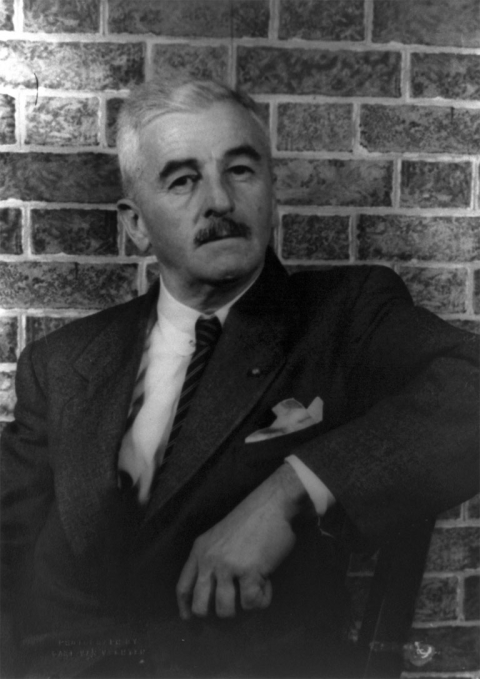
Faulkner1

Image by Carl Van Vecht­en, via Wiki­me­dia Com­mons

My two favorite William Faulkn­er nov­els are, with­out a doubt, Absa­lom, Absa­lom! and The Sound and The Fury. After read­ers get thrust into the nar­ra­tors’ dizzy­ing streams of con­scious­ness, both books mount in ten­sion to a fright­ful, almost unbear­able pitch, before reach­ing their grim, cathar­tic cli­max­es. I’ve always felt that the white-hot inten­si­ty of the nov­els meant that, some­how, they had meant more to Faulkn­er than his oth­er writ­ings. Accord­ing to an audio record­ing of Faulkn­er him­self, it turns out that I was half right.

In 1957 and 1958, Faulkn­er served as the Writer-in-Res­i­dence at the Uni­ver­si­ty of Vir­ginia at Char­lottesville, and today the school retains what is like­ly to be the largest Faulkn­er archive in the world. In addi­tion to Faulkner’s pri­vate library, orig­i­nal man­u­scripts, let­ters, and per­son­al effects, the archive also con­tains hours upon hours of Faulkner’s Q & A ses­sions, speech­es, and read­ings. In April of 1957, dur­ing a class lec­ture, a stu­dent asked Faulkn­er about his favorite nov­el. Lis­ten to the audio clip here:

Uniden­ti­fied par­tic­i­pant: Mr. Faulkn­er, what do you con­sid­er your best book?

William Faulkn­er: The one that—that failed the most trag­i­cal­ly and the most splen­did­ly. That was The Sound and the Fury—the one I worked at the longest, the hard­est, that was to me the—the most pas­sion­ate and mov­ing idea, and made the most splen­did fail­ure. That’s the one that’s my—I con­sid­er the best, not—well, best is the wrong word—that’s the one that I love the most.

The record­ings them­selves are a fas­ci­nat­ing resource, with Faulkn­er com­ment­ing wide­ly on his nov­els and sto­ries. Where else could one hear, for exam­ple, what the author con­sid­ered the best book to start with when read­ing him? Lis­ten here.

Uniden­ti­fied par­tic­i­pant: Do you think that there’s a par­tic­u­lar order in which your works should be read […]? Many peo­ple have offered a sequence. Do you think there’s a par­tic­u­lar sequence that your books should be read in?

William Faulkn­er: Prob­a­bly to begin with a book called Sar­toris. That has the germ of my apoc­rypha in it. A lot of the char­ac­ters are pos­tu­lat­ed in that book. I’d say that’s a good one to begin with.

For those inter­est­ed in learn­ing more about Faulkn­er and his writ­ing, the South­east Mis­souri State University’s Cen­ter for Faulkn­er Stud­ies is offer­ing a promis­ing MOOC called Faulkn­er 101, led by the Center’s founder, Dr. Robert Ham­blin, as well as its cur­rent direc­tor, Dr. Chris Rieger. You can sign up now. Or find count­less oth­er MOOCs in our big, ever-expand­ing list of MOOCs.

Ilia Blin­d­er­man is a Mon­tre­al-based cul­ture and sci­ence writer. Fol­low him at @iliablinderman, or read more of his writ­ing at the Huff­in­g­ton Post.

Relat­ed Con­tent:

William Faulkn­er Reads from As I Lay Dying

William Faulkn­er Audio Archive Goes Online

The Art of William Faulkn­er: Draw­ings from 1916–1925

Raymond Chandler’s Ten Commandments for Writing a Detective Novel

Pro­mo por­trait pho­to of author Ray­mond Chan­dler, via Wiki­me­dia Com­mons

Ray­mond Chan­dler – along with his hard­boiled brethren like Dashiell Ham­mett and James M. Cain – sand­blast­ed the detec­tive nov­el of its deco­rous­ness and instilled it with a sweaty vital­i­ty. Chan­dler, through the eyes of his most famous char­ac­ter Philip Mar­lowe, nav­i­gat­ed a thin­ly veiled Los Ange­les through the des­per­a­tion of those on the low end of society’s totem pole and through the greed and venal­i­ty of those at the top.

Instead of cre­at­ing self-con­tained locked room mys­ter­ies, Chan­dler cre­at­ed sto­ries that looked out­ward, strug­gling to make sense of a moral­ly ambigu­ous world. He ded­i­cat­ed his career to the genre, influ­enc­ing gen­er­a­tions of writ­ers after him. His very name became syn­ony­mous with his terse, pun­gent style.

So it isn’t ter­ri­bly sur­pris­ing that Chan­dler had some very strong opin­ions about crime fic­tion. Below are his ten com­mand­ments for writ­ing a detec­tive nov­el:

1) It must be cred­i­bly moti­vat­ed, both as to the orig­i­nal sit­u­a­tion and the dénoue­ment.

2) It must be tech­ni­cal­ly sound as to the meth­ods of mur­der and detec­tion.

3) It must be real­is­tic in char­ac­ter, set­ting and atmos­phere. It must be about real peo­ple in a real world.

4) It must have a sound sto­ry val­ue apart from the mys­tery ele­ment: i.e., the inves­ti­ga­tion itself must be an adven­ture worth read­ing.

5) It must have enough essen­tial sim­plic­i­ty to be explained eas­i­ly when the time comes.

6) It must baf­fle a rea­son­ably intel­li­gent read­er.

7) The solu­tion must seem inevitable once revealed.

8) It must not try to do every­thing at once. If it is a puz­zle sto­ry oper­at­ing in a rather cool, rea­son­able atmos­phere, it can­not also be a vio­lent adven­ture or a pas­sion­ate romance.

9) It must pun­ish the crim­i­nal in one way or anoth­er, not nec­es­sar­i­ly by oper­a­tion of the law.… If the detec­tive fails to resolve the con­se­quences of the crime, the sto­ry is an unre­solved chord and leaves irri­ta­tion behind it.

10) It must be hon­est with the read­er.

These com­mand­ments are oblique jabs at the locked room who­dunits pop­u­lar dur­ing the Gold­en Age of the detec­tive nov­el dur­ing the 1920s and 30s. Chan­dler deliv­ers a much more point­ed crit­i­cism of these works in his sem­i­nal essay about crime fic­tion, The Sim­ple Art of Mur­der.

After tak­ing thor­ough­ly apart the mur­der mys­tery The Red House by A. A. Milne (yes, the writer of Win­nie the Pooh), Chan­dler rails against detec­tive sto­ries where the machi­na­tions of plot out­strip any sem­blance of real­i­ty. “If the sit­u­a­tion is false, you can­not even accept it as a light nov­el, for there is no sto­ry for the light nov­el to be about.”

He goes on to trash oth­er British mys­tery writ­ers like Agatha Christie and par­tic­u­lar­ly Dorothy L. Say­ers, who Chan­dler paints not only as a hyp­o­crit­i­cal snob but also as bor­ing. “The Eng­lish may not always be the best writ­ers in the world, but they are incom­pa­ra­bly the best dull writ­ers,” he quips.

Chan­dler then offers praise to his hard­boiled col­league Dashiell Ham­mett who infus­es his sto­ries with a sense of real­ism. “Ham­mett gave mur­der back to the kind of peo­ple that com­mit it for rea­sons, not just to pro­vide a corpse; and with the means at hand, not with hand-wrought duelling pis­tols, curare, and trop­i­cal fish….He was spare, fru­gal, hard­boiled, but he did over and over again what only the best writ­ers can ever do at all. He wrote scenes that seemed nev­er to have been writ­ten before.”

Whether con­scious or not, this pas­sage is a fair descrip­tion of Chan­dler as well.

Relat­ed Con­tent:

Hear Ray­mond Chan­dler & Ian Fleming–Two Mas­ters of Suspense–Talk with One Anoth­er in Rare 1958 Audio

Ray­mond Chandler’s 36 Great Unused Titles: From “The Man With the Shred­ded Ear,” to “Quick, Hide the Body”

Watch Ray­mond Chandler’s Long-Unno­ticed Cameo in Dou­ble Indem­ni­ty

Jonathan Crow is a writer and film­mak­er whose work has appeared in Yahoo!, The Hol­ly­wood Reporter, and oth­er pub­li­ca­tions. You can fol­low him at @jonccrow.

Hear Italo Calvino Read Selections From Invisible Cities, Mr. Palomar & Other Enchanting Fictions

The Trav­els of Mar­co Polo—tales told by the Venet­ian explor­er to Ital­ian romance writer Rus­tichel­lo da Pisa—purportedly describes in great detail Polo’s encounter with “The East,” a place in the medieval Euro­pean mind as alien and fan­tas­ti­cal as the inter­stel­lar realms of sci­ence fic­tion. Like oth­er trav­el nar­ra­tives of the peri­od (notably the spu­ri­ous Trav­els of Sir John Man­dev­ille), Polo’s sto­ries mixed accu­rate geo­graph­i­cal and cul­tur­al infor­ma­tion with folk­lore, myth, and Ori­en­tal­ist mis­ap­pre­hen­sion. While the appear­ance of mon­sters and mar­vels seems capri­cious to the mod­ern read­er, these ele­ments may have felt almost mun­dane to Polo’s con­tem­po­raries. Or maybe not. After all, the Ital­ian title of Polo’s trav­el­ogue—Il Mil­ione—may refer to Polo’s rep­u­ta­tion as the teller of “a mil­lion” lies.

But let us leave the puz­zles of authen­tic­i­ty to his­to­ri­ans. As read­ers, we get lost in these fas­ci­nat­ing romances because the worlds they describe are both so strange yet so unset­tling­ly famil­iar. Medieval trav­el­ogues like Polo’s open up the pos­si­bil­i­ty of fairy king­doms with out­landish cus­toms thriv­ing almost with­in reach. These tales of strange and unknown lands were, after all, promi­nent inspi­ra­tion for C.S. Lewis’s Nar­nia books. (Lis­ten to the Chron­i­cles of Nar­nia in a free audio for­mat here).

For grown-up read­ers, no author bet­ter evokes the uncan­ny geopol­i­tics of the medieval imag­i­na­tion than Ita­lo Calvi­no, whose Invis­i­ble Cities imag­ines Polo’s sup­posed jour­ney to the impe­r­i­al seat of Mon­gol ruler Kublai Khan. In Calvino’s novel—more a col­lec­tion of prose-poems—Polo regales Khan with his accounts of 55 exot­ic cities, while the busy emperor’s func­tionar­ies come and go. “At some point,” says author Eric Wein­er, “you real­ize that Calvi­no is not talk­ing about cities at all, not in the way we nor­mal­ly think of the word. Calvino’s cities—like all cities, really—are con­struct­ed not of steel and con­crete but of ideas. Each city rep­re­sents a thought exper­i­ment.”

Sim­i­lar obser­va­tions can be made of any of the author’s odd­ly enchant­i­ng alle­gor­i­cal fic­tions—Sea­mus Heaney called Calvi­no’s sto­ries “fan­tas­tic dis­plays” inspired by “sym­me­tries and arith­metics.” In the audio above, you can hear the author read selec­tions from sev­er­al of his works, includ­ing Invis­i­ble Cities and Mr. Palo­mar, a work of “even more arch­ness and archi­tec­tur­al inven­tion.” Do not be daunt­ed by Calvino’s Ital­ian. I find it very pleas­ing to lis­ten to, even if I do not under­stand it all. But if you’d rather skip ahead to the Eng­lish por­tion of his reading—recorded at the 92nd St. Y on March 31st, 1983—it begins at 8:40 where Calvi­no reads from a sec­tion of Invis­i­ble Cities called “Thin Cities.” In this excerpt, Polo tells Khan of a place called “Armil­la”:

Whether Armil­la is like this because it is unfin­ished or because it has been demol­ished, whether the cause is some enchant­ment or only a whim, I do not know. The fact remains that it has no walls, no ceil­ings, no floors: it has noth­ing that makes it seem a city except the water pipes that rise ver­ti­cal­ly where the hous­es should be and spread out hor­i­zon­tal­ly where the floors should be: a for­est of pipes that end in taps, show­ers, spouts, over­flows […]

 You can read the remain­der of the “Armil­la” sec­tion here, along with oth­er selec­tions from Invis­i­ble Cities. A por­tion of the text of Mr. Palo­mar is avail­able here. Calvino’s read­ing is long—nearly an hour and a half—and very reward­ing, both for the rich musi­cal­i­ty of his accent­ed Eng­lish and the spell­bind­ing charms of his philo­soph­i­cal fic­tions. And if you are so inspired, you may wish to read Calvi­no’s short essay “Why Read the Clas­sics?” to which I often turn for a fuller grasp his wide-rang­ing lit­er­ary inher­i­tance.

via The Paris Review

Relat­ed Con­tent:

Expe­ri­ence Invis­i­ble Cities, an Inno­v­a­tive, Ita­lo Calvi­no-Inspired Opera Staged in LA’s Union Sta­tion

Watch a Whim­si­cal Ani­ma­tion of Ita­lo Calvino’s Short Sto­ry “The Dis­tance of the Moon”

John Tur­tur­ro Reads Ita­lo Calvino’s Ani­mat­ed Fairy Tale

550 Free Audio Books: Down­load Great Books for Free

Josh Jones is a writer and musi­cian based in Durham, NC. Fol­low him at @jdmagness

Edgar Allan Poe Offers Interior Design Advice and Blasts American Aristocrats in “The Philosophy of Furniture” (1840)

edgar-allan-poe-brooklyn

Edgar Allan Poe isn’t read much as an essay­ist, which is too bad. His essays reveal a quick and iron­ic cast of mind where his dark poet­ry and sto­ries often mark him as a sin­gle-mind­ed hyper­sen­si­tive, “like a peony just past bloom.” Where Poe the poet can be lugubri­ous, Poe the essay­ist is brisk, inci­sive, and, well… kin­da cat­ty. Take the fol­low­ing apho­ris­tic wit­ti­cisms from his 1846 “A Few Words on Eti­quette”:

Nev­er use the term gen­teel — it is only to be found in the mouths of those who have it nowhere else.

Green spec­ta­cles are an abom­i­na­tion, fit­ted only for stu­dents of divin­i­ty.

Almost every defect of face may be con­cealed by a judi­cious use and arrange­ment of hair.

Are these casu­al bon mots or seri­ous pre­scrip­tions? Why not both? An edi­tor at the Edgar Allan Poe Soci­ety of Bal­ti­more notes that the eti­quette essay “bears much the same humor­ous tone and mix­ture of gen­uine and satir­i­cal com­men­tary as Poe’s essay ‘The Phi­los­o­phy of Fur­ni­ture’ from 6 years ear­li­er.” Indeed, in that ear­li­er crit­i­cal work on inte­ri­or design, Poe makes con­fi­dent judg­ments, leaps from point to point with delight­ful­ly spe­cif­ic exam­ples, and employs a mix of lev­i­ty and grav­i­ty.

Poe begins “The Phi­los­o­phy of Fur­ni­ture” with “a some­what Colerid­e­gy asser­tion” from Hegel then launch­es into a piti­less cri­tique of var­i­ous nation­al styles. His last point—“The Yan­kees alone are preposterous”—is the basis for what fol­lows, a dis­qui­si­tion on the sad state of Amer­i­can inte­ri­or design, brought about by “an aris­toc­ra­cy of dol­lars” in which “the dis­play of wealth” takes the place of her­aldry. His cri­tique recalls (and per­haps alludes to) Eng­lish poet Alexan­der Pope’s “Epis­tle to Burling­ton,” whose satir­i­cal tar­get makes such a taste­less mess of his vil­la that his neigh­bors cry out “What sums are thrown away!”

In Poe’s case, the offend­ing estate is “what is termed in the Unit­ed States, a well-fur­nished apart­ment.” He decries the inju­di­cious use of cur­tains, the poor dis­play of car­pets (“the soul of the apart­ment”), and the prob­lem “of gas and of glass.” Poe deli­cious­ly details the dec­o­rat­ing habits of a par­venu Amer­i­can aris­toc­ra­cy, whose defects are dis­cern­able by even the “ver­i­est bump­kin.” But he offers more than snark. “Like any good crit­ic,” writes The Smith­son­ian, “Poe doesn’t just con­demn, he offers solu­tions.” In the final, lengthy para­graph of “The Phi­los­o­phy of Fur­ni­ture,” Poe turns his tal­ent for vivid descrip­tion to a por­trait of his per­fect boudoir. Above, you can see a 1959 recre­ation of Poe’s “small and not, osten­ta­tious cham­ber with whose dec­o­ra­tions no fault can be found.” But this may be redun­dant. Poe fur­nish­es us with suf­fi­cient fine detail that we can bet­ter cre­ate his ide­al room in our  imag­i­na­tion. See the excerpts below, and read Poe’s com­plete essay here.

The pro­pri­etor lies asleep on a sofa — the weath­er is cool — the time is near mid­night: I will make a sketch of the room ere he awakes. It is oblong — some thir­ty feet in length and twen­ty-five in breadth — a shape afford­ing the best (ordi­nary) oppor­tu­ni­ties for the adjust­ment of fur­ni­ture. It has but one door — by no means a wide one — which is at one end of the par­al­lel­o­gram, and but two win­dows, which are at the oth­er. These lat­ter are large, reach­ing down to the floor — have deep recess­es — and open on an Ital­ian veran­da. Their panes are of a crim­son-tint­ed glass, set in rose-wood fram­ings, more mas­sive than usu­al. They are cur­tained with­in the recess, by a thick sil­ver tis­sue adapt­ed to the shape of the win­dow, and hang­ing loose­ly in small vol­umes. With­out the recess are cur­tains of an exceed­ing­ly rich crim­son silk, fringed with a deep net­work of gold, and lined with sil­ver tis­sue, which is the mate­r­i­al of the exte­ri­or blind. There are no cor­nices; but the folds of the whole fab­ric (which are sharp rather than mas­sive, and have an airy appear­ance), issue from beneath a broad entab­la­ture of rich gilt-work, which encir­cles the room at the junc­tion of the ceil­ing and walls […]

The car­pet — of Sax­ony mate­r­i­al — is quite half an inch thick, and is of the same crim­son ground, relieved sim­ply by the appear­ance of a gold cord (like that fes­toon­ing the cur­tains) slight­ly relieved above the sur­face of the ground, and thrown upon it in such a man­ner as to form a suc­ces­sion of short irreg­u­lar curves — one occa­sion­al­ly over­lay­ing the oth­er. The walls are pre­pared with a glossy paper of a sil­ver gray tint, spot­ted with small Arabesque devices of a fainter hue of the preva­lent crim­son. Many paint­ings relieve the expanse of paper. These are chiefly land­scapes of an imag­i­na­tive cast — such as the fairy grot­toes of Stan­field, or the lake of the Dis­mal Swamp of Chap­man. There are, nev­er­the­less, three or four female heads, of an ethe­re­al beau­ty — por­traits in the man­ner of Sul­ly. The tone of each pic­ture is warm, but dark […]

Two large low sofas of rose­wood and crim­son silk, gold-flow­ered, form the only seats, with the excep­tion of two light con­ver­sa­tion chairs, also of rose-wood. There is a pianoforte (rose-wood, also), with­out cov­er, and thrown open. An octag­o­nal table, formed alto­geth­er of the rich­est gold-thread­ed mar­ble, is placed near one of the sofas. This is also with­out cov­er — the drap­ery of the cur­tains has been thought suf­fi­cient.. Four large and gor­geous Sevres vas­es, in which bloom a pro­fu­sion of sweet and vivid flow­ers, occu­py the slight­ly round­ed angles of the room. A tall can­de­labrum, bear­ing a small antique lamp with high­ly per­fumed oil, is stand­ing near the head of my sleep­ing friend. Some light and grace­ful hang­ing shelves, with gold­en edges and crim­son silk cords with gold tas­sels, sus­tain two or three hun­dred mag­nif­i­cent­ly bound books. Beyond these things, there is no fur­ni­ture, if we except an Argand lamp, with a plain crim­son-tint­ed ground glass shade, which depends from the lofty vault­ed ceil­ing by a sin­gle slen­der gold chain, and throws a tran­quil but mag­i­cal radi­ance over all.

Again, the Edgar Allan Poe Soci­ety edi­tor help­ful­ly notes that “Poe, in this arti­cle, has adopt­ed an inten­tion­al­ly humor­ous tone.” Should we take this seri­ous­ly or treat is as Poe-ean satire? Why not both?

Works by Poe can be found in our col­lec­tions of Free Audio Books and Free eBooks.

via Smithsonian.com

Relat­ed Con­tent:

The Edgar Allan Poe Dig­i­tal Col­lec­tion

Edgar Allan Poe’s “The Raven,” Read by Christo­pher Walken, Vin­cent Price, and Christo­pher Lee

Edgar Allan Poe & The Ani­mat­ed Tell-Tale Heart

Josh Jones is a writer and musi­cian based in Durham, NC. Fol­low him at @jdmagness

« Go BackMore in this category... »
Quantcast