Updated: Love and longing, hope and fear — these threads run throughout all literature, whether we’re talking about the great ancient epics, or contemporary novels written in the East or the West. That’s the main premise of Invitation to World Literature, a multimedia program organized by David Damrosch (Harvard University), and made with the backing of WGBH and Annenberg Media.
The program features 13 half-hour videos, which move from The Epic of Gilgamesh (circa 2500 BCE) through García Márquez’s One Hundred Years of Solitude(1967). And, collectively, these videos highlight over 100+ writers, scholars, artists, and performers with a personal connection to world literature. Philip Glass, Francine Prose, Harold Ramis, Robert Thurman, Kwame Anthony Appiah — they all make an appearance.
Permanently housed in the Literature section of our collection of 1,300 Free Online Courses, Invitation to World Literature features the following lectures:
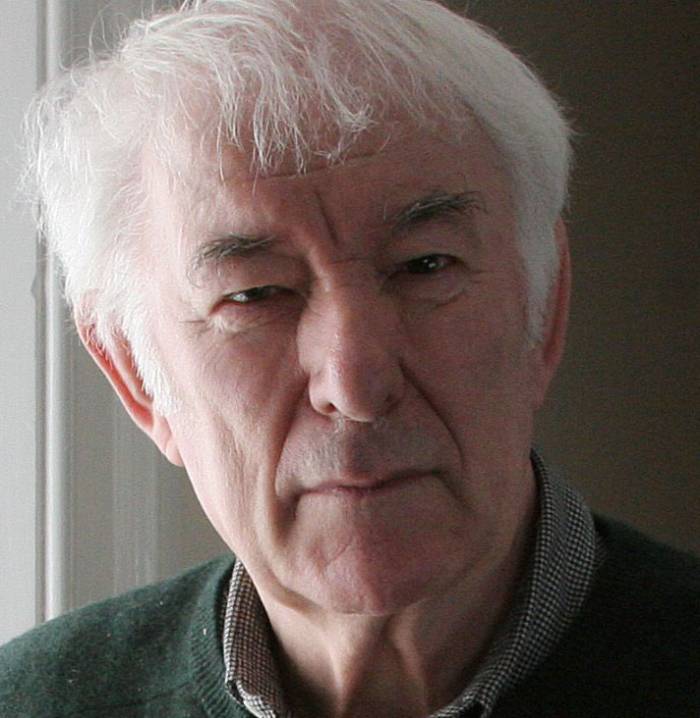
We were among millions deeply saddened to learn today that Seamus Heaney had passed away at age 74. Called the greatest Irish poet since Yeats, Heaney was not only a national treasure to his home country but to the global poetry community. The 1995 Nobel laureate worked in a rich bardic tradition that mined mythic language and imagery, Celtic and otherwise, to get at primeval human verities that transcend culture and nation.
One prominent theme in Heaney’s work—connected to the Irish struggle, but accessible to anyone—is the persistence of tribalism and its damaging effects on future generations. In one of his darker poems, “Punishment,” one I’ve often taught to undergraduates, Heaney’s speaker implicates himself in the execution of a woman found buried in a bog many centuries later. In the last two stanzas, the speaker betrays empathy clothed in helpless recognition of the tribal violence and hypocrisy at the heart of all systems of justice.
I who have stood dumb
when your betraying sisters,
cauled in tar,
wept by the railings,
who would connive
in civilized outrage
yet understand the exact
and tribal, intimate revenge.
The theme of tribal violence and its consequences is central to the Old English poem Beowulf, which Heaney famously translated into a rich new idiom suited for a post-colonial age but still consonant with the distinctive poetic rhythms of its language. You can hear Heaney read his translation of Beowulf online. Above, we have the Prologue. (Apologies in advance for the irritating ad that precedes it.) The remainder of the reading appears on YouTube — listen to Part 1 and Part 2. Plus find more of Heaney’s work at the Poetry Foundation.
Finally, you can also listen to his Nobel lecture delivered on 7 December 1995. It was posted on YouTube today, and we thought it worth your while. It’s presented in full below.
Before William Faulkner more or less defined the genre of Southern literature with his folksy short stories, tragicomic epic novels, and studies in the stream of damaged consciousness, he made a very sincere effort as a poet with a 1924 collection called The Marble Faun. Published in 500 copies with the assistance of his friend Phil Stone, who paid $400 dollars to get the work in print, Faulkner’s poetry did not go over well. Although later judgments have been kinder, the publisher called it “not really a very good book of poetry” and most of the print run was remaindered. The young Faulkner fared much better however with another of his early creative endeavors: art.
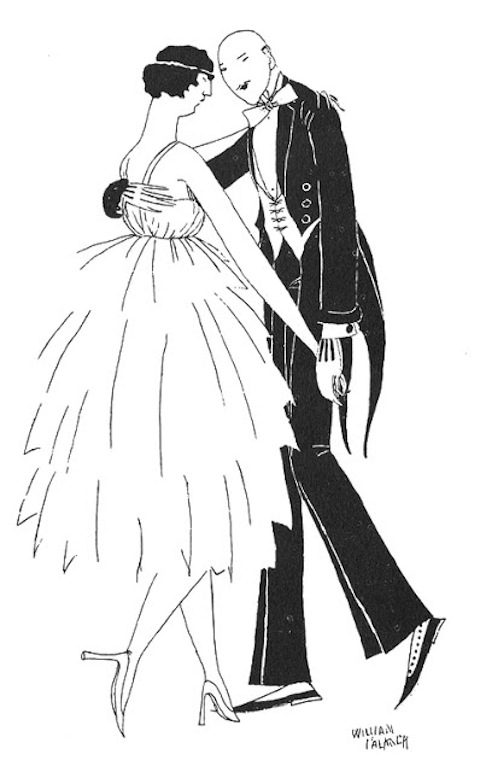
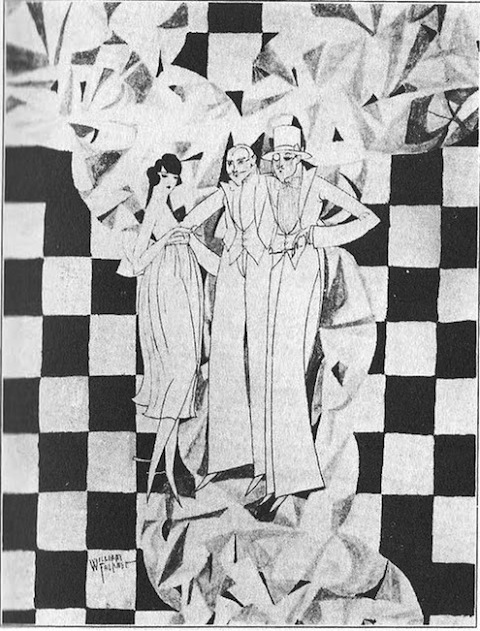
Between 1916 and 1925, the University of Mississippi—which Faulkner attended for three semesters before dropping out in 1920—paid him for drawings published in the university newspaper Ole Miss and its humor magazine The Scream. The drawings, like that of a dancing couple at the top, show the influence of jazz-age art-deco graphic illustration as well as that of English illustrator and aesthete Aubrey Beardsley (who gets a name-check in Faulkner’s 1936 novel Absalom, Absalom!). Beardsley’s influence seems especially evident in the drawing above, from a 1917–18 edition of Ole Miss.
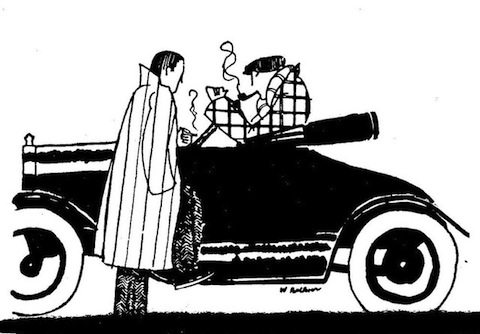
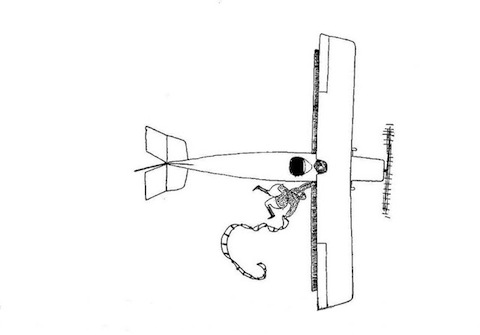
Many of Faulkner’s illustrations are much simpler cartoons, particularly those he did for The Scream, such as the 1925 drawing above of two men and a car. Even simpler, the line drawing of an airplane below recalls the author’s fascination with aviation, manifested in his failed attempt to join the U.S. Air Force, his successful acceptance into the R.A.F., and his non-Mississippi 1935 novel Pylon, about a rowdy crew of barnstormers in a fictionalized New Orleans called “New Valois.” You can see more of Faulkner’s drawings here and read his early prose and poetry in an out-of-print collection housed online at the Internet Archive, which has been now added to our collection of Free eBooks.
T.S. Eliot’s “The Love Song of J. Alfred Prufrock” contains some of the most unforgettable images in modern poetry: the “pair of ragged claws / Scuttling across the floors of silent seas”; the yellow fog that “rubs its back upon the window panes”; the evening “spread out against the sky / Like a patient etherized upon a table.” The poem’s sudden juxtapositions disrupted and dismantled the staid poetic conventions of its time. Like his beloved metaphysical model John Donne, Eliot pushed the resources of literary language to their outer extremes, while still maintaining a respectful relationship with traditional form, deploying Shakespearean pentameter lines whose music is deceptive, since they are the vehicles of such strange, neurotic content.
“Prufrock,” first published in 1915 in Poetry magazine—at the instigation of literary impresario Ezra Pound—caused a shock at its first appearance. Students today are apt to remember it as a bewildering swirl of references—to Dante, the Bible, Shakespeare—and as sardonic commentary on what Eliot saw as the profoundly enervated and impotent condition of modern man (and of himself). It is a daunting study, to be sure, but the poem’s first readers and critics tended to dismiss it as either shockingly anarchic or trivial and meandering.
By 1947, “Prufrock” was recognized as a modernist classic, and Harvard University recorded Eliot reading the poem (above). His thin voice may not carry the weight of the poem’s dense allusive grandeur, so we have Anthony Hopkins at the top of the post reading “Prufrock” as well. Hopkins seems to rush through the poem a bit, capturing, perhaps, the nervous energy of its title character’s psychic anguish.
Many, if not, most writers teach—whether literature, composition, or creative writing—and examining what those writers teach is an especially interesting exercise because it gives us insight not only into what they read, but also what they read closely and carefully, again and again, in order to inform their own work and demonstrate the craft as they know it to students. Let’s take two case studies: exemplars of contemporary literary fiction, both of whom teach at Columbia University. I’ll leave it to you to draw your own conclusions about what their syllabi show us about their process.
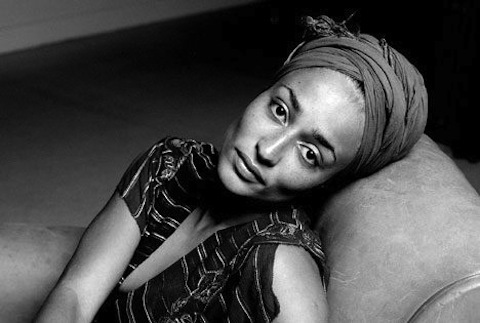
First up, we have Zadie Smith, author of White Teeth and, most recently, NW: A Novel. In 2009, Smith lent her literary sensibilities to the teaching of a weekly fiction seminar called “Sense and Sensibility,” for which we have the full booklist of 15 titles she assigned to students. See the list below and make of it what you will:
Brief Interviews with Hideous Men, David Foster Wallace Catholics, Brian Moore The Complete Stories, Franz Kafka Crash, J.G. Ballard An Experiment in Love, Hilary Mantel Modern Criticism and Theory: A Reader, David Lodge The Screwtape Letters, C.S. Lewis My Loose Thread, Dennis Cooper The Prime of Miss Jean Brodie, Muriel Spark The Loser, Thomas Bernhard The Book of Daniel, E.L. Doctorow A Room with a View, E.M. Forster Reader’s Block, David Markson Pnin, Vladimir Nabokov The Quiet American, Graham Greene
Smith’s list trends somewhat surprisingly white male. She includes not a few “writer’s writers”—Kafka, J.G. Ballard, and of course, Nabokov, who also turns up as a favorite for another Russian expat writer and author of Absurdistan, Gary Shteyngart. In a Barnes and Noble author profile, Shteyngart lists two of Nabokov’s books—Pnin and Lolita—among his ten all-time favorites. Also on his list are Saul Bellow’s Herzog and Philip Roth’s Portnoy’s Complaint. All three authors appear in a 2013 Columbia course Shteyngart teaches called “The Hysterical Male,” a class specifically designed, it seems, to examine the neurosis of the white (or Jewish) male writer. With characteristic dark humor, he describes his course thus:
The 20th Century has been a complete disaster and the 21st century will likely be even worse. In response to the hopelessness of the human condition in general, and the prospects for the North American and British male in particular, the contemporary male novelist has been howling angrily for quite some time. This course will examine some of the results, from Roth’s Portnoy and Bellow’s Herzog to Martin Amis’s John Self, taking side trips into the unreliable insanity of Nabokov’s Charles Kinbote, the muddled senility of Mordecai Richler’s Barney Panofsky and the somewhat quieter desperation of David Gates’s Jernigan. We will examine the strategies behind first-person hysteria and contrast with the alternate third- and first-person meshugas of Bruce Wagner’s I’ll Let You Go. What gives vitality to the male hysterical hero? How should humor be balanced with pathos? Why are so many protagonists (and authors) of Jewish or Anglo extraction? How have early male hysterics given rise to the “hysterical realism” as outlined by critic James Wood? Is the shouting, sweaty male the perfect representation of our disastrous times, or is a dose of sane introspection needed to make sense of the world around us? How does the change from early to late hysterical novels reflect our progress from an entirely male-dominated world to a mostly male-dominated one? Do we still need to be reading this stuff?
I would hazard to guess that Shteyngart’s answer to the last question is “yes.”
It seems like a very morbid and inhuman practice to treat the suicide note as a piece of literature, even if the author of said note is a writer as famous as Virginia Woolf. And yet, why not? I can anticipate all sorts of ethical objections having to do with decency, and I share some of those sentiments. Let us not forget, however, that death has often been a literary occasion: the long tradition of recorded last words ranges from deathbed confessions to the strangely theatrical genre of the gallows speech (see Socrates, Anne Boleyn, or John Brown). Like those unforgettable figures of history, Virginia Woolf’s last scripted words are pored over by lay readers and scholars alike (see, for example, pages on Woolf’s final words from Smith College and Yale).
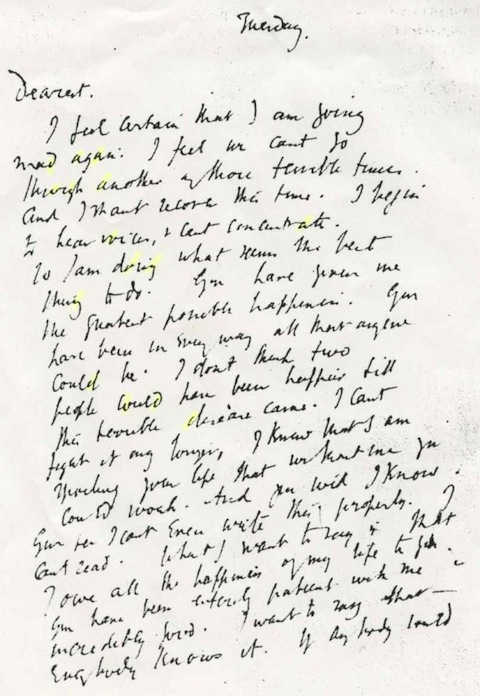
Woolf’s death, in March of 1941, occasioned the third of her suicide letters, and yes, it feels unseemly to linger over her last piece of prose. Perhaps it is the mode of death, suicide still being a societal taboo, thought of as tragic even when it’s undertaken calmly and rationally by someone ready to leave this world. And in many cases, especially those involving mental illness, death seems so needless, so extreme. Such was the case with Woolf, who drowned herself after a long struggle with what would probably be called today bipolar disorder. Her suicide note, written to her husband Leonard, is a haunting and beautiful document, in all its unadorned sincerity behind which much turmoil and anguish lie. See a scan of the handwritten note at the top, and read the full transcript below. Directly above, you can hear a dramatic reading of Woolf’s note, such a wrenching missive because it is not a farewell to the world at large, but rather to a trusted friend and lover.
Dearest,
I feel certain I am going mad again. I feel we can’t go through another of those terrible times. And I shan’t recover this time. I begin to hear voices, and I can’t concentrate. So I am doing what seems the best thing to do. You have given me the greatest possible happiness. You have been in every way all that anyone could be. I don’t think two people could have been happier till this terrible disease came. I can’t fight any longer. I know that I am spoiling your life, that without me you could work. And you will I know. You see I can’t even write this properly. I can’t read. What I want to say is I owe all the happiness of my life to you. You have been entirely patient with me and incredibly good. I want to say that — everybody knows it. If anybody could have saved me it would have been you. Everything has gone from me but the certainty of your goodness. I can’t go on spoiling your life any longer.
I don’t think two people could have been happier than we have been.
“I saw God,” Fat states, and Kevin and I and Sherri state, “No, you just saw something like God, exactly like God.” And having spoke, we do not stay to hear the answer, like jesting Pilate, upon his asking, “What is truth?”
–Philip K. Dick, VALIS
In the months of February and March, 1974, Philip K. Dick met God, or something like God, or what he thought was God, at least, in a hallucinatory experience he chronicled in several obsessively dense diaries that recently saw publication as The Exegesis of Philip K. Dick, a work of deeply personal theo-philosophical reflection akin to Carl Jung’s The Red Book. Whatever it was he encountered—Dick was never too dogmatic about it—he ended up referring to it as Zebra, or by the acronym VALIS, Vast Active Living Intelligence System, also the title of a novel detailing the experiences of one very PKD-like character with the improbable name of “Horselover Fat.”
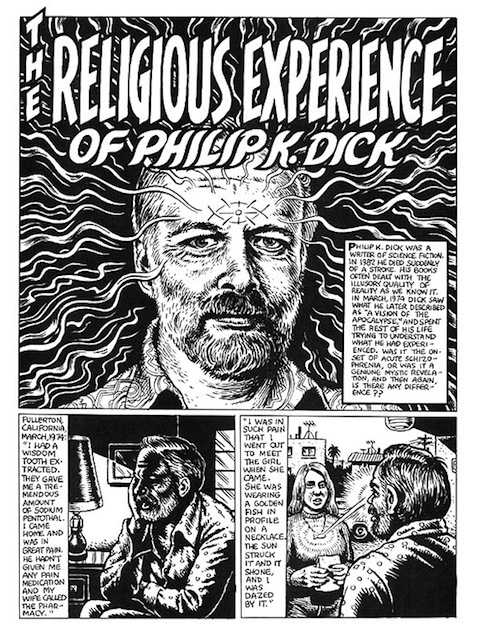
LSD-triggered psychotic break, genuine religious experience, or something else entirely, whatever Dick’s encounter meant, he didn’t let the opportunity to turn it into art slip by him, and neither did outsider cartoonist and PKD fan Robert Crumb. In issue #17 of the underground comix magazine Weirdo, Crumb narrated and illustrated Dick’s meeting with a divine intelligence in the appropriately titled “The Religious Experience of Philip K. Dick.” It was eventually collected in the edition, The Weirdo Years by R. Crumb: 1981-’93. (See the comic in motion in the awkward, amateur video above.) The comic quotes directly from Dick’s telling of the event, which began with a wisdom tooth extraction and was ultimately triggered by a golden Christian fish symbol worn around the neck of a pharmaceutical delivery girl. Most PKD fans will be familiar with the story, whether they treat it as gospel or not, but to see it illustrated with such empathetic intensity by Crumb is truly a treat.
If you only know Crumb as the creator of lascivious Rubenesque women and schlubby, druggy horndog hipsters (like Fritz the Cat), you may be surprised by these emotionally realist illustrations. If you know Crumb’s more serious work, like his take on the book of Genesis, you won’t. In either case, fans of Dick, Crumb, or—most likely—both, won’t want to miss this.
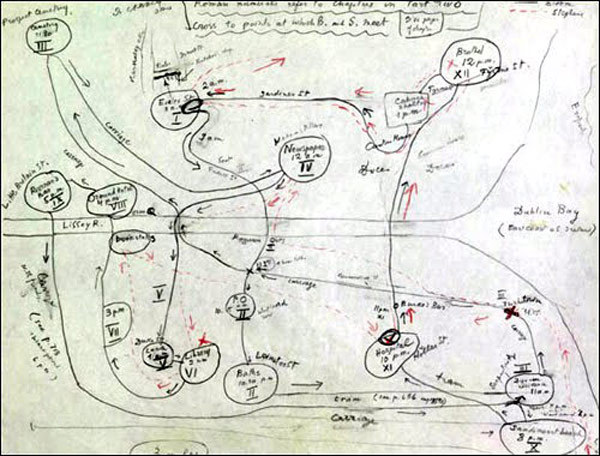
Just above you’ll find a sketched-out map of the paths Stephen Dedalus and Leopold Bloom took through Dublin on June 16, 1904. If you’ve ever read James Joyce’s Ulysses (find it in our lists of Free eBooks and Free Audio Books), you may well have tried drawing one of these yourself, connecting the locations as each chapter finds one of the protagonists somewhere else in Ireland’s capital on that “ordinary” day. Maybe you wanted to test the plausibility of the common assertion that, given accuracy and detail with which Joyce wrote about the city, one could, in case of the apocalypse, build the city all over again using the novel as a plan. This particular Ulysses fan map, however, comes from the hand of a very special reader indeed: Vladimir Nabokov, author of a few much-discussed works of twentieth-century literature himself, including Lolita, Pale Fire, and Speak, Memory.
For those who teach Ulysses, Nabokov has a suggestion: “Instead of perpetuating the pretentious nonsense of Homeric, chromatic, and visceral chapter headings, instructors should prepare maps of Dublin with Bloom’s and Stephen’s intertwining itineraries clearly traced.” A post from Raynor Ganan quotes him as saying that, adding, “Would you not have donated a litre of your own spinal fluid to audit this lecture?” Indeed, Nabokov speaks from experience, having not only produced well-respected literature but taught it, too. The fruits of his time at the front of the classroom appear in his collection Lectures on Literature, though if you want to get as close as possible to the experience of sitting in on one of Nabokov’s classes, go back into our archives and watch the WQED dramatization, starring Christopher Plummer, of his talk on Kafka at Cornell. It won’t give you any insight into Joyce’s Dublin, granted, but some Yale grad students’ more recent project to digitally, interactively map Ulysses just might.
If you would like to support the mission of Open Culture, consider making a donation to our site. It’s hard to rely 100% on ads, and your contributions will help us continue providing the best free cultural and educational materials to learners everywhere. You can contribute through PayPal, Patreon, and Venmo (@openculture). Thanks!
We're hoping to rely on loyal readers, rather than erratic ads. Please click the Donate button and support Open Culture. You can use Paypal, Venmo, Patreon, even Crypto! We thank you!
Open Culture scours the web for the best educational media. We find the free courses and audio books you need, the language lessons & educational videos you want, and plenty of enlightenment in between.