See The Iliad Performed as a One-Woman Show in a Montreal Bar by McGill University Classics Professor Lynn Kozak

Homer’s Ili­ad staged as a one-woman show? IN A BAR! It’s an out­rage. A des­e­cra­tion of a found­ing work of West­ern Civ­i­liza­tion™. A sure sign of cul­tur­al decline.

But wait…. What if McGill Uni­ver­si­ty clas­sics pro­fes­sor Lynn Kozak’s per­for­mance returns the epic Greek poem to its ori­gins, as a dra­mat­ic oral pre­sen­ta­tion for small audi­ences who were, quite pos­si­bly, ine­bri­at­ed, or at least a lit­tle tip­sy? Kozak’s Pre­vi­ous­ly on… The Ili­ad, described as “Hap­py Hour Homer,” presents its inti­mate audi­ence with “a new, par­tial­ly impro­vised Eng­lish trans­la­tion of a bit of The Ili­ad, all the way through the epic.”

The per­for­mances take place every Mon­day at 6 at Montreal’s Bar des Pins. Like the sto­ry itself, Kozak begins in medias res—in the mid­dle, that is, of a chat­ter­ing crowd of stu­dents, who qui­et down right away and give the sto­ry their full atten­tion.

Ancient Greek poet­ry was per­formed, not stud­ied in schol­ar­ly edi­tions in aca­d­e­m­ic depart­ments. It was sung, with musi­cal accom­pa­ni­ment, and prob­a­bly adapt­ed, impro­vised, and embell­ished by ancient bards to suit their audi­ences. Grant­ed, Kozak doesn’t sing (though some per­for­mances involve music); she recites in a man­ner both casu­al and dra­mat­i­cal­ly grip­ping. She reminds us that the sto­ries we find in the text are dis­tant kin to the bloody seri­al­ized TV soap operas that occu­py so much of our day-to-day con­ver­sa­tion, at home, on social media, and at hap­py hour.

The lib­er­ties Kozak takes recre­ate the poem in the present as a liv­ing work. This is clas­sics edu­ca­tion at its most engag­ing and acces­si­ble. Like any poet­ic per­former, Kozak knows her audi­ence. The Ili­ad  is a lot like Game of Thrones, “because of the num­ber of char­ac­ters that you have to keep up with,” Kozak tells the CBC’s As It Hap­pens, “and also because of the fact that there’s not always clean-cut kind of vil­lains or who you’re sup­posed to be root­ing for in any major scene—especially in bat­tle scenes.”

The per­for­mance of the “anger of Achilles” (top, with beer pong) con­veys the moral com­plex­i­ty of the Greek hero. “He must be bru­tal and ready to risk bru­tal­i­ty,” as UNC pro­fes­sor of phi­los­o­phy CDC Reeve writes. “At the same time, he must be gen­tle to his friends and allies, and able to join with them in group activ­i­ties both mil­i­tary and peace­ful.” Is Achilles a tool of the gods or a man dri­ven to extremes by rage? Homer sug­gests both, but the action is set in motion by divine agency. “Apol­lo was pissed at King Agamem­non,” Kozak para­phras­es, then sum­ma­rizes the nature of the insult and checks in with the young lis­ten­ers: “every­one still with me?”

The sto­ry of The Ili­ad, many schol­ars believe, exist­ed as an oral per­for­mance for per­haps 1,000 years before it was com­mit­ted to writ­ing by the scribe or scribes iden­ti­fied as Homer. But the poem “isn’t real­ly a the­atre piece,” says Kozak, despite its musi­cal nature. “It’s real­ly a sto­ry. It’s real­ly a one-per­son show. And for me it’s just impor­tant to be in a place that’s casu­al and where I’m with the audi­ence.” It’s doubt­ful that the poem was per­formed in its entire­ly in one sit­ting, though the notion of “seri­al­iza­tion” as we know it from 19th cen­tu­ry nov­els and mod­ern-day tele­vi­sion shows was not part of the cul­ture of antiq­ui­ty.

“We’re not real­ly sure how The Ili­ad was bro­ken up orig­i­nal­ly,” Kozak admits. Adapt­ing the poem to con­tem­po­rary audi­ence sen­si­bil­i­ties has meant “think­ing about where or if episodes exist in the epic,” in the way of Game of Thrones. Each per­for­mance is styled dif­fer­ent­ly, with Kozak hold­ing court as var­i­ous char­ac­ters. “Some­times there are cliffhang­ers. Some­times they have res­o­lu­tions. It’s been an inter­est­ing mix so far.” That “so far” extends on YouTube from Week 1 (Book 1, lines 1–487) to Week 14 (Book 11, line 461 to Book 12, line 205). Check back each week for new “episodes” to come online, and watch Weeks One through Four above and the oth­er ten at the Pre­vi­ous­ly on… The Ili­ad YouTube chan­nel.

Relat­ed Con­tent:

Hear What Homer’s Odyssey Sound­ed Like When Sung in the Orig­i­nal Ancient Greek

Hear Homer’s Ili­ad Read in the Orig­i­nal Ancient Greek

One of the Best Pre­served Ancient Man­u­scripts of The Ili­ad Is Now Dig­i­tized: See the “Bankes Homer” Man­u­script in High Res­o­lu­tion (Cir­ca 150 C.E.)

Josh Jones is a writer and musi­cian based in Durham, NC. Fol­low him at @jdmagness
An Avalanche of Novels, Films and Other Works of Art Will Soon Enter the Public Domain: Virginia Woolf, Charlie Chaplin, William Carlos Williams, Buster Keaton & More

There may be no sweet­er sound to the ears of Open Cul­ture writ­ers than the words “pub­lic domain”—you might even go so far as to call it our “cel­lar door.” The phrase may not be as musi­cal, but the fact that many of the world’s cul­tur­al trea­sures can­not be copy­right­ed in per­pe­tu­ity means that we can con­tin­ue to do what we love: curat­ing the best of those trea­sures for read­ers as they appear online. Pub­lic domain means com­pa­nies can sell those works with­out incur­ring any costs, but it also means that any­one can give them away for free. “Any­one can re-pub­lish” pub­lic domain works, notes Life­hack­er, “or chop them up and use them in oth­er projects.” And there­by emerges the remix­ing and repur­pos­ing of old arti­facts into new ones, which will them­selves enter the pub­lic domain of future gen­er­a­tions.

Some of those future works of art may even become the next Great Amer­i­can Nov­el, if such a thing still exists as any­thing more than a hack­neyed cliché. Of course, no one seri­ous­ly goes around say­ing they’re writ­ing the “Great Amer­i­can Nov­el,” unless they’re Philip Roth in the 70s or William Car­los Williams (top right) in the 20s, who both some­how pulled off using the phrase as a title (though Roth’s book does­n’t quite live up to it.) Where Roth casu­al­ly used the con­cept in a light nov­el about base­ball, Williams’ The Great Amer­i­can Nov­el approached it with deep con­cern for the sur­vival of the form itself. His mod­ernist text “engages the tech­niques of what we would now call metafic­tion,” writes lit­er­ary schol­ar April Boone, “to par­o­dy worn out for­mu­las and con­tent and, iron­i­cal­ly, to cre­ate a new type of nov­el that antic­i­pates post­mod­ern fic­tion.”

We will all, as of Jan­u­ary 1, 2019, have free, unfet­tered access to Williams’ metafic­tion­al shake-up of the for­mu­la­ic sta­tus quo, when “hun­dreds of thou­sands of… books, musi­cal scores, and films first pub­lished in the Unit­ed States dur­ing 1923” enter the pub­lic domain, as Glenn Fleish­man writes at The Atlantic. Because of the com­pli­cat­ed his­to­ry of U.S. copy­right law—especially the 1998 “Son­ny Bono Act” that suc­cess­ful­ly extend­ed a copy­right law from 50 to 70 years (for the sake, it’s said, of Mick­ey Mouse)—it has been twen­ty years since such a mas­sive trove of mate­r­i­al has become avail­able all at once. But now, and “for sev­er­al decades from 2019 onward,” Fleish­man points out, “each New Year’s Day will unleash a full year’s worth of works pub­lished 95 years ear­li­er.”

In oth­er words, it’ll be Christ­mas all over again in Jan­u­ary every year, and while you can browse the pub­li­ca­tion dates of your favorite works your­self to see what’s com­ing avail­able in com­ing years, you’ll find at The Atlantic a short list of lit­er­ary works includ­ed in next-year’s mass-release, includ­ing books by Aldous Hux­ley, Win­ston Churchill, Carl Sand­burg, Edith Whar­ton, and P.G. Wode­house. Life­hack­er has sev­er­al more exten­sive lists, which we excerpt below:

Movies [see many more at Indiewire]

All these movies, includ­ing:

  • Cecil B. DeMille’s (first, less famous, silent ver­sion of) The Ten Com­mand­ments
  • Harold Lloyd’s Safe­ty Last!, includ­ing that scene where he dan­gles off a clock tow­er, and his Why Wor­ry?
  • A long line-up of fea­ture-length silent films, includ­ing Buster Keaton’s Our Hos­pi­tal­ityand Char­lie Chaplin’s The Pil­grim
  • Short films by Chap­lin, Keaton, Lau­rel and Hardy, and Our Gang (lat­er Lit­tle Ras­cals)
  • Car­toons includ­ing Felix the Cat(the char­ac­ter first appeared in a 1919 car­toon)
  • Mar­lene Dietrich’s film debut, a bit part in the Ger­man silent com­e­dy The Lit­tle Napoleon; also the debuts of Dou­glas Fair­banks Jr. and Fay Wray

Music

All this music, includ­ing these clas­sics:

  • “King Porter Stomp”
  • “Who’s Sor­ry Now?”
  • “Tin Roof Blues”
  • “That Old Gang of Mine”
  • “Yes! We Have No Bananas”
  • “I Cried for You”
  • “The Charleston”—written to accom­pa­ny, and a big fac­tor in the pop­u­lar­i­ty of, the Charleston dance
  • Igor Stravinsky’s “Octet for Wind Instru­ments”

Lit­er­a­ture

All these booksand these books, includ­ing the clas­sics:

  • Mrs. Dal­loway by Vir­ginia Woolf
  • Cane by Jean Toomer
  • The Prophet by Kahlil Gibran
  • The Ego and the Id by Sig­mund Freud
  • Towards a New Archi­tec­ture by Le Cor­busier
  • Whose Body?, the first Lord Peter Wim­sey nov­el by Dorothy L. Say­ers
  • Two of Agatha Christie’s Her­cule Poirot nov­els, The Mur­der of Roger Ack­royd and The Mur­der on the Links
  • The Pris­on­er, vol­ume 5 of Mar­cel Proust’s In Search of Lost Time (note that Eng­lish trans­la­tions have their own copy­rights)
  • The Com­plete Works of Antho­ny Trol­lope
  • George Bernard Shaw’s play Saint Joan
  • Short sto­ries by Christie, Vir­ginia Woolf, H.P. Love­craft, Kather­ine Mans­field, and Ernest Hem­ing­way
  • Poet­ry by Edna St. Vin­cent Mil­lay, E.E. Cum­mings, William Car­los Williams, Rain­er Maria Rilke, Wal­lace Stevens, Robert Frost, Suku­mar Ray, and Pablo Neru­da
  • Works by Jane Austen, D.H. Lawrence, Edith Whar­ton, Jorge Luis Borges, Mikhail Bul­gakov, Jean Cocteau, Ita­lo Sve­vo, Aldous Hux­ley, Win­ston Churchill, G.K. Chester­ton, Maria Montes­sori, Lu Xun, Joseph Con­rad, Zane Grey, H.G. Wells, and Edgar Rice Bur­roughs

Art

These art­works, includ­ing:

  • Con­stan­tin Brâncuși’s Bird in Space
  • Hen­ri Matisse’s Odal­isque With Raised Arms
  • Mar­cel Duchamp’s The Bride Stripped Bare By Her Bach­e­lors, Even (The Large Glass)
  • Yokoya­ma Taikan’s Metempsy­chosis
  • Work by M. C. Esch­er, Pablo Picas­so, Wass­i­ly Kandin­sky, Max Ernst, and Man Ray

Again, these are only par­tial lists of high­lights, and such high­lights…. Speak­ing for myself, I can­not wait for free access to the very best (and even worst, and weird­est, and who-knows-what-else) of 1923. And of 1924 in 2020, and 1925 and 2021, and so on and so on….

via The Atlantic

Relat­ed Con­tent:

The British Library Puts Over 1,000,000 Images in the Pub­lic Domain: A Deep­er Dive Into the Col­lec­tion

The Pub­lic Domain Project Makes 10,000 Film Clips, 64,000 Images & 100s of Audio Files Free to Use

List of Great Pub­lic Domain Films 

Josh Jones is a writer and musi­cian based in Durham, NC. Fol­low him at @jdmagness

A Vending Machine Now Distributes Free Short Stories at Francis Ford Coppola’s Café Zoetrope

I loved the idea of a vend­ing machine, a dis­pens­ing machine that doesn’t dis­pense pota­to chips or beer or cof­fee for mon­ey but gives you art. I espe­cial­ly liked the fact that you didn’t put mon­ey in. — Film­mak­er Fran­cis Ford Cop­po­la

Thus­ly did film­mak­er Cop­po­la arrange for a free Short Edi­tion sto­ry vend­ing machine to be installed in Café Zoetrope, his San Fran­cis­co restau­rant.

The French-built machine is the per­fect com­pan­ion for soli­tary din­ers, freely dis­pens­ing tales on skin­ny, eco-friend­ly paper with the push of a but­ton. Read­ers have a choice over the type of story—romantic, fun­ny, scary—and the amount of time they’re will­ing to devote to it.

After which, they can per­haps begin the task of adapt­ing it into a fea­ture-length film script. Part of Coppola’s attrac­tion to the form is that short sto­ries, like movies, are intend­ed to be con­sumed in a sin­gle sit­ting.

Short Edi­tion, the Greno­ble-based start-up, has been fol­low­ing up on the public’s embrace of the Café Zoetrope machine by send­ing even more short sto­ry kiosks state­side.

Colum­bus Pub­lic Health just unveiled one near the children’s area at its immu­niza­tion clin­ic, pro­vid­ing Ohio kids and par­ents from most­ly dis­ad­van­taged back­grounds with access to free lit­er­a­ture while they wait.

Philadelphia’s Free Library won a grant to install four sto­ry dis­pensers, with more slat­ed for loca­tions in South Car­oli­na and Kansas.

Part of the allure lays in receiv­ing a tan­gi­ble object. You can recy­cle your sto­ry into a book­mark, leave it for some­one else to find, or—in Coppola’s words—save it for an “artis­tic lift” while “wait­ing for a bus, or mar­riage license, or lunch.”

A café patron described the cog­ni­tive dis­so­nance of watch­ing her cousin read the sto­ry the Zoetrope machine picked out for her:

The scene seemed archa­ic: a woman frozen in con­cen­tra­tion, in the mid­dle of a buzzing crowd, read­ing from a line of print instead of scrolling through Insta­gram, as one might nor­mal­ly do while sit­ting solo at a bar. 

“When peo­ple ask [if] we have wifi for the kids,” Café Zoetrope’s gen­er­al man­ag­er told Lit­er­ary Hub, “We point to the machine and say, ‘No, but you have a story—you can read.’”

Those with­out access to a Short Edi­tion sto­ry vend­ing machine can get a feel for the expe­ri­ence dig­i­tal­ly on the company’s web­site.

Scroll down to the dice icon, spec­i­fy your pre­ferred tone and a read­ing time between 1 and 5 min­utes.

Or throw cau­tion to the wind by hit­ting the search but­ton sans spec­i­fi­ca­tion, as I did to become the 3232nd read­er of “Drowned,” a one-minute true crime sto­ry by Cléa Bar­reyre, trans­lat­ed from the French by Wendy Cross.

French speak­ers can also sub­mit their writ­ing. The vend­ing machines’ sto­ries are drawn from Short Edition’s online com­mu­ni­ty, a trove of some 100,000 short sto­ries by near­ly 10,000 authors. Reg­is­ter­ing for a free account will allow you to read sto­ries, after which you can tog­gle over to the French site to post your con­tent through the orange author space por­tal at the top right of the page. The FAQ and Google Trans­late should come in handy here. The edi­tors are cur­rent­ly review­ing sub­mis­sions of comics, poems, and micro fic­tion for the Sum­mer Grand Prix du Court, though again—only in French, for now. 

Short Edi­tion hopes to start con­sid­er­ing oth­er lan­guages for vend­ing machine con­tent inclu­sion soon, begin­ning with Eng­lish. For now, all sto­ries being dis­pensed have been trans­lat­ed from the orig­i­nal French by British lit­er­ary pro­fes­sion­als.

Bon courage!

via Lit­er­ary Hub

Relat­ed Con­tent:

Read 19 Short Sto­ries From Nobel Prize-Win­ning Writer Alice Munro Free Online

Napoleon’s Kin­dle: See the Minia­tur­ized Trav­el­ing Library He Took on Mil­i­tary Cam­paigns

Dis­cov­er the Jacobean Trav­el­ing Library: The 17th Cen­tu­ry Pre­cur­sor to the Kin­dle

Behold the “Book Wheel”: The Renais­sance Inven­tion Cre­at­ed to Make Books Portable & Help Schol­ars Study (1588)

Ayun Hal­l­i­day is an author, illus­tra­tor, the­ater mak­er and Chief Pri­ma­tol­o­gist of the East Vil­lage Inky zine.  Join her in NYC on Mon­day, April 23 for the third install­ment of her lit­er­ary-themed vari­ety show, Necro­mancers of the Pub­lic Domain. Fol­low her @AyunHalliday.

One of the Best Preserved Ancient Manuscripts of The Iliad Is Now Digitized: See the “Bankes Homer” Manuscript in High Resolution (Circa 150 C.E.)

Each time I sit through the end cred­its of a film, I think about how weird auteur the­o­ry is—that a work of cin­e­ma can be pri­mar­i­ly thought of the sin­gu­lar vision of the direc­tor. Typ­i­cal exam­ples come from arti­er fare than the usu­al Hol­ly­wood block­buster in which crews of thou­sands of stunt­peo­ple, spe­cial effects tech­ni­cians, and ani­ma­tors (and sev­er­al dozen “pro­duc­ers”) make essen­tial con­tri­bu­tions. In the case of, say, David Lynch or Wes Anderson—or ear­li­er direc­tors like Godard or Kubrick—one can’t deny the evi­dence of a sin­gu­lar mind at work. Even so, we tend to ele­vate direc­tors to the sta­tus of god­like arti­fi­cers, sur­round­ed by a few angel­ic helpers behind the cam­era and a few star actors in front of it. Every­one else is an extra, includ­ing, very often, the actu­al writ­ers of a film.

Of course, the notion of the auteur comes from the gen­er­al the­o­ry of author­ship that iden­ti­fies lit­er­ary works as the prod­uct of a sin­gle intel­lect. French the­o­rists like Michel Fou­cault and Roland Barthes have cast sus­pi­cion on this idea. When it comes to writ­ing from the man­u­script age, hun­dreds or thou­sands of years old, it can be next to impos­si­ble to iden­ti­fy the author of a work.

Many an ancient work comes down to us as the prod­uct of “Anony­mous.” In the case of the major Greek epics, The Odyssey and The Ili­ad, we have a name, Homer, that most clas­sics schol­ars treat as a con­ve­nient place­hold­er. As a Uni­ver­si­ty of Cincin­nati clas­sics site notes, “Homer” could stand for “a group of poets whose works on the theme of Troy were col­lect­ed.”

Though writ­ten ref­er­ences to Homer date back to the sixth cen­tu­ry B.C., giv­ing cre­dence to the his­tor­i­cal exis­tence of the leg­endary blind poet, he might have been more direc­tor than author, bring­ing togeth­er into a coher­ent whole the labor of hun­dreds of dif­fer­ent sto­ry­tellers. For his­to­ri­an Adam Nicol­son, author of Why Homer Mat­ters, “it’s a mis­take to think of Homer as a per­son. Homer is an ‘it.’ A tra­di­tion. An entire cul­ture com­ing up with ever more refined and ever more under­stand­ing ways of telling sto­ries that are impor­tant to it. Homer is essen­tial­ly shared.” The nar­ra­tive poet­ry attrib­uted to Homer, Nicol­son sug­gests, might go back a thou­sand years before the poet sup­pos­ed­ly put it to papyrus.

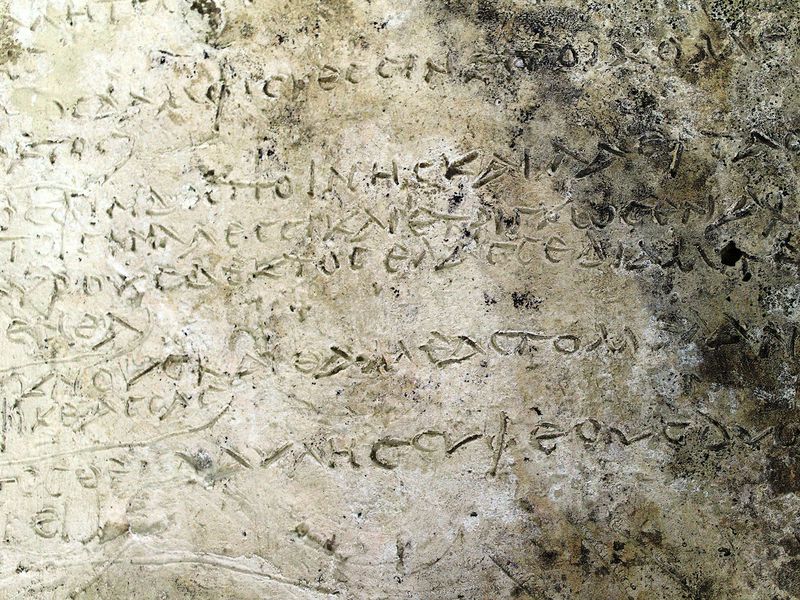
You can read this Nation­al Geo­graph­ic inter­view with Nicol­son (or buy his book) to fol­low the argu­ment. It isn’t par­tic­u­lar­ly original—as Daniel Mendel­sohn writes at The New York­er, “the dom­i­nant ortho­doxy” for over a hun­dred years “has been that The Ili­ad evolved over cen­turies before final­ly being writ­ten down” some­time around 700 B.C. We have no man­u­scripts from that ear­ly peri­od, and no one knows how much the poem evolved through scrib­al errors in the trans­mis­sion from man­u­script to man­u­script over cen­turies. This is one of many ques­tions lit­er­ary his­to­ri­ans ask when they approach papyri like that at the top—an excerpt from the so-called “Bankes Homer,” the most well-pre­served spec­i­men of a por­tion of The Ili­ad, con­tain­ing Book 24, lines 127–804, and dat­ing from cir­ca 150 C.E.

Pur­chased in Egypt in 1821 by Egyp­tol­o­gist William John Bankes, and acquired by an adven­tur­er named Gio­van­ni Finati on the island of Ele­phan­tine, the papyrus scroll, which you can see in full and in high res­o­lu­tion at the British Library site, was cre­at­ed like most oth­er “lit­er­ary papyri” for hun­dreds of years. As the British Library describes the process:

Pro­fes­sion­al scribes made copies from exem­plars at the request of clients, tran­scrib­ing by hand, word by word, let­ter by let­ter. Until around the 2nd cen­tu­ry CE these man­u­script books took the form of rolls com­posed of papyrus sheets past­ed one to the oth­er in suc­ces­sion, often over a con­sid­er­able length.

In addi­tion to the text itself, notes the site His­to­ry of Infor­ma­tion, the man­u­script con­tains “breath­ing marks and accents made by an ancient diorthotesor ‘cor­rec­tor’ to show cor­rect poet­ic pro­nun­ci­a­tion.” The ancient prac­tice of “cor­rect­ing” was a ped­a­gog­i­cal tech­nique used for train­ing stu­dents to prop­er­ly read the text. Like­ly for hun­dreds of years before there was a text, the poem would be com­mit­ted to mem­o­ry, and recit­ed by anony­mous bards all over the Greek-speak­ing world, prob­a­bly chang­ing in the telling to suit the tastes and bias­es of dif­fer­ent audi­ences. Who can say how many, if any, of those ancient bards bore the name “Homer”?

Again you can see the Bankes Homer in high res­o­lu­tion here.

Relat­ed Con­tent:

Hear What Homer’s Odyssey Sound­ed Like When Sung in the Orig­i­nal Ancient Greek

Emi­ly Wil­son Is the First Woman to Trans­late Homer’s Odyssey into Eng­lish: The New Trans­la­tion Is Out Today

Explore 5,300 Rare Man­u­scripts Dig­i­tized by the Vat­i­can: From The Ili­ad & Aeneid, to Japan­ese & Aztec Illus­tra­tions

Josh Jones is a writer and musi­cian based in Durham, NC. Fol­low him at @jdmagness
The 1,700+ Words Invented by Shakespeare*

One of the favorite ref­er­ence books on my shelves isn’t a style guide or dic­tio­nary but a col­lec­tion of insults. And not just any col­lec­tion of insults, but Shakespeare’s Insults for Teach­ers, an illus­trat­ed guide through the playwright’s barbs and put-downs, designed to offer com­ic relief to the belea­guered edu­ca­tor. (Books and web­sites about Shakespeare’s insults almost con­sti­tute a genre in them­selves.) I refer to this slim, humor­ous hard­back every time dis­cus­sions of Shake­speare get too pon­der­ous, to remind myself at a glance that what read­ers and audi­ences have always val­ued in his work is its light­ning-fast wit and inven­tive­ness.

While perus­ing any curat­ed selec­tion of Shakespeare’s insults, one can’t help but notice that, amidst the puns and bawdy ref­er­ences to body parts, so many of his wise­cracks are about lan­guage itself—about cer­tain char­ac­ters’ lack of clar­i­ty or odd ways of speak­ing. From Much Ado About Noth­ing there’s the col­or­ful, “His words are a very fan­tas­ti­cal ban­quet, just so many strange dish­es.” From The Mer­chant of Venice, the sar­cas­tic, “Good­ly Lord, what a wit-snap­per you are!” From Troilus and Cres­si­da, the deri­sive, “There’s a stewed phrase indeed!” And from Ham­let the sub­tle shade of “This is the very coinage of your brain.”

Indeed, it can often seem that Shakespeare—if we grant his his­toric­i­ty and authorship—is often writ­ing self-dep­re­cat­ing notes about him­self. “It is often said,” writes Fras­er McAlpine at BBC Amer­i­ca, that Shake­speare “invent­ed a lot of what we cur­rent­ly call the Eng­lish lan­guage…. Some­thing like 1700 [words], all told,” which would mean that “out of every ten words,” in his plays, “one will either have been new to his audi­ence, new to his actors, or will have been pass­ing­ly famil­iar, but nev­er writ­ten down before.” It’s no won­der so much of his dia­logue seems to car­ry on a meta-com­men­tary about the strange­ness of its lan­guage.

We have enough trou­ble under­stand­ing Shake­speare today. The ques­tion McAlpine asks is how his con­tem­po­rary audi­ences could under­stand him, giv­en that so much of his dic­tion was “the very coinage” of his brain. Lists of words first used by Shake­speare can be found aplent­ly. There’s this cat­a­log from the exhaus­tive mul­ti-vol­ume lit­er­ary ref­er­ence The Oxford Eng­lish Dic­tio­nary, which lists such now-every­day words as “acces­si­ble,” “accom­mo­da­tion,” and “addic­tion” as mak­ing their first appear­ance in the plays. These “were not all invent­ed by Shake­speare,” the list dis­claims, “but the ear­li­est cita­tions for them in the OED” are from his work, mean­ing that the dictionary’s edi­tors could find no ear­li­er appear­ance in his­tor­i­cal writ­ten sources in Eng­lish.

Anoth­er short­er list links to an excerpt from Charles and Mary Cow­den Clarke’s The Shake­speare Key, show­ing how the author, “with the right and might of a true poet… mint­ed sev­er­al words” that are now cur­rent, or “deserve” to be, such as the verb “artic­u­late,” which we do use, and the noun “co-mart”—meaning “joint bargains”—which we could and maybe should. At ELLO, or Eng­lish Lan­guage and Lin­guis­tics Online, we find a short tuto­r­i­al on how Shake­speare formed new words, by bor­row­ing them from oth­er lan­guages, or adapt­ing them from oth­er parts of speech, turn­ing verbs into nouns, for exam­ple, or vice ver­sa, and adding new end­ings to exist­ing words.

“Whether you are ‘fash­ion­able’ or ‘sanc­ti­mo­nious,’” writes Nation­al Geo­graph­ic, “thank Shake­speare, who like­ly coined the terms.” He also appar­ent­ly invent­ed sev­er­al phras­es we now use in com­mon speech, like “full cir­cle,” “one fell swoop,” “strange bed­fel­lows,” and “method in the mad­ness.” (In anoth­er BBC Amer­i­ca arti­cle, McAlpine lists 45 such phras­es.) The online sources for Shakespeare’s orig­i­nal vocab­u­lary are mul­ti­tude, but we should note that many of them do not meet schol­ar­ly stan­dards. As lin­guists and Shake­speare experts David and Ben Crys­tal write in Shakespeare’s Words, “we found very lit­tle that might be classed as ‘high-qual­i­ty Shake­speare­an lex­i­cog­ra­phy’” online.

So, there are rea­sons to be skep­ti­cal about claims that Shake­speare is respon­si­ble for the 1700 or more words for which he’s giv­en sole cred­it. (Hence the aster­isk in our title.) As not­ed, a great many of those words already exist­ed in dif­fer­ent forms, and many of them may have exist­ed as non-lit­er­ary col­lo­qui­alisms before he raised their pro­file to the Eliz­a­bethan stage. Nonethe­less, it is cer­tain­ly the case that the Bard coined or first used hun­dreds of words, writes McAlpine, “with no obvi­ous prece­dent to the lis­ten­er, unless you were schooled in Latin or Greek.” The ques­tion, then, remains: “what on Earth did Shakespeare’s [most­ly] une­d­u­cat­ed audi­ence make of this influx of new­ly-mint­ed lan­guage into their enter­tain­ment?”

McAlpine brings those poten­tial­ly stu­pe­fied Eliz­a­bethans into the present by com­par­ing watch­ing a Shake­speare play to watch­ing “a three-hour long, open air rap bat­tle. One in which you have no idea what any of the slang means.” A good deal would go over your head, “you’d maybe get the gist, but not the full impact,” but all the same, “it would all seem ter­ri­bly impor­tant and dra­mat­ic.” (Cos­tum­ing, props, and stag­ing, of course, helped a lot, and still do.) The anal­o­gy works not only because of the amount of slang deployed in the plays, but also because of the inten­si­ty and reg­u­lar­i­ty of the boasts and put-downs, which makes even more inter­est­ing one data scientist’s attempt to com­pare Shakespeare’s vocab­u­lary with that of mod­ern rap­pers, whose lan­guage is, just as often, the very coinage of their brains.

Relat­ed Con­tent:

Do Rap­pers Have a Big­ger Vocab­u­lary Than Shake­speare?: A Data Sci­en­tist Maps Out the Answer

Hear 55 Hours of Shakespeare’s Plays: The Tragedies, Come­dies & His­to­ries Per­formed by Vanes­sa Red­grave, Sir John Giel­gud, Ralph Fiennes & Many More

What Shakespeare’s Eng­lish Sound­ed Like, and How We Know It

Josh Jones is a writer and musi­cian based in Durham, NC. Fol­low him at @jdmagness.

Hear Beowulf and Gawain and the Green Knight Read in Their Original Old and Middle English by an MIT Medievalist

Many a mock­ing cri­tique floats around point­ing out that some peo­ple who tell their mul­ti­lin­gual neigh­bors to “speak Eng­lish” seem to have a lot of trou­ble with the lan­guage them­selves. I must con­fess, I find the obser­va­tion more sad than fun­ny. I’ve met many Eng­lish speak­ers who strug­gle with under­stand­ing the pecu­liar­i­ties of the lan­guage and do not know its his­to­ry. Increas­ing­ly, such things are not taught to those who don’t devote them­selves to lan­guage study.

When peo­ple do learn how the lan­guage evolved, they can be shocked that for much of its his­to­ry, Eng­lish was unrec­og­niz­able to mod­ern ears. Indeed, the study of Old Eng­lish—or Anglo-Sax­on, the lan­guage of Beowulf—sat­is­fies for­eign lan­guage require­ments in many Eng­lish depart­ments. Orig­i­nal­ly writ­ten in runic before it incor­po­rat­ed the Latin alpha­bet (and retain­ing some of those ear­ly sym­bols after­ward), this Ger­man­ic lan­guage slow­ly became more Lati­nate, and gave way among the read­ing class­es in Britain to Anglo-Nor­man, a Ger­man­ic-French cousin, for a few cen­turies after 1066.

That’s the very short ver­sion. These strains and more even­tu­al­ly com­min­gled to form Mid­dle Eng­lish, the lan­guage of Chaucer, which also sounds to mod­ern ears like anoth­er tongue, though we rec­og­nize more of it. In the video above, Medieval­ist and MIT pro­fes­sor Arthur Bahr gives us demon­stra­tions of both Old and Mid­dle Eng­lish in read­ings of Beowulf and Sir Gawain and the Green Knight as part of his 2014 course, “Major Authors: Old Eng­lish and Beowulf.” (You can still vis­it the course site, read the syl­labus and down­load course mate­ri­als.)

Bahr reads the first 20 lines of the ancient epic poem, which begins:

Hwæt. We Gar­de­na in geardagum, 
þeod­cyninga, þrym gefrunon, 
hu ða æþelin­gas ellen freme­don. 

“Besides being the lan­guage of Rohan in the nov­els of Tolkien,” he writes, “Old Eng­lish is a lan­guage of long, cold, and lone­ly win­ters; of haunt­ing beau­ty found in unex­pect­ed places; and of unshak­able resolve in the face of insur­mount­able odds.” For all its dis­tance from us, we can still rec­og­nize quite a lot in Old Eng­lish if we lis­ten close­ly. Much of its vocab­u­lary and inflec­tions sur­vive, unchanged but for pro­nun­ci­a­tion and spelling, in mod­ern Eng­lish, includ­ing many of the language’s most basic words, like “the,” “in” and “are,” and most com­mon, like “god,” “name,” “me,” “hand,” and even “old.”

After the Viking and Nor­man inva­sions, Old Eng­lish became “the third lan­guage in its own coun­try,” notes Luke Mastin at his His­to­ry of Eng­lish site. More spo­ken than writ­ten, it “effec­tive­ly sank to the lev­el of a patois or cre­ole,” with sev­er­al dis­tinct region­al vari­ants. Eng­lish seemed at one time “in dire per­il” of dying out but “showed its resilience once again, and, two hun­dred years after the Nor­man Con­quest, it was Eng­lish not French that emerged as the lan­guage of Eng­land,” though it remained a dif­fuse col­lec­tion of dialects. As you’ll hear in Bahr’s Mid­dle Eng­lish read­ing, it was also an Eng­lish entire­ly trans­formed by the lan­guages around it, as it would be once again a few hun­dred years lat­er, when we get to the Eng­lish of Shake­speare.

via Laugh­ing Squid

Relat­ed Con­tent:

Hear Beowulf Read In the Orig­i­nal Old Eng­lish: How Many Words Do You Rec­og­nize?

1,000-Year-Old Man­u­script of Beowulf Dig­i­tized and Now Online

Sea­mus Heaney Reads His Exquis­ite Trans­la­tion of Beowulf and His Mem­o­rable 1995 Nobel Lec­ture

Hear What Shake­speare Sound­ed Like in the Orig­i­nal Pro­nun­ci­a­tion

Josh Jones is a writer and musi­cian based in Durham, NC. Fol­low him at @jdmagness
Hear 48 Hours of Lectures by Joseph Campbell on Comparative Mythology and the Hero’s Journey

What does it mean to “grow up”? Every cul­ture has its way of defin­ing adult­hood, whether it’s sur­viv­ing an ini­ti­a­tion rit­u­al or fil­ing your first tax return. I’m only being a lit­tle facetious—people in the U.S. have long felt dis­sat­is­fac­tion with the ways we are ush­ered into adult­hood, from learn­ing how to fill out IRS forms to learn­ing how to fill out stu­dent loan and cred­it card appli­ca­tions, our cul­ture wants us to under­stand our place in the great machine. All oth­er press­ing life con­cerns are sec­ondary.

It’s lit­tle won­der, then, that gurus and cul­tur­al father fig­ures of all types have found ready audi­ences among America’s youth. Such fig­ures have left last­ing lega­cies for decades, and not all of them pos­i­tive. But one pub­lic intel­lec­tu­al from the recent past is still seen as a wise old mas­ter whose far-reach­ing influ­ence remains with us and will for the fore­see­able future. Joseph Camp­bell’s obses­sive, eru­dite books and lec­tures on world mytholo­gies and tra­di­tions have made cer­tain that ancient adult­hood rit­u­als have entered our nar­ra­tive DNA.

When Camp­bell was award­ed the Nation­al Arts Club Gold Medal in Lit­er­a­ture in 1985, psy­chol­o­gist James Hill­man stat­ed that “no one in our century—not Freud, not Thomas Mann, not Levi-Strauss—has so brought the myth­i­cal sense of the world and its eter­nal fig­ures back into our every­day con­scious­ness.” What­ev­er exam­ples Hill­man may have had in mind, we might rest our case on the fact that with­out Camp­bell there would like­ly be no Star Wars. For all its suc­cess as a mega­mar­ket­ing phe­nom­e­non, the sci-fi fran­chise has also pro­duced endur­ing­ly relat­able role mod­els, exam­ples of achiev­ing inde­pen­dence and stand­ing up to impe­ri­al­ists, even if they be your own fam­i­ly mem­bers in masks.

In the video inter­views above from 1987, Camp­bell pro­fess­es him­self no more than an “under­lin­er” who learned every­thing he knows from books. Like the con­tem­po­rary com­par­a­tive mythol­o­gist Mircea Eli­ade, Camp­bell did not con­duct his own anthro­po­log­i­cal research—he acquired a vast amount of knowl­edge by study­ing the sacred texts, arti­facts, and rit­u­als of world cul­tures. This study gave him insight into sto­ries and images that con­tin­ue to shape our world and fea­ture cen­tral­ly in huge pop cul­tur­al pro­duc­tions like The Last Jedi and Black Pan­ther.

Camp­bell describes rit­u­al entries into adult­hood that view­ers of these films will instant­ly rec­og­nize: Defeat­ing idols in masks and tak­ing on their pow­er; bur­ial enact­ments that kill the “infan­tile ego” (aca­d­e­mics, he says with a straight face, some­times nev­er leave this stage). These kinds of edge expe­ri­ences are at the very heart of the clas­sic hero’s jour­ney, an arche­type Camp­bell wrote about in his best­selling The Hero with a Thou­sand Faces and pop­u­lar­ized on PBS in The Pow­er of Myth, a series of con­ver­sa­tions with Bill Moy­ers.

In the many lec­tures just above—48 hours of audio in which Camp­bell expounds his the­o­ries of the mythological—the engag­ing, acces­si­ble writer and teacher lays out the pat­terns and sym­bols of mytholo­gies world­wide, with spe­cial focus on the hero’s jour­ney, as impor­tant to his project as dying and ris­ing god myths to James Fraz­er’s The Gold­en Bough, the inspi­ra­tion for so many mod­ernist writ­ers. Camp­bell him­self is more apt to ref­er­ence James Joyce, Carl Jung, Pablo Picas­so, or Richard Wag­n­er than sci­ence fic­tion, fan­ta­sy, or com­ic books (though he did break down Star Wars in his Moy­ers inter­views). Nonethe­less, we have him to thank for inspir­ing the likes of George Lucas and becom­ing a “patron saint of super­heroes” and space operas.

We will find some of Campbell’s meth­ods flawed and ter­mi­nol­o­gy out­dat­ed (no one uses “Ori­ent” and “Occi­dent” anymore)—and mod­ern heroes can just as well be women as men, pass­ing through the same kinds of sym­bol­ic tri­als in their ori­gin sto­ries. But Campbell’s ideas are as res­o­nant as ever, offer­ing to the wider cul­ture a coher­ent means of under­stand­ing the arche­typ­al stages of com­ing of age. As Hol­ly­wood exec­u­tive Christo­pher Vogler said in 1985, after rec­om­mend­ing The Hero with a Thou­sand Faces as a guide for screen­writ­ers, Campbell’s work “can be used to tell the sim­plest com­ic sto­ry or the most sophis­ti­cat­ed drama”—a sweep­ing vision of human cul­tur­al his­to­ry and its mean­ing for our indi­vid­ual jour­neys.

You can access the 48 hours of Joseph Camp­bell lec­tures above, or direct­ly on Spo­ti­fy.

Relat­ed Con­tent:

Joseph Camp­bell and Bill Moy­ers Break Down Star Wars as an Epic, Uni­ver­sal Myth

A 12-Hour East­ern Spir­i­tu­al­i­ty Playlist: Fea­tures Lec­tures & Read­ings by Joseph Camp­bell, Christo­pher Ish­er­wood, the Dalai Lama & Oth­ers

The Com­plete Star Wars “Fil­mu­men­tary”: A 6‑Hour, Fan-Made Star Wars Doc­u­men­tary, with Behind-the-Scenes Footage & Com­men­tary

Josh Jones is a writer and musi­cian based in Durham, NC. Fol­low him at @jdmagness

When Ira Aldridge Became the First Black Actor to Perform Shakespeare in England (1824)

The ways that Oth­el­lo, Aaron the Moor from Titus Andron­i­cus, and Shy­lock from The Mer­chant of Venice—Shakespeare’s “explic­it­ly racial­ized char­ac­ters,” as George Wash­ing­ton University’s Ayan­na Thomp­son puts it—have been inter­pret­ed over the cen­turies may have less to do with the author’s inten­tions and more with con­tem­po­rary ideas about race, the actors cast in the roles, and the direc­to­r­i­al choic­es made in a pro­duc­tion. To a great degree, these char­ac­ters have been played as though their iden­ti­ties were like the cos­tumes put on by actors who dark­ened their faces or wore stereo­typ­i­cal mark­ers of eth­nic or reli­gious Judaism (includ­ing “an obnox­ious­ly large nose”).

Such por­tray­als risk turn­ing com­plex char­ac­ters into car­i­ca­tures, val­i­dat­ing much of what we might see as overt and implic­it racism in the text. But there are those, Thomp­son says, who think such roles are actu­al­ly “about racial imper­son­ation.” Oth­el­lo, for exam­ple, is “a role writ­ten by a white man, intend­ed for a white actor in black make­up.”

For cen­turies, that is what most audi­ences ful­ly expect­ed to see. The tra­di­tion con­tin­ued in Britain until the 19th cen­tu­ry, when the Shake­speare­an col­or line, so to speak, was first crossed by Ira Aldridge, an Amer­i­can actor born in New York City in 1807.

“Edu­cat­ed at the African Free School,” notes the Fol­ger Shake­speare Library, Aldridge “was able to see Shake­speare plays at the Park The­atre and the African Grove The­atre.” He took on roles like Romeo with the African Com­pa­ny, but “New York was gen­er­al­ly not a wel­com­ing place for black actors… some white the­ater­go­ers even attempt­ed to pre­vent black com­pa­nies from per­form­ing Shake­speare at all.” As Tony Howard, an Eng­lish pro­fes­sor at the Uni­ver­si­ty of War­wick, tells PRI, “he was beat­en up in the streets.” And so Aldridge left for Eng­land in 1824, where he played Oth­el­lo at the The­atre Roy­al, Covent-Gar­den, at only 17 years old, the first black actor to play a Shake­speare­an role in Britain.

He lat­er began per­form­ing under the name Keene, “a homonym,” notes the site Black His­to­ry 365, “for the then pop­u­lar British actor, Edmund Kean.” Aldridge’s big break came after he met Kean and his son Charles, also an actor, in 1831, and both became sup­port­ers of his career. When the elder Kean col­lapsed onstage in 1833, then died, Aldridge took over his role as Oth­el­lo at Lon­don’s Roy­al­ty The­atre in two per­for­mances. “Crit­ics object­ed,” the Fol­ger writes, “to his race, his youth, and his inex­pe­ri­ence.” As Howard tells it, this char­ac­ter­i­za­tion is a gross under­state­ment:

There were those who said this is a very inter­est­ing and extra­or­di­nary young actor. And the fact that he’s a black actor makes it more inter­est­ing and fas­ci­nat­ing. But for many peo­ple, it was an insult because this is still a soci­ety where there is a great deal of slav­ery in the British Empire. And in order to com­bat the idea of increas­ing abo­li­tion, per­form­ers like Ira had to be stopped. And so there was a great deal of vio­lent aggres­sion. Not phys­i­cal vio­lence this time, but vio­lence in the press.

Some of that ver­bal vio­lence includ­ed com­par­ing Aldridge to “per­form­ing hors­es” and “per­form­ing dogs.” Many Lon­don crit­ics saw his entry on the Shake­speare­an stage as an affront to Eng­lish lit­er­ary tra­di­tion. Per­form­ing the bard’s works was “a kind of vio­la­tion,” Howard sum­ma­rizes, “he has no right to do that, not even to play Oth­el­lo.”

Pho­to via the Fol­ger Library

From his begin­nings in Coven­try to his expe­ri­ence in Lon­don, Aldridge made the once-black­face role his own, per­haps increas­ing­ly draw­ing “on his own expe­ri­ence and his own feel­ing.” He also por­trayed Aaron in Titus, and as he per­se­vered through neg­a­tive press and prej­u­dice, he took on oth­er star­ring roles, includ­ing Richard III, Shy­lock, Iago, King Lear, and Mac­beth. He “toured the Eng­lish provinces exten­sive­ly,” the BBC writes, “and stayed in Coven­try for a few months, dur­ing which time he gave a num­ber of speech­es on the evils of slav­ery. When he left, peo­ple inspired by his speech­es went to the coun­ty hall and peti­tioned for its abo­li­tion.”

By the end of the 1840s, how­ev­er, Aldridge felt he had gone as far as he could go in Eng­land and left to tour the Con­ti­nent in what had become his sig­na­ture role, Oth­el­lo. While first tour­ing with an Eng­lish com­pa­ny, he “lat­er began to work with local the­ater troupes,” the Fol­ger writes, “per­form­ing in Eng­lish while the rest of the cast would per­form in Ger­man, Swedish, etc. Despite the lan­guage bar­ri­er, Aldridge’s per­for­mances in Europe were high­ly acclaimed, a tes­ta­ment to his act­ing skills.” (See a play­bill fur­ther up from a Bonn per­for­mance.) After win­ning great fame in Europe and Rus­sia, the actor returned in tri­umph to Lon­don in 1855, and this time was very well-received.

Aldridge died in 1867. And though he was the sub­ject of many por­traits of the period—like that by James North­cote at the top of the post, por­tray­ing the 19-year-old Aldridge as Oth­el­lo, and this 1830 paint­ing by Hen­ry Per­ronet Brig­gs—he was “large­ly for­got­ten by the­ater his­to­ri­ans.” (See him above in an 1858 draw­ing by Ukran­ian artist Taras Shevchenko.) But his lega­cy has been revived in recent years. Aldridge was the sub­ject of two recent plays, Black Oth­el­lo, by Cecil­ia Siden­bladh, and Red Vel­vet by Loli­ta Chakrabar­ti. And last year, he was hon­ored in Coven­try by a plaque on the site of the the­ater where he first achieved fame.

While he suc­ceed­ed in becom­ing an all-around great Shake­speare­an actor, Aldridge’s lega­cy rests espe­cial­ly in the way he helped trans­form roles per­formed as “racial imper­son­ation” for a few hun­dred years into the prove­nance of tal­ent­ed black actors who bring new depth, com­plex­i­ty, and authen­tic­i­ty to char­ac­ters often played as stock eth­nic vil­lains. While white actors like Orson Welles and Lawrence Olivi­er con­tin­ued to play Oth­el­lo well into the 20th cen­tu­ry, these days such cast­ing can be seen as “ridicu­lous,” as Hugh Muir writes at The Guardian, espe­cial­ly if that actor “blacks up” for the role.

via the British Library

Relat­ed Con­tent:

What Shakespeare’s Eng­lish Sound­ed Like, and How We Know It

3,000 Illus­tra­tions of Shakespeare’s Com­plete Works from Vic­to­ri­an Eng­land, Neat­ly Pre­sent­ed in a New Dig­i­tal Archive

Young Orson Welles Directs “Voodoo Mac­beth,” the First Shake­speare Pro­duc­tion With An All-Black Cast: Footage from 1936

Josh Jones is a writer and musi­cian based in Durham, NC. Fol­low him at @jdmagness

« Go BackMore in this category... »
Quantcast