A couple of years ago I met Jason Epstein in passing and he excitedly described his new project: a machine to print On Demand Books. The plan is finally bearing fruit: the Espresso Book Machine was demonstrated at the New York Public Library on Wednesday. Three of the machines are out in the wild, and I suspect many more will appear if the prototypes live up to the hype.
The idea of books on demand is a little eerie but eminently efficient. Publishers and booksellers waste millions of dollars, tons of fuel and forests of paper shipping, returning and trashing unsold books every year. And if a machine like this isn’t too expensive to run, it could revolutionize education in less accessible or wealthy parts of the world. The real question is whether such a machine might do to bookstores what Netflix has done to video rental stores. The Espresso machine can only print paperbacks, so for now I think Barnes and Noble is safe. And even if the shelves are replaced with digital browsing displays one day, many customers will still want to enjoy their purchases with an overpriced latte and pastry. The social spaces of book-reading have yet to be destroyed by Amazon.com or the blogosphere, so I think they’ll survive a new kind of espresso machine.
What Book Changed Your Life? Participate in a Group Project. Tell Us and Become Eligible for a Prize .
Today, by popular demand, we’re running an updated version of one of our more popular posts to date. Enjoy…
At hastened speeds during the past year, we have seen book lovers recording homegrown audiobooks and posting them on sites like Librivox (see our collection of free audiobooks here). For obvious copyright reasons, these audio texts largely come from the public domain, and, yes, they’re sometimes of uneven quality. Some good, some okay. Among the recent releases, you’d expect to find great classical works — the major plays by Shakespeare, the essential treatises by Plato and other philosophers, etc. — and you do get some of those. However, far more often you get texts by more modern writers who wrote within the thriller, sci fi and adventure genres. Here, I’m talking about Washington Irving, Robert Louis Stevenson, Edgar Allen Poe, Arthur Conan Doyle, and H.G. Wells. (Find these podcasts here.)
It seems rather fitting that Wells, the father of science fiction, would be among the first to have his writings digitally recorded and distributed. Nowadays, you can download, sync and listen to his major works – The New Accelerator (mp3), The Invisible Man (iTunes — feed), The Time Machine (iTunes — feed), and The War of the Worlds (iTunes). But what’s better than all of this, at least in our minds, is this vintage gem …
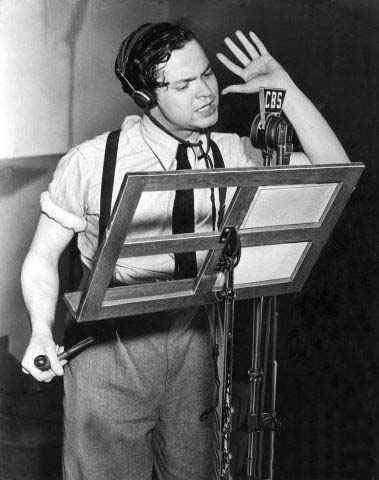
Here you can download the version of The War of the Worlds that Orson Welles famously adapted and aired on national radio in October 1938. Presented so that it sounded like an actual news broadcast, the Orson Welles version was mistaken for truth by many listeners who caught the program midstream (more info here), and, soon enough, they found themselves fleeing an unfolding Martian invasion, running down into their basements with guns cocked and ready to fire. You can catch the mp3 version of the famous Welles recording here (and also alternatively here). Have fun with this broadcast. It’s a classic.
When you think of The New Yorker, you don’t generally think of a magazine with a substantial digital footprint. But, ever so gradually, under David Remnick’s editorial direction, this institution in American journalism and cultural commentary has launched a series of digital initiatives that complement the traditional print journal. And when you add them all up, you realize the magazine is pretty far along the digital curve. How else can you look at it when The New Yorker now offers a fairly robust website, which combines full pieces from the current print edition with specialized online features (take for example the new blog by George Packer)? And then consider the fact that you can now buy on DVD the complete historical archive of the magazine, going back to 1925, and then search and read through it on your computer — all for a fairly scant $63. (Get your own copy here.)
More minor, but nonetheless interesting, forays into the digital world include some recent experiments on the podcast front. Not long ago, we mentioned that The New Yorker’s trademark cartoons have been animated and can be watched as video podcasts (iTunes — Feed). Then there’s The New Yorker Fiction (iTunes — Feed), another relatively new podcast that features famous fiction writers reading out loud selected short stories from the magazine’s fiction archives. (It’s issued only monthly.) Finally, to round things out, another podcast has recently emerged, and it’s simply called Comment (iTunes — Feed) and that’s because it lets you listen to a weekly reading of the magazine’s “Comment” essay, often written by Hendrik Hertzberg, Nicholas Lemann, or David Remnick himself. For a complete list of New Yorker RSS feeds, click here.
The most recent major foray into the world of cultureboxes comes in an entirely different size and market niche: the Apple iPhone. It may look different, but it has all the hallmarks of a culturebox. The iPhone wants to deliver video, audio and the best of the Web; it hopes to revolutionize its market; it requires monthly service fees and a hefty price-tag to use fully.
Just like Microsoft and Tivo, Apple has had some struggles in getting their new device to live up to its promises. The batteries on many of the iPhones are not living up to expectations and some standard phone features seem to be missing. The new phone purports to combine the roles of iPod and cell phone more elegantly than any other device.
Music. Video. Connection. The Tivo, Xbox and iPhone all want to sell us cultural services through an integrated system of digital control. Record or purchase content from the authorized digital store and watch it on the authorized device. All three companies know that the success of their product depends on maintaining a delicate balance between defending the walls of their digital kingdoms and allowing in enough outside content to remain flexible in uncertain markets. All three boxes can be hacked and manipulated, of course, but their manufacturers are counting on the vast majority of customers to play along and pay along.
Just as the box-makers struggle to cut deals with content producers to make their digital offerings appealing to consumers, the “traditional” culture industries are desperately struggling to embrace new forms. The New York Times reviews videogames as well as plays, and just about every major media institution has launched some kind of blog, web video service or podcast so you can connect with the critics on whatever culturebox you prefer.
Culture served up on boxes is very different from public performance or ephemeral newsprint. We can save up hours and hours of it; we can carry it around or duplicate it. When we build up a library of music and videos, we own cultural objects in a way that was never really possible before, when the best we could do was own perishable physical media. We can replay, reformat, share and collate favorites, and we can use our rankings and ratings to find new works. A lot of the most exciting technical advances have had to do with connecting cultureboxes, but that so far that connectivity mostly goes to providing better culture for solo viewing. The three devices discussed here all hope to change that.
The reign of cultureboxes is in many ways the personal, digital version of something that happened in the late 18th century: The birth of the modern museum. The idea was to gather art, knowledge and history together and frame them appropriately—saving up culture for you in vast marble boxes. Today’s personal cultureboxes will never replace theater or museum-going, but they extend the same promise of cultural literacy (have you finished TheSopranos yet?). These days the promise is affiliated with brand name digital emporia.
Like the Xbox, Tivo, and iPhone, many of the first museums wanted to be everything for everybody, offering visitors historical relics, biological specimens and strange devices in a mishmash of art, science and hokum. No wonder the Xboxes are on the fritz: they’re trying to capture all our totally conflicted interests in just one device. Eventually we’ll figure out what digital content really belongs in our pocket on a two-inch screen, what needs to stay in the living room, and what to keep out of the box entirely. I should have some time to think about it while my Xbox gets repaired.
The online magazine Slate runs most of its arts and culture stories in a section called “Culturebox.” Ironically, it’s taken the consumer electronics industry several years to catch up, but now it seems like every new gadget is marketed as a culturebox, from the shiny iPhone to the pioneering Tivo to the hot-running Xbox 360. Manufacturers, advertisers and producers everywhere are thinking about how to sell us sleeker, better boxes and the media that go with them.
The trouble is, nobody is quite sure what the culturebox should look like or what it should do. We can all agree on video, audio and some kind of storage function. But do we want our media pocket-sized or on a big screen? Is the goal to entertain us on the commute or to build up a library of cherished media objects? More importantly, when we say “culture” do we essentially mean television or the whole panoply of forms? Are cultureboxes just TV by other means or are there genuinely new cultural forms on the horizon?
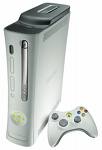
Last week Microsoft announced that Xbox 360s are failing in unprecedented numbers: A dramatic example of Culturebox Anxiety Syndrome. The new generation of videogame consoles allow us to do so much more than blasting aliens—video on demand, HD and Blu-Ray DVD playback, online chatting and music library management are just a few of the roles these particular cultureboxes want to serve. The complexity is clearly an overload: the New York Timesargues that the $1 billion Microsoft is setting aside for this problem implies that between a third and half of Xbox 360 consoles could get the culturebox blues. Now a high-level Xbox executive has announced his resignation, though few people think it’s a punishment since the platform is generally selling well.
Perhaps I’m only writing because I use all these gadgets and my Xbox recently succumbed to “red ring of death” syndrome. Ironically, it only freezes up when I use it to load a videogame. But there is a broader issue here: the transformation of culture from something we experience in concert halls, movie theaters and other shared public spaces into something that we do on the couch or on the go.
The online magazine Slate runs most of its arts and culture stories in a section called “Culturebox.” Ironically, it’s taken the consumer electronics industry several years to catch up, but now it seems like every new gadget is marketed as a culturebox, from the shiny iPhone to the pioneering Tivo to the hot-running Xbox 360. Manufacturers, advertisers and producers everywhere are thinking about how to sell us sleeker, better boxes and the media that go with them.
The trouble is, nobody is quite sure what the culturebox should look like or what it should do. We can all agree on video, audio and some kind of storage function. But do we want our media pocket-sized or on a big screen? Is the goal to entertain us on the commute or to build up a library of cherished media objects? More importantly, when we say “culture” do we essentially mean television or the whole panoply of forms? Are cultureboxes just TV by other means or are there genuinely new cultural forms on the horizon?
Last week Microsoft announced that Xbox 360s are failing in unprecedented numbers: A dramatic example of Culturebox Anxiety Syndrome. The new generation of videogame consoles allow us to do so much more than blasting aliens—video on demand, HD and Blu-Ray DVD playback, online chatting and music library management are just a few of the roles these particular cultureboxes want to serve. The complexity is clearly an overload: the New York Timesargues that the $1 billion Microsoft is setting aside for this problem implies that between a third and half of Xbox 360 consoles could get the culturebox blues. Now a high-level Xbox executive has announced his resignation, though few people think it’s a punishment since the platform is generally selling well.
Perhaps I’m only writing because I use all these gadgets and my Xbox recently succumbed to “red ring of death” syndrome. Ironically, it only freezes up when I use it to load a videogame. But there is a broader issue here: the transformation of culture from something we experience in concert halls, movie theaters and other shared public spaces into something that we do on the couch or on the go.
Keen’s argument can essentially be boiled down to this: Web 2.0 has brought us blogs, Youtube-style video, Wikipedia and other platforms that promote user-generated content, and it’s all killing our Culture. Hacks are now cranking out “an endless digital forest of mediocrity;” “the professional is being replaced by the amateur… the Harvard professor by the unschooled populace;” “kids can’t tell the difference between credible news by objective professional journalists and what they read on joeshmoe.blogspot.com;” “every posting is just another person’s version of the truth;” with the net result being that in “today’s culture of the amateur, the monkeys are running the show.” Using his own words, that’s the gist of Keen’s argument.
You’d think that by positioning himself as the defender of high culture and cultural authority, Keen would uphold his end of the bargain. That is, you’d expect him to offer us a nuanced, carefully-crafted look at the uses and abuses of Web 2.0. But that is not what you get here. Missing the mark, The Cult of the Amateur is long on hyperbolic rhetoric (see above) and short on subtle thinking and balance. It stretches out arguments that ought to fill a 15 page article to 215 pages, and reiterates the same points again and again. (Although targeted to the business community, the book places no premium on efficiency.) And then you have sprinkled in various dilettantish references to philosophers (Marx, Rousseau, Habermas, etc.), coupled with sloppy readings of other contemporary media observers.
The ultimate irony is that Keen’s polemic against amateur content comes off as strangely amateurish. It’s mostly operating at the same level as the very blogosphere he’s attacking. And this impression only gets confirmed by his admission in the acknowledgments: “I confess that, as a writer, I remain a bit of an amateur. This is my first book, and I’m still learning the craft of this complex business.” Apparently, the divide between traditional media and digital media, between high culture and low culture, is not as real and impermeable as Keen would have us believe.
If anyone wants my copy of Keen’s book, just let me know. I will send it anywhere in the US at book rate. But be warned that it has some illegible marginalia, and my kid doodled on one page (page 40), unbeknownst to me. But think of it this way: You get what you don’t pay for. Our email address is in the banner above. First come, first served.
Last weekend’s New York Times Sunday Magazine has declared this the Amateur’s Hour, an era when unpaid hobbyists can edit breaking news, design space technology for NASA, and predict the end of the world. That last article is clearly an outlier, but the first two raise an interesting point—are we getting better service from processes like Wikipedia than we did from traditional, top-down hierarchies?
This is a debate that’s been going on for the past couple of years under the guise of Web 2.0, culminating in the “You” economy announced with much fanfare by Time Magazine last December. In that debate, the battle lines are clearly drawn between the YouTube-using, Google Map-mashing enthusiasts and the skeptics, like aJaron Lanier, who predicts a form of Digital Maoism. In that version of the argument, bloggers are either citizen journalists or incompetent muckrakers clogging the pores of the body politic.
Now the debate seems to have moved into a wider circle—the realm of the amateur versus the professional, with or without the internet. Major outfits from Netflix to NASA have been trying to outsource some of their trickiest problems to the general public, which is as bizarre as it is exciting. Andrew Keen, arguably the most Web 2.0‑enabled critic of Web 2.0, is well-placed to combat the Times coverage with his new book, The Cult of the Amateur: How Today’s Internet is Killing our Culture, which he describes as a polemic against all of the monkeys with typewriters and webcams (that is, us) the Internet has now unleashed upon civilization.
Personally, I find it hard to believe that “real culture” is drowning in a sea of YouTube. If there’s one thing we’re trying to do at Open Culture, it’s to harness Web 2.0 technologies to bring you the best stuff there is: top-notch content from universities, cultural programs and online media around the world. The fact that it might be created by anyone, for anyone doesn’t necessarily make it bad or good—our job as a Web 2.0 filter is to sort that out for you and offer our best suggestions.
Keen’s self-promotional energy is an excellent example of how technology can enhance the great conversation. He’s arguing his case everywhere from Google’s HQ (watch here on YouTube) to the Strand Bookstore in Manhattan. A multiplicity of viewpoints creates debate, and debate is generally a good thing. If there’s one lesson to be learned from “real culture” it’s that life’s great questions don’t have neat or satisfying answers. Interesting conversation is about the best we can hope for, so why not invite more people to join in?
We're hoping to rely on loyal readers, rather than erratic ads. Please click the Donate button and support Open Culture. You can use Paypal, Venmo, Patreon, even Crypto! We thank you!
Open Culture scours the web for the best educational media. We find the free courses and audio books you need, the language lessons & educational videos you want, and plenty of enlightenment in between.