Clare Torry’s Rare Live Performances of “Great Gig in the Sky” with Pink Floyd

When Clare Tor­ry went into the stu­dio to record her now-leg­endary vocals for Pink Floyd’s “Great Gig in the Sky,” the cen­ter­piece of 1973’s Dark Side of the Moon, nei­ther the singer nor the band were par­tic­u­lar­ly impressed with each oth­er. David Gilmour remem­bered the moment in an inter­view on the album’s 30th anniver­sary:

Clare Tor­ry did­n’t real­ly look the part. She was Alan Par­sons’ idea. We want­ed to put a girl on there, scream­ing orgas­mi­cal­ly. Alan had worked with her pre­vi­ous­ly, so we gave her try. And she was fan­tas­tic. We had to encour­age her a lit­tle bit. We gave her some dynam­ic hints: “Maybe you’d like to do this piece qui­et­ly, and this piece loud­er.” She did maybe half a dozen takes, and then after­wards we com­piled the final per­for­mance out of all the bits. It was­n’t done in one sin­gle take.

Asked the fol­low-up ques­tion “what did she look like?,” Gilmour replied, “like a nice Eng­lish house­wife.”

Tor­ry, for her part, was hard­ly starstruck. “If it had been the Kinks,” she lat­er said, “I’d have been over the moon.” She also remem­bers the ses­sion very  dif­fer­ent­ly. “They had no idea” what they want­ed,” she says. Told only “we don’t want any words,” she decid­ed to “pre­tend to be an instru­ment.” She remem­bers “hav­ing a lit­tle go” and knock­ing out the ses­sion in a cou­ple takes.

This Rashomon sce­nario involves not only faulty mem­o­ry but also the legal ques­tion as to who com­posed the song’s melody and vocal concept—a ques­tion even­tu­al­ly decid­ed, in 2004, in Torry’s favor, enti­tling her to roy­al­ties.

She clear­ly wasn’t about to become a tour­ing mem­ber of the band, even after the album’s mas­sive suc­cess and two sub­se­quent tours. Still, while Tor­ry may not have suit­ed Gilmour’s phys­i­cal pref­er­ences for female singers, and while she may not have thought much of Pink Floyd, she has appeared live with their dif­fer­ent iter­a­tions over the years, includ­ing a show at the Rain­bow The­atre in Lon­don just months after the album’s release (fur­ther up). Lat­er, in 1987, Tor­ry appeared again, this time with Roger Waters at Wem­b­ley Sta­di­um on his K.A.O.S. on the Road Tour.

Tor­ry would then join the David Gilmour-led Pink Floyd in 1990 for “Great Gig in the Sky” at Kneb­worth. I do not think she resem­bles an Eng­lish house­wife in the con­cert film at the top—or at least no more than the rest of the band look like mid­dle-aged Eng­lish hus­bands. But she still pulls off the soar­ing vocal, more or less, sev­en­teen years after she first stepped into the stu­dio, hav­ing lit­tle idea who Pink Floyd was or what would become of that fate­ful ses­sion.

Relat­ed Con­tent:

Hear How Clare Torry’s Vocals on Pink Floyd’s “The Great Gig in the Sky” Made the Song Go from Pret­ty Good to Down­right Great

Pink Floyd Stream­ing Free Clas­sic Con­cert Films, Start­ing with 1994’s Pulse, the First Live Per­for­mance of Dark Side of the Moon in Full

Watch Doc­u­men­taries on the Mak­ing of Pink Floyd’s Dark Side of the Moon and Wish You Were Here

Josh Jones is a writer and musi­cian based in Durham, NC. Fol­low him at @jdmagness

Watch Joni Mitchell Sing an Immaculate Version of Her Song “Coyote,” with Bob Dylan, Roger McGuinn & Gordon Lightfoot (1975)

Joni Mitchell doesn’t like to do inter­views, but once she starts to open up, she real­ly opens up, not only about her own strug­gles but about her feel­ings towards her fel­low artists. These are often decid­ed­ly neg­a­tive. Maybe she took a cue from her per­son­al hero, Miles Davis (who, it turned out secret­ly owned all her albums). Mitchell matched his lev­el of caus­tic com­men­tary in 2010 when she told the L.A. Times that Bob Dylan “is not authen­tic at all. He’s a pla­gia­rist, and his name and voice are fake. Every­thing about Bob is a decep­tion.”

Attempts to clar­i­fy fell flat with the most back­hand­ed of com­pli­ments. “I like a lot of Bob’s songs, though musi­cal­ly he’s not very gift­ed.” If any musi­cian has earned the right to crit­i­cize him… In any case, what­ev­er she thought of Dylan dur­ing her mid-sev­en­ties peri­od, when she record­ed and released her dense­ly exper­i­men­tal The Hiss­ing of Sum­mer Lawns and Court and Spark, she was hap­py to join the 1975 Bob Dylan Rolling Thun­der Revue.

Mar­tin Scors­ese cap­tured the tour, which played small­er, more inti­mate venues than Dylan had in years. The doc­u­men­tary, Rolling Thun­der Revue: A Bob Dylan Sto­ry by Mar­tin Scors­ese, was only released last year. Dylan may have been the head­lin­er, but this is also a Joni Mitchell sto­ry, and a Joan Baez, Roger McGuinn, and oth­er artists’ sto­ry. In the clip above, Mitchell plays a new song, “Coy­ote,” at Gor­don Lightfoot’s house, with Dylan and McGuinn join­ing in on gui­tar. Her per­for­mance is immac­u­late, full of con­fi­dence and nuance. McGuinn leans for­ward before she begins to intro­duce the song for Joni, mansplain­ing into the mic, “Joni wrote this song about this tour and on this tour and for this tour.”

Mitchell says noth­ing, but fans will know she wrote the song about Sam Shep­ard and first intro­duced it onstage dur­ing The Hiss­ing of Sum­mer Lawns tour. They’ll also rec­og­nize it as the first song on Mitchell’s 1976 album Heji­ra. The stu­dio ver­sion, above, is still dri­ven by her acoustic gui­tar but incor­po­rates per­cus­sion and Mitchell’s ser­pen­tine vocal line entwines with Jaco Pastorius’s bass. Lyri­cal­ly, the song is full of dusty, for­lorn images like the set­tings of Shepard’s plays. How McGuinn could have thought that it was about Dylan’s tour is beyond me. But Mitchell nev­er need­ed any­one else to speak for her.

Relat­ed Con­tent:

Joni Mitchell Pub­lish­es a Book of Her Rarely Seen Paint­ings & Poet­ry

See Clas­sic Per­for­mances of Joni Mitchell from the Very Ear­ly Years–Before She Was Even Named Joni Mitchell (1965/66)

How Joni Mitchell Wrote “Wood­stock,” the Song that Defined the Leg­endary Music Fes­ti­val, Even Though She Wasn’t There (1969)

Josh Jones is a writer and musi­cian based in Durham, NC. Fol­low him at @jdmagness

How “Strawberry Fields Forever” Contains “the Craziest Edit” in Beatles History

The sto­ry of “Straw­ber­ry Fields For­ev­er” is more or less the sto­ry in minia­ture of the Bea­t­les’ rein­ven­tion after they swore off tour­ing in 1966 and dis­ap­peared into the stu­dio to make their most inno­v­a­tive albums. It was not, as some Bea­t­les fans might remem­ber, an easy tran­si­tion right away. Some of their fans, it turned out, were fick­le, eas­i­ly swayed by gos­sip as the lat­est TV trends. “While unsub­stan­ti­at­ed break-up rumors swirled, some music fans became dis­en­chant­ed with the group,” writes Ulti­mate Clas­sic Rock. “You need only watch a 1967 clip from Amer­i­can Band­stand to see how many teenagers in the audi­ence thought the Bea­t­les were has-beens.”

Eager to get some­thing out and fight the whims of fash­ion, Par­lophone and Capi­tol both released John Lennon’s lat­est, “Straw­ber­ry Fields For­ev­er,” with Paul McCartney’s “Pen­ny Lane” as the B‑side, in 1967. Since the band no longer toured, they were “direct­ed to make film clips to accom­pa­ny each song and pro­mote the sin­gle.”

Here, they debuted their new psy­che­del­ic look, and in the sin­gles they demon­strat­ed the new direc­tion their music would go. The­mat­i­cal­ly, both songs are nos­tal­gic trips through child­hood, with Lennon tak­ing a mys­ti­cal, psych-rock approach and McCart­ney div­ing head­long into his sen­ti­men­tal music hall ambi­tions.

“Straw­ber­ry Fields For­ev­er” also firm­ly estab­lished the band as stu­dio wiz­ards, thanks to the wiz­ardry, pri­mar­i­ly, of George Mar­tin. In the video at the top from You Can’t Unhear This, we learn just what a marvel—as a tech­ni­cal achievement—the band’s new sin­gle was at the time, con­tain­ing “the cra­zi­est edit in Bea­t­les his­to­ry.” The song itself went through a very lengthy ges­ta­tion peri­od, as Col­in Flem­ing details in Rolling Stone, from sketchy, ghost­ly ear­ly acoustic demoes called “It’s Not Too Bad” (below) to the wild cacoph­o­ny of crash­ing rhythms and loop­ing melodies it would become.

Record­ing take after take, the band spent 55 hours in the stu­dio work­ing on “Straw­ber­ry Fields For­ev­er.” Noth­ing seemed to sat­is­fy Lennon, though he was lean­ing toward a dark­er, heav­ier take, Flem­ing notes:

This was a ver­sion approach­ing pro­to-met­al. Lennon couldn’t decide if he want­ed to go the ethe­re­al route, or the stomp­ing one, and famous­ly told George Mar­tin to com­bine the two ver­sions. This was less than prac­ti­cal. 

“Well, there are two things against it,” Mar­tin informed Lennon. “One is that they’re in dif­fer­ent keys. The oth­er is that they’re in dif­fer­ent tem­pos.”

But for a man who had start­ed his most per­son­al, hon­est musi­cal jour­ney, with­in the para­me­ters of a sin­gle song, back in Spain, this was mere­ly part of the process. 

“You can fix it, George,” Lennon con­clud­ed, and that was that, with Mar­tin now tasked with find­ing a solu­tion to a prob­lem that seem­ing­ly vio­lat­ed the laws of musi­cal physics.

Mar­t­in’s solu­tion involved slow­ing one ver­sion down and speed­ing up the oth­er until they were close enough in pitch that “only a musi­col­o­gist, real­ly, would know that there was that much of a dif­fer­ence,” Flem­ing writes. Speed­ing up and slow­ing down tracks was com­mon prac­tice in the stu­dio, and is today, but giv­en the incred­i­ble num­ber of instru­ments and amount of over­dub­bing that went into mak­ing “Straw­ber­ry Fields,” the endeav­or defied the log­ic of what was tech­no­log­i­cal­ly pos­si­ble at the time.

While the time spent on the song might seem extrav­a­gant, we should con­sid­er that these days bands can pluck the sounds they want, what­ev­er they are, from pull-down menus, and splice any­thing togeth­er in a mat­ter of min­utes. In the mid-60s, Bri­an Jones, Bri­an Wil­son, Jimi Hen­drix, the Bea­t­les and oth­er stu­dio pio­neers dreamed up sounds no one had heard before, and brought togeth­er instru­men­ta­tion that had nev­er shared space in a mix. Pro­duc­ers and engi­neers like Mar­tin had to invent the tech­niques to make those new sounds come togeth­er on tape. Learn­ing the ins-and-outs of how Mar­tin did it can give even the most die-hard Bea­t­les fans renewed appre­ci­a­tion for songs as wide­ly beloved as “Straw­ber­ry Fields For­ev­er.”

Relat­ed Con­tent:

Hear John Lennon Sing Home Demo Ver­sions of “She Said, She Said,” “Straw­ber­ry Fields For­ev­er,” and “Don’t Let Me Down”

Lennon or McCart­ney? Sci­en­tists Use Arti­fi­cial Intel­li­gence to Fig­ure Out Who Wrote Icon­ic Bea­t­les Songs

A Vir­tu­al Tour of Every Place Ref­er­enced in The Bea­t­les’ Lyrics: In 12 Min­utes, Trav­el 25,000 Miles Across Eng­land, France, Rus­sia, India & the US

Josh Jones is a writer and musi­cian based in Durham, NC. Fol­low him at @jdmagness

Watch 36 Beastie Boys Videos Now Remastered in HD

The Beast­ie Boys are still the only group to have their music videos receive a Cri­te­ri­on Col­lec­tion release, hav­ing deliv­ered a steady stream of hilar­i­ous and fun pro­mo spots since “She’s on It” in 1985. As the doc­u­men­tary Beast­ie Boys Sto­ry recent­ly dropped on AppleTV, the remain­ing B‑Boys and their record label remas­tered 36 of their videos, now re-uploaded to YouTube in HD. And now’s as good a time as any to restock and rethink their impact on the art form of music video.

The first videos are sil­ly, car­toon­ish slap­stick, with a frat­boy sense of humor that played bet­ter then than now, espe­cial­ly with sev­er­al ref­er­ences to faux-aphrode­si­ac Span­ish Fly. But the sped up action and cos­tume changes placed them in a lin­eage usu­al­ly asso­ci­at­ed with British acts like The Bea­t­les and Mad­ness.

The Beast­ies always poked fun at them­selves, which oth­er Amer­i­can acts rarely did, espe­cial­ly in the very macho worlds of hip-hop and met­al. Even in their final videos they were slap­ping on wigs and fake mus­tach­es.

But if the Beast­ie Boys real­ly had one main lega­cy it was the use of the fish-eye lens. Used first in the “Hold It Now Hit It” video (an afternoon’s film­ing inter­cut with shots from their Dionysian first world tour), it would return for 1989’s “Shake Your Rump”, where the group have learned exact­ly how to work its dis­tort­ing pow­ers (MCA’s fin­gers feel like they’re going to reach through the screen). This style reach­es its apex in “So What’cha Want” where the dis­tor­tion is matched with a slowed motion (the band mim­ing to a sped up ver­sion, then the video slowed to the cor­rect speed). The music’s THC-laced grind is matched with decayed visu­als. Rap videos ever since have used the imme­di­a­cy of the direct-to-cam­era per­for­mance, and direc­tors like Hype Williams made a career of turn­ing a fish­eye lens onto per­form­ers like Bus­ta Rhymes and Mis­sy Elliot, with even more sur­re­al results.

But the Beast­ie Boys real­ly flour­ished when they teamed up with direc­tor Spike Jonze, who direct­ed the Beast­ie Boys Sto­ry and would direct six of their videos. A ris­ing pho­tog­ra­ph­er and direc­tor con­nect­ed with the skate­board­ing scene, his first col­lab­o­ra­tion with the group was 1992’s “Time for Liv­ing,” a punk rock non-sin­gle from Check Your Head. But things real­ly took off with “Sab­o­tage,” one of the band’s best videos, a par­o­dy of 1970s cop shows. Watch­ing the Beast­ies and their friends play dress-up, run ram­pant through the streets of Los Ange­les, jump across rooftops, and toss a dum­my off a bridge is like the pla­ton­ic ide­al of a home movie made with your best friends. Absolute­ly sil­ly and hilar­i­ous, but life-affirm­ing at the same time, a dis­til­la­tion of what made the band great.

You prob­a­bly have your own favorites too, as there’s so many: the Godzil­la trib­ute of “Inter­galac­tic,” the par­o­dy of Dia­bo­lik for “Body Movin’ “, the psy­che­del­ic paint explo­sion of “Shadrach,” the homage to Pink Floyd Live at Pom­peii with “Grat­i­tude”, the celebri­ty love­fest of “Make Some Noise”, and the years-before-their-time ‘70s dis­co-and-poly­ester indul­gence of “Hey Ladies” where Jean Cocteau and Dolemite share a coke­spoon-ful of influ­ences.

The playlist also fea­tures a num­ber of non-album tracks done for the hell of it, some real rar­i­ties even for the fan. Good God y’all.

Relat­ed Con­tent:

Hear Every Sam­ple on the Beast­ie Boys’ Acclaimed Album, Paul’s Boutique–and Dis­cov­er Where They Came From

The Beast­ie Boys Release a New Free­wheel­ing Mem­oir, and a Star-Stud­ded 13-Hour Audio­book Fea­tur­ing Snoop Dogg, Elvis Costel­lo, Bette Midler, John Stew­art & Dozens More

Look How Young They Are!: The Beast­ie Boys Per­form­ing Live Their Very First Hit, “Cooky Puss” (1983)

Ted Mills is a free­lance writer on the arts who cur­rent­ly hosts the Notes from the Shed pod­cast and is the pro­duc­er of KCR­W’s Curi­ous Coast. You can also fol­low him on Twit­ter at @tedmills, and/or watch his films here.

A Soul Train-Style Detroit Dance Show Gets Down to Kraftwerk’s “Numbers” in the Late 80s

Imag­ine Kraftwerk’s Ralf Hüt­ter in his robot voice, say­ing, as he once said to his friend Boris Ven­zen, “Our music is good if blacks and whites can dance to it at the same time.” This state­ment is the essence of Kraftwerk. Despite their ear­ly 70s avant-garde phase and their famous­ly satir­ic Teu­ton­ic look, the robot­ic Ger­man tech­no pio­neers set­tled ear­ly on their “prac­tice of fus­ing Euro­pean elec­tron­ic music with black Amer­i­can rhythms, forg­ing an aes­thet­ic that reached crit­i­cal mass with the release of Trans Europe Express.

So writes John Mor­ri­son at The Wire, in an essay that explores this fusion in some depth. Mor­ri­son also quotes for­mer Kraftwerk per­cus­sion­ist Karl Bar­tos on the band’s debt to black music: “We were all fans of Amer­i­can music: soul, the Tamla/Motown thing, and of course, James Brown. We always tried to make an Amer­i­can rhythm feel, with a Euro­pean approach to har­mo­ny and melody.” The exper­i­men­tal method emerges even in their ear­li­est work, in which they begin work­ing with the “’Bo Did­dley’ beat… that dom­i­nat­ed rock ‘n’ roll in the 50s and ear­ly 60s,” Mor­ri­son notes.

Black DJs in the states picked up on what the Ger­mans were doing, and start­ed play­ing Kraftwerk—along with Gary Numan, Yel­lo Mag­ic Orches­tra, and New Order—in the dis­cos. Mean­while, Kraftwerk start­ed incor­po­rat­ing ear­ly Amer­i­can house music with their 1981 album Com­put­er World. The response to Kraftwerk in black clubs was huge, and they became even more famous after Afri­ka Bam­baataa sam­pled “Trans Europe Express” in his 1981 track, “Plan­et Rock,” a song that had a seis­mic impact on elec­tron­ic dance music around the world.

Kraftwerk’s most sin­gu­lar impact in the U.S. hap­pened in the city of Detroit. As Mor­ri­son writes:

[Kraftwerk]’s influ­ence took a par­tic­u­lar­ly strong hold in Detroit with Urban radio DJs Like Elec­tri­fy­ing Mojo intro­duc­ing the Euro­pean elec­tron­ic sound to the gen­er­a­tion of black youth that went on to cre­ate tech­no. In recent years, sev­er­al clips have been uploaded of The Scene (and its spin-off The New Dance Show), a Soul Train-style dance show that aired from 1975–87 on Detroit’s WGPR TV 62. In these videos, black youth from Detroit can be seen danc­ing to Kraftwerk and a vari­ety of pro­gres­sive elec­tron­ic dance music, giv­ing us a glimpse into Detroit’s scene at the time.

If you ever need­ed to know how to dance to Kraftwerk, writes Dan­ger­ous Minds of the exu­ber­ant Soul Train-like dance line above, “this is how it’s done”—or at least, how it was done in Detroit in the late 80s on The New Dance Show. From the ear­ly 80s on, Mor­ri­son writes, “Kraftwerk became increas­ing­ly aware of the black music scene,” and leg­endary Detroit tech­no DJs like Juan Atkins, Der­rick May, and Kevin Saun­der­son became increas­ing­ly aware of Kraftwerk, a sit­u­a­tion cul­tur­al schol­ar Paul Gilroy might fold into his con­cept of “the Black Atlantic,” but which could also be called some­thing like The Trans Düs­sel­dorf-Detroit Afro­fu­tur­ist Tech­no Express.

“All of the city latched on to” Kraftwerk’s sound, says May in a 2010 inter­view above. Atkins put it this way in a 2012 trib­ute to Kraftwerk pub­lished on Elec­tron­ic Beats:

[T]he first time I heard ‘Robots’ I just froze. My jaw dropped. It just sound­ed so new and fresh. I mean, I had already been doing elec­tron­ic music at the time, but the results weren’t so pristine—the sound of com­put­ers talk­ing to each oth­er. This sound­ed like the future, and it was fas­ci­nat­ing, because I had just start­ed learn­ing about sequencers and drum pro­grams. In my mind, Kraftwerk were, like, con­sul­tants to Roland and Korg and stuff because they had these sounds before any of the machines even appeared on the mar­ket.

I mean, there were oth­er funky elec­tron­ic bands around—Tan­ger­ine Dream and Gary Numan and all that—but none were as funky as Kraftwerk­. I mean, you could actu­al­ly play the stuff on black radio, and that wasn’t a small feat. You could go to an all black club in Detroit and when they put on ‘Pock­et Cal­cu­la­tor’, every­body just went total­ly crazy.

Relat­ed Con­tent:

Watch Flo­ri­an Schnei­der (RIP) in Clas­sic Ear­ly Kraftwerk Per­for­mances

The Case for Why Kraftwerk May Be the Most Influ­en­tial Band Since the Bea­t­les

Kraftwerk’s “The Robots” Per­formed by Ger­man First Graders in Adorable Card­board Robot Out­fits

Josh Jones is a writer and musi­cian based in Durham, NC. Fol­low him at @jdmagness

“Prince and the Revolution: Live,” the Historic 1985 Concert Is Streaming Online

A quick heads up. The Prince Estate has released Prince and the Rev­o­lu­tion: Live, a his­toric con­cert cap­tured at the Car­ri­er Dome in Syra­cuse, NY on March 30, 1985. Stream­ing to sup­port the COVID-19 Sol­i­dar­i­ty Response Fund for the World Health Orga­ni­za­tion, the video revis­its the Pur­ple Rain tour, when Prince was at the height of his pow­ers. You can find the 20-song setlist right below. Enjoy the free fundrais­ing stream while it lasts.

1. Let’s Go Crazy

2. Deliri­ous

3. 1999

4. Lit­tle Red Corvette

5. Take Me With U

6. Yan­kee Doo­dle Dandy

7. Do Me Baby

8. Irre­sistible Bitch

9. Pos­sessed

10. How Come You Don’t Call Me Any­more

11. Let’s Pre­tend We’re Mar­ried

12. Inter­na­tion­al Lover

13. God

14. Com­put­er Blue

15. Dar­ling Nik­ki

16. The Beau­ti­ful Ones

17. When Dove’s Cry

18. I Would Die 4 U

19. Baby I’m A Star

20. Pur­ple Rain

Relat­ed Con­tent:

A New Col­lec­tion of Offi­cial, Autho­rized Prince GIFs!

Hear Prince’s Per­son­al Playlist of Par­ty Music: 22 Tracks That Will Bring Any Par­ty to Life

Read Prince’s First Inter­view, Print­ed in His High School News­pa­per (1976)

The Prince Online Muse­um Archives 16 of Prince’s Offi­cial Web Sites, Span­ning 20 Years

Robert Fripp & King Crimson Perform a Stirring Cover of “Heroes,” Shortly after David Bowie’s Death (2016)

In 2016, King Crim­son per­formed “Heroes” at the Admi­ralspalast in Berlin, just after David Bowie’s death, and near­ly forty years after the song was writ­ten and record­ed next to the Berlin Wall. It was “a cel­e­bra­tion, a remem­branc­ing and an homage,” gen­tle­man gui­tarist Robert Fripp wrote in a state­ment. The fol­low­ing year, they released the live ver­sion on an EP called Heroes, in hon­or of the clas­sic Bowie album’s 40th anniver­sary.

King Crim­son sounds absolute­ly amaz­ing in the con­cert record­ing. Yet it’s Fripp’s keen­ing gui­tar line—part vio­lin, part theremin—that most calls out to us, a gor­geous­ly heav­en­ly wail. Like many Bowie songs, the writ­ing and record­ing of “Heroes” pro­duced many a fas­ci­nat­ing sto­ry. Fripp’s con­tri­bu­tion, as a leg­endary char­ac­ter and prog-rock genius, is no excep­tion.

Frip­p’s angel­ic tone on “Heroes,” as Tony Vis­con­ti tells it above (at 2:15), came about most­ly by hap­py acci­dent. Vis­con­ti explains more ful­ly in a Sound Opin­ions inter­view:

Fripp was avail­able only one week­end. So he came to Berlin, brought his gui­tar, no ampli­fi­er. He record­ed his gui­tar in the stu­dio. We had to play the track very very loud because he was rely­ing on the feed­back from the stu­dio mon­i­tors. So it was deaf­en­ing work­ing with him.

Where­as every­one thinks it’s an ebow, this mag­i­cal gui­tar gad­get called an ebow. In fact it was­n’t an ebow, it was just the feedback–Fripp play­ing this “dah uhh­hh dahh uhhh” that beau­ti­ful motif. And Fripp record­ed a sec­ond time with­out hear­ing the first one. It was a lit­tle bit more cohe­sive, but still quite was­n’t right, and he said, “Let me do it again. Just give me anoth­er track. I’ll do it again.” And we silenced the first two tracks and he did a third pass, which was real­ly great. He nailed it. And then I had the bright idea: I said, “Look let me just hear what it sounds like with the oth­er two tracks. You nev­er know.”

We played it, all three tracks togeth­er, and you know, I must reit­er­ate Fripp did not hear the oth­er two tracks when he was doing the third one so he had no way of being in sync. But he was strange­ly in sync. And all his lit­tle out-of-tune wig­gles sud­den­ly worked with the oth­er pre­vi­ous­ly record­ed gui­tars. It seemed to tune up. It got a qual­i­ty that none of us antic­i­pat­ed. It was this dreamy, wail­ing qual­i­ty, almost cry­ing sound in the back­ground. And we were just flab­ber­gast­ed.

It was a typ­i­cal­ly Eno-Vis­con­ti way to find a new sound. That sound, Vis­con­ti says above, is all over the track. For this rea­son, Fripp has been engaged in legal bat­tles with David Bowie’s estate over his cred­it, insist­ing that he should have “fea­tured play­er” sta­tus, a legal des­ig­na­tion that would give him greater rights to remu­ner­a­tion. Always a shame when wran­gling over mon­ey comes between the cre­ators of great music, but in this case, Bri­an Eno and Tony Vis­con­ti both sup­port Fripp’s claims, and so per­haps would Bowie if he were here.

What­ev­er it takes to be a “fea­tured play­er,” Fripp sailed over the thresh­old on “Heroes.” He demon­strates it again in the King Crim­son trib­ute, mak­ing one gui­tar sound like three onstage, and in the video above, which he released with his wife Toy­ah for VE Day. The back­ing track is from the Berlin per­for­mance at the top, with dubbed vocals by Toy­ah and gui­tar, of course, by Fripp, play­ing the same Gib­son Les Paul he flew into the stu­dio with in 1977, and look­ing just as sin­gu­lar­ly unim­pressed by the pro­ceed­ings.

Relat­ed Con­tent:

Watch David Byrne Lead a Mas­sive Choir in Singing David Bowie’s “Heroes”

David Bowie’s “Heroes” Delight­ful­ly Per­formed by the Ukulele Orches­tra of Great Britain

Pro­duc­er Tony Vis­con­ti Breaks Down the Mak­ing of David Bowie’s Clas­sic “Heroes,” Track by Track

Josh Jones is a writer and musi­cian based in Durham, NC. Fol­low him at @jdmagness

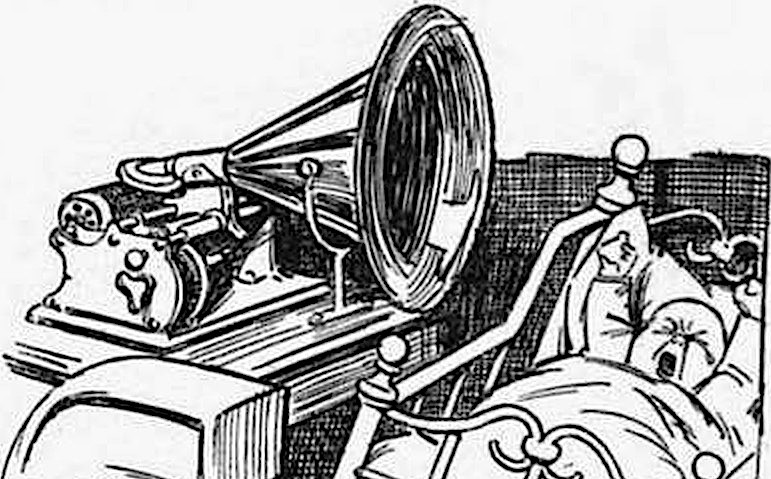
1930s Phonograph Doubled as an Alarm Clock, Letting People Start Their Day with Their Favorite Record

The Deutsches Uhrens­mu­se­um intro­duces the French-made Peter Pan clock above as fol­lows:

Even as ear­ly as 1930, peo­ple were try­ing to find a way to replace the unpleas­ant sound of the alarm clock. The inven­tor of this gramo­phone alarm clock had a bril­liant idea. The gramo­phone works like the stan­dard alarm clock of those days; how­ev­er, instead of a bell, the gramo­phone motor switch­es on when the alarm goes off and your favourite record begins to play to the live­ly crack­ling sound of a typ­i­cal gramo­phone. The motor plays this side of the record twice in suc­ces­sion. The opened lid of the box serves as a res­onator. Even the name is what dreams are made of: Peter Pan Alarm Clock. Who would not want to be a child again and fly off to Nev­er Nev­er Land?

This great find comes from the always inter­est­ing Twit­ter feeds of jazz crit­ic Ted Gioia and the Bib­lio­thèque nationale de France. You can watch the clock in action below.

If you would like to sign up for Open Culture’s free email newslet­ter, please find it here. It’s a great way to see our new posts, all bun­dled in one email, each day.

If you would like to sup­port the mis­sion of Open Cul­ture, con­sid­er mak­ing a dona­tion to our site. It’s hard to rely 100% on ads, and your con­tri­bu­tions will help us con­tin­ue pro­vid­ing the best free cul­tur­al and edu­ca­tion­al mate­ri­als to learn­ers every­where. You can con­tribute through Pay­Pal, Patre­on, and Ven­mo (@openculture). Thanks!

Relat­ed Con­tent:

19th-Cen­tu­ry Skele­ton Alarm Clock Remind­ed Peo­ple Dai­ly of the Short­ness of Life: An Intro­duc­tion to the Memen­to Mori

How Clocks Changed Human­i­ty For­ev­er, Mak­ing Us Mas­ters and Slaves of Time

Wake Up & Smell the Cof­fee: The New All-in-One Cof­fee-Mak­er/Alarm Clock is Final­ly Here!

by | Permalink | Make a Comment ( 1 ) |

« Go BackMore in this category... »
Quantcast