When Pink Floyd Tried to Make an Album with Household Objects: Hear Two Surviving Tracks Made with Wine Glasses & Rubber Bands

There are bands one casu­al­ly encoun­ters through great­est hits or break­through albums, on which they sound exact­ly like them­selves and no one else. It’s impos­si­ble to imag­ine any­one but Fleet­wood Mac mak­ing Rumors or Tusk. Or any­one but Pink Floyd record­ing Wish You Were Here or Dark Side of the Moon. But just like Fleet­wood Mac, when we look back before Floyd’s best-known work, we find, as Mark Blake writes at Team Rock, that “they were a very dif­fer­ent propo­si­tion.”

And yet it was­n’t that Pink Floyd rad­i­cal­ly shuf­fled the lineup—though they had, since their first album, lost found­ing singer and gui­tarist Syd Bar­rett to men­tal ill­ness and tak­en on David Gilmour to replace him. It’s that the same four musi­cians who re-invent­ed psych-rock in the ear­ly 70s with “Mon­ey,” “Time,” and “Great Gig in the Sky,” sound­ed noth­ing like that blues/funk/disco/prog hybrid in the late 60s. Some of the same ele­ments were there—the sar­don­ic sense of humor, love for sound effects and extend­ed jam sessions—but they cohered in much more alien and exper­i­men­tal shapes.

The title track of 1968’s Saucer­ful of Secrets, for exam­ple, opens with four min­utes of dis­so­nant hor­ror-movie organ drones, which give way to pri­mal drum­ming around which piano chords and sci-fi nois­es fall hap­haz­ard­ly, then resolve in a clos­ing word­less choral pas­sage. Not a sin­gle, cyn­i­cal lyric about the pains of mod­ern life to be found. The fol­low­ing year’s Ummagum­ma con­tin­ued to build the band’s exper­i­men­tal foun­da­tions, and in-between these projects, they record­ed film sound­tracks that, again, do not make one think of laser-lit are­na rock shows.

But there is plen­ty of con­nec­tive tis­sue between the var­i­ous phas­es of Floyd, much of it, like the bulk of their 1970 sound­track for Antonioni’s Zabriskie Point, offi­cial­ly unre­leased. We can add to that list an attempt­ed album called House­hold Objects, which they began in 1970 and aban­doned in ’74. The project, drum­mer Nick Mason admit­ted, rep­re­sents the then-large­ly-instru­men­tal band “still look­ing for a coher­ent direc­tion,” and in so doing, aban­don­ing instru­ments alto­geth­er. On House­hold Objects, they made serendip­i­tous dis­cov­er­ies using—as the title clear­ly stated—found sounds, in the vein of John Cage or the avant-garde com­posers of musique con­crete.

In 1971, Abbey Road stu­dios tape oper­a­tor John Leck­ie, who went on to pro­duce the heav­i­ly Floyd-influ­enced Muse, remem­bers the band “mak­ing chords up from the tap­ping of beer bot­tles, tear­ing news­pa­pers for rhythm, and let­ting off aerosol cans to get a hi-hat sound.” Key­boardist Richard Wright recalls spend­ing “days get­ting a pen­cil and a rub­ber band till it sound­ed like a bass.” The idea began two years ear­li­er when the band per­formed a com­po­si­tion called Work that “involved,” writes Blake, “saw­ing wood and boil­ing ket­tles on stage.”

House­hold Objects record­ing ses­sions, writes Rolling Stone, “con­sist­ed of Pink Floyd play­ing songs on hand mix­ers, light bulbs, wood saws, ham­mers, brooms and oth­er home appli­ances. Record­ing in this man­ner was excru­ci­at­ing.” Wright and Gilmour grew exas­per­at­ed and the band moved on to oth­er things, name­ly Wish You Were Here. All that seem­ing­ly remains of House­hold Objects are the two tracks here, “The Hard Way” (an instance where rub­ber bands sound like a bass) and “Wine Glass­es,” the lat­ter employ­ing, you guessed it, wine glass­es. But like so much of Floyd’s less­er-known or for­got­ten exper­i­men­tal work, these ses­sions cre­at­ed the back­drop for their more acces­si­ble hits. “Wine Glass­es” sur­vived in “Shine on You Crazy Dia­mond.” In the video just above, you can see David Gilmour work out the glass arrange­ments for his per­for­mance of the song in the 2006 Roy­al Albert Hall con­cert film Remem­ber That Night.

Relat­ed Con­tent:

The “Lost” Pink Floyd Sound­track for Michelan­ge­lo Antonioni’s Only Amer­i­can Film, Zabriskie Point (1970)

Hear Lost Record­ing of Pink Floyd Play­ing with Jazz Vio­lin­ist Stéphane Grap­pel­li on “Wish You Were Here”

Pink Floyd’s “Echoes” Pro­vides a Sound­track for the Final Scene of Kubrick’s 2001: A Space Odyssey

Josh Jones is a writer and musi­cian based in Durham, NC. Fol­low him at @jdmagness

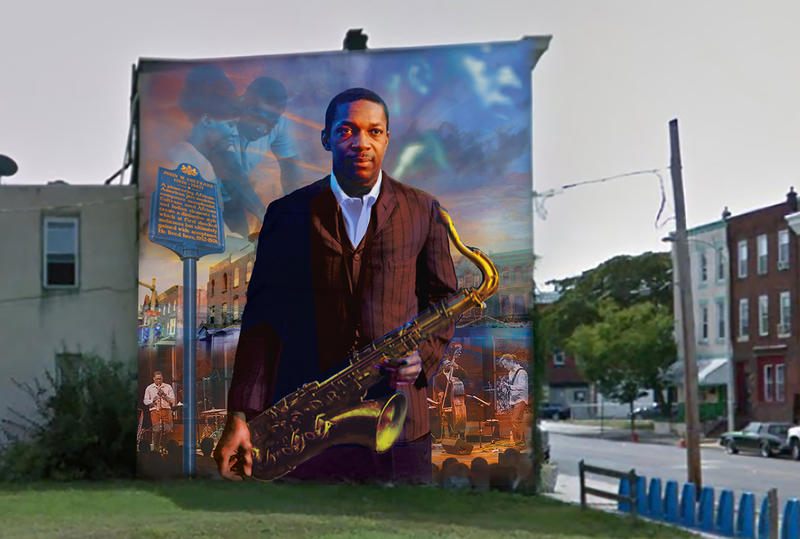
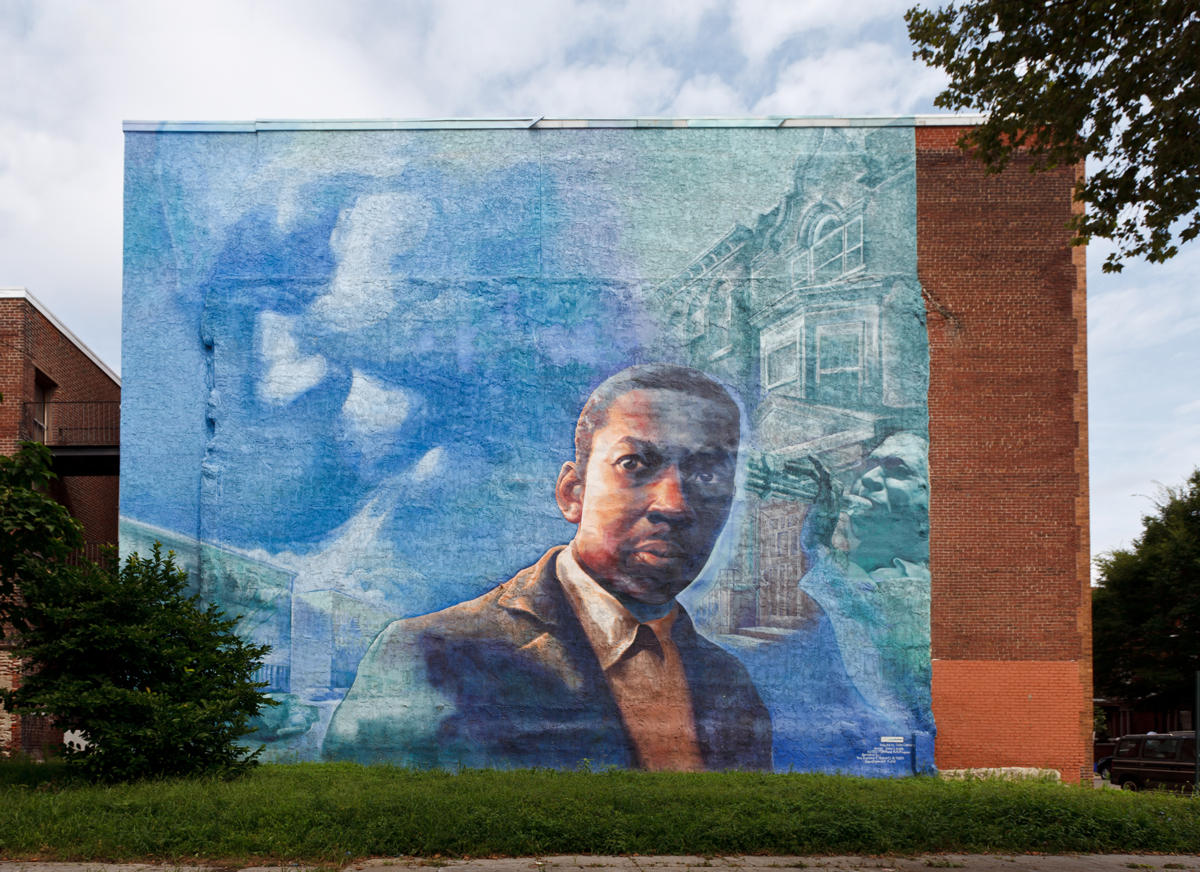
A New Mural Pays Tribute to John Coltrane in Philadelphia

Image by WRTI.ORG

Ear­li­er this sum­mer, artists paint­ed a 10-sto­ry high mur­al of Mud­dy Waters in the heart of Chica­go. Now, Philadel­phia answered with a mur­al of its own, right at the cor­ner of 29th and Dia­mond. There, you’ll find a giant paint­ing of John Coltrane by artist Ernel Mar­tinez, which takes visu­al cues from anoth­er Coltrane mur­al that graced the side of a Philly build­ing from 2002 until 2014.

The new mur­al is not far from where Coltrane bought his Philadel­phia home in 1952. (It’s now a nation­al land­mark, by the way.) The jazz web site, wrti.org, has more on the new mur­al.

If you would like to sup­port the mis­sion of Open Cul­ture, con­sid­er mak­ing a dona­tion to our site. It’s hard to rely 100% on ads, and your con­tri­bu­tions will help us con­tin­ue pro­vid­ing the best free cul­tur­al and edu­ca­tion­al mate­ri­als to learn­ers every­where. You can con­tribute through Pay­Pal, Patre­on, and Ven­mo (@openculture). Thanks!

via @TedGioia

Relat­ed Con­tent:

Her­bie Han­cock to Teach His First Online Course on Jazz

John Coltrane Draws a Pic­ture Illus­trat­ing the Math­e­mat­ics of Music

The Secret Link Between Jazz and Physics: How Ein­stein & Coltrane Shared Impro­vi­sa­tion and Intu­ition in Com­mon

John Coltrane’s Hand­writ­ten Out­line for His Mas­ter­piece A Love Supreme

John Coltrane’s ‘Giant Steps’ Ani­mat­ed

Watch John Lennon’s Last Live Performance (1975): “Imagine,” “Stand By Me” & More


After each heart­break­ing loss of a musi­cal icon this past year and a half, we have turned to their great­est moments onstage, not nec­es­sar­i­ly their last, because their final shows weren’t always all that mem­o­rable. Declin­ing health, bad record­ings… and not every gig is a good one even in the best of times and with the best of per­form­ers. But when it comes to John Lennon’s last pub­lic appear­ance, I like to think he might have left the stage exact­ly the way he want­ed to, as a rock­er, a provo­ca­teur, and a pis­stak­er in a can­dy-apple red jump­suit, backed by a nine-piece mim­ing band of bald men in black leather with masks paint­ed on the back of their heads.


Cred­it­ed as “John Lennon, Etc.,” the band’s true name, giv­en to them by Lennon him­self, is abbre­vi­at­ed on their bass drum: B.O.M.F., or “Broth­ers of Moth­er Fuck­ers.” It was Lennon’s send off to his own career as much as it was a Salute to Sir Lew, as the pro­gram was called. Just a few months lat­er Sean was born, and Lennon declared he would retire to raise his son. At the time of his trag­ic death five years lat­er, he had begun record­ing again, releas­ing Dou­ble Fan­ta­sy and plan­ning a sec­ond dou­ble album, Milk and Hon­ey. But we nev­er got to see him per­form those songs.

The hon­oree for Lennon’s last gig was Sir Lew Grade, “a pow­er­ful media mogul,” notes Dan­ger­ous Minds, “with roots in cabaret and vari­ety shows.” A man known as much for his ruth­less­ness in busi­ness as for his Charleston, which he per­formed on table­tops when­ev­er the mood struck him. In 1969 Grade bought up the rights to over a hun­dred Lennon and McCart­ney songs, after some very tense nego­ti­a­tions. Lennon sued Grade in 1974 and set­tled out of court, and Grade remained the co-pub­lish­er of all of his new songs.


As part of the set­tle­ment, Lennon record­ed his album of cov­ers of clas­sic rock ‘n’ roll songs, appro­pri­ate­ly titled Rock ‘n’ Roll. When he appeared at the trib­ute con­cert for Sir Lew at the Hilton Hotel in New York—on the bill with Julie Andrews, Tom Jones, and Peter Sellers—he played Lit­tle Richard’s “Slip­pin’ and Slidin,” and Ben E. King’s “Stand by Me” for “a “who’s who of the old Hol­ly­wood elite,” includ­ing Lau­ren Bacall, Kirk Dou­glas, Gene Kel­ly, and Orson Welles. The show, record­ed for TV broad­cast, cut his ren­di­tion of “Stand by Me” (hear the audio above), but they did air his final song, “Imag­ine,” which turned out to be the last song he ever sang live onstage (top).


Lennon is in very good form, and seem­ing­ly in good spir­its. The year pre­vi­ous, he’d scored a num­ber one hit with “What­ev­er Gets You Thru the Night.” Accord­ing at least to Paul McCart­ney and Lennon’s girl­friend May Pang, he had even con­sid­ered reunit­ing the Bea­t­les. In Novem­ber of 1974, Lennon joined Elton John onstage at Madi­son Square Gar­den for rol­lick­ing ver­sions of “I Saw Her Stand­ing There,” “Lucy in the Sky with Dia­monds,” and “What­ev­er Gets You Thru the Night” on which Elton had played in the stu­dio. You can see a recre­ation of that per­for­mance above. It was tech­ni­cal­ly Lennon’s last live con­cert appear­ance.

His final appear­ance on stage, on the oth­er hand, while it might have been an odd way to say good­bye, whether he meant to do so or not, may not be what we revis­it when we revis­it Lennon. Why did he agree to do a trib­ute con­cert “for a man he had been embroiled in law­suits with?” With a stage show that many have thought was delib­er­ate­ly designed to antag­o­nize the hon­oree? We’ll nev­er know. But I’m grate­ful that his final live song was one that still speaks to us of hope and pos­si­bil­i­ty. Maybe bow­ing to cen­sors, Lennon changes “Imagine”’s con­tro­ver­sial line about reli­gion. Instead, he sings, “Noth­ing to kill or die for, no immi­gra­tion, too,” refer­ring both to his trou­bles with the U.S. immi­gra­tion author­i­ties and to the bor­der­less world the song projects. “Imag­ine there’s no coun­tries… Imag­ine all the peo­ple shar­ing all the world.”

Relat­ed Con­tent:

The Night John Lennon & Yoko Ono Jammed with Frank Zap­pa at the Fill­more East (1971)

Get a Fly-on-the-Wall View of John Lennon Record­ing & Arrang­ing His Clas­sic Song, “Imag­ine” (1971)

John Lennon’s Solo Albums Now Stream­ing for Free on Spo­ti­fy

Josh Jones is a writer and musi­cian based in Durham, NC. Fol­low him at @jdmagness

The “Lost” Pink Floyd Soundtrack for Michelangelo Antonioni’s Only American Film, Zabriskie Point (1970)

There’s a good argu­ment to be made that some of the most insight­ful writ­ing about the Unit­ed States comes from artists observ­ing the coun­try from afar or through the eyes of a bemused new­com­er. For Euro­pean artists and thinkers, writ­ing about the behe­moth across the sea seems to have proven an irre­sistible chal­lenge from the start, even if, like Franz Kaf­ka, some nev­er set foot on the con­ti­nent. Alex­is de Toc­queville, Wern­er Her­zog, Mar­tin Amis, Wim Wen­ders, the list could go on and on, and would include many very enlight­en­ing per­spec­tives.

But not every such effort has been a suc­cess, in either crit­i­cal or com­mer­cial terms. Michelan­ge­lo Antonioni’s Zabriskie Point (1970), for exam­ple, the Ital­ian director’s “only Amer­i­can movie,” writes Richard Met­zger at Dan­ger­ous Minds, “com­plete­ly missed its mark and failed to cap­ture the zeit­geist of the hip­pie New Left coun­ter­cul­ture of the era.”

When the film was released in 1970, “audi­ences and crit­ics alike hat­ed it, just hat­ed it.” The film’s young, unknown male lead Mark Frechette “dis­tanced him­self from the direc­tor,” writes Den­nis Lim at Slate, say­ing, “he wasn’t mak­ing a film about any Amer­i­ca I knew.” Gui­tarist John Fahey, in Rome to record a song for the film, almost came to blows with Anto­nioni “when the mae­stro launched into an anti-Amer­i­can rant.”

If Anto­nioni came off to his crit­ics as a “clue­less tourist” cin­e­mat­i­cal­ly, he also passed up an excel­lent oppor­tu­ni­ty musi­cal­ly. In the stu­dio when the Doors record­ed “L’America” for L.A. Woman, he “inex­plic­a­bly turned down the track, which could have worked spec­tac­u­lar­ly well in his film.” Instead, thanks in large part to his co-writer and cur­rent girl­friend Clare Peploe, Anto­nioni chose Pink Floyd to score the film, after hear­ing Peploe’s copy of Ummagum­ma. He loved the album, and lis­tened to it obses­sive­ly, espe­cial­ly the dra­mat­ic, psy­che­del­ic “Care­ful with that Axe, Eugene.”

In the end, how­ev­er, only three songs from the band made the final cut. Anto­nioni instead filled out the sound­track with music by Fahey, The Young­bloods, Roy Orbi­son, The Grate­ful Dead, and oth­ers. The com­plete record­ing of the orig­i­nal Floyd sound­track was nev­er com­mer­cial­ly released and has only offi­cial­ly exist­ed in frag­ments. One fan in a music forum notes that the 2 CD Zabriskie Point sound­track includes the three songs from the film and four unused bonus tracks. The huge, and huge­ly expen­sive, Floyd box set The Ear­ly Years con­tains 16 out­takes, none of them on the sound­track CD.

The only way fans have been able to hear the com­plete, orig­i­nal sound­track has been through a series of bootlegs, some fea­tur­ing only the eight intend­ed final songs, oth­ers includ­ing some or all of the known out­takes. One such com­pi­la­tion, above, col­lects sev­er­al songs and out­takes, but does­n’t include the full com­plet­ed sound­track. Despite this disco­graph­ic dis­ar­ray, the dis­card­ed orig­i­nal sound­track, in its many forms, has proven “an extreme­ly sat­is­fy­ing lis­ten,” Met­zger writes. If it sounds “like a ‘lost’ Pink Floyd album record­ed at the end of 1969,” it’s “because that’s exact­ly what it is.”  Remind­ing us at times of Atom Heart Moth­er, or Med­dle, or Ummagum­ma, it both looks back at pre­vi­ous work and ahead toward what’s to come.

The band turned out some unchar­ac­ter­is­ti­cal­ly straight-ahead elec­tric bar­room blues (above). “Heart Beat, Pig Meant,” which appears over the film’s open­ing cred­its (top) “was Pink Floyd’s first time using a human heart­beat as a musi­cal instru­ment (but it would not be the last).” Richard Wright’s “The Vio­lent Sequence,” fur­ther up, may have been scrapped by Anto­nioni, but it would lat­er “be retooled as ‘Us and Them’ on Dark Side of the Moon.” Aside from that album’s unin­tend­ed life as uncan­ny son­ic accom­pa­ni­ment to The Wiz­ard of Oz, the band did some of its most exper­i­men­tal, and tran­si­tion­al, work through film sound­tracks, such as those for Bar­bet Schroeder’s 1969 More and 1972 film The Val­ley. Their work with Anto­nioni is no excep­tion, but Zabriskie Point, like­ly because of its many con­fus­ing states of exis­tence, has not received as much atten­tion.

Per­haps it’s time to revis­it Zabriskie Point, the film, as well as its orig­i­nal sound­track. As fans of Pink Floyd, we can see what inspired the band to cre­ate music that would help deter­mine the direc­tion of their epic albums to come. As fans of Anto­nioni, per­haps, we may come to a greater appre­ci­a­tion of his much-maligned flop, which Lim con­tends “is of a piece with Antonioni’s best work: a lux­u­ri­ant por­trait of spir­i­tu­al alien­ation with a sense of place far more expres­sive than its blankly beau­ti­ful char­ac­ters.” Giv­en that descrip­tion, it’s no won­der Anto­nioni found Pink Floyd such an intrigu­ing choice, even if nei­ther the Ital­ian direc­tor nor Eng­lish band had said much of any­thing in their work about the caul­dron of polit­i­cal unrest, sex­u­al exper­i­men­ta­tion, and cul­tur­al dis­af­fec­tion of the U.S. in the late 60s.

via Dan­ger­ous Minds

Relat­ed Con­tent:

Pink Floyd’s “Echoes” Pro­vides a Sound­track for the Final Scene of Kubrick’s 2001: A Space Odyssey

Hear Lost Record­ing of Pink Floyd Play­ing with Jazz Vio­lin­ist Stéphane Grap­pel­li on “Wish You Were Here”

Syd Barrett’s “Effer­vesc­ing Ele­phant” Comes to Life in a New Retro-Style Ani­ma­tion

Josh Jones is a writer and musi­cian based in Durham, NC. Fol­low him at @jdmagness

Al Franken Provides Comic Relief at the Grateful Dead’s 1980 Halloween Concert: A Tribute to Our Favorite Deadhead Senator

Our illus­tri­ous Sen­a­tor from Min­neso­ta Al Franken has long been a Dead­head, or at least an ardent fan. He and com­e­dy part­ner Tom Davis were the first writ­ers hired by Sat­ur­day Night Live in 1975 and occa­sion­al­ly also per­formed rou­tines on the show. They were also Grate­ful Dead fans respon­si­ble for get­ting the band booked on SNL.

So by the time 1980 and the eight-night res­i­den­cy of the Grate­ful Dead at Radio City Music Hall rolled around, Franken and Davis were asked to host the final night, Hal­loween, for a show that was simul­cast on radio and closed cir­cuit tele­vi­sion to 14 movie the­aters around the coun­try. Their job? To help enter­tain view­ers and fill the two 40-minute breaks in the Dead­’s show.

For Radio City Music Hall, the event saved its finan­cial skin. Accord­ing to Rolling Stone, by the late ‘70s, “with New York City in fis­cal freefall, Radio City’s future was sud­den­ly shaky; movie atten­dance dropped, and plans to con­vert it into an office build­ing or park­ing lot loomed.”

The solu­tion was to book pop and rock acts. The first was Lin­da Ron­stadt. The sec­ond was the Dead, and soon Dead­heads descend­ed on Rock­e­feller cen­ter, buy­ing up 36,000 tick­ets.

Franken and Davis pre-taped many of the seg­ments, and the Dead loved mock­ing them­selves. There’s a Jer­ry Lewis Telethon par­o­dy for “Jerry’s Kids,” where Franken urges dona­tions for acid casu­al­ties; Bob Weir’s lux­u­ri­ous hair is admired; drugs and penis jokes abound; and at one point Davis “mis­tak­en­ly” drinks acid-dosed urine and trips out. (In real­i­ty, Davis actu­al­ly had dropped acid for the live por­tion.)

Radio City’s lawyers sued after the con­certs for dam­ag­ing its rep­u­ta­tion, but lat­er set­tled. A com­pi­la­tion video of the Hal­loween show and the pre­vi­ous night’s con­cert was released in 1981 as Dead Ahead, the source of these clips.

Tom Davis died in 2012 from throat and neck can­cer; and Al Franken rep­re­sents the cit­i­zens of Min­neso­ta, but did briefly take over SiriusXM’s Grate­ful Dead chan­nel in May of 2017 to host a full day of music and inter­views with Bob Weir, Bill Kreutz­mann and Mick­ey Hart, the sur­viv­ing mem­bers of the Dead (always an iron­ic turn of phrase).

Relat­ed Con­tent:

Sen­a­tor Al Franken Does a Pitch Per­fect Imi­ta­tion of Mick Jag­ger (1982)

Al Franken Effort­less­ly Draws the Map of Amer­i­ca

11,215 Free Grate­ful Dead Con­cert Record­ings in the Inter­net Archive

Bob Dylan and The Grate­ful Dead Rehearse Togeth­er in Sum­mer 1987. Lis­ten to 74 Tracks.

The Grate­ful Dead Play at the Egypt­ian Pyra­mids, in the Shad­ow of the Sphinx (1978)

Ted Mills is a free­lance writer on the arts who cur­rent­ly hosts the artist inter­view-based FunkZone Pod­cast and is the pro­duc­er of KCR­W’s Curi­ous Coast. You can also fol­low him on Twit­ter at @tedmills, read his oth­er arts writ­ing at tedmills.com and/or watch his films here.

How to Listen to Music: A Free Course from Yale University

Taught by Yale pro­fes­sor Craig Wright, this course, Lis­ten­ing to Music, oper­ates on the assump­tion that lis­ten­ing to music is “not sim­ply a pas­sive activ­i­ty one can use to relax, but rather, an active and reward­ing process.” When we under­stand the basic ele­ments of West­ern music (e.g., rhythm, melody, and form), we can appre­ci­ate music in entire­ly new ways. That includes every­thing from clas­si­cal music, rock and tech­no, to Gre­go­ri­an chant and the blues.

You can watch the 23 lec­tures above, on YouTube, or Yale’s web­site, where you’ll also find a syl­labus and infor­ma­tion on each class ses­sion. The main text used in the course is Lis­ten­ing to Music, writ­ten by the pro­fes­sor him­self.

Lis­ten­ing to Music will be added to the Music sec­tion of our ever-grow­ing col­lec­tion, 1,700 Free Online Cours­es from Top Uni­ver­si­ties.

It’s also worth not­ing that Prof. Wright has cre­at­ed an inter­ac­tive MOOC called Intro­duc­tion to Clas­si­cal Music. You might want to check it out.

If you would like to sup­port the mis­sion of Open Cul­ture, con­sid­er mak­ing a dona­tion to our site. It’s hard to rely 100% on ads, and your con­tri­bu­tions will help us con­tin­ue pro­vid­ing the best free cul­tur­al and edu­ca­tion­al mate­ri­als to learn­ers every­where. You can con­tribute through Pay­Pal, Patre­on, and Ven­mo (@openculture). Thanks!

Relat­ed Con­tent:

Eve­lyn Glen­nie (a Musi­cian Who Hap­pens to Be Deaf) Shows How We Can Lis­ten to Music with Our Entire Bod­ies

Down­load 400,000 Free Clas­si­cal Musi­cal Scores & 46,000 Free Clas­si­cal Record­ings from the Inter­na­tion­al Music Score Library Project

Play­ing an Instru­ment Is a Great Work­out For Your Brain: New Ani­ma­tion Explains Why

1200 Years of Women Com­posers: A Free 78-Hour Music Playlist That Takes You From Medieval Times to Now

by | Permalink | Make a Comment ( 9 ) |

Bob Dylan Hates Me: An Animation

Film­mak­er Caveh Zahe­di met his idol twice. And lived to ani­mate the sto­ry. Enjoy.

Relat­ed Con­tent:

Bob Dylan Clas­sic, “For­ev­er Young,” Ani­mat­ed for Chil­dren

I Met the Wal­rus: An Ani­mat­ed Film Revis­it­ing a Teenager’s 1969 Inter­view with John Lennon

Watch Kids’ Price­less Reac­tions to Hear­ing the Time­less Music of The Bea­t­les

Hear Bob Dylan’s New­ly-Released Nobel Lec­ture: A Med­i­ta­tion on Music, Lit­er­a­ture & Lyrics


by | Permalink | Make a Comment ( 2 ) |

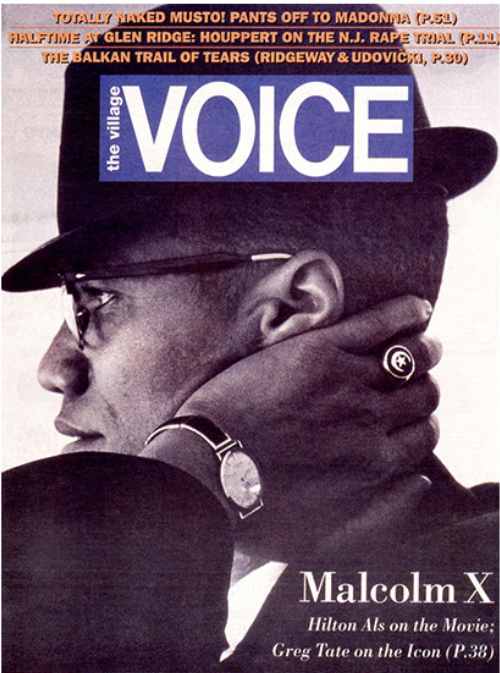
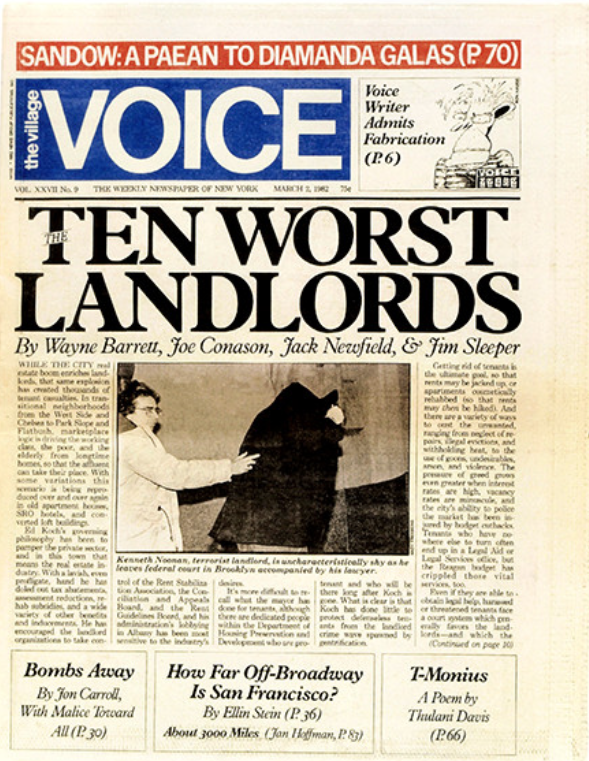
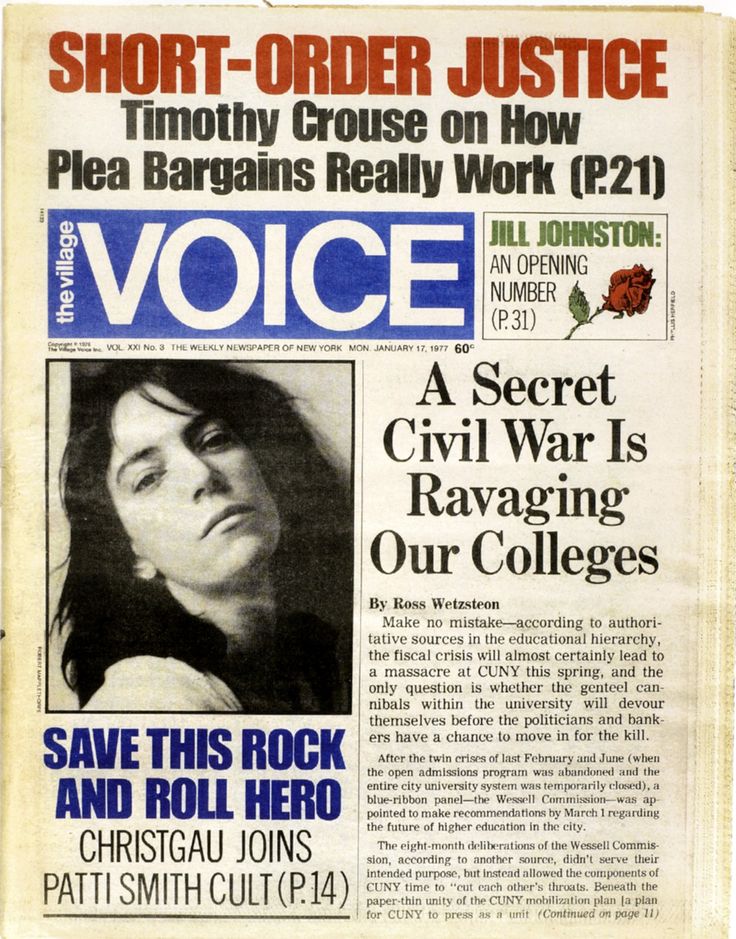
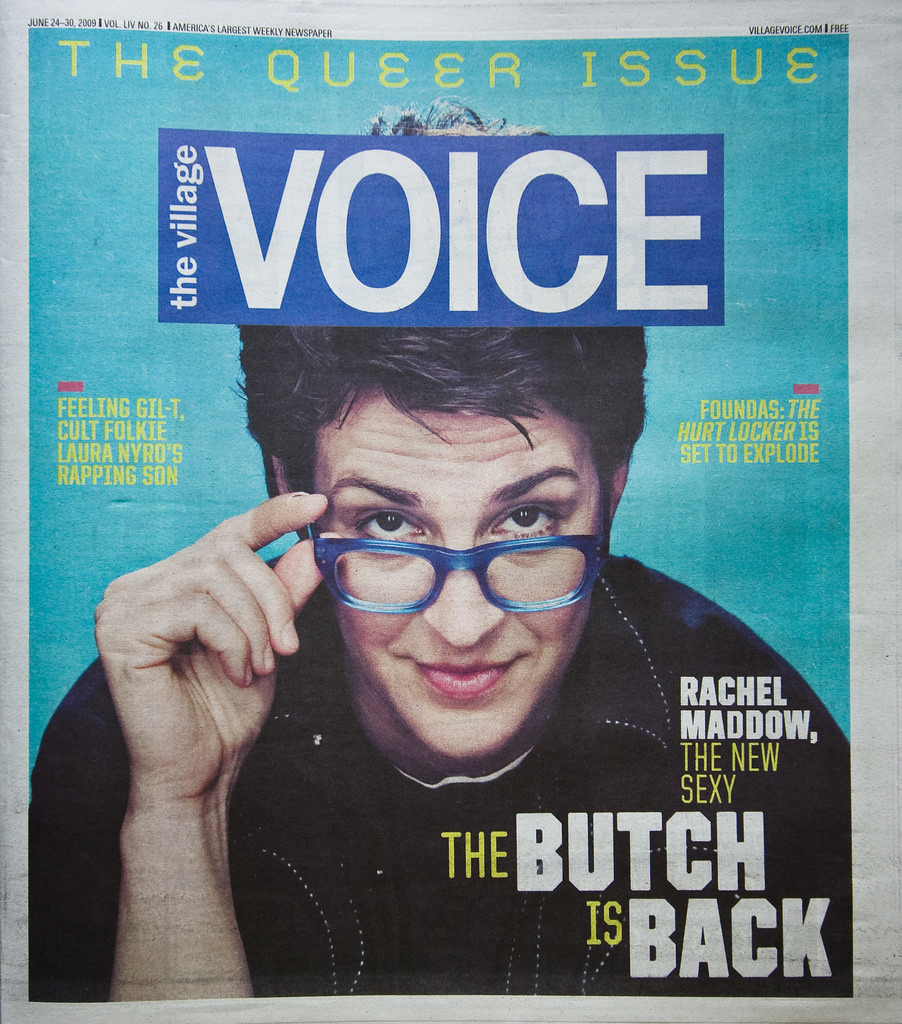
Read 1,000 Editions of The Village Voice: A Digital Archive of the Iconic New York City Paper

After The Vil­lage Voice announced this week that it was fold­ing its print oper­a­tion, a cou­ple peo­ple com­pared the ven­er­a­ble NYC rag’s demise to the end of Gawk­er, the snarky online tabloid tak­en down by Hulk Hogan and his shad­owy financier Peter Thiel. For too many rea­sons to list, this com­par­i­son seems to my mind hard­ly apt. There’s a ges­ture toward the Voice’s pro­fane unruli­ness, but the alter­na­tive week­ly, found­ed in 1955, tran­scend­ed the blog age’s sopho­moric nihilism. The her­met­ic con­tain­er of its newsprint sealed out froth­ing com­ment sec­tions; no links fer­ried read­ers through rivers of per­son­al­ized algo­rithms.

The Voice pub­lished hard jour­nal­ism that many, includ­ing Voice writ­ers them­selves, have rue­ful­ly revis­it­ed of late. Its music and cul­ture writ­ers like Nat Hentoff, Lester Bangs, Sasha Frere-Jones, Robert Christ­gau and so many oth­ers are some of the smartest in the busi­ness. Its colum­nists, edi­tors, and reviewers—Andrew Sar­ris, J. Hober­man, Robert Siet­se­ma, Tom Rob­bins, Greg Tate, Michael Mus­to, Thu­lani Davis, Ta-Nehisi Coates—equally so.

In its over six­ty-year run, Voice writ­ers sat in the front rows for the birth for hard bop, free jazz, punk, no wave, and hip-hop, and all man­ner of down­town exper­i­men­tal­ism in-between and after.

Amongst the many remem­brances from cur­rent and for­mer Voice staff in a recent Esquire oral his­to­ry, one from edi­tor and writer Camille Dodero stands out: “The alt-weekly’s pur­pose was, in the­o­ry, speak­ing truth to pow­er and the abil­i­ty to be irrev­er­ent, and print the word ‘fuck’ while doing so.’” Mis­sion accom­plished many times over, as you can see your­self in Google’s Vil­lage Voice archive, fea­tur­ing 1,000 scanned issues going all the back to 1955, when Nor­man Mail­er found­ed the paper with Ed Fanch­er, Dan Wolf, and John Wilcock. There are “blind spots” in Google’s archive of the Voicenot­ed John Cook at the erst­while Gawk­er. In 2009, his “search­es didn’t turn up any cov­er­age of Nor­man Mailer’s 1969 cam­paign or the Stonewall riots… and there’s not much on Rudy Giuliani’s may­oral bid.” Many years lat­er, months and years in the Google archive remain blank, “no edi­tions avail­able.”

The Voice has had its own blind spots. Writer Wal­ter Troy Spencer referred to Stonewall, for exam­ple, as “The Great Fag­got Rebel­lion” and used a phrase that has per­haps become the most weari­some in Amer­i­can Eng­lish: “there was most­ly ugli­ness on both sides.” This anti-gay prej­u­dice was a reg­u­lar fea­ture of the paper’s first few years, but by 1982, just as the AIDS cri­sis began to fil­ter into pub­lic con­scious­ness, the Voice was the sec­ond orga­ni­za­tion in the US to offer extend­ed ben­e­fits to domes­tic part­ners. It became a promi­nent voice for New York’s LGBTQ cul­ture and pol­i­tics, through all the buy­outs, cut­backs, and unbeat­able com­pe­ti­tion that brought it to its cur­rent pass.

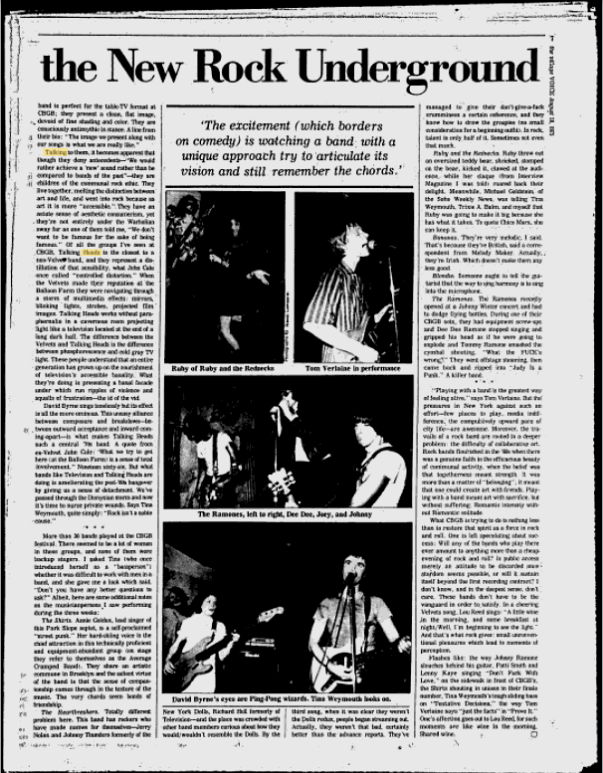
The paper also became a voice for the most inter­est­ing things hap­pen­ing in the city at any giv­en time, such as the goings on at a Bow­ery dive called CBGB in 1975. Char­ac­ter stud­ies have long been a Voice sta­ple. Lester Bangs’ write-up of Iggy Pop two years lat­er cut to the heart of the mat­ter: “It’s as if some­one writhing in tor­ment has made that writhing into a kind of poet­ry.” Back in ’75, Andrew Sar­ris wrote a rather jaw-drop­ping pro­file of Hervé  Vil­lechaize (in which he begins a sen­tence, “The prob­lem of midgets….”).  …. the more I look through Voice back issues, the more I think it might have been a Gawk­er of its time, but as one­time colum­nist Har­ry Siegel tells Esquire, “what made it unique depends a lot on the age of who you’re ask­ing. It was a very dif­fer­ent paper in dif­fer­ent decades. It was valu­able enough for a long time that peo­ple paid mon­ey to read it.”

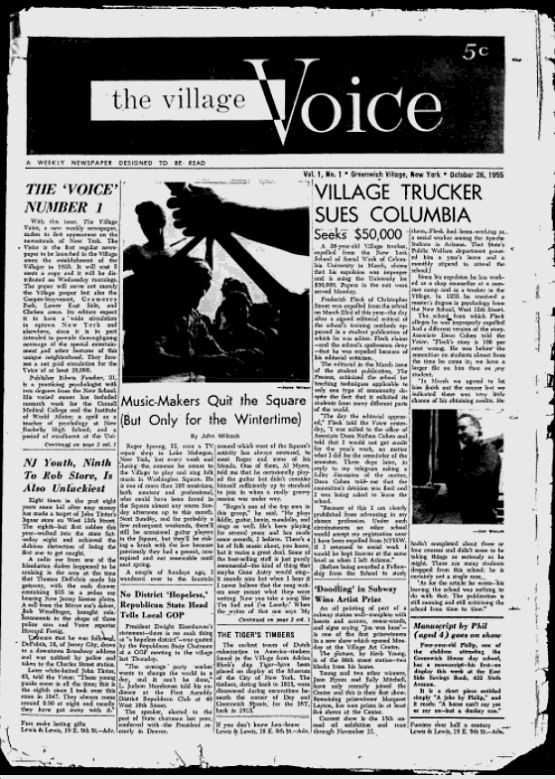
Indeed its first issue cost 5 cents, though by the non­de­script cov­er, above, you wouldn’t guess it would amuse or tit­il­late in the ways the Vil­lage Voice became well-known for—in its columns, pho­tos, car­toons, and lib­er­tine adver­tis­ing and clas­si­fieds. But most peo­ple these days remem­ber it as “free every Wednes­day,” to prof­fer dance, film, the­ater, music, restau­rants, to line sub­way cars and bird­cages, and to open up the city to its read­ers. The Voice is dead, long live the Voice.

Enter the dig­i­tal archive of the Voice here.

Writ­ings from the Voice have been col­lect­ed in these antholo­gies: The Vil­lage Voice Anthol­o­gy (1956–1980) and The Vil­lage Voice Read­er.

Relat­ed Con­tent:

A Com­plete Dig­i­ti­za­tion of Eros Mag­a­zine: The Con­tro­ver­sial 1960s Mag­a­zine on the Sex­u­al Rev­o­lu­tion

Down­load 36 Dadaist Mag­a­zines from the The Dig­i­tal Dada Archive (Plus Oth­er Avant-Garde Books, Leaflets & Ephemera)

Enter a Huge Archive of Amaz­ing Sto­ries, the World’s First Sci­ence Fic­tion Mag­a­zine, Launched in 1926

Josh Jones is a writer and musi­cian based in Durham, NC. Fol­low him at @jdmagness

« Go BackMore in this category... »
Quantcast