“All the Things You Could Be by Now If Sigmund Freud’s Wife Was Your Mother” appeared on Charles Mingus Presents Charles Mingus (1961). And it begins with this cryptic, hard-to-decipher dedication to mothers everywhere:
And now, ladies and gentleman, you have been such a wonderful audience. We have a special treat in store for you. This is a composition dedicated to all mothers. And it’s titled “All The Things You Could Be By Now If Sigmund Freud’s Wife Was Your Mother.” Which means if Sigmund Freud’s wife was your mother, all the things you could be by now. Which means nothing, you got it? Thank you.
Or was that a cryptic, hard-to-decipher non-dedication to mothers everywhere? With Mingus, you never can tell.
Rounding out Mingus’ quartet is Ted Curson on trumpet, Eric Dolphy on alto saxophone and bass clarinet, and Dannie Richmond on drums.
As the protests in Baltimore unfolded, Prince sat at his keyboard at Paisley Park’s soundstage in Minnesota and started penning a peaceful protest song, which just hit the web this morning. Click play and ponder the lyrics below. Then get the backstory on the writing of “Baltimore” at MyFoxTwinCities.
BALTIMORE
lyrics by Prince
NPG RECORDS, copyright 2015
NOBODY GOT IN NOBODY’S WAY
SO EYE GUESS U COULD SAY
IT WAS A GOOD DAY
AT LEAST A LITTLE BETTER THAN THE DAY IN BALTIMORE
DOES ANYBODY HEAR US PRAY?
4 MICHAEL BROWN OR FREDDIE GRAY PEACE IS MORE THAN THE ABSENCE OF WAR
ABSENCE OF WAR
R WE GONNA C ANOTHER BLOODY DAY?
WE’RE TIRED OF CRYIN’ & PEOPLE DYIN’
LET’S TAKE ALL THE GUNS AWAY
ABSENCE OF WAR- U AND ME
MAYBE WE CAN FINALLY SAY
ENUFF IS ENUFF IT’S TIME 4 LOVE
IT’S TIME 2 HEAR,
IT’S TIME 2 HEAR
THE GUITAR PLAY! (guitar solo)
If you would like to support the mission of Open Culture, consider making a donation to our site. It’s hard to rely 100% on ads, and your contributions will help us continue providing the best free cultural and educational materials to learners everywhere. You can contribute through PayPal, Patreon, and Venmo (@openculture). Thanks!
In 2013, we featured Daniel Crawford, an undergrad at the University of Minnesota, playing “A Song of Our Warming Planet” on his cello. The song, produced in collaboration with geography professor Scott St. George, was created using a method called “data sonification,” which converts global temperature records into a series of musical notes. (More on that here.)
Now, two years later, we have a brand new video by Crawford and St. George. This one is a composition for a string quartet called “Planetary Bands, Warming World,” and it’s based on temperature data gathered over time by NASA’s Goddard Institute for Space Studies. As Crawford explains in the video, “Each instrument represents a specific part of the Northern Hemisphere. The cello matches the temperature of the equatorial zone. The viola tracks the mid latitudes. The two violins separately follow temperatures in the high latitudes and in the arctic.” Each note’s pitch “is tuned to the average annual temperature in each region, so low notes represent cold years and high notes represent warm years.” As you listen, keep in mind one observation made by Prof. St. George says. “Listening to the violin climb almost the entire range of the instrument is incredibly effective at illustrating the magnitude of change — particularly in the Arctic which has warmed more than any other part of the planet.” The time period covered here moves from 1880 to present.
Like many people of my generation, I got my first electric guitar as a teenage birthday gift, took a few lessons and learned a few chords, and immediately started a band that bashed out angry punk rock at breakneck speeds. Some of my favorite bands made it seem accessible, and I didn’t have much patience for real musical training on the instrument anyway. Though I’d played brass and strings in school, the guitar had an entirely different mojo. It stood alone, even in a group—primal, wild, and uncomplicated; as Radiohead once observed, anyone can play it.
Well, anyone can play it badly. There wasn’t necessarily anything wrong with the way I learned—it was great fun. But as my musical tastes broadened, so did my desire to play different styles, and years of playing with little formal training meant I had to un- and re-learn a lot of technique, no easy feat without access to a good teacher. Private instruction, however, can be costly and good teachers difficult to come by. Pre-Youtube, that is. These days, anyone can learn to play guitar, from scratch, the right (fun) way, and the wrong (also fun) way, with great teachers, innumerable online mini-tutorials, and some very thorough beginner lessons.
We’ve highlighted a few celebrity lessons here and there, and as far as they go, they’re great ways to pick up some tricks from your favorite musicians. But while people like Paul McCartney and Brian May don’t have a whole lot of time on their hands to make free guitar videos, a number of high quality teachers do, at least as promotional tools for paying gigs. At the top of the post, an instructor named Ravi presents the first ten lessons of his 21-day beginner course, offered on Truefire, an online guitar course service featuring for-pay lessons from such greats as Frank Vignola, David Grissom, and Dweezil Zappa.
This hour-long video functions in and of itself as a complete introductory course that’ll definitely get you started on the instrument. To further help you get the basics down, you can spend hours working through the other free videos here, a “quick start” series offered by Guitarlessons.com and taught by an instructor named Nate Savage. These short videos take you from rudiments like “How to Strum on a Guitar” and “8 Guitar Chords You Must Know” to the slightly more sophisticated but still beginner-worthy “Dominant 7th Blues Chords.” You’ll learn scales and power chords, the bricks and mortar of lead and rhythm playing. You’ll even get a corrective like “7 Mistakes Guitar Players Make,” if, like me, you learned a few things the wrong way, on purpose or otherwise.
Of course mistakes are a necessary part of learning, and often the keys to innovation, so don’t be afraid to make ‘em. But with so much quality, free guitar instruction online, you can also learn techniques that will set you up for success in a variety of different styles. Above, you can watch JustinGuitar’s much-praised videos, which will give you a multipart introduction to playing blues guitar. The key, as with any skill, is practice.
And per the suggestion of our editor, we’re also giving a mention to Guitar Jamz, which features tons of instructional videos that will show you how to play classic songs. In fact, you can find a playlist of 182 easy acoustic songs for beginners right above.
As another, very patient instructor—the host of series “Metal Method”—explains, “learning guitar doesn’t need to be complicated. You don’t need to understand how an internal combustion engine works to drive a car, and you don’t need to understand complex music theory to become an incredible guitarist.” So get to work, guitarists out there, beginners and lifelong students. And please share with us your favorite free online guitar resources in the comments.
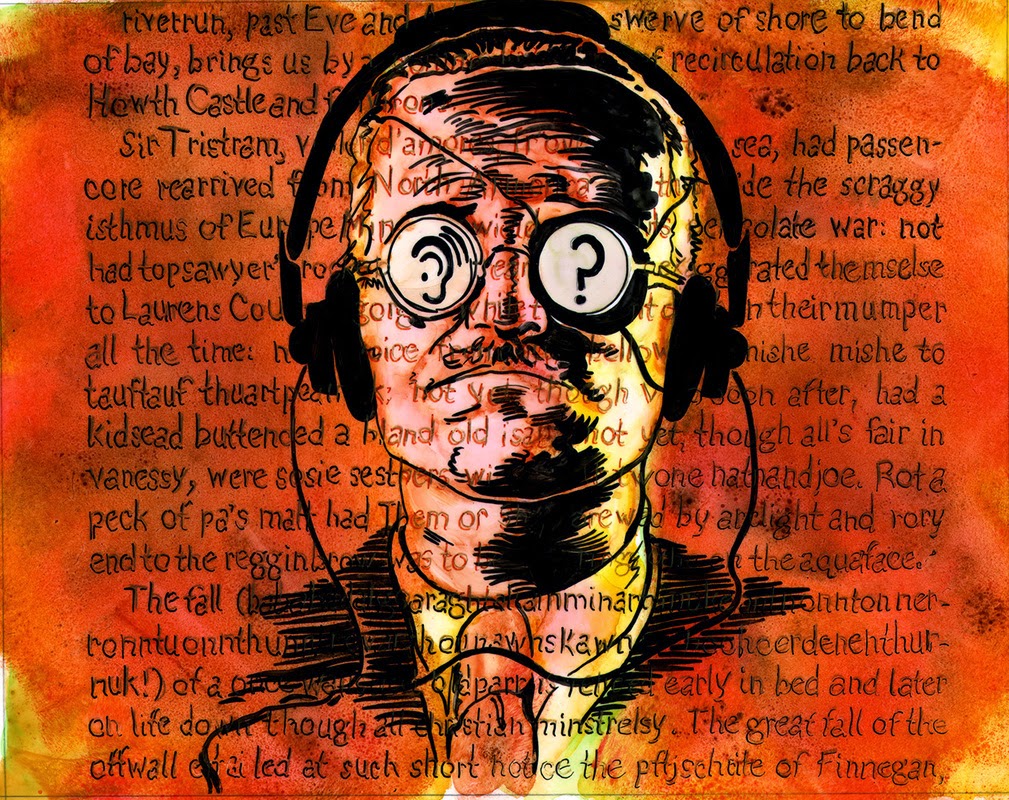
James Joyce’s final and most difficult novel Finnegans Wake unlocks a lot of its secrets when read aloud, preferably in an Irish accent. In this way, Joyce’s multilayered wordplay makes sense aurally even if all the meaning might not be apparent on paper. (His brother, Stanislaus, called it “the work of a psychopath.”)
An audiobook version would be good—-and there is one by Patrick Healy from 1992 (listen online) —but one with music would be much better. This month, Waywords and Meansigns, a project co-founded by Derek Pyle, has released its version of the novel with each of its 17 chapters performed by a different group of musicians and readers. The full text is represented here in a staggering 30+ hours. (You can read along here.)
“Our hope was to create a version of Joyce’s book that would be accessible to newcomers, but still feel fresh and exciting for devoted students and scholars,” says Pyle.
As with all compilation albums, some tracks are better than others. Mariana Lanari & Sjoerd Leijten’s opening chapter chops and cuts various voices together with a hypnotic electronic backing, recreating the confusion of those opening pages and the barrage of influences and voices. They also perform the final chapter. (Lanari is part of the RongWrong Finnegans Wake Reading Group in Amsterdam.) Peter Quadrino, Jake Reading & Evan James take on Book 3, Chapter 3, with a mix of faux-Tom Waits and Martin Denny providing the backdrop. (Quadrino is leader of the Finnegans Wake Reading Group of Austin, Texas) The jazzier the backdrop, by the by, does reveal Joyce’s connection to the Beat poets. Other tracks are dry and more straight-forward: face it, not everybody has the most beautiful reading voice. It is definitely a labor of love, and reveals how many FW reading groups there are around the globe.
Other artists involved in the project include saxophonist Hayden Chisholm, and painter Robert Amos, whose work you can find at the James Joyce Bistro in Victoria, British Columbia.
Ted Mills is a freelance writer on the arts who currently hosts the FunkZone Podcast. You can also follow him on Twitter at @tedmills, read his other arts writing at tedmills.com and/or watch his films here.
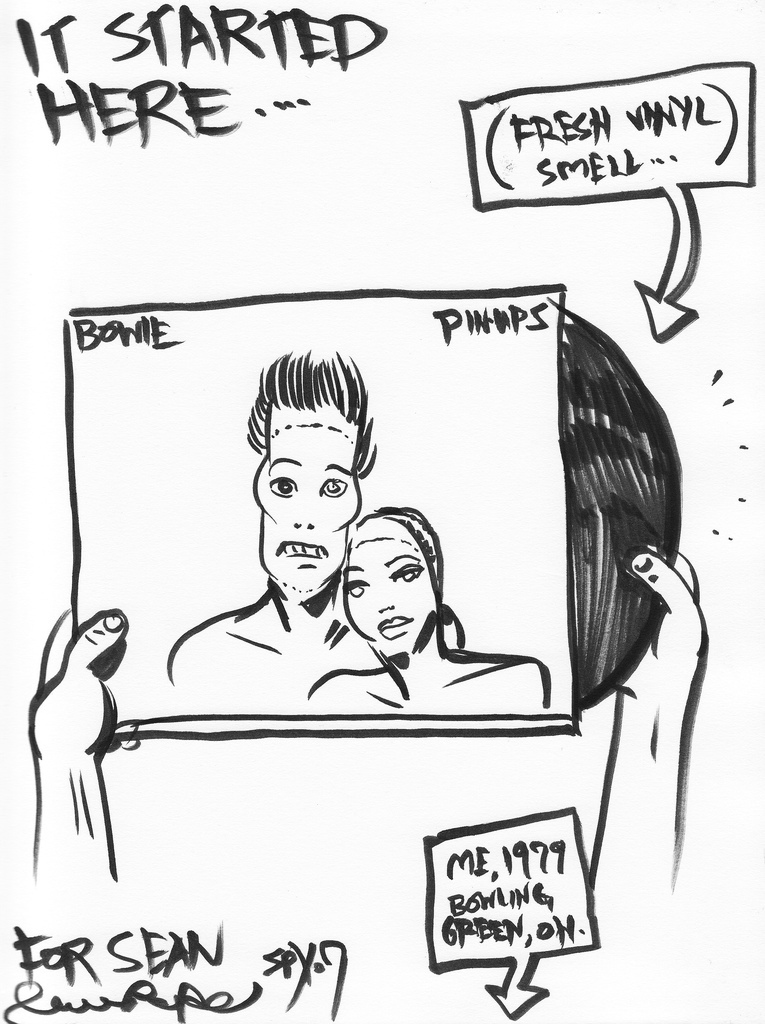
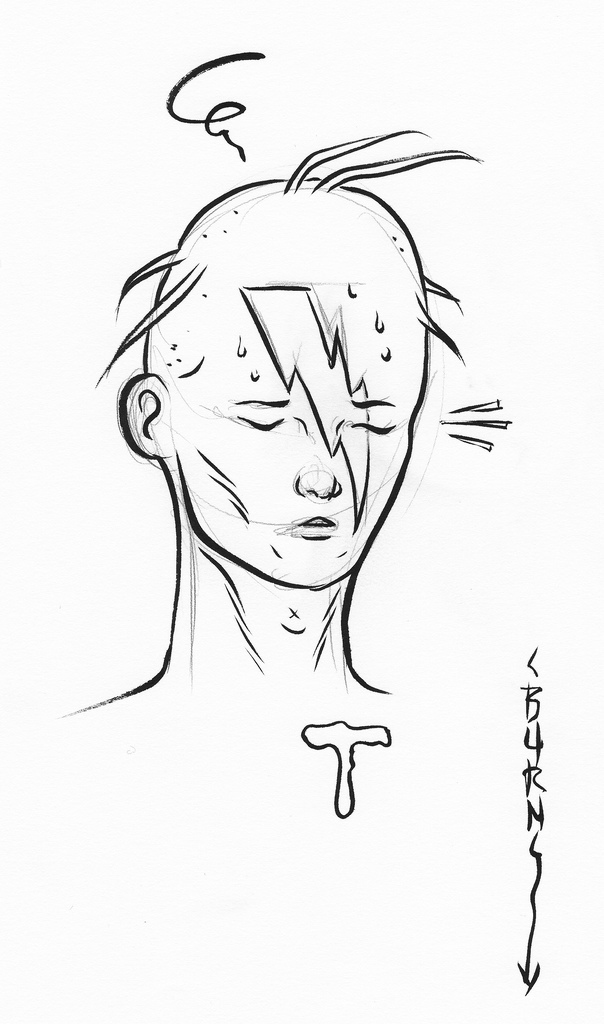
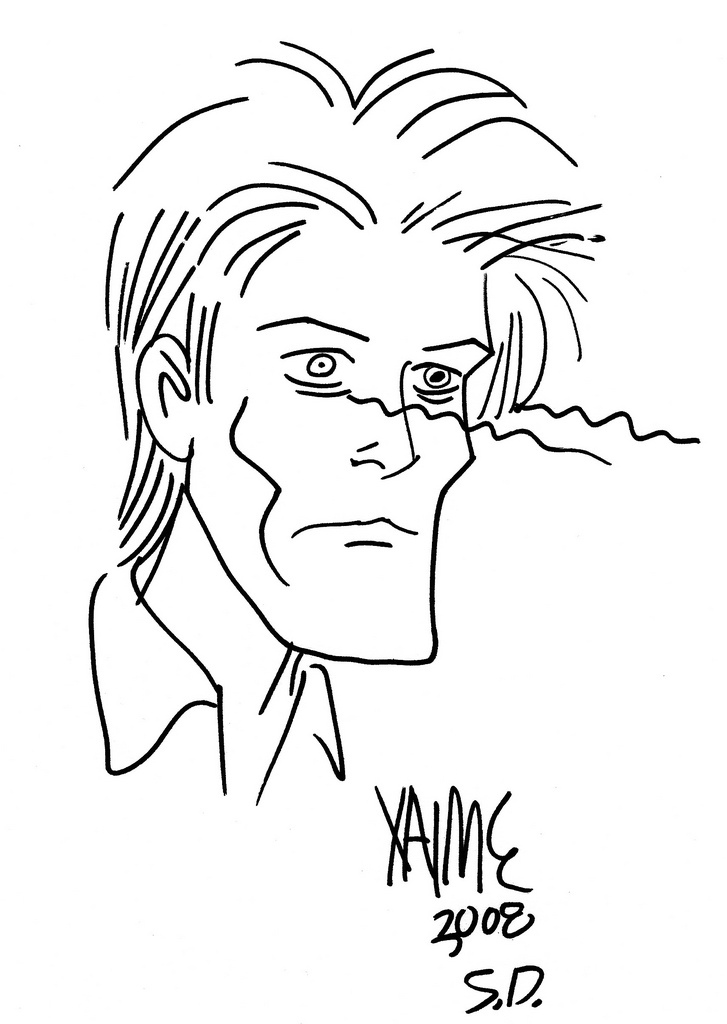
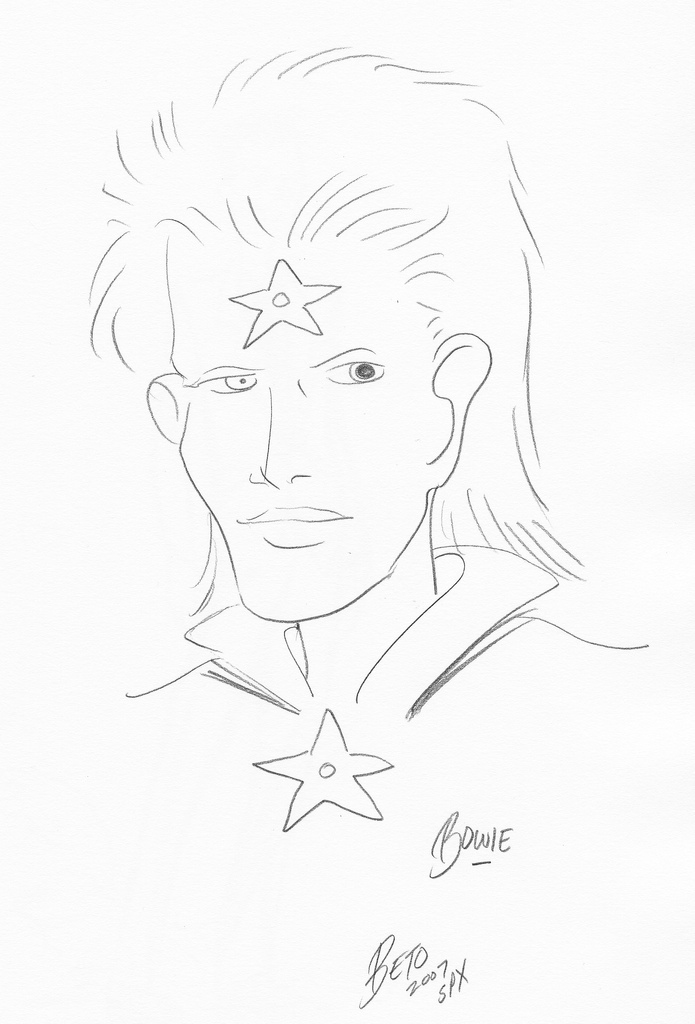
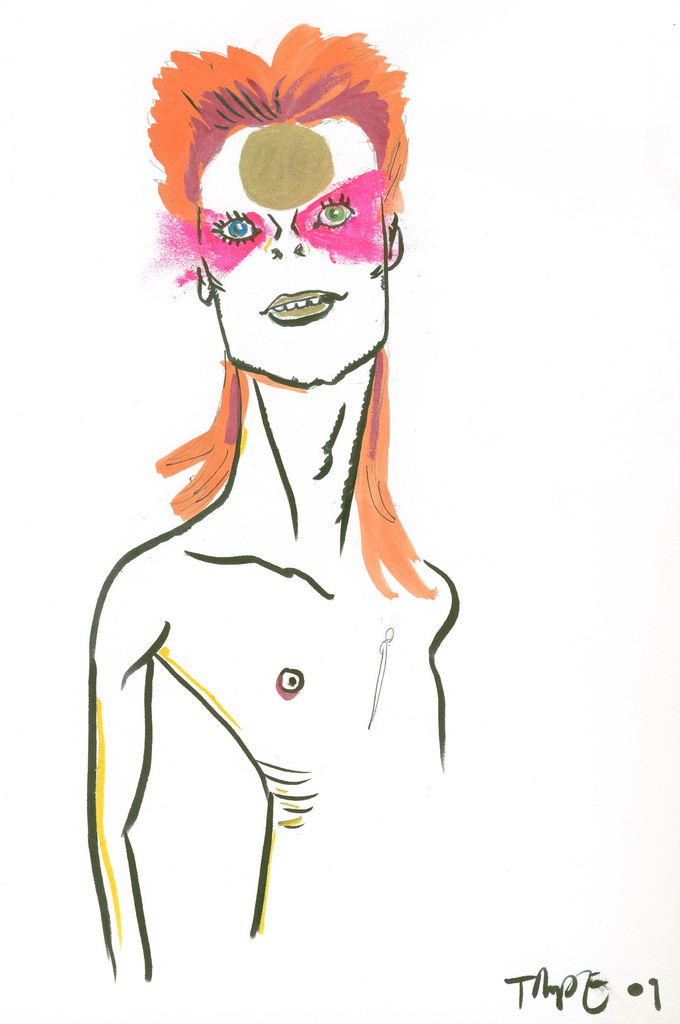
There is a David Bowie for every season. A Christmas David Bowie, a Halloween David Bowie, even a David Bowie Easter celebration. But much more than that, there may be a David Bowie for every Bowie fan, especially for artists influenced by his chameleonic career. See for yourself how a whopping 96 Bowie-loving artists—in this case mainly what Bowie himself calls the “World’s Best Comic Artists”—see the changling rock star/actor/space alien.
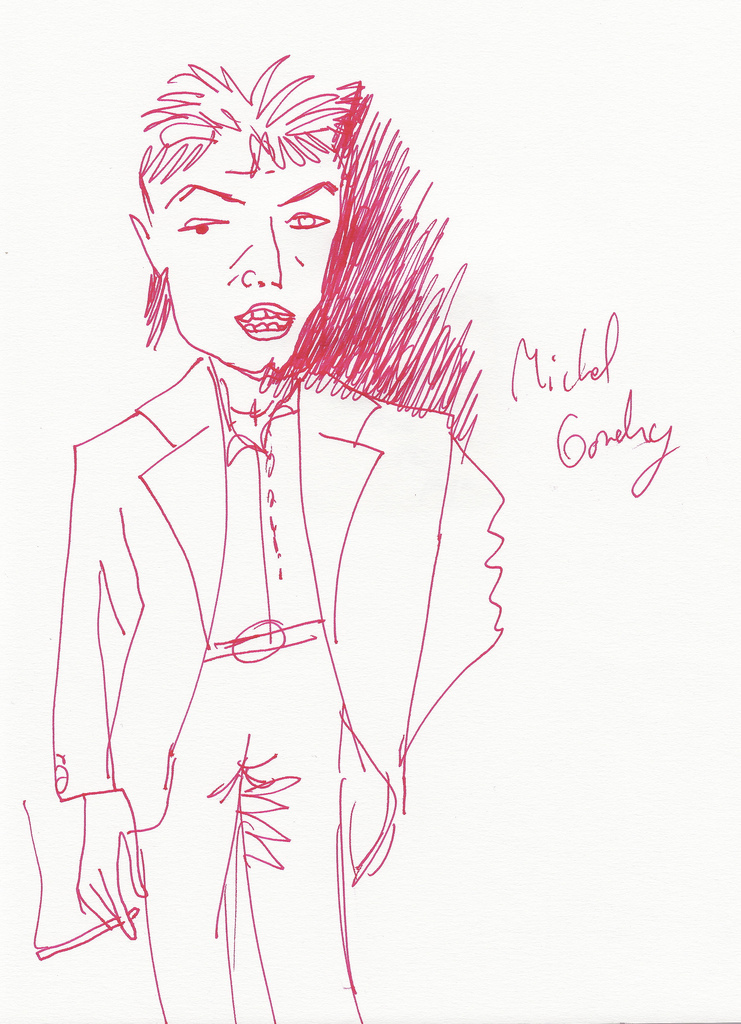
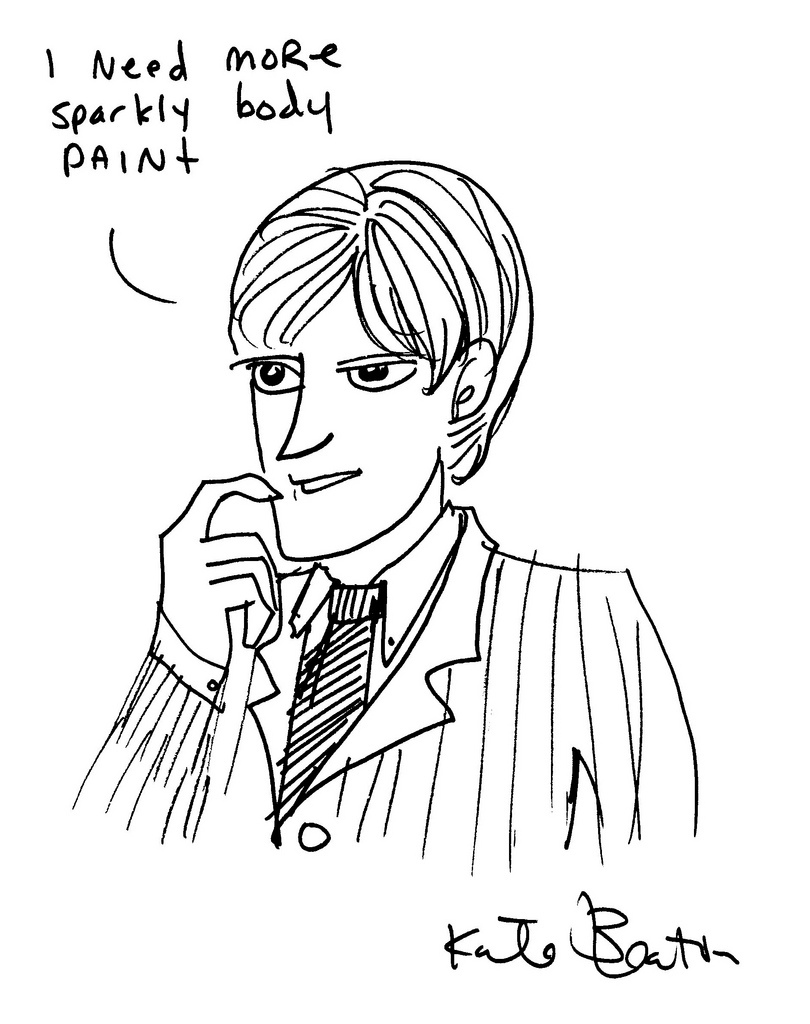
Collins’ impressive collection includes work from Michel Gondry (Eternal Sunshine of the Spotless Mind), whose contribution the editor calls “pretty goddamn wonderful if you ask me.” See it above. And below, Kate Beaton, creator of web comic Hark, A Vagrant, gives us Bowie as a dandy, a character with whom, writes Collins, she has a “rich history.”
Collins offers brief commentary beneath each image in the collection, which also gives us the strange interpretation below by Bowie-inspired underground comics legend Charles Burns; the intense and Archie-esque contributions further down by Brothers Jaime and Gilbert Hernandez, creators of the 80s New Wave classic comic Love and Rockets; and the outer space-proportioned Bowie at the bottom of the post, from vocalist Tunde Adebimpe of TV on the Radio, a band that has both covered and recorded with Bowie.
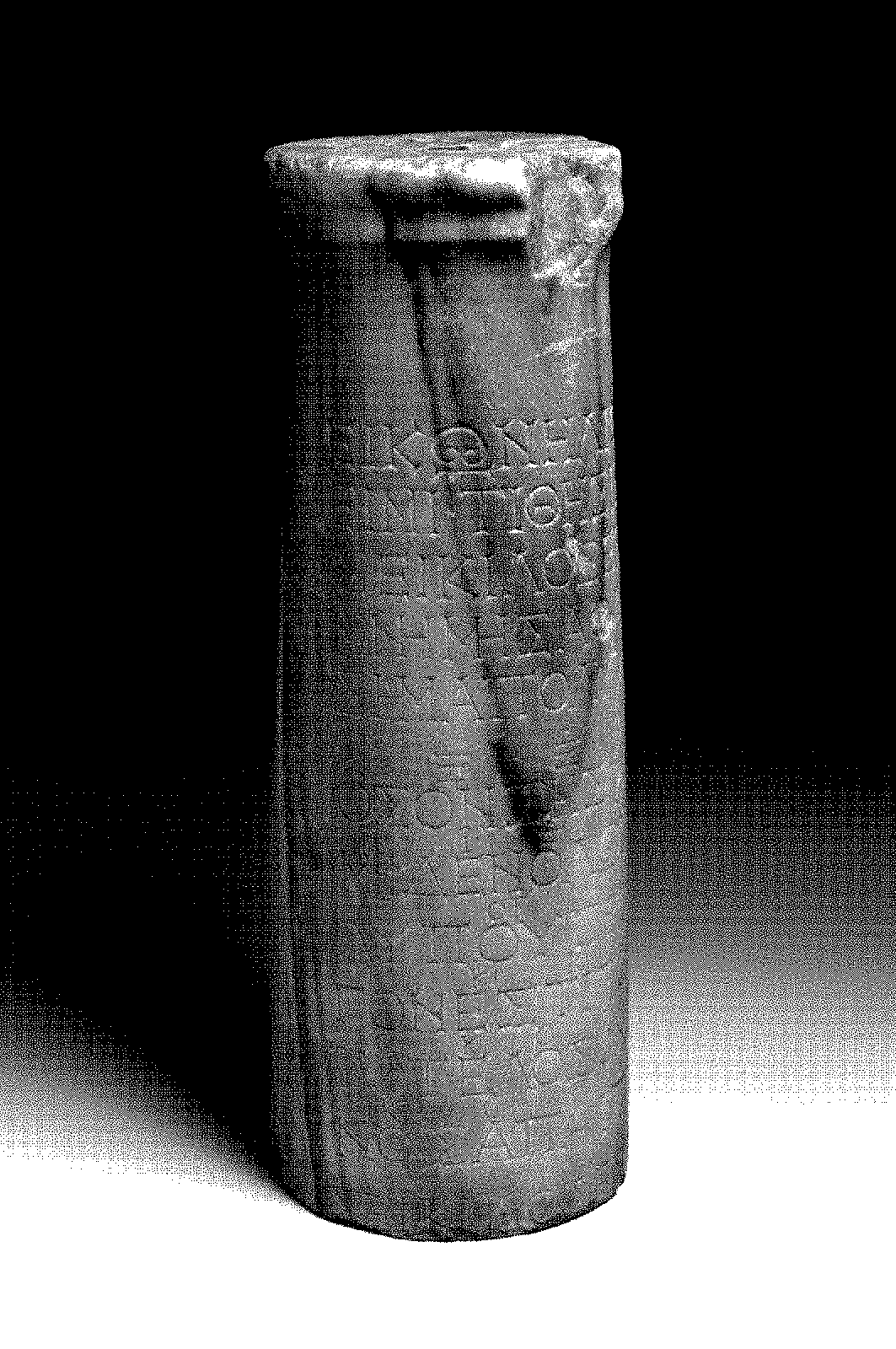
Last summer, we featured a Sumerian hymn considered the oldest known song in the world. Given the popularity of that post, it seems we may have long underestimated the number of ancient-musicophiles on the internet. Therefore, we submit today for your approval the Seikilos epitaph, the oldest known complete musical composition — that is to say, a song that our 21st-century selves can still play and hear in its intended entirety, more or less as did the ancient Greeks who lived during the first-century (or thereabouts) era of its composition.
The Seikilos epitaph’s survival in one piece, as it were, no doubt owes something to its shortness. The Greeks could carve the entire thing onto the surface of a tombstone, exactly the medium on which the modern world rediscovered it in 1885 near Aidin, Turkey. Its lyrics, liberally brought into English, exhort us as follows:
While you live, shine
have no grief at all
life exists only for a short while
and time demands its toll.
The surface also bears an explanatory inscription about — and written in the voice of — the artifact itself: “I am a tombstone, an image. Seikilos placed me here as an everlasting sign of deathless remembrance.” The Greeks, like many peoples in the ancient world of unvarnished mortality, relished a good memento mori, and this oldest complete song in the world offers one whose message still holds today, and which we can trace all the way to more recent words, like those of William Saroyan, when he said, “In the time of your life, live — so that in that good time there shall be no ugliness or death for yourself or for any life your life touches.”
Or for another interpretation, you can hear a modern, guitar-driven cover of the Seikilos epitaph by Vlogbrother and famous internet teacher Hank Green, in a truly striking example of two eras colliding. But of course, the Youtube era has also made everyone a critic. As one commenter perfectly put it, “I prefer his earlier stuff.”
By 1956, jazz was entering its hard bop phase, far from its New Orleans birthplace. At the same time, it was fracturing into several international genres, with the influence of Latin rhythms and the south sea breezes of lounge.
Rock and Roll was just about to displace this music as a public menace du jour (or a passing fad as some thought). This fascinating Columbia release from 1956 finds the composer and conductor Leonard Bernstein setting down his thoughts on the art form of jazz. A spoken word record with samples from ragtime to Miles Davis, Bernstein’s defense-as-lecture is a window on the culture wars at the time.
He’s here to defend jazz against its critics, and argues against their opinions: jazz has low-class origins, it’s loud, and it’s not art — the same critiques to be leveled decades later against hip hop.
In 1956, Bernstein was already known to the general public as an educator on classical music. He gave lectures on CBS’ Omnibus TV program on the great symphonies, while he had already dabbled in the instrumentation and textures of jazz in his score to On the Waterfront, and was busy working on West Side Story. So he was in a perfect position to introduce a conservative mind to jazz. “I love it because it’s an original kind of emotional expression, in that it is never wholly sad or wholly happy,” he says.
Appearing on the album is Buck Clayton, Louis Armstrong, Buster Bailey, Bessie Smith, Teo Macero, and Miles Davis. Davis, who had just been signed by Columbia’s George Avakian, plays “Sweet Sue,” making this track his first recording for the label. Bernstein illustrates jazz music theory, “blue notes,” dissonance, rhythm and explores the African origins of the music for 42 fascinating minutes. Did this LP turn a lot of classical musos on to jazz? Did this influence the children whose parents had this in their collection? Was it all forgotten several years later with Beatlemania? Whatever the answer, it’s an intriguing remnant of a transitional time.
Ted Mills is a freelance writer on the arts who currently hosts the FunkZone Podcast. You can also follow him on Twitter at @tedmills, read his other arts writing at tedmills.com and/or watch his films here.
We're hoping to rely on loyal readers, rather than erratic ads. Please click the Donate button and support Open Culture. You can use Paypal, Venmo, Patreon, even Crypto! We thank you!
Open Culture scours the web for the best educational media. We find the free courses and audio books you need, the language lessons & educational videos you want, and plenty of enlightenment in between.