Watch the Meditative Cinepoem “H20”: A Landmark Avant-Garde Art Film from 1929

We all stand to ben­e­fit from a bit of hydrother­a­py, but in these hec­tic, try­ing times, it’s chal­leng­ing to find the time for a bath, let alone come up with the dough for a trop­i­cal vaca­tion or sooth­ing spa expe­ri­ence.

Giv­en the cir­cum­stances, the near­ly hun­dred-year-old exper­i­men­tal film above may be your best option.

In 1929, pho­togra­her and film­mak­er Ralph Stein­er turned his cam­era on a num­ber of watery subjects—hydrants, water­falls, streams, rain­drops dis­turb­ing placid pud­dled sur­faces.…

The result was H20, an 11-and-a-half minute cinepo­em, con­sid­ered by film his­to­ri­ans, The New York Times not­ed in Steiner’s obit, to be “the sec­ond Amer­i­can art film.”

(Have a look at James Sib­ley Wat­son and Melville Webber’s impres­sion­is­tic 1928 adap­ta­tion of Poe’s The Fall of the House of Ush­er if you’re curi­ous about the first.)

Pho­to­play mag­a­zine bestowed its first prize for ama­teur film­mak­ing upon H20, prais­ing Steiner’s pure abstract pat­terns and aston­ish­ing tem­po, and gush­ing that “the pic­ture is bound to attract wide atten­tion and a great deal of dis­cus­sion wher­ev­er it is shown.”

He revis­it­ed the sub­ject two years lat­er with Surf and Sea­weed, above, though his fas­ci­na­tion with move­ment was not lim­it­ed to the nat­ur­al world, as evi­denced by 1930’s Mechan­i­cal Prin­ci­ples.

The hub­bub may have died down a bit in the 90 years since H20’s release, though Steiner’s spir­it lives on in a num­ber of young exper­i­men­tal filmmakers—witness Nor­bert Shieh’s award-win­ning Wash­es, Dave Krunal’s Water­bomb, and Jaden Chen’s A Cup of Water, below.

H2O has been pre­served for pos­ter­i­ty by the Library of Con­gress’ Unit­ed States Nation­al Film Reg­istry. The orig­i­nal piano score in the ver­sion fea­tured on Open Cul­ture was com­posed by William Pear­son.

Down­load a free copy of H20 from the Inter­net archive for use in future try­ing times.

Stein­er’s films will be added to our col­lec­tion, 4,000+ Free Movies Online: Great Clas­sics, Indies, Noir, West­erns, Doc­u­men­taries & More

via Aeon

Relat­ed Con­tent:

The First Avant Garde Ani­ma­tion: Watch Wal­ter Ruttmann’s Licht­spiel Opus 1 (1921)

Man Ray and the Ciné­ma Pur: Watch Four Ground­break­ing Sur­re­al­ist Films From the 1920s

The Hearts of Age: Orson Welles’ Sur­re­al­ist First Film (1934)

Ayun Hal­l­i­day is an author, illus­tra­tor, the­ater mak­er and Chief Pri­ma­tol­o­gist of the East Vil­lage Inky zine.  See her onstage in New York City in Feb­ru­ary as host of  The­ater of the Apes book-based vari­ety show, Necro­mancers of the Pub­lic Domain. Fol­low her @AyunHalliday.

How Aleister Crowley, the Infamous Occultist, Led the First Attempt to Reach the Summit of K2 (1902)

It sounds like the plot of a Wern­er Her­zog film: Aleis­ter Crow­ley, heir to a brew­ing for­tune and “flam­boy­ant, bisex­u­al drug fiend with a fas­ci­na­tion for the occult,” meets “son of a well-known Jew­ish Social­ist” Oscar Eck­en­stein, “a chemist turned rail­way engi­neer.” The two strike up a friend­ship over their mutu­al pas­sion for moun­taineer­ing, and, in four years time, co-lead an expe­di­tion to reach the sum­mit of K2, the sec­ond high­est moun­tain in the world.

The descrip­tions of these char­ac­ters come from Mick Conefrey’s The Ghosts of K2: The Race for the Sum­mit of the World’s Most Dead­ly Moun­tain, a book detail­ing the many gru­el­ing attempts, many deaths, and few suc­cess­es, in over a cen­tu­ry of climbs to the mountain’s peak. Crow­ley and Eckenstein’s expe­di­tion, under­tak­en in 1902, was the first. Though unsuc­cess­ful, their effort remains a leg­endary feat of his­tor­i­cal brav­ery, or hubris, or insanity—an ascent up the face of what climber George Bell called “a sav­age moun­tain that tries to kill you.”

In an inter­view with Nation­al Geo­graph­ic, Cone­frey sums up the doomed expe­di­tion:

 In those days, nobody had a clue about what it was going to be like. They thought they would go to the Himalayas and knock off K2 in a cou­ple of days. But as the expe­di­tion pro­ceed­ed, it start­ed falling apart. Eck­en­stein, the leader, had a bad res­pi­ra­to­ry infec­tion. Crow­ley had malar­ia and spent most of the time in his tent with a high fever. At one point he got so deliri­ous, he start­ed wav­ing his revolver at oth­er mem­bers of the team. 

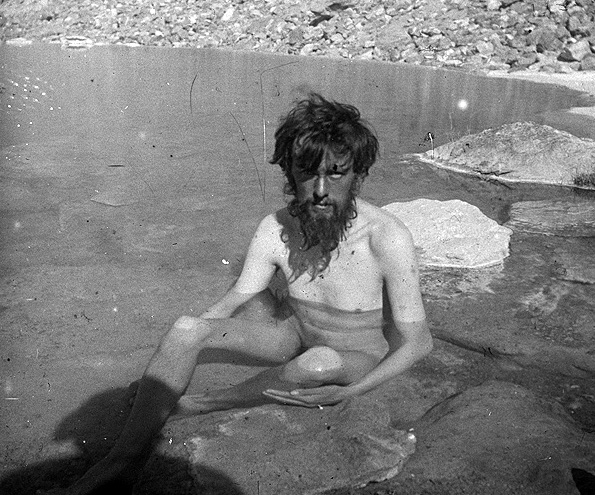
There are many oth­er Her­zo­gian touch­es. In his book Fall­en Giants, Mau­rice Isser­man describes the team—also con­sist­ing of a novice Eng­lish­man, a Swiss doc­tor, and two expe­ri­enced Aus­tri­an climbers—as “unrea­son­ably bur­dened by three tons of lug­gage.” Some of that unnec­es­sary bur­den came from a “sev­er­al-vol­ume library” Crow­ley “intend­ed to haul onto the glac­i­er.” The oth­ers “object­ed to the super­flu­ous weight, but Crow­ley had read enough Joseph Con­rad to know what hap­pened to those who let go of their hold on civ­i­liza­tion in the wild.” The library stayed, and a train of 200 porters hauled the team’s lug­gage to Bal­toro Glac­i­er. (See Crow­ley in a pho­to from the expe­di­tion above, pre­sum­ably strick­en with malar­ia.)

Pri­or to set­ting off for K2 Eck­en­stein and Crow­ley had climbed vol­ca­noes in Mex­i­co, then the lat­ter had trav­eled to San Fran­cis­co, Hawaii, Japan, Sri Lan­ka, and India—along the way hav­ing affairs, learn­ing med­i­ta­tion, and devel­op­ing a “life­long devo­tion to Shi­va, the Hin­du god of destruc­tion.” While it takes a cer­tain rare per­son­al­i­ty to sub­ject them­selves to the rig­ors of scal­ing a moun­tain almost five miles high, Crowley—notorious for his “mag­ick,” sex­u­al adven­tures, drug use, lewd poet­ry, and found­ing of a reli­gious order—is arguably the most out-there per­son­al­i­ty in the his­to­ry of a very extreme sport.

But moun­taineer­ing “is not a nor­mal pur­suit,” writes Scot­tish climber Robin Camp­bell, “and we should not be too sur­prised to find its adepts show­ing odd behav­ior in oth­er spheres of life.” Like all devo­tees of stren­u­ous, death-defy­ing pur­suits, Crow­ley “want­ed extreme expe­ri­ences,” says Cone­frey, “where he pushed him­self to the lim­it.” It just so hap­pened that he want­ed to push far beyond the nat­ur­al and human worlds. After the failed K2 attempt, he would only make one more dar­ing expe­di­tion with Eck­en­stein, in 1905, a climb up the Himalayan moun­tain of Kangchen­jun­ga, the third high­est moun­tain in the world.

On the trip, Crow­ley, the leader, report­ed­ly treat­ed the local porters with bru­tal arro­gance, and when three of them were killed along with one of the expe­di­tion mem­bers, he refused to help, writ­ing to a Dar­jeel­ing news­pa­per, “a moun­tain ‘acci­dent’ of this sort is one of the things for which I have no sym­pa­thy what­ev­er.” He left the fol­low­ing day and gave up moun­taineer­ing, devot­ing the rest of his life to his occult inter­ests and the exploits that earned him the tabloid rep­u­ta­tion as “the wickedest man in the world.”

K2 was final­ly con­quered by two Ital­ian climbers in 1954, who reached the sum­mit, frost­bit­ten and half-mad, as Joan­na Kaven­na puts it in a review of Cone­frey’s spell­bind­ing book, “in a moment of sub­lime anti­cli­max.”

Relat­ed Con­tent:

The Sur­re­al Paint­ings of the Occult Magi­cian, Writer & Moun­taineer, Aleis­ter Crow­ley

Aleis­ter Crow­ley: The Wickedest Man in the World Doc­u­ments the Life of the Bizarre Occultist, Poet & Moun­taineer

Aleis­ter Crow­ley & William But­ler Yeats Get into an Occult Bat­tle, Pit­ting White Mag­ic Against Black Mag­ic (1900)

Josh Jones is a writer and musi­cian based in Durham, NC. Fol­low him at @jdmagness

Pianist Plays Beethoven, Bach, Chopin, Ravel & Debussy for Blind Elephants in Thailand

Rom­sai the ele­phant wore a red rope around his neck to warn approach­ing humans that he was a dan­ger to both them and ele­phants. A dark patch on his head from a tem­po­rin secre­tion indi­cat­ed that he was in the musth cycle, which only height­ened his aggres­sion. His mahouts at the Ele­phantsWorld sanc­tu­ary in Kan­chanaburi, Thai­land observed that the old, blind ele­phant was grow­ing more dan­ger­ous with age.

And yet, he is the per­son­i­fi­ca­tion of sweet­ness, as pianist Paul Bar­ton ser­e­nades him with a per­for­mance of Beethoven’s Sonata Pathé­tique, repeat­ing the melody sec­tion sev­er­al times “as he seems to like it.”

In lieu of applause, Rom­sai places his trunk over the top of Barton’s upright piano again and again, in no way aggres­sive, more the ges­ture of a grate­ful audi­ence mem­ber.

As Bar­ton, a York­shire­man who went to Thai­land over twen­ty years ago for what he thought would be a short piano teach­ing stint only to wind up mar­ry­ing a local artist and ani­mal rights activist, said in an inter­view with YourSto­ry:

All ani­mals like music. Dogs, cats, etc. But ele­phants are the clos­est to human beings in the sense that they have the same neu­rons in the brains as us. Also they have a very good mem­o­ry. If you are treat­ed bad­ly as a child, you are going to remem­ber that all your life. It’s the same with ele­phants. The ele­phant shares that part of the brain with us which has flash­backs. They can nev­er for­get the ter­ri­ble things they have seen and suf­fered… If you play clas­si­cal music to an ele­phant, some­thing soft and beau­ti­ful, some­thing that human beings have been lis­ten­ing to for hun­dreds for hun­dreds of years, some­thing that is timeless—and you play that to an ele­phant that is blind and they’ve nev­er heard music before—the reac­tion is price­less. There is a spe­cial bond between you and the ele­phant. You are com­mu­ni­cat­ing with them in a dif­fer­ent lan­guage. That lan­guage is nei­ther ours nor theirs. There is some­thing infin­i­tes­i­mal­ly won­der­ful in a piece of Beethoven that con­nects me to that ele­phant and that feel­ing is oth­er­world­ly.

The impulse to play live con­certs for Rom­sai and oth­er blind sanc­tu­ary dwellers was part­ly born from see­ing the pos­i­tive effect music had on some blind chil­dren with whom Bar­ton worked.

He also want­ed to make amends for the defor­esta­tion of the elephant’s home­land, and the way the teak indus­try exploit­ed their labor. It was while thus employed that many of them suf­fered scratched corneas and oth­er eye injuries that blind­ed them, ren­der­ing them dou­bly vul­ner­a­ble when the Thai gov­ern­ment enact­ed a ban on com­mer­cial tim­ber log­ging in 1989:

The ele­phant has worked for humans for too long. It was used in wars, it was used to defor­est its own home. What is the lit­tle thing I can do as a human to say sor­ry, for my species for what we have done to them? I’ll car­ry this heavy thing myself and play some music for the ele­phant while it is hav­ing some break­fast.

Removed from the plush seats of a con­cert hall, Rav­el feels right at home. A roost­er crows, a near­by child pipes up, and Rom­sai wan­ders in and out of the frame, at times appear­ing to keep time with his trunk.

Cicadas under­score Schubert’s Ser­e­nade.

Anoth­er Ele­phantsWorld res­i­dent, Lam Duan’s (aka “Tree with Yel­low Flow­ers”) still­ness as she lis­tens to Bach is rem­i­nis­cent of Barton’s first musi­cal out­ing with the ele­phants:

Ele­phants eat a lot of food. A lot. It is exhaust­ing try­ing to pro­cure that much food for so many ele­phants. When an ele­phant gets to eat, it’s a bit like a dog. A dog will eat its food so quick­ly because it’s not sure if it will ever eat again. And ele­phants are the same. Once they get their hands on some juicy leaves, they will eat and eat and noth­ing can tear them away from their food. That morn­ing I brought the piano in ear­ly to the sanc­tu­ary. Pla-Ra was tak­en to a field full of juicy bam­boo shoots and she began eat­ing with a sin­gle mind­ed ded­i­ca­tion. I start­ed to play Beethoven and she stopped eat­ing. There was this half eat­en bam­boo shoot stick­ing out of her trunk while she stared at me. That was a reac­tion nev­er seen before. An ele­phant stopped eat­ing because of music.

Barton’s lat­est record­ing fea­tures 80-year-old Ampan, blind in one eye and near blind in the oth­er, enjoy­ing Debussy’s Clair de Lune.

Sup­port Paul Barton’s Patre­on here. Learn about vol­un­teer oppor­tu­ni­ties or make a dona­tion to Ele­phantsWorld here

via Laugh­ing Squid

Relat­ed Con­tent:

Stream 58 Hours of Free Clas­si­cal Music Select­ed to Help You Study, Work, or Sim­ply Relax

Watch Clas­si­cal Music Get Per­fect­ly Visu­al­ized as an Emo­tion­al Roller Coast­er Ride

Down­load 400,000 Free Clas­si­cal Musi­cal Scores & 46,000 Free Clas­si­cal Record­ings from the Inter­na­tion­al Music Score Library Project

Ayun Hal­l­i­day is an author, illus­tra­tor, the­ater mak­er and Chief Pri­ma­tol­o­gist of the East Vil­lage Inky zine.  Fol­low her @AyunHalliday.

How to Make the Oldest Recipe in the World: A Recipe for Nettle Pudding Dating Back 6,000 BC

Atten­tion culi­nary his­to­ri­ans, sur­vival­ists, wild­crafters, and gonzo eaters!

Net­tle pud­ding, Britain’s—and quite pos­si­bly the world’s—old­est recipe, looks like a good bet in the event of a zom­bie inva­sion, or some oth­er cat­a­stro­phe.

The ingredients—sorrel, water­cress, dan­de­lions, nettles—are the sort of thing you can find in a ditch or pub­lic park.

If you’re wor­ried about pulling an Into the Wild, book a pro­phy­lac­tic tour with nat­u­ral­ist Wild­man Steve Brill.

Should bar­ley flour prove in short sup­ply, don’t wor­ry about it! Grind some acorns, like that kid in My Side of the Moun­tain. 

You think ear­ly man sweat­ed sub­sti­tu­tions?

No way! Impro­vi­sa­tion was the name of the game.

Rigid adher­ence to pub­lished ingre­di­ents will have no place in the zom­bie inva­sion! As Cardiff Met­ro­pol­i­tan University’s home econ­o­mist Dr. Ruth Fairchild told The Dai­ly Mail:

You have to think how much more is wast­ed now than then.

Food waste today is huge. A third of the food in our fridges is thrown away every week with­out being eat­en.

But they would­n’t have wast­ed any­thing, even hooves would have been used for some­thing.

They had to eat what was grown with­in a few miles, because it would have tak­en so long to col­lect every­thing, and even col­lect­ing water would have been a bit of a tri­al.

Yet today, so many peo­ple don’t want to cook because they think of it as a chore.

Stop think­ing of net­tle pud­ding as a chore! Start prac­tic­ing for the zom­bie inva­sion with Antiq­ui­ty Now’s step-by-step recipe and let us know how it tastes.

NETTLE PUDDING (an 8000 year old recipe!)

Ingre­di­ents

1 bunch of sor­rel

1 bunch of water­cress

1 bunch of dan­de­lion leaves

2 bunch­es of young net­tle leaves

Some chives

1 cup of bar­ley flour

1 tea­spoon of salt


Instruc­tions

Chop the herbs fine­ly and mix in the bar­ley flour and salt.

Add enough water to bind it togeth­er and place in the cen­ter of a linen or muslin cloth.

Tie the cloth secure­ly and add to a pot of sim­mer­ing veni­son or wild boar (a pork joint will do just as well). Make sure the string is long enough to pull the pud­ding from the pot.

Cook the pud­ding until the meat is done (at least two hours).

Leave the pud­ding to cool slight­ly, remove the muslin, then cut the pud­ding into thick slices with a knife.

Serve the pud­ding with chunks of bar­ley bread.

(Be mind­ful that fire may attract zom­bies. Keep a shov­el beside you at all times. Good luck!)

You can read more about the dis­cov­ery of Net­tle Pud­ding at the BBC and The Tele­graph.

Relat­ed Con­tent:

Dis­cov­er the Old­est Beer Recipe in His­to­ry From Ancient Sume­ria, 1800 B.C.

Watch a 4000-Year Old Baby­lon­ian Recipe for Stew, Found on a Cuneiform Tablet, Get Cooked by Researchers from Yale & Har­vard

How to Bake Ancient Roman Bread Dat­ing Back to 79 AD: A Video Primer

Ayun Hal­l­i­day is an author, illus­tra­tor, the­ater mak­er and Chief Pri­ma­tol­o­gist of the East Vil­lage Inky zine.  Fol­low her @AyunHalliday.

The Illustrated Medicinal Plant Map of the United States of America (1932): Download It in High Resolution

Two years ago, we high­light­ed col­lec­tor David Rumsey’s huge map archive, which he donat­ed to Stan­ford Uni­ver­si­ty in April of 2016 and which now resides at Stanford’s David Rum­sey Map Cen­ter. The open­ing of this phys­i­cal col­lec­tion was a pret­ty big deal, but the dig­i­tal col­lec­tion has been on the web, in some part, and avail­able to the online pub­lic since 1996. Twen­ty years ago, how­ev­er, though the inter­net was decid­ed­ly becom­ing an every­day fea­ture of mod­ern life, it was dif­fi­cult for the aver­age per­son to imag­ine the degree to which dig­i­tal tech­nol­o­gy would com­plete­ly over­take our lives, not to men­tion the almost unbe­liev­able wealth and pow­er tech com­pa­nies would amass in such short time.

Sim­i­lar­ly, when the above 1932 Med­i­c­i­nal Plant Map of the Unit­ed States (see in a larg­er for­mat here) first appeared—one of the tens of thou­sands of maps avail­able in the dig­i­tal Rum­sey col­lec­tion—few peo­ple oth­er than Aldous Hux­ley could have fore­seen the expo­nen­tial advances, and the rise of wealth and pow­er, to come in the phar­ma­ceu­ti­cal indus­try.

But the phar­ma­cists had a clue. The map, pro­duced by the Nation­al Whole­sale Drug­gists’ Asso­ci­a­tion, “was intend­ed to boost the image of the pro­fes­sion,” writes Rebec­ca Onion at Slate, “at a time when com­pa­nies were increas­ing­ly com­pound­ing new phar­ma­ceu­ti­cals in labs,” there­by ren­der­ing much of the drug-mak­ing knowl­edge and skill of old-time drug­gists obso­lete.

Although the com­mer­cial phar­ma­ceu­ti­cal indus­try began tak­ing shape in the late 19th cen­tu­ry, it didn’t ful­ly come into its own until the so-called “gold­en era” of 1930–1960, when, says Onion, researchers devel­oped “a flood of new antibi­otics, psy­chotrop­ics, anti­his­t­a­mines, and vac­cines, increas­ing­ly rely­ing on syn­thet­ic chem­istry to do so.” Over-the-counter med­ica­tions pro­lif­er­at­ed, and phar­ma­cists became alarmed. They sought to per­suade the pub­lic of their con­tin­ued rel­e­vance by point­ing out, as a short blurb at the bot­tom left cor­ner of the map notes, that “few peo­ple real­ize the extent to which plants and min­er­als enter into the prac­tice of phar­ma­cy.”

The map appeared dur­ing “Phar­ma­cy Week” in Octo­ber, when “phar­ma­cists in Anglo-Sax­on coun­tries” pro­mote their ser­vices. Los­ing sight of those impor­tant ser­vices, the Drug­gists’ Asso­ci­a­tion writes, will lead to suf­fer­ing, should the tra­di­tion­al phar­ma­cist’s func­tion “be impaired or destroyed by com­mer­cial trends.” Thus we have this visu­al demon­stra­tion of com­pe­tence. The map iden­ti­fies impor­tant species—native or cultivated—in each region of the coun­try. In Ken­tucky, we see Nicoti­na tabacum, whose cured leaves, you guessed it, “con­sti­tute tobac­co.” Across the coun­try in Neva­da, we are intro­duced to Apoc­ynum cannabinum, “native of U.S. and South­ern Canada—the dried rhi­zome and roots con­sti­tute the drug apoc­ynum or Cana­di­an hemp.”

The bet­ter-known Can­nibus sati­va also appears, in one of the box­es around the map’s bor­der that intro­duce plants from out­side North Amer­i­ca, includ­ing Ery­throx­y­lon coca, from Bolivia and Peru, and Papaver som­nifer­um, from which opi­um derives. Many of the oth­er med­ica­tions will be less famil­iar to us—and belong to what we now call natur­opa­thy, herbal­ism, or, more gen­er­al­ly, “tra­di­tion­al med­i­cine.” Though these med­i­c­i­nal prac­tices are many thou­sands of years old, the drug­gists try to project a cut­ting-edge image, assur­ing the map’s read­ers that “intense sci­en­tif­ic study, expert knowl­edge, extreme care and accu­ra­cy are applied by the phar­ma­cist to med­i­c­i­nal plants.”

While phar­ma­cists today are high­ly-trained pro­fes­sion­als, the part of their jobs that involved the mak­ing of drugs from scratch has been ced­ed to mas­sive cor­po­ra­tions and their research lab­o­ra­to­ries. The drug­gists of 1932 saw this com­ing, and no amount of col­or­ful pub­lic rela­tions could stem the tide. But it may be the case, giv­en chang­ing laws, chang­ing atti­tudes, the back­lash against over­med­ica­tion, and the dev­as­tat­ing opi­oid epi­dem­ic, that their craft is more rel­e­vant than it has been in decades, though today’s “drug­gists” work in mar­i­jua­na dis­pen­saries and health food stores instead of nation­al phar­ma­cy chains.

View and down­load the map in a high res­o­lu­tion scan at the David Rum­sey Map Col­lec­tion, where you can zoom in to every plant on the map and read its descrip­tion.

via Slate

Relat­ed Con­tent:

Down­load 67,000 His­toric Maps (in High Res­o­lu­tion) from the Won­der­ful David Rum­sey Map Col­lec­tion

The His­to­ry of Car­tog­ra­phy, the “Most Ambi­tious Overview of Map Mak­ing Ever,” Is Now Free Online

1,000-Year-Old Illus­trat­ed Guide to the Med­i­c­i­nal Use of Plants Now Dig­i­tized & Put Online

Josh Jones is a writer and musi­cian based in Durham, NC. Fol­low him at @jdmagness

The Strange, Sci-Fi Sounds of Skating on Thin Black Ice

This gives new mean­ing to “skat­ing on thin ice.” In Swe­den, a film­mak­er named Hen­rik Trygg likes to take his chances skat­ing on pris­tine sheets of black ice, mea­sur­ing only five centimeters/two inch­es thick. It’s a risk. A nat­ur­al thrill. It’s also quite a sen­so­ry expe­ri­ence. Just lis­ten to the “high-pitched, laser-like sounds,” of which sci-fi films could be made.

Watch Tryg­g’s film, “The Sound of Ice,” above. And, below, a ver­sion anno­tat­ed in Eng­lish by Nation­al Geo­graph­ic.

via The Kids Should See This

If you would like to sign up for Open Culture’s free email newslet­ter, please find it here. It’s a great way to see our new posts, all bun­dled in one email, each day.

If you would like to sup­port the mis­sion of Open Cul­ture, con­sid­er mak­ing a dona­tion to our site. It’s hard to rely 100% on ads, and your con­tri­bu­tions will help us con­tin­ue pro­vid­ing the best free cul­tur­al and edu­ca­tion­al mate­ri­als to learn­ers every­where. You can con­tribute through Pay­Pal, Patre­on, and Ven­mo (@openculture). Thanks!

Relat­ed Con­tent:

240 Hours of Relax­ing, Sleep-Induc­ing Sounds from Sci-Fi Video Games: From Blade Run­ner to Star Wars

42 Hours of Ambi­ent Sounds from Blade Run­ner, Alien, Star Trek and Doc­tor Who Will Help You Relax & Sleep

The Sounds of Blade Run­ner: How Music & Sound Effects Became Part of the DNA of Rid­ley Scott’s Futur­is­tic World

by | Permalink | Make a Comment ( 3 ) |

Discover the Japanese Museum Dedicated to Collecting Rocks That Look Like Human Faces

It says some­thing about the human brain that we so often see the shape of human faces in inan­i­mate things — and that we feel such amuse­ment and even delight about it when we do. If you don’t believe it, just ask the 618,000 fol­low­ers of the Twit­ter account Faces in Things, which posts images of noth­ing else. Or go to Chichibu, Japan, two hours north­west of Tokyo, where you’ll find the Chin­sekikan, a small muse­um that has col­lect­ed over 1,700 “curi­ous rocks,” all 100 per­cent organ­i­cal­ly formed, about a thou­sand of which resem­ble human faces, some­times even famous ones.

“The museum’s founder, who passed away in 2010, col­lect­ed rocks for over fifty years,” writes Kotaku’s Bri­an Ashcraft. “Ini­tial­ly, he was drawn to rare rocks, but that evolved into col­lect­ing, well, strange rocks — espe­cial­ly unal­tered rocks that nat­u­ral­ly resem­ble celebri­ties, reli­gious fig­ures, movie char­ac­ters, and more.

These days, the founder’s daugh­ter keeps the muse­um run­ning, and it has been fea­tured on pop­u­lar, nation­wide Japan­ese TV pro­grams.” It has also, more recent­ly, become a sub­ject of CNN’s inter­net video series Great Big Sto­ry, which high­lights inter­est­ing peo­ple and places all around the world.

The Chin­sekikan stands in walk­ing dis­tance of a local riv­er rich with rocks, where we see the muse­um’s pro­pri­etor Yoshiko Haya­ma per­form­ing one of her rou­tine search­es for wee faces star­ing back at her. “To find rocks, we walk step-by-step,” she says. “If we walk too fast, we won’t find them.” She explains that a prop­er jin­mense­ki, or face-shaped stone, needs at least eyes and a mouth, rea­son­ably well-aligned, with a nose being a rare bonus. Only decades of adher­ence to these stan­dards, and hunt­ing with such delib­er­ate­ness, can yield such prize spec­i­mens as a rock that looks like Elvis Pres­ley, a rock that looks (vague­ly) like John­ny Depp, and a rock that looks like Don­ald Trump — though that one does ben­e­fit from what looks like a pile of thread on top, of a col­or best described as not found in nature.

Relat­ed Con­tent:

The Philo­soph­i­cal Appre­ci­a­tion of Rocks in Chi­na & Japan: A Short Intro­duc­tion to an Ancient Tra­di­tion

Wabi-Sabi: A Short Film on the Beau­ty of Tra­di­tion­al Japan

How to Draw the Human Face & Head: A Free 3‑Hour Tuto­r­i­al

Based in Seoul, Col­in Mar­shall writes and broad­casts on cities and cul­ture. His projects include the book The State­less City: a Walk through 21st-Cen­tu­ry Los Ange­les and the video series The City in Cin­e­ma. Fol­low him on Twit­ter at @colinmarshall or on Face­book.

The 1883 Krakatoa Explosion Made the Loudest Sound in History–So Loud It Traveled Around the World Four Times

Think of our­selves though we may as liv­ing in a noisy era, none of us — not even mem­bers of sta­di­um-fill­ing rock bands known specif­i­cal­ly for their high-deci­bel inten­si­ty — have expe­ri­enced any­thing like the loud­est sound in his­to­ry. That sin­gu­lar son­ic event came as a con­se­quence of the explo­sion of Kraka­toa, one of the names (along with Vesu­vius) that has become a byword for vol­canic dis­as­ter. And with good cause: when it blew in mod­ern-day Indone­sia on Sun­day, 26 August 1883, it caused not only 36,000 deaths at the very least and untold destruc­tion of oth­er kinds, but let out a sound heard 3,000 miles away.

“Think, for a moment, just how crazy this is,” writes Nau­tilus’ Aatish Bha­tia. “If you’re in Boston and some­one tells you that they heard a sound com­ing from New York City, you’re prob­a­bly going to give them a fun­ny look. But Boston is a mere 200 miles from New York. What we’re talk­ing about here is like being in Boston and clear­ly hear­ing a noise com­ing from Dublin, Ire­land. Trav­el­ing at the speed of sound (766 miles or 1,233 kilo­me­ters per hour), it takes a noise about four hours to cov­er that dis­tance. This is the most dis­tant sound that has ever been heard in record­ed his­to­ry.”

Any­one who writes about the sound of Kraka­toa, which split the island itself, strug­gles to prop­er­ly describe it, see­ing as even jet mechan­ics lack a com­pa­ra­ble son­ic expe­ri­ence. Bha­tia quotes the cap­tain of the British ship Norham Cas­tle, 40 miles from Kraka­toa when it erupt­ed, writ­ing in his log that “so vio­lent are the explo­sions that the ear-drums of over half my crew have been shat­tered. My last thoughts are with my dear wife. I am con­vinced that the Day of Judge­ment has come.” Kraka­toa’s rever­ber­a­tions – not heard, but felt and record­ed as changes in atmos­pher­ic pres­sure – passed across the whole of the Earth not once but four times.

The sound of the explo­sion aside, “the rest of the world heard such sto­ries almost instant­ly because a series of under­wa­ter tele­graph cables had been recent­ly laid tra­vers­ing the globe,” writes the Inde­pen­dent’s San­ji­da O’Con­nell. “This new tech­nol­o­gy meant that Kraka­toa also gen­er­at­ed the first mod­ern sci­en­tif­ic study of a vol­canic erup­tion.” A Dutch sci­en­tist named Rogi­er Ver­beek turned up first to gath­er details for a detailed and pio­neer­ing report, fol­lowed by geol­o­gists from Lon­don’s Roy­al Soci­ety, whose 627-page The Erup­tion of Kraka­toa and Sub­se­quent Phe­nom­e­na you can read at the Inter­net Archive.

Since nobody would have got the explo­sion on tape in 1883, such ver­bal descrip­tions will have to suf­fice. Not that even today’s high­est-grade record­ing tech­nol­o­gy could with­stand cap­tur­ing such a sound, nor could even speak­ers that go up to a Spinal Tap-lev­el 11 repro­duce it. And no oth­er sound is like­ly to break Kraka­toa’s record in our life­times – not if we’re lucky, any­way.

via Nau­tilus

Relat­ed Con­tent:

Watch the Destruc­tion of Pom­peii by Mount Vesu­vius, Re-Cre­at­ed with Com­put­er Ani­ma­tion (79 AD)

The Web Site “Cen­turies of Sound” is Mak­ing a Mix­tape for Every Year of Record­ed Sound from 1860 to Present

The British Library’s “Sounds” Archive Presents 80,000 Free Audio Record­ings: World & Clas­si­cal Music, Inter­views, Nature Sounds & More

Down­load 10,000 of the First Record­ings of Music Ever Made, Cour­tesy of the UCSB Cylin­der Audio Archive

Map­ping the Sounds of Greek Byzan­tine Church­es: How Researchers Are Cre­at­ing “Muse­ums of Lost Sound”

Based in Seoul, Col­in Mar­shall writes and broad­casts on cities and cul­ture. His projects include the book The State­less City: a Walk through 21st-Cen­tu­ry Los Ange­les and the video series The City in Cin­e­ma. Fol­low him on Twit­ter at @colinmarshall or on Face­book.

« Go BackMore in this category... »
Quantcast