As an English major undergrad in the 90s, I had a keen side interest in reading philosophy of all kinds. But I had little sense of what I should be reading. I browsed the library shelves, picking out what caught my attention. Not a bad way to make unusual discoveries, but if you want to get a focused, not to mention current, view of a particular field, you need to have a knowledgeable guide.
Back in those days, the internet was, as they say, in its infancy. How much better I would have fared if something like Five Books had existed! The site’s general idea, as it trumpets on its homepage, is to recommend “the best books on everything.” Argue amongst yourselves about whether any one resource can deliver on that promise, but let’s keep our focus on the excellent space of their Philosophy section, curated by freelance philosopher-at-large Nigel Warburton.
You may know Dr. Warburton from his many forays in public philosophy. Whether it’s the Philosophy Bites podcast, or its spin-offs Free Speech Bites and Ethics Bites, or his work on the BBC’s animated history of ideas series, or any one of his books, he has a rare knack for bringing the obscure and often difficult concepts of academic philosophy to light with both conversational good humor and intellectual rigor. Most of that work takes place in dialogue, the original form of classical philosophy.
What about the best books on Ethics for Artificial Intelligence? It’s a far more pressing question than it was when Arthur C. Clarke published 2001: A Space Odyssey, which happens to be one of the books on Oxford academic Paula Boddington’s list. In his interview with Boddington, Warburton asks for, and receives, a clarification of the phrase “ethics for artificial intelligence.” In her choice of books, Boddington recommends those below. You may not find some of them shelved in philosophy sections, but when it comes to our sci-fi present, it seems, we may need to expand our categories of thought.
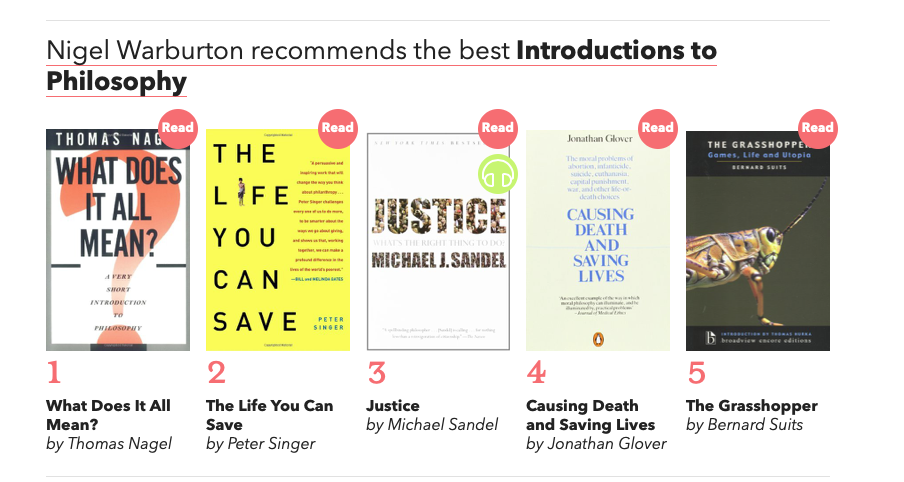
There are dozens more enlightening interviews and lists of five best books—on Nietzsche, Marx, and Hegel, on Existentialism, Stoicism, Consciousness, Chinese Philosophy…. Too many to directly quote here. There are lists from Warburton himself, on the best philosophy books from 2017, and best introductions to philosophy. The whole experience is a little like visiting, virtually, a couple dozen or so highly-regarded philosophers in every field, listening in on an informative chat, and getting a booklist from every one. You’ve still got to find and buy the books yourself (and read and talk about them), but this kind of guidance from living philosophers currently working in the field has never before been so widely and freely available outside of academia.
These days Noam Chomsky is probably most famous for his consistent, outspoken criticism of U.S. foreign policy. Yet before the War on Terror and the War on Drugs, Chomsky became internationally famous for proposing a novel solution to an age-old question: what does a baby know?
Platoargued that infants retain memories of past lives and thus come into this world with a grasp of language. John Locke countered that a baby’s mind is a blank slate onto which the world etches its impression. After years of research, Chomsky proposed that newborns have a hard-wired ability to understand grammar. Language acquisition is as elemental to being human as, say, dam building is to a beaver. It’s just what we’re programmed to do. Chomsky’s theories revolutionized the way we understand linguistics and the mind.
A little while ago, film director and music video auteur Michel Gondry interviewed Chomsky and then turned the whole thing into an extended animated documentary called Is the Man Who Is Tall Happy?.
Above is a clip from the film. In his thick French accent, Gondry asks if there is a correlation between language acquisition and early memories. For anyone who’s watched Eternal Sunshine of the Spotless Mind, you know that memory is one of the director’s major obsessions. Over Gondry’s rough-hewn drawings, Chomsky expounds: “Children know quite a lot of a language, much more than you would expect, before they can exhibit that knowledge.” He goes on to talk about new techniques for teaching deaf-blind children and how a day-old infant interprets the world.
As the father of a toddler who is at the cusp of learning to form thoughts in words, I found the clip to be fascinating. Now, if only Chomsky can explain why my son has taken to shouting the word “bacon” over and over and over again.
If you would like to support the mission of Open Culture, consider making a donation to our site. It’s hard to rely 100% on ads, and your contributions will help us continue providing the best free cultural and educational materials to learners everywhere. You can contribute through PayPal, Patreon, and Venmo (@openculture). Thanks!
Note: An earlier version of this post appeared on our site in March 2015.
Jonathan Crow is a Los Angeles-based writer and filmmaker whose work has appeared in Yahoo!, The Hollywood Reporter, and other publications. You can follow him at @jonccrow. And check out his blog Veeptopus, featuring lots of pictures of badgers and even more pictures of vice presidents with octopuses on their heads. The Veeptopus store is here.
We should be suspicious when researchers assume their conclusion; when the results of an academic study merely confirm the author’s pre-existing biases. Humans are wired to seek confirmation, a cognitive deficit so deeply engrained that it can be exploited among laypeople and specialists alike. Art historians have been fooled by forgeries, historians by fake manuscripts, and paleontologists by phony fossils. Physicist Steven Weinberg referenced such high-level hoaxes in a 1996 essay in The New York Review of Books, and he placed that year’s academic scandal—known as the “Sokal Hoax”—among them.
The gist of the Sokal affair runs as follows: NYU mathematical physicist Alan Sokal suspected that post-structuralist-influenced cultural studies was jargon-laden, obfuscating BS, and he set out to prove it by authoring his own “postmodernist” text, an article full of misused terminology from quantum physics. He sent it off to the journal Social Text, who published it in their Spring/Summer issue. Sokal then revealed in another journal, Lingua Franca, that the article had been a fraud, “liberally salted with nonsense,” and had only been accepted because “(a) it sounded good and (b) it flattered the editor’s ideological preconceptions.”
Sokal’s hoax, it was roundly claimed, demonstrated that certain fashionable quarters of the academic humanities had deteriorated into babble, signifying nothing more than rigid ideological commitments and a general disregard for the actual meanings of words and concepts. Weinberg wasn’t so sure. At most, perhaps, it showed the editorial failings of Social Text. And while humanists may abuse scientific ideas, Weinberg points out that scientists of the stature of Werner Heisenberg have also been prone to slipshod, quasi-mystical thinking.
But the Sokal hoax did expose to the wider public a tendency among a coterie of academics to indulge in mystifying language, including the misuse of jargon from other fields of study, usually in imitation of French theorists like Jacques Lacan, Julia Kristeva, or Jacques Derrida—whom, it must be said, all wrote in a very different intellectual culture (one that expects, Michel Foucault once admitted, at least “ten percent incomprehensible”). For a good many people in the academic humanities, this wasn’t much of a revelation. (Sokal has since published a more thoroughly critical book with the apt title Beyond the Hoax.)
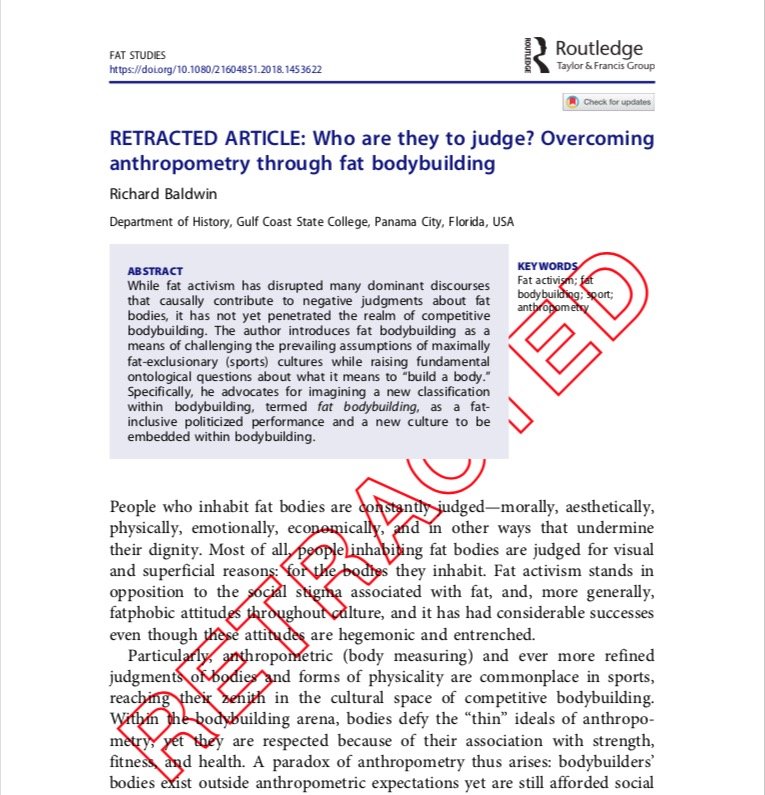
Part of the problem with his hoax as a serious critique is that it began with its conclusion. Cultural studies are rife with crap arguments, ideology, and incomprehensible nonsense, Sokal believed. And so, when his paper was accepted, he simply rested his case, making no effort to engage charitably with good scholarship while he ridiculed the bad. Which brings us to the current state of the academic humanities, and to a contemporary, Sokal-like attack on them by a trio of writers who rest their case on a slightly broader base of evidence—20 fraudulent articles sent out to various niche cultural studies journals over a year: four published (since retracted), three accepted but not published, seven under review, and six rejected.
The authors—academic philosopher Peter Boghossian and writers Helen Pluckrose and James A. Lindsay—revealed the hoax this week in an article published at the Pluckrose-edited Areo magazine. One needn’t read past the title to understand the authors’ take on cultural studies in general: “Academic Grievance Studies and the Corruption of Scholarship.” While all three hoaxers identify as left-leaning liberals, the broad-brush characterization of whole fields as “grievance studies” reveals a prejudicial degree of contempt that seems unwarranted. In the article, they reveal their motivations and methods, outline the successes of the project, and post the comments of the articles’ referees, along with a video of themselves having a good laugh at the whole thing.
This last bit is unnecessary and obnoxious, but does the new hoax—“Sokal Squared” as it’s been called—genuinely undermine the credibility of cultural studies as a whole? Is it “’hilarious and delightful,’” asks Alexander C. Kafka at The Chronicle of Higher Education, or “an ugly example of dishonesty and bad faith?” Harvard political scientist Yascha Mounk tactfully finds in it a serious case for concern: “Some academic emperors—the ones who supposedly have the most to say about these crucial topics [discrimination, racism, sexism]—have no clothes.”
This is a point worth pursuing, and certain recent scandals should give everyone pause to consider how bullying and groupthink manifest on the academic left at the highest level of prestige. But the great majority of academics are not “emperors” and have very little social or economic power. And Mounk is careful not to overstate the case. He points out how the hoax has unfortunately given welcome “ammunition” to right-wing conservative axe-grinders:
Many conservatives who are deeply hostile to the science of climate change, and who dismiss out of hand the studies that attest to deep injustices in our society, are using Sokal Squared to smear all academics as biased culture warriors. The Federalist, a right-wing news and commentary site, went so far as to spread the apparent ideological bias of a few journals in one particular corner of academia to most professors, the mainstream media, and Democrats on the Senate Judiciary Committee.
The Federalist specializes in irresponsible conspiracy-mongering, the kind of thing that sells ads and wins elections but doesn’t belong in academic debate. The question Mounk doesn’t ask is whether the hoaxers’ own attitudes encourage and share in such hostility, an issue raised by several of their critics. As physicist Sean Carroll wrote on Twitter, “What strikes me about stunts like this is their fundamental meanness. No attempt to intellectually engage with ideas you disagree with; just trolling for the lulz.” McGill University political theorist Jacob T. Levy expressed similar reservations in an interview, notes The New York Times, saying
even some colleagues who are not fans of identity-oriented scholarship are looking at the hoax and saying ‘this is potentially unethical and doesn’t show what they think it is showing.’ Besides, he added, “We all recognized that this kind of thing could also be done in our disciplines if people were willing to dedicate a year to do it.”
Therein lies another problem with Sokal Squared. Hoaxes have been perpetuated by smart, dedicated forgers, con-artists, and pranksters in nearly every field, showing up all sorts of experts as potential dupes. The singling out of cultural studies for particular ridicule—the characterization of studies of race, gender, disability, etc. as “grievance studies”—reveals an aggrieved agenda all its own, one that ignores the serious problems corrupting other disciplines (e.g. industry funding in academic sciences, or the gross overuse of undergraduate students as the main subjects of studies—groups that hardly represent the general population.)
Some, but not all, of the successfully-published hoax papers sound ludicrous and terrible. Some, in fact, do not, as Justin Weinberg shows at Daily Nous, and should not shame the editors who published them. Some of the journals have much higher editorial standards than others. (An early hoax attempt by Boghossian targeted an ill-reputed, pay-to-play publication.) The whole affair may speak to broader failures in academic publishing that go beyond a tiny corner of the humanities. In part, those failures may stem from a general trend toward overworked, underpaid, increasingly precarious scholars whose disciplines, and funding, have been under relentless political attack since at least the 1990s and who must keep grinding out publications, sometimes of dubious merit, as part of the overall drive toward sheer productivity as the sole measure of success.
The connections we make between various philosophers and philosophical schools are often connections that have already been made for us by teachers and scholars on our paths through higher education. Many of us who have taken a philosophy class or two leave it at that, content we’ve got the gist of things and that specialists can parse the details perfectly well without us. But there are those curious people who continue to read abstruse and difficult philosophy after their intro classes are over, for the sheer, perverse joy of it, or from a burning desire to understand truth, beauty, justice, or whatever.
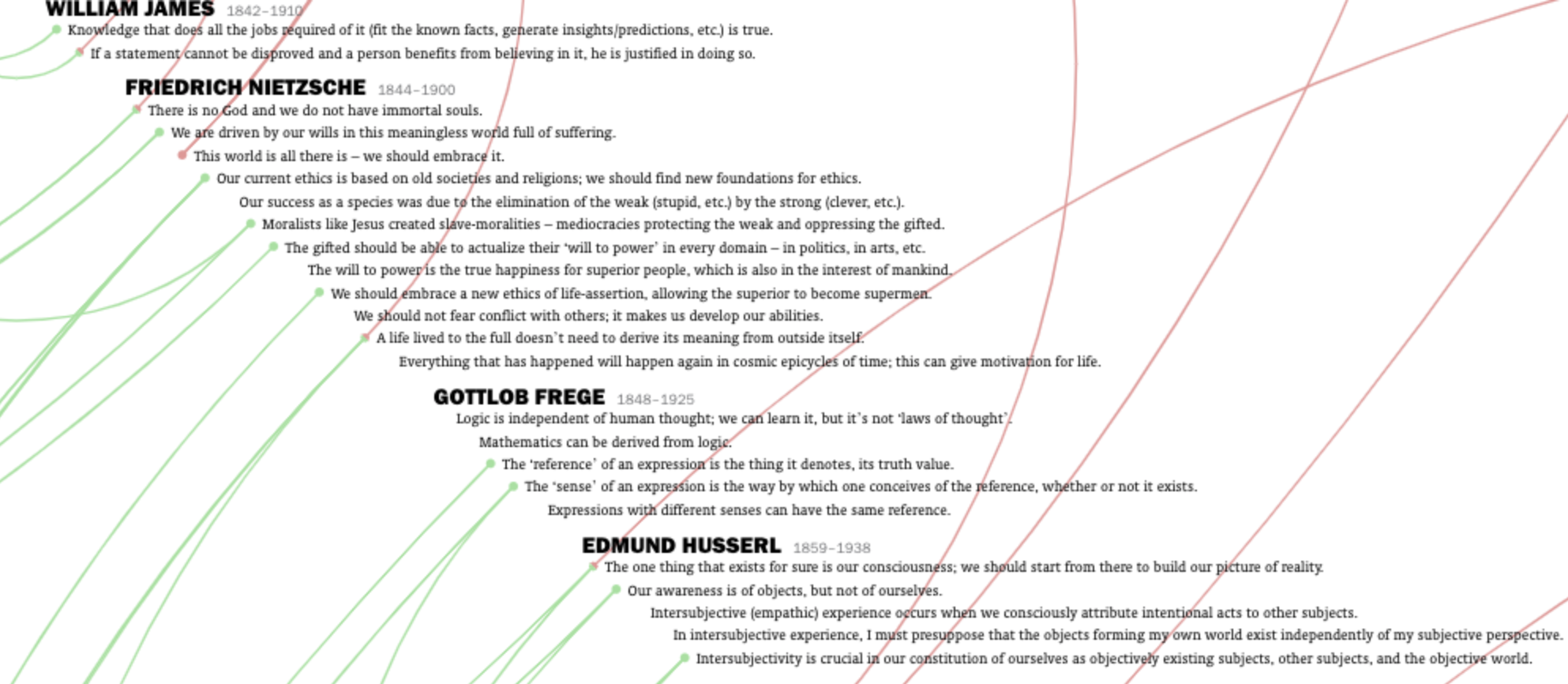
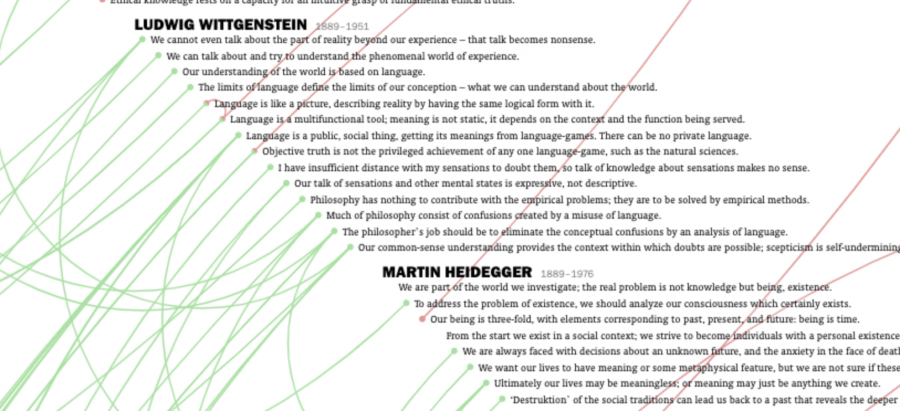
And then there are those who embark on a thorough self-guided tour of Western philosophical history, attempting, without the aid of university departments and faddish interpretive schemes, to weave the disparate strains of thought together. One such autodidact and academic outsider, designer Deniz Cem Önduygu of Istanbul, has combined an encyclopedic mind with a talent for rigorous outline organization to produce an interactive timeline of the history of philosophical ideas. It is “a purely personal project,” he writes, “that I’m doing in my own time, with my limited knowledge, for myself.”
Önduygu shares theproject not to show off his learning but, more humbly, to “get feedback and to make it accessible to those who are interested.” It may be precious few people who have both the time and inclination to teach themselves the history of philosophy, but if you are one of them, this incredibly dense infographic is as good a place to start as any, and while it may appear intimidating at first glance, its menu in the upper right corner allows users to zero in on specific thinkers and schools, and to confine themselves to smaller, more manageable areas of the whole.
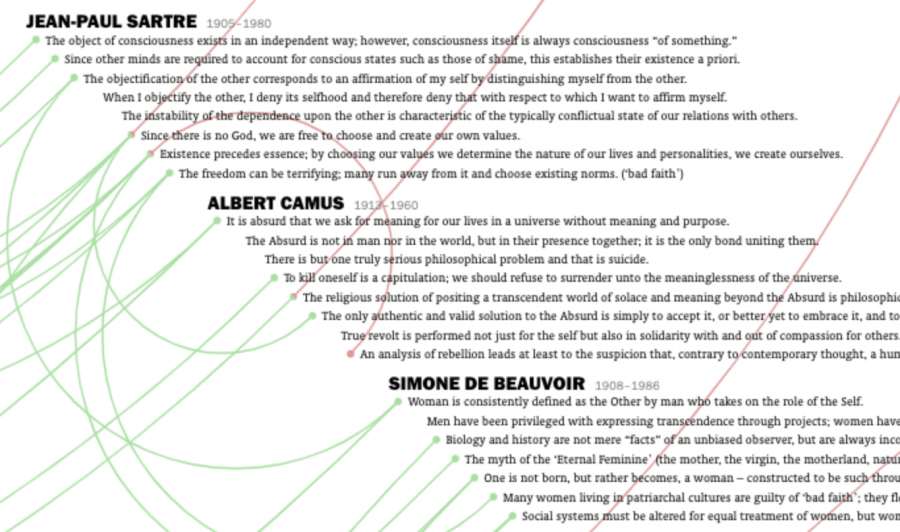
As for the timeline itself, “viewers can zoom in and out,” notes Daily Nous, “and see philosophers listed in chronological order, with ideas they’re associated with listed beneath them. These ideas, in turn, are connected by green lines to similar or supporting ideas elsewhere on the timeline, and connected by red lines to opposing or refuting ideas elsewhere on the timeline. If you hover your mouse cursor over a single idea, all but it and its connected ideas fade. You can then click on the idea to bring those connected ideas closer for ease of viewing.”
The designer admits this is a “never-ending work in progress” and mainly a source for reminding himself of the main arguments of the philosophers he’s surveyed. The major sources for his timeline are “Bryan Magee’s The Story of Philosophy and Thomas Baldwin’s Contemporary Philosophy, along with other works for specific philosophers and ideas.” But many of the connections Önduygu draws in this extensive web of green and red are his own.
He explains his rationale here, noting, “The lines here do not always depict a direct transfer between two people; I think of them as tracing the development of an idea throughout time within our collective conception.” Spend some more time with this impressive project at the History of Philosophy Summarized & Visualized (the site works best in Chrome), and feel free to get in touch with its creator with constructive criticism. He welcomes feedback and is open to opposing ideas, as every lifelong learner should be.
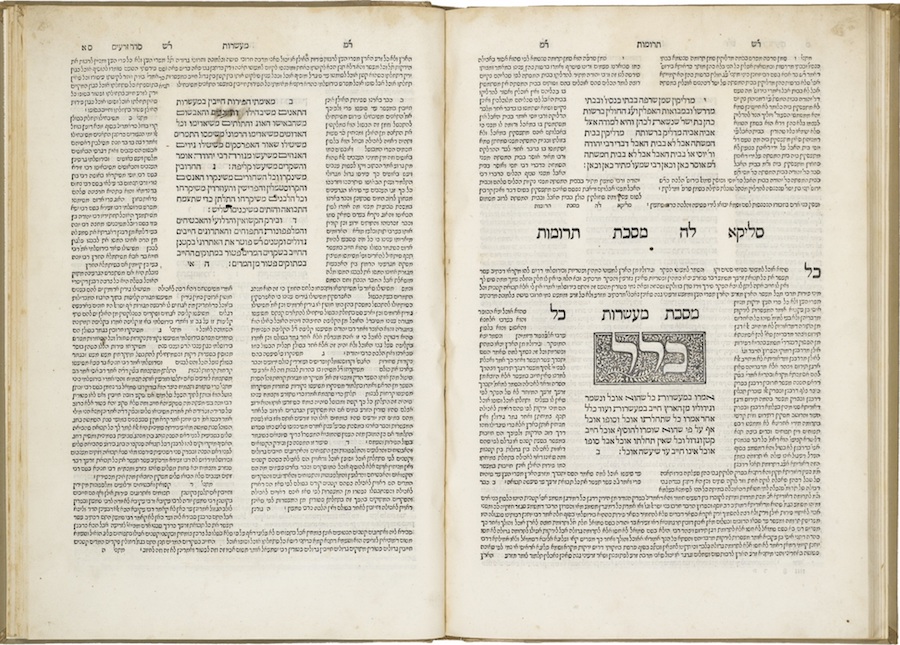
In South Korea, where I live, the Talmud is a bestseller. Just a few years ago the New Yorker’s Ross Armud reported on the improbable publishing success, in this small east Asian country, of Judaism’s “dense compilation of oral laws annotated with rabbinical discussions, consisting of about two and a half million words.” Some of those words dealing with such pressing questions as, “If you find a cake with a pottery shard in it, can you keep it? Do you have to report the discovery of a pile of fruit? What do you do if you find an item built into the wall of your house?”
The much shorter “Korean Talmud,” Armud writes, with its parables, aphorisms, and topics that run the gamut “from business ethics to sex advice,” makes a reader feel like “the last player in a game of telephone.” But Joshua Foer, the science writer who co-founded Atlas Obscura, might say that the Jewish Talmud has long left even Jewish readers in a similar state of befuddlement — if, indeed, they could find the text at all. Looking to get a handle on the Talmud himself back in 2010, he found that, shockingly, the internet had almost nothing to offer him. And so he began working, alongside an ex-Google engineer collaborator named Brett Lockspeiser, to correct that absence.
“Last year, after years of work and negotiations, Foer and Lockspeiser finally succeeded in their quest,” writes the Washington Post’s Noah Smith. “Through a nonprofit they created called Sefaria, the men are bringing the Talmud online in modern English, and free of charge.” Sefaria’s library, available on the web as well as in app form, now includes a variety of texts from Genesis and the Kabbalah to philosophy and modern works — and of course the Talmud, the centerpiece of the collection, the relevant resources for which had not been in the public domain and thus required no small amount of negotiation to make free.
Sefaria’s creators have combined all this with a feature called “source sheets,” which allow “any user on the site to compile and share a selection of relevant texts, from Sefaria or outside, surrounding a given issue or question.” (Smith points to the most popular source sheet thus far, “Is One Permitted to Punch a White Supremacist in the Face?”) At about 160 million words with 1.7 million intertextual links and counting, the site has made a greater volume of Jewish texts far more accessible than ever before. Readers, even non-Orthodox ones, have been discovering them in English, but if Sefaria wants to increase their traffic further still, they might consider uploading some Korean translations as well.
Based in Seoul, Colin Marshall writes and broadcasts on cities and culture. His projects include the book The Stateless City: a Walk through 21st-Century Los Angeles and the video series The City in Cinema. Follow him on Twitter at @colinmarshall or on Facebook.
This past summer, we highlighted the Encyclopedia of Concise Concepts by Women Philosophers, a resource that aims to introduce “women philosophers who mostly have been omitted from the philosophical canon despite their historical and philosophical influence.” Now, in a similar vein, comes a book being edited by Rebecca Buxton (Oxford) and Lisa Whiting (Durham). The Philosopher Queens is essentially “a book about women in philosophy by women in philosophy.” On this crowdfunding page, Buxton and Whiting elaborate:
For all the young women and girls sitting in philosophy class wondering where the women are, this is the book for you. This collection of 21 chapters, each on a prominent woman in philosophy, looks at the impact that women have had on the field throughout history. From Hypatia to Angela Davis, The Philosopher Queens will be a guide to these badass women and how their amazing ideas have changed the world.
This book is written both for newcomers to philosophy, as well as all those professors who know that they could still learn a thing or two. This book is also for those many people who have told us that there are no great women philosophers. Please pledge, read this book and then feel free to get back to us.
The two of us are young women who have studied and loved philosophy for many years. This book is borne out of frustration with the total lack of recognition for women in philosophy, not only its history but its current teaching.
Each chapter is written by a woman working in philosophy today. Our chapters and contributing authors include:
Hypatia by Lisa Whiting Lalleshwari by Shalini Sinha Anne Conway by Julia Bocherding Mary Astell by Simone Webb Mary Wollstonecraft by Sandrine Bergès Harriet Taylor Mill by Helen McCabe Christine Ladd-Franklin by Sara Uckelman Mary Anne Evans by Clare Carlisle Edith Stein by Jae Hetterley Hannah Arendt by Rebecca Buxton Simone de Beauvoir by Kate Kirkpatrick Iris Murdoch by Fay Niker Elizabeth Anscombe by Hannah Carnegy-Arbuthnott Mary Warnock by Gulzaar Barn Iris Marion Young by Desiree Lim Anita L Allen by Ilhan Dahir Azizah Y. al-Hibri by Nima Dahir
… and more exciting chapters yet to be announced.
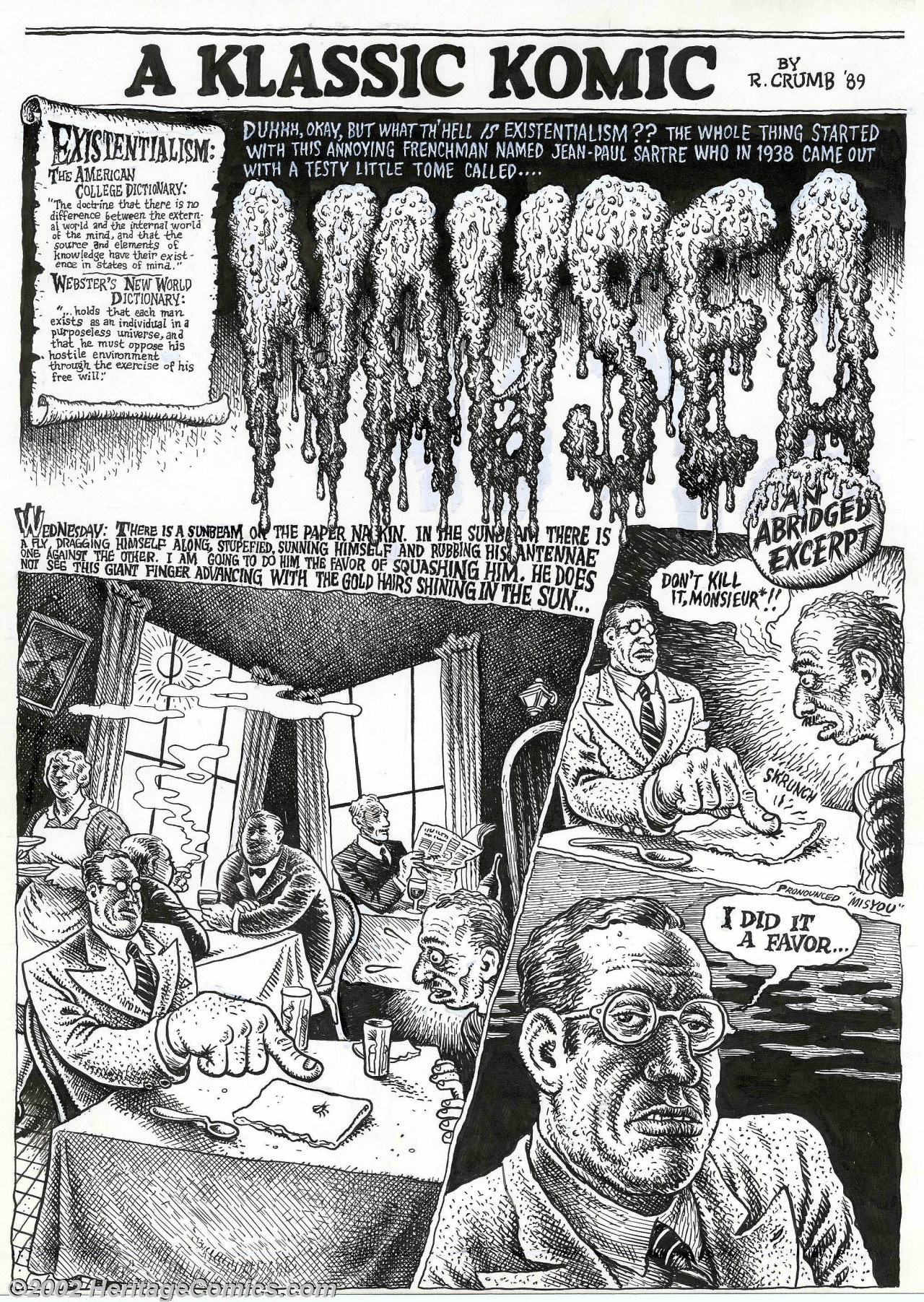
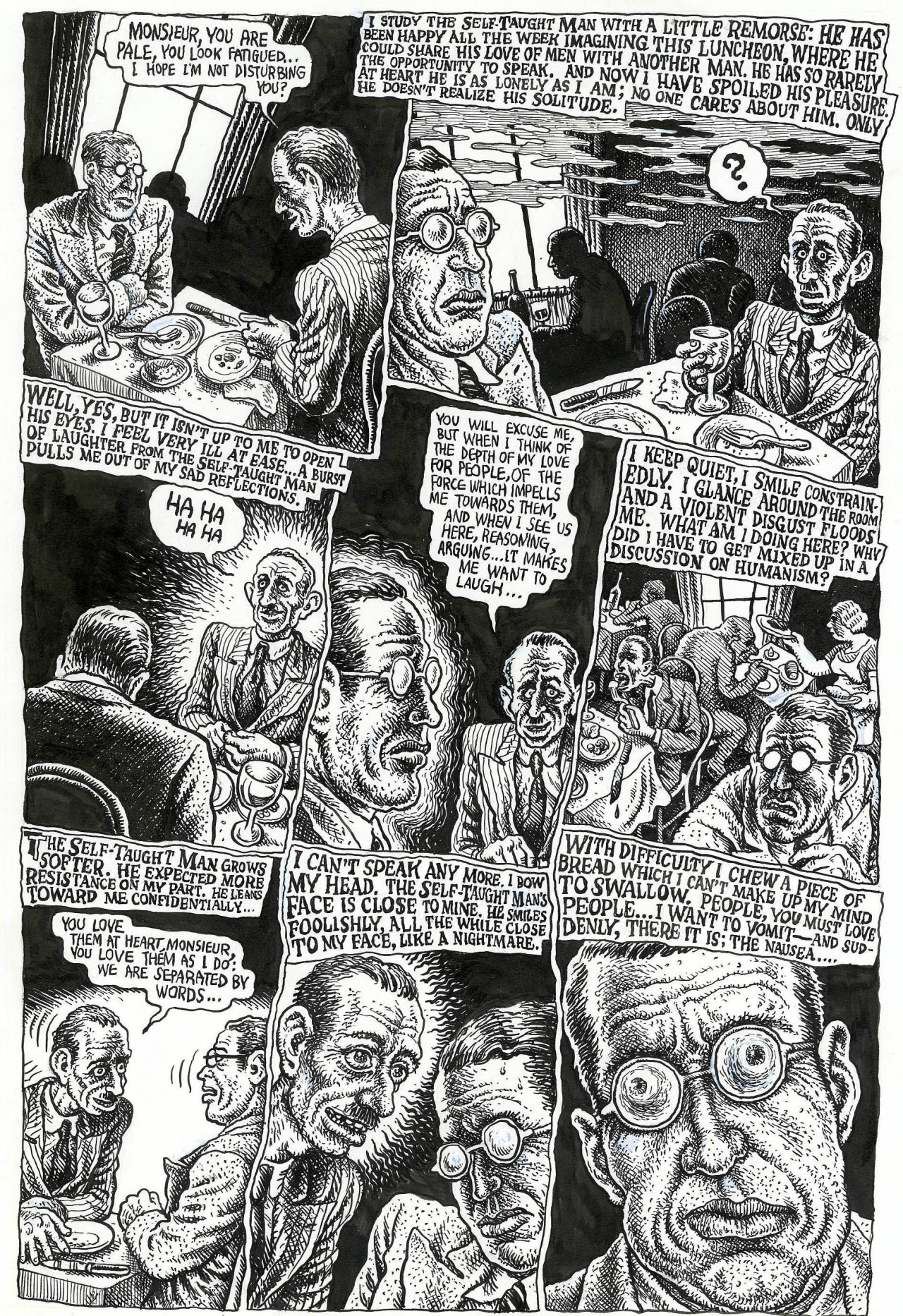
Sartre’s novel Nauseaintroduced his philosophical view as a form of illness to a WWII readership. “Nausea is existence revealing itself—and experience is not pleasant to see,” he wrote in his own summary of his first book, published in 1938. The novel’s dramatization of Historian Roquentin’ s crisis presents a case of existential sickness as mostly involuntary.
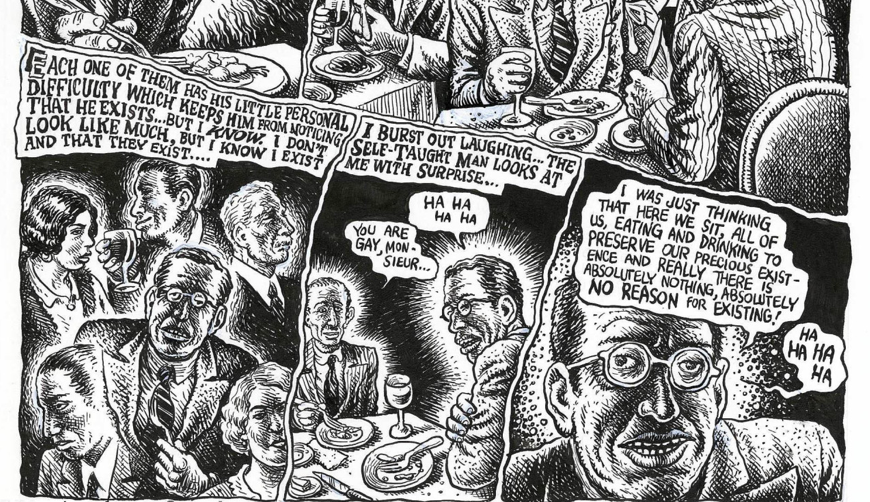
Though published before his many Marxist books and essays, Nauseaconnects the malaise to a certain class experience. “I have no troubles,” thinks Roquentin in Robert Crumb’s short adaptation of the book above, “I have money like a capitalist, no boss, no wife, no children; I exist, that’s all…. And that trouble is so vague, so metaphysical that I am ashamed of it.” Nausea, in one sense, is bourgeoise alienation, while Roquentin’s conversation partner, the Self-Taught Man, confesses a naïve humanist idealism.
The characters alone, some critics suggest, imbue the book with a subtle parody. As he listens to the Self-Taught Man’s troubles and ruminates on his own, Crumb’s Roquentin grows more Sartre-like. Significantly, the Self-Taught Man takes on a Crumb-like demeanor and aspect. Their dialogue moves briskly, the scene resembling My Dinner with Andre with less banter and more neurosis. Sartre’s tone lends itself well to Crumb’s obsessive, tightly-composed panels.
Crumb’s literary interpretations have gravitated toward other anxious writers like Charles Bukowski and Franz Kafka, as well as the murder and incest of the book of Genesis. The underground comics legend is right at home with Sartrean dread and despair. Crumb became famous for Fritz the Cat, an animated film version of his raunchy hipster, what many called his grossly sexist and racist sex fantasies, and the drawing and slogan “Keep on Truckin’.” He was a figure of 60s and 70s counterculture, but that’s never where he belonged.
Crumb was a Sartrean protagonist , even when he “often portrayed himself in his work as naked… and priapic.” In an an interview with Crumb The Guardian describes him:
his words are depressive and lugubrious, and yet he appears mellow, laughing easily through his existential nausea. The most terrible stories amuse him as much as they pain him. He tells me how a best friend killed himself by swallowing four bottles of paper correction fluid, and he chortles. He talks of his own despair, and giggles. He admits that he could never have imagined a life quite so fulfilled—with Aline, and his beloved daughter Sophie, also a cartoonist, and success and money—and says he’s still miserable as hell, and laughs.
He is a little Roquentin, a little bit Sartre, a little bit Self-Taught man, applying to his reading of literature and philosophy an LSD-assisted, sex-positive, and unavoidably controversial and depressive sensibility. See the full Crumb-illustrated Nausea here.
The word “stoic” (from the Greek stoa) has come to mean a few things in popular parlance, most of them related directly to the ancient Greek, then Roman, philosophy from which the term derives. Stoic people seem unmovable. They stay cool in a crisis and “keep calm and carry on” when others lose their heads. For several, perhaps obvious, reasons, these qualities of “calm, resilience, and emotional stability” are particularly needed in a time like ours, says Alain de Botton in his School of Life video above.
But how do we acquire these qualities, according to the Stoics? And what philosophers should we consult to learn about them? One of the most prolific of Stoic philosophers, the Roman writer and statesman Seneca, advised a typical course of action. In a letter to his friend Lucilius, who feared a potentially career-ending lawsuit, Seneca counseled that rather than resting in hopes of a happy outcome, his friend should assume that the worst will come to pass, and that, no matter what, he can survive it.
The goal is not to make Debbie Downers of us all, but to convince us that we are stronger than we think—that even our worst fears needn’t mean the end of the world. Seneca’s stoicism is a thoroughgoing realism that asks us to account for the entire range of possible outcomes—even the absolute worst we can imagine—rather than only those things we want or have previously experienced. In this way, we will not be caught off-guard when bad things come to pass, because we have already made a certain peace with them.
Rather than a pessimistic philosophy, Seneca’s thought seems entirely practical, a means of piercing our pleasant illusions and comfortable bubbles of self-regard, and considering ourselves just as subject to misfortune as anyone else in the world, and just as capable of enduring it as well.
We're hoping to rely on loyal readers, rather than erratic ads. Please click the Donate button and support Open Culture. You can use Paypal, Venmo, Patreon, even Crypto! We thank you!
Open Culture scours the web for the best educational media. We find the free courses and audio books you need, the language lessons & educational videos you want, and plenty of enlightenment in between.