Erica Spyres, Brian Hirt, and Mark Linsenmayer are joined by Ian Maio (who worked for marketing for IGN and Turner in e‑sports) for our first discussion about gaming. Do adults have any business playing video games? Should you feel guilty about your video game habits?
Ian gives us the lay of the land about e‑sports, comparing it to physical sports, and we discuss the changing social functions of gaming, alleged and actual gaming disorders, different types of gamers, inclusivity, and more. Whether you game a lot or not at all, you should still find something interesting here.
We touch on the King of Kong documentary, Grand Theft Auto, Overwatch, The Last of Us, Borderlands, Super Mario, Cuphead, NY Times Electronic Crossword Puzzle, and more. Be sure to watch the Black Mirror episode, “Striking Vipers.”
Lucy Lawless (Xena the Warrior Princess, currently starring in My Life Is Murder) joins Mark Linsenmayer, Erica Spyres, and Brian Hirt to think about the true crime genre, of both the documentary and dramatized variety. What’s the appeal? Why do women in particular gravitate to it?
We touch on Making of a Murderer, Serial, The Staircase, Amanda Knox, Ted Bundy Conversations with a Killer, I Love You Now Die, Mommy Dead and Dearest (dramatized as The Act), American Crime Story: The People v. O.J. Simpson,My Favorite Murder, Casefile, Crime Talk with Scott Reisch, True Murder, and American Vandal.
On the HBO mini-series Chernobyl. Mark Linsenmayer, Erica Spyres, and Brian Hirt first get into the various degrees of looseness in something’s being “based on a true story.” Does it matter if it’s been changed to be more dramatic? We then consider the show as entertainment: Why do people enjoy witnessing suffering? Why might a drama work (or not) for you?
We also touch on Game of Thrones, The Killing, God Is Dead, It’s Always Sunny in Philadelphia, Big Little Lies, Schindler’s List, Vice, Ip Man, and more.
Is media trying to brainwash us into being ALL THE SAME? Are the excesses of the mob scaring us into conformity? And does this in turn keep us from being actually creative, with healthy relationships?
Mark Linsenmayer, Erica Spyres, and Brian Hirt muse on cultural homogenization and a few sci-fi takes on forced sameness and then bring out our first celebrity guest, beloved comedian and now psychology Ph.D. Yakov Smirnoff, who tells us about growing up in a repressive society and his fears that political correctness and a lack of appreciation for the “reciprocal opposites” necessary for authentic communication is leading us in that direction. We conclude with a bit of host-ful response.
We touch on Cat’s Cradle, Aladdin, Rosanne Barr, The Twilight Zone, Brian’s wearing a Cubs hat in Missouri, and performing comedy in the U.S.S.R. as well as various sensitive audiences here. Will you not join us and dress as Devo every day?
Here’s that article that comes up on Kurt Vonnegut Jr.‘s terms “karass” (voluntary, organic grouping) and “granfalloon” (inherited, basically meaningless grouping).
Follow Yakov: @Yakov_Smirnoff. Not enough Yakov? Well, of course there are scads of YouTube clips and other podcast appearances that he’s done that you can check out with a mere web search, but if you want to hear EVERY SINGLE WORD he said to us, we did post an entirely unedited version of the interview for $5 supporters at patreon.com/prettymuchpop.
This post continues Open Culture’s curation of a new podcast series about popular media and how (and why) we consume it. You may wish to listen to the introductory episode first.
What counts as binge watching? Why do we do it? Is it bad for us?
Mark, Erica, and Brian reveal their watching habits (growing up and now) and marvel at crazy-high stats about how much people watch. We think about what people get out of this activity, what shows work do and don’t taste good in bulk, and whether watching is best done in solitary despair or as a bonding experience as you waste the precious hours of your life sitting next to another person.
We touch on many shows including The Office, Game of Thrones, Battlestar Galactica (by way of Portlandia), Jane the Virgin, Pretty Little Liars, Arrow, CSI, and Chernobyl (which we’ll devote the whole of Ep. 5 to).
What is pop culture? Does it make sense to distinguish it from high culture, or can something be both?
Open Culture is pleased to curate a new podcast covering all things entertainment: TV, movies, music, novels, video games, comics, novels, comedy, theater, podcasts, and more. Pretty Much Pop is the invention of Mark Linsenmayer (aka musician Mark Lint), creator of The Partially Examined Life Philosophy Podcast and Nakedly Examined Music. Mark is joined by co-hosts Erica Spyres, an actor and musician who’s appeared on Broadway and plays classical and bluegrass violin, and Brian Hirt, a science-fiction writer/linguistics major who collaborates with his brother on the Constellary Tales magazine and podcast. For this introductory discussion touching on opera, The Beatles, Fortnite, 50 Shades of Grey, reality TV, and more, our hosts are joined by the podcast’s audio editor Tyler Hislop, aka Sacrifice MC.
Some of the articles brought in the discussion are:
The ending song was written by Mark just for this episode. It’s called “High Rollin’ Cult,” and features Erica on violin and harmonies.
For more information on the podcast, visit prettymuchpop.com or look for the podcast soon on Apple Podcasts. To support this effort (and immediately get access to four episodes plus bonus content), make a small, recurring donation at patreon.com/prettymuchpop.
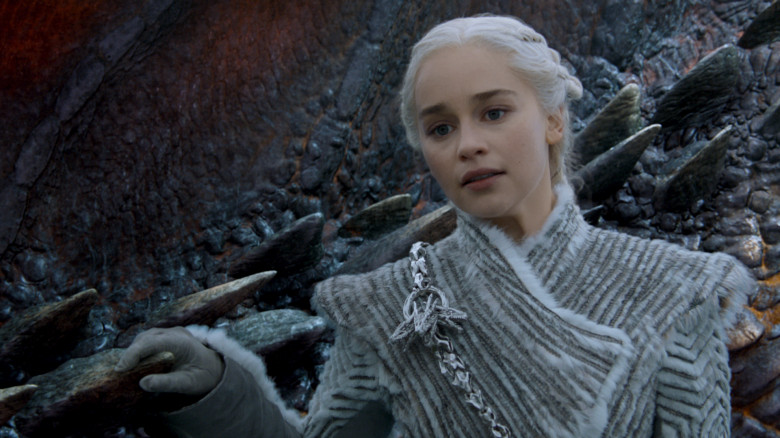
The HBO TV show Game of Thrones, like its source books, George R.R. Martin’s A Song of Ice and Fire, is classified as “fantasy,” but that term as literary classification has become unmoored from its literal meaning. A person’s fantasy is most typically a matter of wish fulfillment, which should put super-hero media at the center of the genre: We regular mortals wish to be powerful and strong, to save the day and be recognized as a hero. Certain elements of classical fantasy fall under this description: Frodo in Lord of the Rings gets to save the world while remaining more or less ordinary (well, yes, he can turn invisible with the ring, but that becomes problematic), and Harry Potter qualifies as a kid super-hero.
Another key element of fantasy is obviously the imagination, which can be deployed as in dreams and the psychedelic art that draws on dream experience to come up with ever-more-fantastical imagery, ever more amazing situations and powers one could fantasize about possessing. However, the imagination also seeks to expand the fantasized creation, to make its world wider and richer, to fill in the details, and almost inevitably to try to make the fantasy more “realistic.” What would it actually be like to have super powers? Would you suffer emotional trauma from damaging all those villains? What about collateral damage? If you get to ride on a dragon, how do you take care of it? What (who) does it eat?
George R.R. Martin writes in the tradition popularized by J.R.R. Tolkien of “high fantasy,” which involves not only characters of high stature engaged in epic struggles, but typically involves a very fleshed out alternative world with its own slightly different laws. The more spelled out these laws are, the more nuts and bolts of the workings of the world are specified, the more realism and hence suffering can be depicted. A Song of Ice and Fire describes its rotating cast of protagonists with such a degree of detail that readers are (as in much literature) able to identify with them, to see the world through their eyes, but they suffer so much that such alternate lives as these books offer readers would hardly be anyone’s fantasy in the sense of wish fulfillment. A visual presentation like a TV show by necessity can’t be as clear about whose eyes the viewer is supposed to see events through (we see through the camera instead), but nonetheless Game of Thrones invites us to live through (some of) its characters, to identify with them, through their exertions of power, through their reactions to loss and triumph. But such identifications will always be imperfect, given that these characters have been drawn as living in a world that is fundamentally foreign to us, not because there are zombies and dragons, but because HBO viewers are for the most part living comfortably in a peaceful country, not having been systematically and often personally exposed to horrible sufferings.
Hear Mark Linsenmayer and Wes Alwan, regular hosts of The Partially Examined Life Philosophy Podcast, along with guest Sabrina Weiss, discuss the psychological and social aspects of the show, but in what is depicted on screen and how these play out in our society’s relationship to this grand spectacle.
Journalist and bestselling author Michael Lewis (Liar’s Poker, Moneyball, The Big Short) has a new podcast, Against the Rules, that “takes a searing look at what’s happened to fairness—in financial markets, newsrooms, basketball games, courts of law, and much more. And he asks what’s happening to a world where everyone loves to hate the referee.” That is, what happens when we, as a society, lose confidence in the arbiters of truth and fairness?
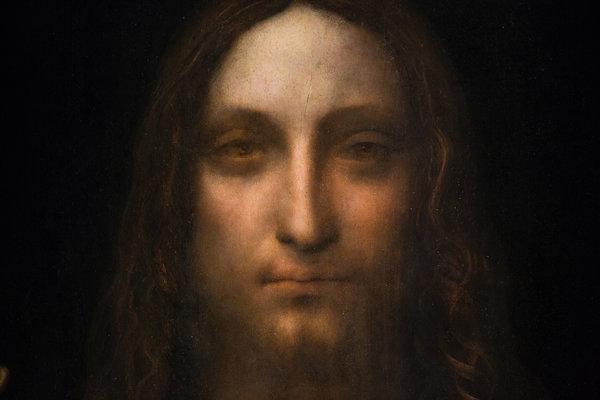
In Episode 5, Lewis focuses on “Salvator Mundi,” a painting of Jesus Christ attributed to Leonardo da Vinci, which famously sold at auction for $450 million in 2017. Pretty remarkable, considering that some question whether “Salvator Mundi,” is really a Leonardo painting at all. Or, if it is, whether the highly-restored painting still retains any brushstrokes from Leonardo himself. This leads Lewis to ask some intriguing questions about the authenticity of art, and to explore the pressure placed on the referees of art–namely, art historians–to confirm the authenticity of potentially valuable paintings. Below, you can stream the episode, “The Hand of Leonardo.”
As a bonus, we’ve also added an episode that examines how sketchy “customer service” companies mislead people trying to repay their student loans, and how the Trump administration has undermined government agencies designed to protect debt-strapped Americans.
If you would like to support the mission of Open Culture, consider making a donation to our site. It’s hard to rely 100% on ads, and your contributions will help us continue providing the best free cultural and educational materials to learners everywhere. You can contribute through PayPal, Patreon, and Venmo (@openculture). Thanks!
We're hoping to rely on loyal readers, rather than erratic ads. Please click the Donate button and support Open Culture. You can use Paypal, Venmo, Patreon, even Crypto! We thank you!
Open Culture scours the web for the best educational media. We find the free courses and audio books you need, the language lessons & educational videos you want, and plenty of enlightenment in between.