115 Books on Lena Dunham & Miranda July’s Bookshelves at Home (Plus a Bonus Short Play)

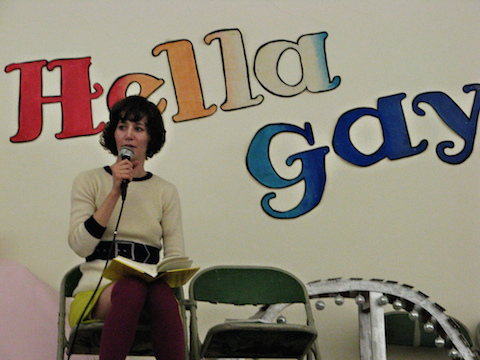
Miranda-july-reading

Miran­da-july-read­ing” by Alex­is Bar­rera / Licensed under CC BY 2.5 via Wiki­me­dia Com­mons.

Ah, the joys of din­ing at a new friend’s home, know­ing soon­er or lat­er, one’s host­ess’ blad­der or some bit of last minute meal prepa­ra­tion will dic­tate that one will be left alone to rifle the titles on her book­shelf with aban­don. No med­i­cine cab­i­net can com­pete with this peek into the psy­che.

Pity that some of the peo­ple whose book­shelves I’d be most curi­ous to see are the least like­ly to open their homes to me. That’s why I’d like to thank The Strand book­store for pro­vid­ing a vir­tu­al peek at the shelves of film­mak­ers-cum-authors Miran­da July and Lena Dun­ham.  (Pre­vi­ous par­tic­i­pants in the Authors Book­shelf series include just-plain-reg­u­lar authors George Saun­ders, Edwidge Dan­ti­cat and the late David Fos­ter Wal­lace whose con­tri­bu­tions were select­ed by biog­ra­ph­er D.T. Max.)

Lena_Dunham_TFF_2012_Shankbone_3

Lena Dun­ham” by David Shankbone — Licensed under CC BY 3.0 via Wiki­me­dia Com­mons.

I wish Dun­ham and July had offered up some per­son­al com­men­tary to explain their hand-picked titles. (Sure­ly their homes are lined with books. Sure­ly each list is but a rep­re­sen­ta­tive sam­pling, one shelf from hun­dreds. Hmm. Inter­est­ing. Did they run back and forth between var­i­ous rooms, curat­ing with a vengeance, or is this a case of what­ev­er hap­pened to be in the case clos­est at hand when dead­line loomed?)

Which book’s a long­time favorite?

Which the lit­er­ary equiv­a­lent of com­fort food?

Are there things that only made the cut because the author is a friend?

Both women are cel­e­brat­ed sto­ry­tellers. Sure­ly, there are sto­ries here beyond the ones con­tained between two cov­ers.

But no mat­ter. The lack of accom­pa­ny­ing anec­dotes means we now have the fun of invent­ing imag­i­nary din­ner par­ties:


ME: (stand­ing in the liv­ing room, call­ing through the kitchen door, a glass of wine in hand) Whoa, Lena, I can’t believe you’ve got Impor­tant Arti­facts and Per­son­al Prop­er­ty from the Col­lec­tion of Lenore Doolan and Harold Mor­ris, Includ­ing Books, Street Fash­ion, and Jew­el­ry!

LENA DUNHAM: (polite, but dis­tract­ed by a pot of red sauce) I know, isn’t that one great?

ME: So great! Where’d you buy it?

LENA DUNHAM: Uh, The Strand, I think.

ME: Me too! Such a great con­ceit, that book. Wish I’d come up with it!

LENA DUNHAM: I know what you mean.

ME: Ooh, you’ve got Was She Pret­ty? 

LENA DUNHAM: Hmm? Oh, yeah, my friend Miran­da gave me that.

ME: (glanc­ing between the two books.) Wait! Leanne Sharp­ton. Leanne Sharp­ton. I didn’t real­ize it’s the same author.

LENA DUNHAM: As what?

ME: The per­son who wrote Was She Pret­ty? also wrote Impor­tant Arti­facts and Per­son­al Prop­er­ty-

ME & LENA DUNHAM IN UNISON: — from the Col­lec­tion of Lenore Doolan and Harold Mor­ris, Includ­ing Books, Street Fash­ion, and Jew­el­ry!

LENA DUNHAM: Got­ta love that title.

ME: Why do you have all these kids’ books?

LENA DUNHAM: Those are from my child­hood.

ME: (slid­ing an unnamed title off the shelf, eyes widen­ing as I read the shock­ing­ly graph­ic per­son­al inscrip­tion on the fly­leaf) Oh?

LENA DUNHAM: I real­ly relate to Eloise.

ME: (hasti­ly slid­ing the vol­ume back onto the shelf before Lena can catch me snoop­ing) Oh yeah…ha ha.

LENA DUNHAM: Are you the one who likes graph­ic nov­els?

ME: Me? Yes!!!

LENA DUNHAM: Yeah. My friend Miran­da does too.

ME:  That’s fun­ny - Sex and the Sin­gle Girl right next to Of Human Bondage.

LENA DUNHAM: (curs­ing under her breath)

ME: Need help?

LENA DUNHAM: No, it’s just this damn …arrrggh. I hate this cook­book!

ME: (bright­ly) Smells good!

LENA DUNHAM: … crap.

ME: So, is Adam Dri­ver com­ing? Or Ray or any­body?

LENA DUNHAM: (testi­ly)  You mean Alex Kar­povsky?

ME: (flus­tered) Oh, ha ha, yes! Alex! … I sent him a Face­book request and he accept­ed.

LENA DUNHAM: (mut­ters under her breath)

ME: Design Sponge? Real­ly? What’s some­one in your shoes doing with a bunch of DIY dec­o­rat­ing books?

LENA DUNHAM: (cold­ly) Research.


Actu­al­ly, maybe it is bet­ter to admire one’s idols’ book­shelves from afar.

I’m cha­grined that I don’t rec­og­nize more of their mod­ern fic­tion picks. That wasn’t such a prob­lem when I was mea­sur­ing myself against the 430 books on Mar­i­lyn Monroe’s read­ing list.

Thank heav­en for old stand­bys like Madame Bovary.

In all sin­cer­i­ty, I was glad that Dun­ham didn’t try to mask her love of home decor blog books.

And that July includ­ed her husband’s mono­graph, Our Bod­ies, Our­selves and a hand­book to rais­ing self-con­fi­dent babies.

One’s shelves, after all, are a mat­ter of taste. So, cel­e­brate the sim­i­lar­i­ties, take their rec­om­men­da­tions under advise­ment, see below and read what you like!


MIRANDA JULY’S SHELF

A Time for Every­thing  — Karl Ove Knaus­gaard

A Very Young Dancer — Jill Kre­mentz

Alice James: A Biog­ra­phy  — Jean Strouse

Ani­ma­cies: Biopol­i­tics, Racial Mat­ter­ing, and Queer Affect  — Mel Y. Chen

Arthur Tress: The Dream Col­lec­tor — John Mina­han

Build­ing Sto­ries  — Chris Ware

Crud­dy: An Illus­trat­ed Nov­el  — Lyn­da Bar­ry

Diaries, 1910–1923  — Franz Kaf­ka

Do the Win­dows Open?  — Julie Hecht

Dorothy Ian­none: Seek The Extremes! (v.1) — Bar­bara Vinken, Sabine Folie

Edge­wise: A Pic­ture of Cook­ie Mueller  — Chloe Grif­fin

Embryo­ge­n­e­sis — Richard Grossinger

Friedl Kubel­ka Vom Groller  — Melanie Ohne­mus

Amer­i­can War  — Har­rell Fletch­er

Han­nah Höch: Album (Eng­lish and Ger­man Edi­tion) — Han­nah Höch

How to Build a Girl  — Caitlin Moran

Humil­i­a­tion  — Wayne Koesten­baum

It’s OK Not to Share and Oth­er Rene­gade Rules for Rais­ing Com­pe­tent and Com­pas­sion­ate Kids  — Heather Shu­mak­er

King Kong The­o­ry  — Vir­ginie Despentes

Leav­ing the Atocha Sta­tion  — Ben Lern­er

Light­ning Rods  — Helen DeWitt

Lost at Sea: The Jon Ron­son Mys­ter­ies  — Jon Ron­son

Maid­en­head  — Tama­ra Faith Berg­er

Man V. Nature: Sto­ries  — Diane Cook

Mike Mills: Graph­ics Films  — Mike Mills

Napa Val­ley His­tor­i­cal Ecol­o­gy Atlas: Explor­ing a Hid­den Land­scape of Trans­for­ma­tion and Resilience  — Robin Grossinger

Need More Love  — Aline Komin­sky Crumb

Our Bod­ies, Our­selves (Com­plete­ly Revised and Updat­ed Ver­sion)  — Boston Wom­en’s Health Book Col­lec­tive

Jim Gold­berg: Rich and Poor  — Jim Gold­berg

San­ja Ivekovic: Sweet Vio­lence  — Rox­ana Mar­co­ci

Sophie Calle: The Address Book  — Sophie Calle

Star­ing Back  — Chris Mark­er

Taryn Simon: A Liv­ing Man Declared Dead and Oth­er Chap­ters, I‑XVIII — Homi Bhab­ha, Geof­frey Batchen

Tete-a-Tete: The Tumul­tuous Lives & Loves of Simone De Beau­voir and Jean-Paul Sartre  — Hazel Row­ley

The Hour of the Star  — Clarice Lispec­tor

The Illus­trat­ed I Ching — R.L. Wing

Two Kinds of Decay: A Mem­oir  — Sarah Man­gu­so

Traf­fic  — Ken­neth Gold­smith

Two Seri­ous Ladies  — Jane Bowles

Was She Pret­ty?  — Leanne Shap­ton

What is the What: The Auto­bi­og­ra­phy of Valenti­no Achak Deng: A Nov­el  — Dave Eggers

Why Did I Ever  — Mary Robi­son

Women in Clothes  — Sheila Heti

Work­ing: Peo­ple Talk About What They Do All Day and How They Feel About What They Do  — Studs Terkel

Your Self-Con­fi­dent Baby: How to Encour­age Your Child’s Nat­ur­al Abil­i­ties — From the Very Start  — Mag­da Ger­ber

Far from the Tree  — Andrew Solomon

How Should a Per­son Be?  — Sheila Heti


LENA DUNHAM’S LIST

The Girls’ Guide to Hunt­ing and Fish­ing  — Melis­sa Bank

A Lit­tle His­to­ry of the World  — E. H. Gom­brich

Anne of Green Gables  — L.M. Mont­gomery

Apart­ment Ther­a­py Presents: Real Homes, Real Peo­ple, Hun­dreds of Real Design Solu­tions  — Maxwell Gilling­ham-Ryan

Ariel: The Restored Edi­tion  — Sylvia Plath

Bad Fem­i­nist: Essays  — Rox­ane Gay

Bas­tard Out of Car­oli­na (20th Anniver­sary Edi­tion)  — Dorothy Alli­son

Blue is the Warmest Col­or  — Julie Maroh

Brighton Rock  — Gra­ham Greene

Caved­weller  - Dorothy Alli­son

Coun­try Girl: A Mem­oir  — Edna O’Brien

Crazy Sal­ad and Scrib­ble Scrib­ble: Some Things About Women and Notes on Media  — Nora Ephron

Design Sponge at Home  — Grace Bon­ney

Din­ner: A Love Sto­ry: It All Begins at the Fam­i­ly Table  — Jen­ny Rosen­stra­ch

Eleanor & Park  — Rain­bow Row­ell

Eloise  — Kay Thomp­son

Eloise In Moscow  — Kay Thomp­son

Eloise In Paris  — Kay Thomp­son

Fan­ny At Chez Panisse  — Alice Waters

Good­bye, Colum­bus and Five Short Sto­ries  — Philip Roth

Hol­i­days on Ice  — David Sedaris

Impor­tant Arti­facts and Per­son­al Prop­er­ty from the Col­lec­tion of Lenore Doolan and Harold Mor­ris, Includ­ing Books, Street Fash­ion, and Jew­el­ry  — Leanne Shap­ton

Lentil  — Robert McCloskey

Love Poems  — Nik­ki Gio­van­ni

Love, an Index (McSweeney’s Poet­ry Series)  — Rebec­ca Lin­den­berg

Love, Nina: A Nan­ny Writes Home  - Nina Stibbe

Madame Bovary: Provin­cial Ways  — Gus­tave Flaubert

NW: A Nov­el  — Zadie Smith

Of Human Bondage  — W. Som­er­set Maugh­am

Ran­dom Fam­i­ly: Love, Drugs, Trou­ble, and Com­ing of Age in the Bronx  — Adri­an Nicole LeBlanc

Rebec­ca  — Daphne Du Mau­ri­er

Remod­elista  — Julie Carl­son

Select­ed Sto­ries, 1968–1994  - Alice Munro

Sex and the Sin­gle Girl  — Helen Gur­ley Brown

She’s Come Undone  — Wal­ly Lamb

Some­where Towards the End: A Mem­oir  — Diana Athill

Stet: An Edi­tor’s Life  - Diana Athill

Sula  — Toni Mor­ri­son

Sum­mer Blonde  — Adri­an Tomine

Super Nat­ur­al Every Day: Well-Loved Recipes from My Nat­ur­al Foods Kitchen  — Hei­di Swan­son

Tenth of Decem­ber  - George Saun­ders

Tess of the D’Urbervilles  — Thomas Hardy

The Boys of My Youth  - Jo Ann Beard

The Col­lect­ed Sto­ries of Lydia Davis  — Lydia Davis

The Dud Avo­ca­do  — Elaine Dundy

The Impor­tant Book  — Mar­garet Wise Brown

The Jour­nal­ist and the Mur­der­er  — Janet Mal­colm

The Liars’ Club: A Mem­oir  — Mary Karr

The Love Affairs of Nathaniel P.: A Nov­el  — Adelle Wald­man

The Mar­riage Plot  — Jef­frey Eugenides

The Phi­los­o­phy of Andy Warhol (From A to B and Back Again)  - Andy Warhol

The Sto­ry of Fer­di­nand  — Munro Leaf

The Woman in White  - Wilkie Collins

The Writ­ing Class  — Jin­cy Wil­lett

This Is My Life  - Meg Wolitzer

Tiny Beau­ti­ful Things: Advice on Love and Life from ‘Dear Sug­ar’  - Cheryl Strayed

Wall­flower At the Orgy  — Nora Ephron

Was She Pret­ty?  — Leanne Shap­ton

We Have Always Lived In the Cas­tle  — Shirley Jack­son

What Lips My Lips Have Kissed: The Loves and Love Poems of Edna St. Vin­cent Mil­lay  — Daniel Mark Epstein

What She Saw…  — Lucin­da Rosen­feld

What the Liv­ing Do: Poems  — Marie Howe

While I Was Gone  - Sue Miller

With or With­out You: A Mem­oir  — Domeni­ca Rut

Women in Clothes  — Sheila Heti

via Scrib­n­er Books

Relat­ed Con­tent: 

Miran­da July’s Quirky Film Presents Some­body, the New App That Con­nects Strangers in the Real World

David Fos­ter Wallace’s Love of Lan­guage Revealed by the Books in His Per­son­al Library

The 430 Books in Mar­i­lyn Monroe’s Library: How Many Have You Read?

- Ayun Hal­l­i­day is an author, illus­tra­tor, and Chief Pri­ma­tol­o­gist of the East Vil­lage Inky zine. Fol­low her @AyunHalliday

Jean Cocteau Delivers a Speech to the Year 2000 in 1962: “I Hope You Have Not Become Robots”

Jean Cocteau was a great many things to a great many people—writer, film­mak­er, painter, friend, and lover. In the lat­ter two cat­e­gories he could count among his acquain­tances such mod­ernist giants as Pablo Picas­so, Ken­neth Anger, Erik Satie, Mar­lene Diet­rich, Edith Piaf, Jean Marais, Mar­cel Proust, André Gide, and a num­ber of oth­er famous names. But Cocteau him­self had lit­tle use for fame and its blan­d­ish­ments. As you’ll see in the short film above, “Cocteau Address­es the Year 2000,” the great 20th cen­tu­ry artist con­sid­ered the many awards bestowed upon him naught but “tran­scen­dent pun­ish­ment.” What Cocteau cared for most was poet­ry; for him it was the “basis of all art, a ‘reli­gion with­out hope.’ ”

Cocteau began his career as a poet, pub­lish­ing his first col­lec­tion, Aladdin’s Lamp, at the age of 19. By 1963, at the age of 73, he had lived one of the rich­est artis­tic lives imag­in­able, trans­form­ing every genre he touched.

Decid­ing to leave one last arti­fact to pos­ter­i­ty, Cocteau sat down and record­ed the film above, a mes­sage to the year 2000, intend­ing it as a time cap­sule only to be opened in that year (though it was dis­cov­ered, and viewed a few years ear­li­er). Biog­ra­ph­er James S. Williams describes the doc­u­men­tary tes­ta­ment as “Cocteau’s final gift to his fel­low human beings.”

He reit­er­ates some of his long-stand­ing artis­tic themes and prin­ci­ples: death is a form of life; poet­ry is beyond time and a kind of supe­ri­or math­e­mat­ics; we are all a pro­ces­sion of oth­ers who inhab­it us; errors are the true expres­sion of an indi­vid­ual, and so on. The tone is at once spec­u­la­tive and uncom­pro­mis­ing…

Por­tray­ing him­self as “a liv­ing anachro­nism” in a “phan­tom-like state,” Cocteau, seat­ed before his own art­work, quotes St. Augus­tine, makes para­bles of events in his life, and address­es, pri­mar­i­ly, the youth of the future. The uses and mis­us­es of tech­nol­o­gy com­prise a cen­tral theme of his dis­course: “I cer­tain­ly hope that you have not become robots,” Cocteau says, “but on the con­trary that you have become very human­ized: that’s my hope.” The peo­ple of his time, he claims, “remain appren­tice robots.”

Among Cocteau’s con­cerns is the dom­i­nance of an “archi­tec­tur­al Esperan­to, which remains our time’s great mis­take.” By this phrase he means that “the same house is being built every­where and no atten­tion is paid to cli­mate, atmos­pher­i­cal con­di­tions or land­scape.” Whether we take this as a lit­er­al state­ment or a metaphor for social engi­neer­ing, or both, Cocteau sees the con­di­tion as one in which these monot­o­nous repeat­ing hous­es are “pris­ons which lock you up or bar­racks which fence you in.” The mod­ern con­di­tion, as he frames it, is one “strad­dling con­tra­dic­tions” between human­i­ty and machin­ery. Nonethe­less, he is impressed with sci­en­tif­ic advance­ment, a realm of “men who do extra­or­di­nary things.”

And yet, “the real man of genius,” for Cocteau, is the poet, and he hopes for us that the genius of poet­ry “hasn’t become some­thing like a shame­ful and con­ta­gious sick­ness against which you wish to be immu­nized.” He has very much more of inter­est to com­mu­ni­cate, about his own time, and his hopes for ours. Cocteau record­ed this trans­mis­sion from the past in August of 1963. On Octo­ber 11 of that same year, he died of a heart attack, sup­pos­ed­ly shocked to death by news of his friend Edith Piaf’s death that same day in the same man­ner.

His final film, and final com­mu­ni­ca­tion to a pub­lic yet to be born, accords with one of the great themes of his life’s work—“the tug of war between the old and the new and the para­dox­i­cal dis­par­i­ties that sur­face because of that ten­sion.” Should we attend to his mes­sages to our time, we may find that he antic­i­pat­ed many of our 21st cen­tu­ry dilem­mas between tech­nol­o­gy and human­i­ty, and between his­to­ry and myth. It’s inter­est­ing to imag­ine how we might describe our own age to a lat­er gen­er­a­tion, and, like Cocteau, what we might hope for them.

via Net­work Awe­some

Relat­ed Con­tent:

Jean Cocteau’s Avante-Garde Film From 1930, The Blood of a Poet

The Post­cards That Picas­so Illus­trat­ed and Sent to Jean Cocteau, Apol­li­naire & Gertrude Stein

David Lynch Presents the His­to­ry of Sur­re­al­ist Film (1987)

Josh Jones is a writer and musi­cian based in Durham, NC. Fol­low him at @jdmagness

Allen Ginsberg Sings the Poetry of William Blake (1970)

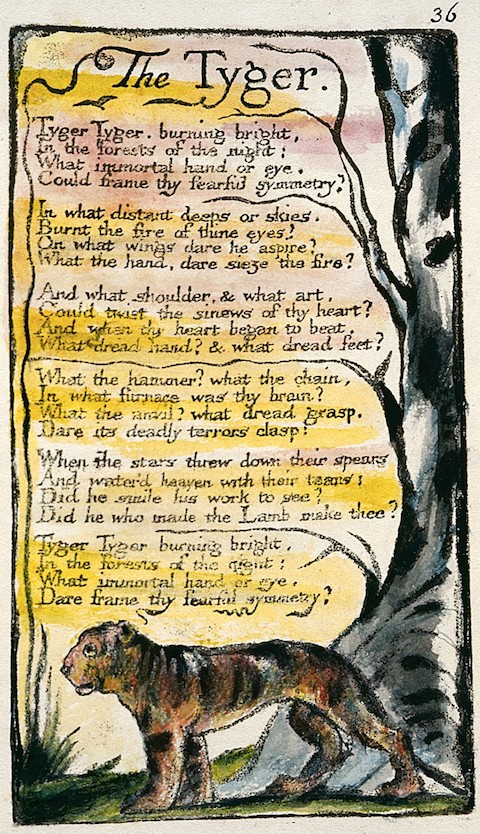
There was once a time, if you can believe it, when Allen Gins­berg could take the poet­ry of William Blake, sing it in a record­ing stu­dio, and then MGM Records would release it as a long-play­ing album. I refer to the time, of course, of “the six­ties,” that half-myth­i­cal era that seems to have run from around 1966 to 1972. Smack in the mid­dle of the six­ties, thus defined, came this dis­tinc­tive release, Songs of Inno­cence and Expe­ri­ence by William Blake, tuned by Allen Gins­berg, record­ed in Decem­ber 1969 and released in 1970.

Songs_of_Innocence_and_of_Experience_copy_L_object_36_The_Tyger_1795

Every read­er famil­iar with Blake, of course, knows Songs of Inno­cence and of Expe­ri­ence as a book, an illus­trat­ed col­lec­tion of poems first self-pub­lished in 1789 and in 1794 re-issued and expand­ed as Songs of Inno­cence and of Expe­ri­ence Show­ing the Two Con­trary States of the Human Soul. This work of an 18th-cen­tu­ry poet cap­tured the imag­i­na­tion of the 20th-cen­tu­ry poet Gins­berg, and not just as read­ing mate­r­i­al; he came to believe that not only did Blake intend his words to be sung, but that he him­self could ren­der them faith­ful­ly in song — as well as play the piano and har­mo­ni­um in accom­pa­ni­ment.

You can hear hear the fruit of Gins­berg’s musi­cal-poet­ic recon­struc­tive labors at the top of the post, at the Inter­net Archive, or at PennSound, which not only offers each track indi­vid­u­al­ly but also its lyrics and some­times even links to the cor­re­spond­ing page from the orig­i­nal book at the William Blake Archive. When we think of six­ties-defin­ing albums, we think of Blonde on Blonde, Are You Expe­ri­enced?Sgt, Pep­per’s Lone­ly Hearts Club Band, that sort of thing, and right­ly so, but a project like Songs of Inno­cence and Expe­ri­ence by William Blake, tuned by Allen Gins­berg speaks just as much to what became pos­si­ble in that artis­tic Cam­bri­an explo­sion of an era.

Relat­ed Con­tent:

William Blake’s Hal­lu­ci­na­to­ry Illus­tra­tions of John Milton’s Par­adise Lost

Hear Allen Ginsberg’s Short Free Course on Shakespeare’s Play, The Tem­pest (1980)

Allen Ginsberg’s “Celes­tial Home­work”: A Read­ing List for His Class “Lit­er­ary His­to­ry of the Beats”

Allen Ginsberg’s Last Three Days on Earth as a Spir­it: The Poet’s Final Days Cap­tured in a 1997 Film

Allen Gins­berg Record­ings Brought to the Dig­i­tal Age. Lis­ten to Eight Full Tracks for Free

Col­in Mar­shall hosts and pro­duces Note­book on Cities and Cul­ture as well as the video series The City in Cin­e­ma and writes essays on cities, lan­guage, Asia, and men’s style. He’s at work on a book about Los Ange­les, A Los Ange­les Primer. Fol­low him on Twit­ter at @colinmarshall or on Face­book.

Patti Smith and David Lynch Talk About the Source of Their Ideas & Creative Inspiration


Where do artis­tic ideas come from?

The col­lec­tive uncon­scious?

Cheesy cov­ers of 50s pop tunes?

The ghost of Jer­ry Gar­cia?

Per­haps rather than try­ing to iden­ti­fy the source, we should work toward being open to inspi­ra­tion in what­ev­er guise it presents itself.  It’s an approach that cer­tain­ly seems to be work­ing for Pat­ti Smith and David Lynch, aka the God­moth­er of Punk and Jim­my Stew­art from Mars, both a shock­ing­ly youth­ful 69.

One of the most excit­ing things about their recent seg­ment for the BBC’s News­night “Encoun­ters” series is watch­ing how appre­cia­tive these vet­er­ans are of each other’s process.

“I want a copy of what you just said,” Smith gasps, after Lynch likens the begin­nings of a cre­ative process to being in pos­ses­sion of a sin­gle, intrigu­ing puz­zle piece, know­ing that a com­plet­ed ver­sion exists in the adja­cent room.

Lynch, a long­time advo­cate of tran­scen­den­tal med­i­ta­tion, smiles benign­ly as Smith wax­es poet­ic about the for­ma­tion of her ideas.

As artists, they’re com­mit­ted to peek­ing beneath the veneer. “What’s more hor­ri­fy­ing than nor­mal­cy?” Smith asks.

It does seem impor­tant to note how both of these long­time prac­ti­tion­ers men­tion jot­ting their ideas down imme­di­ate­ly fol­low­ing the muse’s vis­it.

Also what I wouldn’t give for a ring­tone of Lynch say­ing, “I want to talk to you about Pussy Riot,” as sin­cere­ly and earnest­ly as Mr. Rogers!

Relat­ed Con­tent:

Pat­ti Smith Doc­u­men­tary Dream of Life Beau­ti­ful­ly Cap­tures the Author’s Life and Long Career (2008)

David Lynch Explains How Med­i­ta­tion Enhances Our Cre­ativ­i­ty

David Lynch Lists His Favorite Films & Direc­tors, Includ­ing Felli­ni, Wilder, Tati & Hitch­cock

Ayun Hal­l­i­day is an author, home­school­er, and Chief Pri­ma­tol­o­gist of the East Vil­lage Inky zine. Fol­low her @AyunHalliday

Isaac Asimov Wrote “Gross” Limericks — Lots of Them

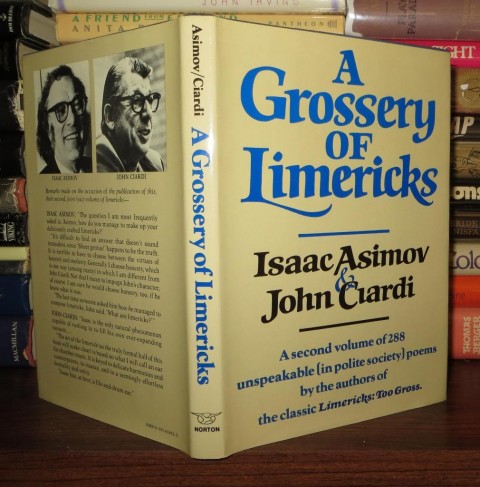
asimov gross limericks
Isaac Asi­mov — he’s best known for his mas­ter­ful works of sci­ence fic­tion.  He was also a pro­fes­sor of bio­chem­istry at Boston Uni­ver­si­ty. A com­mit­ted human­ist. And some­one who enjoyed writ­ing lots of dirty lim­er­icks. Some­where on his list of 500+ books, you will find Lech­er­ous Lim­er­icks (1976), Lim­er­icks: Too Gross (1978), A Grossery of Lim­er­icks (1981), and Asi­mov Laughs Again: More Than 700 Jokes, Lim­er­icks, and Anec­dotes (1993). In two of these vol­umes, Asi­mov sparred with pop­u­lar poet and Dante trans­la­tor John Cia­r­di, each writ­ing dirty poems, and try­ing to mas­ter a rather strict poet­ic form that began in ear­ly 18th cen­tu­ry Eng­land.

Most of the lim­er­icks are indeed a “gross.” Many are crude. Some would be con­sid­ered down­right offen­sive by 2015 stan­dards. But, if you want a taste of what Asi­mov served up, you can try out these tamer ones from Lim­er­icks: Too Gross.

The haughty philoso­pher, Pla­to
Would unbend to a sweet young toma­to.
Though she might be naive
Like you would­n’t believe
He would patient­ly show her the way to.

A cer­tain young fel­low named Scott
Once jumped his young bride on their cot.
He intend­ed no shirk­ing.
But from sheer over­work­ing
A dry run is all that she got.

If you want to see Asi­mov at his tamest, you can also check out his book Lim­er­icks for Chil­dren.

Relat­ed Con­tent:

Isaac Asi­mov Pre­dicts in 1964 What the World Will Look Like Today — in 2014

Free: Isaac Asimov’s Epic Foun­da­tion Tril­o­gy Dra­ma­tized in Clas­sic Audio

Isaac Asi­mov Imag­ines Learn­ing in the Elec­tron­ic Age … and Gets It Quite Right (1989)

by | Permalink | Make a Comment ( 3 ) |

Rare Footage of Allen Ginsberg, Jack Kerouac & Other Beats Hanging Out in the East Village (1959)

We don’t often think of the Beats as fam­i­ly men, and that’s because the most promi­nent of them weren’t, except William Bur­roughs for a time (a trag­ic sto­ry or two for anoth­er day). But friends of Gins­berg and Ker­ouac like Lucien and Francesca Carr and Robert and Mary Frank brought chil­dren into the poets’ lives, and you can see them all above, relax­ing at the Har­mo­ny Bar & Restau­rant in New York’s East Vil­lage in 1959.

This rare silent footage unites the three Carr and two Frank chil­dren in a rare appear­ance of the Beats togeth­er on film. The mus­ta­chioed Lucien Carr —a char­ac­ter with his own dark sto­ry—can be seen seat­ed next to Ker­ouac.  The Franks, père and mère, were both artists in their own right—London-born Mary a trained dancer, sculp­tor, and painter, and Robert an impor­tant Amer­i­can pho­tog­ra­ph­er and doc­u­men­tary film­mak­er.

Dan­ger­ous Minds spec­u­lates that it’s Robert Frank behind the cam­era, both because we don’t see him in front of it and because Frank would that same year direct the short film Pull My Daisy (above), fea­tur­ing both Gins­berg and Ker­ouac and adapt­ed from Kerouac’s play Beat Gen­er­a­tion. (Frank appar­ent­ly denies he shot the footage at the top). Pull My Daisy also includes famous Beats like Gre­go­ry Cor­so, musi­cian David Amram, and Ginsberg’s part­ner, poet Peter Orlovsky. In a pre­vi­ous post on that film, Open Culture’s Col­in Mar­shall described it as craft­ed with “great delib­er­ate­ness, albeit the kind of delib­er­ate­ness meant to cre­ate the impres­sion of thrown-togeth­er, ram­shackle spon­tane­ity.”

To learn more about the Beats’ appear­ances on film—as them­selves, in char­ac­ter, and through their adapt­ed work, see this excel­lent fil­mog­ra­phy. And just above, watch a mash-up of most of those var­i­ous cin­e­mat­ic appear­ances in a trail­er pro­duced by Cine­fam­i­ly for the IFC and Sun­dance series “Beats on Film.”

via The Wall Break­ers/Dan­ger­ous Minds

Relat­ed Con­tent:

Pull My Daisy: 1959 Beat­nik Film Stars Jack Ker­ouac and Allen Gins­berg, Shot by Robert Frank

William S. Burrough’s Avant-Garde Movie ‘The Cut Ups’ (1966)

Bob Dylan and Allen Gins­berg Vis­it the Grave of Jack Ker­ouac (1975)

Josh Jones is a writer and musi­cian based in Durham, NC. Fol­low him at @jdmagness

Watch a Music Video & Hear Tracks From Maya Angelou’s Posthumous Hip-Hop Album, Caged Bird Songs

Before she died ear­li­er this year, Maya Angelou was work­ing on Caged Bird Songs, a musi­cal col­lab­o­ra­tion that fea­tures Angelou recit­ing her poems and pro­duc­ers Shawn Rivera and Rocc­Starr blend­ing them with mod­ern day hip-hop. After her pass­ing, Angelou’s estate con­tin­ued nudg­ing the project along. Even­tu­al­ly the 13-song album was released in Novem­ber, and now comes a music video. The video (above) cen­ters around “Harlem Hop­scotch,” a poem Angelou wrote in 1969. The text of the poem is avail­able over at the Poet­ry Foun­da­tion. You can hear more tracks from the album below, or pur­chase the com­plete album here:

via Metafil­ter

Relat­ed Con­tent:

Maya Angelou Tells Studs Terkel How She Learned to Count Cards & Hus­tle in a New Ani­mat­ed Video

Maya Angelou Reads “Still I Rise” and “On the Pulse of the Morn­ing”

Watch Langston Hugh­es Read Poet­ry from His First Col­lec­tion, The Weary Blues (1958)

by | Permalink | Make a Comment ( 1 ) |

A Sun Ra Christmas: Hear His 1976 Radio Broadcast of Poetry and Music

Every­body spreads hol­i­day cheer in their own way. On Christ­mas Day 1976, the eccen­tric jazz com­pos­er and band­leader did it by appear­ing on Blue Gen­e­sis, a show on the Uni­ver­si­ty of Penn­syl­va­ni­a’s radio sta­tion WXPN, read­ing his poet­ry with music. “The choice of poems and their sequenc­ing offers what Sun Ra thought was most impor­tant in his writ­ing,” writes John Szwed in Space is the Place: The Life and Times of Sun Ra. “Here are key words like ‘cos­mos,’ ‘truth,’ ‘bad,’ ‘myth,’ and ‘the impos­si­ble’; atten­tion to pho­net­ic equiv­a­lence; the uni­ver­sal­i­ty of the music and its meta­phys­i­cal sta­tus; allu­sions to black fra­ter­nal orders and secret soci­eties; bib­li­cal pas­sages and their inter­pre­ta­tion; and even a few auto­bi­o­graph­i­cal glimpses.”

Part 1

Part 2

Though read on Christ­mas, these poems have no par­tic­u­lar reli­gious slant — noth­ing, that is, but Sun Ra’s usu­al mix­ture of the Kab­bal­ah, Rosi­cru­cian­ism, numerol­o­gy, Freema­son­ry, ancient Egypt­ian mys­ti­cism, Gnos­ti­cism, and black nation­al­ism.

Fans of Sun Ra would expect no less. But those more recent­ly acquaint­ed with the jazzman born Her­man Poole Blount may find this an unusu­al half-hour of lis­ten­ing, for the hol­i­days or oth­er­wise. “A pio­neer of ‘Afro­fu­tur­ism,’ Sun Ra emerged from a tra­di­tion­al swing scene in Alaba­ma, tour­ing the coun­try in his teens as a mem­ber of his high school biol­o­gy teacher’s big band,” wrote Open Cul­ture’s own Josh Jones ear­li­er this year. “While attend­ing Alaba­ma Agri­cul­tur­al and Mechan­i­cal Uni­ver­si­ty, he had an out-of-body expe­ri­ence dur­ing which he was trans­port­ed into out­er space.”

In that post on Sun Ra’s 1971 UC Berke­ley Course “The Black Man in the Cos­mos,” you can learn more about the numer­ous non­stan­dard expe­ri­ences and philoso­phies that went into the pro­duc­tion of his words and his music, which con­verge in this spe­cial broad­cast you can hear at the top of the post or on Ubuweb. It’ll make you regret that Sun Ra and his free-jazz “Arkestra” nev­er pro­duced a full-length Christ­mas album — though maybe, on whichev­er dis­tant plan­et his immor­tal spir­it reached after the end of his Earth-life two decades ago, he’s record­ing it as we speak.

via Ubuweb

Relat­ed Con­tent:

Sun Ra’s Full Lec­ture & Read­ing List From His 1971 UC Berke­ley Course, “The Black Man in the Cos­mos”

The Cry of Jazz: 1958’s High­ly Con­tro­ver­sial Film on Jazz & Race in Amer­i­ca (With Music by Sun Ra)

Col­in Mar­shall hosts and pro­duces Note­book on Cities and Cul­ture and writes essays on cities, lan­guage, Asia, and men’s style. He’s at work on a book about Los Ange­les, A Los Ange­les Primer. Fol­low him on Twit­ter at @colinmarshall or on Face­book.

« Go BackMore in this category... »
Quantcast