Nine Things a Woman Couldn’t Do in 1971

As we bar­rel toward the cen­ten­ni­al cel­e­bra­tion of wom­en’s suf­frage in the Unit­ed States, it’s not enough to bone up on the plat­forms of female pri­ma­ry can­di­dates (though that’s an excel­lent start).

A Twit­ter user and self-described Old Crone named Robyn recent­ly urged her fel­low Amer­i­cans to take a good long gan­der at a list of nine free­doms women in the Unit­ed States were not uni­ver­sal­ly grant­ed in 1971, the year Helen Red­dy released the soon-to-be anthem, “I Am Woman,” above.

Even those of us who remem­ber singing along as chil­dren may expe­ri­ence some shock that these facts check out on Snopes.

  1. CREDIT CARDS: Pri­or to the Equal Cred­it Oppor­tu­ni­ty Act of 1974, mar­ried women couldn’t get cred­it cards with­out their hus­bands’ sig­na­tures. Sin­gle women, divorcees, and wid­ows were often required to have a man cosign. The dou­ble stan­dard also meant female appli­cants were fre­quent­ly issued card lim­its up to 50% low­er than that of males who earned iden­ti­cal wages.
  2. PREGNANT WORKERS: The Preg­nan­cy Dis­crim­i­na­tion Act of 1978 pro­tect­ed preg­nant women from being fired because of their impend­ing mater­ni­ty. But it came with a major loop­hole that’s still in need of clos­ing. The lan­guage of the 41-year-old law stip­u­lates that the employ­ers must accom­mo­date preg­nant work­ers only if con­ces­sions are being made for oth­er employ­ees who are “sim­i­lar in their abil­i­ty or inabil­i­ty to work.”
  3. JURY DUTY: In 1975, the Supreme Court declared it con­sti­tu­tion­al­ly unac­cept­able for states to deny women the oppor­tu­ni­ty to serve on juries. This is an are­na where we’ve all come a long way, baby. It’s now com­plete­ly nor­mal for men to be excused from jury duty as the pri­ma­ry care­givers of their young chil­dren.
  4. MILITARY COMBAT: In 2013, for­mer Sec­re­tary of Defense Leon Panet­ta and for­mer Chair­man of the Joint Chiefs of Staff, Gen­er­al Mar­tin Dempsey announced that the Pen­ta­gon was rescind­ing the direct com­bat exclu­sion rule that barred women from serv­ing in artillery, armor, infantry and oth­er such bat­tle roles. At the time of the announce­ment, the mil­i­tary had already seen more than 130 female sol­diers killed, and 800 wound­ed on the front­lines in Iraq and Afghanistan.
  5. IVY LEAGUE ADMISSIONS: Those who con­ceive of elite col­leges as breed­ing grounds for sex­u­al assault protests and Title IX activism would do well to remem­ber that Colum­bia Col­lege didn’t admit women until 1983, fol­low­ing in the mar­gin­al­ly deep­er foot­steps of oth­ers in the Ivy League—Harvard (1977), Dart­mouth (1972), Brown (1971), Yale (1969), and Prince­ton (1969). These days, sin­gle sex high­er edu­ca­tion options for women far out­num­ber those for men, but the net­work­ing pow­er and increased earn­ing poten­tial an Ivy League degree con­fers remains the same.
  6. WORKPLACE HARASSMENT: In 1977, women who’d been sex­u­al­ly harassed in the work­place received con­fir­ma­tion in three sep­a­rate tri­als that they could sue their employ­ers under Title VII of the 1964 Civ­il Rights Act. In 1998, the Supreme Court ruled that same-sex harass­ment was also unlaw­ful. In between was the tele­vi­sion event of 1991, Ani­ta Hill’s shock­ing tes­ti­mo­ny against her for­mer boss, U.S. Supreme Court jus­tice (then nom­i­nee) Clarence Thomas.
  7. SPOUSAL CONSENT: In 1993, spousal rape was offi­cial­ly out­lawed in all 50 states. Not tonight hon­ey, or you’ll have a headache in the form of your wife’s legal back up.
  8. HEALTH INSURANCE: In 2010, the Patient Pro­tec­tion and Afford­able Care Act decreed that any health insur­ance plan estab­lished after March of that year could not charge women high­er pre­mi­ums than men for iden­ti­cal ben­e­fits. This was bad news for women who got their health insur­ance through their jobs, and whose employ­ers were grand­fa­thered into dis­crim­i­na­to­ry plans estab­lished pri­or to 2010. Of course, that’s all ancient his­to­ry now.
  9. CONTRACEPTIVES: In 1972, the Supreme Court made it legal for all cit­i­zens to pos­sess birth con­trol, irre­spec­tive of mar­i­tal sta­tus, stat­ing “if the right of pri­va­cy means any­thing, it is the right of the indi­vid­ual, mar­ried or sin­gle, to be free from unwar­rant­ed gov­ern­men­tal intru­sion into mat­ters so fun­da­men­tal­ly affect­ing a per­son as the deci­sion whether to bear or beget a child.” (It’s worth not­ing, how­ev­er, that in 1972, states could still con­sti­tu­tion­al­ly pro­hib­it and pun­ish sex out­side of mar­riage.)

Fem­i­nism is NOT just for oth­er women.

- Old Crone

Via Kot­tke

Relat­ed Con­tent:

The Library of Con­gress Dig­i­tizes Over 16,000 Pages of Let­ters & Speech­es from the Women’s Suf­frage Move­ment, and You Can Help Tran­scribe Them

MAKERS Tells the Sto­ry of 50 Years of Progress for Women in the U.S.

Women’s Hid­den Con­tri­bu­tions to Mod­ern Genet­ics Get Revealed by New Study: No Longer Will They Be Buried in the Foot­notes

A Space of Their Own, a New Online Data­base, Will Fea­ture Works by 600+ Over­looked Female Artists from the 15th-19th Cen­turies

Ayun Hal­l­i­day is an author, illus­tra­tor, the­ater mak­er and Chief Pri­ma­tol­o­gist of the East Vil­lage Inkyzine.  Join her in NYC on Mon­day, Octo­ber 7 when her month­ly book-based vari­ety show, Necro­mancers of the Pub­lic Domaincel­e­brates the art of Aubrey Beard­s­ley. Fol­low her @AyunHalliday.

The Library of Congress Digitizes Over 16,000 Pages of Letters & Speeches from the Women’s Suffrage Movement, and You Can Help Transcribe Them

“Democ­ra­cy may not exist,” Astra Tay­lor declares in the title of her new book, “but we’ll miss it when it’s gone.” This inher­ent para­dox, she argues, is not fatal, but a ten­sion with which each era’s demo­c­ra­t­ic move­ments must wres­tle, in messy strug­gles against inevitable oppo­si­tion. “Per­fect democ­ra­cy… may not in fact exist and nev­er will, but that doesn’t mean we can’t make progress toward it, or that what there is of it can’t dis­ap­pear.”

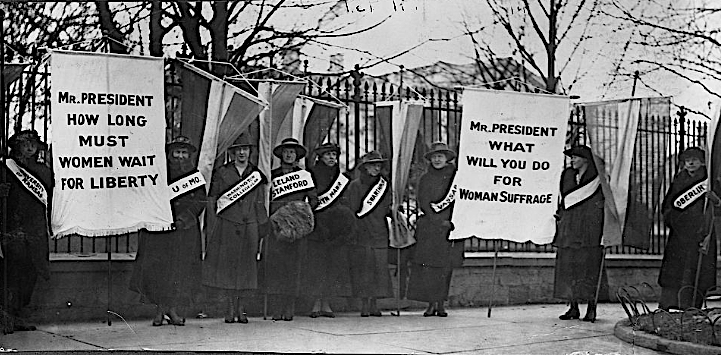
Tay­lor is upfront about “democracy’s dark his­to­ry, from slav­ery and colo­nial­ism to facil­i­tat­ing the emer­gence of fas­cism.” But she is equal­ly cel­e­bra­to­ry of its successes—moments when those who were denied rights mar­shaled every means at their dis­pos­al, from lob­by­ing cam­paigns to con­fronta­tion­al direct action, to win the vote and bet­ter the lives of mil­lions. For all its imper­fec­tions, the women’s suf­frage move­ment of the 19th and ear­ly 20th cen­tu­ry did just that.

It did so—even before elec­tron­ic mass com­mu­ni­ca­tion systems—by build­ing inter­na­tion­al activist net­works and form­ing nation­al asso­ci­a­tions that took high­ly-vis­i­ble action for decades until the 19th Amend­ment passed in 1920. We can learn how this all came about from the sources them­selves, through the “let­ters, speech­es, news­pa­per arti­cles, per­son­al diaries, and oth­er mate­ri­als from famed suf­frag­ists like Susan B. Antho­ny and Eliz­a­beth Cady Stan­ton.”

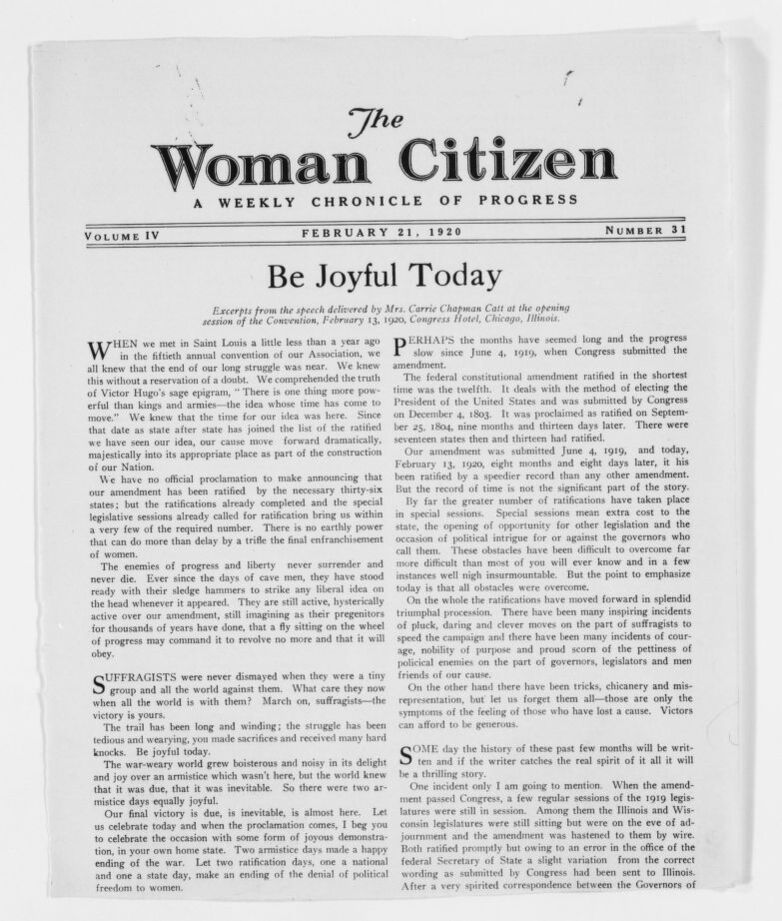
So reports Men­tal Floss, describ­ing the Library of Con­gress’ dig­i­tal col­lec­tion of suf­frag­ist papers, which includes dozens of famous and less famous activist voic­es. In one exam­ple of both inter­na­tion­al coop­er­a­tion and inter­na­tion­al ten­sion, Car­rie Chap­man Catt, Anthony’s suc­ces­sor (see a pub­lished excerpt of one of her speech­es below), describes her expe­ri­ence at the Con­gress of the Inter­na­tion­al Woman Suf­frage Alliance in Rome. “A more unpromis­ing place for a Con­gress I nev­er saw,” she wrote, dis­mayed. Maybe despite her­self she reveals that the dif­fer­ences might have been cul­tur­al: “The Ital­ian women could not com­pre­hend our dis­ap­proval.”

The frac­tious, often dis­ap­point­ing, rela­tion­ships between the larg­er inter­na­tion­al women’s suf­frage move­ment, the African Amer­i­can women’s suf­frage move­ment, and most­ly male Civ­il Rights lead­ers in the U.S. are rep­re­sent­ed by the diaries. let­ters, note­books, and speech­es of Mary Church Ter­rell, “a founder of the Nation­al Asso­ci­a­tion of Col­ored Women. These doc­u­ments shed light on minori­ties’ labo­ri­ous suf­frage strug­gles and her own deal­ings with Civ­il Rights fig­ures like W.E.B. Du Bois.” (Ter­rell became an activist in 1892 and lived to fight against Jim Crow seg­re­ga­tion in the ear­ly 1950s.)

The col­lec­tion includes “some 16,000 his­toric papers relat­ed to the women’s rights move­ment alone.” All of them have been dig­i­tal­ly scanned, and if you’re eager to dig into this for­mi­da­ble archive, you’re in luck. The Library of Con­gress is ask­ing for help tran­scrib­ing so that every­one can read these pri­ma­ry sources of demo­c­ra­t­ic his­to­ry. So far, reports Smith­son­ian, over 4200 doc­u­ments have been tran­scribed, as part of a larg­er, crowd­sourced project called By the Peo­ple, which has pre­vi­ous­ly tran­scribed papers from Abra­ham Lin­coln, Clara Bar­ton, Walt Whit­man, and oth­ers.

Rather than focus­ing on an indi­vid­ual, this project is inclu­sive of what is arguably the main engine of democ­ra­cy: large-scale social movements—paradoxically the most demo­c­ra­t­ic means of claim­ing indi­vid­ual rights. Enter the impres­sive dig­i­tal col­lec­tion “Suf­frage: Women Fight for the Vote” here, and, if you’re moved by civic duty or schol­ar­ly curios­i­ty, sign up to tran­scribe.

via Men­tal Floss

Relat­ed Con­tent:  

The Women’s Suf­frage March of 1913: The Parade That Over­shad­owed Anoth­er Pres­i­den­tial Inau­gu­ra­tion a Cen­tu­ry Ago

Odd Vin­tage Post­cards Doc­u­ment the Pro­pa­gan­da Against Women’s Rights 100 Years Ago

The Library of Con­gress Makes Thou­sands of Fab­u­lous Pho­tos, Posters & Images Free to Use & Reuse

Josh Jones is a writer and musi­cian based in Durham, NC. Fol­low him at @jdmagness.

Mister Rogers Creates a Prime Time TV Special to Help Parents Talk to Their Children About the Assassination of Robert F. Kennedy (1968)

Near­ly three min­utes into a patient blow-by-blow demon­stra­tion of how breath­ing works, Fred Rogers’ tim­o­rous hand pup­pet Daniel Striped Tiger sur­pris­es his human pal, Lady Aber­lin, with a wham­my: What does assas­si­na­tion mean?

Her answer, while not exact­ly Web­ster-Mer­ri­am accu­rate, is both con­sid­ered and age-appro­pri­ate. (Daniel’s for­ev­er-age is some­where in the neigh­bor­hood of four.)

The exchange is part of a spe­cial prime­time episode of Mis­ter Rogers’ Neigh­bor­hood, that aired just two days after Sen­a­tor Robert F. Kennedy’s assas­si­na­tion.

Rogers, alarmed that America’s chil­dren were being exposed to unfil­tered descrip­tions and images of the shock­ing event, had stayed up late to write it, with the goal of help­ing par­ents under­stand some of the emo­tions their chil­dren might be expe­ri­enc­ing in the after­math:

I’ve been ter­ri­bly con­cerned about the graph­ic dis­play of vio­lence which the mass media has been show­ing recent­ly. And I plead for your pro­tec­tion and sup­port of your young chil­dren. There is just so much that a very young child can take with­out it being over­whelm­ing.

Rogers was care­ful to note that not all chil­dren process scary news in the same way.

To illus­trate, he arranged for a vari­ety of respons­es through­out the Land of Make Believe. One pup­pet, Lady Elaine, is eager to act out what she has seen: “That man got shot by that oth­er man at least six times!”

Her neigh­bor, X the Owl, does­n’t want any part of what is to him a fright­en­ing-sound­ing game.

And Daniel, who Rogers’ wife Joanne inti­mat­ed was a reflec­tion “the real Fred,” pre­ferred to put the top­ic on ice for future discussions—a lux­u­ry that the grown up Rogers would not allow him­self.

The episode has become noto­ri­ous, in part because it aired but once on the small screen. (The 8‑minute clip at the top of the page is the longest seg­ment we were able to truf­fle up online.)

Writer and gameshow his­to­ri­an Adam Ned­eff watched it in its entire­ty at the Paley Cen­ter for Media, and the detailed impres­sions he shared with the Neigh­bor­hood Archive web­site pro­vides a sense of the piece as a whole.

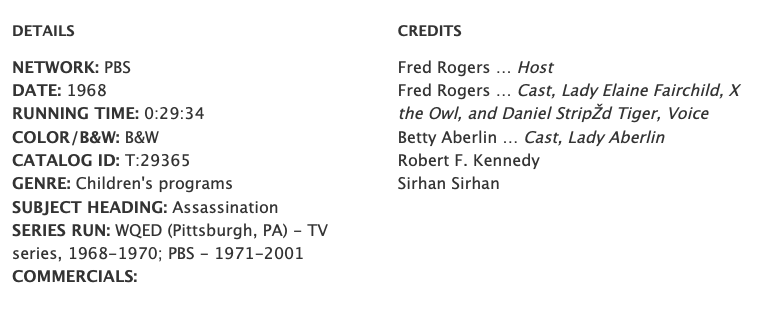
Mean­while, the Paley Center’s cat­a­logue cred­its speak to the dra­ma-in-real-life imme­di­a­cy of the turn­around from con­cep­tion to air­date:

Above is some of the footage Rogers feared unsus­pect­ing chil­dren would be left to process solo. Read­ers, are there any among you who remem­ber dis­cussing this event with your par­ents… or chil­dren?

Ever vig­i­lant, Rogers returned in the days imme­di­ate­ly fol­low­ing the 2001 attack on the World Trade Cen­ter, with a spe­cial mes­sage for par­ents who had grown up watch­ing him.

Relat­ed Con­tent:

Mr. Rogers’ Nine Rules for Speak­ing to Chil­dren (1977)

When Fred Rogers and Fran­cois Clem­mons Broke Down Race Bar­ri­ers on a His­toric Episode of Mis­ter Rogers’ Neigh­bor­hood (1969)

All 886 episodes of Mis­ter Roger’s Neigh­bor­hood Stream­ing Online (for a Lim­it­ed Time)

Ayun Hal­l­i­day is an author, illus­tra­tor, the­ater mak­er and Chief Pri­ma­tol­o­gist of the East Vil­lage Inkyzine.  Join her in NYC on Mon­day, Sep­tem­ber 9 for anoth­er sea­son of her book-based vari­ety show, Necro­mancers of the Pub­lic Domain. Fol­low her @AyunHalliday.

Alexis de Tocqueville’s Prediction of How American Democracy Could Lapse Into Despotism, Read by Michel Houellebecq

Michel Houelle­bec­q’s third nov­el Plat­form, which involves a ter­ror­ist bomb­ing in south­east Asia, came out the year before a sim­i­lar real-life inci­dent occurred in Thai­land. His sev­enth nov­el Sub­mis­sion, about the con­ver­sion of France into a Mus­lim coun­try, came out the same day as the mas­sacre at the offices of Islam-pro­vok­ing satir­i­cal week­ly Char­lie Heb­do. His most recent nov­el Sero­tonin, in which farm­ers vio­lent­ly revolt against the French state, hap­pened to come out in the ear­ly stages of the pop­ulist “yel­low vest” move­ment. Houelle­becq has thus, even by some of his many detrac­tors, been cred­it­ed with a cer­tain pre­science about the social and polit­i­cal dan­gers of the world in which we live today.

So too has a coun­try­man of Houelle­bec­q’s who did his writ­ing more than 150 years ear­li­er: Alex­is de Toc­queville, author of Democ­ra­cy in Amer­i­ca, the endur­ing study of that then-new coun­try and its dar­ing­ly exper­i­men­tal polit­i­cal sys­tem. And what does per­haps France’s best-known liv­ing man of let­ters think of Toc­queville, one of his best-known pre­de­ces­sors? “I read him for the first time long ago and real­ly found it a bit bor­ing,” Houelle­becq says in the inter­view clip above, with a flat­ness rem­i­nis­cent of his nov­els’ dis­af­fect­ed nar­ra­tors. “Then I tried again two years ago and I was thun­der­struck.”

As an exam­ple of Toc­queville’s clear-eyed assess­ment of democ­ra­cy, Houelle­becq reads aloud this pas­sage about its poten­tial to turn into despo­tism:

I seek to trace the nov­el fea­tures under which despo­tism may appear in the world. The first thing that strikes the obser­va­tion is an innu­mer­able mul­ti­tude of men, all equal and alike, inces­sant­ly endeav­or­ing to pro­cure the pet­ty and pal­try plea­sures with which they glut their lives. Each of them, liv­ing apart, is as a stranger to the fate of all the rest; his chil­dren and his pri­vate friends con­sti­tute to him the whole of mankind. As for the rest of his fel­low cit­i­zens, he is close to them, but he does not see them; he touch­es them, but he does not feel them; he exists only in him­self and for him­self alone; and if his kin­dred still remain to him, he may be said at any rate to have lost his coun­try.

Above this race of men stands an immense and tute­lary pow­er, which takes upon itself alone to secure their grat­i­fi­ca­tions and to watch over their fate. That pow­er is absolute, minute, reg­u­lar, prov­i­dent, and mild. It would be like the author­i­ty of a par­ent if, like that author­i­ty, its object was to pre­pare men for man­hood; but it seeks, on the con­trary, to keep them in per­pet­u­al child­hood: it is well con­tent that the peo­ple should rejoice, pro­vid­ed they think of noth­ing but rejoic­ing. For their hap­pi­ness such a gov­ern­ment will­ing­ly labors, but it choos­es to be the sole agent and the only arbiter of that hap­pi­ness; it pro­vides for their secu­ri­ty, fore­sees and sup­plies their neces­si­ties, facil­i­tates their plea­sures, man­ages their prin­ci­pal con­cerns, directs their indus­try, reg­u­lates the descent of prop­er­ty, and sub­di­vides their inher­i­tances: what remains, but to spare them all the care of think­ing and all the trou­ble of liv­ing?

Being a writer, Houelle­becq nat­u­ral­ly points out the deft­ness of Toc­queville’s style: “It’s mag­nif­i­cent­ly punc­tu­at­ed. The dis­tri­b­u­tion of colons and semi­colons in the sec­tions is mag­nif­i­cent.” But he also has com­ments on the pas­sage’s phi­los­o­phy, pro­nounc­ing that it “con­tains Niet­zsche, only bet­ter.” The oper­a­tive Niet­zschean con­cept here is the “last man,” described in Thus Spoke Zarathus­tra as the pre­sum­able end point of mod­ern soci­ety. If con­di­tions con­tin­ue to progress in the way they have been, each and every human being will become this last man, a weak, com­fort­able, com­pla­cent indi­vid­ual with noth­ing left to fight for, who desires noth­ing more than his small plea­sure for the day, his small plea­sure for the night, and a good sleep.

Safe to say that nei­ther Niet­zsche nor Toc­queville looked for­ward, nor does Houelle­becq look for­ward, to the world of ener­vat­ed last men into which democ­ra­cy could deliv­er us. Houelle­becq also reads aloud anoth­er pas­sage from Democ­ra­cy in Amer­i­ca, one that now appears on the Wikipedia page for soft despo­tism, describ­ing how a demo­c­ra­t­ic gov­ern­ment might gain absolute pow­er over its peo­ple with­out the peo­ple even notic­ing:

After hav­ing thus suc­ces­sive­ly tak­en each mem­ber of the com­mu­ni­ty in its pow­er­ful grasp and fash­ioned him at will, the supreme pow­er then extends its arm over the whole com­mu­ni­ty. It cov­ers the sur­face of soci­ety with a net­work of small com­pli­cat­ed rules, minute and uni­form, through which the most orig­i­nal minds and the most ener­getic char­ac­ters can­not pen­e­trate, to rise above the crowd. The will of man is not shat­tered, but soft­ened, bent, and guid­ed; men are sel­dom forced by it to act, but they are con­stant­ly restrained from act­ing. Such a pow­er does not destroy, but it pre­vents exis­tence; it does not tyr­an­nize, but it com­press­es, ener­vates, extin­guish­es, and stu­pe­fies a peo­ple, till each nation is reduced to noth­ing bet­ter than a flock of timid and indus­tri­ous ani­mals, of which the gov­ern­ment is the shep­herd.

“A lot of what I’ve writ­ten could be sit­u­at­ed with­in this sce­nario,” Houelle­becq says, adding that in his gen­er­a­tion the “defin­i­tive trans­for­ma­tion of soci­ety into indi­vid­u­als” has been more com­plete than Toc­queville or Niet­zsche would have imag­ined.

In addi­tion to lack­ing a fam­i­ly, Houelle­becq (whose sec­ond nov­el was titled Atom­ized) also men­tions hav­ing “the impres­sion of being caught up in a net­work of com­pli­cat­ed, minute, and stu­pid rules” as well as “of being herd­ed toward a uni­form kind of hap­pi­ness, toward a hap­pi­ness which does­n’t real­ly make me hap­py.” In the end, adds Houelle­becq, the aris­to­crat­ic Toc­queville “is in favor of the devel­op­ment of democ­ra­cy and equal­i­ty, while being more aware than any­one else of its dan­gers.” That the 19th-cen­tu­ry Amer­i­ca Toc­queville knew avoid­ed them he cred­it­ed to the “habits of the heart” of the Amer­i­can peo­ple. We cit­i­zens of demo­c­ra­t­ic coun­tries, whichev­er demo­c­ra­t­ic coun­try we live in, would do well to ask where the habits of our own hearts will lead us next.

Relat­ed Con­tent:

Alex­is De Tocqueville’s Democ­ra­cy in Amer­i­ca: An Ani­mat­ed Intro­duc­tion to the Most Insight­ful Study of Amer­i­can Democ­ra­cy

How to Know if Your Coun­try Is Head­ing Toward Despo­tism: An Edu­ca­tion­al Film from 1946

George Orwell’s Final Warn­ing: Don’t Let This Night­mare Sit­u­a­tion Hap­pen. It Depends on You!

Is Mod­ern Soci­ety Steal­ing What Makes Us Human?: A Glimpse Into Nietzsche’s Thus Spoke Zarathus­tra by The Par­tial­ly Exam­ined Life

The His­to­ry of West­ern Social The­o­ry, by Alan Mac­Far­lane, Cam­bridge Uni­ver­si­ty

Hunter S. Thomp­son Gets in a Gun­fight with His Neigh­bor & Dis­pens­es Polit­i­cal Wis­dom: “In a Democ­ra­cy, You Have to Be a Play­er”

Based in Seoul, Col­in Mar­shall writes and broad­casts on cities, lan­guage, and cul­ture. His projects include the book The State­less City: a Walk through 21st-Cen­tu­ry Los Ange­les and the video series The City in Cin­e­ma. Fol­low him on Twit­ter at @colinmarshall, on Face­book, or on Insta­gram.

Watch a Star-Studded Cast Read The Mueller Report: John Lithgow, Kevin Kline, Sigourney Weaver, Annette Bening & More

Laugh­ter is good med­i­cine, but I’ve found lit­tle gen­uine humor in satire of the 2016 elec­tion and sub­se­quent events. Polit­i­cal real­i­ty defies par­o­dy. So, I guess I wasn’t par­tic­u­lar­ly amused by the idea of a com­ic stag­ing of the Mueller Report. But aside from whether or not the report has com­ic poten­tial, the exer­cise rais­es a more seri­ous ques­tion: Should ordi­nary cit­i­zens read the report?

Giv­en the snowjob sum­ma­ry offered by the Attor­ney General—and cer­tain press out­fits who repeat­ed claims that it exon­er­at­ed the president—probably. Espe­cial­ly (good luck) if they can score an unredact­ed copy. Yet, this rais­es yet anoth­er ques­tion: Does any­one actu­al­ly want to read it? The answer appears to be a resound­ing yes. Even though it’s free, the [redact­ed] report is a best­seller.

And yet, “the pub­lished ver­sion is as dry as a [redact­ed] saltine,” writes James Poniewozik at The New York Times. “Robert Mueller him­self has the sto­ic G‑man bear­ing of some­one who would laugh by writ­ing ‘ha ha’ on a memo pad.” (Now that’s a fun­ny image.) One won­ders how many peo­ple duti­ful­ly down­load­ing it have stayed up late by the light of their tablets com­pelled to read it all.

But of course, one does not approach any gov­ern­ment doc­u­ment with the hopes of being enter­tained, though unin­ten­tion­al hilar­i­ty can leap from the page at any time. How should we approach The Inves­ti­ga­tion: A Search for the Truth in 10 Acts? Script­ed by Pulitzer Prize-win­ning  play­wright Robert Schenkkan from the Mueller Report’s tran­scripts, the pro­duc­tion is “part old-time pub­lic recita­tion,” writes Ponei­wozik, and “part Hol­ly­wood table read.”

The stag­ing above at New York’s River­side Church was host­ed by Law Works and per­formed live by a cast includ­ing Annette Ben­ing, Kevin Kline, John Lith­gow (as “Indi­vid­ual 1” him­self), Michael Shan­non, Justin Long, Jason Alexan­der, Wil­son Cruz, Joel Gray, Kyra Sedg­wick, Alfre Woodard, Zachary Quin­to, Mark Ruf­fa­lo, Bob Bal­a­ban, Alyssa Milano, Sigour­ney Weaver, Julia Louis-Drey­fus, Mark Hamill, and more. Bill Moy­ers serves as emcee.

Can this dark­ly com­ic pro­duc­tion deliv­er some com­ic balm for hav­ing lived through the sor­did real­i­ty of the events in ques­tion? It has its moments. Can it offer us some­thing resem­bling truth? You be the judge. Or you be the pro­duc­er, direc­tor, actor, etcetera. If you find value—civic, enter­tain­ment, or otherwise—in the exer­cise, Schenkkan encour­ages you to put on your own ver­sion of The Inves­ti­ga­tion. “Your pro­duc­tion can be as mod­est or extrav­a­gant as you like,” he writes at Law Works, fol­lowed by a list of fur­ther instruc­tions for a pos­si­ble stag­ing.

If, like maybe mil­lions of oth­er peo­ple, you’ve got an unread copy of the Mueller Report on your night­stand, maybe watching—or per­form­ing—The Inves­ti­ga­tion is the best way to get your­self to final­ly read it. Or the most grim­ly humor­ous, moron­ic, pathet­ic, and sur­re­al parts of it, any­way.

Relat­ed Con­tent:

The Mueller Report Released as a Free Well-For­mat­ted eBook (by The Dig­i­tal Pub­lic Library of Amer­i­ca)

Sat­ur­day Night Live: Putin Mocks Trump’s Poor­ly Attend­ed Inau­gu­ra­tion 

The Mueller Report Is #1, #2 and #3 on the Ama­zon Best­seller List: You Can Get It Free Online

Josh Jones is a writer and musi­cian based in Durham, NC. Fol­low him at @jdmagness

An Introduction to the Life & Music of Fela Kuti: Radical Nigerian Bandleader, Political Hero, and Creator of Afrobeat

I can­not write about Niger­ian band­leader, sax­o­phon­ist, and founder of the Afrobeat sound, Fela Aniku­lapo Kuti, with any degree of objec­tiv­i­ty, what­ev­er that might mean. Because hear­ing him counts as one of the great­est musi­cal eye-open­ers of my life: a feel­ing of pure ela­tion that still has not gone away. It was not an orig­i­nal dis­cov­ery by any means. Mil­lions of peo­ple could say the same, and far more of those peo­ple are African fans with a much bet­ter sense of Fela’s mis­sion. In the U.S., the play­ful­ly-deliv­ered but fer­vent urgency of his activist lyri­cism requires foot­notes.

Afrobeat fan­dom in many coun­tries does not have to per­son­al­ly reck­on with the his­to­ry from which Fela and his band emerged—a Nige­ria wracked in the 60s by a mil­i­tary coup, civ­il war, and rule by a suc­ces­sion of mil­i­tary jun­tas. Fela (for whom the first name nev­er seems too famil­iar, so envelop­ing was his pres­ence on stage and record) cre­at­ed the con­di­tions for a new style of African music to emerge, an earth-shat­ter­ing fusion of jazz, funk, psych rock, high life from Ghana, sal­sa, and black pow­er, anti-colo­nial, and anti-cor­rup­tion pol­i­tics.

He took up the cause of the com­mon peo­ple by singing in a pan-African Eng­lish that leapt across bor­ders and cul­tur­al divides. In 1967, the year he went to Ghana to craft his new sound and direc­tion, his cousin, Nobel-prize win­ning writer Wole Soyin­ka, was jailed for attempt­ing to avert Nigeria’s col­lapse into civ­il war. Fela returned home swing­ing three year lat­er, a bur­geon­ing super­star with a new name (drop­ping the British “Ran­some” and tak­ing on the Yoru­ba “Aniku­lapo”), a new sound, and a new vision.

Fela built a com­mune called Kalaku­ta Repub­lic, a home for his band, wives, chil­dren and entourage. The com­pound was raid­ed by the mil­i­tary gov­ern­ment, his night­club shut down, he was beat­en and jailed hun­dreds of times. He con­tin­ued to pub­lish columns and speak out in inter­views and per­for­mances against colo­nial hege­mo­ny and post-colo­nial abuse. He cham­pi­oned tra­di­tion­al African reli­gious prac­tices and pan-African social­ism. He harsh­ly cri­tiqued the West’s role in prop­ping up cor­rupt African gov­ern­ments and con­duct­ing what he called “psy­cho­log­i­cal war­fare.”

What would Fela have thought of Fela Kuti: the Father of Afrobeat, the doc­u­men­tary about him here in two parts? I don’t know, though he might have had some­thing to say about its source: CGTN Africa, a net­work fund­ed by the Chi­nese gov­ern­ment and oper­at­ed by Chi­na Cen­tral Tele­vi­sion. Debate amongst your­selves the pos­si­ble pro­pa­gan­da aims for dis­sem­i­nat­ing the film; none of them inter­fere with the vibrant por­trait that emerges of Nigeria’s most charis­mat­ic musi­cal artist, a man beloved by those clos­est to him and those far­thest away.

Find out why he so enthralls, in inter­views with his band and fam­i­ly, flam­boy­ant per­for­mance footage, and pas­sion­ate, filmed inter­views. Part guru and rad­i­cal pop­ulist hero, a band­leader and musi­cian as tire­less­ly per­fec­tion­is­tic as Duke Elling­ton or James Brown—with the crack band to match—Fela was him­self a great pro­pa­gan­dist, in the way of the great­est self-made star per­form­ers and rev­o­lu­tion­ar­ies. With force of will, per­son­al­i­ty, end­less rehearsal, and one of the great­est drum­mers to come out of the 20th cen­tu­ry, Tony Allen, Fela made a nation­al strug­gle uni­ver­sal, draw­ing on sources from around the glob­al south and the U.S. and, since his death in 1997, inspir­ing a Broad­way musi­cal and wave upon wave of revival and redis­cov­ery of his music and the jazz/rock/Latin/traditional African fusions hap­pen­ing all over the con­ti­nent of Africa in the 60s and 70s.

No list of superla­tives can con­vey the feel­ing of lis­ten­ing to Fela’s music, the unre­lent­ing funk­i­ness that puls­es from his band’s com­plex, inter­lock­ing polyrhythms, the ser­pen­tine lines his sax­o­phone traces around right­eous vocal chants and wah gui­tars. Learn the his­to­ry of his strug­gle, by all means, and cast a wary eye at those who may use it for oth­er means. But let no extra-musi­cal con­cerns stop you from jour­ney­ing through Fela’s cat­a­log, whether as a curi­ous tourist or as some­one who under­stands first­hand the musi­cal war he waged on the zom­bie relics of empire and a mil­i­ta­rized anti-demo­c­ra­t­ic gov­ern­ment.

Fela Kuti: the Father of Afrobeat will be added to our col­lec­tion Free Doc­u­men­taries, a sub­set of our col­lec­tion, 4,000+ Free Movies Online: Great Clas­sics, Indies, Noir, West­erns, Doc­u­men­taries & More.

Relat­ed Con­tent:

Watch a Young Bob Mar­ley and The Wail­ers Per­form Live in Eng­land (1973): For His 70th Birth­day Today

Every Appear­ance James Brown Ever Made On Soul Train. So Nice, So Nice!

Josh Jones is a writer and musi­cian based in Durham, NC. Fol­low him at @jdmagness

Pulitzer Prize-Winning Author Jared Diamond Describes How the U.S. Could Become a Dictatorship in 10 Years

It can hap­pen here, and it has.

By “it” I mean the enor­mous con­cen­tra­tion of wealth and polit­i­cal pow­er in the hands of a very few, and by “here” I mean the Unit­ed States of Amer­i­ca, a coun­try that adver­tis­es itself as a democ­ra­cy, but should right­ly be referred to as an oli­garchy, ruled by a wealthy elite.

But the coun­try is not a dic­ta­tor­ship yet. I say “yet” because that too can hap­pen here, giv­en the afore­men­tioned con­cen­tra­tion of wealth and pow­er, the increas­ing tol­er­ance for nation­al­ism, cru­el­ty, xeno­pho­bia, and near-con­stant lying, and the craven acqui­es­cence so many of the country’s legislators—who are sup­posed to put a check on such things—have shown to the whims of a bald­ly auto­crat­ic exec­u­tive.

Per­haps it is only a mat­ter of time, giv­en the above. How much time? Maybe ten years, argues Jared Dia­mond, Pulitzer Prize-win­ning anthro­pol­o­gist, geo­g­ra­ph­er, his­to­ri­an, and ecol­o­gist, and author of The Third Chim­panzeeGuns, Germs, and Steel; Col­lapse: How Soci­eties Choose to Fail or Suc­ceed; and The World Until Yes­ter­day.

In the Big Think video inter­view clip above, Dia­mond frames the prob­lem as one of an unwill­ing­ness to com­pro­mise, using the anal­o­gy of a hap­py mar­riage. “The best you can hope for in a mar­riage is an agree­ment on 80%. If you agree on 80%, that’s fan­tas­tic.” For any two peo­ple, mar­ried or oth­er­wise, 80% agree­ment seems opti­mistic. For an entire coun­try, it seems almost utopi­an.

But what­ev­er num­ber you want to set as a real­is­tic goal, the U.S. has fall­en far below it—at least when it comes to the way our gov­ern­men­tal bod­ies work, or don’t, togeth­er. This is not a prob­lem reducible to “both sides.” One par­ty in par­tic­u­lar has con­sis­tent­ly refused to work with the oth­er and used every dirty trick—from extreme ger­ry­man­der­ing to refus­ing to let a sit­ting Pres­i­dent appoint a Supreme Court Justice—to hold pow­er.

Pol­i­tics is a dirty busi­ness, you may say, and yes, it is. But—to return to Diamond’s point—a func­tion­ing democ­ra­cy requires com­pro­mise. These days, con­gress can­not pass leg­is­la­tion; “leg­is­la­tures are at odds with the judi­cia­ry” (Dia­mond cites the exam­ple of the Repub­li­can-con­trolled West Vir­ginia con­gress impeach­ing the state’s entire, Demo­c­ra­t­ic-major­i­ty, supreme court in 2018); state gov­ern­ments are suing the fed­er­al gov­ern­ment, and vice-ver­sa.

The fail­ure of com­pro­mise, says Dia­mond, is “the only prob­lem that could pre­cip­i­tate the Unit­ed States into the end of democ­ra­cy and into a dic­ta­tor­ship in the next decade.” The usu­al his­tor­i­cal exam­ples can be more or less instruc­tive on this point. But there are oth­er, more recent, dic­ta­tor­ships that do not receive near­ly enough attention—perhaps by design, since they have been “friend­ly” regimes that the U.S. helped cre­ate.

Dia­mond describes the sit­u­a­tion in Chile, for exam­ple, where he lived in the late 60s. When he first moved there, it had been “the most demo­c­ra­t­ic coun­try in Latin Amer­i­ca,” a coun­try that prid­ed itself on its abil­i­ty to com­pro­mise. But this qual­i­ty was in decline, he says, and its loss led to the country’s mil­i­tary coup in 1973, which brought the bru­tal dic­ta­tor Augus­to Pinochet to pow­er (with the help of the CIA and cer­tain Amer­i­can econ­o­mists).

The new Chilean gov­ern­ment “smashed world records for sadism and tor­ture,” says Dia­mond, shock­ing those Chileans who believed their coun­try was immune to the excess­es of oth­er Latin Amer­i­can nations that had suc­cumbed to repres­sive author­i­tar­i­an­ism. If that hap­pens here, he argues, it will not come through a mil­i­tary coup, but rather through “what we see going on now”—namely restric­tions on the right to vote and vot­er apa­thy.

Vot­ing is the pri­ma­ry solu­tion, Dia­mond claims, but vot­ing alone may not address the prob­lem of oli­garchy. When a hand­ful of the wealthy con­trol mass media, fund local and nation­al polit­i­cal cam­paigns, and oth­er­wise exert undue influ­ence, through mass sur­veil­lance, manip­u­la­tion, and the use of for­eign agents, the pos­si­bil­i­ty of free and fair elec­tions may dis­ap­pear, if it hasn’t already.

Nonethe­less, Diamond’s point deserves some seri­ous con­sid­er­a­tion. If we want to avert dic­ta­tor­ship in the U.S., how can we encour­age compromise—without, that is, relin­quish­ing our most fun­da­men­tal val­ues? It’s a point to pon­der.

Relat­ed Con­tent:

Aldous Hux­ley Warns Against Dic­ta­tor­ship in Amer­i­ca

Umber­to Eco Makes a List of the 14 Com­mon Fea­tures of Fas­cism

Han­nah Arendt on “Per­son­al Respon­si­bil­i­ty Under Dic­ta­tor­ship:” Bet­ter to Suf­fer Than Col­lab­o­rate

Josh Jones is a writer and musi­cian based in Durham, NC. Fol­low him at @jdmagness

What If We’re Wrong?: An Animated Video Challenges Our Most Deeply Held Beliefs–With the Help of a Ludwig Wittgenstein Thought Experiment

Philoso­pher Lud­wig Wittgen­stein asked us to imag­ine a rope stretched around the earth at the equa­tor (and imag­ine the earth as a per­fect sphere). Were we to add one more yard to the rope, then stretch it out taut again, would any­one be able to notice the dif­fer­ence? Most of us will intu­it that it couldn’t pos­si­bly be so, a yard would dis­ap­pear in the immen­si­ty of the Earth’s cir­cum­fer­ence.

Some geom­e­try and alge­bra show, in fact, that the rope would hov­er about 6 inch­es off the ground, becom­ing a haz­ardous trip­wire span­ning the globe. The video above from the Cen­ter for Pub­lic Phi­los­o­phy at the Uni­ver­si­ty of Cal­i­for­nia, San­ta Cruz begins with this odd thought exper­i­ment and ends with a call to action: to apply more skep­ti­cism to our polit­i­cal posi­tions.

If we can be so wrong about a prob­lem with a math­e­mat­i­cal proof, we’re asked, “how should an open-mind­ed hon­est per­son regard her own cer­tain­ty in areas where there are often no proofs, like pol­i­tics, phi­los­o­phy, ethics, or aes­thet­ics? Maybe we should be a lot less con­fi­dent in our beliefs. After all, we might be wrong more than we real­ize.” Maybe so. But it seems there’s some slip­pery use of ter­mi­nol­o­gy here.

In any case, the short video is not, we should point out, a rep­re­sen­ta­tion of Wittgenstein’s thought, only a riff on his imag­in­ing a rope around the world. What did Wittgen­stein him­self have to say about skep­ti­cism and cer­tain­ty? It’s com­pli­cat­ed. Attempt­ing to char­ac­ter­ize his thought in brief might be an impos­si­ble task. He can seem like a high­ly con­tra­dic­to­ry thinker, refut­ing the ideas in his first book, the Trac­ta­tus Logi­co-Philo­soph­i­cus, in his posthu­mous­ly pub­lished Philo­soph­i­cal Inves­ti­ga­tions, for exam­ple.

But per­haps it is more so the case—as A.C. Grayling writes of anoth­er posthu­mous­ly pub­lished Wittgen­stein col­lec­tion, On Cer­tain­ty—that the stages of the enig­mat­ic thinker’s career were each “a col­lec­tion of pro­vi­sion­al notes, record­ing a jour­ney not an arrival.” He had begun in the Trac­ta­tus by con­sid­er­ing phi­los­o­phy “a spu­ri­ous enter­prise.” Most famous­ly, Wittgen­stein wrote, “Where­of one can­not speak, there­of one must be silent,” sweep­ing away with one lofty ges­ture all meta­physics and abstract spec­u­la­tion.

In On Cer­tain­ty, he appears to final­ly accept philosophy’s “legit­i­ma­cy.” Any con­flict with his ear­li­er posi­tions does not trou­ble him at all. Wittgen­stein attempts to refute skep­ti­cism, return­ing to the image of a “world pic­ture” that recurs again and again in his work, build­ing his case with apho­risms like “I have a world pic­ture. Is it true or false? Above all it is the sub­stra­tum of all my enquir­ing and assert­ing.” Draw­ing on the foun­da­tion­al­ism of G.E. Moore, Wittgen­stein deploys rhetoric that sounds down­right fun­da­men­tal­ist:

If I say ‘we assume that the earth has exist­ed for many years past’ (or some­thing sim­i­lar), then of course it sounds strange that we should assume such a thing. But in the entire sys­tem of our lan­guage-games it belongs to the foun­da­tions. The assump­tion, one might say, forms the basis of action, and there­fore, nat­u­ral­ly, of thought.

Isn’t the ques­tion this: ‘What if you had to change your opin­ion even on these most fun­da­men­tal things?’ And to that the answer seems to me to be: ‘You don’t have to change. That is just what their being “fun­da­men­tal” is.’

This does not sound like a per­son like­ly to ever change their mind about what one might call their “strong­ly-held beliefs.” Wittgen­stein con­structs anoth­er view at the very same time. His sec­ond argu­ment “is not com­fort­ably con­sis­tent with—perhaps, indeed, under­mines” the first. While defend­ing cer­tain­ty, he argues for “rel­a­tivism… the view that truth and knowl­edge are not absolute or invari­able, but depen­dent upon view­point, cir­cum­stances or his­tor­i­cal con­di­tions.”

Our thoughts about the world, or our “world-pic­ture,” writes Wittgen­stein, “might be part of a kind of mythol­o­gy…. The mythol­o­gy may change back into a state of flux, the riv­er-bed of thoughts may shift.” Our beliefs change as the “lan­guage-game” changes. We put on new dis­cur­sive cloth­ing, con­tin­gent on our present cir­cum­stances. “The dif­fi­cul­ty,” writes the philoso­pher, with almost a hint of sym­pa­thy, “is to real­ize the ground­less­ness of our believ­ing.”

Nei­ther of these positions—that we are jus­ti­fied in believ­ing “fun­da­men­tal,” self-evi­dent propo­si­tions because they’re fun­da­men­tal; or that we change our beliefs because of a change in rel­a­tive “language-games”—fit neat­ly with the idea that we should try to be less cer­tain and more open to chang­ing our minds. Nor is any ref­er­ence in Wittgen­stein like­ly to help resolve our polit­i­cal dis­agree­ments.

We may find it a com­fort, or a deeply unset­tling propo­si­tion, that cer­tain beliefs might be anchored more deeply than proof or skep­ti­cism can reach. Or as Wittgen­stein put it: “And now if I were to say ‘It is my unshake­able con­vic­tion that etc.,’ this means in the present case too that I have not con­scious­ly arrived at the con­vic­tion by fol­low­ing a par­tic­u­lar line of thought, but that it is anchored in all my ques­tions and answers, so anchored that I can­not touch it.” Yet, per­haps it is the case that we share more of these con­vic­tions than we know.

via Aeon

Relat­ed Con­tent:

An Ani­mat­ed Intro­duc­tion to Lud­wig Wittgen­stein & His Philo­soph­i­cal Insights on the Prob­lems of Human Com­mu­ni­ca­tion

Hear Wittgenstein’s Trac­ta­tus Logi­co-Philo­soph­i­cus Sung as a One-Woman Opera

Lud­wig Wittgenstein’s Short, Strange & Bru­tal Stint as an Ele­men­tary School Teacher

In Search of Lud­wig Wittgenstein’s Seclud­ed Hut in Nor­way: A Short Trav­el Film

Josh Jones is a writer and musi­cian based in Durham, NC. Fol­low him at @jdmagness.

« Go BackMore in this category... »
Quantcast