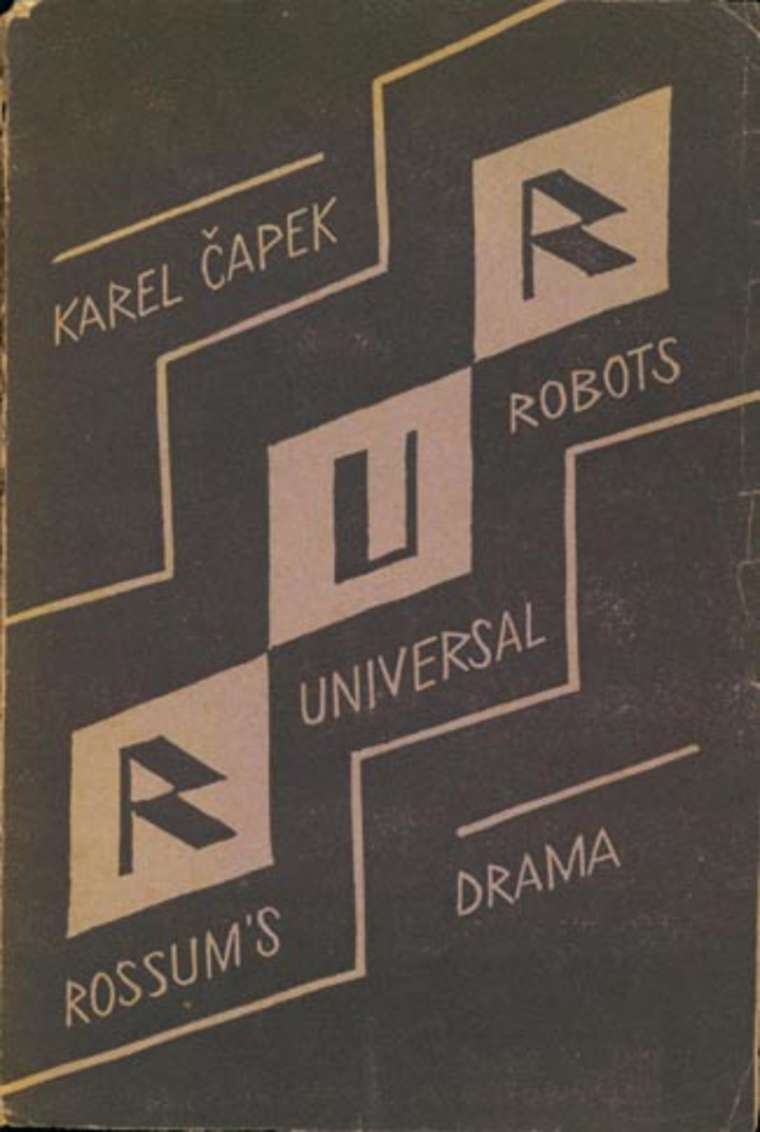
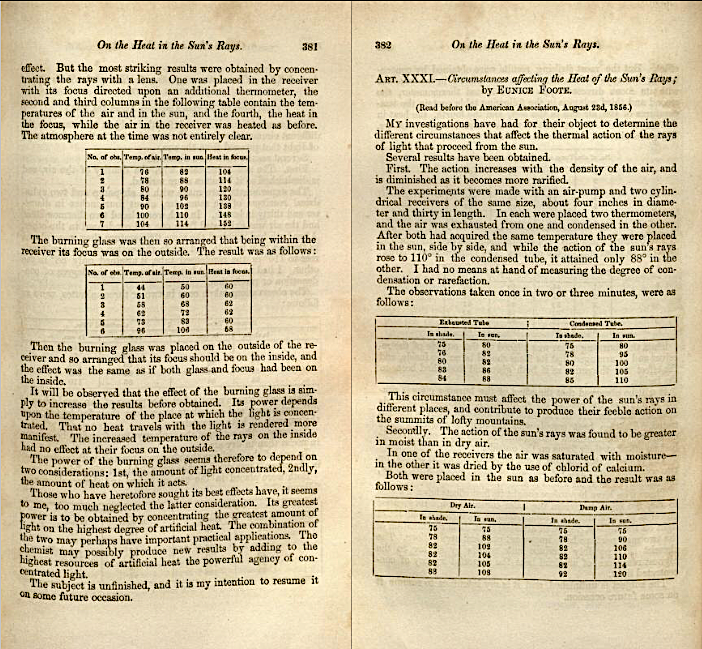
Remember the posters that decorated your childhood or teenaged bedroom?
Of course you do.
Whether aspirational or inspirational, these images are amazingly potent.
I’m a bit embarrassed to admit what hung over my bed, especially in light of a certain CGI adaptation…
No such worries with a set of eight free downloadable posters honoring eight female trailblazers in the fields of science, technology, engineering, and math.
These should prove evergreen.
Commissioned byNevertheless, a podcast that celebrates women whose advancements in STEM fields have shaped—and continue to shape—education and learning, each poster is accompanied with a brief biographical sketch of the subject.
Nevertheless has taken care that the featured achievers are drawn from a wide cultural and racial pool.
No shame if you’re unfamiliar with some of these extraordinary women. Their names may not possess the same degree of household recognition as Marie Curie, but they will once they’re hanging over your daughter’s (or son’s) bed.
It’s worth noting that with the exception of the undersung mother of DNA Helix Rosalind Franklin, these are living role models. They are:
Nobel prize-winning physicist Richard Feynman is “famous in a number of dimensions,” says science and math explainer Grant Sanderson of the YouTube channel 3blue1brown in the video above. “To scientists, he’s a giant of 20th century physics… to the public, he’s a refreshing contradiction to the stereotypes about physicists: a safe-cracking, bongo-playing, mildly philandering non-conformist.” Feynman is also famous, or infamous, for his role in the Manhattan Project and the building of the first atomic bomb, after which the FBI kept tabs on him to make sure he wouldn’t, like his colleague Klaus Fuchs, turn over nuclear secrets to the Soviets.
He may have led an exceptionally eventful life for an academic scientist, but to his students, he was first and foremost “an exceptionally skillful teacher… for his uncanny ability to make complicated topics feel natural and approachable.” Feynman’s teaching has since influenced millions of readers of his wildly popular memoirs and his lecture series, recorded at Caltech and published in three volumes in the early 1960s. (Also see his famous course taught at Cornell.) For decades, Feynman fans could list offhand several examples of the physicist’s acumen for explaining complex ideas in simple, but not simplistic, terms.
But it wasn’t until the mid-nineties that the public had access to one of the finest of his Caltech lectures. Discovered in the 1990s and first published in 1996, the “lost lecture”—titled “The Motion of the Planets Around the Sun”—“uses nothing more than advanced high school geometry to explain why the planets orbit the sun elliptically rather than in perfect circles,” as the Amazon description summarizes. You can purchase a copy for yourself, or hear it Feynman deliver for free just below.
Feynman gave the talk as the guest speaker in a 1964 freshman physics class. He addresses them, he says, “just for the fun of it”; none of the material would be on the test. Nevertheless, he ended up hosting an informal 20-minute Q&A afterwards. Given his audience, Feynman assumes only the most basic prior knowledge of the subject: an explanation for why the planets make elliptical orbit around the sun. “It ultimately has to do with the inverse square law,” says Sanderson, “but why?”
Part of the problem with the lecture, as its discoverers David and Judith Goodstein—husband and wife physicist and archivist at Caltech—found, involves Feynman’s extensive reference to figures he draws on the blackboard. It took some time for the two to dig these diagrams up in a set of class notes. In Sanderson’s video at the top, we get something perhaps even better: animated physical representations of the mathematics that determine planetary motion. We need not know this math in depth to grasp what Feynman calls his “elementary” explanation.
“Elementary” in this case, despite common usage, does not mean “easy,” Feynman says. It means “that very little is required to know ahead of time in order to understand it, except to have an infinite amount of intelligence.” That last part is a typical bit of humor. Even those of who haven’t pursued math or physics much beyond the high school level can learn the basic outlines of planetary motion in Feynman’s witty lecture, supplemented by the video visual aids Sanderson offers at the top.
One doesn’t normally get into astrophysics for the fame. But sometimes one gets famous anyway, as has astrophysicist Neil DeGrasse Tyson, Director of the Hayden Planetarium at the Rose Center for Earth and Space. But that title doesn’t even hint at the scope of his public-facing ventures, from the columns he’s written in magazines like Natural History and StarDate to his hosting of television shows like NOVA and the sequel to Carl Sagan’s Cosmos to his podcast StarTalk and his high-profile social media presence. Has any other figure in the annals of science communication been as prolific, as outspoken, and as willing to talk to anyone and do anything?
Now comes Tyson’s latest media venture: a course fromMasterclass, the online education company that specializes in bringing big names from various fields in front of the camera and getting them to tell us what they know. (Other teachers include Malcolm Gladwell, Steve Martin, and Werner Herzog.) “Neil DeGrasse Tyson Teaches Scientific Thinking and Communication,” whose trailer you can watch above, gets into subjects like the scientific method, the nature of skepticism, cognitive and cultural bias, communication tactics, and the inspiration of curiosity. “There’s, like, a gazillion hours of me on the internet,” admits Tyson, and though none of those may cost $90 USD (or $180 for an all-access pass to all of Masterclass’ offerings), in none of them has he taken on quite the goal he does in his Masterclass: to teach how to “not only find objective truth, but then communicate to others how to get there. It’s not good enough to be right. You also have to be effective.” You can sign up Tyson’s coursehere.
If you sign up for a MasterClass course by clicking on the affiliate links in this post, Open Culture will receive a small fee that helps support our operation.
Based in Seoul, Colin Marshall writes and broadcasts on cities, language, and culture. His projects include the book The Stateless City: a Walk through 21st-Century Los Angeles and the video series The City in Cinema. Follow him on Twitter at @colinmarshall or on Facebook.
The science of optics and the fine art of science illustration arose together in Europe, from the early black-and-white color wheel drawn by Isaac Newton in 1704 to the brilliantly hand-colored charts and diagrams of Goethe in 1810. Goethe’s illustrations are more renowned than Newton’s, but both inspired a considerable number of scientific artists in the 19th century. It would take a science writer, the French journalist and mathematician Amédée Guillemin, to fully grasp the potential of illustration as a means of conveying the mind-bending properties of light and color to the general public.
Guillemin published the hugely popular textbook Les phénomènes de la physique in 1868, eventually expanding it into a five-volume physics encyclopedia. (View and download a scanned copy at the Wellcome Collection.) He realized that in order to make abstract theories “comprehensible” to lay readers, Maria Popova writes at Brain Pickings, “he had to make their elegant abstract mathematics tangible and captivating for the eye. He had to make physics beautiful.” Guillemin commissioned artists to make 31 colored lithographs, 80 black-and-white plates, and 2,012 illustrated diagrams of the physical phenomena he described.
The most “psychedelic-looking illustrations,” notes the Public Domain Review, are by Parisian intaglio printer and engraver René Henri Digeon and “based on images made by the physicist J. Silbermann showing how light waves look when they pass through various objects, ranging from a bird’s feather to crystals mounted and turned in tourmaline tongs.”
Digeon also illustrated the “spectra of various light sources, solar, stellar, metallic, gaseous, electric,” above, and created a color wheel, further down, based on a classification system of French chemist Michel Eugène Chevreul.
Many of Digeon’s images “were used to explain the phenomenon of birefringence, or double refraction,” the Public Domain Review writes (hence the double rainbow). In addition to his striking plates, this section of the book also includes the image of the soap bubble above, by artist M. Rapine, based on a painting by Alexandre-Blaise Desgoffe.
[The artists’] subjects were not chosen haphazardly. Newton was famously interested in the iridescence of soap bubbles. His observations of their refractive capacities helped him develop the undulatory theory of light. But he was no stranger to feathers either. In the Opticks (1704), he noted with wonder that, “by looking on the Sun through a Feather or black Ribband held close to the Eye, several Rain-bows will appear.”
In turn, Guillemin’s lavishly illustrated encyclopedia continues to influence scientific illustrations of light and color spectra. “In order thus to place itself in communion with Nature,” he wrote, “our intelligence draws from two springs, both bright and pure, and equally fruitful—Art and Science.” See more art from the book at Brain Pickings and the Public Domain Review.
A catastrophic series of chain reactions, including but not limited to:
–Sea level rise
–Change in land and ocean ecosystems
–Increased intensity and frequency of weather extremes
–Temperature extremes on land
–Drought due to precipitation deficits
–Species loss and extinction
The Parasol that supplies the title for Francisco de Goya’s El Quitasol of 1777 becomes a tattered umbrella barely sheltering miserable, crowded refugees in the sodden, makeshift camp of Pedro Veloso’s reimagining.
And the Niños en la Playa captured relaxing on the beach in 1909 by Joaquín Sorolla now compete for space with dead fish, as observed by artist Conspiracy 110 years further along.
None of the original works are currently on display.
It would be a public service if they were, alongside their drastically retouched twins and perhaps Hieronymus Bosch’s The Garden of Earthly Delights, to further unnerve viewers about the sort of hell we’ll soon be facing if we, too, don’t make some major alterations.
For now the works in the +1.5ºC Lo Cambia Todo (+1.5ºC Changes Everything) project are making an impact on giant billboards in Madrid, as well as online.
Are plants sentient? We know they sense their environments to a significant degree; like animals, they can “see” light, as a New Scientist feature explains. They “live in a very tactile world,” have a sense of smell, respond to sound, and use taste to “sense danger and drought and even to recognize relatives.” We’ve previously highlighted research here on how trees talk to each other with chemical signals and form social bonds and families. The idea sets the imagination running and might even cause a little paranoia. What are they saying? Are they talking about us?
Maybe we deserve to feel a little uneasy around plant life, given how ruthlessly our consumer economies exploit the natural world. Now imagine we could hear the sounds plants make when they’re stressed out. In addition to releasing volatile chemicals and showing “altered phenotypes, including changes in color, smell, and shape,” write the authors of a new study published at bioRxiv, it’s possible that plants “emit airborne sounds [their emphasis] when stressed—similarly to many animals.”
The researchers who tested this hypothesis at Tel Aviv University “found that tomato and tobacco plants made sounds at frequencies humans cannot hear,” New Scientist reports. “Microphones placed 10 centimetres from the plants picked up sounds in the ultrasonic range of 20 to 100 kilohertz, which the team say insects and some mammals would be capable of hearing and responding to from as far as 5 metres away.”
The plants made these sounds when stressed by lack of water or when their stems were cut. Tomato plants stressed by drought made an average of 35 sounds per hour. Tobacco plants, on average, made 11. Unstressed plants, by contrast, “produced fewer than one sound per hour.” The scientists used machine learning to distinguish between different kinds of distress calls, as it were, and different kinds of plants, “correctly identifying in most cases whether the stress was caused by dryness or a cut,” and they conducted the experiments in both closed acoustic chambers and a greenhouse.
Plants do not, of course, have vocal cords or auditory systems. But they do experience a process known as “cavitation,” in which “air bubbles form, expand and explode in the xylem, causing vibrations,” the paper explains. These vibrations have been recorded in the past by direct, contact-based methods. This new study, which has yet to pass peer review, might be the first to show how plants might use sound to communicate with each other and with other living organisms, suggesting “a new modality of signaling.”
The possibilities for future research are fascinating. We might learn, for example, that “if plants emit sounds in response to a caterpillar attack, predators such as bats could use these sounds to detect attacked plants and prey on the herbivores, thus assisting the plant.” And just as trees are able to respond to each other’s distress when they’re connected in a forest, “plants could potentially hear their drought stressed or injured neighbors and react accordingly”—however that might be.
Much remains to be learned about the sensory lives of plants. Whether their active calls and responses to the stimuli around them are indicative of a kind of consciousness seems like a philosophical as much as a biological question. But “even if the emission of the sounds is entirely involuntary,” the researchers write (seeming to leave room for plant volition), it’s a phenomenon that counts as a form of communication: maybe even what we might someday call plant language, different from species to species and, perhaps, between individual plants themselves.
Henry Wadsworth Longfellow’s description of music as a universal language has become a well-worn cliché, usually uttered in a sentimental and not particularly serious way. Maybe this is why it doesn’t inspire a corresponding breadth of appreciation for the music of the world. We are conditioned and acculturated, it can seem, by formative experience to gravitate toward certain kinds of music. We can expand our tastes but that usually requires some careful study and acculturation.
In the sciences, the “universal language” hypothesis in music has been taken far more seriously, and, more recently, so has its critique. “In ethnomusicology,” notes the Universitat Wien’s Medienportal, “universality became something of a dirty word.” The diversity of world music is profound, as Kevin Dickinson writes at Big Think.
Katajjaq, or Inuit throat singing, expresses playfulness in strong, throaty expressions. Japan’s nogaku punctuates haunting bamboo flutes with the stiff punctuation of percussion. South of Japan, the Australian Aborigines also used winds and percussions, yet their didgeridoos and clapsticks birthed a distinct sound. And the staid echoes of medieval Gregorian chant could hardly be confused for a rousing track of thrash metal.
The idea that all of these kinds of music and thousands more are all the same in some way strikes many as “groundless or even offensive.” But even hardcore skeptics might be persuaded by papers published just last month in Science.
University of Vienna Cognitive Biologists W. Tecumseh Fitch and Tudor Popescu begin their article “The World in a Song” with a brief sketch of the history of “the empirical quest for musical universals.” The search began in Berlin in 1900, almost as soon as phonographs could be used to record music. The Nazis stamped out this research in Germany in the 1930s, though it flourished in the U.S.—in the work of Alan Lomax, for example. Yet “by the 1970s ethnomusicologists were discouraged from even discussing musical ‘universals.’ ”
Nonetheless, as a team of researchers led by Harvard’s Samuel Mehr show in their paper “Universality and Diversity in Human Song,” there are indeed universal musical qualities, though they manifest in some specific ways. Using the “tools of computational social science” to analyze a huge archive of audio recordings of world music, the researchers found that “identifiable acoustic features of songs (accent, tempo, pitch range, etc.) predict their primary behavioral context (love, healing, etc.).” Societies around the world use similar musical properties to accompany similar emotional contexts, in other words.
Moreover, the meta-analysis found that “melodic and rhythmic bigrams fall into power-law distributions” and “tonality is widespread, perhaps universal.” Focusing primarily on vocal song, since instrumentation varied too widely, the scientists tested “five sets of hypotheses about universality and variability in musical behavior and musical forms.” All of these analyses make use of ethnographic data. Critics might point out that such data is riddled with bias.
Ethnographers, from the purely academic to popular curators like Lomax, applied their own filters, choosing what to record and what to ignore based on their own assumptions about what matters in music. Nonetheless, Mehr and his co-authors write that they have adjusted for “sampling error and ethnographer bias, problems that have bedeviled prior tests.” Their methodology is rigorous, and their conclusions are backed by some dense analytics.
It would indeed seem from their exhaustive research that, in many respects, music is genuinely universal. The findings should not surprise us. Humans, after all, are biologically similar across the globe, with generally the same propensities for language learning and all the other things that humans universally do. Many previous comparative projects in history have used generalizations to create racial hierarchies and attempt to show the superiority of one culture or another. “Universality is a big word,” said Leonard Bernstein, “and a dangerous one”—a word beloved by empires throughout time.
But the data-driven approach used by the most recent studies adheres more closely to the science. Wide variation is a given, and several indicators show great “variability across cultures” when it comes to music, as the introduction to “Universality and Diversity in Human Song” acknowledges. Nonetheless, forms of music appear in every human society, accompanying ceremonies, rituals, and rites. Echoing the conclusions of modern genetics, the authors point out that “there is more variation in musical behavior within societies than between societies.” Read Mehr and his team’s studyhere.
The arrival of a newborn son has inspired no few poets to compose works preserving the occasion. When Neil Gaiman wrote such a poem, he used its words to pay tribute to not just the creation of new life but to the scientific method as well. “Science, as you know, my little one, is the study / of the nature and behavior of the universe,” begins Gaiman’s “The Mushroom Hunters.” An important thing for a child to know, certainly, but Gaiman doesn’t hesitate to get into even more detail: “It’s based on observation, on experiment, and measurement / and the formulation of laws to describe the facts revealed.” Go slightly over the head of a newborn as all this may, any parent of an older but still young child knows what question naturally comes next: “Why?”
As if in anticipation of that inevitable expression of curiosity, Gaiman harks back to “the old times,” when “men came already fitted with brains / designed to follow flesh-beasts at a run,” and with any luck to come back with a slain antelope for dinner. The women, “who did not need to run down prey / had brains that spotted landmarks and made paths between them,” taking special note of the spots where they could find mushrooms. It was these mushroom hunters who used “the first tool of all,” a sling to hold the baby but also to “put the berries and the mushrooms in / the roots and the good leaves, the seeds and the crawlers. / Then a flint pestle to smash, to crush, to grind or break.” But how to know which of the mushrooms — to say nothing of the berries, roots, and leaves — will kill you, which will “show you gods,” and which will “feed the hunger in our bellies?”
“Observe everything.” That’s what Gaiman’s poem recommends, and what it memorializes these mushroom hunters for having done: observing the conditions under which mushrooms aren’t deadly to eat, observing childbirth to “discover how to bring babies safely into the world,” observing everything around them in order to create “the tools we make to build our lives / our clothes, our food, our path home…” In Gaiman’s poetic view, the observations and formulations made by these early mushroom-hunting women to serve only the imperative of survival lead straight (if over a long distance), to the modern scientific enterprise, with its continued gathering of facts, as well as its constant proposal and revision of laws to describe the patterns in those facts.
You can see “The Mushroom Hunters” brought to life in the video above, a hand-drawn animation by Creative Connection scored by the composer Jherek Bischoff (previously heard in the David Bowie tribute Strung Out in Heaven). You can read the poem at Brain Pickings, whose creator Maria Popova hosts “The Universe in Verse,” an annual “charitable celebration of science through poetry” where “The Mushroom Hunters” made its debut in 2017. There it was read aloud by the musician Amanda Palmer, Gaiman’s wife and the mother of the aforementioned son, and so it is in this more recent animated video. Young Ash will surely grow up faced with few obstacles to the appreciation of science, and even less so to the kind of imagination that science requires. As for all the other children in the world — well, it certainly wouldn’t hurt to show them the mushroom hunters at work.
We're hoping to rely on loyal readers, rather than erratic ads. Please click the Donate button and support Open Culture. You can use Paypal, Venmo, Patreon, even Crypto! We thank you!
Open Culture scours the web for the best educational media. We find the free courses and audio books you need, the language lessons & educational videos you want, and plenty of enlightenment in between.