Explorer David Livingstone’s Diary (Written in Berry Juice) Now Digitized with New Imaging Technology

One of the 19th century’s most intrigu­ing fig­ures, the Scot­tish explor­er David Liv­ing­stone may be best known for words uttered by a reporter when the two men met on the shores of Lake Tan­ganyi­ka: “Dr. Liv­ing­stone, I pre­sume?”

David Liv­ing­stone dis­ap­peared in Africa for six years before meet­ing the famous­ly quot­ed Hen­ry Mor­ton Stan­ley. He was a hero in Vic­to­ri­an Eng­land for his rags-to-rich­es sto­ry of an impov­er­ished boy who went on to become a sci­en­tif­ic inves­ti­ga­tor and anti-slav­ery cru­sad­er. Liv­ing­stone became impas­sioned about the poten­tial of Chris­tian­i­ty to erad­i­cate the slave trade in Africa and took his mis­sion­ary work into the African inte­ri­or.

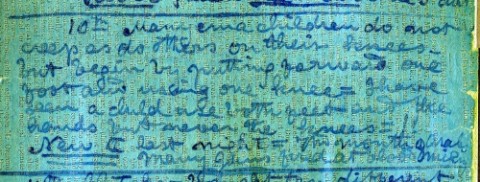
An avid chron­i­cler of his adven­tures, Liv­ing­stone left behind a num­ber of jour­nals, but one of his most vivid accounts—of a mas­sacre hit wit­nessed in 1871—has been inac­ces­si­ble until now. Liv­ing­stone’s 1871 Field Diary cap­tures a five-month peri­od when the explor­er was strand­ed in a vil­lage in the Con­go. He had run out of paper and ink to main­tain his usu­al jour­nal, so he impro­vised by writ­ing over an old copy of The Stan­dard news­pa­per using ink made from the seeds of a local berry.

In col­lab­o­ra­tion with British and Amer­i­can archivists, the UCLA Dig­i­tal Library Pro­gram used spec­tral imag­ing tech­nol­o­gy to dig­i­tize the del­i­cate mate­r­i­al. Over­all the site offers an inter­est­ing pre­sen­ta­tion of Livingstone’s work, though the diary pages them­selves aren’t too leg­i­ble. Crit­i­cal notes are abun­dant and intrigu­ing, and diary pages appear side-by-side with tran­scrip­tions. View­ers can zoom in to study Livingstone’s spi­dery script writ­ten per­pen­dic­u­lar to the news­pa­per copy. The spec­tral imag­ing process itself is worth a look. With­out this tech­nique, the diaries appear as noth­ing more than ghost­ly scrib­bles.

Pre­vi­ous to keep­ing this field diary, Liv­ing­stone embarked on a mis­sion to find the source of the Nile Riv­er, which he misiden­ti­fied. But his the­o­ries about cen­tral African water sys­tems are fas­ci­nat­ing. Liv­ing­stone was the first Euro­pean to see Mosi-oa-Tun­ya, “the smoke that thun­ders,” water­fall, which he renamed Vic­to­ria Falls after his monarch. His diaries pro­vide a peek into a time when explo­ration was dan­ger­ous, dif­fi­cult and even dead­ly. Liv­ing­stone died of Malar­ia in present-day Zam­bia, where his heart is buried under a tree. The rest of his remains were interred at West­min­ster Abbey.

Kate Rix is an Oak­land based free­lance writer. See more of her work at .

Seven Questions for Stephen Hawking: What Would He Ask Albert Einstein & More

If Stephen Hawk­ing could talk with Albert Ein­stein, what would he say?

“I would ask him why he did­n’t believe in black holes,” says Hawk­ing in this video from Time mag­a­zine. “The field equa­tions of his Gen­er­al The­o­ry of Rel­a­tiv­i­ty implied that a large star or cloud of gas would col­lapse in on itself and form a black hole. Ein­stein was aware of this but some­how man­aged to con­vince him­self that some­thing like an explo­sion would always occur to throw off mass and pre­vent the for­ma­tion of a black hole. What if there was no explo­sion?”

The famous cos­mol­o­gist, the­o­ret­i­cal physi­cist and author of the best­seller A Brief His­to­ry of Time made the remark in late 2010, when he agreed to take part in the Time’“10 Ques­tions” series. The mag­a­zine invit­ed read­ers from around the world to sub­mit ques­tions for Hawk­ing, but because of the sci­en­tist’s disability–he is ful­ly par­a­lyzed due to motor neu­rone dis­ease and has to painstak­ing­ly com­pose his answers using a sin­gle cheek mus­cle to oper­ate his word processor–the inter­view was pared down to sev­en ques­tions.

One read­er asks if Hawk­ing thinks civ­i­liza­tion will sur­vive long enough to extend itself into deep space. “I think we have a good chance of sur­viv­ing long enough to col­o­nize the Solar Sys­tem,” says Hawk­ing. “How­ev­er, there is nowhere else in the solar sys­tem any­thing like as suit­able as the Earth, so it is not clear if we would sur­vive if the Earth was made unfit for habi­ta­tion. To ensure our long-term sur­vival we need to reach for the stars. That will take much longer. Let’s hope we can last until then.”

Relat­ed con­tent:

A Brief His­to­ry of Time: Errol Mor­ris’s Film of Stephen Hawk­ing

Stephen Hawk­ing’s Uni­verse: A Visu­al­iza­tion in Stars and Sound

Stephen Hawk­ing: Aban­don Earth or Face Extinc­tion

Neil deGrasse Tyson & Richard Dawkins Ponder the Big Enchilada Questions of Science

When­ev­er you bring togeth­er Neil deGrasse Tyson and Richard Dawkins — one the pub­lic face of astro­physics, the oth­er the pub­lic face of biol­o­gy — you’re pret­ty much guar­an­teed a good crowd and a spir­it­ed con­ver­sa­tion. And that’s what stu­dents got in Sep­tem­ber 2010, when the sci­en­tists shared the stage at Howard Uni­ver­si­ty and con­sid­ered some big enchi­la­da ques­tions. For exam­ple: Why did our mind — from an evo­lu­tion­ary point of view — lead us to abstract math­e­mat­ics, which dri­ves the major dis­cov­er­ies in physics? What are the chances that we’ll dis­cov­er intel­li­gent life in the uni­verse, and, if they dis­cov­er us (rather than the oth­er way around), could we, as a civ­i­liza­tion, be in big trou­ble? Is nat­ur­al selec­tion oper­a­tive through­out the uni­verse and would aliens look any­thing like us? And why is The Blob a much bet­ter alien than ET? In short, they’re con­sid­er­ing just the kinds of mind-bend­ing ques­tions that col­lege stu­dents love to enter­tain — and hope­ful­ly you do to. Their con­ver­sa­tion runs about 50 min­utes and a Q&A fol­lows.

Relat­ed Con­tent:

Neil deGrasse Tyson Lists 8 (Free) Books Every Intel­li­gent Per­son Should Read

Some­thing from Noth­ing? Richard Dawkins and Lawrence Krauss Dis­cuss Cos­mol­o­gy, Ori­gins of Life & Reli­gion Before a Packed Crowd

Grow­ing Up in the Uni­verse: Richard Dawkins Presents Cap­ti­vat­ing Sci­ence Lec­tures for Kids (1991)

125 Great Sci­ence Videos: From Astron­o­my to Physics & Psy­chol­o­gy

30 Free Physics Cours­es from Top Uni­ver­si­ties (More Free Cours­es here)

by | Permalink | Make a Comment ( 2 ) |

The Electronic Nose and The Strange Future of Public Health & Safety

Over in Nate Lewis’ Cal­tech lab, they’re work­ing on devel­op­ing an “elec­tron­ic nose” that can sniff out dis­eases, bombs, dan­ger­ous tox­ins and beyond. And then they want to put that e‑nose right in your smart­phone.

Need to find out if you have a lit­tle tuber­cu­lo­sis? No prob­lem, there’s an app for that. Won­der­ing if that pow­der may be anthrax? Oh iPhone, what say you?

The Anatomical Drawings of Renaissance Man, Leonardo da Vinci

Leonar­do da Vin­ci, the arche­type of the Renais­sance Man, received some for­mal train­ing in the anato­my of the human body. He reg­u­lar­ly dis­sect­ed human corpses and made very detailed draw­ings of mus­cles, ten­dons, the heart and vas­cu­lar sys­tem, inter­nal organs and the human skele­ton. A great num­ber of these draw­ings can now be seen in the largest exhi­bi­tion of Leonar­do da Vinci’s stud­ies of the human body, “Leonar­do da Vin­ci: Anatomist,” at The Queen’s Gallery in Buck­ing­ham Palace, Lon­don. In this video, Senior Cura­tor Mar­tin Clay­ton explores three of these draw­ings and shows that Leonar­do’s med­ical dis­cov­er­ies could have trans­formed the study of anato­my in Europe, had they not lan­guished unpub­lished for cen­turies. Clay­ton has also pub­lished his find­ings in “Nature”. And the BBC has looked into the ques­tion of just how accu­rate Leonar­do’s anatom­i­cal draw­ings real­ly were.

Bonus links:

  • The Guardian has a fas­ci­nat­ing sto­ry about Leonar­do da Vin­ci’s note­book, includ­ing his ‘to-do’ list.
  • Here’s a won­der­ful 360° panoram­ic view of San­ta Maria delle Grazia in Milan with Leonar­do’s “Last Sup­per”.

By pro­fes­sion, Matthias Rasch­er teach­es Eng­lish and His­to­ry at a High School in north­ern Bavaria, Ger­many. In his free time he scours the web for good links and posts the best finds on Twit­ter.

Just How Small are Atoms? Mind Blowing TEDEd Animation Puts It All Into Perspective

In this new video from TED Edu­ca­tion, teacher and author Jonathan Bergmann uses col­or­ful analo­gies to help us visu­al­ize the scale of the atom and its nucle­us. Bergmann is a pio­neer of the “Flipped Class­room” teach­ing method, which inverts the tra­di­tion­al edu­ca­tion­al mod­el of class­room lec­tures fol­lowed by home­work. In a flipped class­room there are no lec­tures. Instead, teach­ers assign video lessons like the one above as home­work, and devote their class­room time to help­ing stu­dents work their way through prob­lems. To learn more about the flipped class­room method you can read a recent arti­cle co-authored by Bergmann in The Dai­ly Riff. And to see more TED Edu­ca­tion videos, which come with quizzes and  oth­er sup­ple­men­tary teach­ing mate­ri­als, vis­it the TED­Ed YouTube chan­nel.

PS Find 31 Free Physics Cours­es in our Col­lec­tion of 450 Free Cours­es Online. They’re all from top uni­ver­si­ties — MIT, Stan­ford, Yale and the rest.

via Boing­Bo­ing

An Easy, Scientifically-Proven Way to Make Yourself Smarter. Go for a Good Walk or Swim Every Day

This week, The New York Times gave us some good news. Accord­ing to an arti­cle by Gretchen Reynolds, a decade of research by neu­ro­sci­en­tists and phys­i­ol­o­gists shows fair­ly con­vinc­ing­ly that exer­cise can make you smarter. She writes:

Using sophis­ti­cat­ed tech­nolo­gies to exam­ine the work­ings of indi­vid­ual neu­rons — and the make­up of brain mat­ter itself — sci­en­tists in just the past few months have dis­cov­ered that exer­cise appears to build a brain that resists phys­i­cal shrink­age and enhance cog­ni­tive flex­i­bil­i­ty. Exer­cise, the lat­est neu­ro­science sug­gests, does more to bol­ster think­ing than think­ing does.

There’s appar­ent­ly a lot to be gained from a sim­ple dai­ly walk (assum­ing it checks out with your doc­tor). And, as the video below shows, the gains goes beyond cog­ni­tion itself:

The pho­to above was pro­vid­ed cour­tesy of Big­Stock­Pho­to

by | Permalink | Make a Comment ( 3 ) |

The First Images and Video Footage from Outer Space, 1946–1959

In Octo­ber 1946, Amer­i­can sci­en­tists, work­ing in White Sands, New Mex­i­co, shot a V‑2 mis­sile 65 miles into the air. The mis­sile (orig­i­nal­ly designed by the Nazis dur­ing World War II) car­ried a 35-mil­lime­ter cam­era aloft that snapped an image every sec­ond and a half. When the mis­sile returned to Earth, the cam­era itself was demol­ished by the impact. But the film, pro­tect­ed by a steel cas­ing, remained unscathed, accord­ing to Air & Space Mag­a­zine. And when the sci­en­tists recov­ered the film, they wit­nessed some­thing nev­er seen by humans before — the first images of our plan­et tak­en from out­er space. As one sci­en­tist put it, we got to see (above) “how our Earth would look to vis­i­tors from anoth­er plan­et com­ing in on a space ship.”

By the 1950s, the U.S. Air Force start­ed work­ing with a new line of mis­sile, the Thor mis­sile. And it made his­to­ry in May, 1959. Launched from Cape Canaver­al, the Thor Mis­sile Num­ber 187 car­ried a Gen­er­al Elec­tric-man­u­fac­tured “data cap­sule” and 16-mil­lime­ter cam­era in its nose cone. The flight last­ed 15 min­utes, cov­ered 1500 miles, and end­ed in the Atlantic Ocean. Accord­ing to the GE Film Cat­a­log, when the data cap­sule was recov­ered:

Gen­er­al Elec­tric sci­en­tists began the care­ful pro­cess­ing of the cap­sule’s con­tents. They were not long in find­ing the results they had hoped for—in the sub­dued light of a pho­to­graph­ic dark room, on a still-drip­ping strip of devel­oped motion pic­ture film, the eyes of man beheld for the first time the image of the earth as it appears from beyond the atmos­phere.

You can watch the his­toric video imme­di­ate­ly above.

To get more recent views of the Earth from out­er space, don’t miss these daz­zling videos:

via It’s Okay to be Smart

by | Permalink | Make a Comment ( 5 ) |

« Go BackMore in this category... »
Quantcast