NASA Lauches Photo Archive on Flickr

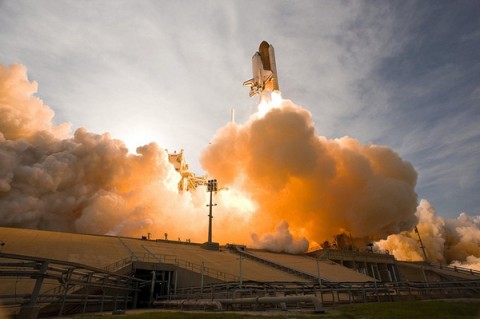
This week, NASA rolled a big archive of his­tor­i­cal images into Flickr Com­mons, giv­ing users access to more than a half cen­tu­ry of NASA’s pho­to­graph­ic his­to­ry. The images are divid­ed into three neat sets – “Launch and Take­off,” “Build­ing NASA” and “Cen­ter Name­sakes” – and they’re all copy­right-free, mean­ing that you can share and use these images how­ev­er you like. You can jump into the archive here and watch it grow over time. Thanks for the heads up @eugenephoto! They’re always appre­ci­at­ed…

What Makes Us Human?

Some of the most basic ques­tions about human exis­tence (how did we devel­op lan­guage? why do we love music and art but kill in war? how did we devel­op cer­tain eat­ing habits? etc.) come back to a more sin­gu­lar ques­tion: how are we dif­fer­ent from chim­panzees? This ques­tion is slow­ly get­ting answered by some of today’s lead­ing pri­ma­tol­o­gists and evo­lu­tion­ary biol­o­gists, includ­ing Robert Sapol­sky, Daniel Lieber­man, Richard Wrang­ham, Jane Goodall, Steven Pinker, all fea­tured above.

by | Permalink | Make a Comment ( 2 ) |

Richard Feynman: Fun to Imagine

Back in 1983, the BBC aired Fun to Imag­ine, a tele­vi­sion series host­ed by Richard Feyn­man that used physics to explain how the every­day world works – “why rub­ber bands are stretchy, why ten­nis balls can’t bounce for­ev­er, and what you’re real­ly see­ing when you look in the mir­ror.” In case you’re not famil­iar with him, Feyn­man was a Nobel prize-win­ning physi­cist who had a gift for many things, includ­ing pop­u­lar­iz­ing sci­ence and par­tic­u­lar­ly physics. The clip above comes from Fun to Imag­ine, and thanks to this YouTube video, you can now watch all six videos in the series, each run­ning about 12 min­utes.  If you’re look­ing for more Feyn­man videos, let me give you this: The Plea­sure of Find­ing Things Out, an hour-long BBC/PBS pro­gram from 1981, and Feyn­man’s leg­endary lec­tures on physics taped in 1964, now post­ed online cour­tesy of Bill Gates. And, oh yes, don’t for­get Feyn­man play­ing the bon­gos too…

Want to study some physics? Get Free Physics cours­es here. And Free Physics Text­books here.

by | Permalink | Make a Comment ( 2 ) |

30 Years of Asteroids in 3 Minutes

This amaz­ing lit­tle video charts the loca­tion of every aster­oid dis­cov­ered since 1980. As we move into the 1990s, the rate of dis­cov­ery picks up quite dra­mat­i­cal­ly because we’re now work­ing with vast­ly improved sky scan­ning sys­tems. And that means that you will espe­cial­ly want to watch the sec­ond half of the video. Below the jump, I’ve past­ed some more infor­ma­tion that explains what you’re see­ing. Thanks to @WesAlwan and Mike for send­ing this great lit­tle clip our way.

via Giz­mo­do

(more…)

by | Permalink | Make a Comment ( 1 ) |

Earthrise, Then and Now

On Decem­ber 24, 1968, astro­nauts aboard Apol­lo 8, mak­ing the first human trip around the moon, stum­bled upon a most beau­ti­ful scene – an “Earth­rise.” Almost 40 years lat­er (in 2007), Japan’s Kaguya satel­lite cap­tured footage of the same scene unfold­ing: an Earth­rise and also this time an Earth­set. If you click on the pre­ced­ing links, you will see some pret­ty won­der­ful still shots in HD.

by | Permalink | Make a Comment ( 3 ) |

Science Under a Microscope

What hap­pens when you study sci­ence in a sci­en­tif­ic way? When you apply sci­en­tif­ic meth­ods to sci­ence itself? When you put sci­ence under its own micro­scope and ask, “What is sci­ence real­ly all about?” These are some of the fun­da­men­tal ques­tions that the CBC pro­gram Ideas tack­les when it spends 24 hours inter­view­ing his­to­ri­ans, soci­ol­o­gists, philoso­phers and sci­en­tists who have thought long and hard about the nature of sci­ence. You can access the first five episodes below, or go straight to the full col­lec­tion here.

Episode 1 — Steven Shapin and Simon Schaf­fer
Episode 2 — Lor­raine Das­ton
Episode 3 — Mar­garet Lock
Episode 4 — Ian Hack­ing and Andrew Pick­er­ing
Episode 5 — Ulrich Beck and Bruno Latour

Many thanks to Paul for the tip here.

Balloon Flight Into Near Space

In June, a group of San Fran­cis­co-based design­ers and engi­neers launched a bal­loon into near space, cap­tur­ing the flight with two cam­eras that went along for the ride. Two hours into the flight, and at 80,000 feet of alti­tude, the bal­loon gives up the ghost and comes crash­ing back down to Earth. It all hap­pens around the 2:20 mark of the video, and the images are … um … out of this world. Amaz­ing­ly, all of the equip­ment onboard sur­vives the fall – cam­eras and all – thanks to the para­chute.

This was actu­al­ly the sec­ond bal­loon launch under­tak­en by this group. You can see images from their first launch here. Next time, they’re hop­ing to reach above 100,000 feet. And, yes, it’s final­ly worth not­ing that they con­tact­ed the FAA before let­ting these bal­loons take flight.

This clip was sent our way by an anony­mous view­er. If he/she wants to get in touch, we have a copy of Eat, Pray, Love ready to send your way.

by | Permalink | Make a Comment ( 1 ) |

Zooming Into the World


Last week, a clas­sic film, Pow­ers of Ten, showed us what it looks like when we zoom out into the uni­verse by fac­tors of ten. Hele­na sent us that video. Now, Robert directs our atten­tion to videos that move in the extreme oppo­site direc­tion. They zoom inward, tak­ing us down to the atom­ic lev­el of things that sur­round us – a tooth (above), the human eye and the eye of a fly, an every­day piece of plas­tic, and more. The videos come from John Size­more’s “Weird Weird Sci­ence” col­lec­tion on Dai­ly Motion. Robert gets the copy of The Omni­vore’s Dilem­ma (kind­ly donat­ed by Pen­guin) for send­ing these along.

The 50% off sale on great films in the Cri­te­ri­on Col­lec­tion ends today (August 2)! Vis­it sale here.

by | Permalink | Make a Comment ( 1 ) |

« Go BackMore in this category... »
Quantcast