Leonard Nimoy’s death yesteday at the age of 83 is an enormous loss to fans across the world who loved and respected the actor. Nimoy may have never transcended his Star Trek character Spock, though he tried, but he seemed to have made his peace with that, signing his many wise tweets in the last few months of his life with the acronym “LLAP,” or “live long and prosper,” the Vulcan farewell. The actor and his most famous character were very familiar to even non-fans of the show; Spock has come to represent an archetype of the dispassionate and rational, and Nimoy eventually immersed himself in the Star Trek universe, penning Star Trek novels and continuing to star in the franchise’s many films (and in good natured car ads with his replacement). He was an ambassador for science fiction, and an ambassador for science fact, as a major donor to NASA and narrator of several films about astronomy.
Nimoy also had several other non- Trek endeavors of note, including his work as a photographer and narrator of audiobooks about, for example, whales. And while Spock fans watched the actor inhabit the half-Vulcan, half-human character’s existential struggles with his identity, Nimoy the actor had his own distinctive background as the son of Ukrainian Jewish immigrants. His parents escaped the town of Zaslav in what was then Soviet Russia and emigrated to Boston’s West End, a neighborhood roughly 60 percent Italian and 25–30 percent Jewish. It was a place—Nimoy says in the engaging 10 minute excerpt above from an interview with Christa Whitney—where the Italians spoke Yiddish and the Jews spoke Italian (Nimoy speaks some Yiddish, some famous lines from Hamlet!, above).
Nimoy remembers his personal history, his parents’ bemusement with Spock, and his own identification with the famous character: “Spock is an alien wherever he is,” says Nimoy, “not totally at home in the Vulcan culture… not totally at home in the human culture. And that alienation is something that I had learned in Boston… so I understood that aspect of the character.” The interview was taped in October of 2013 as part of the Yiddish Book Center’s Wexler Oral History Project. As we grieve the loss of Nimoy-as-Spock, it’s a fitting way to get to know much more about the man himself. Hear much more of Nimoy’s Yiddish and much more about his life in the full, two-hour interview below. You can find basic Yiddish lessons in our collection, Learn 45+ Languages Online for Free: Spanish, Chinese, English & More.
In between clips of Curry’s Frank-n-Furter sashaying through such destined-to-become cult favorites as “Sweet Transvestite” and “The Time Warp,” in fishnets, merry widow, and maquillage designed by David Bowie’s personal makeup artist, the actor entertained questions…in luscious black and white!
Kudos to the young interviewer, Mark Caldwell, for never interrupting or trying to elbow his way into the spotlight with jokey asides or double entendres. The reward is a serious consideration of the filmmaking process and the actor’s craft.
(Bear in mind that it would be at least a year until midnight audiences at New York’s Waverly Theater started throwing toast, rice, and toilet paper at the screen, thus initiating an entire script’s worth of audience participation.)
Having originated the role on the London stage (he auditioned with Little Richard’s “Tutti Frutti”) and reprised it in L.A., Curry was clearly ready to put some space between himself and his iconic creation, announcing—correctly, as it turns out—that any sequels would have to proceed without him.
Then he clammed up for three decades, refusing to discuss his most iconic role until 2005, when he broke the silence during an interview on NPR’s Fresh Air .
It’s clear that Curry saw the making of the film as a serious business, but Rocky Horror fans will find plenty of juicy morsels to feed their obsession. Even virgins will enjoy the story of Frank’s evolving accent —from middle European to “Belgravia Hostess with the Mostest.”
Ayun Halliday is an author, illustrator, and Chief Primatologist of the East Village Inky zine. Follow her @AyunHalliday
If you warbled “02134” without hesitation, you probably grew up watching a beloved children’s television show of the 70s.
It turns out Zoom wasn’t the only cool program WGBH hatched in 1972. On March 13, just a couple of months after Zoom’s debut, the station aired Between Time and Timbuktu, a 90-minute special inspired by the work of Kurt Vonnegut.
Vonnegut also wrote the introduction to the published script, a paperback quickie enhanced by production stills and photos taken by Vonnegut’s wife, Jill Krementz. It was as good a forum as any for him to announce his retirement from film, which he cited as a medium “too clanking and real” for his comfort.
The show itself is likely to cause nostalgia for television’s freewheeling, Monty Python era.
Though 1972 wasn’t an entirely silly period, if you’ll recall. The Vietnam War was raging, with Walter Cronkite holding down the CBS Evening News desk.
Between Time and Timbuktu capitalizes on the veteran broadcaster’s ubiquity by casting comedian Ray Goulding of Bob and Ray fame, as an appropriately grave Walter Gesundheit. Bob joined him at the news desk as a fictitious former astronaut. Vonnegut was appreciative of their efforts, stating that American comedians had probably done more to shape his thinking than any other writer.
Also look for William Hickey, who played Prizzi’s Honor’s genial, aged mafia don, in the lead role of Stony Stevenson—now there’s a period character name! If you’ll remember, Stony is also the first civilian in space, at least according to the Sirens of Titan.
Attention sulky art school students! Next time you’re stocking up on pre-smashed TVs, baby doll parts, riot cop stencils and mannequins, be sure to say hello to Shepard Fairey.
Fairey’s real, but the store, a brightly lit emporium catering to those seeking to make subversive statements with their art, is the invention of Fred Armisen and Carrie Brownstein’s Portlandia. (The full episode aired last week on IFC.)
Meanwhile, Fairey wins laughs by leaving the comedy to the comedians. Though I wouldn’t be surprised to learn that Shocking Art Supply employee Shepard F is an admirer of Henry Rollins. You can read all sorts of things into a performance that deadpan.
The segment was filmed in a Portland store where Fairey remembered purchasing art supplies a few years back. As he notes on his website:
I’m no actor, but this part, along with maybe “jaded art student” or “jaded skate shop employee,” are the closest I’ll ever get to method acting.
- Ayun Halliday is an author whose last sting in Portland involved making final edits to the Zinester’s Guide to NYC in a broken down vintage camper infested with flying ants. Follow her @AyunHalliday
Ah, the joys of dining at a new friend’s home, knowing sooner or later, one’s hostess’ bladder or some bit of last minute meal preparation will dictate that one will be left alone to rifle the titles on her bookshelf with abandon. No medicine cabinet can compete with this peek into the psyche.
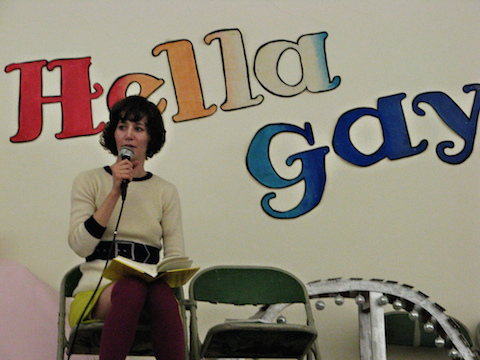
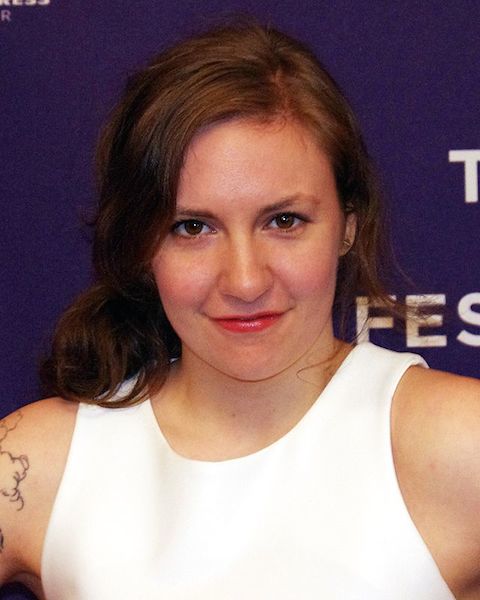
Pity that some of the people whose bookshelves I’d be most curious to see are the least likely to open their homes to me. That’s why I’d like to thank The Strand bookstore for providing a virtual peek at the shelves of filmmakers-cum-authors Miranda July and Lena Dunham. (Previous participants in the Authors Bookshelf series include just-plain-regular authors George Saunders, Edwidge Danticat and the late David Foster Wallace whose contributions were selected by biographer D.T. Max.)
I wish Dunham and July had offered up some personal commentary to explain their hand-picked titles. (Surely their homes are lined with books. Surely each list is but a representative sampling, one shelf from hundreds. Hmm. Interesting. Did they run back and forth between various rooms, curating with a vengeance, or is this a case of whatever happened to be in the case closest at hand when deadline loomed?)
Which book’s a longtime favorite?
Which the literary equivalent of comfort food?
Are there things that only made the cut because the author is a friend?
Both women are celebrated storytellers. Surely, there are stories here beyond the ones contained between two covers.
But no matter. The lack of accompanying anecdotes means we now have the fun of inventing imaginary dinner parties:
ME: (flustered) Oh, ha ha, yes! Alex! … I sent him a Facebook request and he accepted.
LENA DUNHAM: (mutters under her breath)
ME: Design Sponge? Really? What’s someone in your shoes doing with a bunch of DIY decorating books?
LENA DUNHAM: (coldly) Research.
Actually, maybe it is better to admire one’s idols’ bookshelves from afar.
I’m chagrined that I don’t recognize more of their modern fiction picks. That wasn’t such a problem when I was measuring myself against the 430 books on Marilyn Monroe’s reading list.
Thank heaven for old standbys like Madame Bovary.
In all sincerity, I was glad that Dunham didn’t try to mask her love of home decor blog books.
One’s shelves, after all, are a matter of taste. So, celebrate the similarities, take their recommendations under advisement, see below and read what you like!
The Girls’ Guide to Hunting and Fishing — Melissa Bank
A Little History of the World — E. H. Gombrich
Anne of Green Gables — L.M. Montgomery
Apartment Therapy Presents: Real Homes, Real People, Hundreds of Real Design Solutions — Maxwell Gillingham-Ryan
Ariel: The Restored Edition — Sylvia Plath
Bad Feminist: Essays — Roxane Gay
Bastard Out of Carolina (20th Anniversary Edition) — Dorothy Allison
Blue is the Warmest Color — Julie Maroh
Brighton Rock — Graham Greene
Cavedweller - Dorothy Allison
Country Girl: A Memoir — Edna O’Brien
Crazy Salad and Scribble Scribble: Some Things About Women and Notes on Media — Nora Ephron
Design Sponge at Home — Grace Bonney
Dinner: A Love Story: It All Begins at the Family Table — Jenny Rosenstrach
Eleanor & Park — Rainbow Rowell
Eloise — Kay Thompson
Eloise In Moscow — Kay Thompson
Eloise In Paris — Kay Thompson
Fanny At Chez Panisse — Alice Waters
Goodbye, Columbus and Five Short Stories — Philip Roth
Holidays on Ice — David Sedaris
Important Artifacts and Personal Property from the Collection of Lenore Doolan and Harold Morris, Including Books, Street Fashion, and Jewelry — Leanne Shapton
Lentil — Robert McCloskey
Love Poems — Nikki Giovanni
Love, an Index (McSweeney’s Poetry Series) — Rebecca Lindenberg
Perhaps rather than trying to identify the source, we should work toward being open to inspiration in whatever guise it presents itself. It’s an approach that certainly seems to be working for Patti Smith and David Lynch, aka the Godmother of Punk and Jimmy Stewart from Mars, both a shockingly youthful 69.
One of the most exciting things about their recent segment for the BBC’s Newsnight “Encounters” series is watching how appreciative these veterans are of each other’s process.
“I want a copy of what you just said,” Smith gasps, after Lynch likens the beginnings of a creative process to being in possession of a single, intriguing puzzle piece, knowing that a completed version exists in the adjacent room.
As artists, they’re committed to peeking beneath the veneer. “What’s more horrifying than normalcy?” Smith asks.
It does seem important to note how both of these longtime practitioners mention jotting their ideas down immediately following the muse’s visit.
Nobody likes the way an entire human life can get reduced to a sound bite, but even if you know absolutely nothing else about Carl Sagan, you know that he said the words “billions and billions.” Or rather, you think you know it; in reality (and in accordance with the “Play it again, Sam” principle), the famous astronomer and science popularizer never actually said quite those words on television. A posthumous essay collection used them as its title, but the public only latched on to the catchphrase — or catch half-phrase, anyway — in 1980, when Johnny Carson used it in a Tonight Show parody of Sagan’s broadcast persona. But if you want to hear the real Sagan invoking very large numbers in his characteristic intonation, have we got the video for you.
At the top of the post, you’ll find a supercut of each and every one of his uses of “million,” “billion,” “trillion,” and even “quadrillion” during the entirety of his acclaimed television series Cosmos — to a beat. Alternatively, using similar source material to an entirely different aesthetic end, the sound clip above contains just one instance of Sagan saying “billion” — but stretched out to an hour in length, which turns it into a sort of dronelike ambient music. A not just outward- but forward-thinking scientific visionary like Sagan surely understood more about what lies ahead for humanity than the rest of us do, but could he possibly have foreseen us using our technology for stuff like this? Still, he probably would’ve dug it.
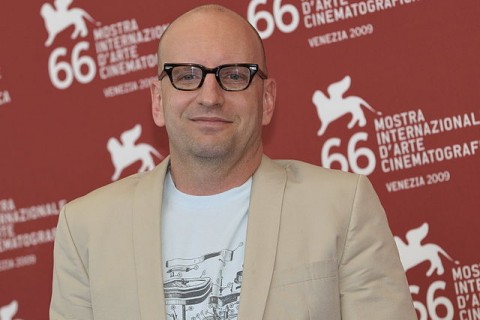
Our vast media landscape feels grossly oversaturated with advertising, propaganda, and all manner of redundant noise. But the discerning eye, and ear, perceives just as much quality out there as crap. “Retired” auteur Steven Soderbergh, as fans of his will know, is just such a discerning customer — and an exacting, highly organized one at that. Soderbergh has sworn off directing film, turning his attention to television by directing the Cinemax series The Knick as well as—reports Indiewire—“producing, editing, and lensing Magic Mike XXL,” the second installment of the Channing Tatum-starring male stripper saga.
One might think all this work would keep Soderbergh busy from dawn to dusk, but he’s a man who “gets more done in a day than most do in a week.” A consummate consumer of culture high and low, Soderbergh assiduously documented his watching, reading, and listening experiences for the entire year previous. His list includes TV shows like Veep and Louie, and heavier fare like True Detective and House of Cards. He read Donna Tartt’s The Goldfinch and Karl Ove Gnausgaard’s laborious Proustian novel My Struggle (books one through three—in two months). In addition to recent films like Gone Girl, Soderbergh watched Kubrick’s 2001: A Space Odyssey three times and Jaws twice. He even found the time for Die Hard With a Vengeance.
The above represents but the tiniest sampling of Soderbergh’s voracious diet. You can see the full list, including his album purchases here. As Indiewire rightly observes, the list is “a lot to wade through.” Even more so the incredible range and diversity of creative works contained within. Soderbergh maintained a similar log for 2013, which you can see here. Scanning these may inspire you to step up your input, or maybe just to pull a manageable number of selections for future reading/viewing/listening of your own.
We're hoping to rely on loyal readers, rather than erratic ads. Please click the Donate button and support Open Culture. You can use Paypal, Venmo, Patreon, even Crypto! We thank you!
Open Culture scours the web for the best educational media. We find the free courses and audio books you need, the language lessons & educational videos you want, and plenty of enlightenment in between.