Watch a New Virtual Reality Production of Shakespeare’s Hamlet: A Modern Take on a Classic Play

Often com­pared to The Tem­pest, Samuel Beck­et­t’s Endgame may have as much of Shakespeare’s Ham­let in it, though the author was unwill­ing to acknowl­edge the influ­ence to Theodor Adorno. Beck­et­t’s cen­tral char­ac­ter, the blind, aged Hamm, spends all of his time in a throne harangu­ing the oth­er three, in a gloomy place, The New York Times’ Brooks Atkin­son wrote, “some­where between life and death.” Hamm might have been the Dan­ish prince grown old and bit­ter, left with noth­ing but what Beck­ett called Shakespeare’s “fat greasy words.”

In any case, Ham­let has long been thought of as a pro­to­type of the absurd, a play where lit­tle hap­pens because its pro­tag­o­nist is too haunt­ed to have rela­tion­ships with the liv­ing or make deci­sions, a con­di­tion he com­plains about in scene after scene. Trau­ma, exis­ten­tial paral­y­sis, crip­pling doubt punc­tu­at­ed by fits of rage and violence—these are the mak­ings of the 20th cen­tu­ry anti-hero. If the play has a clas­si­cal hero, a man of action and resolve, it is, absurd­ly, a dead man, Hamlet’s father, who testi­ly declares his pur­pose in his final speech, “to whet thy almost blunt­ed pur­pose.”

Should Ham­let be turned into an immer­sive VR and aug­ment­ed real­i­ty expe­ri­ence, allow­ing view­ers to inhab­it a char­ac­ter’s point of view, they might not opt to see things as the moody, depres­sive, speechi­fy­ing prince. In Ham­let 360: Thy Father’s Spir­it, we instead get to inhab­it the ghost, who only appears in the play a hand­ful of times but still fills every scene with his glow­er­ing pres­ence. The 60-minute VR “mod­ern adap­ta­tion” is a co-pro­duc­tion of Boston’s Com­mon­wealth Shake­speare Com­pa­ny and Google.

“Both extreme­ly long by the stan­dards of vir­tu­al real­i­ty and extreme­ly short by the stan­dards of Ham­let,” writes Eliz­a­beth Har­ris at The New York Times, the film “can be watched in 3‑D using a V.R. head­set or in two dimen­sions on a desk­top or mobile device” (see it above). On a vast, dark­ened set clut­tered with fine but shab­by fur­nish­ings in heaps, glow­ing lamps, a bath­tub, and a car, actors per­form con­densed scenes while we, as ghost, freely roam about, view­ing the action in three dimen­sions, a device intend­ed to give the view­er “a sense of agency and urgency as an omni­scient observ­er, guide and par­tic­i­pant,” the pro­duc­tion notes.

The film’s cre­ators, Har­ris writes, “hope that beyond the fresh expe­ri­ence it pro­vides, it will also serve as a tool to bring great the­ater to wider audiences—and bring big­ger audi­ences to the­ater.” It may have that effect, though one might feel it priv­i­leges dig­i­tal effects over the tru­ly immer­sive, full expe­ri­ence of Shakespeare’s “fat greasy words.” It’s hard to think the “great Shake­speare­an” Beck­ett would approve, but he found lit­tle to his lik­ing.

Younger, less can­tan­ker­ous audi­ences might, how­ev­er. “Many young people’s first expe­ri­ence of Shake­speare is not all that great,” says direc­tor Steven Maler. Ham­let 360 allows the Com­mon­wealth Shake­speare Com­pa­ny to “scale up” their mis­sion to “tru­ly democ­ra­tize Shake­speare and the­ater.”  Expe­ri­ence it for your­self above or on YouTube and learn more at Boston’s WGBH, who recent­ly pre­miered the film. The actors “deliv­er pow­er­ful per­for­mances,” the PBS sta­tion writes, “that bring the play for­ward to today, mak­ing it both cur­rent and time­less.”

via The New York Times

Relat­ed Con­tent:

Free Online Shake­speare Cours­es: Primers on the Bard from Oxford, Har­vard, Berke­ley & More

Google Gives You a 360° View of the Per­form­ing Arts, From the Roy­al Shake­speare Com­pa­ny to the Paris Opera Bal­let

30 Days of Shake­speare: One Read­ing of the Bard Per Day, by The New York Pub­lic Library, on the 400th Anniver­sary of His Death

Josh Jones is a writer and musi­cian based in Durham, NC. Fol­low him at @jdmagness

Lin-Manuel Miranda & Emily Blunt Take You Through 22 Classic Musicals in 12 Minutes

Watch­ing James Cor­den, Lin-Manuel Miran­da, and Emi­ly Blunt don­ning bad wigs to mug their way through a 12-minute salute to 22 movie musi­cal “clas­sics” is a bit rem­i­nis­cent of watch­ing the three most pop­u­lar coun­selors ham it up dur­ing an over­long sum­mer camp skit.

Their one-take per­for­mance was part of Role Call, a reg­u­lar fea­ture of the Late Late Show with James Cor­den. Usu­al­ly, this fan favorite is an excuse for Cor­den and a megas­tar guest—Tom Han­ks, Julia Roberts, Samuel L. Jack­son—to bum­ble through the most icon­ic moments of their career.

These kinds of larks are more fun for being a mess, and the live stu­dio audi­ence screams like besot­ted campers at every goofy quick change and wink­ing inside ref­er­ence. Blunt and Miran­da are def­i­nite­ly game, though one won­ders if they felt a bit cha­grinned that the film they are pro­mot­ing, Mary Pop­pins Returns, is giv­en pride of place­ment, while the orig­i­nal 1964 film star­ring Julie Andrews and Dick Van Dyke is strange­ly absent.

As is Thor­ough­ly Mod­ern Mil­lie, Victor/Victoria, and even The Sound of Music.

Maybe Corden’s sav­ing up for a Julia Andrews-cen­tric Role Call.

What did make the cut points to how few orig­i­nal movie musi­cals there are to res­onate with mod­ern audi­ences.

Of the 22, over 2/3 start­ed out as Broad­way plays.

And “You Can’t Stop the Beat” from 2007’s Hair­spray was born of the 2002 stage adap­ta­tion, not the grit­ty 1988 orig­i­nal star­ring John Waters’ main­stay, Divine.

Is it wrong to hope that most view­ers hear­ing “Your Song” will think, Elton John! not Moulin Rouge”?

And Beau­ty and The Beast is per­haps not so much a movie musi­cal as a children’s fea­ture-length ani­ma­tion, so why not The Lit­tle Mer­maid, The Lion  King, or hell, Snow White or Pinoc­chio?

Alas, 1953’s Gen­tle­men Pre­fer Blondes is as far back as this skit’s mem­o­ry goes, pre­sum­ably because the audi­ence has a greater like­li­hood of rec­og­niz­ing Mar­i­lyn Mon­roe than say, Howard Keel.

More inter­est­ing than the jokey horse­play with Into the Woods and The Mup­pet Movie is the choice to blithe­ly cast white actors in roles that were writ­ten for black women (Dream­girls, Lit­tle Shop of Hor­rors). I don’t think any­one would try to get away with that on Broad­way these days, even in in a spoofy char­i­ta­ble event like Broad­way Bares or East­er Bon­net… though if they did, get­ting Lin-Manuel Miran­da on board would be a very good idea.

As to why Hamil­ton isn’t one of the titles below … it’s not a movie musi­cal—yet!

Readers—what glar­ing omis­sions leap out at you?

Cabaret

Chica­go

La La Land

Beau­ty and the Beast

Guys and Dolls

Evi­ta

Sin­gin’ in the Rain

Mary Pop­pins Returns

The Mup­pet Movie

The Wiz­ard of Oz 

Hair­spray

Dream­girls

Annie

Fid­dler on the Roof

Into the Woods 

Lit­tle Shop of Hor­rors

Les Mis­er­ables

Moulin Rouge 

Once

Fame 

Gen­tle­men Pre­fer Blondes

Mama Mia

Relat­ed Con­tent:

Hair: The Amer­i­can Trib­al Love-Rock Musi­cal Debuted on Broad­way 50 Years Ago: Watch Footage of the Cast Per­form­ing in 1968

David Bowie Dreamed of Turn­ing George Orwell’s 1984 Into a Musi­cal: Hear the Songs That Sur­vived the Aban­doned Project

Alexan­der Hamil­ton: Hip-Hop Hero at the White House Poet­ry Evening

Ayun Hal­l­i­day is an author, illus­tra­tor, the­ater mak­er and Chief Pri­ma­tol­o­gist of the East Vil­lage Inky zine.  See her onstage in New York City this Jan­u­ary as host of  The­ater of the Apes book-based vari­ety show, Necro­mancers of the Pub­lic Domain. Fol­low her @AyunHalliday.


Living Paintings: 13 Caravaggio Works of Art Performed by Real-Life Actors

Michelan­ge­lo Merisi da Car­avag­gio, the father of Baroque paint­ing, shocked the upper class aes­thetes of his day by draft­ing pros­ti­tutes and pro­le­tari­ats as mod­els for his pri­mar­i­ly Bib­li­cal sub­jects.

Ten years ago, under the direc­tion of founder Ludovi­ca Ram­bel­li, eight mem­bers of the Ital­ian com­pa­ny, Malathe­atre, dis­cov­ered first hand the insane­ly rig­or­ous pos­es Car­avag­gio demand­ed of his mod­els, cre­at­ing 23 tableaux vivants inspired by the master’s oeu­vre.

The com­pa­ny sought less to repro­duce the paint­ings than the scene Car­avag­gio would have gazed on from behind his easel.

The 13 stag­ings in the video above make one aware of the intense phys­i­cal­i­ty evi­dent in Caravaggio’s work.

All those extend­ed arms and inver­sions are agony for a mod­el. After 30 sec­onds or so, even a sharply inclined neck or bent back can serve up a small taste of what it’s like to be cru­ci­fied.

The result is exquis­ite. The eight play­ers are not just extra­or­di­nar­i­ly fit spec­i­mens, they have clear­ly devot­ed much thought to the emo­tion­al life of each char­ac­ter they embody, sus­tain­ing the moment with great focus and deter­mi­na­tion.

The action unfolds in the suit­ably ancient set­ting of Naples’ Church of San­ta Maria Donnaregi­na Nuo­va.

When not called upon to mod­el, the per­form­ers become stage hands, help­ing each oth­er to arrange the sim­ple, well cho­sen props and flow­ing man­tles.

(I enjoyed the small joke of a female Bac­chus.)

Per­formed live to selec­tions from Mozart, Bach, and Vival­di, this com­pa­ny has set­tled on the Lux Aeter­na sec­tion of Mozart’s Requiem to accom­pa­ny their archival footage.

The next oppor­tu­ni­ty to see the show per­formed live will be in Naples on Decem­ber 28.

Have a look at the video below, for some com­par­isons between the orig­i­nal paint­ings and the 13 tableaux vivants seen in the video:

The Entomb­ment of Christ

Mary Mag­da­lene in Ecsta­sy,

Cru­ci­fix­ion of Saint Peter

The Behead­ing of St John the Bap­tist

Judith Behead­ing Holofernes

Fla­gel­la­tion of Christ

The Mar­tyr­dom of Saint Matthew

Annun­ci­a­tion

Rest on the Flight into Egypt

Nar­cis­sus,

The Rais­ing of Lazarus

Saint Fran­cis of Assisi in Ecsta­sy

Bac­chus

via This Kids Should See This

Relat­ed Con­tent:

Flash­mob Recre­ates Rembrandt’s “The Night Watch” in a Dutch Shop­ping Mall

Bat­man & Oth­er Super Friends Sit for 17th Cen­tu­ry Flem­ish Style Por­traits

Why Babies in Medieval Paint­ings Look Like Mid­dle-Aged Men: An Inves­tiga­tive Video

Ayun Hal­l­i­day is a for­mer artist’s mod­el turned author, illus­tra­tor, the­ater mak­er and Chief Pri­ma­tol­o­gist of the East Vil­lage Inky zine.  Join her in NYC on Mon­day, Novem­ber 12 for anoth­er month­ly install­ment of her book-based vari­ety show, Necro­mancers of the Pub­lic Domain. Fol­low her @AyunHalliday.


The CIA’s Former Chief of Disguise Show How Spies Use Costumes in Undercover Operations

Think on this as you ready your Hal­loween fin­ery. Some­times it’s not a case of win­ning a cos­tume con­test, or impress­ing your friends with your wit­ty take on cur­rent events or pop cul­ture.

Some­times, mas­quer­ade is a thin line between life and death.

The CIA’s for­mer Chief of Dis­guise, Jon­na Mendez, rose up through the ranks, hav­ing signed on as recep­tion­ist short­ly after her fiancé revealed—three days before the wedding—that he was actu­al­ly an under­cov­er agent.

As Chief of Dis­guise, her mis­sion was to pro­tect case offi­cers in dan­ger­ous sit­u­a­tions, as well as for­eign sources who rou­tine­ly put their lives at risk by meet­ing with Amer­i­can oper­a­tives.

Trans­form­ing their appear­ance was an addi­tive proposition—while it’s dif­fi­cult to make some­one short­er, slim­mer, or younger, it’s not dif­fi­cult to ren­der them taller, heav­ier, old­er…

In her expe­ri­ence, women are eas­i­ly dis­guised as men. (She shared with The New York Times’ Matthew Rosen­berg how she her­self passed unde­tect­ed in male mufti, thanks pri­mar­i­ly to a lit cig­ar.)

Men have a tougher time pass­ing as women. Fans of RuPaul’s Drag Race might take excep­tion to this posi­tion, were it not for the asser­tion that blend­ing in is key.

The goal is to be for­get­table, not fab­u­lous.

For Amer­i­cans abroad, this pos­es cer­tain cul­tur­al chal­lenges.

Mendez stress­es that dis­guise is much more than a sim­ple facial trans­for­ma­tion, involv­ing make­up, false hair, and pros­thet­ics.

It’s dress, car­riage, gait, jew­el­ry, scent…

The biggest Amer­i­can give­away is our shoes. An Ital­ian civil­ian can peg ‘em with one swift glance.

Pass­ing requires fur­ther behav­ioral mod­i­fi­ca­tions in the realms of table man­ners, gait, and even hang­ing out. (Euro­peans dis­trib­ute their weight even­ly, where­as Amer­i­cans lean.)

To fly beneath the radar, the dis­guised oper­a­tive must shoot to trans­form every aspect of their appear­ance. Imag­ine a sur­vey where­in the par­tic­i­pant recalls every phys­i­cal aspect of some­one they’ve just encoun­tered. The goal is to nudge that par­tic­i­pant into answer­ing every ques­tion incor­rect­ly.

What col­or are your eyes? Your hair? How much do you weigh? How tall are you? How old?  How would you describe your nose? Your voice? Your cloth­ing?

Change it.

Change it all.

You can do so by low tech meth­ods, using what­ev­er is on hand. Mendez once maneu­vered an agent out of a tight spot on the Sub-Con­ti­nent, by impro­vis­ing a quick change with Dr. Scholl’s pow­der and cos­met­ics col­lect­ed from local CIA wives.

She cred­its her own sec­ond hus­band, CIA “mas­ter of dis­guise” Tony Mendez (the inspi­ra­tion for Ben Affleck’s char­ac­ter in Argo) with many trade secrets she put into reg­u­lar prac­tice: den­tal facades, speech-alter­ing arti­fi­cial palettes, pros­thet­ics…

At the high end is the mask she wore to brief for­mer CIA Chief, Pres­i­dent George HW Bush, on devel­op­ments with­in the dis­guise pro­gram. The Pres­i­dent was none the wis­er.

Mean­while, a masked Amer­i­can agent chucked his mask under a Moscow rock when dan­ger com­pelled him to scup­per his mis­sion mid­way through. That mask now resides in the KGB muse­um where Mendez can­not vis­it it.

Check out the Mendezes’ book Spy­dust for more infor­ma­tion on their adven­tures in the field.

Relat­ed Con­tent:

Read the CIA’s Sim­ple Sab­o­tage Field Man­u­al: A Time­less Guide to Sub­vert­ing Any Orga­ni­za­tion with “Pur­pose­ful Stu­pid­i­ty” (1944)

The CIA Assess­es the Pow­er of French Post-Mod­ern Philoso­phers: Read a New­ly Declas­si­fied CIA Report from 1985

Declas­si­fied CIA Doc­u­ment Reveals That Ben Franklin (and His Big Ego) Put U.S. Nation­al Secu­ri­ty at Risk

Ayun Hal­l­i­day is an author, illus­tra­tor, the­ater mak­er and Chief Pri­ma­tol­o­gist of the East Vil­lage Inky zine.  Join her in NYC on Mon­day, Novem­ber 12 for anoth­er month­ly install­ment of her book-based vari­ety show, Necro­mancers of the Pub­lic Domain. Fol­low her @AyunHalliday.

Why Read Waiting For Godot?: An Animated Case for Samuel Beckett’s Classic Absurdist Play

Iseult Gille­spie’s lat­est lit­er­a­ture themed TED-Ed les­son—Why should you read Wait­ing For Godot?—pos­es a ques­tion that’s not too dif­fi­cult to answer these days.

The mean­ing of this sur­pris­ing­ly stur­dy Absur­dist play is famous­ly open for debate.

Author Samuel Beck­ett told Roger Blin, who direct­ed and act­ed in its first pro­duc­tion at the Théâtre de Baby­lon in 1953, that all he knew for cer­tain was that the two main char­ac­ters, Vladimir and Estragon, wore bowler hats.

(Anoth­er thing he felt sure of was that they were male, and should only be brought to life by those in pos­ses­sion of a prostate gland, a spec­i­fi­ca­tion that ran­kles female the­ater artists eager to take a crack at char­ac­ters who now seem as uni­ver­sal as any in Shake­speare. The Beck­ett estate’s vig­or­ous enforce­ment of the late playwright’s wish­es is itself the sub­ject of a play, The Under­pants Godot by Dun­can Pflaster.)

A “tragi­com­e­dy in two acts,” accord­ing to Beck­ett, Wait­ing for Godot emerged dur­ing a vibrant moment for exper­i­men­tal the­ater, as play­wrights turned their backs on con­ven­tion to address the dev­as­ta­tion of WWII.

Com­e­dy got dark­er. Bore­dom, reli­gious dread, and exis­ten­tial despair were major themes.

Per­haps we are on the brink of such a peri­od our­selves?

Crit­ics, schol­ars, and direc­tors have found Godot a mean­ing­ful lens through which to con­sid­er the Cold War, the French resis­tance, England’s col­o­niza­tion of Ire­land, and var­i­ous forms of apoc­a­lyp­tic near-future.

Per­haps THAT is why we should read (and/or watch) Wait­ing for Godot.

Vladimir:

Was I sleep­ing, while the oth­ers suf­fered? Am I sleep­ing now? Tomor­row, when I wake, or think I do, what shall I say of today? That with Estragon my friend, at this place, until the fall of night, I wait­ed for Godot? That Poz­zo passed, with his car­ri­er, and that he spoke to us? Prob­a­bly. But in all that what truth will there be? (Estragon, hav­ing strug­gled with his boots in vain, is doz­ing off again. Vladimir looks at him.) He’ll know noth­ing. He’ll tell me about the blows he received and I’ll give him a car­rot. (Pause.) Astride of a grave and a dif­fi­cult birth. Down in the hole, lin­ger­ing­ly, the grave dig­ger puts on the for­ceps. We have time to grow old. The air is full of our cries. (He lis­tens.) But habit is a great dead­en­er. (He looks again at Estragon.) At me too some­one is look­ing, of me too some­one is say­ing, He is sleep­ing, he knows noth­ing, let him sleep on. (Pause.) I can’t go on! (Pause.) What have I said?

Gillespie’s les­son, ani­mat­ed by Tomás Pichar­do-Espail­lat, above, includes a sup­ple­men­tal trove of resources and a quiz that edu­ca­tors can cus­tomize online.

Relat­ed Con­tent:

Samuel Beck­ett Directs His Absur­dist Play Wait­ing for Godot (1985)

Hear Wait­ing for Godot, the Acclaimed 1956 Pro­duc­tion Star­ring The Wiz­ard of Oz’s Bert Lahr

An Ani­mat­ed Intro­duc­tion to Samuel Beck­ett, Absur­dist Play­wright, Nov­el­ist & Poet

“Try Again. Fail Again. Fail Bet­ter”: How Samuel Beck­ett Cre­at­ed the Unlike­ly Mantra That Inspires Entre­pre­neurs Today

The Books Samuel Beck­ett Read and Real­ly Liked (1941–1956)

Watch the Open­ing Cred­its of an Imag­i­nary 70s Cop Show Star­ring Samuel Beck­ett

Ayun Hal­l­i­day is an author, illus­tra­tor, the­ater mak­er and Chief Pri­ma­tol­o­gist of the East Vil­lage Inky zine.  Her play Zam­boni Godot pre­miered in New York City in 2017. Join her in NYC on Mon­day, Octo­ber 15 for anoth­er month­ly install­ment of her book-based vari­ety show, Necro­mancers of the Pub­lic Domain. Fol­low her @AyunHalliday.

Sarah Bernhardt Becomes the First Woman to Play Hamlet (1899)

At one time, the name Sarah Bern­hardt was syn­ony­mous with melo­dra­mat­ic self-pre­sen­ta­tion. In her hey­day, the actress cre­at­ed a cat­e­go­ry all her own—impossible to judge by the usu­al stan­dards of the dra­mat­ic arts. Or as Mark Twain put it, “there are five kinds of actress­es: bad actress­es, fair actress­es, good actress­es, great actresses—and then there is Sarah Bern­hardt.”

Admired and beloved by Vic­tor Hugo and play­wright Edmond Ros­tand, who called her “the queen of the pose and the princess of the ges­ture,” Bern­hardt com­mand­ed atten­tion in every role, and became infa­mous as “a can­ny self-pro­mot­er,” as Han­nah Mank­telow writes. Bern­hardt “cul­ti­vat­ed her image as a mys­te­ri­ous, exot­ic out­sider. She claimed to sleep in a cof­fin and encour­aged the cir­cu­la­tion of out­landish rumors about her eccen­tric behav­ior.”

Bernhardt’s world­wide fame rest­ed not only on her pub­lic rela­tions skill, but also on her will­ing­ness to take dra­mat­ic risks most actress­es of the time would nev­er dare. In one notable exam­ple, she played Ham­let in 1899, at age 55, in a French adap­ta­tion of Shakespeare’s play. What’s more, she bold­ly under­took the role in Lon­don, then again in Strat­ford at the Shake­speare Memo­r­i­al The­atre. Final­ly, she became the first woman to por­tray Ham­let on film (see a short clip above).

Reac­tions to her stage per­for­mance by con­tem­po­raries were mixed. In her review, actress and writer Eliz­a­beth Robins praised Bernhardt’s “amaz­ing skill” in play­ing “a spir­it­ed boy… with impetu­os­i­ty, a youth­ful­ness, almost child­ish.” But Robins issued a qual­i­fi­ca­tion at the out­set: “for a woman to play at being a man is, sure­ly, a tremen­dous hand­i­cap,” she writes, a crit­i­cism echoed by Eng­lish essay­ist Max Beer­bohm, who went so far as to deny women the pow­er to cre­ate art.

“Cre­ative pow­er,” wrote Beer­bohm, “the pow­er to con­ceive ideas and exe­cute them, is an attribute of viril­i­ty; women are denied it, in so far as they prac­tice art at all, they are aping viril­i­ty, exceed­ing their nat­ur­al sphere. Nev­er does one under­stand so well the fail­ure of women in art as when one sees them delib­er­ate­ly imper­son­at­ing men upon the stage.” Set­ting Beerbohm’s cat­e­gor­i­cal­ly sex­ist asser­tions aside (for the moment), we must mark the irony that both he and Robins are trou­bled by a woman play­ing a man, giv­en that all of Shakespeare’s female char­ac­ters were once played by men, a fact both crit­ics some­how fail to men­tion.

Where Beer­bohm saw in Bernhardt’s per­for­mance a mere “aping of viril­i­ty,” Robins, unham­pered by Beer­bohm’s ugly misog­y­ny, observed the great actress in vivid detail, in an essay that brings Bernhardt’s Ham­let to life with descrip­tions of her, for exam­ple, “appeal­ing dumb­ly for anoth­er sign” after see­ing her father’s ghost (on paint­ed gauze), “and pass­ing pathet­ic flut­ter­ing hands over the unre­spon­sive sur­face, grop­ing piteous­ly like a child in the dark.”

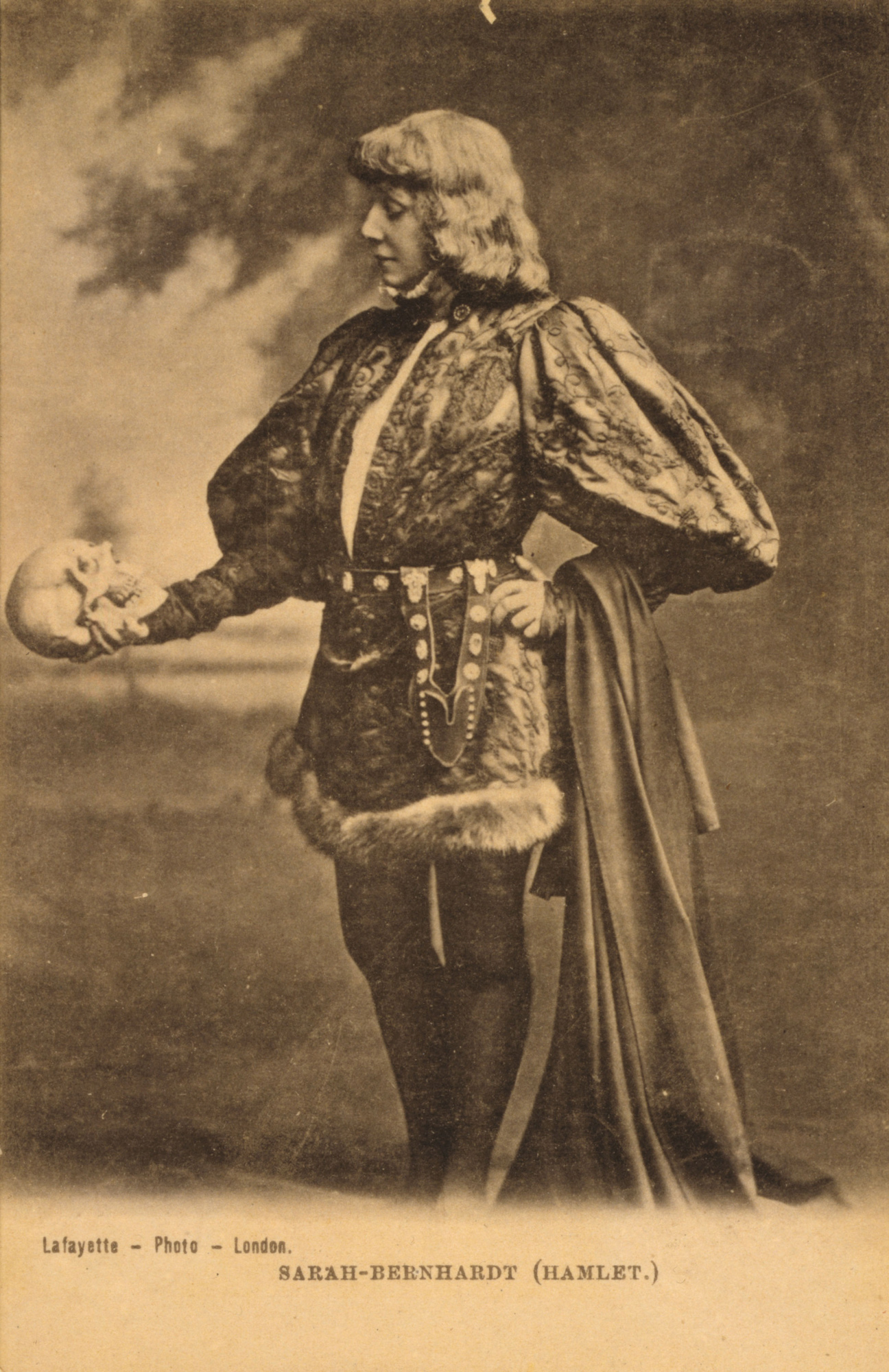
The pathos of Bernhardt’s per­for­mance was under­cut, Robins felt, by some clum­sy moments, such as her  mis­treat­ment of poor Yorick’s skull. (A real human skull, by the way, giv­en to her by Vic­tor Hugo). “It was not pleas­ant,” writes Robins, “to see the grin­ning object han­dled so cal­lous­ly…. Indeed, I feel sure that Madame Bern­hardt treats her lap-dog more con­sid­er­ate­ly.” On the whole, how­ev­er, Robins felt the per­for­mance a tru­ly dra­mat­ic achieve­ment through Bernhardt’s “mas­tery of sheer poise… of spar­ing, clean-cut ges­ture… the effect that the artist in her want­ed to pro­duce.”

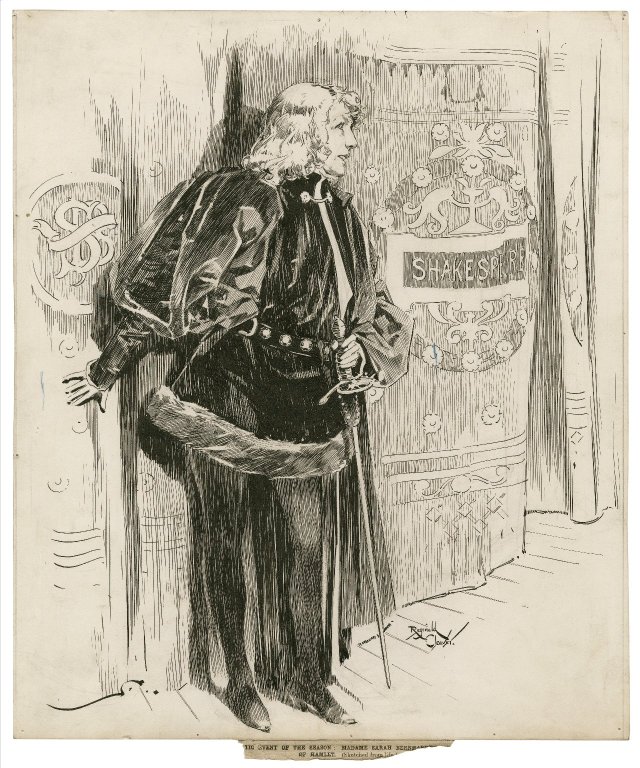
Fur­ther up, see an ink draw­ing of Bern­hardt as Ham­let by Regi­nal Cleaver and, just above, an 1899 post­card pho­to­graph (with Hugo’s gift­ed skull). Read more about Bernhardt’s per­for­mance, and the atten­dant pub­lic­i­ty, at the Shake­speare Blog, and learn about a new play based on Bernhardt’s Ham­let called “The Divine Sarah” at the Fol­ger Shake­speare Library’s Shake­speare & Beyond.

Relat­ed Con­tent:

Rare 1910 Audio: Sarah Bern­hardt, ‘The Most Famous Actress the World Has Ever Known,’ in Racine’s Phè­dre

When Ira Aldridge Became the First Black Actor to Per­form Shake­speare in Eng­land (1824)

What Shakespeare’s Eng­lish Sound­ed Like, and How We Know It

Josh Jones is a writer and musi­cian based in Wash­ing­ton, DC. Fol­low him at @jdmagness

Eleven Rules for Writing from Eight Contemporary Playwrights 

Chances are most of us won’t be imme­di­ate­ly famil­iar with the eight most­ly British play­wrights reflect­ing on their process in the Nation­al The­atre’s video, above.

That’s a good thing.

It’s eas­i­er to choose which pieces of inspir­ing, occa­sion­al­ly con­flict­ing writ­ing advice to fol­low when the scale’s not weight­ed down by the thumb of celebri­ty.

(Though rest assured that there’s no short­age of peo­ple who do know their work, if the Nation­al The­ater is plac­ing them in the hot seat.)

It’s impos­si­ble to fol­low all of their sug­ges­tions on any giv­en project, so go with your gut.

Or try your hand at one that doesn’t come nat­u­ral­ly, espe­cial­ly if you’ve been feel­ing stuck.

These approach­es are equal­ly valid for those writ­ing fic­tion, and pos­si­bly even cer­tain types of poet­ry and song.

The Nation­al wins points for assem­bling a diverse group—there are four women and four men, three of whom are peo­ple of col­or.

With­in this crew, it’s the women who over­whelm­ing­ly bring up the notions of per­mis­sion and per­fec­tion, as in it’s okay to let your first draft be absolute­ly dread­ful.

Most of the males are prone to plot­ting things out in advance.

And no one seems entire­ly at home marooned against a seam­less white back­ground on a plain wood­en stool.

Jew­ish iden­ti­ty, school shoot­ings, immi­gra­tion, race, cli­mate change, and homo­pho­bia are just some of the top­ics they have con­sid­ered in their plays.

Some have worked in film and TV, adapt­ed the clas­sics, or writ­ten for young audi­ences.

They have won pres­ti­gious awards, seen their plays staged ‘round the globe, and had suc­cess with oth­er artis­tic pur­suits, includ­ing poet­ry, per­for­mance, and dance.

Clear­ly, you’ll find some great advice below, though it’s not a one-size-fits-all propo­si­tion. Let us know in the com­ments which rules you per­son­al­ly con­sid­er worth fol­low­ing.

Eleven Rules for Writ­ing from Eight Con­tem­po­rary Play­wrights

1. Start

or

2. Don’t start. Let your idea mar­i­nate for a min­i­mum of six months, then start.

3.. Have some sort of out­line or plan before you start

4. Do some research

5. Don’t be judg­men­tal of your writ­ing while you’re writ­ing

6. Embrace the ter­ri­ble first draft 

7. Don’t show any­one your first draft, unless you want to.

8. Know how it’s going to end

or

9. Don’t know how it’s going end

10. Work with oth­ers

11. Print it, and read it like some­one expe­ri­enc­ing it for the first time. No edit­ing aloud. Get that pen out of your hand.

And now, it’s time to dis­cov­er the work of the par­tic­i­pat­ing play­wrights. Go see a show, or at least read about one in the links:

In-Sook Chap­pell

Ryan Craig

Suhay­la El-Bushra

Inua Ellams

Lucy Kirk­wood

Evan Placey

Tanya Ron­der

Simon Stephens

The Nation­al The­atre has sev­er­al fas­ci­nat­ing playlists devot­ed to play­writ­ing. Find them here.

Relat­ed Con­tent:

An Ani­mat­ed Intro­duc­tion to Samuel Beck­ett, Absur­dist Play­wright, Nov­el­ist & Poet

How the Russ­ian The­atre Direc­tor Con­stan­tin Stanislavs­ki Rev­o­lu­tion­ized the Craft of Act­ing: A New Video Essay

Ayun Hal­l­i­day is an author, illus­tra­tor, the­ater mak­er and Chief Pri­ma­tol­o­gist of the East Vil­lage Inky zine.  Join her in NYC on Wednes­day, May 16 for anoth­er month­ly install­ment of her book-based vari­ety show, Necro­mancers of the Pub­lic Domain. Fol­low her @AyunHalliday.

Hair: The American Tribal Love-Rock Musical Debuted on Broadway 50 Years Ago: Watch Footage of the Cast Performing in 1968

As years go, 1968 is packed with notable events.

The Tet Offen­sive and the Apol­lo 8 mis­sion to the moon.

The assas­si­na­tions of Mar­tin Luther King Jr. and Robert F. Kennedy.

The first 747 took to the skies. Star Trek showed television’s first inter­ra­cial kiss.

And Hair: The Amer­i­can Trib­al Love-Rock Musi­cal, which debuted down­town hard on the heels of the Sum­mer of Love, reopened on Broad­way.

New York Times crit­ic Clive Barnes—a fan—caved to pres­sure from anx­ious pre­view audi­ence mem­bers, who want­ed him to warn prospec­tive tick­et buy­ers what they were in for. Tongue firm­ly in cheek, he com­plied with­in the body of a rave review:

A great many four let­ter words such as “love”

A num­ber of men and women (I should have count­ed)… total­ly nude

Fre­quent approv­ing ref­er­ences… to the expand­ing ben­e­fits of drugs

Homo­sex­u­al­i­ty

Mis­ce­gena­tion

Flow­ers

Then, as now, a grow­ing youth move­ment occu­pied the Amer­i­can public’s imag­i­na­tion.

If 2018’s Broad­way pro­duc­ers are will­ing to take a risk on a musi­cal that’s not adapt­ed from a pop­u­lar movie, we may well be enter­ing tick­et lot­ter­ies for Gon­za­lez! some­time in the very near future.

Back then, young peo­ple were in revolt against the Viet­nam War and the val­ues their par­ents held dear.

The orig­i­nal ver­sions, both on and off Broad­way, fea­tured two of the show’s three authors, Gerome Rag­ni and James Rado, as anti­heroes Berg­er and Claude. (Galt Mac­Der­mot wrote the music.)

While oth­er cast mem­bers emerged from New York’s hip­pie scene, Rag­ni and Rado’s back­grounds were some­what lack­ing in patchouli. Rado was an aspi­rant com­pos­er of tra­di­tion­al Broad­way musi­cals. Rag­ni, as a mem­ber of The Open The­ater, was a bit more tuned in, the­atri­cal­ly speak­ing.

As Rado recalled in an inter­view:

There was so much excite­ment in the streets and the parks and the hip­pie areas, and we thought if we could trans­mit this excite­ment to the stage it would be won­der­ful. … We hung out with them and went to their Be-Ins (and) let our hair grow.

Barnes wry­ly not­ed in his review that “these hard-work­ing and tal­ent­ed actors are in real­i­ty about as hip­pie as May­or Lind­say.”

But there’s noth­ing too wig-like about the hair swing­ing around in the above footage—from the Gram­mys, The Smoth­ers Broth­ers Com­e­dy Hour, and the 1969 Tony Awards where the cast was intro­duced by Har­ry Bela­fonte. There’s a spon­tane­ity sel­dom seen in big bud­get musi­cals these days, though with a nation­al tour hit­ting the road and dozens of 50th anniver­sary pro­duc­tions pop­ping up across the coun­try, we may be in for a redux.

To learn more about Hair’s role in the­ater history—including under­study Diane Keaton’s refusal to get naked and a page from the Times’ the­ater list­ings show­ing what else was play­ing at the time—read The Bow­ery Boys pho­to-packed 50th anniver­sary salute.

Sing along with the orig­i­nal Off-Broad­way cast below.

Relat­ed Con­tent:

Rare Footage of the “Human Be-In,” the Land­mark Counter-Cul­ture Event Held in Gold­en Gate Park, 1967

89 Essen­tial Songs from The Sum­mer of Love: A 50th Anniver­sary Playlist

Fed­eri­co Felli­ni Intro­duces Him­self to Amer­i­ca in Exper­i­men­tal 1969 Doc­u­men­tary

Ayun Hal­l­i­day is an author, illus­tra­tor, the­ater mak­er and Chief Pri­ma­tol­o­gist of the East Vil­lage Inky zine.  Join her in NYC on Wednes­day, May 16 for anoth­er month­ly install­ment of her book-based vari­ety show, Necro­mancers of the Pub­lic Domain. Fol­low her @AyunHalliday.

« Go BackMore in this category... »
Quantcast