Just what happens to your brain when that daily cup of joe kicks in? Lifehacker has pulled together a nice little primer based on research appearing in Stephen R. Braun’s book, Buzz: The Science and Lore of Alcohol and Caffeine. The post also references a short video – “A Brain On Caffeine” – from CurrentTV. It’s re-presented above.
Eudora Welty on “A Worn Path”
First published in The Atlantic Monthly in February 1940, “A Worn Path” is perhaps Eudora Welty’s most prized piece of short fiction. In this video, Welty talks with dramatist Beth Henley about the writing of the famous short story. The two women, it’s worth noting, share a good deal in common. Both are Pulitzer Prize winners who have their common roots in Jackson, Mississippi. Thanks to Mike S. for sending our way…
William Faulkner Audio Archive Goes Online
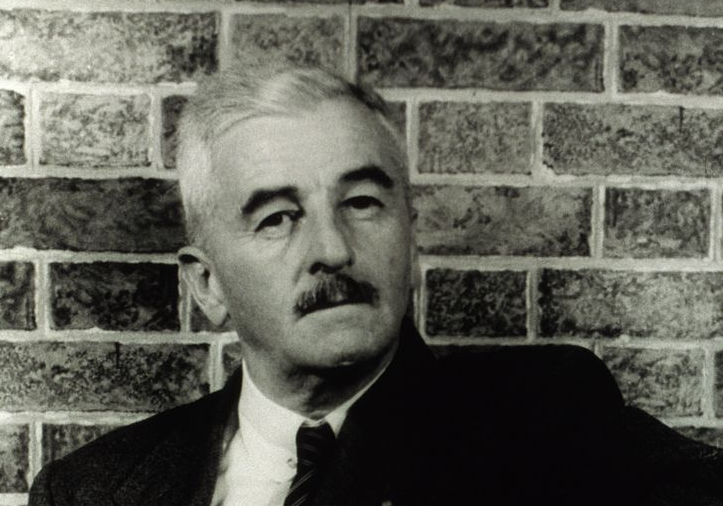
Image by Carl Van Vechten, via Wikimedia Commons
In 1957 and 1958, the great American writer William Faulkner spent two years as Writer-in-Residence at the University of Virginia. During this stint, he presented several public speeches, gave many readings from his literary works, spoke at countless public events, and answered questions from hundreds of students. The talks were originally recorded on reel-to-reel tapes, and now UVA has digitized the audio collection and made it available through a new web site: Faulkner at Virginia: An Audio Archive. In total, the archive presents 1690 minutes (over 28 hours) of Faulkner recordings. It also includes an archive of photos and newspaper items, as well as an audio recording of a press conference the English department gave when Faulkner died on July 6, 1962. A real treasure. You can dive into the audio trove right here.
Note: To access the audio, you will need a QuickTime player. If your browser doesn’t already support QuickTime, you can download a free QuickTime plug-in here.
Jimi Hendrix Plays “Sgt. Pepper’s Lonely Hearts Club Band” Days After the Song Was Released (1967)
When playing a concert in San Francisco in July 2010, Paul McCartney recalled for his audience how the Beatles released Sgt. Pepper’s Lonely Hearts Club Band in June, 1967. The album came out on a Friday, and by Sunday night, Jimi Hendrix learned the songs and opened his own show with a cover of the title track. It would have looked something like this. Watch above. And watch out for your ears!
Related Content:
Deconstructing The Master Track of The Beatles’ “Sgt. Pepper’s Lonely Hearts Club Band”
The Beatles: Unplugged Collects Acoustic Demos of White Album Songs (1968)
In 1969 Telegram, Jimi Hendrix Invites Paul McCartney to Join a Super Group with Miles Davis
Jimi Hendrix’s Final Interview on September 11, 1970: Listen to the Complete Audio
Snagging Free Hitchcock and Fritz Lang Movies Online
Yesterday, we told you where to find Andrei Tarkovsky’s great films online. Meanwhile, over at Brain Pickings, we wrote a guest piece highlighting where you can watch 15 films (all free, of course) directed by Alfred Hitchcock and Fritz Lang, two great directors whose careers moved in parallel from the silent era, to sound movies, and from Europe to Hollywood. Along the way you will encounter some landmark films – Metropolis, The 39 Steps, The Lodger, and M, to name a few. These movies (all in the public domain) and nearly 200 others reside in our collection of Free Movies.
The Civil War & Reconstruction: A Free Course from Yale University
The Civil War was a watershed moment in US history, and it figures centrally in any American history curriculum. If you missed this course during high school or college, not to worry. Now, thanks to Yale University, you can revisit this historical moment with Prof. David Blight, one of the nation’s leading Civil War scholars. The Civil War and Reconstruction “explores the causes, course, and consequences of the American Civil War, from the 1840s to 1877,” looking at how the United States was transformed on multiple levels: racially, socially, politically, constitutionally and morally. You can access the 27 free lectures, presented in audio and video, via YouTube, iTunes, and the Yale web site (plus a syllabus). We also have it on the list of our Free History Courses, a subset of our collection 1,700 Free Online Courses from Top Universities.
If you would like to support the mission of Open Culture, consider making a donation to our site. It’s hard to rely 100% on ads, and your contributions will help us continue providing the best free cultural and educational materials to learners everywhere. You can contribute through PayPal, Patreon, and Venmo (@openculture). Thanks!
Watch Andrei Tarkovsky’s Films Free Online: Stalker, The Mirror & Andrei Rublev
The stench of Vladimir Putin and his invasion of Ukraine shouldn’t taint everything Russian, especially some of its finest cinema. So we’ll give you this heads up: Mosfilm, the largest and oldest film studio in Russia, has posted several major films by Andrei Tarkovsky (1932–1986), on its official YouTube channel. Above, you can watch Stalker, which we’ve covered amply here on Open Culture. Below, stream The Mirror, Andrei Rublev, and Ivan’s Childhood.
The Mirror
Andrei Rublev
Solaris
Ivan’s Childhood
If you would like to support the mission of Open Culture, consider making a donation to our site. It’s hard to rely 100% on ads, and your contributions will help us continue providing the best free cultural and educational materials to learners everywhere. You can contribute through PayPal, Patreon, and Venmo (@openculture). Thanks!
Related Content:
The Masterful Polaroid Pictures Taken by Filmmaker Andrei Tarkovsky
Tarkovsky’s Advice to Young Filmmakers: Sacrifice Yourself for Cinema
Slavoj Žižek Explains the Artistry of Andrei Tarkovsky’s Films: Solaris, Stalker & More
Watch Stalker, Andrei Tarkovsky’s Mind-Bending Masterpiece Free Online
Andrei Tarkovsky’s Masterpiece Stalker Gets Adapted into a Video Game
Roman Polanski on Making Chinatown
This morning, the Swiss rejected US requests to extradite Roman Polanksi. This decision effectively brings to a close a rather dark chapter in his personal life and lets the conversation return to his filmmaking. Enter our video above, which features Polanski talking about the making of Chinatown, his 1974 neo-noir film, starring Jack Nicholson, Faye Dunaway, and John Huston, that landed eleven Academy Award nominations. Thanks Mike for sending this our way…
Three Minute Philosophy — Immanuel Kant
File under comedy. It’s slightly cheeky, at times little crass, but how often do the comedy and philosophy worlds collide? I mean, really?
S. Peter Davis also has three minute takes on Descartes, Hume, Aristotle, Locke, Galileo, Pythagoras, and Aquinas.
via Metafilter
A Brief, Artistic Introduction to Nikola Tesla
This weekend marked the 154th birthday of Nikola Tesla, the Serbian/Croatian emigre whose work on electromagnetism and electromechanical engineering contributed to the birth of commercial electricity. Especially during the past year, his name has regained a fair amount of currency, not least because there’s a very sporty electric roadster now named after him. In honor of his birthday, the clip above gives a very quick and artistic introduction to Tesla’s life and work …
John Wayne Recites the Pledge of Allegiance
This week, the US celebrated its independence. And so it’s perhaps fitting to head into the weekend with John Wayne, an American icon, reciting and interpreting the Pledge of Allegiance. Long live the Duke…
Find more vintage audio and video in our collection of Cultural Icons.
Support Us
We're hoping to rely on loyal readers, rather than erratic ads. Please click the Donate button and support Open Culture. You can use Paypal, Venmo, Patreon, even Crypto! We thank you!

Great Lectures
About Us

Open Culture scours the web for the best educational media. We find the free courses and audio books you need, the language lessons & educational videos you want, and plenty of enlightenment in between.
Advertise With Us
Archives
- October 2026
- September 2026
- August 2026
- July 2026
- June 2026
- May 2026
- April 2026
- March 2026
- February 2026
- January 2026
- December 2025
- November 2025
- October 2025
- September 2025
- August 2025
- July 2025
- June 2025
- May 2025
- April 2025
- March 2025
- February 2025
- January 2025
- December 2024
- November 2024
- October 2024
- September 2024
- August 2024
- July 2024
- June 2024
- May 2024
- April 2024
- March 2024
- February 2024
- January 2024
- December 2023
- November 2023
- October 2023
- September 2023
- August 2023
- July 2023
- June 2023
- May 2023
- April 2023
- March 2023
- February 2023
- January 2023
- December 2022
- November 2022
- October 2022
- September 2022
- August 2022
- July 2022
- June 2022
- May 2022
- April 2022
- March 2022
- February 2022
- January 2022
- December 2021
- November 2021
- October 2021
- September 2021
- August 2021
- July 2021
- June 2021
- May 2021
- April 2021
- March 2021
- February 2021
- January 2021
- December 2020
- November 2020
- October 2020
- September 2020
- August 2020
- July 2020
- June 2020
- May 2020
- April 2020
- March 2020
- February 2020
- January 2020
- December 2019
- November 2019
- October 2019
- September 2019
- August 2019
- July 2019
- June 2019
- May 2019
- April 2019
- March 2019
- February 2019
- January 2019
- December 2018
- November 2018
- October 2018
- September 2018
- August 2018
- July 2018
- June 2018
- May 2018
- April 2018
- March 2018
- February 2018
- January 2018
- December 2017
- November 2017
- October 2017
- September 2017
- August 2017
- July 2017
- June 2017
- May 2017
- April 2017
- March 2017
- February 2017
- January 2017
- December 2016
- November 2016
- October 2016
- September 2016
- August 2016
- July 2016
- June 2016
- May 2016
- April 2016
- March 2016
- February 2016
- January 2016
- December 2015
- November 2015
- October 2015
- September 2015
- August 2015
- July 2015
- June 2015
- May 2015
- April 2015
- March 2015
- February 2015
- January 2015
- December 2014
- November 2014
- October 2014
- September 2014
- August 2014
- July 2014
- June 2014
- May 2014
- April 2014
- March 2014
- February 2014
- January 2014
- December 2013
- November 2013
- October 2013
- September 2013
- August 2013
- July 2013
- June 2013
- May 2013
- April 2013
- March 2013
- February 2013
- January 2013
- December 2012
- November 2012
- October 2012
- September 2012
- August 2012
- July 2012
- June 2012
- May 2012
- April 2012
- March 2012
- February 2012
- January 2012
- December 2011
- November 2011
- October 2011
- September 2011
- August 2011
- July 2011
- June 2011
- May 2011
- April 2011
- March 2011
- February 2011
- January 2011
- December 2010
- November 2010
- October 2010
- September 2010
- August 2010
- July 2010
- June 2010
- May 2010
- April 2010
- March 2010
- February 2010
- January 2010
- December 2009
- November 2009
- October 2009
- September 2009
- August 2009
- July 2009
- June 2009
- May 2009
- April 2009
- March 2009
- February 2009
- January 2009
- December 2008
- November 2008
- October 2008
- September 2008
- August 2008
- July 2008
- June 2008
- May 2008
- April 2008
- March 2008
- February 2008
- January 2008
- December 2007
- November 2007
- October 2007
- September 2007
- August 2007
- July 2007
- June 2007
- May 2007
- April 2007
- March 2007
- February 2007
- January 2007
- December 2006
- November 2006
- October 2006
- September 2006


