The Montreux Jazz Festival — the second largest jazz festival in the world — has seen many acts come and go since it kicked off in 1967. Miles Davis, Keith Jarrett, Nina Simone, Bill Evans and Ella Fitzgerald have all played there. And now we have the first concert performed by a jazz pianist (Al Blatter) and The Cosmic Piano, an instrument created by particle physicists at CERN, the home of the Large Hadron Collider, in Switzerland. The Cosmic Piano works something like this: “When a cosmic ray passes through one of four separate detector pads of the Cosmic Piano, it triggers a musical note and a colourful flash of light.” The rays arrive in random intervals, and once they’re combined with Blatter’s notes, you get some interesting polyrhythmic jazz. Catch a few highlights above, and get more background information and video clips on CERN’s web site.
One of the many pleasures of hearing a children’s author reading his or her own work is their overwhelming lack of vocal sentiment. When my children were young, I always opted for the horse’s mouth, over the more histrionic characterizations of a hired narrator, regardless of what sitcom or Broadway play he or she may have starred in. It might have taken author E.B. White 17 takes to lay down a track for Charlotte’s Web’s titular character’s death scene, but he eventually achieved the healthy remove that lets the listener—not the reader—wallow in the valley of deep emotions.
Neil Gaiman’s Coraline is not a weepie, like White’s best loved work. Instead, it revels in a sort of understated creepiness en route to the horrifically bizarre. It’s a tone his fellow literary celebs are blissfully well equipped to deliver, reading chapters aloud in honor of the book’s 10th anniversary. You can see them read all of the chapters here and also above and below.
Gaiman himself bookends the proceedings by claiming the first (above) and final chapter. Lucky that. One shudders to think of the myriad ways in which a narrator of cutesier sensibilities could have screwed up phrases like “oompah oompah” and “squidy brown toadstools” (thus blighting the entire book).
I conceive of these readings as a multiple narrator audiobook because the performers are reading, rather than attempting to act out the text in their hands, but really it’s more of a video storytime. Gaiman is definitely on point in front of the camera—his large brown eyes, prominent proboscis and stringy sternocleidomastoid muscles adding to the proceedings.
For the longest time, Facebook gave you no ability to control what content you see in your Facebook newsfeed. Some 378,000 people have “liked” our Facebook page. But only a fraction actually see Open Culture posts in their newsfeed. That’s because a Facebook algorithm started making the decisions for you, showing you material from some people/publishers, and not others.
Now, Facebook has finally introduced a new feature that will let you control what you see. Please check out the instructions below. When you’re done reading them, consider giving us a Like on Facebook, and then set your newsfeed accordingly. (You get bonus points if you Follow us on Twitter too!)
If you’re using a mobile phone, open the Facebook app, click the “More” icon along the bottom of the app, then scroll down and click “Newsfeed preferences,” then click “Prioritize who to see first,” and make your picks. (You can select more than one item.)
If you’re using Facebook on a computer, click on the downward facing arrow on the top nav bar, then click “Newsfeed preferences,” locate one of the people or publishers you follow, and change the setting from “Following” to “See First.”
If the impressionistic animation style of psychologist, writer, and filmmaker Ilana Simons’ “About Haruki Murakami”—a short video introduction to the jazz bar owning, marathon running, Japanese novelist—puts you in mind of Richard Linklater’s Waking Life, then the elliptical, lucid dream narration may do so even more. “He didn’t use too many words,” Simons tells us. “Too many words is kinda… too many words. Someone’s always losing their voice. Someone’s hearing is acute. Haruki Murakami.” Like Roger Ebert said of Linklater’s film, Simons’ ode to Murakami—and the novelist’s work itself—is “philosophical and playful at the same time.”
Simons reads us Murakami’s existentialist account of how he became a novelist, at age 29, after having an epiphany at a baseball game: “The idea struck me,” he says, “I could write a novel…. I could do it.” And he did, sitting down every night after working the bar he owned with his wife, writing by hand and drinking beer. “Before that,” he has said in an interview with singer/songwriter John Wesley Harding, “I didn’t write anything. I was just one of those ordinary people. I was running a jazz club, and I didn’t create anything at all.” And it’s true. Besides suddenly deciding to become a novelist, “out of the blue” at almost 30, then suddenly becoming an avid marathon runner at age 33, Murakami’s life was pretty unremarkable.
It’s not entirely surprising that he became a novelist. Both of Murakami’s parents taught Japanese literature, though he himself was not a particularly good student. But the author of such beloved books as Norwegian Wood, The Wind-Up Bird Chronicle, Kafka on the Shore and dozens of short stories (read six free here), has mostly drawn his inspiration from outside his national tradition—from American baseball and jazz, from British invasion rock and roll, from Fitzgerald, Kafka, and Hollywood films. As Colin Marshall wrote in a previous post on the BBC Murakami documentary below, “he remained an author shaped by his favorite foreign cultures—especially America’s. This, combined with his yearning to break from established norms, has generated enough international demand for his work to sell briskly in almost every language.”
Murakami’s desire to break with norms, Simons tells us in her charming, visually accomplished animated short, is symptomatic of his “detachment” and “introspection.” Murakami “liked escape, or he just doesn’t like joining groups and investing too many words in places where words have been too often.” The thought of “organized activities,” Murakami has said, like “holding hands at a demonstration… gives me the creeps.” Murakami’s love of solitude makes him seem mysterious, “elusive,” says presenter Alan Yentob in the film above. But one of the extraordinary things about Murakami—in addition to his running a 62-mile “ultramarathon” and conquering the literary world on a whim—is just how ordinary he is in many ways. Both Simons’ increasingly surrealist, bebop-scored short and the BBC’s cool jazz-backed exploration make this contrast seem all the more remarkable. It’s Murakami’s ability to stretch and bend the ordinary world, Simons suggests near the end of her lyrical tribute, that makes his readers feel that “somehow, magically… he does something very private and intimate with their brains”
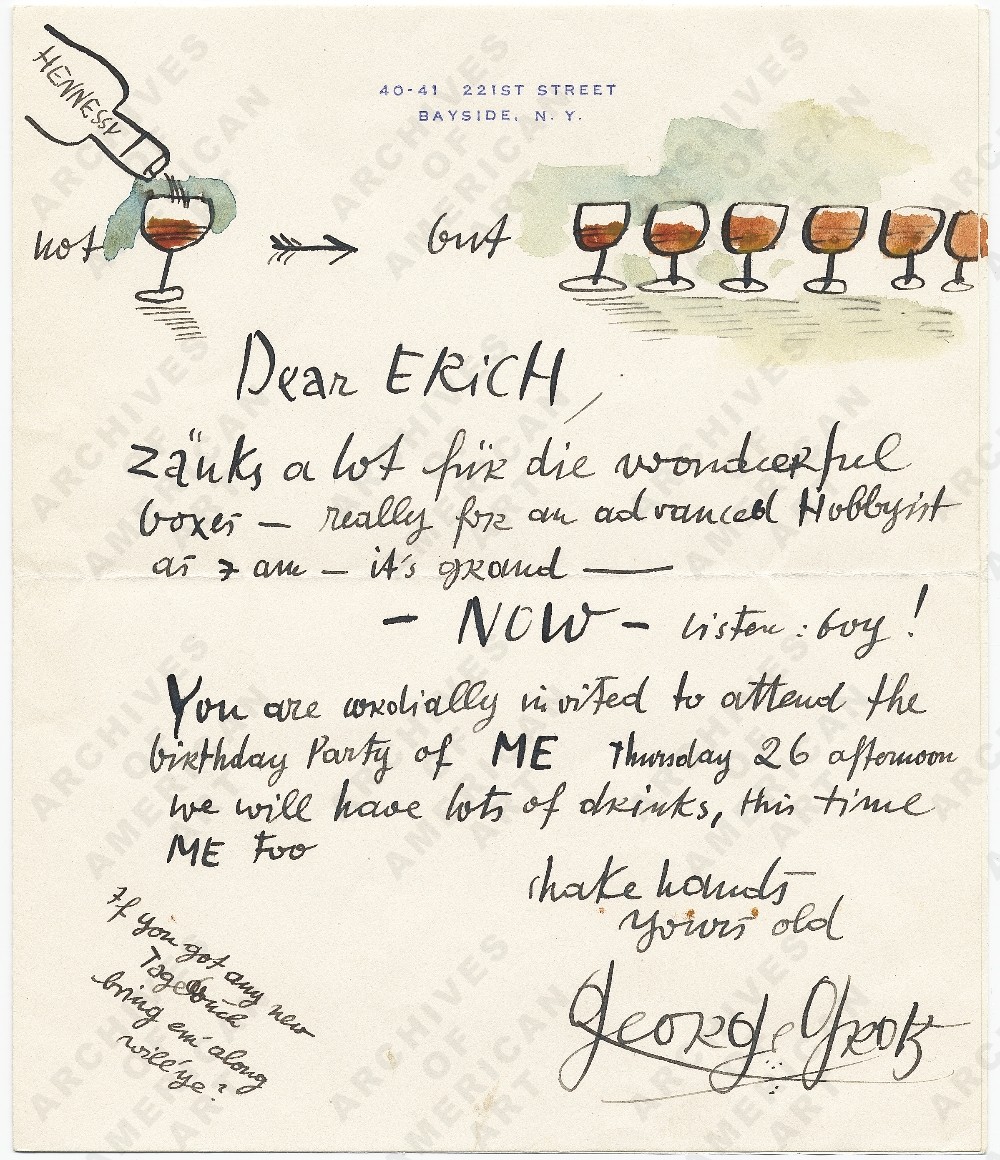
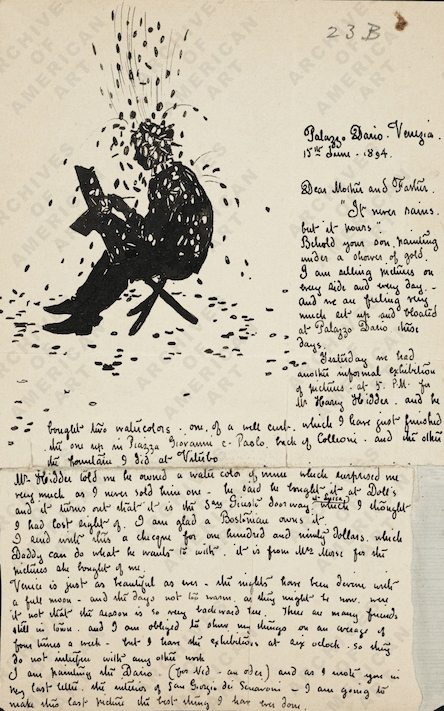
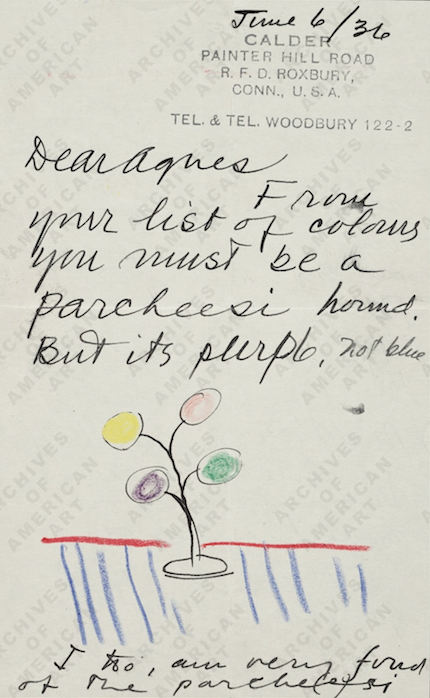
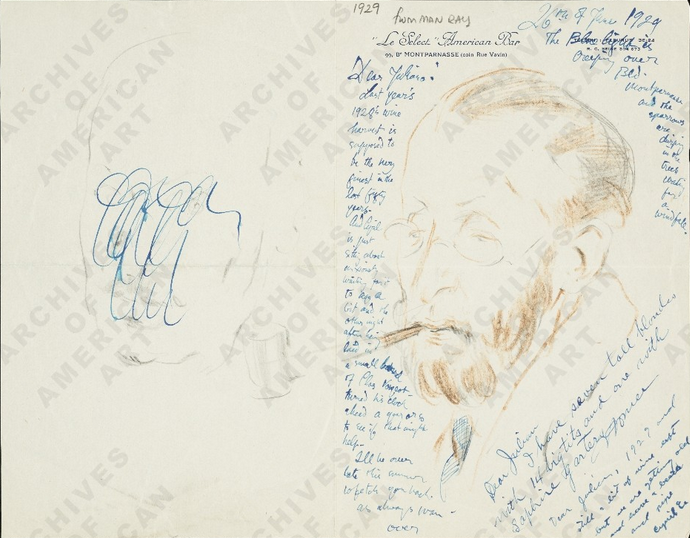
The illustrated letters make for humanizing insights into the private world of artists that we usually only experience through their work.
The 1945 letter from George Grosz to Erich S. Herrmann (above) is to invite his friend (and art dealer) to his birthday party, promising not just one glass of Hennessy, but six (and more). “Listen: boy!” he declares. “You are cordially invited to attend the birthday party of ME.” This was when Grosz was in his 50s and living in Huntington, New York. It should be noted that Grosz met his end falling down a flight of stairs while drunk, but the man knew how to party.
Joseph Lindon Smith was an American illustrator best known for being the artist who traveled to Egypt and documented the excavations at Giza and the Valley of the Kings, very faithful in their representation. But in 1894, this letter finds Smith, 31 years old, living in Paris, trying to make a go of it as an artist, and having enough success to tell his parents: “Behold your son painting under a shower of gold,” he writes. Check out that handwriting: it’s beautiful.
Sculptor Alexander Calderwrote this note to Vassar colleague and friend Agnes Rindge Claflin in 1936, continuing some conversation they were having about color, and noting her choices mark her as a “Parcheesi hound,” and adding that he’s a fan of the game too. The little illustration, which is straight Calder, is cute too. Claflin would later go on to narrate one of MOMA’s first films to accompany an exhibit, Herbert Matter’s 1944 film on Calder, Sculpture and Constructions.
This Man Rayletter to painter Julian E. Levi looks like it has been worried over or recycled—-“Dear Julian” appears several times on the stationery from Le Select American Bar in Montparnasse. It’s a bit difficult to make out all his writing: he starts mentioning “Last year’s 1928 wine harvest is supposed to be the very finest in the last fifty years” at the beginning, but I’m more fascinated with the bottom right: “I have seven tall blondes with 14 big tits and one with sapphire garters.”
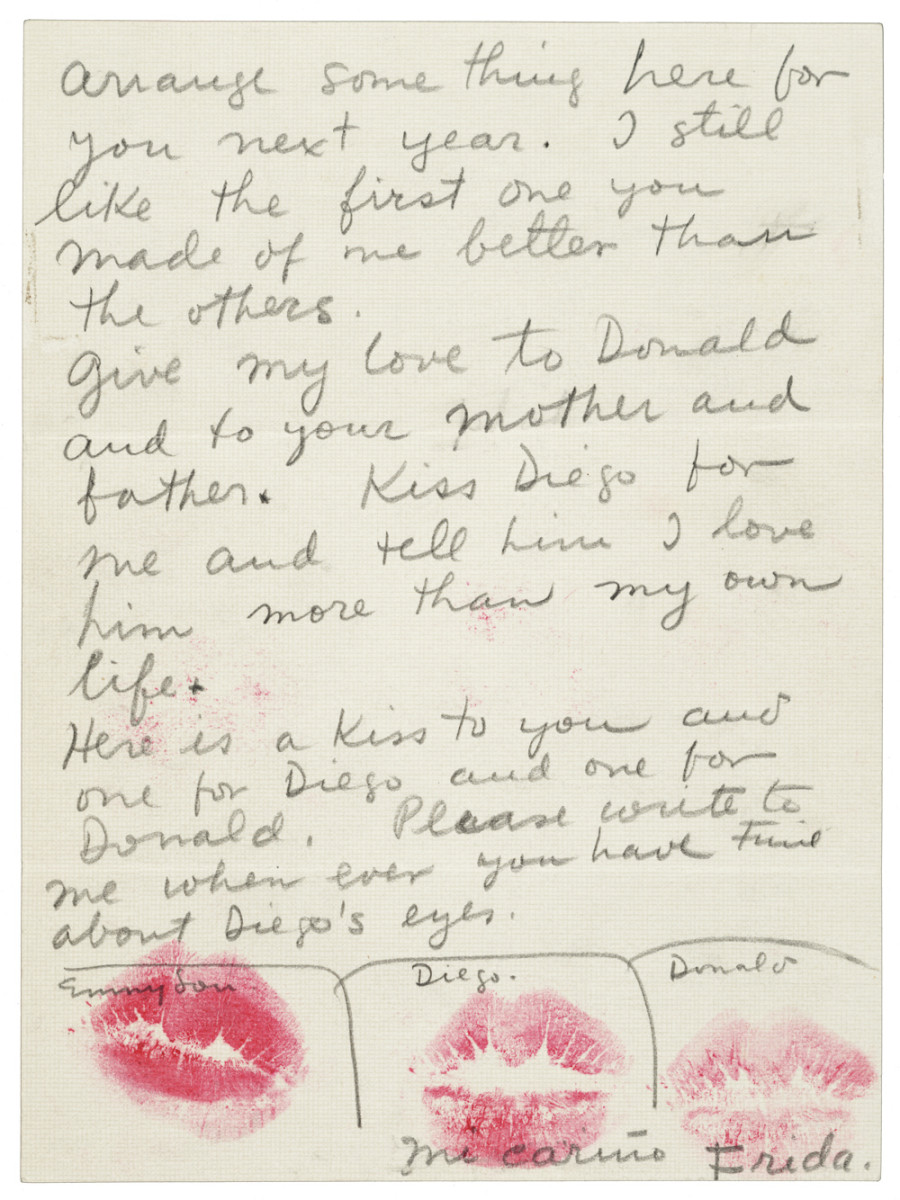
Finally, we close out with a letter Frida Kahlo sent to her friend Emmy Lou Packard in 1940, where she thanked Packard for taking care of Diego during an illness. The letter gets sealed, Priscilla Frank notes at HuffPo, with three lipstick kisses — “one for Diego, one for Emmy Lou, and one for her son.”
There’s plenty more illustrated letters to explore at the Smithsonian site and in Kirwin’s handsome book, featuring artists well known and obscure, but all who knew how to compose a good letter.
Ted Mills is a freelance writer on the arts who currently hosts the FunkZone Podcast. You can also follow him on Twitter at @tedmills, read his other arts writing at tedmills.com and/or watch his films here.
Stephen King’s 1977 psychological horror novel The Shininghas inspired several other works, most notably Stanley Kubrick’s 1980 film adaptation, a movie widely considered to have elevated King’s story of the possessed Overlook Hotel and its luckless winter caretakers, the Torrance family, to a higher artistic plane. But King himself never really approved of Kubrick’s interpretation: “Parts of the film are chilling, charged with a relentlessly claustrophobic terror,” he said, “but others fall flat. A visceral skeptic such as Kubrick just couldn’t grasp the sheer inhuman evil of the Overlook Hotel.”
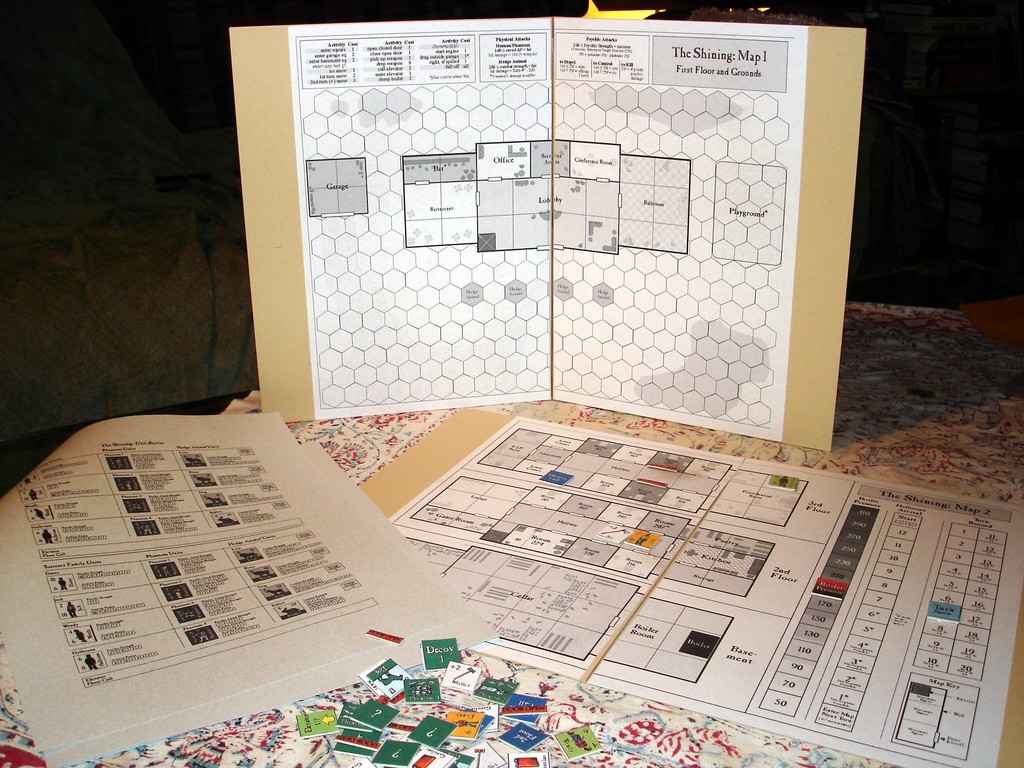
Presumably King had a better time playing the board game of The Shining, which won the first Microgame Design Contest in 1998, and about which you can read more at Board Game Geek. It has been said that King himself helped with the game’s development and offered his services as an early play-tester, though some will contest that. (See the claims in the comments section below.)
You can tell that the game’s faith lies with King’s novel rather than Kubrick’s film by its use of things that never made it from page to screen as gameplay elements, such as the hotel grounds’ hedge-sculpture animals that come to vicious life.
You can play The Shining board game as the Torrance family, in which case you’ll have to fight those hedge animals. Or you can play it as the Overlook Hotel itself, in which case you’ll control them. Each player has a host of implements at their disposal — ghosts, decoys, the famous axe and snowmobile — all meant to help them accomplish the task of driving the other side away. Think of it as a simplified wargame set in a haunted hotel.
If you would like to support the mission of Open Culture, consider making a donation to our site. It’s hard to rely 100% on ads, and your contributions will help us continue providing the best free cultural and educational materials to learners everywhere. You can contribute through PayPal, Patreon, and Venmo (@openculture). Thanks!
Katy Davis (AKA Gobblynne) created an immensely popular video animating Dr. Brené Brown’s insights on The Power of Empathy. Now, she returns with another animal-filled animation that could also put you on the right mental track. Narrated by Dan Harris, this one lays out the basics of meditation and deals with some common misconceptions and points of frustration. Give it a quick watch, and if you want to give meditation a first, second or third try, check out these Free Guided Meditations From UCLA. If you know of other helpful meditation resources, feel free to let us know in the comments.
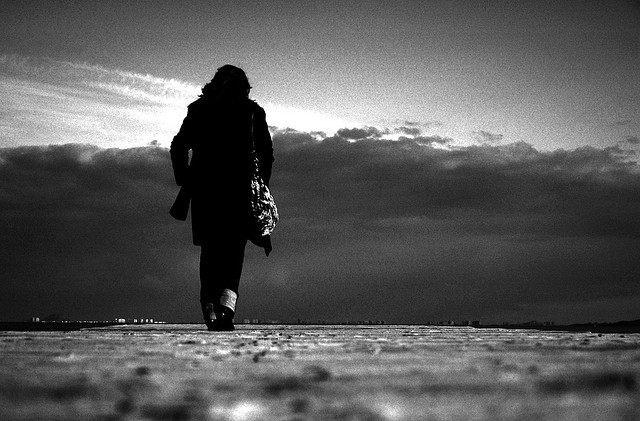
A certain Zen proverb goes something like this: “A five year old can understand it, but an 80 year old cannot do it.” The subject of this riddle-like saying has been described as “mindfulness”—or being absorbed in the moment, free from routine mental habits. In many Eastern meditative traditions, one can achieve such a state by walking just as well as by sitting still—and many a poet and teacher has preferred the ambulatory method.
This is equally so in the West, where we have an entire school of ancient philosophy—the “peripatetic”—that derives from Aristotle and his contemporaries’ penchant for doing their best work while in leisurely motion. Friedrich Nietzsche, an almost fanatical walker, once wrote, “all truly great thoughts are conceived by walking.” Nietzsche’s mountain walks were athletic, but walking—Frédéric Gros maintains in his A Philosophy of Walking—is not a sport; it is “the best way to go more slowly than any other method that has ever been found.”
Gros discusses the centrality of walking in the lives of Nietzsche, Rimbaud, Kant, Rousseau, and Thoreau. Likewise, Rebecca Solnit has profiled the essential walks of literary figures such as William Wordsworth, Jane Austen, and Gary Snyder in her book Wanderlust, which argues for the necessity of walking in our own age, when doing so is almost entirely unnecessary most of the time. As great walkers of the past and present have made abundantly clear—anecdotally at least—we see a significant link between walking and creative thinking.
More generally, writes Ferris Jabr in The New Yorker, “the way we move our bodies further changes the nature of our thoughts, and vice versa.” Applying modern research methods to ancient wisdom has allowed psychologists to quantify the ways in which this happens, and to begin to explain why. Jabr summarizes the experiments of two Stanford walking researchers, Marily Oppezzo and her mentor Daniel Schwartz, who found that almost two hundred students tested showed markedly heightened creative abilities while walking. Walking, Jabr writes in poetic terms, works by “setting the mind adrift on a frothing sea of thought.” (Hear Dr. Oppezzo discuss her study in a Minnesota public radio interview above.)
Oppezzo and Schwartz speculate, “future studies would likely determine a complex pathway that extends from the physical act of walking to physiological changes to the cognitive control of imagination.” They recognize that this discovery must also account for such variables as when one walks, and—as so many notable walkers have stressed—where. Researchers at the University of Michigan have tackled the where question in a paper titled “The Cognitive Benefits of Interacting with Nature.” Their study, writes Jabr, showed that “students who ambled through an arboretum improved their performance on a memory test more than students who walked along city streets.”
One wonders what James Joyce—whose Ulysses is built almost entirely on a scaffolding of walks around Dublin—would make of this. Or Walter Benjamin, whose concept of the flâneur, an archetypal urban wanderer, derives directly from the insights of that most imaginative decadent poet, Charles Baudelaire. Classical walkers, Romantic walkers, Modernist walkers—all recognized the creative importance of this simple movement in time and space, one we work so hard to master in our first years, and sometimes lose in later life if we acquire it. Going for a walk, contemporary research confirms—a mundane activity far too easily taken for granted—may be one of the most salutary means of achieving states of enlightenment, literary, philosophical, or otherwise, whether we roam through ancient forests, over the Alps, or to the corner store.
Having known Pico Iyer for quite some time, on paper and in person, as a perpetual example and occasional mentor in the writing of place, it delights me to watch him attract more listeners than ever with the talks he’s given in recent years, the most popular of which advocate something called “stillness.” But at first I wondered: did this shift in subject mean that Iyer—a California-grown Brit from an Indian family who mostly lives in Japan (“a global village on two legs,” as he once called himself), known for books like Video Night in Kathmandu, Falling off the Map, and The Global Soul—had put his signature hard-traveling ways behind him?
Hardly. But he did start telling the world more about his long-standing habit of routinely seeking out the most quiet, least “connected” places he can—the seaside no-speech-allowed Catholic hermitage, the rural village outside Kyoto—in order to reflect upon the time he has spent circling the globe, transposing himself from culture to alien culture. “24 years ago, I took the most mind-bending trip across North Korea,” he tells us, “but the trip lasted a few days. What I’ve done with it sitting still—going back to it in my head, trying to understand it, finding a place for it in my thinking—that’s lasted 24 years already, and will probably last a lifetime.”
If we want to follow Pico’s example, we must strike a balance: we must process the time we spend doing something intensely—traveling, writing, programming, lifting weights, what have you—with time spent not doing that something, a pursuit in its own way as intense. He connects all this with the 21st-century technology culture in which we find ourselves, citing the example of folks like Wired co-founder Kevin Kelly and even certain enlightenment-minded Googlers who regularly and rigorously detach themselves from certain kinds of modern devices, going “completely offline in order to gather the sense of direction and proportion they’ll need when they go online again.”
Achieving such a proper intellectual, psychological, social, and technological compartmentalization in life may seem like a rare trick to pull off. But if you ever doubt its possibility, just revisit the last talk from Pico we featured, in which he describes his encounter with Leonard Cohen, the only man alive who has successfully combined the lifestyles of rock star and Zen monk.
The auteur responsible for The Disorderly Orderlies might not be the obvious choice to make a movie about the Holocaust but that’s apparently what happened. For the handful of people who have seen Jerry Lewis’s The Day the Clown Cried– his unreleased 1972 film about a washed-up clown named Helmut Doork who amuses a boxcar of Jewish children all the way to an Auschwitz gas chamber — say that the movie is far, far worse than you might imagine.
“This film was really awe-inspiring, in that you are rarely in the presence of a perfect object,” said Harry Shearer in a 1992 Spy Magazine article about the movie. “This was a perfect object. This movie is so drastically wrong, its pathos and its comedy are so wildly misplaced, that you could not, in your fantasy of what it might be like, improve on what it really is. “Oh My God!” — that’s all you can say.” (Below you can hear Shearer tell Howard Stern more about the film.)
There is reportedly only one copy of the movie and that print is under lock and key. Lewis is adamant that the movie is never going to be seen by the public while he still has a say in the matter. “It was all bad and it was bad because I lost the magic,” Lewis told an audience at the 2013 Cannes Film Festival. “You will never see it, no-one will ever see it, because I am embarrassed at the poor work.”
Its mind-boggling awfulness and its inaccessibility has placed The Day the Clown Cried into that rarified pantheon of legendary lost films like the original cut of Erich von Stroheim’s Greed. Only the film is purposefully kept in obscurity. Every once in a while, a new fragment of the movie will pop up on the internet only to be quickly quashed.
The latest glimpse of this famously wrong-headed production comes in the form of a seven-minute clip of a making-of documentary on the film that aired on Flemish TV. You can watch it above. There’s a longer section here.
The clip opens with Lewis in clown face doing his rubber-faced slapstick shtick. It’s not especially funny out of context. In context one can only imagine that the routine would be about as hilarious as a whoopie cushion during the My Lai massacre.
Later, the documentary shows Lewis behind the camera and he seems every bit the auteur. The voice over notes that Lewis is working “as a clown, actor, director, conductor and producer.” Lewis is even seen telling his French sound engineer how to use his Nagra tape recorder.
But perhaps the most surprising moment in the clip is when that 1960s power couple Jane Birkin and Serge Gainsbourg are seen hanging around the set. There really does seem to be something with the French and Jerry Lewis.
Jonathan Crow is a Los Angeles-based writer and filmmaker whose work has appeared in Yahoo!, The Hollywood Reporter, and other publications. You can follow him at @jonccrow. And check out his blog Veeptopus, featuring lots of pictures of vice presidents with octopuses on their heads. The Veeptopus store is here.
Google has made its “inceptionism” algorithm available to all, allowing coders around the world to replicate the process the company used to create mesmerising dreamscapes with its image processing neural-network.
The system, which works by repeatedly feeding an image through an AI which enhances features it recognises, was first demonstrated by Google two weeks ago. It can alter an existing image to the extent that it looks like an acid trip, or begin with random noise to generate an entirely original dreamscape.
Since then a coder, Roelof Pieters, began messing around with the publicly-available software, and decided to take the “Great San Francisco Acid Wave” scene from Terry Gilliam’s Fear and Loathing in Las Vegas (1998) and run it through “Deep Dream,” as the software is known. The results (below), now going viral across the internet, are pretty trippy and intense. Just when you thought Hunter S. Thompson couldn’t get more “out there,” this comes along.
We noticed that Pieters ran a similar experiment with pieces of Kubrick’s 2001: A Space Odyssey, and we couldn’t help but put them on display. Watch above.
If you would like to support the mission of Open Culture, consider making a donation to our site. It’s hard to rely 100% on ads, and your contributions will help us continue providing the best free cultural and educational materials to learners everywhere. You can contribute through PayPal, Patreon, and Venmo (@openculture). Thanks!
We're hoping to rely on loyal readers, rather than erratic ads. Please click the Donate button and support Open Culture. You can use Paypal, Venmo, Patreon, even Crypto! We thank you!
Open Culture scours the web for the best educational media. We find the free courses and audio books you need, the language lessons & educational videos you want, and plenty of enlightenment in between.