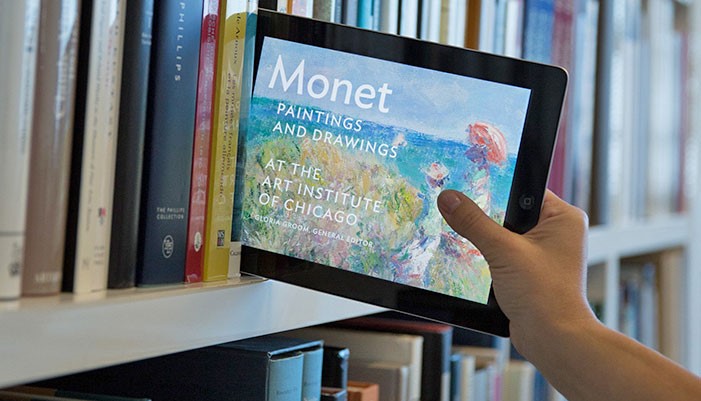
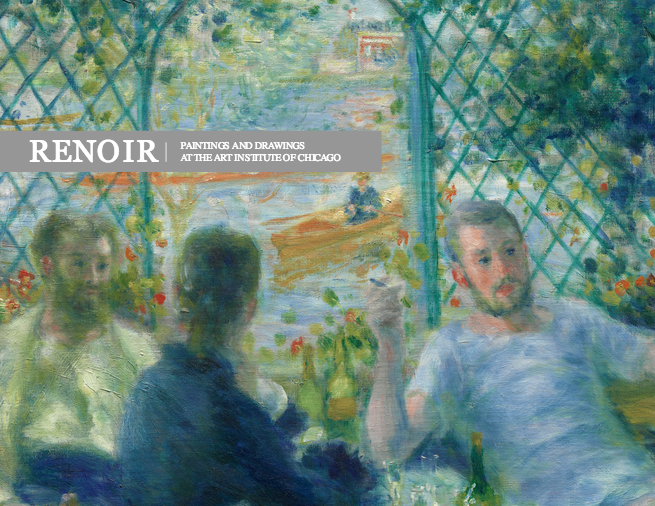
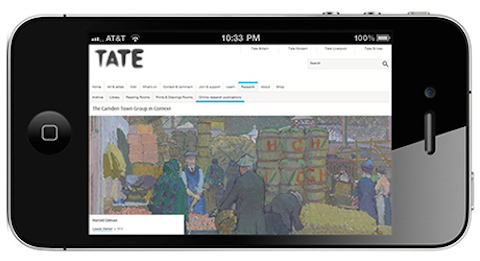
We’ve previously featured the various pioneering efforts of The Getty — from freeing 4,600 high-resolution art images (and then 77,000 more) into the public domain, to digitally releasing over 250 art books. Now they’ve put their minds to those rare, beautiful, and highly edifying specimens known as art catalogues. “Based on meticulous research, these catalogues make available detailed information about the individual works in a museum’s collection, ensuring the contents a place in art history,” announces their site. “Yet printed volumes are costly to produce and difficult to update regularly; their potential content often exceeds allotted space. One could say they are like thoroughbred horses confined to stock pens.” But now the Getty has offered a solution in the form of the Online Scholarly Catalogue Initiative (OCSI), creating an online platform for free catalogues — and not just the Getty’s, but those of any art institution.
You can learn more about the project, its development, and its potential in the short Getty video, “The Future of Digital Publishing in Museums.” Do note that, while you can, of course, view this wealth of catalogues on a computer, you’ll want to use a tablet for the optimized experience. And the more the OCSI initiative develops, the richer a reading experience you’ll have on any device; it not only provides users detailed art images, but also the options to “overlay them with conservation documentation, discover scholarly essays in easy-to-read formats, take notes in the margins that can be stored for later use, and export citations to their desktops.” And thus yet another unexpected benefit of the internet emerges: we are all art historians now.
By its very nature, propaganda distorts the truth or tells outright lies. It targets our basest impulses—fear and anger, flight or fight. While works of pure propaganda may pretend to make logical arguments, they eliminate nuance and oversimplify complicated issues to the point of caricature. These general tendencies hold true in every case, but nowhere, perhaps, is this gross exaggeration and fear mongering more evident than in times of war.
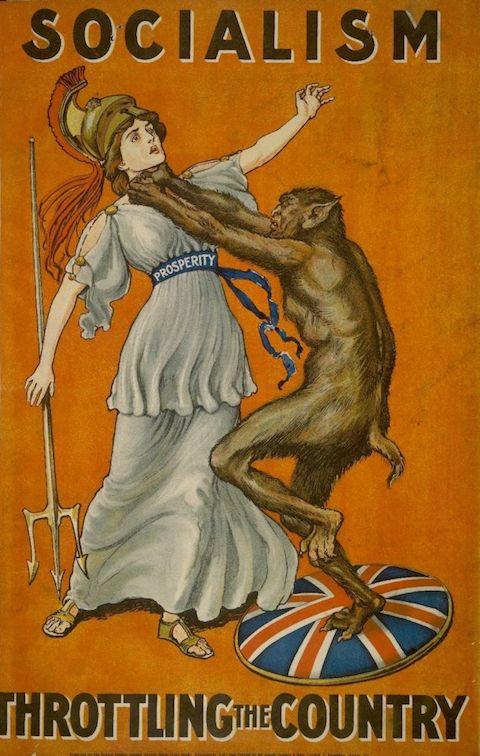
And while we’ve all seen our share of wartime propaganda, we may be less familiar with the decades-long propaganda war the U.S. and Western Europe waged against socialism and Communism, even decades before the Cold War era. It may surprise you to learn that this offensive began even before the start of World War One, as you can see above in a British Conservative Party poster from 1909.
Representing socialism as an ape-like demon strangling some sort of goddess of “prosperity,” this striking piece of poster art sets the tone for almost all of the anti-Communist propaganda to come in the wake of the Russian Revolution. At least since this early graphic salvo, Communists and socialists have generally been depicted as terrifying monsters. See, for example, an early, post-WWI example of Russian anti-Communist propaganda above, portraying the Communist threat as an apocalyptic horseman of death.
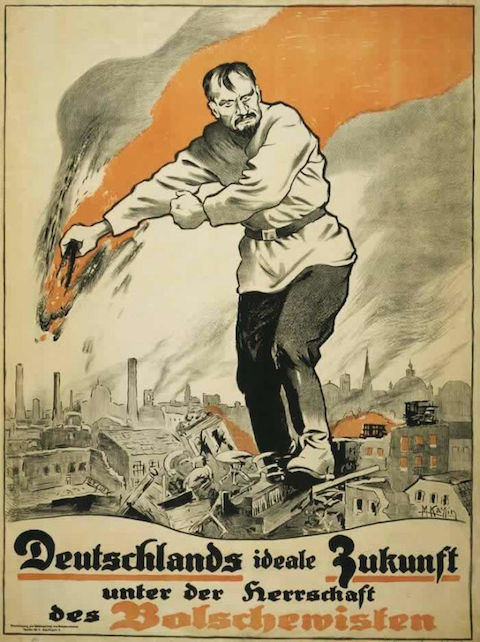
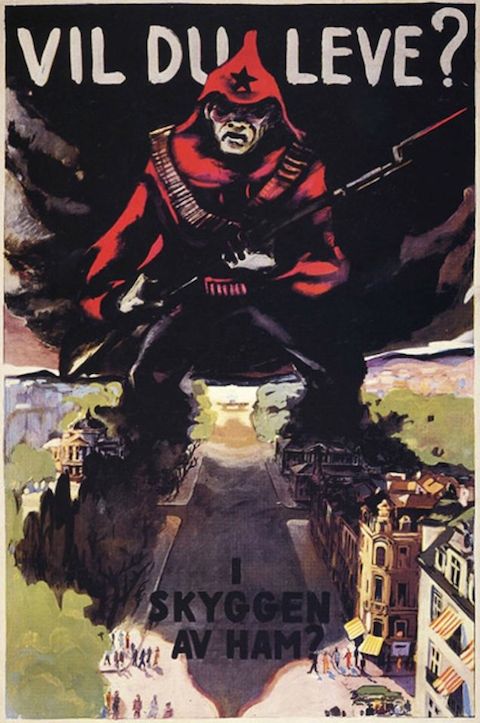
As the perceived threat increased, so too did the scale of the monstrous caricatures. In the post-WWI era German and Norwegian posters above, Godzilla-sized Communists lay waste to entire cities. Below, in “Bolshevism Unmasked,” an example from the Second World War, the skeletal Communist destroyer straddles the entire globe.
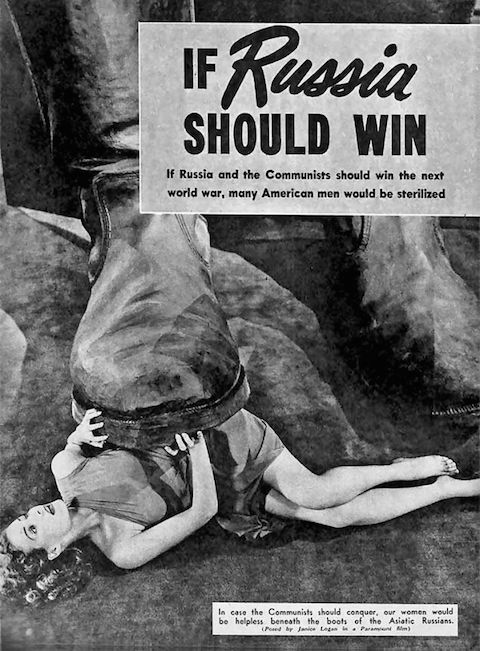
Occasionally the racial dimensions of these depictions were explicit. More often, they were strongly implied. But a 1953 Cold War example below is particularly unsubtle. Showing a scene literally right out of a schlocky Paramount horror film, featuring actress Janet Logan, the text tells us, “In case the Communists should conquer, our women would be helpless beneath the boots of the Asiatic Russians.” At the top of this rather lurid piece of agit-prop, we’re also told that “many American men would be sterilized” should Russia win the “next world war.”
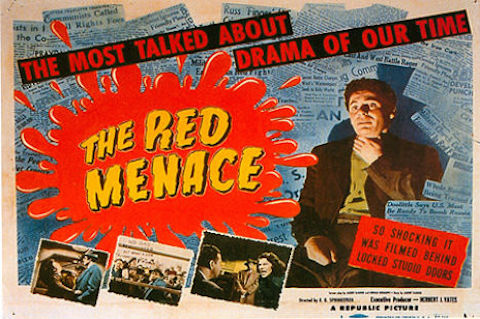
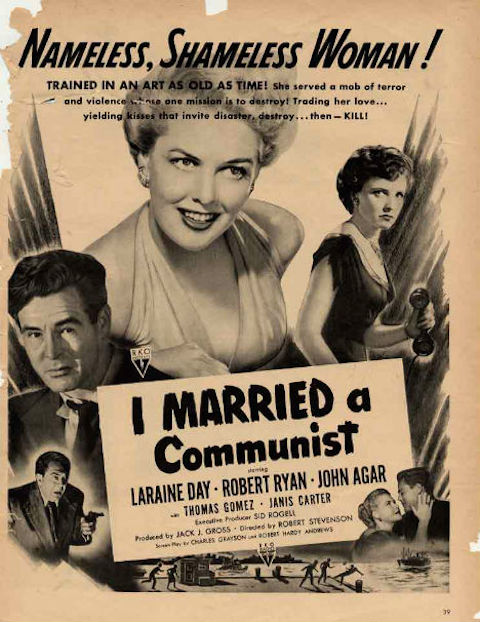
In the 50s and 60s, pop culture media like film and comic books lent themselves particularly well to anti-Communist propaganda, and they were exploited relentlessly by government agencies, production companies, and corporations. Films like I Married a Communist (below) and The Red Menace (top), both from 1949, offered sensationalized pulpy takes on the red scare.
In these peak Cold War decades, anti-Communist sentiment flourished as the U.S.’s former ally the Soviet Union became its primary enemy. Comic books provided the perfect platform for the broad strokes of anti-Communist propaganda. As psychiatrist Fredric Wertham waged war against the corrupting influence of comic books, advertisers and the government found them increasingly effective at spreading messages. “If there was any entity that believed in the power of comic books to indoctrinate and instruct as Wertham did,” writes Greg Beato at Reason, “it was the U.S. government.”
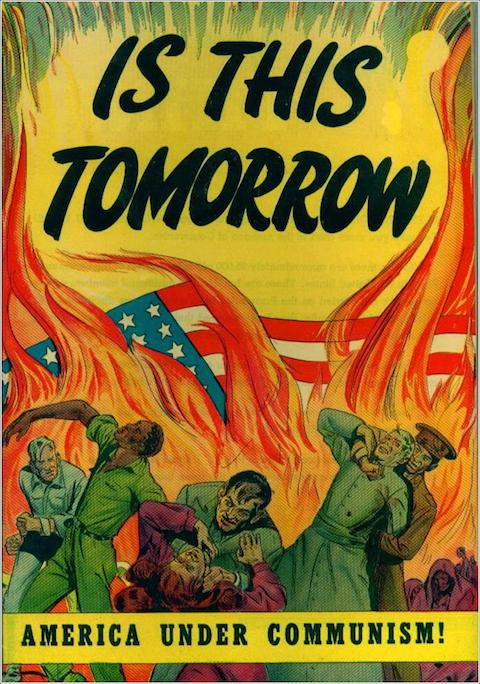
But private entities did their share in the comic book war against Communism as well. Witness a particularly wild example, Is This Tomorrow?, above. Published by the “Catechetical Guild Educational Society” in St. Paul, MN, this 1947 comic implicates government regulation of business, social welfare programs, anti-religious sentiment, and “people giving up their silly ideas about ‘sacredness’ of life” in a fiendishly orchestrated plot to take over America. Workers who embrace Communist doctrine are little more than dupes and pawns. You can read the whole feverish scenario here.
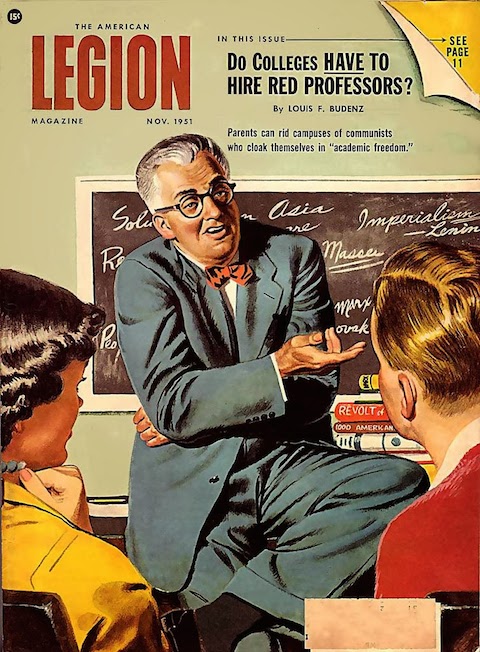
These cartoon scare tactics may seem outlandish, but of course we know that red scare propaganda had real effects on the lives and livelihoods of real Americans, particularly those in the arts and academia. Freethinking, left-leaning creative types and intellectuals have long been targets of anti-Communist paranoia. The American Legion Magazine cover above illustrates the fear—one still very prevalent now—that college professors were bent on corrupting young, malleable minds. “Parents,” the magazine states, “can rid campuses of communists who cloak themselves in ‘academic freedom.’” At the height of the red scare, many college professors, like Stanley Moore at Reed College, were dragged before the House Un-American Activities Committee and summarily fired.
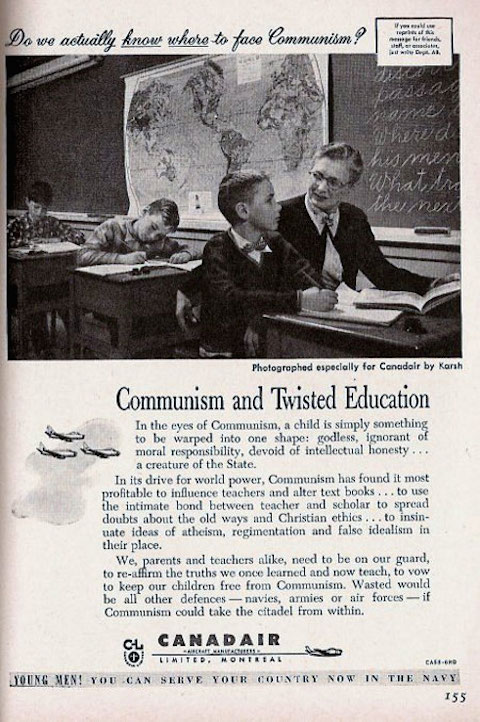
More confident, it seems, than the propaganda of previous decades, the Cold War variety shrunk the Communist threat back to human dimensions. But Communists were no less monstrous than before—only more insidious. They looked like your neighbors, your co-workers, and your children’s teacher. Instead of purveyors of brute force, they were depicted as devious manipulators who used ideological machinations to pervert democracy and cripple capitalism. As in the American Legion college professor cover story, education was often posed as the cultural battlefield on which—as the heated Canadair ad above states—“Communism could take the citadel from within” by spreading “doubts about the old ways” and insinuating “ideas of atheism, regimentation and false idealism.”
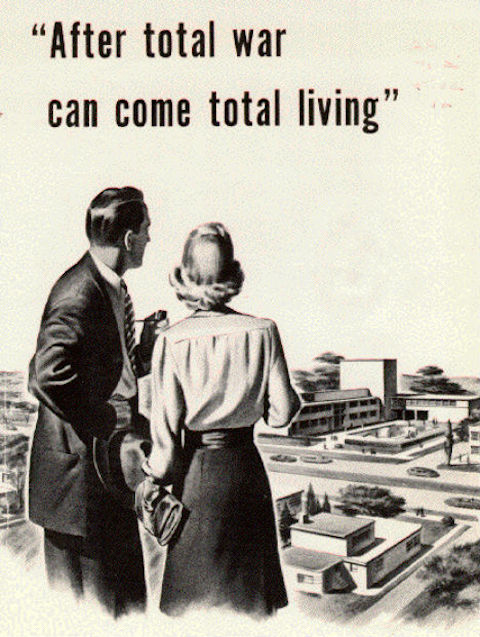
Post-WWII, of course, the greatest threat was not a full-scale invasion—it was total nuclear annihilation. It was a grim possibility—as Kubrick’s Dr. Strangelove satirically pointed out—in which no one would win. Web Urbanist points us toward one particularly chilling and dishonest piece of propaganda distributed by the government. In the poster above, we are assured that “After total war can come total living.” Unless the happy couple is gazing out over a manicured suburb in the afterlife, this scene of “total living” post-nuclear war is absurd given the strategy of Mutually Assured Destruction. Nevertheless, what the poster depicts is an analogue of the Soviets’ totalitarian ethos—it’s a future of total ideological purity, in which the Earth has been cleansed of the hulking monstrous hordes of Communism, as well as, presumably, the crypto-Communist teachers, artists, intellectuals, and bureaucrats who threaten from within.
Last week we told you about an ambitious video series — The Great War — that will document how World War I unfolded, week-by-week, over a four-year period, from 1914 to 1918. A new video will be released every Thursday, and it will reflect on what happened during the same week 100 years prior. When complete, there should be close to 300 videos in the series.
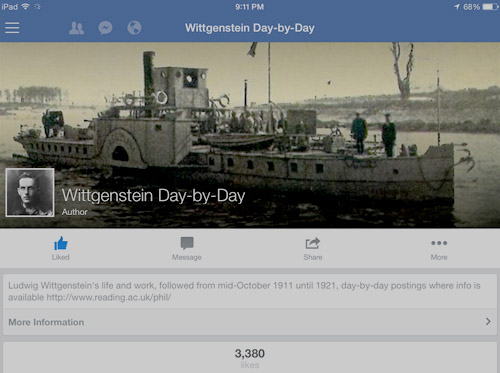
Today, we’re staying in the same time period, but getting even more micro. Wittgenstein Day-by-Day is a Facebook page that “tracks [Ludwig] Wittgenstein’s diary entries as they were written 100 years ago,” writes Levi Asher on his blog Literary Kicks. During World War I, Wittgenstein served on the frontlines in a howitzer regiment in Galicia and was decorated several times for his courage (more on that here). While fighting, he continued writing philosophy — texts that would be gathered in Notebooks, 1914–1916 – while also recording his experiences in his diaries. Today’s entry on Wittgenstein Day-by-Day reads:
Wednesday 18th November, 1914: In his private diary, LW reports hearing more thunder from the front-line, as well as machine-gun fire and heavy artillery fire. He records feeling pleased that their commander is again being replaced by their Lieutenant. He notes that he has done quite a lot of (philosophical) work, and is in a good mood. However, he also notes that in his work there has been at a standstill, as he needs a major incident to move forward (GT2, S.22).
Continuing his thought from yesterday, LW tells himself that it is all simply a matter of the existence of the logical place. ‘But what the devil is this “logical place”?’, he then asks himself (NB, p.31).
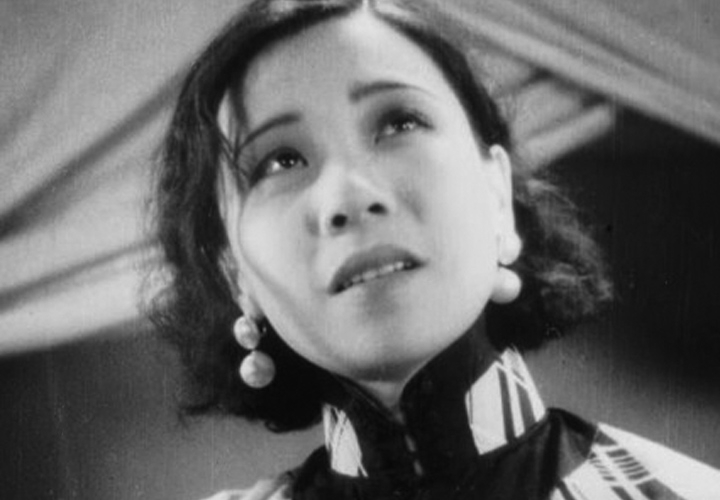
Ruan Lingyu delivered one of the greatest performances in silent cinema, and yet to Western audiences, she is almost completely unknown.
Up until the Imperial Japanese Army invaded the city in 1937, Shanghai was the thriving, cosmopolitan cultural heart of China. The first Chinese film was made in Shanghai in 1905 and, for the next couple of decades, costumed retellings of traditional tales dominated the industry. Then, in the ‘30s, filmmakers like Sun Yu and Cheng Bugao started to make gritty, realistic movies about the struggles of the lower class. Perhaps the greatest of these films is Wu Yonggang’s 1935 masterpiece The Goddess, featuring an absolutely heartbreaking performance by Ruan. You can watch it above.
On paper, the story of The Goddess could easily be mistaken for films by Josef Von Sternberg or G.W. Pabst – a “fallen woman” weepie where the protagonist suffers for the sins of hypocritical society. Ruan plays the nameless lead, a beautiful, impoverished woman forced to sell her body to feed and educate her son. She soon falls in with The Boss, a porcine, dissolute gangster who serves as her pimp. She scrapes and struggles to keep her son out of the same gutter where she finds herself trapped. Yet, at every step, she and her son are taunted and shunned. When she spends everything she has to put her son into a good school, the child is expelled simply because the other parents don’t approve of her. “Even though I am a degenerate woman,” she begs to the school board, “don’t I have the right as a mother to raise him as a good boy?”
While silent film acting tended towards the histrionic, Ruan’s performance is naturalistic while still having an emotional rawness that few actors could match. Just watch the scene where the protagonist is watching her son perform during a school play. Her expression of unadulterated parental pride slowly curdles as she hears vicious whispers from nearby hausfraus. Like Greta Garbo or Marlene Dietrich, Ruan has a wounded beauty that simply rivets you to the screen.
Like many of the characters she played, Ruan came from humble beginnings and had perpetual romantic trouble. When her complicated personal life became the fodder for press, she took an overdose of sleeping pills on March 8, 1935, leaving behind a note that read, “Gossip is a fearful thing.” She was only 24. Ruan’s funeral procession was over three miles long and three women were reportedly so distraught over her death that they committed suicide. The funeral even ended up on the front page of the New York Times who called it “the most spectacular funeral of the century.”
In 1992, Maggie Cheung played Ruan for Stanley Kwan’s Center Stage(1992), which ended up winning a Best Actress prize at the Berlin International Film Festival.
Jonathan Crow is a Los Angeles-based writer and filmmaker whose work has appeared in Yahoo!, The Hollywood Reporter, and other publications. You can follow him at @jonccrow. And check out his blog Veeptopus, featuring lots of pictures of vice presidents with octopuses on their heads. The Veeptopus store is here.
The UK’s Open University has become a dependable source of very short, online video introductions to all sorts of things, from weighty subjects like religion, economics, and literary theory to lighter, but no less interesting fare like the art and science of bike design. With breezy tone and serious intent, their animated “60-Second Adventures” make seemingly arcane academic ideas accessible to laypeople with no prior background. Now they’ve teamed up with writer and BBC broadcaster Melvyn Bragg of In Our Time fame for a series of video shorts that run just a little over 60 seconds each, with animations by Andrew Park of Cogni+ive, and narration by comedic actor Harry Shearer from Spinal Tap, The Simpsons, and, most recently, Nixon’s the One.
Drawn from Bragg’s BBC 4 radio program “A History of Ideas,” the shorts introduce exactly that—each one a précis of a longstanding philosophical problem like Free Will vs. Determinism (top) or the Problem of Evil (above). Unlike some similarly rapid outlines, these videos—like the tie-in Bragg radio program—don’t simply sketch out the issues in abstract; they draw from specific approaches from fields as diverse as neuroscience, moral philosophy, theology, and feminist theory. In the video on free will at the top, for example, Shearer introduces us to the Libet experiments, performed in the 1980s by neurologist Benjamin Libet to test our ability to make voluntary, conscious decisions. The “Free Will Defense” video above references—at least visually—Bertrand Russell’s notorious teapot in its rather skeptical presentation of this theological bugbear.
Some of the videos get even more specific, focusing in on the work of one thinker whose contributions are central to our understanding of certain concepts. Just above in “Feminine Beauty,” we have an introduction to existential philosopher Simone de Beauvoir’s argument that feminine beauty, and gender presentation more generally, is socially constructed by prevailing patriarchal norms—a concept central to the feminist work of later thinkers like Judith Butler. And below, we have the 18th century concept of the “Sublime,” a supposedly higher, more threatening and ineffable aesthetic mode, as discussed in the work of conservative political philosopher Edmund Burke (also a subject dear to Immanuel Kant, who had his own take on the idea).
And for much more extensive discussions of these age-old philosophical questions with real living “philosophers, theologians, lawyers, neuroscientists, historians and mathematicians,” download episodes of Melvyn Bragg’s “A History of Ideas” show here or on iTunes.
David Byrne has played many roles: frontman of Talking Heads, architectural observer, composer of opera (specifically opera about Imelda Marcos, former first lady of the Philippines, the country from which I write this post today), enthusiastic musicalcollaborator, urban cycling advocate — and that only counts the ones he’s played here in Open Culture posts. (Someday, we’ve got to write up his love of Powerpoint.) But did you know he’s also done a free internet radio show, and for nearly a decade at that? “For one or two days a month I queue up David Byrne’s Radio Station on the web and listen to his two-hour loop of new, wonderful, delicious tunes,” writes Kevin Kelly in a Cool Tools post from 2008, just over halfway into the life of the show so far. “Rock-star Byrne is a professional musical pioneer, admirably eclectic in his taste, yet astutely discriminating at the same time. Over years of listening to all kinds of music — experimental, indie, international, fringe, classical, pop — he’s heard enough to make some great recommendations.”
Kelly cites such tantalizing Byrnean playlists as “Icelandic Pop,” “Opera highlights,” “Eclectic Stuff,” and “African Fusion Pop.” More recent sessions, which can run for three hours or longer, include “Southern Writers,” “Songs of Burt Bacharach,” and “Raga Rock.” A new playlist comes out every month. You can list to his August playlist, “Custom Jackets, Now and Then,” a celebration of women “who have been tainted or touched by country music” including Neko Case, Emmylou Harris, Gillian Welch, and Lucinda Williams. You can also hear a brand new November playlist on the davidbyrne.com front page, which uses a newer audio player than all the previous installments. “Viva Mexico Part 1” promises a selection of artists from that vibrant country who “have found ways to incorporate their Mexican musical heritage and culture into what might be called the global pop form,” resulting not in “imitations of North American or UK alt-rock” but songs that “sound like nothing but themselves.” And if you can’t trust David Byrne to know musical uniqueness when he hears it, who can you trust?
Increasingly Facebook seems a virtual pet cemetery, with images of recently departed cats and dogs buttressed with words of heartbreak and consolation. It feels hard-hearted to scroll past without laying a comment at each freshly dug cyber-mound, even when one has no personal relationship with the deceased, or, to large degree, the owner. The lazy man may “like” news of a beloved Airedale’s demise, but acknowledgment cannot always be said to equal respect.
And what, pray tell, is the protocol after? How many minutes should elapse before it is acceptable to post Throwback Thursday shots of one’s younger, big-haired self? What if one accidentally sends a Farmville notification to the bereaved?
On account of our birds, cats were not allowed in the house; but from a friend in London I received a present of a white kitten — Williamina — and she and her numerous offspring had a happy home at “Gad’s Hill.” … As the kittens grow older they became more and more frolicsome, swarming up the curtains, playing about on the writing table and scampering behind the bookshelves. But they were never complained of and lived happily in the study until the time came for finding them other homes. One of these kittens was kept, who, as he was quite deaf, was left unnamed, and became known by servants as “the master’s cat,” because of his devotion to my father. He was always with him, and used to follow him about the garden like a dog, and sit with him while he wrote. One evening we were all, except father, going to a ball, and when we started, left “the master” and his cat in the drawing-room together. “The master” was reading at a small table, on which a lighted candle was placed. Suddenly the candle went out. My father, who was much interested in his book, relighted the candle, stroked the cat, who was looking at him pathetically he noticed, and continued his reading. A few minutes later, as the light became dim, he looked up just in time to see puss deliberately put out the candle with his paw, and then look appealingly towards him. This second and unmistakable hint was not disregarded, and puss was given the petting he craved. Father was full of this anecdote when all met at breakfast the next morning.
One anecdote Mamie chose not to include is that when Dickens’ Bob, the deaf kitten mentioned above, left this earthly plane, the master turned him into a letter opener.
Well, not the whole cat, actually. Just a single paw, which the author had stuffed and attached to an ivory blade. The blade is engraved “C.D. In Memory of Bob 1862” which is more grave marker than most pussycats can hope for.
I certainly felt the need to hustle my then 12-year-old son past this unusual souvenir when it was displayed as part of the New York Public Library’s cozy exhibit, Charles Dickens: The Key to Character. The kid’s an animal lover who was in Oliver! at the time. I feared he’d respond with Tale of Two Cities-level peasant rage, which is acceptable, except when there’s a show that must go on.
Preserved!, a British taxidermy blog sponsored by the Arts and Humanities Research Council offers a tender take on Dickens’ motivation. Over the years, he had several animals, including a pet raven, stuffed, but his closeness with Bob called for a special approach. 19th-century literature scholar Jenny Pyke writes that “the taxidermied cat paw stands out in its tactile softness and emotional tenderness. Most often, as popular as it was in the nineteenth century, taxidermy was consumed visually only, displayed in glass cases or crowded cabinets. With Bob’s paw, Dickens created an object meant to be held daily.”
It’s not for the squeamish, but I can see how this cannily orchestrated hand-holding could bring ongoing comfort. More than the fleeting condolences proliferating on Facebook, anyway.
It didn’t take long, only 25 hours, for Griffin Dunne and Susanne Rostock to raise enough money on Kickstarter to complete a documentary on novelist and essayist Joan Didion. Initially hoping to raise $80,000, they’ve already received commitments exceeding $211,000, and they still have four days to go.
We Tell Ourselves Stories In Order to Live will be the first and only documentary about Joan Didion. And it will be made with Joan, using her own words. The trailer for the documentary just premiered on Vogue. It’s fitting, seeing that Didion landed her first job, at Vogue, after winning an essay contest sponsored by the magazine. She also published her seminal essay, ““On Self Respect” in Vogue in 1961.
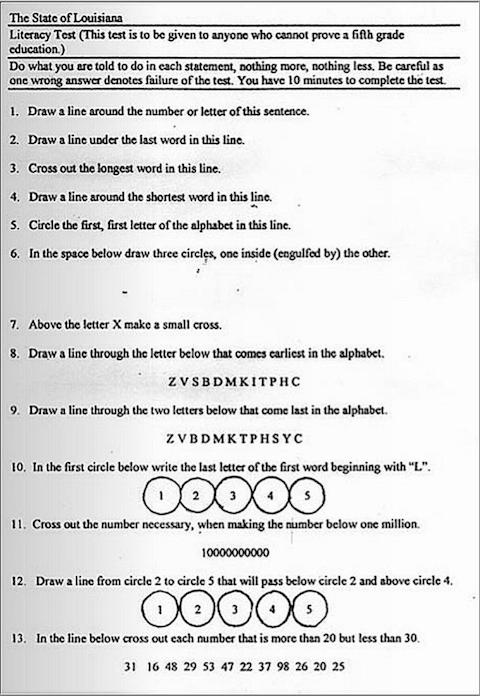
This summer, we revisited a literacy test from the Jim Crow South. Given predominantly to African-Americans living in Louisiana in 1964, the test consisted of 30 ambiguous questions to be answered in 10 minutes. One wrong answer, and the test-taker was denied the right to vote. It was all part of the South’s attempt to impede free and fair elections, and ensure that African-Americans had no access to politics or mechanisms of power.
How hard was the test? You can take it yourself below (see an answer key here) and find out. Just recently, the same literacy test was also administered to Harvard students — students who can, if anything, ace a standardized test — and not one passed. The questions are tricky. But even worse, if push comes to shove, the questions and answers can be interpreted in different ways by officials grading the exam. Carl Miller, a resident tutor at Harvard and a fellow at the law school, told The Daily Mail: “Louisiana’s literacy test was designed to be failed. Just like all the other literacy tests issued in the South at the time, this test was not about testing literacy at all. It was a … devious measure that the State of Louisiana used to disenfranchise people that had the wrong skin tone or belonged to the wrong social class.” (Sometimes the test was also given to poor whites.) Above, you can watch scenes from the Harvard experiment and students’ reactions.
Readers often ask us, “What’s the best way to make sure that I don’t miss any of your posts?” First and foremost we recommend signing up for our daily email. Each day, you will receive an email that tidily wraps up everything we’ve featured on the site over a 24 hour period. Faithfully it will appear in your inbox each day. Sign up for the free email here. And, to initiate the email subscription, please make sure that you click the verification link in the email you will receive upon registration.
You can always follow us on Twitter (@openculture) where we highlight our daily posts, plus many other cultural curiosities found on the web. Definitely give that a shot.
You can also like our Facebook page, and then Facebook will decide whether you get to see our posts. They just do the thinking for you. Lucky you.
Finally, consider subscribing to our RSS feed, especially if you use feed readers like Feedly. That will let you keep tabs on each and every post. The RSS address is: http://feeds.feedburner.com/OpenCulture
Just wanted to give you a quick heads up that we’ve recently spun out a collection of Free Philosophy eBooks (from our larger, more diverse collection of 600 Free eBooks). Right now, you will find 110 classic works on the new list — foundational texts written by Aristotle, Descartes, Hegel and Kant, not to mention Kierkegaard, Wittgenstein and Nietzsche, too. The list will keep growing at a steady clip. But if you see any crucial texts missing, please let us know, and we will try to get them added ASAP. Of course, we’re looking for works in the public domain.
You can generally download the Free Philosophy eBooks to your Kindle, iPad, iPhone and other devices. (Kindle users can use these instructions to get .mobi files onto their devices.) Or, in most cases, we give you the option to read the books in your web browser. Take your pick.
We're hoping to rely on loyal readers, rather than erratic ads. Please click the Donate button and support Open Culture. You can use Paypal, Venmo, Patreon, even Crypto! We thank you!
Open Culture scours the web for the best educational media. We find the free courses and audio books you need, the language lessons & educational videos you want, and plenty of enlightenment in between.