Coursera Strikes Partnerships with 12 Universities, Raises More $$$, Announces a Long List of Courses
 There’s an interesting competition shaping up between Udacity and Coursera. Specializing in offering Massively Open Online Courses (MOOCs), both ventures spun out of Stanford earlier this year. But they did so in very different ways. When Sebastian Thrun, Udacity’s founder, left his tenured position at Stanford, he kicked a little sand in the University’s face. And true to its name, Udacity (oh the audacity!) has positioned itself as an outsider. It isn’t partnering with established universities (so far as we know). Rather, it’s creating courses under its own brand (à la Khan Academy and The Teaching Company) and exerting top-down control over the product (à la Apple). It’s an approach that has obvious upsides and downsides.
Meanwhile, Coursera is heading down a very different path. The founders (both Stanford professors) didn’t snub their employer, and they’ve instead built a platform on which traditional universities can launch their own open courses. The downside: the company doesn’t exercise great control over the courses being built. The upside: they can leverage the brands of great universities, and the many courses they’ll build. Case in point.…
Today, Coursera is announcing that they’ve signed partnership agreements with 12 new universities: Georgia Tech, Duke University, University of Washington, Caltech, Rice University, University of Edinburgh, University of Toronto, EPFL — Lausanne, Johns Hopkins University (School of Public Health), UCSF, University of Virginia, and the University of Illinois. That’s in addition to their four existing partners: University of Pennsylvania, Princeton, University of Michigan and Stanford.
There’s a lot of great institutions entering Coursera’s stable. And they’ll bring with them over 60 courses in the coming months. (Find a complete list of courses below the jump.) We’ll keep you posted on how Coursera and Udacity evolve, and, in the coming weeks, we’ll carefully test drive their courses and let you know the pros and cons of each. Stay tuned for more from the battle of the MOOCs.
Related Content:
Coursera Adds Humanities Courses, Raises $16 Million, Strikes Deal with 3 Universities
Harvard and MIT Create EDX to Offer Free Online Courses Worldwide
Free Online Certificate Courses from Great Universities: A Complete List
Read More...Mathematics Made Visible: The Extraordinary Mathematical Art of M.C. Escher
The eye and the intellect play off one another in surprising and beautiful ways in the art of M.C. Escher. Where the Renaissance masters used shading and perspective to create the illusion of three-dimensional depth on two dimensional surfaces, Escher turned those tricks in on themselves to create puzzles and paradoxes. He manipulated our faculties of perception not simply to please the senses, but to stimulate the mind.
His cool, analytic tendency was apparent from the start. “Maurits Escher is a good graphic artist,” wrote the headmaster of the Haarlem School of Architecture and Decorative Arts in 1922, the year of Escher’s graduation, “but he lacks the right artistic temperament.
His work is to too cerebral–neither emotional nor lyrical enough.” Escher’s work became even more cerebral over time, as it grew in geometric sophistication. In describing what went into the creation of his woodcuts and engravings, Escher wrote:
The ideas that are basic to them often bear witness to my amazement and wonder at the laws of nature which operate in the world around us. He who wonders discovers that this is in itself a wonder. By keenly confronting the enigmas that surround us, and by considering and analyzing the observations that I had made, I ended up in the domain of mathematics. Although I am absolutely innocent of training or knowledge in the exact sciences, I often seem to have more in common with mathematicians than with my fellow artists.
The affinity between Escher and mathematicians is described in the scene above from the the BBC documentary, The Mathematical Art of M.C. Escher. “Mathematicians know their subject is beautiful,” says Ian Stewart of the University of Warwick. “Escher shows us that it’s beautiful.”
If the BBC clip whets your appetite, be sure to watch Metamorphose: M.C. Escher, 1898–1972, a 2002 documentary by Jan Brodriesz. The one-hour film gives an excellent overview of the Dutch artist’s life and work, and features a rare interview with Escher, along with scenes of him creating his art. If you’re a fan of Escher, this film is a must-see.
If you would like to support the mission of Open Culture, consider making a donation to our site. It’s hard to rely 100% on ads, and your contributions will help us continue providing the best free cultural and educational materials to learners everywhere. You can contribute through PayPal, Patreon, and Venmo (@openculture). Thanks!
Related Content:
M.C. Escher’s Perpetual Motion Waterfall Brought to Life: Real or Sleight of Hand?
Inspirations: A Short Film Celebrating the Mathematical Art of M.C. Escher
Read More...Marlon Brando Screen Tests for Rebel Without A Cause (1947)
During the 1940s, Warner Brothers bought the rights to Robert Lindner’s book, Rebel Without a Cause: The Hypnoanalysis of a Criminal Psychopath, and began turning it into a film. A partial script was written, and a 23-year old Marlon Brando was asked to do a five-minute screen test in 1947. For whatever reason, the studio abandoned the original project, and eventually revived it eight years later with a new script and a new actor — James Dean, of course. Dean’s own screen test for Rebel Without a Cause appears here.
If you would like to support the mission of Open Culture, consider making a donation to our site. It’s hard to rely 100% on ads, and your contributions will help us continue providing the best free cultural and educational materials to learners everywhere. You can contribute through PayPal, Patreon, and Venmo (@openculture). Thanks!
Related Content:
The Godfather Without Brando?: It Almost Happened
The James Dean Story by Robert Altman (Complete Film)
Paul Newman and James Dean Screentest for East of Eden
Read More...World Cinema: Joel and Ethan Coen’s Playful Homage to Cinema History
Chacun son cinéma (To Each His Own Cinema) is a 2007 French anthology film that brings together short films by 36 acclaimed directors. Lars von Trier, Jane Campion, Gus Van Sant, and Abbas Kiarostami all contributed to the project. Meant to commemorate the 60th anniversary of the Cannes Film Festival, the film originally aired on Canal+ in France. And, for reasons that remain unknown to us, that broadcast didn’t include the short film contributed by Joel and Ethan Coen, World Cinema. Nor did it appear on a later DVD release. If you wait long enough, these kinds of films eventually surface on YouTube. And, as luck would have it, you can watch World Cinema above. Fans of the Coen Brothers will immediately recognize Josh Brolin, who played a very similar character in their Academy Award-winning film, No Country for Old Men. Grant Heslov and Brooke Smith also make appearances. H/T Biblioklept
Related Content:
Tuileries: A Short, Slightly Twisted Film by Joel and Ethan Coen
40 Great Filmmakers Go Old School, Shoot Short Films with 100 Year Old Camera
Read More...The Classic 1956 Oscar-Winning Children’s Film, The Red Balloon
The best children’s stories can be a delight for adults, too. That’s certainly the case with Albert Lamorisse’s 1956 short film, The Red Balloon. The story is set in the run-down Ménilmontant neighborhood of Paris. A little boy, played by the director’s son Pascal, is walking to school one morning when he discovers a red balloon tangled around a lamp post. He “rescues” it and takes it to school with him. Along the way, the boy discovers that the balloon has a mind of its own. It follows him like a stray dog, and together they face the terrors, and tedium, of childhood.
The film, shown above in its entirety, earned Lamorisse an Academy Award for Best Original Screenplay and a Palme d’Or for Best Short Film at the Cannes Film Festival, along with near-universal praise from critics. “The Red Balloon is a wonderful movie for children,” says New York Times film critic A.O. Scott in the “Critics’ Picks” video below. “It’s also a uniquely insightful movie about childhood.” In a 2008 essay, “The Red Balloon: Written on the Wind,” the children’s author Brian Selznick writes of his life-long appreciation for the film:
As a child, I longed for two specific things that I now realize Lamorisse’s movie embodies: the presence of a loving friend and the knowledge that real magic exists in the world. Childhood, in so many ways, is about learning to navigate the world around us, to make sense of what seems overwhelming and gigantic. Having a special companion makes that experience more manageable and less terrifying. To kids, the world of grown-ups is often alien and untranslatable, and so magic becomes a lens through which the incomprehensible universe (as Einstein once called it) becomes comprehensible.
Many Americans remember seeing The Red Balloon for the first time as a 16mm film projected in elementary school classrooms and cafeterias. With the 2008 release of the Criterion Collection DVD, many are rediscovering the movie–and perhaps over-analyzing it–from the perspective of adulthood. “An adult watching The Red Balloon will not find it difficult to see the title character as a symbol of spirituality, friendship, love, transcendence, the triumph of good over evil, or any of the countless other things that a simple, round red balloon can represent,” writes Selznick. “But perhaps we’re better off enjoying some things the way a child understands them: not as metaphors but as stories. In the end, I think there’s something nice about allowing the balloon to just be. I guess that’s what you do with good friends–you let them be themselves.”
If you would like to support the mission of Open Culture, consider making a donation to our site. It’s hard to rely 100% on ads, and your contributions will help us continue providing the best free cultural and educational materials to learners everywhere. You can contribute through PayPal, Patreon, and Venmo (@openculture). Thanks!
Read More...Robert Penn Warren Archive Brings Early Civil Rights to Life
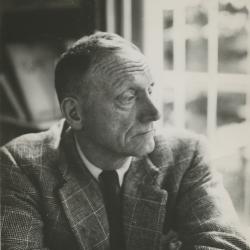 While an undergraduate at Vanderbilt University in Tennessee, writer Robert Penn Warren began writing about the south and its turbulent racial history. He traveled throughout the United States and interviewed men and women involved with the Civil Rights Movement, recording each conversation on a reel-to-reel tape recorder—a project that resulted in the 1965 book Who Speaks for the Negro? This month, Vanderbilt University’s Robert Penn Warren Center for the Humanities makes a full digital record available of Warren’s research for the book—an impressive and well-constructed collection of interviews with historical figures including Ralph Ellison, James Baldwin and Malcolm X. The richness of the site is its connective design. Each interview is tagged by topic, including a subject’s link to broader issues or to other interviewees, making evident through user experience the complex nature of the Civil Rights Movement. A search for the NAACP, for example, yields multiple interviews featuring different points of view on the organization’s formation along with PDFs of original letters and the searchable text of newspaper articles about early NAACP demonstrations. But the site’s audio offerings are its most powerful assets.
- The sonorous voice of Martin Luther King, Jr. as he talks about his father and family
- The worldly James Baldwin musing on the concept of revolution in the United States
- Malcolm X. discusses his analysis of Islam accompanied by the background noise of New York City traffic
The material offers a potent portrait of a historical moment and is rich with references to politics, art and specific conflicts over integration. The group interviews with university students and protesters are worth a listen, both for the content and for the early 1960s group dynamics. When Warren interviews men and women together, men tend to speak first and at most length. But the views expressed are fascinating, as in one case when a female sit-in participant gives her opinion about assimilation.
“My first reaction of course would be, thinking of Socrates: Know thyself. We do face the problem of amalgamation into the whole of American life, being Americans first, say, or being what I would like to term Negro Americans or Black Americans. I think that we as black men have an obligation to know ourselves as black men and be proud of what we are, and contribute to America what we could actually offer to this culture.”
Kate Rix is an Oakland based writer. See more of her work at .
Related Content:
Great Cultural Icons Talk Civil Rights (1963)
Read More...The New Yorker’s Fiction Podcast: Where Great Writers Read Stories by Great Writers
 Each major print publication expands into podcasting differently. Some, having failed to find a suitable form for the audio companion to their text, scale the operation way back and declare podcasting dead or dying. Others, through trial and error, eventually happen upon a way of podcasting that clicks with both their own sensibility as well as their readers’ listening fascinations. The New Yorker’s fiction podcast stands as an example of the latter, trading on more than one of the magazine’s strengths. As one of the longest-running and last remaining venues for the short story, the New Yorker has access to a wealth of fiction that one can read out loud within a comfortable podcast runtime. Given their countless connections to respected writers, they’ve also got access to plenty of interesting people to do the reading.
Here’s the big innovation: these writers don’t read their stories out loud; they read their favorite stories by other writers out loud. This has brought us podcasts from, to name a few pairings:
- Richard Ford reading John Cheever
- Jhumpa Lahiri reading William Trevor
- Joyce Carol Oates reading Eudora Welty
- Paul Theroux reading Jorge Luis Borges
In the past year, we’ve also heard Allegra Goodman read John Updike, Salman Rushdie read John Barthelme, and Matthew Klam read Charles D’Ambrosio. (A new episode appears every month.) The readers also have a brief discussion about the story they’ve selected with the New Yorker’s fiction editor Deborah Treisman. Being writers themselves, they talk about the pieces with a much different sort of scrutiny than you might remember from all those hours of short-story analysis in English class. They engage, to put it broadly, more with the writing’s craft than with its testable mechanics. Some podcast-listeners wonder aloud about the place of fiction in this new form; the New Yorker has developed a place for it by looking back to an old one.
The recordings above have been indexed in our collection of Free Audio Books.
Colin Marshall hosts and produces Notebook on Cities and Culture. Follow him on Twitter at @colinmarshall.
Read More...The Idea TED Didn’t Consider Worth Spreading: The Rich Aren’t Really Job Creators
Late last week, The National Journal published a story called The Inequality Speech That TED Won’t Show You, along with a related story explaining the controversy, which boils down to this:
TED organizers invited a multimillionaire Seattle venture capitalist named Nick Hanauer – the first nonfamily investor in Amazon.com – to give a speech on March 1 at their TED University conference. Inequality was the topic – specifically, Hanauer’s contention that the middle class, and not wealthy innovators like himself, are America’s true “job creators.”…
You can’t find that speech online. [Note: it has now been independently published on YouTube.] TED officials told Hanauer initially they were eager to distribute it. “I want to put this talk out into the world!” one of them wrote him in an e‑mail in late April. But early this month they changed course, telling Hanauer that his remarks were too “political” and too controversial for posting.
The National Journal and Hanauer present it as a case of censorship. But TED’s lead curator Chris Anderson responded in a blog post, saying: “Our policy is to post only talks that are truly special. And we try to steer clear of talks that are bound to descend into the same dismal partisan head-butting people can find every day elsewhere in the media.” He went on to offer this analogy: Sometimes you send an op-ed to The New York Times and they don’t publish it. Does that mean your ideas are being censored? Or does it maybe mean your ideas aren’t very well put? Or did someone else do a better job of framing the argument?
One way or another, TED didn’t see Hanauer’s ideas as being “worth spreading.” The video now appears on YouTube. You can watch it above and decide what you think: Censorship or selectivity? Or, let me add a third option: a desire to please anyone and everyone at the expense of opening deeply-held beliefs and oft-stated mantras to real debate?
Read More...Sigmund Freud’s Home Movies: A Rare Glimpse of His Private Life
Not long ago we posted the only known recording of Sigmund Freud’s voice. Today we present rare home movies of the founder of modern psychology, captured during the last decade of his life.
The scenes are narrated by Freud’s youngest daughter Anna, who allowed the footage to be shown only within the psychoanalytic community before her death in 1982. The first scenes in the clip above were filmed in 1932 at Freud’s summer home in Pötzleinsdorf, a suburb of Vienna. He is shown visiting with his old friend Emanuel Löwy, an archaeologist, and petting his dog Jofi. The next sequence was shot between 1934 and 1937 at Freud’s later summer home in Grinzing, now a district of Vienna. It shows Freud relaxing with a book while his wife Martha and her sister, Minna Bernays, do their sewing. The movies were made by Freud’s friend and patient Mark Brunswick, husband of the psychoanalyst Ruth Mack Brunswick, a close associate of Freud’s.
You can watch the complete 24-minute film from which these scenes were taken on YouTube. And you can view or download a series of annotated clips at the Freud Museum Web site.
If you would like to support the mission of Open Culture, consider making a donation to our site. It’s hard to rely 100% on ads, and your contributions will help us continue providing the best free cultural and educational materials to learners everywhere. You can contribute through PayPal, Patreon, and Venmo (@openculture). Thanks!
Read More...Venice in a Day: From Daybreak to Sunset in Timelapse
It’s not the first timelapse video of Venice, and it certainly won’t be the last. You can bank on that. But what distinguishes this clip from the others is its continual focus on the canals that make Venice, Venice. Gives this video three minutes and it will give you a full day in the life of Venetian waterways. And when you’re done, don’t miss How Venice Works, an impressive 18 minute video that explains the complex inner-workings of the city made up of 124 islands, 183 canals, 438 bridges and the rest. How it all hangs together is pretty amazing.
Related Content:
Ernest Hemingway Reads “In Harry’s Bar in Venice”
It’s 5:46 A.M. and Paris Is Under Water
Read More...Support Us
We're hoping to rely on loyal readers, rather than erratic ads. Please click the Donate button and support Open Culture. You can use Paypal, Venmo, Patreon, even Crypto! We thank you!

About Us

Open Culture scours the web for the best educational media. We find the free courses and audio books you need, the language lessons & educational videos you want, and plenty of enlightenment in between.
Advertise With Us
FREE UPDATES!
GET OUR DAILY EMAIL
Get the best cultural and educational resources on the web curated for you in a daily email. We never spam. Unsubscribe at any time.
FOLLOW ON SOCIAL MEDIA
Open Culture editor Dan Colman scours the web for the best educational media. He finds the free courses and audio books you need, the language lessons & movies you want, and plenty of enlightenment in between.
Advertise With Us

