The Elegant Universe
PBS’s NOVA recently aired a three-hour mini-series, The Elegant Universe, that introduced TV viewers to string theory — a radical “theory of everything” that unites major laws of physics and offers a unified explanation for everything that happens in the universe. The program was hosted by Brian Green, a string theorist who wrote a runaway bestselling book also called The Elegant Universe (you can read an excerpt here). The program makes difficult concepts quite graspable, partly with the help of dynamic computer animation. And the best part is that you can now watch the mini-series any time you want online (just click here to get the videos). You can also access the complete description of the show here.
PS: Here is a great heads up from a reader. “A great complement to the Elegant Universe is the Origins series on NOVA, part of which is also available online. It details the creation of life on earth.” The complete collection of NOVA episodes can be found here. Thanks Allen for the good info.
Related Content:
- Science Podcast Collection
- Cutting-Edge Physics on iTunes
- Has Stephen Hawking Been Wrong For The Last 30 Years?
- Einstein’s E = mc2 Explained
- What Genius Looks Like at Zero Gravity
- William Gibson, Father of Cyberpunk, Reads New Novel in Second Life

Hannibal on iTunes: From the Classical World to Archaeology Today
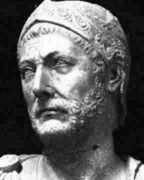
The course, originally presented in Stanford’s Continuing Studies Program, will be rolled out in installments over the next several weeks. Separately you can listen to a standalone lecture that Hunt gave on Hannibal shortly before the start of the course. (Listen on iTunes here.) For more courses like these, check out our podcast collection of free university courses.

Course Description for Hannibal
“Hannibal is a name that evoked fear among the ancient Romans for decades. His courage, cunning and intrepid march across the dangerous Alps in 218 bce with his army and war elephants make for some of the most exciting passages found in ancient historical texts written by Polybius, Livy, and Appian. And they continue to inspire historians and archaeologists today. The mystery of his exact route is still a topic of debate, one that has consumed Patrick Hunt (Director of Stanford’s Alpine Archaeology Project) for more than a decade.
This course examines Hannibal’s childhood and his young soldierly exploits in Spain. Then it follows him over the Pyrenees and into Gaul, the Alps, Italy, and beyond, examining his victories over the Romans, his brilliance as a military strategist, and his legacy after the Punic Wars. Along the way, students will learn about archaeologists’ efforts to retrace Hannibal’s journey through the Alps and the cutting-edge methods that they are using. Hunt has been on foot over every major Alpine pass and has now determined the most probable sites where archaeological evidence can be found to help solve the mystery.”
Read More...Beyond Free Speech: Ahmadinejad at Columbia (on Video)
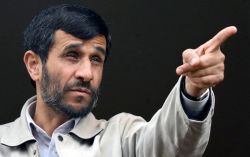 There was a lot of hand-wringing leading up to Mahmoud Ahmadinejad’s appearance at Columbia University on Monday. But, as it turns out, freedom of speech seemingly worked as it was intended. Ahmadinejad entered the marketplace of ideas and quickly came out the wrong side of the exchange. (You can watch the full video of his appearance here or read the transcript here.) The deciding factor wasn’t so much the unbecoming introduction offered by Lee Bollinger, Columbia’s president. It was more just a matter of giving Ahmadinejad enough rope to hang himself (i.e., letting him doubt the existence of the Holocaust and also gays in Iran) and then sitting back and watching it happen.
Of course, the “marketplace of ideas” metaphor only goes so far when you’re dealing with international politics. Ahmadinejad’s speech wasn’t about winning a competition at Columbia. It was mostly about playing to an audience at home, one for whom his rhetorical strategies score points. But then there are the unintended consequences to consider. Far better than a discredited Bush administration ever could, Ahmadinejad realistically softened up the American public to any military plans that the US government has on the table. At the very least, this has to qualify for a Darwin Award. I’ll save further analysis for the pundits and talking heads since I know that politics and political opinions only go so far on this blog.
Related Note:
Last week, KQED’s Forum here in San Francisco had a good conversation about free speech in the university. It touched on Ahmadinejad’s appearance at Columbia, but also Don Rumsfeld’s invitation to Stanford’s Hoover’s Institution and Larry Summers canceled invitation to speak before the UC Board of Regents. Listen here: iTunes — Feed — Mp3 — Web site.
Read More...Halberstam’s The Coldest Winter
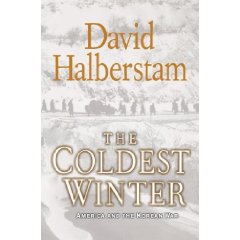
David Halberstam’s no stranger to writing big books about big wars, and he reportedly thought of his final work, The Coldest Winter: America and the Korean War, as a “bookend” to his classic on
Halberstam died in a car crash last spring and so, remarkably, a group of his friends are doing a publicity tour for him. Authors like Joan Didion, Seymour Hersh, Bob Woodward and Anna Quindlen are taking up legs of the grueling publicity trek in honor of Halberstam. According to the New York Times they will be “offering personal reminiscences and readings” in an interesting combination of festschrift and promotion. The tour will start on Tuesday and run until October 15th. In the words of Sy Hersh, “Listen, ain’t nothing like David — you don’t need this to keep David alive. You’ve got to market a book, let’s market a book, but he transcends that. He was a great war reporter and a great baseball reporter, and the most loyal person in the world.”
Related: See our piece from April, David Halberstam’s Last Speech and Supper.
Read More...
Ten Discoveries That Rewrote History
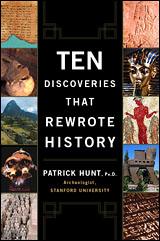
Patrick Hunt: “First I should say that not every archaeologist would agree that these are the ten most important discoveries of all time. On the other hand, the ten stories retold in this book are often regarded as among the most exciting archaeological discoveries of the modern era (since 1750). And no one would deny that these ten vital discoveries have forever changed the world of archaeology, transforming how and what we know about ancient history. Let me tell you a little about them.
Rosetta Stone: This exciting discovery in 1799 was the key to deciphering Egyptian hieroglyphs and unlocking the history of the ancient world texts. It provides a window into the real history of Egypt rather than an imaginary one; all other decipherings of ancient languages since the Rosetta Stone’s initial decoding in 1822 are based on its precedents. (See photo here.)
Troy: Its discovery and excavation beginning in 1870 proved once and for all that Troy was not just a myth based on Homer; Troy was a historical site where real people lived and fought. Its earliest excavator, the oft-maligned and often-unethical Heinrich Schliemann has been mostly credited — right or wrong — as being the “Father of Archaeology” and his techniques became the foundation of archaeological research, however greatly improved, afterward.
Nineveh and the Royal Assyrian Library: This riveting find beginning in 1849 by Austen Henry Layard, a sleuth of antiquity, eventually unearthed a whole lost library of cuneiform texts, including ones not only from ancient Assyria but also from far older Sumer, Akkad, Babylon and other great civilizations. This had a very significant impact on world literature, introducing such seminal works as the Epic of Gilgamesh.
King Tut’s Tomb: The dramatic opening of this royal tomb in 1922 — sought for years by a determined Howard Carter — was the first time in millennia a pharaoh’s tomb had actually been found intact; its treasure gave the world a unique opportunity to actually account for staggering Egyptian royal wealth. [Dan’s note: National Geographic has a nice web site on this archaeological find.]
Machu Picchu: The remarkable high jungle mountain discovery in 1911 of the remote Lost City of the Inca by Hiram Bingham made it possible for the world to finally see an undisturbed Inca royal city mysteriously abandoned on a mountaintop but neither conquered nor changed by the colonial world. (See photo here.)
Pompeii: Preserved by the eruption of Vesuvius in AD 79 and not dug out for almost two millennia, Pompeii (probably accidentally found by a farmer digging a well) is the single most important Roman site in the world; its artifacts offer the largest and fullest record of life in a Roman city. Pompeii’s misfortune is our great fortune. It preserves a city with thousands of objects virtually unchanged. (See images here.)
Dead Sea Scrolls: Since 1947, when two Bedouin boys in the desert stumbled upon the first cave at Qumran, these hidden desert texts have revolutionized our perceptions of early Jewish and Christian religion; their finding has pushed back our knowledge of biblical manuscripts by a thousand years. This discovery and the off-and-on secrecy of the finds reads like spy fiction but is real instead. (See photo here.)
Akrotiri on Thera: Archaeologist Spyridon Marinatos had been laughed at by his peers for his theories and was finally vindicated 30 years later (circa 1967). Like Pompeii, ash from the volcanic eruption in 1620 BC preserved a whole Aegean city that might have been the source of the Atlantis myths but was certainly a wealthy city with fabulous wall paintings depicting Bronze Age life. It gives us for the first time a whole new body of Minoan art and understanding of Mediterranean sea trade. (Images here.)
Olduvai Gorge: Since the 1920’s, the Leakey family doggedly persisted searching in East Africa for the most ancient human origins; dramatic unearthing of bones and tools in 1959 from Olduvai and other sites in Great Rift Africa forever showed the world how long — at least a million years — antecedents to human life have persisted, finally providing proof of Darwinian evolution from earlier primate and hominid finds.
Tomb of 10,000 Warriors: This staggering tomb from around 220–210 BC, spreading over hundreds of acres, single-handedly awakened Western interest in Chinese history and revitalized Chinese archaeology. The opulence and grandeur of an emperor’s tomb astonished the world. Archeotourism in China has profited immensely from the accidental 1974 find of a pre-Han tomb where lies the authoritarian emperor who forcibly united and rewrote Chinese culture in many ways that still survive today.”
Related Content: Above, I mentioned that you can listen to Patrick Hunt’s Stanford course on Hannibal on iTunes. The course is going to be rolled out in installments over the next several weeks. Separately you can listen to a standalone lecture that he gave on Hannibal shortly before the start of the course. (Listen on iTunes here.) This lecture gets referenced in the course at several points. Patrick’s work on Hannibal is sponsored by National Geographic Society.
 Subscribe to our feed and see our complete collection of free university courses.
The Writing Rooms of Famous Writers
Here’s where great writing gets done. The Guardian has posted a nice collection of annotated photos of the working spaces used by famous writers, including Seamus Heaney, AS Byatt, Michael Frayn, and Alain de Botton. (Get the full list here.) My favorite selection is Jonathan Safran Foer’s, the Rose Reading Room of the 42nd Street Branch of the New York Public Library, a beautiful place to work.
Another quick observation to mention: Most all of these rooms are painted completely white. For most of the world, that’s hardly strange. But if you live in Northern California, the site of one white room after another is fairly jarring. It’s pastels here all the way. Source: Boing Boing

Also check out our list of Free University Courses and Foreign Language Lesson Podcasts.
Read More...iPod Classic Not Quite Ready for Primetime
Robert X. Cringley’s weekly article/podcast (iTunes — Feed — Web Site) may make you think twice about buying an iPod Classic … at least for now. Despite the name, the guts of the iPod Classic are actually new, and the bugs haven’t been fully worked out. The list of problems experienced by users includes (and I quote Cringley directly):
- VERY Slow menu switching response
- Display of clock rather than song info when “Now Playing”
- Inability to use existing AUTHORIZED 3rd party dock products (including Apple-advertised)
- Audio skipping during operation
- Slow connection to Macs and PCs
- Inability to disable “split-screen” menus
- Lagging and unresponsive Click Wheel
- Camera connector not working
- Inability to use EQ settings without skipping and distortion
Seeing that the “Classic” is Apple’s only iPod that currently has more than 16 gigs of storage, the company will be hustling to fix these problems. But, for now, podcast lovers might want to stick to their tried and true mp3 player. Source: I, Cringley
See our Technology Podcast Collection
Read More...The World of Words & Carnal Knowledge
 Grammar is in vogue. The statistics don’t lie. The Grammar Girl (iTunes — Feed — Web Site) remains one of the most popular podcasts on iTunes, and The Grammar Grater (iTunes — Feed — Web Site) is holding its own. From grammar, it’s just a short step to words, to etymology. And, today, we want to highlight Podictionary (iTunes — Feed — Site) for you. It’s a “word-of-the-day” podcast that spends an easy three to five minutes surveying the history of common words in the English language. (This makes it useful for native and non-native speakers alike). Its creator, Charles Hodgson, has so far tackled over 600 terms, which means that he’s amassed an extensive audio archive that you can access here.
And his work on words doesn’t stop there. Hodgson recently published a new book called Carnal Knowledge: A Navel Gazer’s Dictionary of Anatomy, Etymology, and Trivia (St. Martin’s Press). Far from pedantic, the book uses engaging prose and fun facts to tease out the meaning of words we use to describe our bodies. The whole body gets covered here, from the “eye” to the “simian line” to the “gullet,” and it goes straight down to the nether regions, too. For more information, spend some time with the blog that accompanies the new book.
Related Content:
Ten Podcasts to Build Your Vocabulary
Read More...
The End of History Revisited
 Stewart Brand, the creator of the iconic Whole Earth Catalog, heads up the The Long Now Foundation, an organization committed to cultivating “slower/better” thinking and fostering greater responsibility over “the next 10,000 years.” (Yes, they’re ambitious.) To help bring this about, Brand hosts a monthly speaking series that you can download as a podcast (iTunes — Feed — MP3s), and, in late June, he brought in Francis Fukuyama to speak. Fukuyama, a professor of international political economy at Johns Hopkins, first made a name for himself in 1989 when, during the waning days of the Cold War, he published an essay called “The End of History?” (Later, he would turn it into a bestselling book, The End of History and the Last Man.) Stealing a page from Karl Marx, Fukuyama maintained that history had a direction to it. It flowed with purpose, always bringing progress. But the end point wasn’t communist utopia. It was liberal democracy mixed with free market economics. That’s where humanity was collectively heading, with a victorious America leading the way. (In his original essay, he wrote, “What we may be witnessing is not just the end of the Cold War, or the passing of a particular period of post-war history, but the end of history as such: that is, the end point of mankind’s ideological evolution and the universalization of Western liberal democracy as the final form of human government.”)
In the intervening years, the world’s movement toward western democracy hasn’t exactly followed a straight line, and the 9/11 attacks and the ensuing “War on Terror” have seemingly lent credence to a dimmer worldview, one outlined by Samuel Huntington in the controversial book, The Clash of Civilizations and the Remaking of World Order. Speaking 18 years after the publication of his original essay (iTunes — Feed — MP3 — Blog), Fukuyama revisits, clarifies and largely defends his thesis that liberal democracy is still on track to prevail. And that’s because, in his mind, there are deep economic, scientific and technological trends in motion that drive almost inexorably toward these political ends. Whether he is right or wrong, it’s impossible to say. Regardless, his talk is smart, hardly dogmatic, and worth your time.
Read More...SmartLinks From Our Readers
Below, we have some links recommended by our readers. Feel free to send other good bits our way. The more we give, the more we get. Just click here to send:
- Sean Penn reads an excerpt from Bob Dylan’s autobiography, Chronicles, here. (Or check out the full audiobook version.)
- Jared Diamond, the Pulitzer Prize-winning author of Guns, Germs, and Steel and Collapse speaks at The Long Now Foundation about why civilizations have historically endured or failed. Two important factors include how they managed their natural resources and dealt with climate change. Does this ring any bells? Get the lecture here: (iTunes — Feed — MP3s)
- Ayn Rand’s Literature of Capitalism. A piece in The New York Times explores Atlas Shrugged and its impact on Alan Greenspan.
- Interview with Hal Varian, Chief Economist at Google (and UC Berkeley Professor), who talks (iTunes - Feed — MP3 — Web Site) about the internet as an “engine for democracy.”
- Appearing in The New York Review of Books, this piece, entitled Citizen Gore, takes a look a Al Gore’s new book, The Assault on Reason, and how Gore, being freed up from politics, has been remarkably able to prod the conscience of the nation. For some, however, it’s not enough. Hence the recent “Draft Al Gore” campaign that has gotten underway.
- Check out the Voodoo Music Festival coming up on October 26, 27 & 28 in New Orleans. The lineup of artists includes Rage Against The Machine, Common, Tiesto, The Smashing Pumpkins, Black Rebel Motorcycle Club, M.I.A., Ben Harper, Wilco and more. To win passes to the show and some travel money, you can enter a contest here.
Support Us
We're hoping to rely on loyal readers, rather than erratic ads. Please click the Donate button and support Open Culture. You can use Paypal, Venmo, Patreon, even Crypto! We thank you!

About Us

Open Culture scours the web for the best educational media. We find the free courses and audio books you need, the language lessons & educational videos you want, and plenty of enlightenment in between.
Advertise With Us
FREE UPDATES!
GET OUR DAILY EMAIL
Get the best cultural and educational resources on the web curated for you in a daily email. We never spam. Unsubscribe at any time.
FOLLOW ON SOCIAL MEDIA
Open Culture editor Dan Colman scours the web for the best educational media. He finds the free courses and audio books you need, the language lessons & movies you want, and plenty of enlightenment in between.
Advertise With Us



