“One of The Supreme Creations of Documentary Filmmaking” Airs Tonight
A.O. Scott (The New York Times) calls it “One of the most remarkable experiments in the history of cinema.” Roger Ebert says it “is on my list of the ten greatest films of all time.” The film is 49 UP, and it airs tonight on PBS.
The film is the seventh film in a long-running series of documentaries that has traced the lives of 14 Brits, starting when they were 7 years old in 1964. The director, Michael Apted, has revisited these children every seven years (they are now 49 years old), watching how their lives have changed over the years. Talk about ambitious. You can watch a trailer for the film here, and listen to an interview with the director here.
P.S. The quote in the title comes from Salon.
Read More...
David Foster Wallace: Deciderization 2007 Online
Reading David Foster Wallace (author of Infinite Jest and A Supposedly Fun Thing I’ll Never Do Again) is always a pleasure. And perhaps even more pleasurable is reading him for free.
Tomorrow, The Best American Essays 2007 hits the streets. Wallace edited the collection and kicked it off with a fiery essay of his own. Houghton Mifflin was good enough (or, rather, marketing-savvy enough) to post the essay, The Deciderization 2007‑A Special Report, online for free. And some unknown character did us all a favor by creating a PDF version that’s considerably more legible and printer friendly. Read away.
For good measure, we’re also throwing your way some more digital David Foster Wallace. Here we have him reading his essay “Consider the Lobster” (the text of which you can also read here), plus the author appearing on The Charlie Rose Show here and here. (In both cases, his appearances come later in the show.) Ciao.
Read More...
Coffee Break French (and Nine Other Ways to Parler Français)
Although facing no shortage of competition, Coffee Break Spanish (iTunes — Feed — Web Site) has remained the most popular foreign language lesson podcast, bar none. The popularity rankings on iTunes have continually attested to that.
From this position of strength, the producers of Coffee Break Spanish have smartly moved into new European territories, rolling out earlier this year MyDailyPhrase Italian (iTunes — Feed — Web Site) and MyDailyPhrase German (iTunes — Feed — Web Site). Now they will be facing a stiffer challenge – trying to penetrate the already-crowded French language lesson market.
Coffee Break French (iTunes — Feed — Web Site) was launched on September 26, and how it fares against the competition (see our list below) depends mainly on whether the podcast delivers French lessons better than the others, and whether it can capitalize on the established “Coffee Break” brand. Stay tuned. All of this remains TBD. Let’s sit back and watch how things unfold.
See our complete list How to Learn Languages for Free: Spanish, English, Chinese & 37 Other Languages, which includes audio lessons that will teach you 40 languages.

Read More...
Stephen Colbert’s New Book Released Early as Audiobook
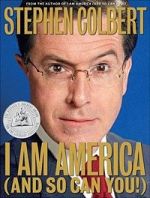 Here’s a quick heads up: Stephen Colbert’s new book — I Am America (And So Can You!) — will hit the streets on October 9. However, if you’re really champing at the bit, you can download the book early, starting today, in audiobook format. The book is narrated by Colbert himself, which is a perk, and you can download it from Audible here.
To round things out, let us refer you to this video where Colbert, speaking at Book Expo America, pumps his new book, spars with Khaled Hosseini (author of The Kite Runner and A Thousand Splendid Suns), and trashes Cormac McCarthy. Have fun.
Read More...Animated New Yorker Cartoons: A Funny Twist on Einstein’s Relativity
The New Yorker has rolled out a series of animated cartoons, which puts in motion its famous cartoons. They can be watched as video podcasts or as streamed videos. You should definitely head over to The New Yorker web site to view the larger collection. But, if you want a little taste, take a look below:

YouTube Gets Smart: The Launch of New University Channels
Updated: See full collection of University Video Collections on YouTube.
I heard rumors something like this was coming, and now it’s here. YouTube has struck deals with major universities, creating dedicated channels from which schools can distribute their media content. Not surprisingly UC Berkeley, always at the digital forefront, has taken the lead and launched an ambitious channel with over 300 hours of videotaped courses and events. You can check out their channel here. The other major university to sign on is USC (University of Southern California).
Back in March, we lamented the sheer dearth of cultural content on YouTube. (Listen to our radio interview here and also see our related blog post.) Since its inception, the now Google-owned video service has been awash with home-brewed videos of guitar riffs, dormroom lip sync sessions, and pet tricks. Meanwhile, videos of greater cultural substance have been harder to come by (and that’s why we’ve tried to flag the good ones for you. See here, here & here.) YouTube’s new university initiative begins to remedy that problem. It shows a perhaps burgeoning commitment to higher-minded media. But let’s not get too carried away. When you go to YouTube, it’s not clear how users will find/navigate to these channels. If you look under Categories, “education” is not an option (although I think it used to be). Perhaps YouTube has plans to tweak its navigation. Or is this just a case of letting a tree fall in the woods? Let’s stay optimistic and we’ll check back soon.
Please visit our collection of 250 Free Online Courses
Read More...
Philip Roth’s Exit Ghost: Free Chapters, Podcasts & More
Philip Roth fans didn’t have to wait very long for another novel. A short year and a half after publishing Everyman, Roth has just put out Exit Ghost. It’s another book that takes a hard look at aging, and it also marks the ninth and possibly last time that the character Nathan Zuckerman will inhabit Roth’s literary creations. (For more on the Zukerman series, see Salon’s older piece here.) We’ll eventually have more to say about Exit Ghost. But, for now, we wanted to point you to some good related resources. For starters, if you can’t wait to get the book, you can read the first chapter online for free here. And you can also catch some very recent interviews with Roth. First, Amazon Wired (iTunes — Feed — Transcript) features him talking about Exit Ghost and offering a very short reading from it. Then there is this interview by Terry Gross on NPR’s Fresh Air. (iTunes — Feed — Stream). Finally, here are the first reviews that have rolled out: New York Magazine, The New York Sun, The New York Times, The LA Times, The Washington Post, and Times Online (UK).
P.S. Here are a couple of other Philip Roth goodies.
- Philip Roth on “Everyman” (Real Player — Audio)
- Philip Roth on “Everyman” and His Approach to Writing (mp3 stream)
 Subscribe to Our Feed and check out our collection of free audiobook podcasts.
The World Without Us: Author Interview
Earlier this week I spoke on the phone with Alan Weisman, the author of The World Without Us. (See our initial piece on his book.) Alan was gracious enough to take some time out of his publicity schedule to share his thoughts on the book, the world, his writing process, and more. What follows is an edited transcript of our conversation.
Ed: This book addresses what on the surface seems to be a pretty far-fetched hypothetical: that humanity might suddenly disappear. What drew you to this premise in the first place?
Alan: Well, precisely that. Most great environmental writing does not get read by a lot of the people who ought to be learning about it because the nearer-term possibilities just seem sometimes so frightening, or so depressing, that nobody really wants to pick up a book to read it.
By structuring the book the way that I did, I disarm the automatic fear that repels a lot of people from reading about the environment. People don’t want to read something that seems too threatening. On a subconscious or even a conscious level, they don’t want to be worried we’re all going to die. In my book, killing us off in the first couple of pages means people don’t have to worry about dying because we’re already dead, and that’s a relief in a sense. The idea of glimpsing the future is irresistible to all of us and I establish pretty quickly that is not going to just be me speculating, it’s going to be some hard science writing based on a lot of reporting, of talking to experts or eyewitnesses whose guesses will be far more interesting than most peoples’.
The fact that it is far-fetched is really useful because on the one hand really it’s a remote possibility that we would leave, that we would disappear tomorrow. So people don’t go into a panic over this book, and it really gives people enough time to think about these things without panicking about it. So that’s how this device works, and I think it’s been proven to be very effective. I’m getting a lot more people to read it than just people who are hung up on the environment.
Read More...Kasparov, The Chess Master, Takes on Putin: A New Yorker Podcast
 David Remnick, the editor of the New Yorker and author of the Pulitzer Prize-winning book, Lenin’s Tomb, has recently revisited the country he knows so well. And what he has to show for it is an extensive piece on Garry Kasparov, arguably the best chess player in history, and his dangerous move into the political arena. In Vladimir Putin’s Russia, neither political dissent nor political opposition goes over terribly well. Since he took the reins of power in 2000, more than a dozen journalists critical of Putin have turned up dead. So have some politicians. Then there was the dramatic case of Alexander Litvinenko, the former KGB agent turned Putin critic, who died of radiation poisoning in London last fall. All of the cases remain “unresolved.”
At great personal and financial cost, Kasparov is trying to lay the foundation for a legitimate political opposition. Getting there, however, won’t be easy. For one, Putin, having shored up Russia’s economy and national psyche, is immensely popular, having upwards to an 80% popularity rating. Even the old dissident Aleksandr Solzhenitsyn likes him. Then, there’s the fact that Putin has almost a tsarist, “L’État, c’est moi” kind of grip on power. In a podcasted interview (iTunes — Feed — Web Site) that grew out of Remnick’s article, Kasparov talks about his expectations for the next presidential election in Russia, when Putin is constitutionally required to cede presidential powers to another politician. Here, he tells Remnick that Putin will continue calling the shots because, as he puts it, Russia’s political elite is so feckless that they would “vote to make Putin’s dog the prime minister.” This strikes the listener as a strange but timely comment, especially in light of Putin’s announcement yesterday that he may seek to become Russia’s prime minister, which would essentially give him the chance to continue exercising power from what one diplomat has called “a parallel structure.” That’s a move that should prove hard for Kasparov or any other Putin opponent to parry.
Related Content:
- The New Yorker Magazine Crosses the Digital Divide
- The New Yorker Magazine’s Famous Cartoons Now Available on Podcast
- My Trip to Al Qaeda: A New Yorker Video

The Grey Video: Mixing The Beatles with Jay‑Z
In 2004, Danger Mouse released The Grey Album which layered the rapper Jay-Z’s The Black Album on top of The Beatles’ White Album. Black and white makes grey.
Now, on YouTube, you can find The Grey Video, which experimentally brings Danger Mouse’s concept to video. The video, created by two Swiss directors, meshes clips from The Beatles’ film A Hard Day’s Night with footage of Jay‑Z performing. Watch it below, and get more info on The Grey Album here. Also check our collection of MP3 Music Blogs.

Support Us
We're hoping to rely on loyal readers, rather than erratic ads. Please click the Donate button and support Open Culture. You can use Paypal, Venmo, Patreon, even Crypto! We thank you!

About Us

Open Culture scours the web for the best educational media. We find the free courses and audio books you need, the language lessons & educational videos you want, and plenty of enlightenment in between.
Advertise With Us
FREE UPDATES!
GET OUR DAILY EMAIL
Get the best cultural and educational resources on the web curated for you in a daily email. We never spam. Unsubscribe at any time.
FOLLOW ON SOCIAL MEDIA
Open Culture editor Dan Colman scours the web for the best educational media. He finds the free courses and audio books you need, the language lessons & movies you want, and plenty of enlightenment in between.
Advertise With Us

