The New iPod Lineup Versus Its Rivals
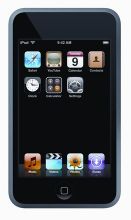 Since we talk a lot here about podcasts and mp3 files, it seems worth flagging this Yahoo gadget review that pits the new iPod lineup against its rivals. Here, we’ve got the new iPod Touch v. the Samsung Yepp YP-P2; the new Nano (with video) v. the Sansa View, and the iPod Classic v. Microsoft’s Zune. The net result is that the new iPods come out ahead, but not by much. Get review here.
(For another review of the new iPod Touch, have a look at this piece on Gizmodo.)
Quick note: As part of the new lineup, the iPod Classic features a new 160 GB model for $349. It apparently holds 40,000 songs (twice as many as the previous model), which translates to three continuous months of listening entertainment. Imagine how many mind-expanding podcasts that could include.
Read More...
New R.E.M. Concert Video “Leaving New York”
Below we have “R.E.M. Live, recorded on the Around the World Tour, which promoted Around the Sun, a studio album from 2004. It is to be released October 16.” (Thanks to Justin for the clarification.)
Source: Stereogum. (For more music, check out our collection of MP3 Blogs.)
 For more smart media, subscribe to our feed
Falling Man 9–11
 On the anniversary of the September 11th attacks, it seems fitting to call attention to Don DeLillo’s Falling Man, a recent addition to the growing body of fiction now known as “9/11 novel.” However you may feel about DeLillo’s writing style (we often find that it grates), Falling Man adeptly captures the emotional and physical haze that surrounded NYC in the wake of the attacks. In interviews with Guernica and NPR’s All Things Considered, DeLillo talks about the influences that led him to explore the attacks and their aftermath from the perspective of both a terrorist and a survivor. If listening to the book is more your speed, check out the audio version at Amazon or the download at Audible.
This guest post was written by Noah Elkin.
 Subscribe to our feed, and click here to access over 75 complete courses from some of the world’s leading universities.
Life-Changing Books Now on Google’s “My Library”
A few weeks ago, our readers contributed to creating a list of books that left an indelible mark on their lives. You can review the original post here. But we figured why not add them to our “My Library” page on Google, a new product that we briefly mentioned yesterday. You can access the collection here (or get it by rss feed). And, as you’ll see, we also imported to the list all of our users’ comments on the individual books. Explore the list, find a great read, and pass it along to a worthy friend.
Related Content:
Download over 100 classic audiobooks as free podcasts, or learn over 25 foreign languages with, yes, more free podcasts.
Read More...
The World Without Us: The Staggering Thought Experiment

Based on his considerable research and extensive interviews with experts, Weisman sees things playing out like this (and here I’m quoting from the New York Times book review): “With no one left to run the pumps, New York’s subway tunnels would fill with water in two days. Within 20 years, Lexington Avenue would be a river. Fire- and wind-ravaged skyscrapers would eventually fall like giant trees. Within weeks of our disappearance, the world’s 441 nuclear plants would melt down into radioactive blobs, while our petrochemical plants, ‘ticking time bombs’ even on a normal day, would become flaming geysers spewing toxins for decades to come… After about 100,000 years, carbon dioxide would return to prehuman levels. Domesticated species from cattle to carrots would revert back to their wild ancestors. And on every dehabitated continent, forests and grasslands would reclaim our farms and parking lots as animals began a slow parade back to Eden.” And, it’s also helpful to know, perhaps, that not even cockroaches would fare well in a world without Homo sapiens.
How Weisman researched this big question and drew his conclusions is fascinating, and fortunately it’s all explained in this Scientific American podcast (iTunes — Feed — Web Site) that features two recent interviews with Weisman. You can also catch Weisman speaking on John Stewart’s Daily Show in less scientific terms. Watch the video here.
 Subscribe to our feed in a reader
Related Content:
- For more related podcasts, check out our Science Podcast Collection
- Also check out Scientific American’s June 12 interview with Jared Diamond (author of Guns, Germs & Steel: The Fate of Human Societies), who talks about the “State of the World Environment.” (iTunes — Feed — Web Site).
Google’s “My Library” (and Other Bookish Social Networks)
As part of Google’s push into the digital book market (see Friday’s post), the company launched last week My Library, which lets you create lists of your own books, search the content of your book inventory by keyword, and then share your book lists with friends. (You can see examples of these book lists here and here, and also get Google’s official spiel on the project here.) It’s a nice idea for students and scholars, but will it have much take-up with the broader reading public? I’m skeptical, but you tell me? We’ve got many bona fide readers here. Will you be sinking time into building your Google Library? Or are you instead ever-refining your Facebook profile and sharing booklists there? Yeah, that’s what I thought.
Check out the Visual Bookshelf app on Facebook, which offers an effective way of sharing your books with your social network. Also be sure to scan Deeplinking’s compilation, The Big List of Bookish Social Networks. Finally, if you create a booklist on Google Library (start making one here), send the urls our way and we’ll post them.
 Subscribe to our feed in a reader.
The Digital Tipping Point: The Wild Ride from Podcast to Book Deal
 Publisher’s Weekly announced last week that Lars Brownworth, a New York high school teacher, will publish with Crown (a Random House division) a new book that covers “1,200 years of Byzantine history, examining the culture’s forgotten role in preserving classical thought, connecting East and West, and building modern Western society.” It’s expected to hit the bookstores in early 2009.
There’s lots to say about this deal, but we wanted to delve a little into the backstory, and particularly how an unexpected chain of events, all built into Web 2.0, made this deal possible. (And, yes, we’ll also touch briefly on where Open Culture fits into the picture.)
The story begins in March 2005, back when Brownworth started distributing on iTunes an educational podcast called 12 Byzantine Rulers: The History of the Byzantine Empire (iTunes — Feed — Site). Released in installments, the podcasts gave users the rare ability to download a complete academic course to their MP3 player, anytime, anywhere, for free. Brownworth was a pioneer, and by late 2006, people started taking notice. In December, Wired mentioned 12 Byzantine Rulers in a short web feature, which netted the podcast a small uptick in downloads. Then, days later, our fledgling blog followed up with a short piece — The Hottest Course on iTunes (and the Future of Digital Education). From there, things got interesting. Our post got almost immediately picked up on Digg.com, a massively popular website, and its users catapulted the story to Digg’s homepage. Downloads of Brownworth’s podcasts surged; the power of Web 2.0 was kicking in. Brownworth speculated during an interview last week that the “Digg effect” widely broadened the exposure of his podcast, and, soon enough, The New York Times was knocking on his door. By late January, the pillar of American journalism published a flattering feature: History Teacher Becomes Podcast Celebrity. Then, it all started again. Podcast downloads spiked higher, far exceeding the previous wave from Digg. More articles and an NPR interview followed. Next came the book agents’ calls. … That’s, in short, how we got to last week’s announcement.
Brownworth’s story, although unusual, is part of a growing trend. Book publishers seem increasingly willing to let the wisdom of crowds identify podcasts that translate into marketable books, and then let the podcasts stimulate book sales. This year, Mignon Fogarty notably inked deals to release spinoff books and audiobooks of her popular Grammar Girl podcast (iTunes — Feed — Web Site). And given that 12 Byzantine Rulers has been downloaded 735,000 times just this year, Brownworth and his new publisher felt rightly justified in taking a similar approach.
We’ll gradually find out whether this developing model provides a way for innovative podcasters to monetize their successful content. In the meantime, Lars is giving it all a good go. He recently gave up his New York teaching job, relocated to North Carolina (where his brother Anders provides technology and business support), and is now dedicating himself full-time to podcasting and writing. It’s a big change, but a change worth making. “Web 2.0 has enabled me,” Brownworth says, “to do things that I never would have been able to do otherwise. It’s a bit humbling to find myself on the ground floor of a revolution, but this move is undoubtedly the most exciting opportunity I’ve ever had.”
We’re pleased to have played even a bit part in Brownworth’s success. Keep an eye out for his book and, until then, give his podcast a good listen: 12 Byzantine Rulers: The History of the Byzantine Empire (iTunes — Feed — Site).
Read More...The Return of Dr. Strangelove?
 The Stanley Kubrick classic Dr. Strangelove or: How I Learned to Stop Worrying and Love the Bomb centers around a Soviet doomsday device. If Russia is attacked by nuclear weapons, the device will set off countless nuclear bombs automatically, thereby rendering the Earth uninhabitable. It was dark humor when Peter Sellers brought it to life on the silver screen…but what if it’s real?
That’s just what a new book from the U.K. is arguing. Doomsday Men by P. D. Smith provides evidence that a Russian doomsday system called “Perimetr” went operational in the mid-1980s, and still is. As Ron Rosenbaum points out in Slate, this is particularly upsetting news since Vladimir Putin recently announced that Russian nuclear bombers would recommence “strategic flights”–potentially armed with nukes. The prospect of war between the U.S. and Russia might seem remote, but the return to nuclear posturing is not a good sign for humanity. Rosenbaum once interviewed some of the Minuteman commanders who control our own nuclear arsenal and his article makes a great read:
“This doomsday apparatus, which became operational in 1984, during the height of the Reagan-era nuclear tensions, is an amazing feat of creative engineering.” According to Blair, if Perimetr senses a nuclear explosion in Russian territory and then receives no communication from Moscow, it will assume the incapacity of human leadership in Moscow or elsewhere, and will then grant a single human being deep within the Kosvinsky mountains the authority and capability to launch the entire Soviet nuclear arsenal.
Other content worth exploring:
- How to Learn 21 Languages with Your iPod
- 25 UC Berkeley Courses Available via Free Video
- The Decline and Fall of the Roman Empire: A Free Audiobook
- James Joyce’s Ulysses: A Free Podcast
- Bestselling Novelist Sells Story Ideas for $1
- Subscribe to our feed in a reader
New eBook Initiatives from Amazon and Google
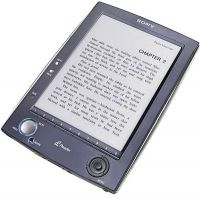 In case you missed it, The New York Times published a piece yesterday previewing two new efforts to bring electronic books to the mass market. In October, Amazon.com will roll out the Kindle (check out leaked pictures here), an ebook reader, priced somewhere between $400 to $500, that will wirelessly connect to an e‑book store on Amazon’s site, from which readers can download books in electronic format. (Think iTunes for ebooks.) Meanwhile, Google will start “charging users for full online access to the digital copies of some books in its database” and share revenue with publishers. The whole idea here is to disrupt the $35 billion book market in much the same way that the Apple has dislocated the music market with the iPod. But whether consumers will see digital books as having comparable advantages to the iPod remains TBD, and the doubters are certainly out there. Read more here. And, in the meantime, if you want a lot of free audiobooks, check out our Audiobook Podcast Collection.
 Subscribe to our feed in a reader
A Bungled Beauty Pageant and Our Reason for Being
By now, millions of web users have watched Miss Teen South Carolina explain in mortifying fashion (see below) why many Americans can’t find the United States on a map. And, in their own unintended way, her comments effectively answered the question posed to her. Education simply isn’t what it should be in America. And that holds true for many other nations.
All of this sets the stage for explaining Open Culture’s reason for being. Put simply, we try to put people, no matter what their age or where they live, in a position to continue learning and improving themselves. With the help of our podcast collections, you can now start learning over 25 foreign languages, listen to over 100 audiobooks, including classic works in literature, poetry and philosophy, and take over 75 complete courses from some of the world’s leading universities (MIT, Stanford, UC Berkeley, Oxford, etc.). Our podcast library includes many more educational resources as well, and the best part is that they’re completely free. Hours of free education are at your disposal whenever you want it. To benefit, you simply need the desire and the will, and the ability to use podcasts. (If you don’t know how, simply read our Podcast Primer. We’ll get you up to speed.) We hope that you profit from these podcast collections and our daily posts (subscribe to our feed), and, if they can benefit a friend, please let them know about us at www.oculture.com.
P.S. For those who want to bone up on geography, check out Geography of World Cultures on iTunes. This informative course was taught by Martin Lewis at Stanford University.
Support Us
We're hoping to rely on loyal readers, rather than erratic ads. Please click the Donate button and support Open Culture. You can use Paypal, Venmo, Patreon, even Crypto! We thank you!

About Us

Open Culture scours the web for the best educational media. We find the free courses and audio books you need, the language lessons & educational videos you want, and plenty of enlightenment in between.
Advertise With Us
FREE UPDATES!
GET OUR DAILY EMAIL
Get the best cultural and educational resources on the web curated for you in a daily email. We never spam. Unsubscribe at any time.
FOLLOW ON SOCIAL MEDIA
Open Culture editor Dan Colman scours the web for the best educational media. He finds the free courses and audio books you need, the language lessons & movies you want, and plenty of enlightenment in between.
Advertise With Us

