People of Nowhere: Short, Powerful Film Captures the Human Dimension of the Syrian Refugee Crisis
“The propagandist’s purpose is to make one set of people forget that certain other sets of people are human.”
–Aldous Huxley (1936)
Lior Sperandeo, who has previously directed short films called People of Mumbai, People of Nepal, and People of Senegal, returns with a film that resists focusing on a sense of place. People of Nowhere captures the plight of Syrian refugees, fleeing their worn-torn country for a safer life in Europe. Explaining how he came to make the dramatic film, Sperandeo writes:
I have heard and read different opinions about the wave of Syrian refugees who try to make their way in to the EU. Then I went to Lesvos. 7 days on the Greek Island gave me a healthier, human perspective on the situation. Seeing the people behind the headlines with my own eyes, and feeling their deep struggle, broke my heart. Are they the ‘threat’ people talk about? All I saw were courageous people in a time of crisis, looking for hope. I also got to meet brave volunteers from all over the world who reach out to help all people regardless of their religion, race or background. That inspired me. My hope is that this video might tear down some of the walls of bad ideas and opinions we have built around ourselves.
You can watch Lior’s film, a reminder that real lives are stake in the slow-moving genocide in Syria, on Vimeo here. And visit his Vimeo Channel here.
Follow Open Culture on Facebook and Twitter and share intelligent media with your friends. Or better yet, sign up for our daily email and get a daily dose of Open Culture in your inbox. And if you want to make sure that our posts definitely appear in your Facebook newsfeed, just follow these simple steps.
Read More...Mœbius & Jodorowsky’s Sci-Fi Masterpiece, The Incal, Brought to Life in a Tantalizing Animation
Last year we featured artwork from the Dune movie that never was, a collaboration between Alejandro Jodorowsky, the mysticism-minded Chilean director of such oft-described-as-mind-blowing pictures as El Topo and The Holy Mountain, and the artist Jean Giraud, better known as Mœbius, creator of oft-described-as-mind-blowing comics as Arzach, Blueberry, and The Airtight Garage. If ever a meeting of two creative minds made more sense, I haven’t heard about it. Alas, Jodorowsky and Mœbius’ work didn’t lead to their own Dune movie, but it didn’t mark the end of their artistic partnership, as anyone who’s read The Incal knows full well.
Telling a metaphysical, satirical, space-operatic story in the form of comic books originally published throughout the 1980s (with sequel and prequel series to come over the following 25 years), The Incal on the page became the fullest realization of Jodorowsky and Mœbius’ combined vision.
Its success made it a logical candidate for film adaptation, and so director Pascal Blais brought together artists from Heavy Metal magazine (in which Mœbius first published some of his best known work) to make it happen. It resulted in nothing more than a trailer, but what a trailer; you can watch a recently revamped edition of the one Blais and his collaborators put together in the 1980s at the top of the post.
Any Incal fan who watches this spruced-up trailer will immediately want nothing more in this life than to see a feature-film version of dissolute private investigator John DiFool, his concrete seagull Deepo, and the titular all-powerful crystal that sets the story in motion. And anyone not yet initiated into the science-fiction “Jodoverse” for which The Incal forms the basis will want to plunge into the comic books at the earliest opportunity. Perhaps Blais will one day fully revive the project; until then, we’ll have to content ourselves with Luc Besson’s The Fifth Element (with its Mœbius-developed production design, similar enough to The Incal’s to have sparked a lawsuit) and maybe, just maybe, a live-action adaptation from Drive director Nicholas Winding Refn.
Related Content:
Moebius’ Storyboards & Concept Art for Jodorowsky’s Dune
The Inscrutable Imagination of the Late Comic Artist Mœbius
Moebius Gives 18 Wisdom-Filled Tips to Aspiring Artists (1996)
Mœbius Illustrates Paulo Coelho’s Inspirational Novel The Alchemist (1998)
Mœbius Illustrates Dante’s Paradiso
Based in Seoul, Colin Marshall writes and broadcasts on cities and culture. He’s at work on a book about Los Angeles, A Los Angeles Primer, the video series The City in Cinema, and the crowdfunded journalism project Where Is the City of the Future? Follow him on Twitter at @colinmarshall or on Facebook.
Read More...Mark Twain’s Adventures of Huckleberry Finn as a Free eBook & Audio Book
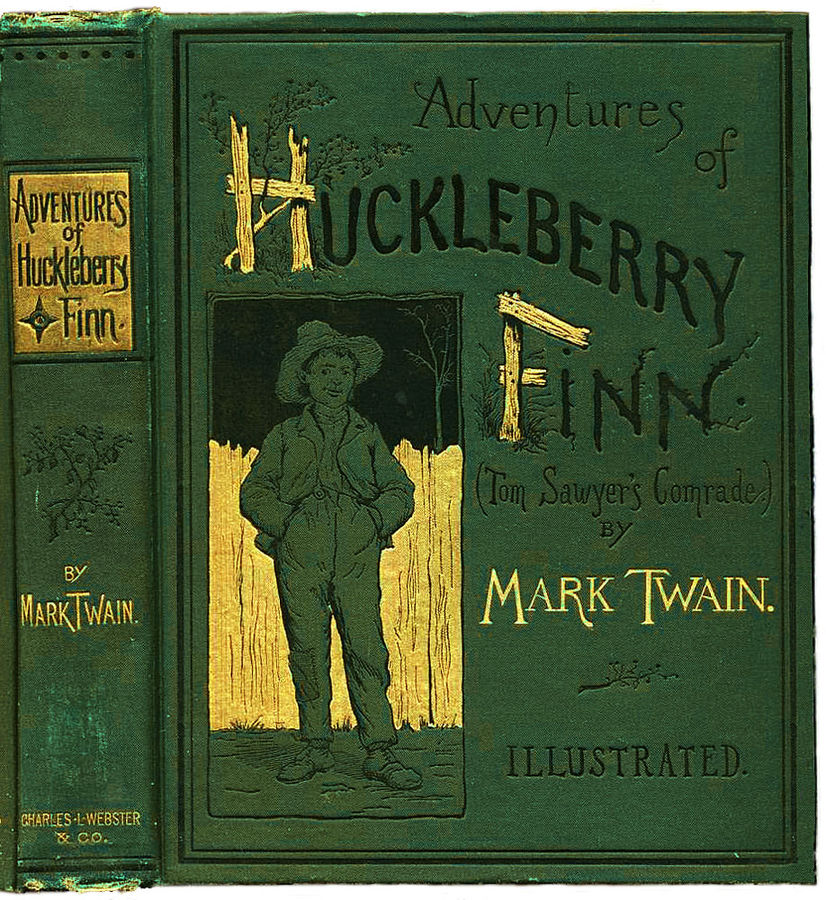
“All modern American literature comes from one book by Mark Twain called Huckleberry Finn. American writing comes from that. There was nothing before. There has been nothing as good since.” That’s what Ernest Hemingway, had to say about Mark Twain’s 1885 novel, The Adventures of Huckleberry Finn. The book, now in the public domain, can be download for free in ebook and audiobooks formats. Find them here:
eBooks: iPad/iPhone — Kindle + Other Formats — Read Online Now
Audio Books: Free MP3 — Free MP3 Zip File — Free iTunes — Spotify version
Find many more great classics in our twin collections: 800 Free eBooks for iPad, Kindle & Other Devices and 1,000 Free Audio Books: Download Great Books for Free. And if you are looking for a professionally read version of Huckleberry Finn, you might also want to explore downloading one for free from Audible.com. They have a great, no-strings-attached deal. If you start a 30 day free trial with Audible.com, you can download two free audio books of your choice. Get more details on the offer here.
Follow Open Culture on Facebook, Twitter, Google Plus and LinkedIn and share intelligent media with your friends. And if you want to make sure that our posts definitely appear in your Facebook newsfeed, just follow these simple steps.
Related Content:
Free Online Literature Courses
Bill Murray Gives a Delightful Reading of Twain’s Huckleberry Finn (1996)
Norman Rockwell Illustrates Mark Twain’s Tom Sawyer & Huckleberry Finn (1936–1940)
Read More...An Interactive Timeline Covering 14 Billion Years of History: From The Big Bang to 2015
For his final project in Bezalel Academy of Arts and Design in Jerusalem, Matan Stauber created Histography, an interactive timeline that covers 14 billion years of history. The timeline, writes Stauber, “draws historical events from Wikipedia, and it self-updates daily with new recorded events.” And the interface lets users see history in smaller chunks (decades at a time) or bigger ones (millions of years at a time). To get a vague feel for how Histography works, you can watch the video above. But really the best way to experience things is to dive right in here.
Follow Open Culture on Facebook and Twitter and share intelligent media with your friends. Or better yet, sign up for our daily email and get a daily dose of Open Culture in your inbox. And if you want to make sure that our posts definitely appear in your Facebook newsfeed, just follow these simple steps.
Related Content:
An Interactive Map of Odysseus’ 10-Year Journey in Homer’s Odyssey
The History of Modern Art Visualized in a Massive 130-Foot Timeline
Big History: David Christian Covers 13.7 Billion Years of History in 18 Minutes
Free Online History Courses
Read More...Free Entertainment for Cats and Dogs: Videos of Birds, Squirrels & Other Thrills
Before Friday, we had never managed to cover NASCAR, but we crossed that off the list when we featured Terry Gilliam’s mockumentary The Legend of Hallowdega. And now today we have another Open Culture first: yes, an archive of free, entertaining videos for cats and dogs.
Over the past 6 years, Paul Dinning has created a YouTube channel packed with over 400 videos featuring the wildlife of Cornwall, England. And, from that footage, he has cobbled together playlists designed to delight all cats and dogs with access to the internet. And, apparently cats and dogs are watching. The first video above, called “Squirrel and Bird Fun,” has clocked some 863,000 views over the past year. And the next video, “The Ultimate Videos of Birds for Cats To Watch,” has 946,000 views since January. I showed the videos to my cat Cocco [sic] and, I kid you not, he was transfixed.
A longer playlist of videos for cats and dogs can be viewed here.
Follow Open Culture on Facebook and Twitter and share intelligent media with your friends. Or better yet, sign up for our daily email and get a daily dose of Open Culture in your inbox. And if you want to make sure that our posts definitely appear in your Facebook newsfeed, just follow these simple steps.
Read More...Now Streaming Free: The Best of The Grateful Dead’s “Fare Thee Well” Concerts in Chicago

A quick note: Thanks to NPR’s First Listen site, you can now stream for free (but only for a limited time) The Best Of Fare Thee Well: Celebrating 50 Years Of The Grateful Dead. This new double record, featuring 16 tracks recorded during the Dead’s farewell shows in Chicago this summer, will be officially released on November 20th. But you can get a sneak peek right here, right now by clicking the play button on the audio player below.
Tracks includes “Box Of Rain,” “Shakedown Street,” “Truckin’,” “Scarlet Begonias,” “Fire On The Mountain,” “Not Fade Away,” “Touch of Grey” and other fan favorites.
As with all Dead shows, you can also find raw recordings of the entire three Chicago concerts on the web. Just revisit our July 7th post to stream those too.
Follow Open Culture on Facebook and Twitter and share intelligent media with your friends. Or better yet, sign up for our daily email and get a daily dose of Open Culture in your inbox. And if you want to make sure that our posts definitely appear in your Facebook newsfeed, just follow these simple steps.
Related Content:
The Grateful Dead’s Final Farewell Concerts Now Streaming Online
Bob Dylan & The Grateful Dead Rehearse Together in Summer 1987: Hear 74 Tracks
The Grateful Dead’s “Ripple” Played by Musicians Around the World
10,173 Free Grateful Dead Concert Recordings in the Internet Archive
Read More...The Power of Pessimism: Science Reveals the Hidden Virtues in Negative Thinking
These days, you don’t really hear many people making the case for pessimism. Quite the contrary, positive psychology is now en vogue. And its founder, University of Pennsylvania psychology professor Martin Seligman, has written bestsellers with titles like Learned Optimism: How to Change Your Mind and Your Life. But maybe, as Alain de Botton suggests above, there’s an argument to be made for pessimism – for having a sober, if not negative, outlook on life. And maybe there’s science that validates that point of view.
This second video, created by New York Magazine, summarizes the research of NYU professor Gabriele Oettingen, attributing to her the belief that “pessimism can be a better motivator for achieving goals than optimism,” seeing that optimism tends to lull us into complacency and slacken our desire to achieve important personal goals, like losing weight.
Couple that with this: a 2013 study released in Psychology and Aging, a journal published by the American Psychological Association (APA), concluded that “Older people who have low expectations for a satisfying future may be more likely to live longer, healthier lives than those who see brighter days ahead.” The lead author of the study Frieder R. Lang, PhD, added: “Our findings revealed that being overly optimistic in predicting a better future was associated with a greater risk of disability and death within the following decade.” “Pessimism about the future,” it seems, “may encourage people to live more carefully, taking health and safety precautions” that sunny optimists might not otherwise take.
I should add this caveat: scientists don’t necessarily find virtue in pure, unadulterated pessimism. Rather, they find benefits in what they call “defensive pessimism.” This is a strategy, as summarized by The Wall Street Journal, where people “lower their expectations and think through all the possible negatives that could happen in order to avoid them.” Frieder R. Lang, author of the Psychology & Aging study mentioned above, told WSJ, “Those who are defensively pessimistic about their future may be more likely to invest in preparatory or precautionary measures, whereas we expect that optimists will not be thinking about those things.” Similar virtues might be attributed to “defensive optimism,” but we’ll have to wait and see what the inevitable scientific studies have to say about that.
Follow Open Culture on Facebook and Twitter and share intelligent media with your friends. Or better yet, sign up for our daily email and get a daily dose of Open Culture in your inbox. And if you want to make sure that our posts definitely appear in your Facebook newsfeed, just follow these simple steps.
Related Content:
Free Online Psychology & Neuroscience Courses
John Cleese Explores the Health Benefits of Laughter
Read More...Poignant and Unsettling Post-Mortem Family Portraits from the 19th Century
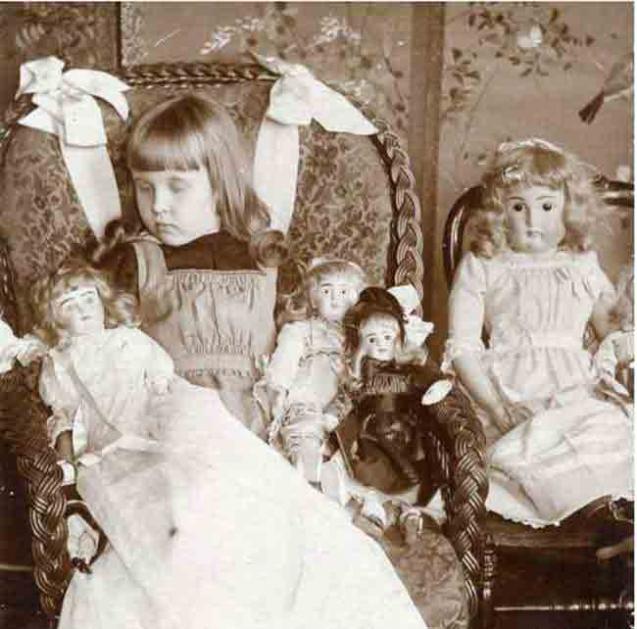
The 19th century witnessed the birth of photography. And, before too long, Victorian society found important applications for the new medium — like memorializing the dead. A recent post on a Dutch version of National Geographic notes that “Photographing deceased family members just before their burial was enormously popular in certain Victorian circles in Europe and the United States. Although adults were also photographed, it was mainly children who were commemorated in this way. In a period plagued by unprecedented levels of infant mortality, post-mortem pictures often provided the only tangible memory of the deceased child.”
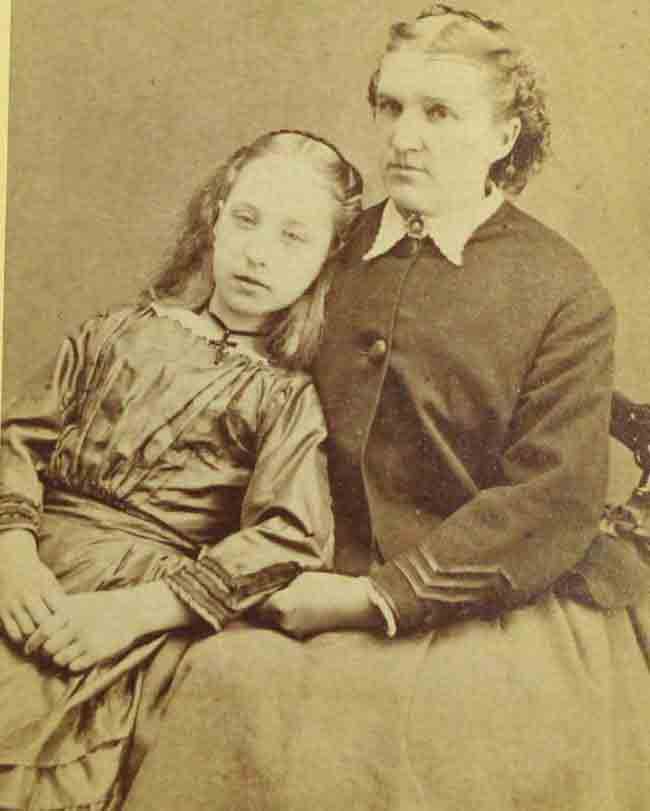
Though unusual by modern standards, the pictures played an important role in a family’s grieving process and often became one of its cherished possessions — cherished because it was likely the only photo of the deceased child that families had. During the early days of photography, portraits were expensive, which meant that most families didn’t take pictures during the course of everyday life. It was only death that gave them a prompt.
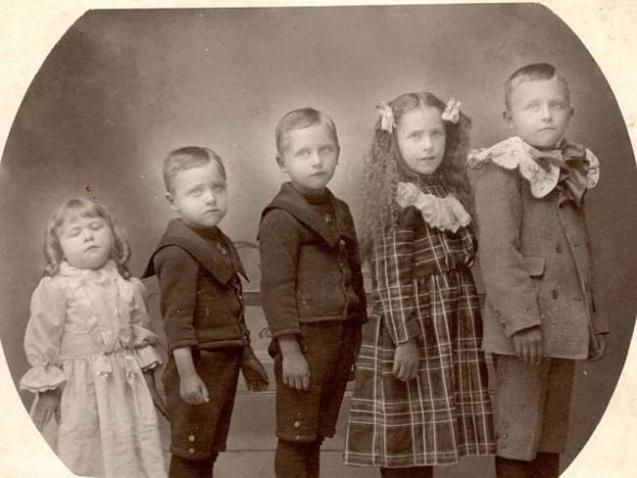
The practice of taking post mortem pictures peaked in the 19th century, right around the time when “snapshot” photography became more prevalent, allowing families to take portraits at a lower cost, when everyone was in the full swing of life. Hence obviating the need for post-mortem photos. You can learn more about this bygone practice by visiting the Burns Archive or getting the book, Sleeping Beauty: Memorial Photography in America.
via Dutch Nat Geo/ Science Dump
Follow Open Culture on Facebook and Twitter and share intelligent media with your friends. Or better yet, sign up for our daily email and get a daily dose of Open Culture in your inbox. And if you want to make sure that our posts definitely appear in your Facebook newsfeed, just follow these simple steps.
Read More...
Read the Entire Comic Book Adaptation of T.S. Eliot’s “The Love Song of J. Alfred Prufrock”
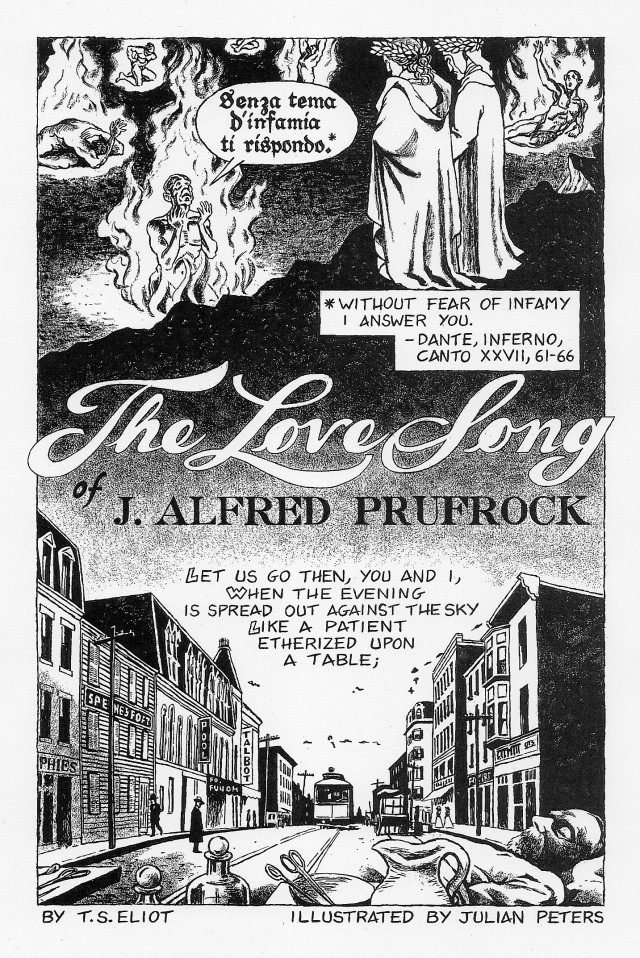
Two years ago, we highlighted for you the beginning of a promising project — Julian Peters’ comic book adaptation of T.S. Eliot’s 1910 poem “The Love Song of J. Alfred Prufrock.” At the time of our post, Peters had only completed the first nine pages of his adaptation. And, about those first pages, our Josh Jones had this to say:
Dante is where “Prufrock” begins, with an epigraph from the Inferno. Peters’ first page illustrates the agonized speaker of Dante’s lines, Guido da Montefeltro, a soul confined to the eighth circle, whom you can see at the top of the title page shown above. Peters’ visual choices place us firmly in the hellish emotional realm of “Prufrock,” a seeming catalogue of the mundane that harbors a darker import. Peters gives us no hint of when we might expect new pages, but I for one am eager to see more.
Happily for Josh … and the rest of us … we can now find out where Peters took the rest of the project. The adaptation is now complete. 24 pages in total. All now on display on Peters’ website here.
If you’re not familiar with “The Love Song of J. Alfred Prufrock,” I’d strongly encourage you to revisit a post in our archive where you can hear “Prufrock” being read by T.S. Eliot himself and also Sir Anthony Hopkins. There you can learn more about Eliot’s modernist masterpiece.
Note: Julian is looking for a publisher to help put his comic book in print. If any publishers want to chat with him, you can find his contact info on his web site.
Follow Open Culture on Facebook and Twitter and share intelligent media with your friends. Or better yet, sign up for our daily email and get a daily dose of Open Culture in your inbox. And if you want to make sure that our posts definitely appear in your Facebook newsfeed, just follow these simple steps.
Related Content:
T.S. Eliot’s Radical Poem “The Love Song of J. Alfred Prufrock,” Read by Anthony Hopkins and Eliot Himself
Listen to T.S. Eliot Recite His Late Masterpiece, the Four Quartets
T.S. Eliot Reads Old Possum’s Book of Practical Cats & Other Classic Poems (75 Minutes, 1955)
Bob Dylan Reads From T.S. Eliot’s Great Modernist Poem The Waste Land
Read More...iTunes Terms & Conditions Adapted into a Graphic Novel: Read It Free Online

In the past, we’ve brought you the creative work of R. Sikoryak. An illustrator who teaches at the Parsons School of Design in NYC, Sikoryak has a penchant for creating comic book adaptations of literary classics. Take for example Dostoyevsky Comics where Batman stars in a comic book version of Crime & Punishment. Or Waiting to Go, which marries Waiting for Godot with Beavis and Butt-Head.
In his latest project, Sikoryak veers sharply away from literature toward language that is much more technical. Now, on his tumblr, you can find iTunes Terms & Conditions: The Graphic Novel.
Adding a new page every day, Sikoryak is creating an illustrated version of the “complete, unabridged legal agreement.” You can currently view the first 49 pages. Click here. Go to the bottom of the page. Then start scrolling up as you read.
Follow Open Culture on Facebook and Twitter and share intelligent media with your friends. Or better yet, sign up for our daily email and get a daily dose of Open Culture in your inbox. And if you want to make sure that our posts definitely appear in your Facebook newsfeed, just follow these simple steps.
Related Content:
Batman Stars in an Unusual Cartoon Adaptation of Dostoyevsky’s Crime and Punishment
Download 15,000+ Free Golden Age Comics from the Digital Comic Museum
Comics Inspired by Waiting For Godot, Featuring Tintin, Roz Chast, and Beavis & Butthead
Read More...Support Us
We're hoping to rely on loyal readers, rather than erratic ads. Please click the Donate button and support Open Culture. You can use Paypal, Venmo, Patreon, even Crypto! We thank you!

About Us

Open Culture scours the web for the best educational media. We find the free courses and audio books you need, the language lessons & educational videos you want, and plenty of enlightenment in between.
Advertise With Us
FREE UPDATES!
GET OUR DAILY EMAIL
Get the best cultural and educational resources on the web curated for you in a daily email. We never spam. Unsubscribe at any time.
FOLLOW ON SOCIAL MEDIA
Open Culture editor Dan Colman scours the web for the best educational media. He finds the free courses and audio books you need, the language lessons & movies you want, and plenty of enlightenment in between.
Advertise With Us


