Steve Martin on the Legendary Bluegrass Musician Earl Scruggs
The great bluegrass banjo player Earl Scruggs died Wednesday at the age of 88. Shortly afterward, Steve Martin sent out a tweet calling Scruggs the most important banjo player who ever lived. “Few players have changed the way we hear an instrument the way Earl has,” wrote Martin earlier this year in The New Yorker, “putting him in a category with Miles Davis, Louis Armstrong, Chet Atkins, and Jimi Hendrix.”
Martin writes of Scruggs:
Some nights he had the stars of North Carolina shooting from his fingertips. Before him, no one had ever played the banjo like he did. After him, everyone played the banjo like he did, or at least tried. In 1945, when he first stood on the stage at the Ryman Auditorium in Nashville and played banjo the way no one had heard before, the audience responded with shouts, whoops, and ovations. He performed tunes he wrote as well as songs they knew, with clarity and speed like no one could imagine, except him. When the singer came to the end of a phrase, he filled the theatre with sparkling runs of notes that became a signature for all bluegrass music since. He wore a suit and a Stetson hat, and when he played he smiled at the audience like what he was doing was effortless. There aren’t many earthquakes in Tennessee, but that night there was.
You can continue reading the essay at The New Yorker Website.
In November of 2001 Martin had the opportunity to play the banjo alongside his hero on the David Letterman show. (See above.) They played Scruggs’s classic, “Foggy Mountain Breakdown,” with Scruggs’s sons Randy on acoustic guitar and Gary on Harmonica, and a stellar group that included Vince Gill and Albert lee on electric guitar, Marty Stewart on mandolin, Glen Duncan on fiddle, Jerry Douglas on Dobro, Glenn Wolf on bass, Harry Stinson on drums, Leon Russell on organ and Paul Shaffer on piano.
Read More...The Wondrous Night When Glen Hansard Met Van Morrison
Depending on which circles you run in, you might have first spotted singer-songwriter-actor Glen Hansard as the leader of the rock band The Frames, as an actor in Alan Parker’s film The Commitments, or, more recently, as one half of the folk-rock duo The Swell Season. But if the success of John Carney’s movie Once is anything to go by, you may well have become aware of Glen Hansard while watching it. Carney, The Frames’ former bassist, knew that Hansard had accumulated just the kind stories in his youth spent busking around Dublin to shape his film’s down-and-out musician protagonist. By shooting time, Hansard had taken on the role himself, ensuring that a whole new, large audience would soon learn of a second inimitable Irish voice to put on their playlists.
The first, of course, would have to be Van Morrison, whose artistic captivation of generations of listeners extends to Hansard himself. Invited to Morrison’s birthday party by a Guinness heiress whom he befriended while busking, Hansard seized the chance to get near his favorite singer. Like some brave fans, he found a way to approach the reputedly brusque and temperamental Morrison. Unlike most of those fans, Hansard’s experience turned into a uniquely close and personal one. Watch the clip from Kevin Pollak’s Chat Show below and hear him tell the story of how he inadvertently parlayed a brushed-off song request (“You don’t know me!” was Morrison’s devastating dismissal) into an entire night spent exchanging songs alone with his musical idol.
Hansard likens this memory to one of “jamming with a Beatle,” before correcting himself: “No, better than a Beatle — it’s Van Morrison!” Though Hansard hails from Dublin and Morrison from Belfast — the root of such innate difference, Hansard explains, that he can’t even imitate Morrison’s accent — it seems only to make good sense that the two artists could engage in such a brief yet intense connection. Despite coming from separate generations and subcultures, these two immediately recognizable Irish musicians sound possessed of, or possessed by, something unusual. In both cases, their peculiarly expressive vocal and rhythmic energies defy easy description. In his book When That Rough God Goes Riding: Listening to Van Morrison, critic Greil Marcus describes this quality in Morrison as “the yarragh.” Listen to the cover of Morrison’s “Astral Weeks” above and wonder: what to call it in Hansard? H/T Metafilter
Colin Marshall hosts and produces Notebook on Cities and Culture. Follow him on Twitter at @colinmarshall.
The Bayeux Tapestry Animated
We had to do it. We had to bring back a wonderful little animation of The Bayeux Tapestry — you know, the famous embroidery that offers a pictorial interpretation of the Norman Conquest of England (1066) and the events leading up to this pivotal moment in medieval history. Currently residing in France, the tapestry measures 20 inches by 230 feet, and you can now see an animated version of the story it narrates. The clip above starts roughly halfway through the historical narrative, with the appearance of Halley’s Comet, and it concludes with the Battle of Hastings in 1066. The video created by David Newton began as a student project at Goldsmiths College.
P.S. Don’t miss the many courses in the History section of our big collection of Free Online Courses. They’re all from top flight universities.
Follow us on Facebook, Twitter and now Google Plus and share intelligent media with your friends! They’ll thank you for it.
Read More...Art in the Era of the Internet (and Why Open Education Matters)
During the late 1990s, when the internet first boomed, we talked a lot about creative destruction — about how old businesses would collapse, making way for new ones to emerge. And, indeed, companies like Amazon, Dell.com, and eBay changed the way we buy our books, computers and everyday items. Years later, we’re seeing new internet technologies changing the arts world. Kickstarter, a platform that uses crowdsourcing to fund creative projects, may eventually bring more funding to the arts than the NEA, providing support for countless new artists. Creative Commons and its liberating copyright regime already lets artists distribute their creative works to the broadest audience possible. And The Creators Project, a global arts initiative created by Intel and Vice, is redefining our concept of the art studio and art exhibition. That’s the story told by Art in the Era of the Internet, a video created by PBS’ Off Book web series.
Speaking of Creative Commons, the California nonprofit (along with the U.S. Department of Education and the Open Society Institute) has launched the Why Open Education Matters Video Competition. The competition will award cash prizes for the best short videos explaining the use of Open Educational Resources and the opportunities these materials create for teachers, students and schools. Create a great video (by June 5th) and you can win $25,000. Get more details at WhyOpenEdMatters.org
via BrainPickings
Read More...Wim Wenders and Celebrated Directors Talk About the Future of Cinema (1982)
His interest stoked by the sight of a majestic old tree beside the road to Cannes, one which lived before anyone made films and may well live after anyone makes films, Wim Wenders consulted fifteen of his colleagues for their thoughts on the future of cinema. This being the time and place of the 35th Cannes Film Festival, he managed to round up celebrated international auteurs like Jean-Luc Godard, Werner Herzog, Rainer Werner Fassbinder, and Michelangelo Antonioni — names cinephiles now mention alongside Wenders’ own — as well as lesser-known filmmakers like Mike De Leon, Romain Goupil, and Ana Carolina. Alone in a hotel room in front of the rolling camera, a tape recorder capturing their voice to their right and a silent television spouting images to their left, they each respond to questions on a sheet that follow from the same prompt: “Is cinema a language about to get lost, an art about to die?” Their reactions make up Room 666, which you can watch free online.
You may be familiar with the hand-wringing happening over this question even today, 30 years on. While our current anxiety has to do with whether on-demand, internet-based delivery mechanisms will render movies as we know them obsolete, several of the filmmaking minds in Room 666 go straight to the then-looming specter of home video. Some seem nervous about it; others — notably Goupil, who unhesitatingly denounces the inconvenience of traditional production tools, and Herzog, who prefaces his answer by taking off his shoes and socks — seem untroubled. Late in the documentary, a certain Steven Spielberg pops up to defend his position as “one of the last optimists” in cinema. Even more surprising than his presence, given the context, is his view of the film artist’s struggle against the film industry. Hollywood, he claims, has always yearned to make that mythical, money-printing “movie for everyone.” He argues that, given these demands, the troubled economic times, the struggling dollar, and the shaky attendance figures — in 1982, remember — filmmakers will just have to fight the good fight that much harder to tell their small, peculiar stories in ways that seem big and broadly marketable.
Pacing and gesticulating, Antonioni explains his confidence that mankind will adopt, adapt to, and improve upon whichever variety of filmmaking technology comes its way, “magnetic tape” or something more futuristic. But does this apply equally to filmgoers as to filmmakers? Antonioni and certain other of Wenders’ isolated interviewees speculate that, with the advent of personal screening technologies, the entire traditional cinematic viewing infrastructure — theaters, projectors, snack bars — will inevitably vanish. When Two Lane Blacktop director Monte Hellman takes his seat in Room 666 and bemoans having taped hundreds of movies off television without having watched a single one, he briefly comes off as more prescient, or at least as more of an illustration of the future, than anyone else.
Yet in 2012’s mixed cinematic economy, amid an unprecedentedly wide range of means to watch a movie, I still find myself in theaters more often that not. In these theaters, I often watch revivals of films by these very same filmmakers, or even by their elders. Since Anthony Lane wrote it in the New Yorker, I’ve quoted it almost daily: “There’s only one problem with home cinema: it doesn’t exist. The very phrase is an oxymoron. As you pause your film to answer the door or fetch a Coke, the experience ceases to be cinema. Even the act of choosing when to watch means you are no longer at the movies. Choice—preferably an exhaustive menu of it—pretty much defines our status as consumers, and has long been an unquestioned tenet of the capitalist feast, but in fact carte blanche is no way to run a cultural life (or any kind of life, for that matter), and one thing that has nourished the theatrical experience, from the Athens of Aeschylus to the multiplex, is the element of compulsion.” H/T Dangerous Minds
Colin Marshall hosts and produces Notebook on Cities and Culture. Follow him on Twitter at @colinmarshall.
Read More...Monty Python’s Away From it All: A Twisted Travelogue with John Cleese
And now for something completely delicious: a rare gem from the Monty Python vault called Away From it All, featuring John Cleese as Nigel Farquhar-Bennett, a voice-over artist badly in need of a holiday.
The 13-minute film is a parody of the mind-numbing travelogues they used to show in movie theaters. It was produced in 1979 and screened in British and Australian theaters as a warm-up for Monty Python’s Life of Brian.
The narration was written by Cleese, who Michael Palin once said was born with a silver tongue in his mouth. “John loves words,” writes Palin in The Very Best of Monty Python, “especially ‘nebulous’, ‘trenchant’ and ‘orthodontic’. Though most children’s first word is ‘mama’, John’s was ‘elision’. ‘Mama’ was third, after ‘hydraulics’.” Enjoy.
Related Content:
John Cleese on the Origin of Creativity
The Monty Python Philosophy Football Match Revisited
Read More...Ballet in Super Slow Motion (And More Culture Around the Web)
This doesn’t need much in the way of an introduction, except to say that two photographers, Simon Iannelli & Johannes Berger, caught Marina Kanno and Giacomo Bevilaqua, both from the Staatsballett Berlin, performing several jumps, each captured in slow motion at 1000 frames per second. And it’s all set to Radiohead’s “Everything In Its Right Place.” Enjoy that (h/t Kottke) and also …
More Culture from Around the Web/Our Twitter Stream:
Google Doodle Celebrates Mies Van Der Rohe’s Crowning Achievement
Terry Gross Talks With Matthew Weiner (‘Mad Men’ Creator) On What’s Next For Don Draper
Will One Researcher’s Discovery in the Amazon Destroy Chomsky’s Theory of Linguistics?
How to be an Academic Failure: A Guide for Beginners
Recording of William Faulkner’s Nobel Prize Speech
From Le Monde, “Backstage with Charlie Chaplin,” a Handful of Very Moving Stills
Kurt Vonnegut: The Paris Review Interview (1977)
A Rejected & Unpublished Kurt Vonnegut Novella Gets Released as a $1.99 Kindle Single
Advice on Advice from Literary Greats
First High-Resolution Images of the Wreck of the Titanic
Read More...Watch The Hitch-Hiker by Ida Lupino (the Only Female Director of a 1950s Noir Film)
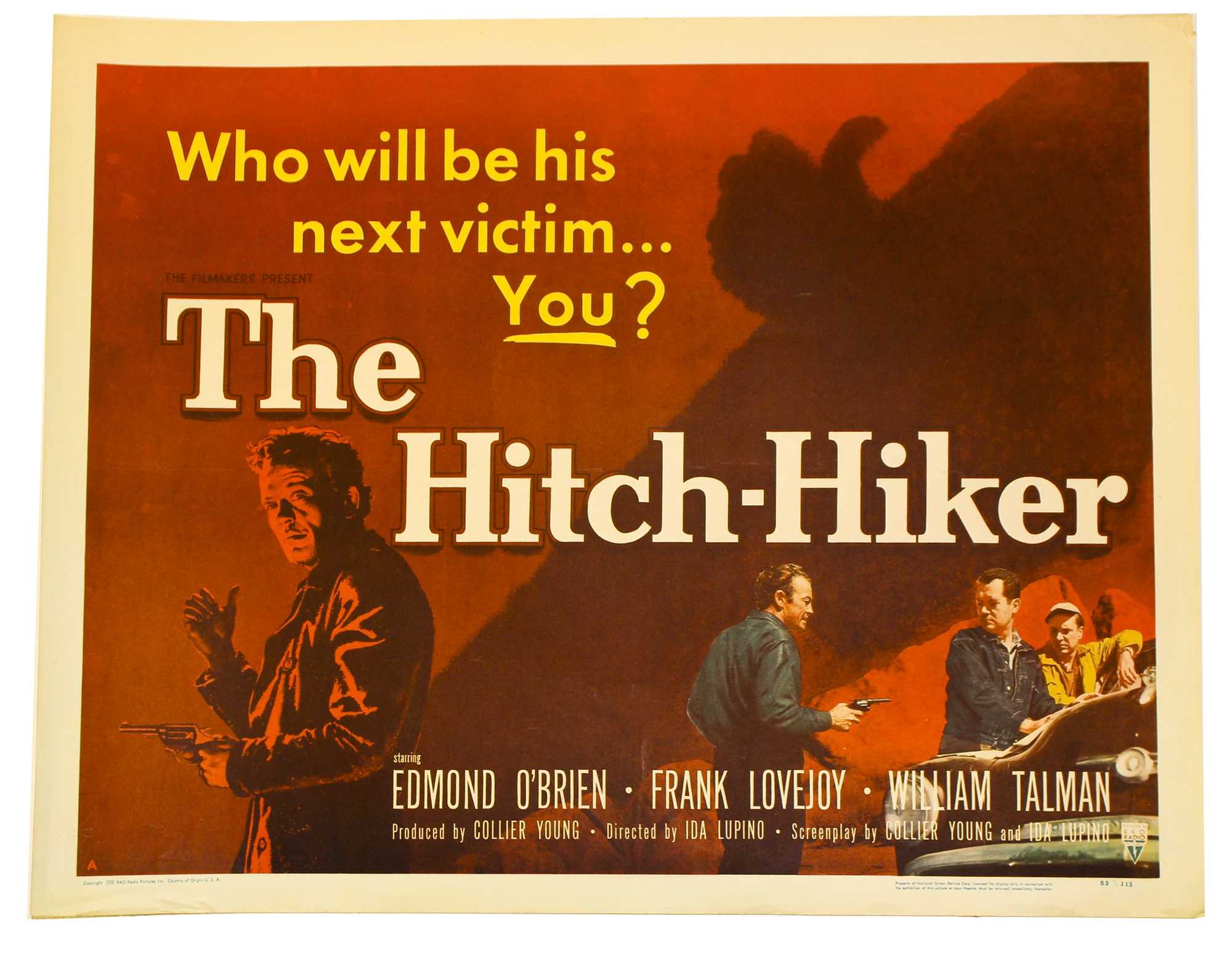
In our enlightened times, film directing has become a reasonably open profession, admitting men, women, and — given the plummeting cost of production equipment — children alike. But imagine how it would’ve been in 1949, when the English-born actress Ida Lupino took the reins of Not Wanted from the project’s ailing director Elmer Clifton. This wouldn’t have seemed normal at the time, and it would’ve seemed even less normal that she went on to direct six more pictures. Her fifth, 1953’s The Hitch-hiker, even entered the tradition of noir, one rarely associated with female writers or directors. Femmes fatales, sure — these stories could scarcely exist without them — but women behind the camera?
To add a layer of irony on top of the unlikeliness, The Hitch-hiker does away with any trace of overt womanly presence. By the time we get to know the film’s hapless protagonists, a couple of buddies who look and act like fresh-cut slabs of all-American blandness, they’ve already told their wives they’re off to a fishing trip, and they’ll get back when they get back.
Bearing straight south down the open road, no sooner do they reach Mexico than they pick up a hitchhiker. By the time they come to understand that this black-clad, lumpy-featured fellow has killed before, may well kill again, and intends to mount a ceaseless campaign of psychological manipulation in order to get a ride to his freedom, we understand why hitchhiking has gone out of style. You can find out how things turn out for them by watching the whole thing, free on YouTube.
Lupino’s film doesn’t just remove the women from the noir formula; it leaves aside most of the darkness implicit in the genre’s very name. Apart from a few tense nighttime scenes and a climactic chase through an after-hours shipyard, the bulk of The Hitch-hiker’s action takes place under a harsh Mexican sun that bleaches out nearly everything but the jagged shadows cast by unearthly rock formations along the empty road. Though actually shot on the eastern slopes of the Sierra Nevada mountains, the movie takes its foreign setting seriously, offering several relatively extended sequences and exchanges conducted entirely in untranslated Spanish. By the standards of midcentury American genre film, this nearly counts as an act of radical artistic experimentation. Yes, The Hitch-hiker plays a bit broadly today and leans on a few tropes that must have seemed creaky even in 1953, but it remains an unusual enough entry in noir history to merit attention — and not just because of the sex of the director.
You can find The Hitch-hiker and other films by Ida Lupino in our collection 4,000+ Free Movies Online: Great Classics, Indies, Noir, Westerns, Documentaries & More, and in our special collection of Free Noir Films.
Colin Marshall hosts and produces Notebook on Cities and Culture. Follow him on Twitter at @colinmarshall.
Read More...Star Gazing from the International Space Station (and Free Astronomy Courses Online)
Don Pettit joined NASA in 1996 and has since logged more than 176 days in space, living abord the International Space Station (ISS) multiple times, and always taking his camera with him. In the past, he has shown us What It Feels Like to Fly Over Planet Earth, Views of the Aurora Borealis Seen from Space, and How to Drink Coffee at Zero Gravity. Now we get an edited version of what it looks like to star gaze from low orbit. Whether you look up or down, you can’t lose.
Looking to dig a little deeper into what’s happening out there in the cosmos? Then you might want to spend some time with the courses listed in the Astronomy section of our Free Courses collection.
- Astrobiology and Space Exploration – iTunes – YouTube – Lynn Rotschild, Stanford
- Astronomy 101 – iTunes – Web Site – Scott Miller, Mercedes Richards & Stephen Redman, Penn State
- Exploring Black Holes: General Relativity & Astrophysics –YouTube – iTunes Video — Web Site – Edmund Bertschinger, MIT
- Frontiers and Controversies in Astrophysics - YouTube — iTunes Audio – iTunes Video – Download Course – Charles Bailyn, Yale
- Introduction to Astrophysics — iTunes — Joshua Bloom, UC Berkeley
Follow us on Facebook, Twitter and now Google Plus and start sharing intelligent media with your friends! They’ll thank you for it.
Read More...Free Science Fiction Classics on the Web: Huxley, Orwell, Asimov, Gaiman & Beyond
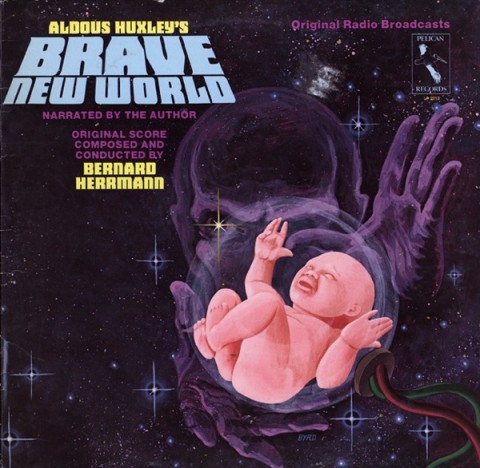
Today we’re bringing you a roundup of some of the great Science Fiction, Fantasy and Dystopian classics available on the web. And what better way to get started than with Aldous Huxley reading a dramatized recording of his 1932 novel, Brave New World. The reading aired on the CBS Radio Workshop in 1956. You can listen to Part 1 here and Part 2 here.
(FYI: You can download Huxley’s original work — as opposed to the dramatized version — in audio by signing up for a Free Trial with Audible.com, and that applies to other books mentioned here as well.)
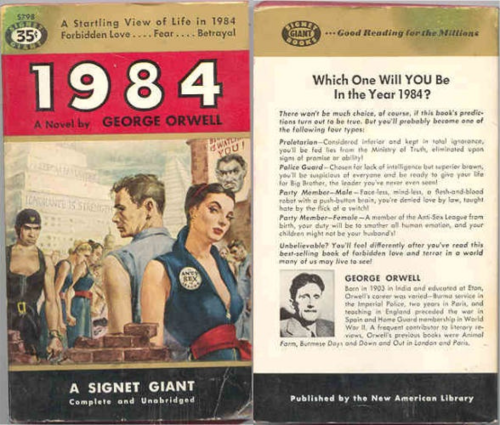
Little known fact. Aldous Huxley once gave George Orwell French lessons at Eton. And, 17 years after the release of Brave New World, Huxley’s pupil published 1984. The seminal dystopian work may be one of the most influential novels of the 20th century, and it’s almost certainly the most important political novel from that period. You can find it available on the web in three formats: Free eText — Free Audio Book – Free Movie.
In 1910, J. Searle Dawley wrote and directed Frankenstein. It took him three days to shoot the 12-minute film (when most films were actually shot in just one day). It marked the first time that Mary Shelley’s classic monster tale (text — audio) was ever adapted to film. And, somewhat notably, Thomas Edison had a hand (albeit it an indirect one) in making the film. The first Frankenstein film was shot at Edison Studios, the production company owned by the famous inventor.
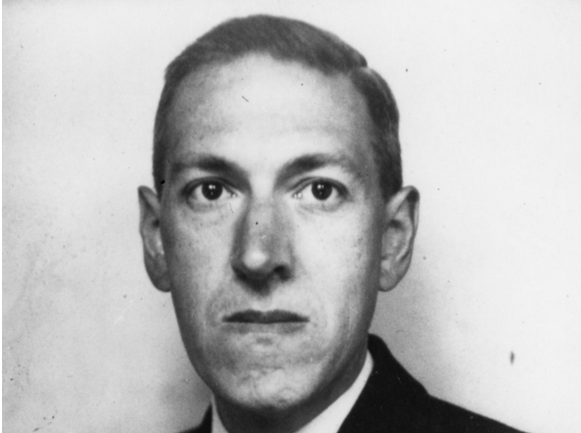
Stephen King and Joyce Carol Oates — they both pay homage to H.P. Lovecraft and his great tales. And you can too by spending time with his collected works, available in etext formats here and audio formats here (Free Mp3 Zip File – Free Stream).
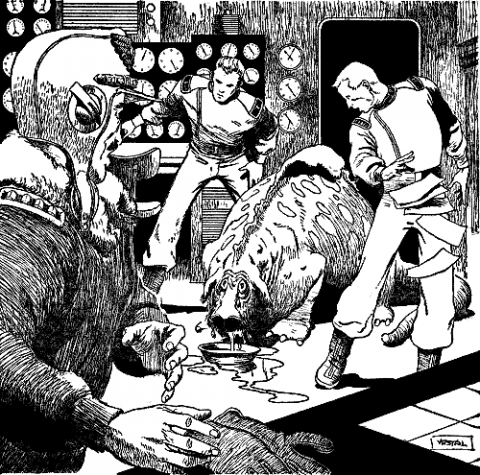
Philip K. Dick published 44 novels and 121 stories during his short lifetime, solidifying his position as one of America’s top sci-fi writers. If you’re not intimately familiar with his novels, then you almost certainly know major films based on Dick’s work – Blade Runner, Total Recall, A Scanner Darkly and Minority Report. To get you acquainted with PKD’s writing, we have culled together 14 short stories for your enjoyment.
eTexts (find download instructions here)
- “Beyond the Door”
- “Beyond Lies the Wub”
- “Mr. Spaceship”
- “Piper in the Woods”
- “Second Variety”
- “The Crystal Crypt”
- “The Defenders”
- “The Eyes Have It”
- “The Gun”
- “The Hanging Stranger”
- “The Skull”
- “The Variable Man”
- “Tony and the Beetles”
- “We Can Remember It For You Wholesale”
- iPad/iPhone
Audio
- “Beyond Lies the Wub” – Free MP3
- “Beyond the Door” – Free MP3
- “Second Variety” – Free MP3 Zip File – Stream Online
- “The Defenders” — Free MP3
- “The Hanging Stranger” – Free MP3
- “The Variable Man” – Free MP3 Zip File – Stream Online
- “Tony and the Beetles” – MP3 Part 1 – MP3 Part II

Back in the late 1930s, Orson Welles launched The Mercury Theatre on the Air, a radio program dedicated to bringing dramatic, theatrical productions to the American airwaves. The show had a fairly short run, lasting from 1938 to 1941. But it made its mark. During these few years, The Mercury Theatre aired The War of the Worlds, an episode narrated by Welles that led many Americans to believe their country was under Martian attack. The legendary production, perhaps the most famous ever aired on American radio, was based on H.G. Wells’ early sci-fi novel, and you can listen to the broadcast right here.

Between 1951 and 1953, Isaac Asimov published three books that formed the now famous Foundation Trilogy. Many considered it a masterwork in science fiction, and that view became official doctrine in 1966 when the trilogy received a special Hugo Award for Best All-Time Series, notably beating out Tolkien’s The Lord of the Rings. Eventually, the BBC decided to adapt Asimov’s trilogy to the radio, dramatizing the series in eight one-hour episodes that aired between May and June 1973. Thanks to The Internet Archive you can download the full program as a zip file, or stream it online:
Part 1 |MP3| Part 2 |MP3| Part 3 |MP3| Part 4 |MP3| Part 5 |MP3| Part 6 |MP3| Part 7 |MP3| Part 8 |MP3|
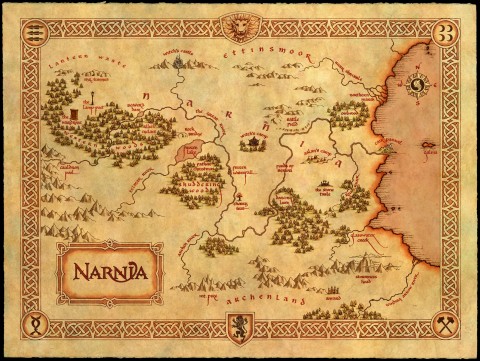
Before the days of Harry Potter, generations of young readers let their imaginations take flight with The Chronicles of Narnia, a series of seven fantasy novels written by C. S. Lewis. Like his friend J.R.R. Tolkien, Lewis served on the English faculty at Oxford University and took part in the Inklings, an Oxford literary group dedicated to fiction and fantasy. Published between 1950 and 1956, The Chronicles of Narnia has sold over 100 million copies in 47 languages, delighting younger and older readers worldwide.
Now, with the apparent blessing of the C.S. Lewis estate, the seven volume series is available in a free audio format. There are 101 audio recordings in total, each averaging 30 minutes and read by Chrissi Hart. Download the complete audio via the web or RSS Feed.

Neil Gaiman has emerged as one of today’s best fantasy writers. He has made comics respectable and published novels, including one that will be adapted by HBO. A great deal of his output, though, has been in the form of short stories, some available on the web in text format, others in audio.
Audio & Video
- “Harlequin Valentine” – Free Audio at Last.FM
- “How to Talk to Girls at Parties” – Free MP3
- “Orange” (read live) – Free Video
- “Other People” (read live) – Free Video
- The Truth Is a Cave in the Black Mountains – Free Audio
- The Graveyard Book (a novel read live with illustrations) – Free Video
- “Troll Bridge” (read live, starts at 4:00 mark) – Free iTunes
- “A Study in Emerald” – Free iTunes
Other Gaiman works can be download via Audible.com’s special Free Trial. More details here.
Text
- American Gods – Read the First Five Chapters Online
- “A Study in Emerald” — Read Online
- “Bitter Grounds” – Read Online
- “Cinnamon” – Read Online
- “Down to a Sunless Sea” – Read Online
- “I Cthulhu” – Read Online
- “The Case of the Four and Twenty Blackbirds” – Read Online
- “The Day the Saucers Came” – Read Online
- The Truth Is a Cave in the Black Mountains – Read Online

Between 1982 and 2000, Rudy Rucker wrote a series of four sci-fi novels that formed The Ware Tetralogy. The first two books in the series – Software and Wetware – won the Philip K. Dick Award for best novel. And William Gibson has called Rucker “a natural-born American street surrealist” or, more simply, one sui generis dude. And now the even better part: Rucker (who happens to be the great-great-great-grandson of Hegel) has released The Ware Tetralogy under a Creative Commons license, and you can download the full text for free in PDF and RTF formats. In total, the collection runs 800+ pages.
Read More...Support Us
We're hoping to rely on loyal readers, rather than erratic ads. Please click the Donate button and support Open Culture. You can use Paypal, Venmo, Patreon, even Crypto! We thank you!

About Us

Open Culture scours the web for the best educational media. We find the free courses and audio books you need, the language lessons & educational videos you want, and plenty of enlightenment in between.
Advertise With Us

FREE UPDATES!
GET OUR DAILY EMAIL
Get the best cultural and educational resources on the web curated for you in a daily email. We never spam. Unsubscribe at any time.
FOLLOW ON SOCIAL MEDIA

Open Culture editor Dan Colman scours the web for the best educational media. He finds the free courses and audio books you need, the language lessons & movies you want, and plenty of enlightenment in between.
Advertise With Us

