Martin Scorsese Documentary on George Harrison Coming This Fall
Martin Scorsese (Raging Bull, Taxi Driver, Goodfellas) has always had a penchant for the rockumentary. In 1978, he directed The Last Waltz featuring the farewell concert of The Band — a film later called “the greatest rock concert movie ever made.” Then, after a hiatus, Scorsese returned to music again, shooting No Direction Home: Bob Dylan (2005) and Shine a Light, a tribute to the Rolling Stones, in 2008.
If you’re tackling Dylan and the Stones, then why not go for the trifecta and bring your cinematic talents to bear on The Beatles? And so it shall be. On October 5th and 6th, HBO will air George Harrison: Living in the Material World, a two-part documentary dedicated to the Beatle who long played in the shadow of John and Paul. Scorsese’s latest film will feature unseen archival materials and interviews with Paul, Ringo, Eric Clapton, Tom Petty, Terry Gilliam, Phil Spector and others. It will also be co-released with a 400-page hardcover book written by Olivia Harrison, which uses photographs, letters, diaries, and memorabilia to trace the arc of George’s life. Can hardly wait. H/T Wired
Note: You can find The Last Waltz and Taxi Driver in our collection of Free Movies Online.
Related Content:
The Beatles: Why Music Matters in Two Animated Minutes
Peter Sellers Performs The Beatles in Shakespearean Mode
Read More...Anselm Kiefer at Work, Creating His “World of Ruination”
Over Your Cities Grass Will Grow, a newish film directed by Sophie Fiennes, lets you sit back and watch the German artist Anselm Kiefer at work, creating his large-scale “world of ruination.” The film has no narration, only some musical accompaniment. And, more than anything, it gives you a direct, unembellished view of Kiefer’s “alchemical creative process” that regularly takes over his studio in southern France. Above, Kiefer puts the finishing touches on, then raises, one of his elaborate creations. The clip, along with others, appears in a larger, more compelling format on the film’s official web site. H/T NYRB
Follow us on Facebook and Twitter, and we’ll deliver great culture right to your virtual doorstep daily.
Read More...Archive of 9/11 TV Coverage Launches with 3,000+ Hours of Video
The drama of 9/11 unfolded before the world on TV. Even many New Yorkers, myself included, watched the traumatic events on CNN rather than witnessing them firsthand. During the days that followed, we were bombarded with endless replays — the planes hitting the buildings, the towers aflame and collapsing, the piles of smoking debris left behind. Then, mercifully, the coverage disappeared.
Almost a decade later, the Internet Archive has launched a 9/11 Television News Archive, a resource for scholars, journalists, and anyone interested in the historical record created by television. The archive brings together more than 3,000 hours of television coverage from 20 US and international broadcasters, and the coverage can be segmented by day, time and news provider.
Yet one more reason why we consider the Internet Archive one of the most valuable sites on the web.
via BoingBoing
Read More...Biblioburro: Library on a Donkey
For more than a decade, Luis Soriano, a primary school teacher, has traveled the rugged terrain of Colombia by donkey, delivering books to children in hundreds of rural villages. The project, powered by his two donkeys Alfa and Beto, goes by the name “Biblioburro.” And it seeks to promote literacy in areas where access to books is not always a given. You can find more information and pictures on the homepage of the Biblioburro project and also make a small donation. A video update shows what these donations are actually used for.
Bonus material: The clip above is part of a 60-minute PBS documentary available in full here. If you are a teacher and want to work with the film in class, you will appreciate this related lesson plan. Biblioburro has even been covered by The New York Times, and there is now a similar project underway in Ethiopia.
By profession, Matthias Rascher teaches English and History at a High School in northern Bavaria, Germany. In his free time he scours the web for good links and posts the best finds on Twitter.
Read More...The Brief Wondrous Career of Arthur Rimbaud (1870–1874)
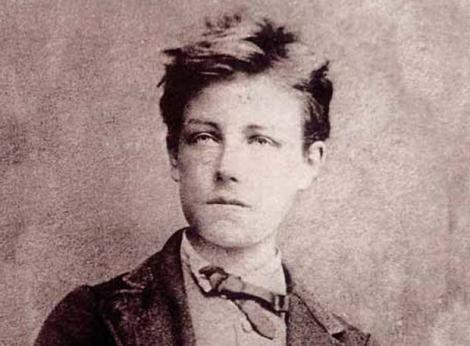
Arthur Rimbaud, once described by Victor Hugo as ‘an infant Shakespeare,’ burst onto the Parisan literary scene in 1870, shortly before he was 16. By the time 1874 rolled around, Rimbaud had broken the conventions of poetry and fashioned a new, modern poetic language. He had published all of his major works — Illuminations, Une saison en enfer, etc. – and had his absinthe/hashish-fueled affair with Paul Verlaine. Then, committing an act that still haunts his fans today, the 20 year old renounced poetry utterly and completely and started traveling the world.
The mystery of Rimbaud’s renunciation and his short-lived literary career gets revisited in this week’s edition of The New Yorker.
Related Content:
Tom Waits Reads Charles Bukowski
Poems as Short Films: Langston Hughes, Pablo Neruda and More
Bill Murray Reads Poetry at Construction Site
Free Audio Books: Download Great Books for Free
Read More...Forensic Linguistics: Finding a Murderer Through Text Messages
Malcolm Coulthard teaches Forensic Linguistics at Aston University, Birmingham. And, in case you’re wondering what this means, forensic linguistics is all about “taking linguistic knowledge, methods and insight, and applying these to the forensic context of law, investigation, trial, punishment and rehabilitation.” Or solving crimes, in short. This may sound rather dry, but when Professor Coulthard talks about his work we get a fascinating glimpse into what forensic linguistics looks like in practice. In the video above, an excerpt from his inaugural lecture at Aston University (watch the full version here), Coulthard explains how the analysis of text messages helped solve a recent murder case. This puts him on the new frontier of police work.
Meanwhile, in an interview with the BBC, Tim Grant, Deputy Director at the Centre for Forensic Linguistics at Aston University, explains how his team’s analysis of documents and writings can help police with their investigations. The video does not work in all regions, but there is a transcript below the video.
By profession, Matthias Rascher teaches English and History at a High School in northern Bavaria, Germany. In his free time he scours the web for good links and posts the best finds on Twitter.
Read More...Jackson Pollock 51: Short Film Captures the Painter Creating Abstract Expressionist Art
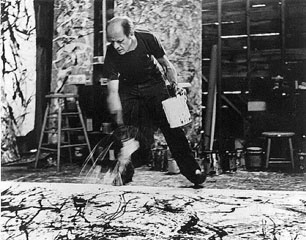
In the summer of 1950, Hans Namuth approached Jackson Pollock and asked the abstract expressionist painter if he could photograph him in his studio, working with his “drip” technique of painting. When Namuth arrived, he found:
A dripping wet canvas covered the entire floor. Blinding shafts of sunlight hit the wet canvas, making its surface hard to see. There was complete silence.… Pollock looked at the painting. Then unexpectedly, he picked up can and paintbrush and started to move around the canvas. It was as if he suddenly realized the painting was not finished. His movements, slow at first, gradually became faster and more dancelike as he flung black, white and rust-colored paint onto the canvas.
The images from this shoot “helped transform Pollock from a talented, cranky loner into the first media-driven superstar of American contemporary art, the jeans-clad, chain-smoking poster boy of abstract expressionism,” one critic later wrote in The Washington Post.
But Namuth wasn’t satisfied that he had really captured the essence of Pollock’s work. He wanted to capture Pollock in motion and color, to focus on the painter and painting alike.
Above, you can watch the result of Namuth’s second effort. The ten-minute film, simply called Jackson Pollock 51 (the 51 being short for 1951), lets you see Pollock painting from a unique angle — through glass. The film achieved Namuth’s aesthetic goals, but it came at a price. Apparently the filming taxed Pollock emotionally, and by the evening, the painter decided to pour himself some bourbon, his first drink in two years. A blowout argument followed; Pollock never stopped drinking again; and it was downhill from there…
If you would like to support the mission of Open Culture, consider making a donation to our site. It’s hard to rely 100% on ads, and your contributions will help us continue providing the best free cultural and educational materials to learners everywhere. You can contribute through PayPal, Patreon, and Venmo (@openculture). Thanks!
Related Content:
MoMA Puts Pollock, Rothko & de Kooning on Your iPad
Steven Spielberg Admits Swallowing a Transistor to Andy Warhol
Read More...James Taylor Gives Free Acoustic Guitar Lessons Online

James Taylor has started to offer free guitar lessons online. He is, after all, your Handy Man.
Now let’s get this out of the way: The jury is still out on whether these video lessons will offer serious guidance or not. The first video offers a somewhat detailed primer on … caring for your fingernails. And it comes coupled with a short lesson, “Little Wheel” in e minor, that is decidedly short on pedagogy. More lessons will be coming soon though. Sign up for JT’s email list, and they’ll ping you when new videos are posted online.
What to do in the meantime? Well, you can always turn to YouTube, which features a surprising number of free video tutorials. If you sift around, you can learn how to buy an acoustic guitar, tune it by ear, play stum patterns, finger pick, play various chord progressions and so on. For more lessons, you can start rummaging around three helpful YouTube channels: RockonGoodPeople; Watch & Learn Music Lessons; and MartyZsongs. They provide lots of free tutorials (while also trying to promote paid products on the side).
via metafilter
Read More...OK Go Covers The Muppet Show Theme Song (Stream New Album Online)
Today marks the official release of The Green Album, a new compilation featuring contemporary rock and indie artists covering classic Muppets songs. OK Go, Weezer, Andrew Bird, and My Morning Jacket, they all contribute to the album. And, thanks to the good people at NPR, you can stream the complete album online for the remainder of the week.
Meanwhile, if you want to indulge in some more Muppet nostalgia, don’t miss the Muppet rendition of Beethoven’s Ode to Joy, or Jim Henson’s 15 Minute Primer on Puppet Making from 1969.
Read More...Jerry Leiber, Writer of Enduring Rock Classics, on What’s My Line? (1958)
Jerry Leiber died yesterday at the age of 78. Leiber wasn’t a household name during most of his career. But his compositions are known worldwide. Along with his partner Mike Stoller, Leiber wrote “Hound Dog,” “Jailhouse Rock,” and “Treat Me Nice,” among others songs made famous by Elvis Presley during the 1950s. They also composed “Stand by Me,” a tune sung by Ben E. King in 1960, then covered countless times. (We particularly like this version.)
The clip above takes you back to 1958, when Leiber and Stoller appeared on the long-running television show What’s My Line?. If you’ve watched some of these vintage episodes, you’ll know that the panel usually wore blindfolds lest the identity of the guest be immediately revealed. But there was no risk of that in the case of Leiber & Stoller. And, by the way, it’s worth mentioning that Vincent Price made a special guest appearance on the panel that night.
Read More...Support Us
We're hoping to rely on loyal readers, rather than erratic ads. Please click the Donate button and support Open Culture. You can use Paypal, Venmo, Patreon, even Crypto! We thank you!

About Us

Open Culture scours the web for the best educational media. We find the free courses and audio books you need, the language lessons & educational videos you want, and plenty of enlightenment in between.
Advertise With Us

FREE UPDATES!
GET OUR DAILY EMAIL
Get the best cultural and educational resources on the web curated for you in a daily email. We never spam. Unsubscribe at any time.
FOLLOW ON SOCIAL MEDIA

Open Culture editor Dan Colman scours the web for the best educational media. He finds the free courses and audio books you need, the language lessons & movies you want, and plenty of enlightenment in between.
Advertise With Us