The History of Philosophy … Without Any Gaps
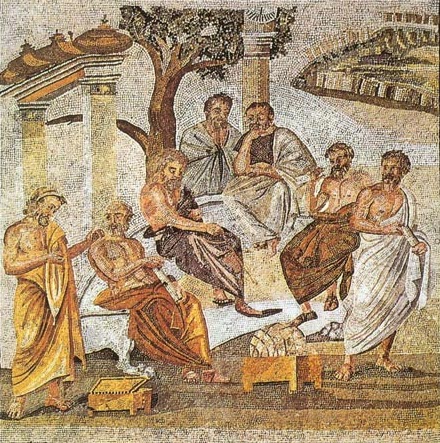 On Monday, we told you where you can download Free Courses from Top Philosophers (Foucault, Searle, Russell and the rest). As the day went along, our list grew thanks to reader suggestions, and we also discovered another promising resource — a podcast called “The History of Philosophy Without Any Gaps,” created by Peter Adamson, Professor of Ancient and Medieval Philosophy at King’s College London:
Beginning with the earliest ancient thinkers, the series will look at the ideas and lives of the major philosophers (eventually covering in detail such giants as Plato, Aristotle, Avicenna, Aquinas, Descartes, and Kant) as well as the lesser-known figures of the tradition.
That’s what Adamson promises, and he doesn’t disappoint. Over the past 34 months, Adamson has produced 136 episodes, each about 20 minutes long, covering the PreSocratics (Pythagoras, Zeno, Parmenides, etc) and then Socrates, Plato and Aristotle. That’s roughly 45 hours of audio, and there’s no telling how many more hours of audio will bring us to the modern period. The more, the better, we say.
You can access all episodes via these links: iTunes — RSS Feed — Web Site. Or find other free philosophy courses in our big collection of Free Courses Online.
If you would like to support the mission of Open Culture, consider making a donation to our site. It’s hard to rely 100% on ads, and your contributions will help us continue providing the best free cultural and educational materials to learners everywhere. You can contribute through PayPal, Patreon, and Venmo (@openculture). Thanks!
Related Content:
Free Online Philosophy Courses
Take First-Class Philosophy Courses Anywhere with Free Oxford Podcasts
Learn The History of Philosophy in 247 Podcasts (With More to Come)
Read More...Blade Runner is a “Waste of Time”: Siskel & Ebert in 1982
It’s perhaps hard to imagine now, but Ridley Scott’s classic sci-fi film, Blade Runner, saw some hard days when it was first released in 1982. Preview screenings went badly. Crowds flocked instead to see Steven Spielberg’s blockbuster, ET. The film lost money. And critics gave the film mixed reviews.
Case in point, Siskel & Ebert’s review on national television. Roger finds some redeeming qualities — the special effects. Siskel calls it a “waste of time.” One thumb up grudgingly; another firmly down. A decidedly mixed review.
Siskel died, of course, in 1999. If you’re wondering if Ebert ever changed his position, you can find this reappraisal written in 2007, on the 25th anniversary of the film’s release.
If you would like to support the mission of Open Culture, consider making a donation to our site. It’s hard to rely 100% on ads, and your contributions will help us continue providing the best free cultural and educational materials to learners everywhere. You can contribute through PayPal, Patreon, and Venmo (@openculture). Thanks!
Related Content:
The Blade Runner Promotional Film
Read More...Fritz Lang’s Metropolis: Uncut & Restored
2010 saw the release of a restored version of Metropolis, the classic German expressionist, sci-fi film directed by Fritz Lang. The restoration started two years earlier, in 2008, when a long sought-after copy of the 1927 film was found in the archives of the Museo del Cine in Buenos Aires, and it contained 30 minutes of previously unseen footage. (Get the backstory here.) German experts got to work and fully restored the extended but degraded copy. Then came the big unveiling. In February 2010, the new Metropolis was screened at The Berlin International Film Festival, and ARTE presented a live broadcast. The trailer for the film appears above; and the film, as presented by ARTE, now lives on YouTube.
Older versions of Metropolis — the ones you know so well — are listed in our collection of 420 Free Movies Online. Scroll to the bottom of the page and look under “Silent Films.”
P.S. A rock opera version of Metropolis will be coming to a theater near you. More on that here.
Related Content:
Marlene Dietrich’s Temperamental Screen Test for The Blue Angel (1929)
Where Horror Film Began: The Cabinet of Dr. Caligari
The Seashell and the Clergyman: The World’s First Surrealist Film
Read More...Jerry’s Map: An Amazing Half Century Act of Imagination
Way back in 1963, Jerry Gretzinger began making a map of his imaginary world. And now, almost 50 years later, the Map weaves together more than 2,000 panels, and covers more than 1,600 square feet of surface area (see photo here).
What started as a simple doodle took on an amazing life of its own. Jerry tells the rest of this story in this short video shot by Greg Whitmore.
Follow us on Facebook and Twitter, and we’ll deliver great culture right to your virtual doorstep, day in, day out.
Read More...Jennifer Egan, Pulitzer Prize Winner, Talks Writing @Google
Earlier this month Jennifer Egan, the newly-minted Pulitzer Prize winner, paid a visit to Google to talk about A Visit from the Goon Squad, her experimental novel that won the Pulitzer, among many other awards. That’s the ostensible focus. But the conversation moves quickly into other areas that will interest writers and readers alike — how Egan first develops ideas for her novels, why she writes her first drafts in illegible handwriting on legal pads, why she wrote a chapter of her new novel in PowerPoint (without ever having used the software before), what her novel has in common with The Who’s Quadrophenia (I’m hooked), and how technology might change the novel as we know it.
The Egan video went live yesterday, and runs about 54 minutes. Other videos appearing in the Authors@Google series feature conversations with Salman Rushdie, Neil Gaiman, Elizabeth Gilbert, Michael Pollan, Slavoj Zizek and Junot Diaz. H/T @webacion
Read More...Restoration and 18th Century Poetry: From Dryden to Wordsworth (Free Course)

Taught by William Flesch at Brandeis University, this course offers a survey of poetry that’s out of favor. But it turns out to be among the most skillful, brilliant, witty, invigorating, funny, sometimes dirty poetry ever written. (The dirty poetry is definitely NSFW. It may not even be safe for consenting adults.) Coverage goes from the urbane civic poetry of Dryden and his contemporaries to the beginnings of the intense subjectivity of Romanticism, with attention to the continuities between these wildly different schools. It’s helpful to have a complete Pope and the Penguin Dryden. We also use the Oxford Anthology of English Literature, ed. Martin Price.
1) Introduction: Poetic form and the resourcefulness it requires. Poetry about the real world, from politics to sex. For example: Rochester and Walpole: Audio
2) Dryden on Oldham and Oldham on Sodom. Dryden’s scatology: Audio
3) Dryden: Absalom and Achitophel. Antithetical style and heroic couplet: Audio
4) Dryden: Absalom and Achitophel. Dryden’s skepticism about perfectibility: Audio
5) Dryden: Religio Laici and poets’ claims to political and philosophical expertise: Audio
6) Dryden: Conclusion of discussion of both Absalom and Achitophel and Religio Laici: Audio
7) Dryden’s Subtlety: Audio
8) Dryden’s conclusions: his late masques and essays; his prose and his digressiveness: Audio
9) Rochester vs. Dryden; Rochester’s skill and range: Audio
10) Rochester. Definitely NSFW, but with considerable psychological acuity: Audio
11) Swift. Also NSFW. Swift’s scatology: Audio
12) Swift on himself and on Stella and on his contemporaries: Audio
13) Pope. Introduction and Essay on Criticism: Audio
14) Pope. Essay on Criticism, Eloisa to Abelard, Rape of the Lock: Audio
15) Pope and how poetry becomes topical. Arbuthnot, Rape of the Lock: Audio
16) Pope’s Satires and To the Memory of an Unfortunate Lady: Audio
17) Last Class on Pope: Dunciad: Audio
18) Doctor Johnson as poet. His Proto-Romanticism: Audio
19) Thomson and Collins as Proto-Romantics: Audio
20) Young, Gray, and the advent of Romanticism: Audio
21) Christopher Smart: Prayer and Praise: Audio
22) Goldsmith and Cowper: Audio
23) Barbauld and Baillie: Audio
24) Burns, Blake, and perspectives on innocence: Audio
25) Wordsworth and Coleridge in 1798: Audio
26) Last class, return to Pope’s Essay on Man, and retrospective on course: Audio
Read More...The Western Canon: From Homer to Milton (Free Course)

Taught by William Flesch at Brandeis University, this course offers a survey of some of the greatest and most influential works on Western literature, philosophy and culture, from Homer through Milton. Part of the through line is that every writer covered in the course wrote in a context inherited from the earlier ones, so we look at affiliations between them all. The course used the Lattimore translations of the Iliad and the Odyssey, and the Hollander translations of Dante. For the other works, any translation or edition is fine.
1. Introductory lecture on the legendary and the real Homer as treated by Dante and Milton: Audio
2. Homeric simile in The Iliad: Audio
3. Iliad, mainly Book 6: Audio
4. Iliad: Hektor frightens Astyanax; Achilleus plays the lyre: Audio
5. Iliad: Achilleus, Patroklos, Hektor, Priam, and the laws of hospitality: Audio
6. The Odyssey: Funeral games and gift-giving (a bit truncated due to glitch): Audio
7. Odyssey: Gifr-giving and hospitality: Audio
8. Odyssey: The Use of oral formulae: Audio
9. Odyssey: Why Odysseus is “no man”: Audio
10. Odyssey: Conclusion, including reunion and two greatest similes in the poem: Audio
11. Plato, Socrates, Zeno, Forms: Audio
12. Plato: The Cave and the argument against poetry: Audio
13. Aristophanes’s Clouds: his Socrates vs. Plato’s: Audio
14. Ovid: and his influence on Milton: Audio
15. Ovid and Virgil and their relation to Homer: Audio
16. Virgil’s sublimity: Audio
17. Virgil’s Homeric recapitulations. Doctor Johnson’s strictures: Audio
18. Dante: Introduction. Terza Rima. Dante’s Virgil. Topography of Hell: Audio
19. Dante: Inferno. Love, justice, desire: Audio
20. Dante: Inferno and Purgatorio: topographic ordering of sins in both, from least bad to worst: Audio
21. Dante: Purgatorio. Contrapasso and allopathic punishment in Purgatory vs. homeopathic punishment in hell: Audio
22. Dante: Purgatorio and Paradiso: Love and gravity; the idea of theodicy: Audio
23: Dante: Paradiso, the Universe, and everything: Audio
24. Milton: Paradiso and Paradise Lost: Audio
25. Milton: Paradise Lost and its antecedents in our reading: Audio
26. Milton: Freedom of conscience and guilt in Paradise Lost: Audio
27. Milton: Paradise Lost and conclusion of the course: parallels between all worlds; angelic sex; love and Adam’s self-sacrifice for Eve and hers for him: Audio
Read More...Free Course: A Survey of Shakespeare’s Plays
 This is a course on Shakespeare’s career, given at Brandeis University in the spring of 2010, by William Flesch. It covers several representative plays from all four genres: comedy, tragedy, history, and romance. We consider both the similarities and differences among those genres, and how his more and more radical experimentations in genre reflect his developing thought, about theater, about time, about life, over the course of his career. In terms of texts, any complete Shakespeare will suffice, including this free version online from MIT. The Norton Shakespeare, edited by Stephen Greenblatt, is also recommended.
1. Introduction on Shakespeare’s thinking about time, especially in Sonnet 73, and then Richard II: Audio
2. Richard II, part 2: Audio
3. Richard II, part 3: Audio
4. Richard II, concluded; Midsummer Night’s Dream: Audio
5. Midsummer Night’s Dream concluded: Audio
6. Merchant of Venice: Audio
7. Hamlet, part 1: The idea of revenge: Audio
8. Hamlet, part 2: Introspection vs. drama: Audio
9. Hamlet, concluded: The circumstances of revenge and moral luck: Audio
10. King Lear, part 1: Audio
11. King Lear, part 2: Audio
12. King Lear, concluded: Audio
13. Macbeth, part 1: Audio
14. Macbeth, concluded: Audio
15. Antony and Cleopatra, part 1: Audio
16. Antony and Cleopatra, part 2: Audio
17. Antony and Cleopatra, part 3: Antony: Audio
18. Antony and Cleopatra, concluded: Audio
19: The Winter’s Tale, part 1: Things Dying: Audio
20. The Winter’s Tale, and the course, concluded: Things New Born Audio
Read More...Download Free Courses from Famous Philosophers: From Bertrand Russell to Michel Foucault
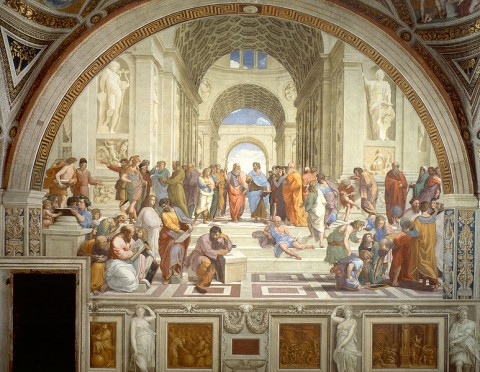
You can download hundreds of Free Courses from Great Universities. (Perhaps you already knew that.) And that includes courses by some of the biggest minds teaching in philosophy. (Is that old news too? Or some welcomed good news?) So we’re starting the week by giving you a rundown of some notable mentions.
John Searle began teaching philosophy at UC-Berkeley in 1959, and first did important work on “speech act” theory. Later he turned to consciousness and artificial intelligence, out of which came his famous “Chinese room” thought experiment. You can find a nice trio of classes online.
- Philosophy of Language — iTunes
- Philosophy of Mind — iTunes
- Philosophy of Society — iTunes
Walter Kaufmann spent 33 years teaching philosophy at Princeton. And more than anyone else, Kaufmann introduced Nietzsche’s philosophy to the English-speaking world and made it possible to take Nietzsche seriously as a thinker. Here he delivers three lectures on existentialists.
- Lectures on Nietzsche, Kierkegaard and Sartre — Web Site
Leo Strauss landed at The University of Chicago in 1949, where he spent decades teaching and writing on political philosophy, especially the political thought of the Ancients. His intellectual legacy is controversial, but his courses valuable.
- Hegel: The Philosophy of History - Web Site
- Kant — Web Site
- Nietzsche, Beyond Good and Evil - Web Site
Find many more Strauss courses here.
Bertrand Russell was one of the most important British philosophers of the last century — a logician, essayist and social critic best known for his work in mathematical logic and analytic philosophy. When it comes to this lecture series, start with the bottom lecture first and then work your way up.
- Authority & the Individual: Six BBC Lectures — Web Site
Michel Foucault taught history and philosophy at the Collège de France and published influential writings on power, knowledge, and discourse.
- Six Lectures on Truth & Subjectivity presented on the UC Berkeley campus (English) - YouTube
Find more Foucault audio here and here.
Hubert Dreyfus has taught many popular existentialism and phenomenology courses also at UC Berkeley, some of which laid the foundation for his new book, All Things Shining: Reading the Western Classics to Find Meaning in a Secular Age.
- Existentialism in Literature & Film — iTunes
- Heidegger — iTunes
- Heidegger’s Being & Time — iTunes
Michael Sandel has taught political philosophy at Harvard since 1980. His course on justice (below) has been taken by more than 15,000 students, making it the most popular undergraduate course at Harvard. This version aired on PBS and the web.
For all 75 philosophy courses, please see the Philosophy section of our list of 575 Free Online Courses.
Related Content:
The Harvard Classics: A Free Digital Collection
Stephen Fry on Philosophy & Unbelief
The Existential Star Wars: Sartre Meets Darth Vader
Read More...Miss USA 2011: Should Schools Teach Evolution? … or Math?
“Should evolution be taught in schools?” That was the question actually put to participants in the Miss USA pageant held this past June.
In response, MacKenzie Fegan and her friends had some fun with the whole line of thinking, shooting their own mock video in reply. Enjoy, and do know that we heart Miss Vermont…
via BoingBoing
Related Content:
50 Famous Academics & Scientists Talk About God
50 Famous Scientists & Academics Speak About God: Part II
Richard Dawkins & John Lennox Debate Science & Atheism
Read More...Support Us
We're hoping to rely on loyal readers, rather than erratic ads. Please click the Donate button and support Open Culture. You can use Paypal, Venmo, Patreon, even Crypto! We thank you!

About Us

Open Culture scours the web for the best educational media. We find the free courses and audio books you need, the language lessons & educational videos you want, and plenty of enlightenment in between.
Advertise With Us

FREE UPDATES!
GET OUR DAILY EMAIL
Get the best cultural and educational resources on the web curated for you in a daily email. We never spam. Unsubscribe at any time.
FOLLOW ON SOCIAL MEDIA

Open Culture editor Dan Colman scours the web for the best educational media. He finds the free courses and audio books you need, the language lessons & movies you want, and plenty of enlightenment in between.
Advertise With Us

