Record Making With Duke Ellington (1937)
We’re moving back in time. Before the iPod, and before the CD. We’re going back to the analog age, a moment when the vinyl record reigned supreme. (That moment lasted most of the 20th century.) The clip above, which features the great Duke Ellington, shows you how records were actually recorded, plated and pressed. Alois Havrilla, a pioneer radio announcer, narrates.
Read More...Love on the Metro: Watch J’Attendrai Le Suivant (I’ll Wait for the Next One)
It starts as it always does on the subway in France. The speech has the same formulaic windup. And you think you know what’s coming next — the pitch for some spare change. But then things head in a new direction, and a mini drama unfolds. I won’t spoil the rest. J’Attendrai Le Suivant (I’ll Wait for the Next One) was nominated for an Academy Award for the Best Short Film in 2002. It received multiple other nominations and prizes. This comes our way via Daniel, a film student in Berlin. We’ve added it to our collection, 4,000+ Free Movies Online: Great Classics, Indies, Noir, Westerns, Documentaries & More.
If you would like to support the mission of Open Culture, consider making a donation to our site. It’s hard to rely 100% on ads, and your contributions will help us continue providing the best free cultural and educational materials to learners everywhere. You can contribute through PayPal, Patreon, and Venmo (@openculture). Thanks!
Read More...William Faulkner Reads from As I Lay Dying
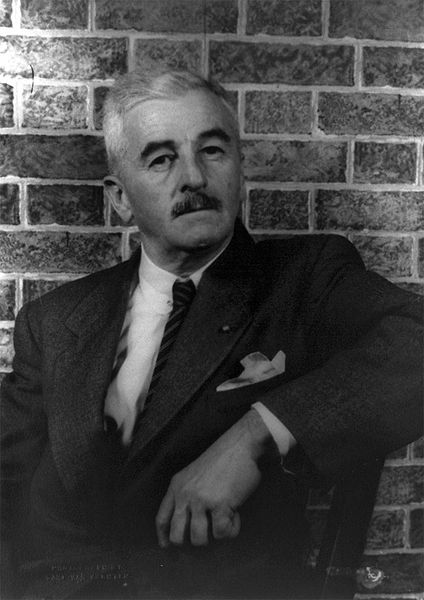 William Faulkner’s As I Lay Dying is widely considered one of the great American novels. Quite an accomplishment, especially considering that Faulkner wrote the novel in six weeks while working at a power plant in 1929–30. Read more about his day jobs here.
Thanks to HarperCollins, you can now listen to Faulkner, himself, reading from his masterpiece: .au file (4.4 Mb), .gsm file (0.9 Mb), .ra file (0.5 Mb). The audio can be a little difficult to make out at times. But you can read right along with the text in Google Books. Enjoy. Thanks MS.
For more audio classics, check out our collection of Free Audio Books.
Read More...The Future of the Textbook: A Quick Glimpse
Amazon ran a not so successful etextbook experiment at Princeton this year. Now it’s time for the iPad to take a crack at the digital textbook market. Wasting little time, CourseSmart has announced an iPad app that will bring thousands of textbooks to Apple’s new platform. The video above gives you a glimpse into this initiative. And while you can only tell so much from a short video, it looks like this product could have some legs. The interface looks pretty slick, and the product quite usable. The downside is that CourseSmart doesn’t do enough to lower costs for students. Generally, the company rents digital textbooks for 50% of the price that Amazon sells hard copies. That leaves students still paying inflated prices. And so the video above hardly constitutes an endorsement. It’s more to show you where the market is going.
See our young and growing collection of Free Textbooks.
via Wired
Already, you can download a free app produced by Coursesmart
Read More...“April is the Cruellest Month…”
T.S. Eliot reads from The Wasteland, one of the great poems of the last century. It begins famously:
APRIL is the cruellest month, breeding
Lilacs out of the dead land, mixing
Memory and desire, stirring
Dull roots with spring rain.
Winter kept us warm, covering
Earth in forgetful snow, feeding
A little life with dried tubers.
Summer surprised us, coming over the Starnbergersee
With a shower of rain; we stopped in the colonnade,
And went on in sunlight, into the Hofgarten,
And drank coffee, and talked for an hour.
Bin gar keine Russin, stamm’ aus Litauen, echt deutsch.
And when we were children, staying at the archduke’s,
My cousin’s, he took me out on a sled,
And I was frightened. He said, Marie,
Marie, hold on tight. And down we went.
In the mountains, there you feel free.
I read, much of the night, and go south in the winter.
Get the full text here.
Read More...Google Creating Grants to Study Digital Books
The details are still hazy. But we know this: Google will be launching a “collaborative research program to explore the digital humanities” using Google Books. Scholars will get up to $50,000 per year, and they’ll come from eight potential disciplines (archaeology, history, anthropology, linguistics, literature, classics, philosophy & sociology). And what’s the point of their research? Essentially to make Google’s online digital library more effective and friendly for researchers. Just last year, a prominent academic called Google Books a “Disaster for Scholars” in a high profile forum. The new grants should begin to address these concerns in some meaningful ways. For more information, head over to The Chronicle of Higher Education, which has the full story.
Read More...Kurt Vonnegut Reads from Slaughterhouse-Five
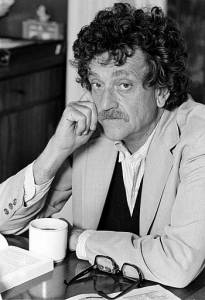 Kurt Vonnegut’s Slaughterhouse-Five was published back in 1969, and the anti-war sci fi novel quickly became a classic. (The book now appears, for example, on Time Magazine’s list of All Time 100 Novels.) Whether you’ve read the novel or not, you’ll want to check this out. HarperCollins has posted online a recording of Vonnegut himself reading a lengthy passage from the work. And he does it with the “casual irony that complements the novel’s wonderfully eccentric tone.” You can stream Vonnegut’s reading in the following formats: .au format (4.5 Mb), .gsm format (900 Kb), .ra format ( Mb). (Sorry a straightforward mp3 is not available.) Also, if you want some more Vonnegut, feel free to download his 1962 sci fi short story, 2BR02B, which is otherwise listed in our collection of Free Audio Books.
Note: Audible.com offers a version of Slaughterhouse-Five narrated by actor/writer Ethan Hawke. You can download it (or any another other book) for free if you start a free 14 day trial. It has no strings attached. Get some more basic details here.
Read More...Free Stanford Course Explains Particle Physics & the Large Hadron Collider
There’s big news coming out of Europe today. After 16 years and $10 billion, the Large Hadron Collider (LHC) is finally beginning to collide subatomic particles. If you’re wondering what this all means, let me turn your attention to a yearlong course that we’re offering in Stanford’s Continuing Studies program (my day job). New Revolutions in Particle Physics is taught by Leonard Susskind, one of the world leading physicists, and it takes a deep look at new theories in particle physics that emerged during the 1970s, and how they’re now being tested by the LHC. The first course overviews the basic concepts, and you can watch it on YouTube or iTunes. (The first lecture appears above.) The second course will be soon made available online. The third course is just getting underway in the classroom (you can enroll here if you live near Stanford), and we’ll eventually post that course online as well. You can find more physics courses in the Physics section of our large collection of Free Online Courses.
UPDATE: As Maria, aka @brainpicker notes in the comments, CERN (which runs the LHC) hosts an archive of lectures, movies and collision videos, including some of this morning’s successful tests. More here.
Read More...Tony Judt on our Uncertain Future
As we mentioned two weeks ago, Tony Judt, a prominent historian and public intellectual, has been grappling with ALS (otherwise known as Lou Gehrig’s disease) since 2008. With the disease now taking its toll, Judt has gone more public and started publishing with more urgency. On Monday, he was interviewed by Terry Gross on NPR’s Fresh Air (listen below, here or on iTunes). Of the many items discussed, one particularly struck me. When Gross asked whether history still mattered deeply to him, the historian answered: yes, but:
I think now, I’m more worried about the future. The past is always going to be a mess. It’s going to be a mess because it was mess and because people are going to abuse it, get it wrong and so on. But I’m reasonably confident that with each generation of historians, we keep fighting hard to get it right again. But we could get the future very seriously wrong, and there it’s much harder to get it right… I’m encountering the first generation of young people in colleges and schools who really do not believe in the future, who don’t think not just that things will get evidently and permanently better but who feel that something has gone very badly wrong that they can’t quite put their finger on, but that is going to spoil the world that they’re growing up into.
Whether it’s climate change or political cynicism or overreaction or lack of reaction, to external challenges, whether it’s terrorism or poverty, the sense that it’s all got out of control, that they, the politicians and so on, media people, are neither doing anything nor telling us the truth. That sense seems to have pervaded the younger generation in ways that were not true in my experience.
Maybe the last time that might have been true was in the 1920s, where you had the combination of shock and anger from World War I, the beginnings of economic depression and the terrifying realization that there might very well be a World War II. I don’t think we’re on the edge of World War III or IV. But I do think that we are on the edge of a terrifying world. That’s why I wrote the book [Ill Fares the Land].
The first chapter of Ill Fares the Land is now available (for free) on The New York Times website, and it will give you a quick feel for the issues that Judt thinks we need to confront. The complete Fresh Air interview ranges much more broadly, going into Judt’s personal experience with ALS, and I’d encourage you to give it your time. (Stream below.) Also please visit Move For ALS to contribute to a new campaign affiliated with Tony Judt to fund ALS research.
Read More...A Virtual Tour of the Sistine Chapel

The Sistine Chapel in the Vatican. It’s one of the triumphs of Renaissance painting. The chapel’s walls were frescoed by Raphael, Bernini, and Sandro Botticelli. And then, between 1508 and 1512, Michelangelo painted the chapel ceiling, covering some 12,000 square feet, decorating it with 300 figures from nine Book of Genesis scenes. Thanks in part to Villanova University, you can now take a virtual, panoramic tour of the Chapel. Using buttons in the lower left screen, you can move around the room and zoom in on the paintings, including those on the ceiling. It’s been a while since I visited the Vatican. But, from what I remember, this virtual tour gives you a closer look than the average visitor gets.
Thanks Ted for this excellent tip! To all others, please feel free to suggest good material for the site. Just click here. We always welcome and appreciate your tips.
Read More...Support Us
We're hoping to rely on loyal readers, rather than erratic ads. Please click the Donate button and support Open Culture. You can use Paypal, Venmo, Patreon, even Crypto! We thank you!

About Us

Open Culture scours the web for the best educational media. We find the free courses and audio books you need, the language lessons & educational videos you want, and plenty of enlightenment in between.
Advertise With Us

FREE UPDATES!
GET OUR DAILY EMAIL
Get the best cultural and educational resources on the web curated for you in a daily email. We never spam. Unsubscribe at any time.
FOLLOW ON SOCIAL MEDIA

Open Culture editor Dan Colman scours the web for the best educational media. He finds the free courses and audio books you need, the language lessons & movies you want, and plenty of enlightenment in between.
Advertise With Us

