10 Tips From Billy Wilder on How to Write a Good Screenplay
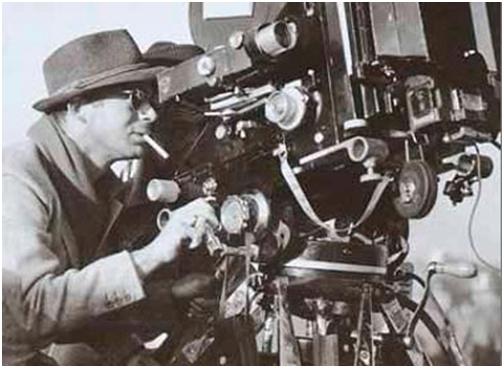
There’s an old story — Orson Welles called it “the greatest Hollywood one-liner ever made” — that when someone attending the 1958 funeral of Harry Cohn, the fearsome president of Columbia Pictures, asked how it was possible that such a huge crowd would show up for Cohn’s funeral, Billy Wilder quipped: “Well, give the people what they want.”
The story is almost certainly apocryphal. The line may have been spoken by someone else, at a different Hollywood mogul’s funeral. But the fact that it is so often attributed to Wilder says something about his reputation as a man with a razor-sharp wit and a firm grasp of the imperatives of popular movie-making. In films like Sunset Boulevard, Some Like it Hot, Double Indemnity and Sabrina, Wilder used his formidable craft as a director to tell stories in a clear and efficient way. It was an ethic he picked up as a screenwriter.
Wilder was born in Austria-Hungary and moved as a young man to Germany, where he worked as a newspaper reporter. In the late 1920s he began writing screenplays for the German film industry, but he fled the country soon after Adolf Hitler became chancellor in 1933. Wilder made his way to Hollywood, where he continued to write screenplays. He co-wrote a number of successful films in the 30s, including Ninotchka, Hold Back the Dawn and Ball of Fire. In the early 40s he got his first chance to direct a Hollywood movie, and a long string of hits followed. In 1960 he won three Academy Awards for producing, writing and directing The Apartment.
Wilder was 90 years old when the young director Cameron Crowe approached him in 1996 about playing a small role in Jerry Maguire. Wilder said no, but the two men formed a friendship. Over the next several years they talked extensively about filmmaking, and in 1999 Crowe published Conversations with Wilder. One of the book’s highlights is a list of ten screenwriting tips by Wilder. “I know a lot of people that have already Xeroxed that list and put it by their typewriter,” Crowe said in a 1999 NPR interview. “And, you know, there’s no better film school really than listening to what Billy Wilder says.”
Here are Wilder’s ten rules of good filmmaking:
1: The audience is fickle.
2: Grab ’em by the throat and never let ’em go.
3: Develop a clean line of action for your leading character.
4: Know where you’re going.
5: The more subtle and elegant you are in hiding your plot points, the better you are as a writer.
6: If you have a problem with the third act, the real problem is in the first act.
7: A tip from Lubitsch: Let the audience add up two plus two. They’ll love you forever.
8: In doing voice-overs, be careful not to describe what the audience already sees. Add to what they’re seeing.
9: The event that occurs at the second act curtain triggers the end of the movie.
10: The third act must build, build, build in tempo and action until the last event, and then — that’s it. Don’t hang around.
Note: Readers might also be interested in Wilder’s 1996 Paris Review interview. It’s called The Art of of Screenwriting.
Don’t miss anything from Open Culture. Sign up for our Daily Email or RSS Feed. And we’ll send quality culture your way, every day.
via Gotham Writers’ Workshop
Related Content:
Tarkovsky’s Advice to Young Filmmakers: Sacrifice Yourself for Cinema
Watch Raymond Chandler’s Long-Unnoticed Cameo in Double Indemnity
Filmmaking Advice from Quentin Tarantino and Sam Raimi (NSFW)
Read More...Andy Warhol Shoots “Screen Tests” of Nico, Bob Dylan & Salvador Dalí
Just the other day, I had a chat with a well-known poet who laid out for me his theory that Andy Warhol invented our conception of modern America. When we think about this country, the poet explained, we think about this country broadly in the way that Warhol (and thus his disciples) envisioned it. We here at Open Culture have covered several of the forms in which the artist promulgated his distinctive brand of Americana, and today, for the 85th anniversary of his birth, we’ve rounded up a few of his famous “screen tests,” the short films he made between 1963 and 1968 that offer portraits of hundreds of figures, famous and otherwise, who happened to pass through his studio/social club/subcultural hot zone, The Factory. Just above, you can watch Warhol’s screen test with Nico, the German singer who would become an integral part of the Factory-formed band the Velvet Underground.
Little-heard at the time but ultimately highly influential, the Velvet Underground’s sound shaped much American popular music — and given popular music’s centrality back then, much of American culture to come. You may not necessarily buy that argument, but surely you can’t argue against the influence of a certain singer-songwriter by the name of Bob Dylan, Warhol’s screen test with whom appears just above.
Coming from a Polish immigrant family, and seemingly dedicated to the cultivation of his own outsider status his entire life, Warhol understood the importance of foreigners to the vitality of American culture. Naturally, he didn’t miss his chance to shoot a screen test with Salvador Dalí, below, when the Spanish surrealist came to the Factory.
See also our previous post on Warhol’s screen tests with Lou Reed, Dennis Hopper, Edie Sedgwick, and others. When you’ve watched them all, consider continuing your celebration of life in Andy Warhol’s 85th birthday with the EarthCam and The Warhol Museum’s collaboration Figment. It offers live camera feeds of not only his grave but the church where he was baptized. Comparisons to the viewing experience of Empire are encouraged.
If you would like to support the mission of Open Culture, consider making a donation to our site. It’s hard to rely 100% on ads, and your contributions will help us continue providing the best free cultural and educational materials to learners everywhere. You can contribute through PayPal, Patreon, and Venmo (@openculture). Thanks!
Related Content:
Three “Anti-Films” by Andy Warhol: Sleep, Eat & Kiss
Andy Warhol’s One Minute of Professional Wrestling Fame (1985)
Roy Lichtenstein and Andy Warhol Demystify Their Pop Art in Vintage 1966 Film
The film Andy Warhol: A Mirror of the Sixties has been added to our list of 550 Free Movies Online.
Colin Marshall hosts and produces Notebook on Cities and Culture and writes essays on literature, film, cities, Asia, and aesthetics. He’s at work on a book about Los Angeles, A Los Angeles Primer. Follow him on Twitter at @colinmarshall.
Read More...Warhol’s Cinema: A Mirror for the Sixties (1989)
This 64 minute documentary from 1989 examines Andy Warhol’s films from the 1960s. (You can view several of these films — Eat, Sleep, and Kiss – here.) The documentary above was made by Channel 4 in association with The Factory, MOMA and the Whitney Museum of Art. The film was directed & produced by Keith Griffiths, and it has been added to our collection of 550 Free Movies Online.
Related Content:
Three “Anti-Films” by Andy Warhol: Sleep, Eat & Kiss
Andy Warhol’s One Minute of Professional Wrestling Fame (1985)
Roy Lichtenstein and Andy Warhol Demystify Their Pop Art in Vintage 1966 Film
Read More...Thom Yorke’s Isolated Vocal Track on Radiohead’s 1992 Classic, ‘Creep’
The 1992 song “Creep,” Radiohead’s anthem of self loathing and unrequited love, was originally recorded in one take.
The song had been written several years earlier by singer Thom Yorke, when he was still a student at Exeter University. “When I wrote it,” Yorke said in an early interview, “I was in the middle of a really, really serious obsession. It lasted about eight months. And it was unsuccessful, which made it even worse. She knows who she is.”
The emotions were apparently still running deep when Yorke and his bandmates went into Chipping Norton Studios in their hometown of Oxford to record their debut album, Pablo Honey. The raw, cathartic quality of “Creep” caused an immediate stir, said producer Paul Kolderie. “Everyone in the studio applauded when it was done.”
The original take was largely retained, except for a few touch-ups. Yorke went back into the studio and recorded a rewritten first verse. He also agreed to change the sarcastic phrase “You’re so fucking special” to “You’re so very special” to make the song suitable for American radio. You can hear Yorke’s vocals from the sanitized version in the isolated track above. For the full arrangement, see the official video below.
Related Content:
A Middle-Eastern Version of Radiohead’s 1997 Hit “Karma Police”
Radiohead’s Thom Yorke Gives Teenage Girls Endearing Advice About Boys (And Much More)
Radiohead-Approved, Fan-Made Film of the Band at Roseland for 2011′s The King of Limbs Tour
Kurt Cobain’s Isolated Vocal Track From ‘Smells Like Teen Spirit,’ 1991
Read More...Free: Download 151 Sci-Fi & Fantasy Stories from Tor.com
 A quick note: If you’re not already familiar with it, Tor.com is a web site dedicated to “science fiction, fantasy, and all the things that interest SF and fantasy readers.” And, among other things, the site regularly publishes original sci-fi stories. To celebrate its 5th birthday, Tor has decided to assemble the last five years of its original fiction and make it available as downloadable ebook files. You will need to register with the site beforehand, and then you can download the texts in various formats — PDF, Mobi, and ePub — all of which can be loaded onto ebook readers. And, yes, it’s all free.
If you’re a sci-fan, we’d encourage you to see our post from earlier this week, 100 Great Sci-Fi Stories by Women Writers and then some of the great related material below.
via i09
Related Content:
Free Science Fiction Classics on the Web: Huxley, Orwell, Asimov, Gaiman & Beyond
Free Philip K. Dick: Download 11 Great Science Fiction Stories
Isaac Asimov’s Science Fiction Classic, The Foundation Trilogy, Dramatized for Radio (1973)
Neil Gaiman’s Free Short Stories
425 Free eBooks: Download to Kindle, iPad/iPhone & Nook
Read More...Watch the First Commercial Ever Shown on American TV, 1941
Let’s set the scene: The Brooklyn Dodgers are playing the Philadelphia Phillies at Ebbets Field on July 1, 1941, and the game is being aired on WNBT-TV (later to become WNBC). Before the game begins, TV viewers see this: a 10-second advertisement for Bulova clocks and watches. The ad shows a clock and a map of the United States, with a voice-over that says, “America runs on Bulova time.” This litte spot (which ran at 2:29 pm, if you’re keeping Bulova time) marked the advent of something much bigger — commercialized television. Earlier in 1941, the FCC had approved a plan to turn TV into big business. When Bulova paid $9 dollars to plug its brand, the plan was actualized. Every advertisement seen since (for better or worse) has a common lineage in this moment.
via Mashable
If you would like to support the mission of Open Culture, consider making a donation to our site. It’s hard to rely 100% on ads, and your contributions will help us continue providing the best free cultural and educational materials to learners everywhere. You can contribute through PayPal, Patreon, and Venmo (@openculture). Thanks!
Related Content:
Ingmar Bergman’s Soap Commercials Wash Away the Existential Despair
Fellini’s Fantastic TV Commercials
Before Mad Men: Familiar and Forgotten Ads from 1950s to 1980s Now Online
Read More...100 Great Sci-Fi Stories by Women Writers (Read 20 for Free Online)

Image by Frankie Fouganthin, via Wikimedia Commons
Since 2009, the organization VIDA: Women in the Literary Arts has sought to bring balance to the representation of female authors in the literary world. As revealed by the 2010 controversy begun by author Jodi Picoult over the gushing treatment Jonathan Franzen’s Freedom received in the New York Times, the disparity, and the bias, are real. Author Jennifer Weiner chimed in as well, writing: “when a man writes about family and feelings, it’s literature with a capital L, but when a woman considers the same topics, it’s romance, or a beach book.” This fracas—involving a number of mostly New York literati and the death of the term “chick lit”—didn’t split evenly down gender lines. Both male and female writers lined up to defend Picoult and Franzen, but it did open up legitimate questions about the old (mostly white) boys club that claims the upper echelons of literary fiction and the brass ring that is the New York Times book review.
What received no notice in the popular media during all this chatter was the place of women writers in genre fiction, which mostly lives outside the gates and rarely gets much notice from the critics (with the exception of a handful of “serious” writers and the Young Adult market). Well, there is a discussion about gender parity in the science fiction world taking place now on the blog of sci-fi critic and writer Ian Sales. Sales curates SF Mistressworks—a blog for women sci-fi writers—and after reviewing a 1975 anthology called Women of Wonder, he asked readers over at his blog to submit their favorite short fiction by women writers. His goal? To collect 100 stories and novellas as a counter to the classic, and almost wholly male-dominated collection, 100 Great Science Fiction Short Short Stories, edited by Isaac Asimov. You can read the full list of 100 over at Sales’ blog. Below, we’ve excerpted those stories that are freely available online. If you’re a science fiction fan and find yourself unable to name more than one or two female authors in the genre (everyone knows, for example, the fabulous Ursula K. Le Guin and Margaret Atwood, pictured above), you might want to take a look at some of the great work you’ve missed out on.
Sales’ list spans several decades and, as he writes, demonstrates “a good spread of styles and themes and approaches across the genre.”
1 ‘The Fate of the Poseidonia’, Clare Winger Harris (1927, short story) online here
12 ‘The New You’, Kit Reed (1962, short story) online here
13 ‘The Putnam Tradition’, Sonya Dorman (1963, short story) online here
16 ‘The Heat Death of the Universe’, Pamela Zoline (1967, short story) online here
24 ‘The Violet’s Embryo’, Angélica Gorodischer (1973, novelette) online here (excerpt)
28 ‘The View from Endless Scarp’, Marta Randall (1978, short story) online here
51 ‘The Road to Jerusalem’, Mary Gentle (1991, short story) online here
71 ‘Captive Girl’, Jennifer Pelland (2006, short story) online here
79 ‘Spider the Artist’, Nnedi Okrafor (2008, short story) online here
81 ‘Eros, Philia, Agape’, Rachel Swirsky (2009, novelette) online here
82 ‘Non-Zero Probabilities’, NK Jemisin (2009, short story) online here
85 ‘Blood, Blood’, Abbey Mei Otis (2010, short story) online here and here
88 ‘Amaryllis’, Carrie Vaughn (2010, short story) online here
89 ‘I’m Alive, I Love You, I’ll See You in Reno’, Vylar Kaftan (2010, short story) online here
91 ‘Six Months, Three Days’, Charlie Jane Anders (2011, short story) online here
93 ‘The Cartographer Bees and the Anarchist Wasps’, E Lily Yu (2011, short story) online here
94 ‘Silently and Very Fast’, Catherynne M Valente (2011, novella) online here, here and here
96 ‘A Vector Alphabet of Interstellar Travel’, Yoon Ha Lee (2011, short story) online here
97 ‘Immersion’, Aliette de Bodard (2012, short story) online here
98 ‘The Lady Astronaut of Mars’, Mary Robinette Kowal (2012, novelette) online here
* Please note: an earlier version of this post was titled “The 100 Best Sci-Fi Stories by Women Writers (Read 20 for Free Online).” As this list’s curator, Ian Sales, points out unequivocally below, this is not meant to be a definitive “best of” in any sense. Our apologies for misreading his intentions.
via Metafilter
Related Content:
Free Science Fiction Classics on the Web: Huxley, Orwell, Asimov, Gaiman & Beyond
Free Philip K. Dick: Download 11 Great Science Fiction Stories
Isaac Asimov Recalls the Golden Age of Science Fiction (1937–1950)
425 Free eBooks: Download to Kindle, iPad/iPhone & Nook
Josh Jones is a writer and musician based in Washington, DC. Follow him at @jdmagness
Read More...Martin Scorsese Reveals His 12 Favorite Movies
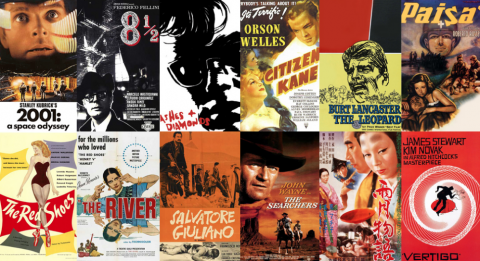 Cinema as we’ve almost always known it — “Edison, the Lumière brothers, Méliès, Porter, all the way through Griffith and on to Kubrick” — has “really almost gone.” So writes Martin Scorsese in his recent essay for the New York Review of Books, “The Persisting Vision: Reading the Language of Cinema.” He argues that traditional film forms have “been overwhelmed by moving images coming at us all the time and absolutely everywhere, even faster than the visions coming at the astronaut” in Kubrick’s 2001: A Space Odyssey. “We have no choice but to treat all these moving images coming at us as a language. We need to be able to understand what we’re seeing and find the tools to sort it all out.” Only natural that Scorsese, as one of the best-known, highest-profile auteurs alive, would reference Kubrick, his generational predecessor in the untiring furtherance of cinematic vision and craft.
We just yesterday featured a post about Kubrick’s 1963 list of ten favorite films. Scorsese, for his part, has impressed many as one of the most enthusiastically cinephilic directors working in America today: his essays about and appearances on the DVDs of his favorite movies stand as evidence for the surprising breadth of his appreciation. Today, why not have a look at Scorsese’s list, which he put together for Sight and Sound magazine, and which begins with the Kubrick selection you might expect:
- 2001: A Space Odyssey (1968) – Stanley Kubrick
- 8½ (1963) – Federico Fellini
- Ashes and Diamonds (1958) – Andrzej Wajda
- Citizen Kane (1941) – Orson Welles
- The Leopard (1963) – Luchino Visconti
- Paisan (1946) – Roberto Rossellini
- The Red Shoes (1948) – Michael Powell/Emeric Pressburger
- The River (1951) – Jean Renoir
- Salvatore Giuliano (1962) – Francesco Rosi
- The Searchers (1956) – John Ford
- Ugetsu Monogatari (1953) – Mizoguchi Kenji
- Vertigo (1958) – Alfred Hitchcock
In “The Persisting Vision,” he champions comprehensive film preservation, citing the case of Hitchcock’s Vertigo, the final entry on his list, now named the greatest film of all time by Sight and Sound’s critics poll. “When the film came out some people liked it, some didn’t, and then it just went away.” When, after decades of obscurity, Vertigo came back into circulation, the color was completely wrong,” and “the elements — the original picture and sound negatives — needed serious attention.” A restoration of the “decaying and severely damaged” film eventually happened, and “more and more people saw Vertigo and came to appreciate its hypnotic beauty and very strange, obsessive focus.” I, personally, couldn’t imagine the world of cinema without it — nor without any of the other pictures Scorsese calls his favorites.
Related Content:
Martin Scorsese Makes a List of 85 Films Every Aspiring Filmmaker Needs to See
Martin Scorsese Creates a List of 39 Essential Foreign Films for a Young Filmmaker
Revisit Martin Scorsese’s Hand-Drawn Storyboards for Taxi Driver
Martin Scorsese’s Very First Films: Three Imaginative Short Works
Martin Scorsese Brings “Lost” Hitchcock Film to Screen in Short Faux Documentary
Colin Marshall hosts and produces Notebook on Cities and Culture and writes essays on literature, film, cities, Asia, and aesthetics. He’s at work on a book about Los Angeles, A Los Angeles Primer. Follow him on Twitter at @colinmarshall.
Read More...Stephen Colbert Tries to Make Sense of MOOCs with the Head of edX
Last week Anant Agarwal, President of edX (the MOOC consortium launched by Harvard and MIT), paid a visit to The Colbert Report. And it didn’t take long for the host, the one and only Stephen Colbert, to ask funny but unmistakably probing questions about the advent of Massive Open Online Courses. “I don’t understand. You’re in the knowledge business in a university. Let’s say I had a shoe store, ok, and then I hired you to work at my shoe store. And you said, ‘Hey, I’ve got a great idea! Let’s give the shoes away for free.’ I would fire you and then probably throw shoes at your head.” In other words, why would universities disrupt themselves and give education away at no cost? Where’s the sanity in that? If you have five minutes, you can watch Agarwal’s response and get a few laughs along the way. And if you’re ready to take a MOOC, then dive into our collection of 550 Free MOOCs from Great Universities. 120 new courses will be starting in August and September alone.
Related Content:
Stephen Colbert Talks Science with Astrophysicist Neil deGrasse Tyson
Stephen Colbert Dishes Out Wisdom & Laughs at Northwestern
Harvard and MIT Create EDX to Offer Massive Open Online Courses Worldwide
Read More...Noam Chomsky Went Gangnam Style … Ever So Briefly?
I’m usually pretty dialed into this stuff, but somehow this one slipped by me last fall. During the Gangnam Style craze, MIT shot a parody video where Noam Chomsky, the father of modern linguistics, made a cameo appearance. Maybe it slipped by me because the appearance is brief. About 5 seconds, starting at the 3:20 mark. We were on the ball enough, however, to spot another parody by Ai Weiwei and then we had Slavoj Žižek demystifying the whole Gangnam Style phenomenon, complete with wild hand gesticulations and frantic rubs of the nose. Anyway, one day this will make for some good archival footage — public intellectual meets international pop culture craze — so we’re adding it to the trove.
Related Content:
Noam Chomsky Spells Out the Purpose of Education
A Shirtless Slavoj Žižek Explains the Purpose of Philosophy from the Comfort of His Bed
Noam Chomsky & Michel Foucault Debate Human Nature & Power (1971)
Read More...Support Us
We're hoping to rely on loyal readers, rather than erratic ads. Please click the Donate button and support Open Culture. You can use Paypal, Venmo, Patreon, even Crypto! We thank you!

About Us

Open Culture scours the web for the best educational media. We find the free courses and audio books you need, the language lessons & educational videos you want, and plenty of enlightenment in between.
Advertise With Us

FREE UPDATES!
GET OUR DAILY EMAIL
Get the best cultural and educational resources on the web curated for you in a daily email. We never spam. Unsubscribe at any time.
FOLLOW ON SOCIAL MEDIA

Open Culture editor Dan Colman scours the web for the best educational media. He finds the free courses and audio books you need, the language lessons & movies you want, and plenty of enlightenment in between.
Advertise With Us


