Paris in (Stop) Motion
Thanks to Mayeul Akpovi, we’ll always have Paris.…
via Devour
Related Content:
Le Flaneur: Time Lapse Video of Paris Without the People
It’s 5:46 A.M. and Paris Is Under Water
Tuileries: A Short, Slightly Twisted Film by Joel and Ethan Coen
Read More...Neil deGrasse Tyson’s StarTalk Radio Show Podcast Tackles the History of Video Games
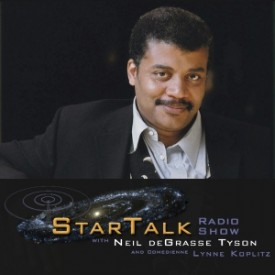 Neil deGrasse Tyson has a podcast. I repeat, Neil deGrasse Tyson has a podcast. If you’re unfamiliar (and you shouldn’t be), Tyson is Astrophysicist-in-residence at New York’s Natural History Museum and Director of its Hayden Planetarium. He’s also the most prominent advocate for a revitalized U.S. space program. Okay, back to the podcast. As an avid consumer of every science-based podcast out there, I can tell you that the StarTalk Radio Show (iTunes — Feed — Web Site) has quickly risen to the top of my list. The very personable Tyson is the big draw, but he has also made the wise decision to include “comedian co-hosts, celebrities, and other special guests.” In the episode right below, Tyson and comedian Eugene Mirman (whom you might recognize as the voice of Gene from Bob’s Burgers) mix it up with video game designer Will Wright and author Jeff Ryan.
Ryan’s Super Mario: How Nintendo Conquered America—and the history of video games more generally—is the topic of the show. Despite the less-than-stellar audio quality, this is not to be missed. The conversation is rapid-fire: Mirman interjects hilarious inanities while Wright and Ryan speed through the fascinating history and Tyson throws knuckleball questions and enthuses (at 4:30) that the “first real video game,” Space Wars, was about, what else, space. We also get the history of the unforgettable Pong (at 5:59), the original Star Wars game (at 8:17), and, naturally, Donkey Kong (at 3:19), designed by the now wildly famous (in Japan, at least) Shigeru Miyamoto–who also invented Mario, and who had never designed a game in his life before Donkey Kong. All this and some classic 8‑bit video game music to boot.
StarTalk in general has much to recommend it. Tyson is the “nation’s foremost expert on space,” and is probably instantly recognizable from his hosting of NOVA scienceNow and his bestselling books. He is the public face of a scientific community often in need of good press, and he has the rare ability to translate abstruse concepts to the general public in a humorous and approachable way. Previous guests/co-hosts have included Janeane Garofalo (in the “most argumentative Startalk podcast ever”) and John Hodgman (of the Daily Show and the “Mac vs. PC” ads). But above all, c’mon, it’s Neil deGrasse Tyson. The man deservedly has his own internet meme, inspired by his dramatic gestures in this video discussion of Isaac Newton from Big Think.
Enough said.
Watch the full Big Think interview with Tyson here. And don’t forget to subscribe to the StarTalk Radio Show (iTunes — Feed — Web Site).
Josh Jones is a doctoral candidate in English at Fordham University and a co-founder and former managing editor of Guernica / A Magazine of Arts and Politics.
Read More...Star Trek Celebrities, William Shatner and Wil Wheaton, Narrate Mars Landing Videos for NASA
NASA and Star Trek — they’ve been joined at the hip for decades. Back in 1972, when NASA launched its very first space shuttle, they called it the Enterprise, a clear nod to the starship made famous by the 1960s TV show. In 2011, NASA brought the space shuttle program to a close, and they fittingly asked William Shatner to narrate an 80 minute film documenting the history of the audacious space program. (Watch it here.)
Now we’re one week away from another NASA milestone — the landing of the rover Curiosity on Mars — which can mean only one thing. William Shatner’s back, and he’s previewing the action that lies ahead. First the Curiosity’s difficult landing, the so-called Seven Minutes of Terror. And then the rover’s mission on the Red Planet. Shatner’s clip will give geeks north of 40 a little nerdgasm. For younger geeks (said affectionately), NASA has Wil Wheaton, the star of Star Trek: The Next Generation, reading the same script. You can watch it below.
Follow us on Facebook, Twitter and now Google Plus and share intelligent media with your friends! They’ll thank you for it.
Read More...
Andrei Tarkovsky’s Voyage in Time: A Portrait of the Filmmaker in Exile
By 1982 Andrei Tarkovsky’s battles with Soviet censors had reached the point where he could no longer work in his native country. This rarely seen documentary shows the great Russian filmmaker treading unfamiliar ground as he travels across southern Italy in search of locations for his first film in exile, Nostalghia.
Voyage in Time (Tiempo di Viaggio) is less about the Italian countryside than Tarkovsky’s inner landscape, as he struggles to express his views on filmmaking and art to Tonino Guerra, his co-writer on Nostalghia. Guerra, who died earlier this year, was a legendary Italian screenwriter. He collaborated with Michelangelo Antonioni on many of his greatest films, including L’Avventura, La Notte, and Blow-Up, and with Federico Fellini on several of his later films, including Amarcord. The 63-minute film was produced for Italian television and completed in 1983, the same year as Nostalghia, with Tarkovsky and Guerra sharing the directing credit. Voyage in Time has been added to our collection of Free Tarkovsky Films Online.
Note: If you don’t automatically see subtitles, click CC at the bottom of the YouTube window.
Related content:
Tarkovsky’s Solaris Revisited
Andrei Tarkovsky’s Very First Films: Three Student Films, 1956–1960
Read More...
Wim Wenders Creates Ads to Sell Beer (Stella Artois), Pasta (Barilla), and More Beer (Carling)
Few would call Wim Wenders, the auteur behind Paris, Texas, Wings of Desire, The Buena Vista Social Club, and last year’s documentary Pina, a “commercial” director. Yet he has, now and again, put in time as a director of commercials — advertisements, that is, for beer, food, and cameras. His personal hymn to Leica’s craftsmanship aside (“As a boy,” he narrates, “I looked at my father’s Leica like a sacred object”), these spots don’t immediately betray the identity of the man at the helm. Even if you’ve seen many of Wenders’ feature films, you might not guess that he made these commercials if you just happened upon them; you would, though, feel their difference in sensibility from the ads surrounding them. The Stella Artois clip above includes several attention-drawing television tropes like a picturesque European coast, fast cars and motorcycles, vintage musical instruments, alcohol, and femininity, but it approaches them in a nonstandard way — one that, consequentially, actually stands a chance of drawing your attention.
“There’s a certain amount of objects that men like a lot,” says Wenders in a short documentary on the making of the commercial, “and they like them so much that they give them their girlfriends’ names.” We see first a motorcycle named Sophie, then a convertible named Victoria, then a guitar named Valerie, then a beer — Stella. We never see any actual women, or, for that matter, any men; just places and things. Wenders imbues the sequence with humanity through the camera’s gaze, and the behind-the-scenes footage shows it as no easy task, requiring take after precisely lit take shot with cameras mounted on elaborate mechanical arms that look more expensive than the treasured objects themselves. (It also requires the director to issue instructions in no fewer than three languages, though I understand that as business as usual on a Wenders set.) For an entirely different perspective on beer, watch his spot for Carling that involves bicycling over a waterfall. For a more epic take on the relationship between mankind and machinery, watch what he put together for food conglomerate Barilla’s 125th anniversary.
Related content:
Wes Anderson’s New Commercials Sell the Hyundai Azera
Fellini’s Fantastic TV Commercials
David Lynch’s Surreal Commercials
Jean-Luc Godard’s After-Shave Commercial for Schick
Colin Marshall hosts and produces Notebook on Cities and Culture. Follow him on Twitter at @colinmarshall.
Read More...The Strawberry Fields Forever Demos: The Making of a Beatles Classic (1966)
In 1966, John Lennon found himself in Almería, Spain working on Richard Lester’s film, How I Won the War. Between shots, he began writing Strawberry Fields Forever, a song Lennon later called “psychoanalysis set to music” and “one of the few true songs I ever wrote.” Although the song became one of the Beatles’ most refined and intricate recordings, it started off simply, with Lennon trying out lyrics and chords on his acoustic guitar, then recording solo demos upon his return to England. Listen above.
Once the Beatles started recording the song in November, 1966, the band spent at least 45 hours, spaced over a month, working through new versions. Around and around they went, tweaking, polishing, recording new takes, trying to get it right. Eventually the song, as we know it, came together when George Martin, the Beatles’ producer, pulled off the “Big Edit,” a technological feat that involved speeding up one recording and slowing down another and fusing them into the song we know today. (Amazingly, the two tracks were recorded in different keys and tempos.) Strawberry Fields Forever was released as a double A‑side single in February 1967 along with Penny Lane, and it was accompanied by a promotional film, a precursor to music videos we know and love today. You can watch it below.
Related Content:
Here Comes The Sun: The Lost Guitar Solo by George Harrison
The Making of “Tomorrow Never Knows”
Guitarist Randy Bachman Demystifies the Opening Chord of ‘A Hard Day’s Night’
The Beatles’ Rooftop Concert: The Last Gig
Read More...Great Cities at Night: Views from the International Space Station
During his time on the International Space Station (ISS), astronaut Don Pettit endeared himself to me in two ways. First, he invented a handy-dandy “zero‑g coffee cup” that lets you drink coffee in space without using a straw — something we’ll all hopefully use one day. Next, between 2002 and 2008, he took some striking images of great cities and their lights shining at night. The opening minutes explain how the shots were actually taken. Then, at the 1:45 mark, the tour begins. Zurich, Milan, Madrid, Athens, London, Cairo (including the Pyramids), Jerusalem, Mecca, Tokyo, Sao Paulo, San Francisco, Las Vegas (the brightest spot on earth) — they’re all included on the tour.
Pettit narrates the entire video. And, along the way, he takes care to underscore an interesting point — each culture creates its cities in its own way, using differently geographic layouts and technologies. Those differences we can see on the ground from one perspective, and from outer space from yet another vantage point.
Related Content:
Neil deGrasse Tyson Explains What Happens If You Fall into a Black Hole
The Aurora Borealis Viewed from Orbit (and What Creates Those Northern Lights?)
What a Hurricane Looks Like From Outer Space
Read More...The Science of the Olympic Flame; Ancient Style Meets Modern Technology
For all the recent scandal and the trauma of past Games, the Olympics remain a pageant of grandeur and glory, and there is no greater symbol of its ideals than the Olympic Flame. The video above, from the Ontario Science Centre, explains the evolving technology that keeps the flame burning from its lighting to the closing ceremonies. It’s a pretty cool story, set to a bombastic soundtrack worthy of its subject and carried by an animated runner who just peeled himself off of an ancient Athenian vase.
Introduced in the 1928 Summer Olympics in Amsterdam, the flame revives a symbol from antiquity, commemorating Prometheus’s audacity and reminding warring city states to put aside hostilities for as long as it burned. In the modern Olympics, between the lighting and the opening ceremonies, the flame, in its stylized torch, makes a pilgrimage to the host city via relay, a practice that began with the 1936 games in Berlin. This year’s relay started on May 19th in Land’s End in Cornwall and ends this Friday, the 27th at the opening ceremony in London. The torch will have traveled through 1,000 places in the UK, covered a total of 8,000 miles (and passing through 8,000 hands), moving over land, air, and water, without once having to be relit.
Follow us on Facebook, Twitter and now Google Plus and share intelligent media with your friends! We’ll thank you for it.
Read More...Martin Scorsese Appears in New Apple Ad with Siri, Plays on His Chilling Cameo in Taxi Driver
In 1976, Martin Scorsese made a chilling cameo appearance in his thriller, Taxi Driver. Perhaps you remember the scene: Playing a bearded, nameless character, Scorsese enters a cab, bosses the driver around for a while, then proceeds to explain, in an uncomfortably matter of fact way, how he plans to kill his wife. It’ll make your hair stand on end. In a new commercial for Apple, Scorsese plays a bossy back-seat rider again. But this time, there’s no killing involved, just shilling. It’s an ad for Apple’s iPhone, and it’s the latest in a new series of ads featuring celebs like Zooey Deschannel, Samuel Jackson and John Malkovich.
Of course, the parallel between the Siri ad and the 1976 film was spotted by Roger Ebert. All props to him.
P.S.: In case you think we’re seeing a parallel that doesn’t actually exist, it’s worth noting that both cabs have the same number. Great spot by @sinyc.
Read More...John Cleese Explains the Brain
We all know John Cleese can be funny, but watch his discussion of the human brain above and witness how adroitly he can rise to the occasion when it comes to a serious subject. The clip comes from a video podcast in which he starred from 2006 to 2009, and which dealt with the big topics: science, God, the monarchy, and airline service, to name but four. (He followed it up with the Headcast.) Here, Cleese dons a lab coat to solemnly explain, in an erudite and highly technical manner, the workings of our gray matter. I mean, I assume that’s what he’s explaining; being untrained in neuroscience, I suppose there’s a chance I can’t tell whether he might simply be engaging in that rich British satirical tradition of appearing to say a great deal of the utmost importance while actually saying nothing at all, in language barely even recognizable as made up of words.
You can see Cleese in a different mode in another vanishingly short-form video, the new DirecTV commercial. Speaking with blunt simplicity, he pitches the satellite television provider’s service package in the character of a wealthy Englishman engaged in a variety of increasingly absurd wealthy-Englishman activities: sitting fireside in a voluminous smoking jacket, receiving a massage on the hood of his Bentley, practicing indoor archery, dining upon a lobster the size of the table. As an examination of the aristocracy, Grand Illusion it ain’t; it does, however, shed some light on Cleese’s distinctive comedic skills. In both of these videos, Cleese uses a serious demeanor to his advantage, but his decades of experience allow him to use different nuances of seriousness appropriate to each performative occasion. He has his funniest moments when he assumes the characteristics of the perfectly humorless, having mastered and long resided in that liminal state between laughter and stultification, irony and straightforwardness, that the most respected British comedians have made their own.
Related Content:
John Cleese Plays the Devil, Makes a Special Appeal for Hell, 1966
John Cleese on the Origin of Creativity
John Cleese, Monty Python Icon, on How to Be Creative
Monty Python’s Away From it All: A Twisted Travelogue with John Cleese
Colin Marshall hosts and produces Notebook on Cities and Culture. Follow him on Twitter at @colinmarshall.
Read More...
Support Us
We're hoping to rely on loyal readers, rather than erratic ads. Please click the Donate button and support Open Culture. You can use Paypal, Venmo, Patreon, even Crypto! We thank you!

About Us

Open Culture scours the web for the best educational media. We find the free courses and audio books you need, the language lessons & educational videos you want, and plenty of enlightenment in between.
Advertise With Us

FREE UPDATES!
GET OUR DAILY EMAIL
Get the best cultural and educational resources on the web curated for you in a daily email. We never spam. Unsubscribe at any time.
FOLLOW ON SOCIAL MEDIA

Open Culture editor Dan Colman scours the web for the best educational media. He finds the free courses and audio books you need, the language lessons & movies you want, and plenty of enlightenment in between.
Advertise With Us

