‘Never Be Afraid’: William Faulkner’s Speech to His Daughter’s Graduating Class in 1951
By the start of the 1950s, the euphoria felt by Americans after winning World War II had given way to a pervasive atmosphere of dread.
The Soviets had exploded their first atomic bomb, McCarthyism had reared its head, and America’s schoolchildren would soon be told to “Duck and Cover” at the first sound of a civil defense siren.
It was in this climate of palpable fear that William Faulkner was asked by his daughter, Jill, to speak to her graduating class of 1951 at University High School in Oxford, Mississippi. Faulkner was at the height of his fame.
Only a few months earlier, in November of 1950, he had traveled to Sweden to accept the Nobel Prize in Literature. In his speech at Stockholm, Faulkner said that “the basest of all things is to be afraid”:
“Our tragedy today is a general and universal physical fear so long sustained by now that we can even bear it. There are no longer problems of the spirit. There is only the question: When will I be blown up?”
Faulkner expanded on the theme during the speech to his daughter’s high school class, delivered May 28, 1951 at Fulton Chapel on the campus of the University of Mississippi, or “Ole Miss.”
The occasion was something of a home-town triumph for Faulkner, who had dropped out of high school without a diploma. The excerpt above is from a short documentary released in 1952 called, simply, William Faulkner. Two passages from the speech are omitted in the film. You can read the complete text below. Faulkner begins with a passage from Henri Estienne’s 1594 book Les Prémices: “If youth only knew; if age only could.”
“Years ago, before any of you were born, a wise Frenchman said, ‘If youth knew; if age could.’ We all know what he meant: that when you are young, you have the power to do anything, but you don’t know what to do. Then, when you have got old and experience and observation have taught you answers, you are tired, frightened; you don’t care, you want to be left alone as long as you yourself are safe; you no longer have the capacity or the will to grieve over any wrongs but your own.
“So you young men and women in this room tonight, and in thousands of other rooms like this one about the earth today, have the power to change the world, rid it forever of war and injustice and suffering, provided you know how, know what to do. And so according to the old Frenchman, since you can’t know what to do because you are young, then anyone standing here with a head full white hair should be able to tell you.
“But maybe this one is not as old and wise as his white hairs pretend to claim. Because he can’t give you a glib answer or pattern either. But he can tell you this, because he believes this. What threatens us today is fear. Not the atom bomb, nor even fear of it, because if the bomb fell on Oxford tonight, all it could do would be to kill us, which is nothing, since in doing that, it will have robbed itself of its only power over us: which is fear of it, the being afraid of it. Our danger is not that. Our danger is the forces in the world today which are trying to use man’s fear to rob him of his individuality, his soul, trying to reduce him to an unthinking mass by fear and bribery — giving him free food which he has not earned, easy and valueless money which he has not worked for; the economies and ideologies or political systems, communist or socialistic or democratic, whatever they wish to call themselves, the tyrants and the politicians, American or European or Asiatic, whatever they call themselves, who would reduce man to one obedient mass for their own aggrandizement and power, or because they themselves are baffled and afraid, afraid of, or incapable of, believing in man’s capacity for courage and endurance and sacrifice.
“That is what we must resist, if we are to change the world for man’s peace and security. It is not men in the mass who can and will save man. It is man himself, created in the image of God so that he shall have the power to choose right from wrong, and so be able to save himself because he is worth saving — man, the individual, men and women, who will refuse always to be tricked or frightened or bribed into surrendering, not just the right but the duty too, to choose between justice and injustice, courage and cowardice, sacrifice and greed, pity and self — who will believe always not only in the right of man to be free of injustice and rapacity and deception, but the duty and responsibility of man to see that justice and truth and pity and compassion are done.
“So, never be afraid. Never be afraid to raise your voice for honesty and truth and compassion, against injustice and lying and greed. If you, not just you in this room tonight, but in all the thousands of other rooms like this one about the world today and tomorrow and next week, will do this, not as a class or classes, but as individuals, men and women, you will change the earth; in one generation all the Napoleons and Hitlers and Caesars and Mussolinis and Stalins and all the other tyrants who want power and aggrandizement, and the simple politicians and time-servers who themselves are merely baffled or ignorant of afraid, who have used, or are using, or hope to use, man’s fear and greed for man’s enslavement, will have vanished from the face of it.”
When he was finished, Faulkner gave his copy of the speech to the editor of the local newspaper. At a party afterward he reportedly said, “You know, I never knew how nice a graduation could be. This is the first one I’ve ever been to.”
To watch the full film from which the speech is taken, see our earlier post: “Rare 1952 Film: William Faulkner on His Native Soil in Oxford, Mississippi.”
Related Content:
William Faulkner Reads His Nobel Prize Speech
Seven Tips From William Faulkner on How to Write Fiction
7 Nobel Speeches by 7 Great Writers: Hemingway, Faulkner and More
Read More...Quarantined Family Re-Creates Journey’s “Separate Ways” Video Shot-by-Shot
The Heller family writes: “Solitary confinement does strange things to the best of us and this quarantine was really having an effect. My wife texted me and said, ‘we need to remake a music video.’ I thought that sounded like a lot of work, but her persistence paid off and here we are. Enjoy!”
Read More...Take Hannah Arendt’s Final Exam for Her 1961 Course “On Revolution”
After her analysis of totalitarianism in Nazi Germany and Stalin’s Soviet Union, Hannah Arendt turned her scholarly attention to the subject of revolution—namely, to the French and American Revolutions. However, the first chapter of her 1963 book On Revolution opens with a paraphrase of Lenin about her own time: “Wars and revolutions… have thus far determined the physiognomy of the twentieth century.”
Arendt wrote the book on the threshold of many wars and revolutions yet to come, but she was not particularly sympathetic to the leftist turn of the 1960s. On Revolution favors the American Colonists over the French Sans Culottes and Jacobins. The book is in part an intellectual contribution to anti-Communism, one of many ideologies, Arendt writes, that “have lost contact with the major realities of our world”?
What are those realities? “War and revolution,” she argues, “have outlived all their ideological justifications… no cause is left but the most ancient of all, the one, in fact, that from the beginning of our history has determined the very existence of politics, the cause of freedom versus tyranny.” This sounds like pamphleteering, but Arendt did not use such abstractions lightly. As one of the foremost scholars of ancient Greek and modern European philosophy, she was eminently qualified to define her terms.
Her students, on the other hand, might have struggled with such weighty concepts as “revolution,” “rights, “freedom,” etc. which can so easily become meaningless slogans without substantive elaboration and “contact with reality.” Arendt was a thorough teacher. Once her students left her class, they surely had a better grasp on the intellectual history of liberal democracy. Such understanding constituted Arendt’s life’s work, and it was through teaching that she developed and refined the ideas that became On Revolution.
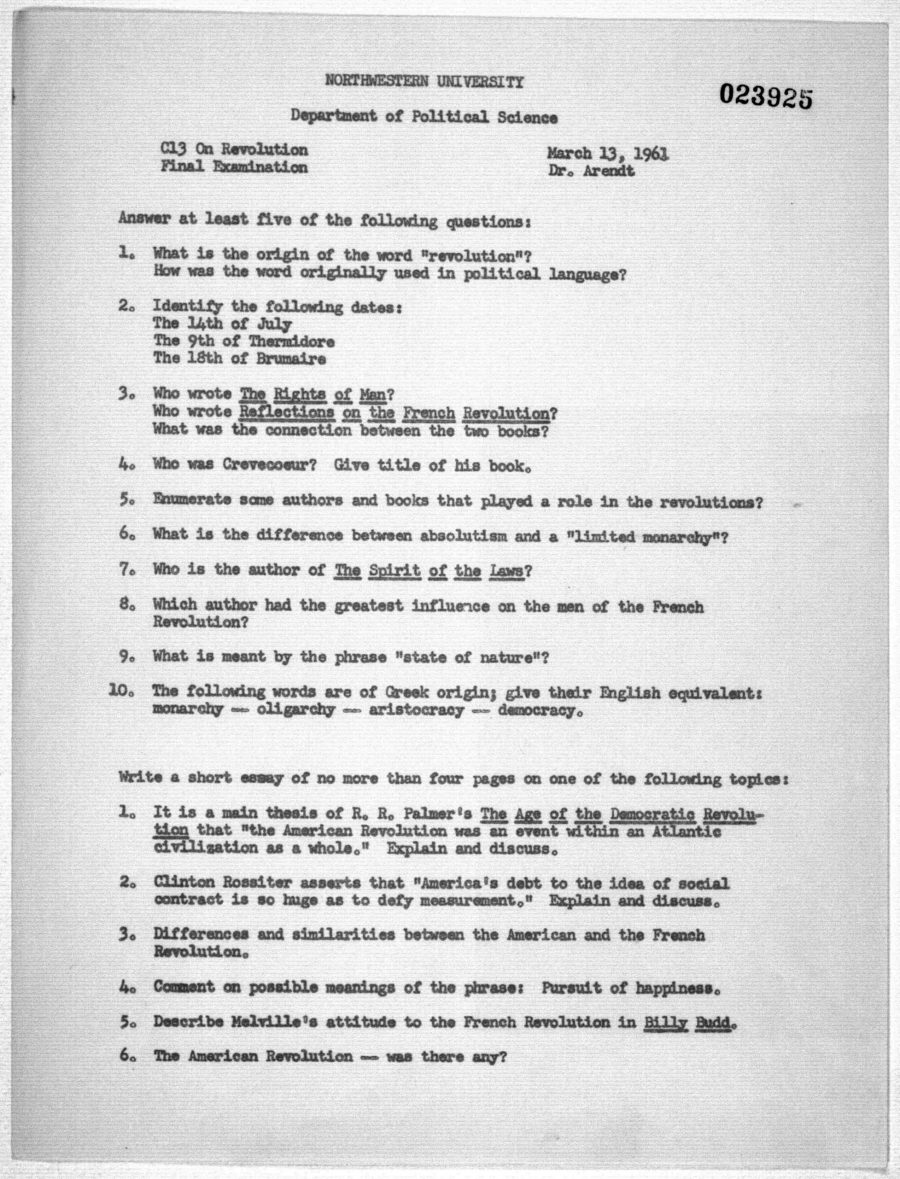
Arendt began research for the book at Princeton, where she was appointed the first woman to serve as a full professor in 1953. Throughout the 50s and early 60s, she taught at Berkeley, Columbia, Cornell, the University of Chicago, and Northwestern before joining the faculty of the New School. In 1961, she taught a Northwestern seminar called “On Revolution.” Just above, you can see the course’s final exam. (View it in a larger format here.) If you’re wondering why she gave the test in March, perhaps it’s because the following month, she boarded a plane to cover the Adolf Eichmann trial for The New Yorker.
What did Arendt want to make sure that her students understood before she left? See a transcription of the exam questions below. We see the two poles of her later argument coming into focus, the French and the American Revolutionary ideas. The latter example has been seen by many critical philosophers as hardly revolutionary at all, given that it was primarily waged in the interests of merchants and slave-owning plantation owners. It was, as one historian puts it, “a revolution in favor of government.”
This criticism is likely the basis of Arendt’s final question on the test. But in her erudite argument, the American Revolution is foundational to use of “revolution” as a political term of art. As Arendt writes in a late 60s lecture, re-discovered in 2017, “prior to the two great revolutions at the end of the 18th century and the specific sense it then acquired, the word ‘revolution’ was hardly prominent in the vocabulary of political thought or practice.” Rather, it mainly had astrological significance.
Arendt saw all subsequent world revolutions as partaking of the twinned logics of the 18th century. “Its political usage was metaphorical,” she says, “describing a movement back into some pre-established point, and hence a motion, a swinging back to a pre-ordained order.” Generally, that order has been pre-ordained by the revolutionaries themselves. See if your understanding of revolutionary history is up to Arendt’s pedagogical standards, below, and get a more comprehensive history of revolution from the readings on recent course syllabuses here, here, and here.
Answer at least five of the following questions:
- What is the origin of the word “revolution”?
How was the word originally used in political language?
- Identify the following dates:
The 14th of July
The 9th of Thermidore
The 18th of Brumaire
- Who wrote The Rights of Man?
Who wrote Reflections on the French Revolution?
What was the connection between the two books?
- Who was Crevecoeur? Give title of his book.
- Enumerate some authors and books that played a role in the revolutions?
- What is the difference between absolutism and a “limited monarchy”?
- Who is the author of The Spirit of the Laws?
- Which author had the greatest influence on the men of the French Revolution?
- What is meant by the phrase “state of nature”?
- The following words are of Greek origin; give their English equivalent: monarchy—oligarchy—aristocracy—democracy.
Write a short essay of no more than four pages on one of the following topics:
-
It is a main thesis of R.R. Palmer’s The Age of the Democratic Revolution that “the American Revolution was an event within an Atlantic civilization as a whole.” Explain and discuss.
-
Clinton Rossiter asserts that “America’s debt to the idea of social contract is so huge as to defy measurement.” Explain and discuss.
-
Differences and similarities between the American and the French Revolution.
-
Connect on possible meanings of the phrase: Pursuit of happiness.
-
Describe Melville’s attitude to the French Revolution in Billy Budd.
-
The American Revolution—was there any?
via Samantha Hill
Related Content:
Josh Jones is a writer and musician based in Durham, NC. Follow him at @jdmagness
Read More...Peruvian Singer & Rapper, Renata Flores, Helps Preserve Quechua with Viral Hits on YouTube
Ten years ago, a study by David Harmon and Jonathan Loh showed that in 30 years’ time, the world had seen a twenty percent decline in linguistic diversity. Indigenous languages and local dialects have continued to dwindle, in the U.S. and around the globe. “There are a lot of pressures in the world that are enticing or even forcing people to switch from generally smaller, more geographically restricted languages, to larger languages,” Harmon told National Geographic, “especially global languages like Mandarin Chinese, English, or Spanish.”
This pressure has been exerted on indigenous languages for centuries. Yet hundreds have survived, including Quechua, a family of languages descended from the Inca, and spoken by almost 4 million people in Peru alone. With many more speakers in Bolivia, Argentina, and elsewhere, it is Latin America’s most widely spoken Indigenous language.
It may seem to be thriving, but Quechua speakers are widely treated with contempt in Peru, though they make up roughly 13% of the population. They are the country’s poor and ignored. Quechua has been grossly understudied in academia and until recently has had almost no major media presence.
The language’s absence from centers of power has made it less accessible to newer generations—whose parents would not teach them Quechua for fear of stigmatizing them—and more likely to die out without intervention. It became “synonymous with discrimination” and “social rejection,” says Hugo Coya, director of a recent Peruvian news program entirely in Quechua. Coya aims to change that, as does Peruvian scholar Roxana Quispe Collantes, who defended the first Quechua doctoral thesis last year. Their work will surely have significant impact, but perhaps not nearly as much as the debut of a 14-year-old Peruvian singer and rapper, Renata Flores, who had a viral hit five years ago with her Quechua cover of Michael Jackson’s “The Way You Make Me Feel” (top).
Flores, now 19, has followed up with a string of songs in Quechua that have “brought huge success,” writes Vice, “millions of views on YouTube; features and interviews in Peruvian media and foreign press like The Clinic, Telemundo, El Paid, AJ+ Español, CNN, and BBC; fans in Bolivia, Ecuador, Chile, Argentina, Guatemala, Dominican Republic, Costa Rica, Puerto Rico, Mexico, the United States, Spain, Italy, China, Algeria, and counting. And with it, Flores is challenging the very way people value languages, especially indigenous ones.” Her music may speak the language of a specific region, but does so in a global idiom, combining “trap, hip-hop, and electronic influences with Andean instruments.”
Flores’ success in bringing such widespread attention to Quechua shows another major cultural shift of the past few years. Internet culture, once assumed to be ephemeral and of little lasting value, has become the coin of the realm, as academic humanities struggle, political institutions implode, and journalism fails. The joke so often goes that historians of the future will have to fill textbooks (or interactive virtual reality lessons) with tweets, posts, and memes. Viral YouTube stars like Flores are also making history, their videos primary documents of how a language that is marginalized in its home country reached out and found millions of fans around the world.
“The message conveyed to Quechua speakers” by most treatments of their culture in Peru, “is that their identities are part of the region’s past,” writes Julie Turkewitz in a New York Times profile of Flores. Harmon makes a similar connection: “there is a strong possibility that we’ll lose languages that people are using as their main vehicle of expression, which they may regard as one of the linchpins of their self-identity.” When national narratives, media, and education relegate a contemporary language to a pre-colonial past, it tells millions of people they essentially don’t exist in the modern world. Flores, who grew up with Quechua, counters that message with style.
Flores and other Quechua singers not only reaffirm their cultural identity, but they put their language in conversation with contemporary pop music and political concerns. Taking on “female power, government corruption, war and international pop culture polemics,” writes Turkewitz, Flores continues a legacy her one-time musician parents helped launch decades earlier, a Quechua-language blue-rock movement called Uchpa. Now her family helps her record her own songs in their music school. But like most young artists she began with covers. See her play a Quechua version of “House of the Rising Sun” as a 14-year-old contest winner, further up; see her very first concert, at the same age, in her hometown of Ayacucho, below. And see what she’s been up to since then in the videos above and on her YouTube channel.
Related Content:
Josh Jones is a writer and musician based in Durham, NC. Follow him at @jdmagness
Read More...Watch Jean-Luc Godard’s Filmmaking Masterclass on Instagram
As the last living major French New Wave director, Jean-Luc Godard has become a kind of oracle for younger filmmakers and cinéastes. Despite having turned 89 last December, he remains in a sense what film scholar David Bordwell not long ago called “the youngest filmmaker at work today.” When Godard started working in cinema just about 65 years ago, it didn’t take him long to make his name by breaking its rules. Ever since, he’s warded off complacency by continuing to rethink, at the most fundamental level, not just film but the nature of images, sounds and words themselves. And he pursues this line of thinking in any available medium, including, as demonstrated in the conversation above on “images in the time of the coronavirus,” Instagram Live.
This form, as a filmmaker like Godard would surely appreciate, suits the substance. No venue could be more of the moment than Instagram Live, as performers of all kinds have taken to streaming themselves from home in the midst of the global pandemic. But where many such figures use the opportunity to take viewers’ minds off the coronavirus, Godard and his interviewer Lionel Baier, head of the cinema department at Lausanne’s ECAL University of Art and Design, use it as a starting point. What begins as a discussion of Godard’s news-watching habits turns into a conversational journey across such subjects as filmmaking, writing, painting, philosophy, science, medicine, law, and language. “I don’t believe in language,” goes one of Godard’s characteristic pronouncements. “What needs to be changed is the alphabet. There are too many letters and we should delete lots of them.”
Perhaps that doesn’t come as a surprise from a director whose recent pictures include one called Goodbye to Language. But spoken or filmed, Godard’s ideas on the matter also reflect his personal experience: he tells of having for a time lost the memory of names of certain fruits and vegetables, and consequently developing a visual method of remembering his grocery lists. Such everyday stories come along with references to a wide range of artists, scientists, philosophers, and “adventurers” in history, especially from the history of the Francophone world. More than once arises the name of Nicéphore Niépce, the 19th-century French inventor responsible for the first known photograph ever taken (previously featured here on Open Culture) and a subject of one of Godard’s current works-in-progress.
“In the film I’m going to make,” Godard explains, “I ask what Niépce believed he was doing or what his intentions were when he simply wanted to copy reality.” All throughout his decades as a filmmaker, Godard has clearly kept asking the same question about himself: in making films, does he want to “copy reality” or do something more interesting? Fortunately for cinema, he always seems to have opted for the latter, back to his days with his Nouvelle Vague compatriots François Truffaut, Jacques Rivette, Claude Chabrol, and Éric Rohmer, all of whom figure into his reminiscences here. And will COVID-19 figure in a future Godard film? “It’ll have an influence but not directly,” he says. “The virus should definitely be talked about once or twice. With everything that comes with it, the virus is a form of communication. It doesn’t mean we’re going to die from it, but we might not live very well with it either.”
Related Content:
An Introduction to Jean-Luc Godard’s Innovative Filmmaking Through Five Video Essays
Jean-Luc Godard Takes Cannes’ Rejection of Breathless in Stride in 1960 Interview
Based in Seoul, Colin Marshall writes and broadcasts on cities, language, and culture. His projects include the book The Stateless City: a Walk through 21st-Century Los Angeles and the video series The City in Cinema. Follow him on Twitter at @colinmarshall, on Facebook, or on Instagram.
Read More...The Art of the New Deal: Why the Federal Government Funded the Arts During the Great Depression
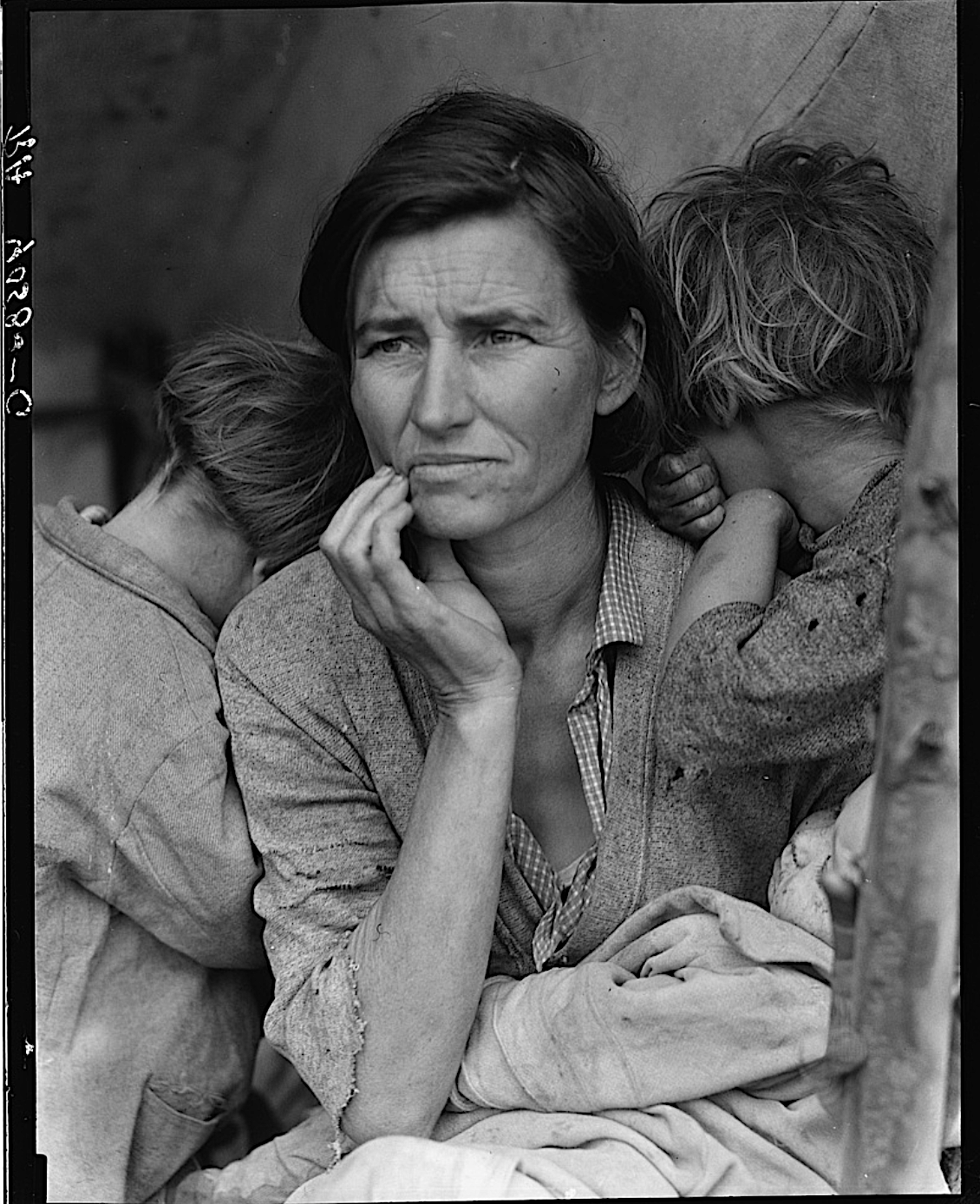
It’s odd to think that the gray-faced, gray-suited U.S. Cold Warriors of the 1950s funded Abstract Expressionism and left-wing literary magazines in a cultural offensive against the Soviet Union. And yet they did. This seeming historical irony is compounded by the fact that so many of the artists enlisted (mostly unwittingly) in the cultural Cold War might not have had careers were it not for the New Deal programs of 20 years earlier, denounced by Republicans at the time as communist.
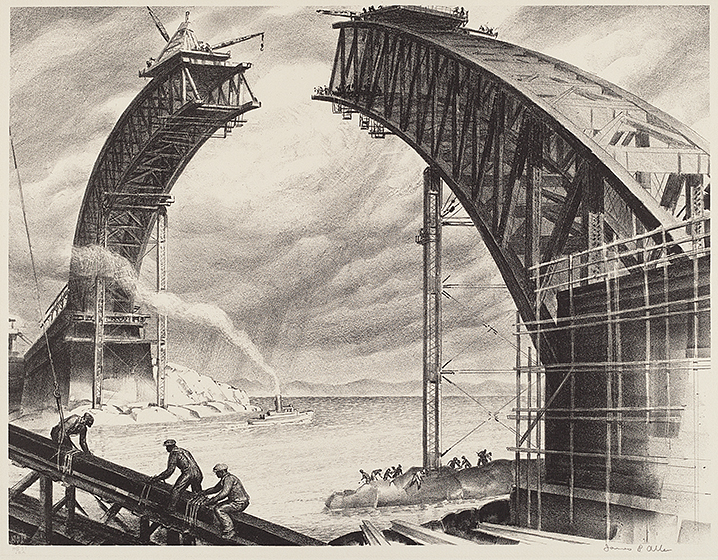
The New Deal faced fierce opposition, and its passage involved some very unfortunate compromises. But for artists, it was a major boon. Programs established under the Works Progress Administration in 1935 helped thousands of artists survive until they could get back to plying trades, working as professionals, or building world-famous careers. Artists and art workers once supported by the WPA include Dorothea Lange, Langston Hughes, Orson Welles, Ralph Ellison, Zora Neale Hurston, Gordon Parks, Alan Lomax, Mark Rothko, Jackson Pollock, James Agee, and dozens more famous names.
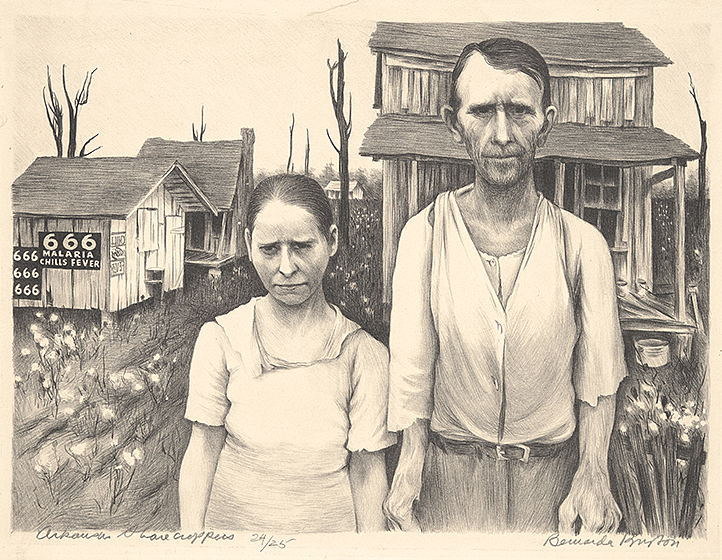
There were also thousands of unknown painters, photographers, sculptors, poets, dancers, playwrights, etc. who received funding in their local areas to put their skills to work. “Through the WPA,” the National Gallery of Art writes, artists “participated in government employment programs in every state and county in the nation.” As to the question of whether their work deserved to be paid, “Harry Hopkins,” Jerry Adler writes at Smithsonian, “whom President Franklin D. Roosevelt put in charge of work relief, settled the matter, saying, ‘”Hell, they’ve got to eat just like other people!”
He turns the question about who “deserves” relief on its head. Dance may not be necessary by some people’s lights but eating most certainly is. Why shouldn’t artists use their talent to beautify the country, collect and archive its cultural history, and provide quality entertainment in uncertain times? And why shouldn’t the country’s artists document the enormous building projects underway, and the major shifts happening in people’s lives, for posterity?
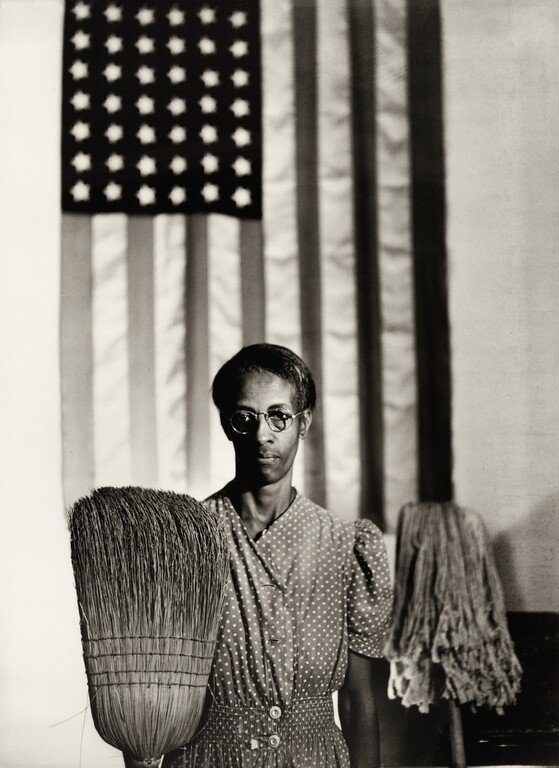
Roosevelt, taking many of his cues from Eleanor, spoke of funding the arts in much grander terms than the pragmatic Hopkins. He elaborated on his belief in their “essential” nature in a speech at the dedication of the Metropolitan Museum of Art’s new building in 1939:
Art in America has always belonged to the people and has never been the property of an academy or a class. The great Treasury projects, through which our public buildings are being decorated, are an excellent example of the continuity of this tradition. The Federal Art Project of the Works Progress Administration is a practical relief project which also emphasizes the best tradition of the democratic spirit. The W.P.A. artist, in rendering his own impression of things, speaks also for the spirit of his fellow countrymen everywhere. I think the W.P.A. artist exemplifies with great force the essential place which the arts have in a democratic society such as ours.
In the future we must seek more widespread popular understanding and appreciation of the arts. Many of our great cities provide the facilities for such appreciation. But we all know that because of their lack of size and riches the smaller communities are in most cases denied this opportunity. That is why I give special emphasis to the need of giving these smaller communities the visual chance to get to know modern art.
As in our democracy we enjoy the right to believe in different religious creeds or in none, so can American artists express themselves with complete freedom from the strictures of dead artistic tradition or political ideology. While American artists have discovered a new obligation to the society in which they live, they have no compulsion to be limited in method or manner of expression.
He began the address with several airy phrases about freedom and liberty; here, he defines what that looks like for the artist—the ability to have dignified work and livelihood, and to operate with full creative freedom. Of course, artists, especially those employed in decorating public buildings, were constrained by certain “American” themes. But they could interpret those themes broadly, and they did, picturing scenes of hardship and leisure, recovering the past and imagining better futures.
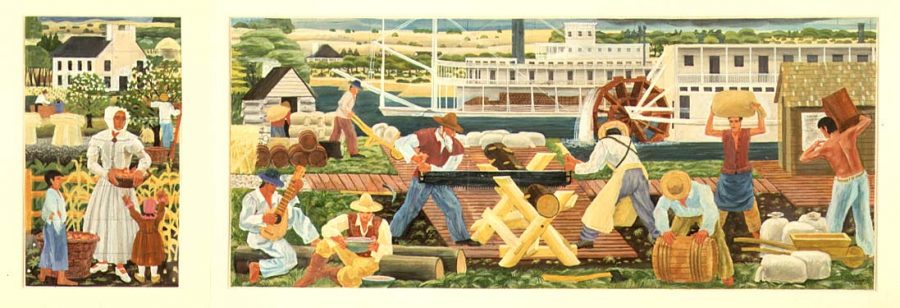
It couldn’t last. “The WPA-era art programs reflected a trend toward the democratization of the arts in the United States and a striving to develop a uniquely American and broadly inclusive cultural life,” the National Gallery explains. Art from this period “offers a window through which to explore the social conditions of the Depression, the mainstreaming of art and birth of ‘public art,’ and the opening of government employment to women and African Americans.” Opponents of the programs pushed back with red baiting. Arts funding under the WPA was ended in 1943 by a Congress, says scholar of the period Francis O’Connor, who could “look at two blades of grass and see a hammer and sickle.”
See much more New Deal art–including plays, photography, art posters and more–at the National Gallery of Art, the National Archives, Smithsonian, and at the links below.
Related Content:
Yale Presents an Archive of 170,000 Photographs Documenting the Great Depression
Josh Jones is a writer and musician based in Washington, DC. Follow him @jdmagness
Read More...Take a Virtual Tour of the World’s Only Sourdough Library
There’s 15-year-old Precious from the Netherlands…
And Bubble from Australia, age 4…
Yeasty Beasty Methuselah, from Twin Falls, Idaho, is estimated to be around 50…
Every sourdough starter is special to the ones who made or maintain it, but of the 1000s registered online with Quest for Sourdough, only 125 have earned a permanent place in the Puratos Sourdough Library in Saint-Vith, Belgium. It’s the world’s only library dedicated to Sourdough, and you can take a virtual tour here.
Housed in identical jars in a museum-quality refrigerated cabinets, these heritage starters have been carefully selected by librarian Karl De Smedt, above, who travels the world visiting bakeries, tasting bread, and learning the stories behind each sample that enters the collection.
As De Smedt recalls in an interview with the Sourdough Podcast, the idea for the museum began taking shape when a Lebanese baker reached out to Puratos, a hundred-year-old company that supplies commercial bakers and pastry makers with essentials of the trade. The man’s sons returned from a baking expo in Paris and informed their dad that when they took over, they planned to retire his time-honored practice of baking with fermented chickpeas in favor of instant yeast. Worried that his prized recipe would be lost to history, he appealed to Puratos to help preserve his protocols.
While fermented chickpeas do not count as sourdough—a combination of flour, water, and the resulting microorganisms this marriage gives rise to over time—the company had recently collected and analyzed 43 venerable starters. The bulk came from Italy, including one from Altamura, the “city of bread, producer of what Horace called in 37 B.C. ‘the best bread to be had, so good that the wise traveler takes a supply of it for his onward journey.’”
Thus was a non-circulating library born.
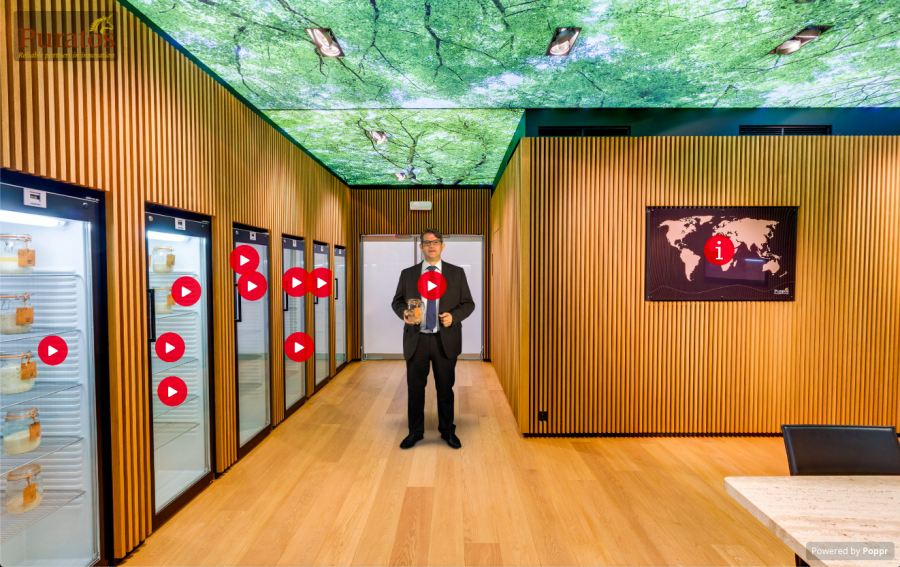
Each specimen is analyzed by food microbiologist Marco Gobbetti from the University of Bolzano and Bari.
A collaboration with North Carolina State University biologists Rob Dunn and Anne Madden revealed that sourdough bakers’ hands share distinct microbes with their starters.
More than 1100 strains of microorganisms have been recorded so far.
Every two months, the starters are taken out of the fridge and fed, i.e. reactivated, with a combination of water and some of their flour of origin, yearly quantities of which are contributed by their bakers. Without this regular care, the starters will die off.
(The pandemic has De Smedt working from home, but he intimated to The New York Times that he intended to make it back to feed his babies, or “mothers” as they are known in sourdough circles.)
#72 from Mexico feeds on eggs, lime and beer
#100 from Japan is made of cooked sake rice.
#106 is a veteran of the Gold Rush.
Their consistency is documented along a line that ranges from hard to fluid, with Silly Putty in the middle.
Each year, De Smedt expands the collection with starters from a different area of the world. The latest additions come from Turkey, and are documented in the mouthwatering travelogue above.
For now, of course, he’s grounded in Belgium, and using his Instagram account to provide encouragement to other sourdough practitioners, answering rookie questions and showing off some of the loaves produced by his own personal starters, Barbara and Amanda.
Register your starter on Quest for Sourdough here.
If you haven’t yet taken the sourdough plunge, you can participate in North Carolina State University’s Wild Sourdough Project by following their instructions on making a starter from scratch and then submitting your data here.
And bide your time until you’re cleared to visit the Puratos Sourdough Library in person by taking an interactive virtual tour or watching a complete playlist of De Smedt’s collecting trips here.
Related Content:
How to Bake Ancient Roman Bread Dating Back to 79 AD: A Video Primer
An Archive of Handwritten Traditional Mexican Cookbooks Is Now Online
400 Ways to Make a Sandwich: A 1909 Cookbook Full of Creative Recipes
Ayun Halliday is an author, illustrator, theater maker and Chief Primatologist of the East Village Inky zine. Her current starter, Miss Sourdough, was brought to life with an unholy splash of apple cider. Follow her @AyunHalliday.
Read More...The Stay At Home Museum: Your Private, Guided Tours of Rubens, Bruegel & Other Flemish Masters
Of the many world class museums treating a stuck-at-home public to virtual tours of their collections, none inspire the resolve for future travel as the Stay At Home Museum, an initiative of the Flanders tourism board.
Before the COVID-19 epidemic response demanded the temporary shuttering of all such attractions, the region was entering the final year of a 3‑year festival celebrating such Flemish masters as Jan Van Eyck, Pieter Bruegel, and Peter Paul Rubens.
Its website appeals to young, hip visitors by matching interests with celebrity tour guides: Bacchus (as rendered by Rubens) for eating and drinking in an arty atmosphere and Rubens’ Venus for culturally responsible shopping and diamond admiring.
Other enticing prospects we can’t take advantage of at present:
A downloadable Bruegel walking tour map
A Flemish Masters itinerary for children
Our sadness at missing these cannot be chalked up to FOMO. Right now, the whole world is missing out.
So, consider the Stay At Home Museum a preview, something to help us enjoy our trips to the region all the more at some point in the future, by educating ourselves on the painters who made Flanders famous.
The series is also a treat for the Zoom weary. The expert guides aren’t facing their webcams at home, but rather using their high level access to lead us through the empty museums in which the exhibits are still installed.
No jostling…
No crowding in front of the most celebrated pieces…
No inane lunch-related chatter from tourists who aren’t into art as deeply as you are…
Above, Van Eyck expert Till-Holger Borchert, Director of Musea Bruges, orients us to the artist and his work, most notably the Ghent altarpiece, aka Adoration of the Mystic Lamb, a 12-panel polyptych that Van Eyck worked on with Hugo, the older brother who died 6 years before its completion.
Pay close attention to Adam and Eve’s body hair. Borchert certainly does.
He also sheds a lot of interesting light on the significance of materials, framing choices, and composition.
The restored altarpiece was slated to be reinstalled in its original home of Ghent’s Saint Bavo’s Cathedral, following the scheduled closing of Jan van Eyck: An Optical Revolution—April 30, 2020.
The Royal Museum of Fine Art’s director Michel Draguet takes us on a French-speaking journey inside Bruegel’s painting, The Fall of the Rebel Angels.
Ben Van Beneden, the director of the Rubens House, invites us into Ruben’s “art gallery room”—something no self-respecting wealthy polyglot diplomat/aesthete who’s also a Baroque painter would do without, apparently.
The peek at Rubens’ garden is nice too, especially for those of us with no private outdoor space of our own.
Jumping ahead to the Belgian avant-garde of the late nineteenth and early twentieth centuries, curator Mieke Mels of Ostennd’s the Mu.ZEE spills the beans on why native son, James Ensor, shielded his 1888 masterpiece Christ’s Entry into Brussels from the public view for 3 decades.
This episode has been translated into International Sign Language for deaf and hearing impaired viewers.
A fifth and allegedly final episode is forthcoming. View a playlist of all Stay At Home Museum episodes here.
Related Content:
Take a Virtual Tour of 30 World-Class Museums & Safely Visit 2 Million Works of Fine Art
14 Paris Museums Put 300,000 Works of Art Online: Download Classics by Monet, Cézanne & More
The British Museum Puts 1.9 Million Works of Art Online
Ayun Halliday is an author, illustrator, theater maker and Chief Primatologist of the East Village Inky zine. It’s been so long since she visited Belgium, she can’t remember if her indiscretion in the Bruges youth hostel made it into her travel memoir, No Touch Monkey! And Other Travel Lessons Learned Too Late. Follow her @AyunHalliday.
Read More...500+ Beautiful Manuscripts from the Islamic World Now Digitized & Free to Download
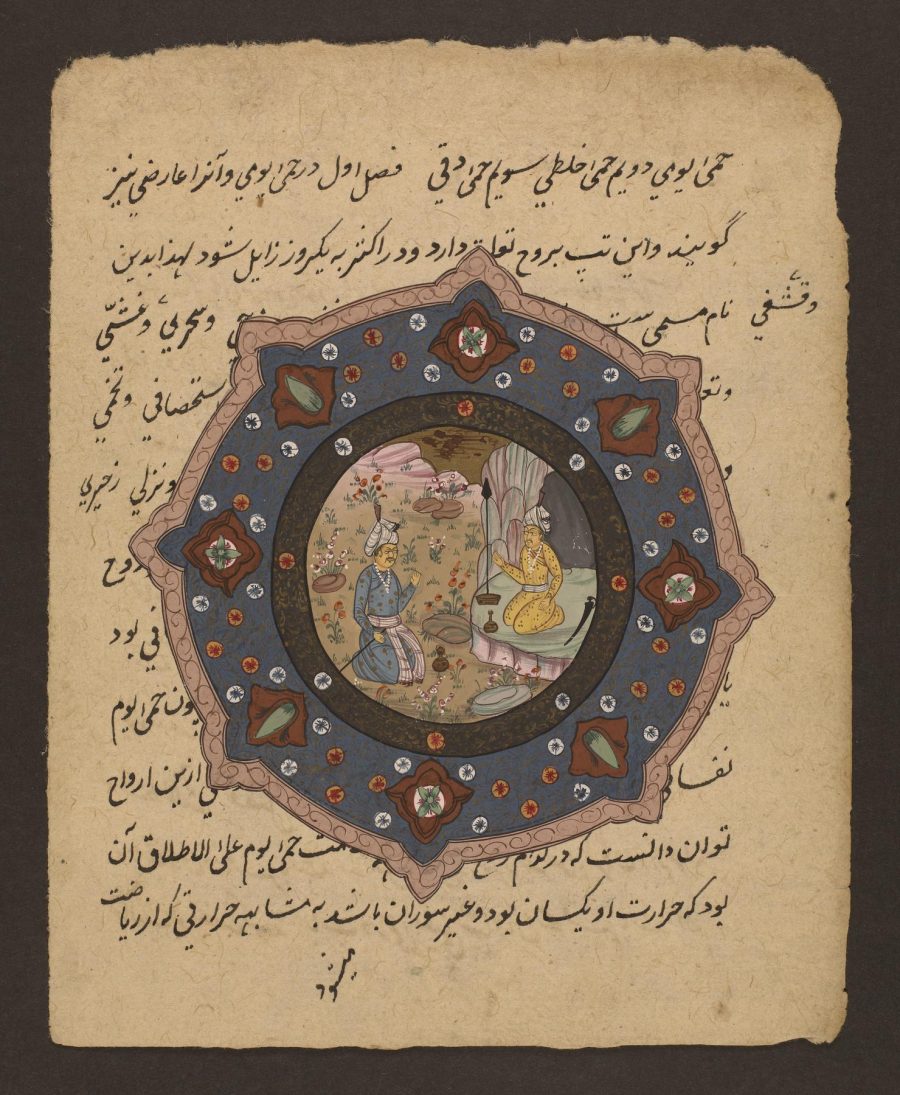
Mathematics, astronomy, history, law, literature, architecture: in these fields and others, the Muslim world came up with major innovations before any other civilization did. This Islamic cultural and intellectual flowering lasted from the 11th through the 19th century, and many of the texts the period left as its legacy have gone mostly unresearched. So say the creators of Manuscripts of the Muslim World, a project of Columbia University, the Free Library of Philadelphia, the University of Pennsylvania, Bryn Mawr College, and Haverford College aimed at creating an online archive of “more than 500 manuscripts and 827 paintings from the Islamicate world broadly construed.”
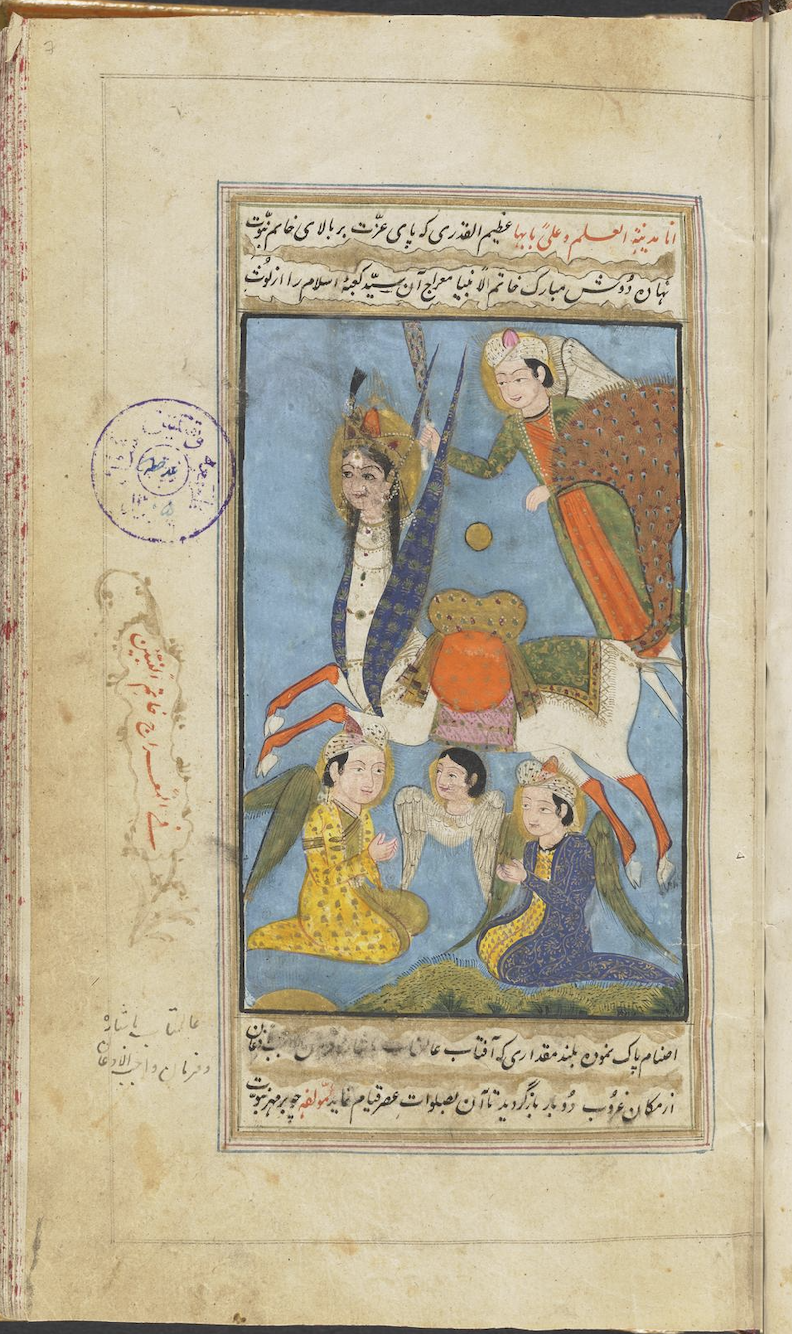
As UPenn Libraries Senior Curator of Special Collections Mitch Fraas tells Hyperallergic’s Sarah Rose Sharp, “The aim of this project was to find and digitize all the Islamicate manuscripts in Philadelphia collections and along the way we partnered with Columbia on a grant to take a multi-city approach.”
To the sources of its manuscripts it also takes a multi-culture approach, including “texts related to Christianity (Coptic and Syriac mss. galore), Hinduism (epics translated into Persian in Mughal India), science, technology, music, etc. but which were produced in the historic Muslim world.” There are also texts, he adds, “in Persian, Arabic, and Turkish of course but also in Coptic, Tamazight, Avestan, etc.”
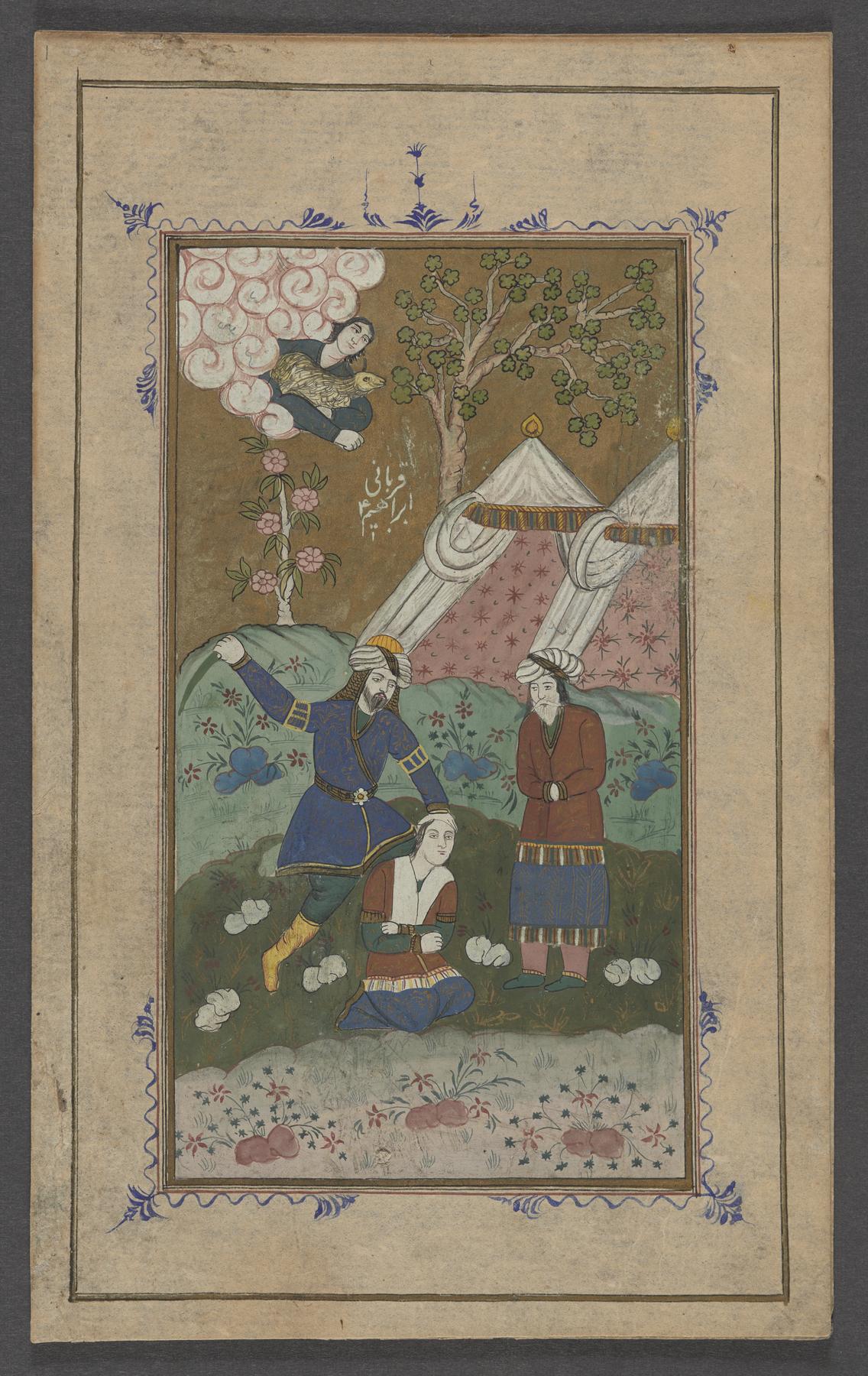
If you can read those languages, Manuscripts of the Muslim World obviously amounts to a gold mine. (You may also find something of interest in the digital archives of 700 years of Persian manuscripts and 10,000 books in Arabic we’ve previously featured here on Open Culture.) But even if you don’t, you’ll find in the collection marvels of book design that will appeal to anyone with an appreciation of the lush aesthetics, both abstract and figurative, of these places and these times. Some of them aren’t even as old as they may seem: take the manuscript at the top of the post, “overpainted in the 20th century to mimic Mughal style.” Or the one below that, whose colophon “says the copy was completed in 1121 A.H. (1709 or 1710 CE),” which “does not make sense given the author likely lived in the 19th century.”
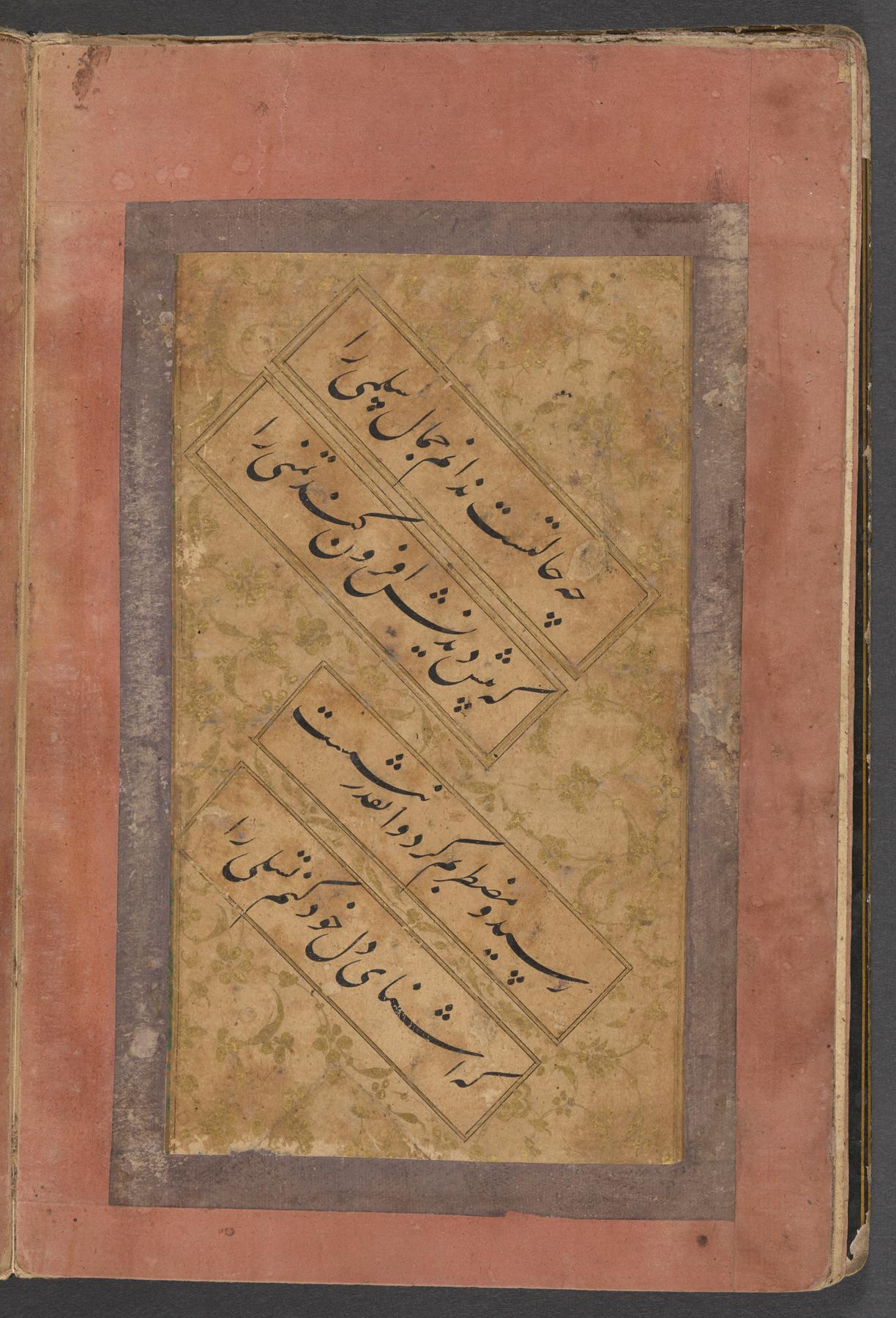
The other pages here come from a set of “illustrations from Qur’ānic stories” (this one depicting “Abraham sacrificing his son”) and a “Persian calligraphy and illustration album.” You’ll find much more in Manuscripts of the Muslim World, hosted on OPENN, the University of Pennsylvania’s online repository of “high-resolution archival images of manuscripts” accompanied by “machine-readable TEI P5 descriptions and technical metadata,” all released into the public domain or under Creative Commons licenses. Though each manuscript’s entry comes with basic notes, the collection is, in the main, not yet a thoroughly studied one. If you have an interest in the Islamic world at its peak of cultural and intellectual influence so far, you may just find your next big research subject here — or at the very least, material for a few hours’ admiration. Enter the collection.
via Hyperallergic
Related Content:
The Complex Geometry of Islamic Art & Design: A Short Introduction
How Arabic Translators Helped Preserve Greek Philosophy … and the Classical Tradition
700 Years of Persian Manuscripts Now Digitized and Available Online
Download 10,000+ Books in Arabic, All Completely Free, Digitized and Put Online
Based in Seoul, Colin Marshall writes and broadcasts on cities, language, and culture. His projects include the book The Stateless City: a Walk through 21st-Century Los Angeles and the video series The City in Cinema. Follow him on Twitter at @colinmarshall, on Facebook, or on Instagram.
Read More...The Library of Congress Makes Its Archives Free for DJs to Remix: Introducing the “Citizen DJ” Project
Since the beginning of hip hop and turntablism, the best DJs have been the best crate diggers, people who would spend hours flipping thru old vinyl, unknown titles, rare cuts, and sometimes seriously out-of-fashion, embarrassing old records for those brief moments of music that when looped, could be spun into modern magic.
At the same time, hip hop sampling has also been a minefield for copyright law, so much that modern DJs shy away from sampling lest they spend months and or years seeking clearing rights.
Artist and computer scientist Brian Foo knows where there are plenty of crates that have yet to be dug: the Library of Congress. Already the author of several projects that turn data into music, Foo received a grant from the Library this year to do something amazing with their collection and offer it to the public.
Citizen DJ is the result and currently you can play around with the beta version. The above video features Foo leading you through the site, and I highly recommend you watch it before diving in.
Sound sources come from the Library’s many collections: Edison sound recordings, Variety Stage recordings, Joe Smith’s interviews with early 20th century celebrities, a collection of American dialect recordings, government information films, and their more modern free music archives.
You can browse these as a color-coded graphic tapestry or as a list, with plenty of filters to narrow down your search. Once you find a sound you like you can chop it up in a sequencer and then bring in loops, change the bpm, and create some very, very odd modern music. (If you’re lucky it will also be funky!) Everything can be downloaded offsite into a (digital audio workstation) DAW of your choice.
Whatever you make, by the way, is yours to do with whatever you want, and that includes selling it as your own track. (Although it’s best-practice to credit the source and the Library).
Foo notes that the project is fully launching in late summer, but is really looking for your feedback, whether you are a professional musician or a curious citizen. (We also want to hear anything that you wind up making, so let us know.)
Related Content:
What Is Fair Use?: A Short Introduction from the Maker of Everything is a Remix
The Library of Congress Makes 25 Million Records From Its Catalog Free to Download
Ted Mills is a freelance writer on the arts who currently hosts the Notes from the Shed podcast and is the producer of KCRW’s Curious Coast. You can also follow him on Twitter at @tedmills, and/or watch his films here.
Read More...Support Us
We're hoping to rely on loyal readers, rather than erratic ads. Please click the Donate button and support Open Culture. You can use Paypal, Venmo, Patreon, even Crypto! We thank you!

About Us

Open Culture scours the web for the best educational media. We find the free courses and audio books you need, the language lessons & educational videos you want, and plenty of enlightenment in between.
Advertise With Us

FREE UPDATES!
GET OUR DAILY EMAIL
Get the best cultural and educational resources on the web curated for you in a daily email. We never spam. Unsubscribe at any time.
FOLLOW ON SOCIAL MEDIA

Open Culture editor Dan Colman scours the web for the best educational media. He finds the free courses and audio books you need, the language lessons & movies you want, and plenty of enlightenment in between.
Advertise With Us

