Watch the Twin Peaks Visual Soundtrack Released Only in Japan: A New Way to Experience David Lynch’s Classic Show
Critics describe David Lynch’s most memorable imagery as not just deeply troubling but deeply American. Despite that — or maybe because of it — his films have found enthusiastic audiences all over the world. But does Lynch command quite as fervent a fan base in any country as he does in Japan? Unlikely though the cultural match of creator and viewer may seem, Lynch’s work tends to make big splashes in the Land of the Rising Sun, and Twin Peaks, the groundbreakingly strange television drama Lynch co-created with Mark Frost, made an especially big one. Standing as evidence is the Twin Peaks material made for the Japanese and no one else: the Lynch-directed Twin Peaks Georgia Coffee commercials, for instance, or the Twin Peaks Visual Soundtrack on Laserdisc.
“What must the thirty-five million people who tuned in to the pilot episode of Twin Peaks in April 1990 have thought when they first witnessed the show’s opening credits?” writes musician Claire Nina Norelli in her book on Twin Peaks’ soundtrack. “This haunting music, coupled with images of rural terrain and industrialization, must have belied audiences’ expectations.”
That holds as true for audiences outside America as inside it: Norelli, who first saw the show in her “small, isolated hometown” of Perth, Australia, writes that “what really captured my attention during what would be the first of many forays into the world of Twin Peaks was its soundtrack, composed by Angelo Badalamenti.”
The Twin Peaks Visual Soundtrack, which you can watch on Youtube, takes Badalamenti’s soundtrack (which Norelli credits with “strengthening the visual language” of the show, no mean feat given the innate strength of Lynch’s visions) and accompanies it with footage of the small town of Twin Peaks and its environs — or rather, footage of the locations around Washington state that Lynch and company used to craft the small town of Twin Peaks and its environs. Matt Humphrey of the Twin Peaks Podcast highlights the track “Laura Palmer’s Theme,” whose video “explores the train graveyard where they filmed the exteriors of Laura’s death location. Now, in the series, the interiors of the train were built on sets. In this video you can see the actual interior of the old trains. It’s pretty cool/gross.”
“From what I can tell,” Humphrey writes, “these Visual Soundtrack videos were taken in maybe 1992 by a Japanese film crew.” In some shots, he adds, “you can see the townsfolk staring.” Other shots bear traces of Twin Peaks’ popularity: “The Double R diner is already sporting the ‘Twin Peaks Cherry Pie’ sign, so I think it’s after the series’ run. However the town of North Bend is still in full Twin Peaks promotional mode as you can see some gift shops in the videos selling all sorts of memorabilia.” But Twin Peaks fans will especially enjoy the opening of the Visual Soundtrack, a CGI fly-through of the eponymous town complete with the aforementioned diner (coffee and cherry pie not included in the rendering), the Twin Peaks Sheriff’s Department, and a logging truck. Seeing how it all compares to Lynch’s hand-drawn map from when he first pitched the show to ABC will be left as an exercise for the true fan.
Related Content:
David Lynch’s Twin Peaks Title Sequence, Recreated in an Adorable Paper Animation
Angelo Badalamenti Reveals How He and David Lynch Composed the Twin Peaks‘ “Love Theme”
Experimental Post-Punk Band Xiu Xiu Plays the Music from David Lynch’s Twin Peaks
David Lynch Directs a Mini-Season of Twin Peaks in the Form of Japanese Coffee Commercials
Japanese Movie Posters of 10 David Lynch Films
Based in Seoul, Colin Marshall writes and broadcasts on cities, language, and culture. His projects include the book The Stateless City: a Walk through 21st-Century Los Angeles and the video series The City in Cinema. Follow him on Twitter at @colinmarshall or on Facebook.
Read More...Hear Vladimir Nabokov’s “My Russian Education” Read by Orhan Pamuk
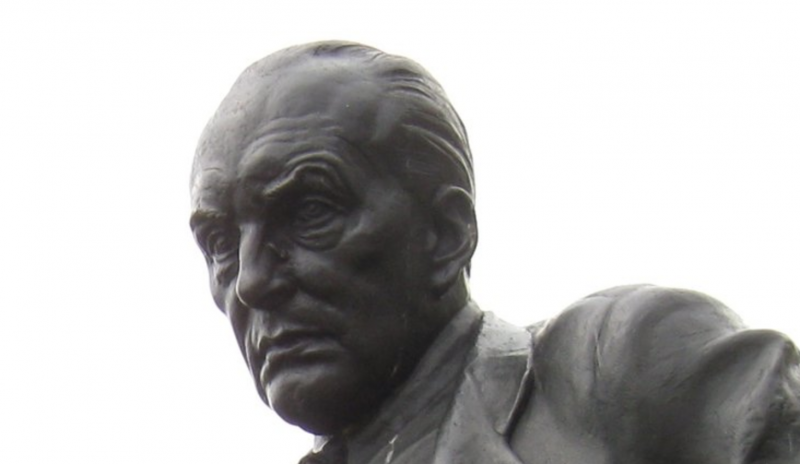
Image by Rahul Narain, via Wikipedia
Below Orhan Pamuk reads Vladimir Nabokov’s “My Russian Education” and discusses it with The New Yorker’s fiction editor, Deborah Treisman. The story originally appeared in a 1948 edition of The New Yorker.
Pamuk received the Nobel Prize in Literature in 2006. Hear him also read “Ibn Hakkan Al-Bokhari, Dead in his Labyrinth” by Jorge Luis Borges here.
This reading will be added to our collection, 1,000 Free Audio Books: Download Great Books for Free.
If you would like to support the mission of Open Culture, consider making a donation to our site. It’s hard to rely 100% on ads, and your contributions will help us continue providing the best free cultural and educational materials to learners everywhere. You can contribute through PayPal, Patreon, and Venmo (@openculture). Thanks!
Read More...How to Take 70+ MasterClass Courses For Less Than a Cup of Good Coffee

FYI: If you sign up for a MasterClass course by clicking on the affiliate links in this post, Open Culture will receive a small fee that helps support our operation.
Masterclass has developed a catalog of online courses taught by “the world’s greatest minds.” As it stands, they have 85 courses covering filmmaking, creative writing, photography, songwriting and more, taught by figures like David Lynch, Annie Leibovitz, Malcolm Gladwell, Margaret Atwood, Neil Gaiman, David Mamet and others. You can sign up for an individual course for $90. (Each course is listed below.) Or if you purchase an All Access Pass, you can take every course in the catalog over a 12-month period. The All Access Pass runs $180–which translates to about $2.00 per course. Not bad, but if you want something completely free, see our collection: 1,700 Free Online Courses from Top Universities
Acting
Helen Mirren Teaches Acting
Samuel L. Jackson Teaches Acting
Natalie Portman Teaches Acting
Filmmaking/Directing
David Lynch Teaches Creativity and Film
Spike Lee Teaches Filmmaking
Werner Herzog Teaches Filmmaking
Martin Scorsese Teaches Filmmaking
Ken Burns Teaches Documentary Filmmaking
Jodie Foster Teaches Filmmaking
Ron Howard Teaches Directing
Mira Nair Teaches Independent Filmmaking
Hans Zimmer Teaches Film Scoring
Danny Elfman Teaches Music for Film
Photography
Annie Leibovitz Teaches Photography
Jimmy Chin Teaches Adventure Photography
Science
Neil deGrasse Tyson Teaches Scientific Thinking and Communication
Writing: Fiction, Poetry, TV, Plays & More
Malcolm Gladwell Teaches Writing
Margaret Atwood Teaches Creative Writing
Neil Gaiman Teaches The Art of Storytelling
David Mamet Teaches Dramatic Writing
Billy Collins Teaches Reading and Writing Poetry
Dan Brown Teaches Writing Thrillers
Dominique Ansel Teaches French Pastry Fundamentals
David Baldacci Teaches Mystery and Thriller Writing
James Patterson Teaches Writing
Shonda Rhimes Teaches Writing For Television
Aaron Sorkin’s MasterClass
R.L. Stine Teaches Writing for Young Audiences
Joyce Carol Oates on the Short Story
David Sedaris on Storytelling and Humor
Music and Songwriting
Carlos Santana Teaches The Art and Soul of Guitar
Herbie Hancock Teaches Jazz
Tom Morello Teaches Electric Guitar
Itzhak Perlman Teaches Violin
Armin van Buuren Teaches Dance Music
Christina Aguilera Teaches Singing
deadmau5 Teaches Electronic Music Production
Timbaland Teaches Producing and Beatmaking
Usher Teaches the Art of Performance
Hans Zimmer Teaches Film Scoring
Danny Elfman Teaches Music for Film
Comedy
Steve Martin Teaches Comedy
Judd Apatow Teaches Comedy
Cooking
Wolfgang Puck Teaches Cooking
Gordon Ramsay Teaches Cooking
Gordon Ramsay Teaches Cooking II: Restaurant Recipes at Home
Alice Waters Teaches Home Cooking
Gabriela Camara Teaches Mexican Cooking
Dominique Ansel Teaches French Pastry Fundamentals
Thomas Keller Teaches Cooking Techniques
James Suckling Teaches Wine Appreciation
Massimo Bottura Teaches Modern Italian Cooking
Aaron Franklin Teaches Texas-Style BBQ
Lynnette Marrero & Ryan Chetiyawardana Teach Mixology
Fashion
Marc Jacobs Teaches Fashion Design
Diane Von Furstenburg Teaches Fashion
Anna Wintour Teaches Creativity and Leadership
Bobbi Brown Teaches Makeup and Beauty
Architecture and Design
Kelly Wearstler Teaches Interior Design
Frank Gehry Teaches Design and Architecture
Games
Garry Kasparov Teaches Chess
Daniel Negreanu Teaches Poker
Phil Ivey Teaches Poker Strategy
Will Wright Teaches Game Design and Theory
Sports
Stephen Curry Teaches Basketball
Serena Williams Teaches Tennis
Simone Biles Teaches Gymnastics Fundamentals
Business and Economics
Bob Iger Teaches Business Strategy & Leadership
Jeff Goodby & Rich Silverstein Teach Advertising and Creativity
Sara Blakely Teaches Self-Made Entrepreneurship
Paul Krugman Teaches Economics and Society
Howard Schultz Leading a Values-Based Business
Chris Voss Teaches the Art of Negotiation
Leadership
Bob Iger Teaches Business Strategy & Leadership
Doris Kearns Goodwin Teaches US Presidential History and Leadership
Anna Wintour Teaches Creativity and Leadership
Sundry
Jane Goodall Teaches Conservation
David Axelrod & Karl Rove Teach Campaign Strategy
Chris Hadfield Teaches Space Exploration
Misty Copeland Teaches Ballet Technique and Artistry
RuPaul Teaches Self-Expression and Authenticity
This page will be updated as more courses get added to the MasterClass catalog.
Read More...Hear Raymond Carver’s “Cathedral” Read by Actor James Naughton
Raymond Carver’s “Cathedral” is the title story from his third short story collection, Cathedral (1983). It tells the story “about blindness and learning to enter the very different world of another.” You can hear actor James Naughton read the story above.
If you would like to support the mission of Open Culture, consider making a donation to our site. It’s hard to rely 100% on ads, and your contributions will help us continue providing the best free cultural and educational materials to learners everywhere. You can contribute through PayPal, Patreon, and Venmo (@openculture). Thanks!
Hear “Shakespeare’s Memory” by Jorge Luis Borges
In this recording above and below, hear Hisham Matar read “Shakespeare’s Memory,” by Jorge Luis Borges. The story was originally published in The New Yorker in 1998. It has since been published in the collection, The Book of Sand and Shakespeare’s Memory. Find this reading listed in our collection, 1,000 Free Audio Books: Download Great Books for Free.
If you would like to support the mission of Open Culture, consider making a donation to our site. It’s hard to rely 100% on ads, and your contributions will help us continue providing the best free cultural and educational materials to learners everywhere. You can contribute through PayPal, Patreon, and Venmo (@openculture). Thanks!
Read More...Hear Salman Rushdie Read Donald Barthelme’s “Concerning the Bodyguard”
From The New Yorker: “Salman Rushdie reads Donald Barthelme’s ‘Concerning the Bodyguard,’ and discusses it with The New Yorker’s fiction editor, Deborah Treisman. ‘Concerning the Bodyguard’ was published in the October 16, 1978, issue of The New Yorker, and was collected in Forty Stories. Salman Rushdie’s most recent book is Luka and the Fire of Life.”
You can stream Rushdie reading Barthelme both above and below.
You can find this reading indexed in our collection, 1,000 Free Audio Books: Download Great Books for Free.
If you would like to support the mission of Open Culture, consider making a donation to our site. It’s hard to rely 100% on ads, and your contributions will help us continue providing the best free cultural and educational materials to learners everywhere. You can contribute through PayPal, Patreon, and Venmo (@openculture). Thanks!
Read More...Why Do Sad People Like to Listen to Sad Music? Psychologists Answer the Question in Two Studies
I find it surprising that psychologists have only just begun to study the reasons that sad people love sad songs. There’s an entire genre named after sadness, and the blues inspired nearly all modern music in one way or another. Classical music is filled with dirges, elegies, laments, requiems, and “countless tear-jerkers.” Listen to the music of any ancient society and you will likely find the same. Humans, it seems, have some innate need to hear sad songs.
Maybe this isn’t too surprising. We aren’t the only species to experience grief, but we are the only one to have devised language, and ways to make it sing to us. We tell stories of loss through music, just as through every other art. This explanation hardly satisfies scientific curiosity, however. Psychologists want to know, specifically, why we do this. Or—more specifically—why sad people do this.
Maybe not everyone enjoys the maudlin jangle of The Smiths during a breakup, or wants to listen to Leonard Cohen after a loss. But enough people do that scenes of sad characters listening to sad songs (or being sad while sad songs play) are some of the most memorable, and memorably parodied, in movie history. Researchers Annemieke Van den Tol and Jane Edwards at the University of Limerick wanted to understand the phenomenon in a 2013 study, so they sought out participants online.
The researchers opted for a limited qualitative approach to get the ball rolling. “This issue has hardly been investigated before,” writes Christian Jarrett at The British Psychological Society’s Research Digest. Their sample consisted of a self-selecting group of adults, age 18 to 66. Thirty-five of them were men and 30 women. Most of the respondents were Irish, though some were also from the Netherlands, the U.S., Germany, and Spain.
Each of the study participants was asked to describe a specific time in their lives when “they’d had a negative experience and then chose to listen to a sad piece of music.” Their descriptions were then analyzed for recurring themes. Among the most common were nostalgia, a desire for connection, and a sense of “common humanity.” The participants also cited aesthetic appreciation and a “re-experiencing of their affect” in which the sad song helped them express their feelings and find relief.
A more recent study published in Emotion concentrated its focus. Rather than surveying people who had had sad times in their lives—a category that includes pretty much everyone—researchers at the University of South Florida surveyed people with major depression. Their sample size is hardly any larger, and the participants are more homogenous: 76 female undergraduates, half of whom had a diagnosis of major depressive disorder and half of whom did not.
The study replicated methods used in a 2015 study to find out whether people with depression tended to choose sad music over “happy and neutral music,” writes Jarrett. That turned out to be the case, the researchers found. The reason surprised them. Against “the provocative idea” argued in other research “that depressed people are seeking to perpetuate their low mood,” the study instead found that those “who favored sad music said that they did so because it was relaxing, calming or soothing.”
In some ways, the answers aren’t significantly different from those of people who are not clinically depressed but still experience periods of deep sadness. Sad songs give meaning to our pain and let us know we aren’t the only ones feeling it. But we know this. Everyone has at least one or two sad songs that soothe them, and some of us have whole playlists of them. The Paste magazine staff put together an excellent list of songs that helped them “hurt so good.” It’s got some of the finest writers and singers of sad songs on it: Tammy Wynette, Elliot Smith, Tom Waits, Patty Griffin, Prince, by way of Sinead O’Connor. If one of your sad songs isn’t on here, you’ll probably find a few new ones to add.
I’d suggest for inclusion, to start, The Cure’s “The Same Deep Water as You,” Etta James’ “I Rather Go Blind,” Bonnie ‘Prince’ Billie’s “I See a Darkness,” Radiohead’s “How to Disappear Completely,” and The Smith’s “That Joke Isn’t Funny Anymore.” Tell us, what would you add—and why would you want to do a thing like listen to sad music when you’re already miserable? Tell us your reasons, and your songs, below.
Related Content:
Nick Cave Creates a List of His 10 Favorite Songs–His Favorite “Hiding Songs”
Josh Jones is a writer and musician based in Durham, NC. Follow him at @jdmagness
Read More...Steven Pinker & Rebecca Goldstein Debate the Value of Reason in an Animated Socratic Dialogue
Academic power couple Steven Pinker and Rebecca Newberger Goldstein probably need no introduction to Open Culture readers, but if so, their lengthy and impressive CVs are only a search and click away. The Harvard cognitive psychologist and novelist and philosopher, respectively, are secular humanist heroes of a sort—public intellectuals who have dedicated their lives to defending science and classical logic and reasoning. So, what do two such people talk about when they go out to dinner?
The TED-Ed video above depicts a date night scenario, with dialogue recorded live at TED in 2012 and edited into an “animated Socratic dialogue.” The first scene begins with a defensive Goldstein holding forth on the decline of reason in political discourse and popular culture. “People who think too well are often accused of elitism,” says Goldstein, while she and Pinker’s animated avatars stroll under a Star Trek billboard featuring Spock giving the Vulcan salute, just one of many clever details inserted by animation studio Cognitive.
Pinker narrows the debate to a dilemma—a Spockean dilemma, if you will—between the head and heart. “Perhaps reason is overrated,” he ventures (articulating a position he may not actually hold): “Many pundits have argued that a good heart and steadfast moral clarity are superior to the triangulations of over-educated policy wonks.” The cowboy with a six-shooter and a heart of gold depicted in the animation bests the stereotypical eggheads in every Hollywood production.
The “best and brightest” of the eggheads, after all, says Pinker, “dragged us into the quagmire in Vietnam.” Other quagmires advocated by other policy wonks might come to mind (as might the unreasoning cowboys who made the big decisions.) Reason, says Pinker, gave us environmental despoliation and weapons of mass destruction. He sets up a dichotomy between “character & conscience” on the one side and “cold-hearted calculation” on the other. “My fellow psychologists have shown that we are led by our bodies and our emotions and use our puny powers of reason merely to rationalize our gut feelings after the fact.”
Goldstein counters, “how could a reasoned argument entail the ineffectiveness of reasoned arguments?” (Visual learners may remember the image of a person blithely sawing off the branch on which they sit.) “By the very act of trying to reason us into your position, you’re conceding reason’s potency.” One might object that stating a scientific theory—such as the theory that sensation and emotion come before reasoning—is not the same as making an Aristotelian argument.
But this is a 15-minute debate, not a philosophical treatise. There will, by nature of the forum and the editing process, be elisions and some slippery uses of terminology. Still, when Goldstein dismisses the critique of “logocentrism” as an allegation of “the crime of letting logic dominate our thinking,” some philosophers may grind their teeth. The problem of logocentrism is not “too much logic” but the underlying influence of Platonic idealism and the so-called “metaphysics of presence” on Western thinking.
Without the critique of logocentrism, argues philosopher Peter Gratton, “there is no 20th-century continental philosophy.” Handwaving away an entire body of thought seems rather hasty. Outside of specific contexts, idealized abstractions like “reason” and “progress” may mean little to nothing at all in the messy reality of human affairs. This is the problem Pinker alludes to in asking whether reason can have moral ends if it is mainly a tool we use to satisfy short-term biological and emotional needs and desires.
By the time the check arrives, Pinker has been persuaded by Goldstein’s argument that in the course of time, maybe a long time, reason is the key driver of moral progress, provided that certain conditions are met: that reasoners care about their well-being and that they belong to a community of other reasoners who hold each other accountable and produce better outcomes than individuals can alone. Drop your assumptions, watch their stimulating animated dinner and see if, by the final course, you are persuaded too.
Related Content:
Steven Pinker: “Dear Humanists, Science is Not Your Enemy”
What is the Good Life? Plato, Aristotle, Nietzsche, & Kant’s Ideas in 4 Animated Videos
Josh Jones is a writer and musician based in Durham, NC. Follow him at @jdmagness
Read More...Steve Jobs Shares a Secret for Success: Don’t Be Afraid to Ask for Help
In 1994—the year Apple co-founder Steve Jobs filmed an interview with The Silicon Valley Historical Association in which he encouraged people to go for what they want by enlisting others’ assistance—there was no social media, no Kickstarter, no GoFundMe, no Patreon… email was just becoming a thing.
Back then, asking for help meant engaging in a face-to-face or voice-to-voice real time interaction, something many people find intimidating.
Not so young Jobs, an electronics nut who related more easily to the adult engineers in his Silicon Valley neighborhood than to kids his own age.
As he recounts above, his desire to build a frequency counter spurred him to cold call Bill Hewlett (of Hewlett-Packard), to see if he’d give him some of the necessary parts.
(In light of the recent college admissions scandal, let us recognize the 12-year-old Jobs not only had the gumption to make that call, he also appears to have had no parental assistance looking up Hewlett’s number in the Palo Alto White Pages.)
Hewlett agreed to the young go-getter’s request for parts. Jobs’ chutzpah also earned him a summer job on a Hewlett Packard assembly line, putting screws into frequency counters. (“I was in heaven,” Jobs said of this entry level position.)
Perhaps the biggest lesson for those in need of help is to ask boldly.
Ask like it’s 1994.
No, ask like it’s 1968, and you’re a self-starter like Steve Jobs hellbent on procuring those specialty parts to build your frequency counter.
(Let’s further pretend that lying around waiting for Mom to order you a DIY frequency counter kit on Amazon is not an option…)
Need an extra push?
Psychologist Adam Grant’s bestselling Give and Take makes an effective case for human interaction as the pathway to success, whether you’re the kid placing the call, or the big wig with the power to grant the wish.
Social psychologist Heidi Grant’s book, Reinforcements: How to Get People to Help You, explains how to ask without sniveling, self-aggrandizing, or putting the person on the receiving end in an awkward position.
And that shy violet Amanda Fucking Palmer, author of The Art of Asking and no stranger to the punk rock barter economy, details how her “ninja master-level fan connection” has resulted in her every request being met—from housing and meals to practice pianos and a neti pot hand delivered by an Australian nurse.
Just don’t forget to say “please” and, eventually, “thank you.”
Related Content:
Steve Jobs on Life: “Stay Hungry, Stay Foolish”
A Young Steve Jobs Teaches a Class at MIT (1992)
Steve Jobs Narrates the First “Think Different” Ad (Never Aired)
Ayun Halliday is an author, illustrator, theater maker and Chief Primatologist of the East Village Inky zine. Join her in New York City this May for the next installment of her book-based variety show, Necromancers of the Public Domain. Follow her @AyunHalliday.
Read More...Trivial Pursuit: The Shakespeare Edition Has Just Been Released: Answer 600 Questions Based on the Life & Works of William Shakespeare

“The standard thing to say is that each age makes a Shakespeare in its own image,” wrote The New Yorker’s Adam Gopnik on the the Bard’s 440th birthday. But over the centuries, the biographical and critical portrayal of the playwright of Hamlet, Romeo and Juliet, Othello, and King Lear has remained remarkably consistent: “He was a genius at comedy, a free-flowing natural who would do anything for a joke or a pun, and whom life and ability bent toward tragedy.” He evolved “a matchless all-sidedness and negative capability, which could probe two ideas at once and never quite come down on the ‘side’ of either: he was a man in whom a temperamental timidity and caution blossomed artistically into the nearest thing we have to universality.”
But today, on Shakespeare’s 455th birthday, we might still wonder how universal his work really is. As luck would have it, the Shakespeare Birthday Trust has just come up with a kind of test of that proposition: an all-Shakespeare edition of the popular board game Trivial Pursuit.
“Devised by the Shakespeare Birthplace Trust, the independent and self-sustaining charity that cares for the world’s greatest Shakespeare heritage sites in his home town of Stratford-upon-Avon, in partnership with games company, Winning Moves,” Trivial Pursuit: The Shakespeare Edition (which you can buy on the Shakespeare Birthday Trust’s online shop) offers “600 questions across six categories — Comedies, Histories, Tragedies, Characters, Biography and Legacy,” all “carefully crafted by Shakespeare scholars Dr Nick Walton and Dr Anjna Chouhan.”
One might assume that Shakespeare buffs and scholars will dominate this game. No doubt they will, but perhaps not as often as expected, since its questions give anyone with general cultural awareness a fighting chance: “As well as questions about Shakespeare’s life and works, there are others that link him to popular culture such as the Harry Potter film series, TV shows Dr. Who and Upstart Crow, as well as actors Sir Patrick Stewart, Sir Laurence Olivier, and Keanu Reeves, and the Bard’s lesser known influence on the likes of Elvis Presley and even the classic cartoon Popeye.” As Walton puts it, “there are all sorts of paths to Shakespeare,” not least because of his work’s still-unchallenged place as the most drawn-upon texts, deliberately or inadvertently, in the whole of the English language. As for Shakespeare himself, he remains “the reigning poet of the language,” in Gopnik’s words, as well as “the ordinary poet of our company” — and now we have a game to play to keep him in our company.
Pick up your copy of the game here.
via Mental Floss
Related Content:
Free Online Shakespeare Courses: Primers on the Bard from Oxford, Harvard, Berkeley & More
Read All of Shakespeare’s Plays Free Online, Courtesy of the Folger Shakespeare Library
Take a Virtual Tour of Shakespeare’s Globe Theatre
Based in Seoul, Colin Marshall writes and broadcasts on cities, language, and culture. His projects include the book The Stateless City: a Walk through 21st-Century Los Angeles and the video series The City in Cinema. Follow him on Twitter at @colinmarshall or on Facebook.
Read More...Support Us
We're hoping to rely on loyal readers, rather than erratic ads. Please click the Donate button and support Open Culture. You can use Paypal, Venmo, Patreon, even Crypto! We thank you!

About Us

Open Culture scours the web for the best educational media. We find the free courses and audio books you need, the language lessons & educational videos you want, and plenty of enlightenment in between.
Advertise With Us

FREE UPDATES!
GET OUR DAILY EMAIL
Get the best cultural and educational resources on the web curated for you in a daily email. We never spam. Unsubscribe at any time.
FOLLOW ON SOCIAL MEDIA

Open Culture editor Dan Colman scours the web for the best educational media. He finds the free courses and audio books you need, the language lessons & movies you want, and plenty of enlightenment in between.
Advertise With Us

