Historic Manuscript Filled with Beautiful Illustrations of Cuban Flowers & Plants Is Now Online (1826 )
The internet has become an essential back up system for thousands of pieces of historical art, science, and literature, and also for a specialized kind of text incorporating them all in degrees: the illustrated natural science book, from the golden ages of book illustration and philosophical naturalism in Europe and the Americas. We’ve seen some fine digital reproductions of the illustrated Nomenclature of Colors by Abraham Gottlob Werner, for example—a book that accompanied Darwin on his Beagle voyage.
The same source has also brought us a wonderfully illustrated, influential 1847 edition of Euclid’s Elements, with a semaphore-like design that color-codes and delineates each axiom. And we’ve seen Emily Noyes Vanderpoel’s 1903 Color Problems: a Practical Manual for the Lay Student of Color come online (and back in print), a study whose ideas would later show up in the work of modern minimalists like Josef Albers.
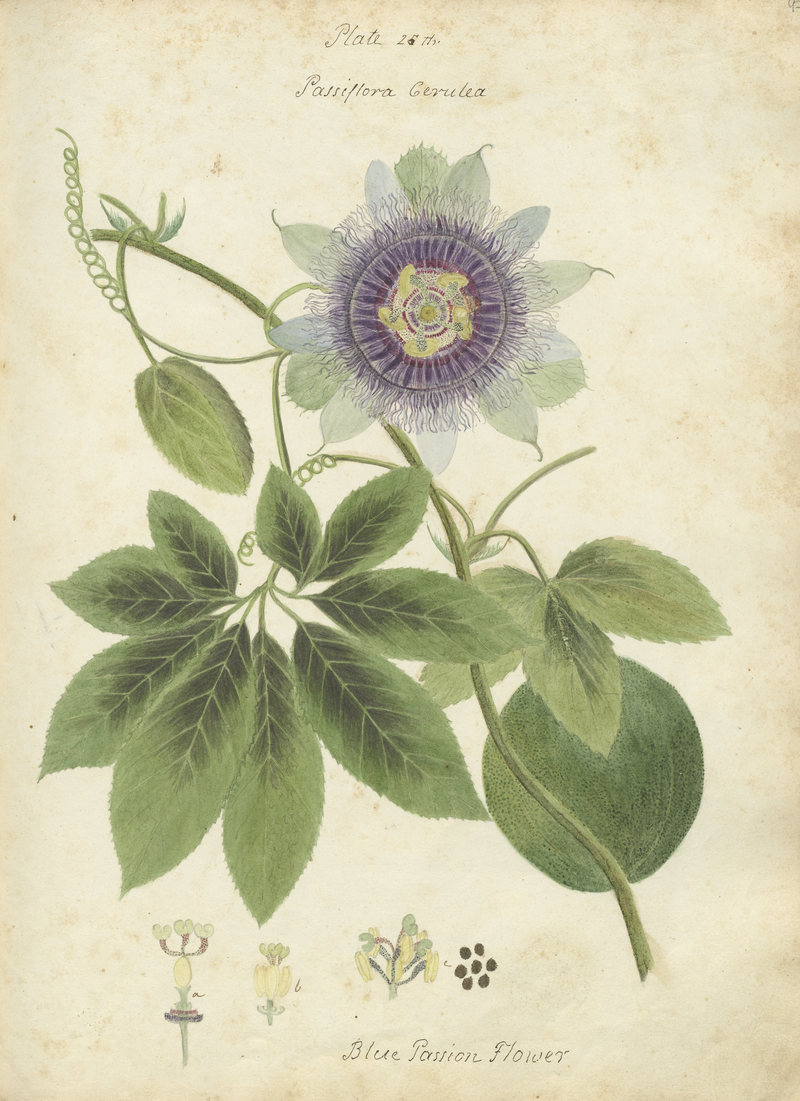
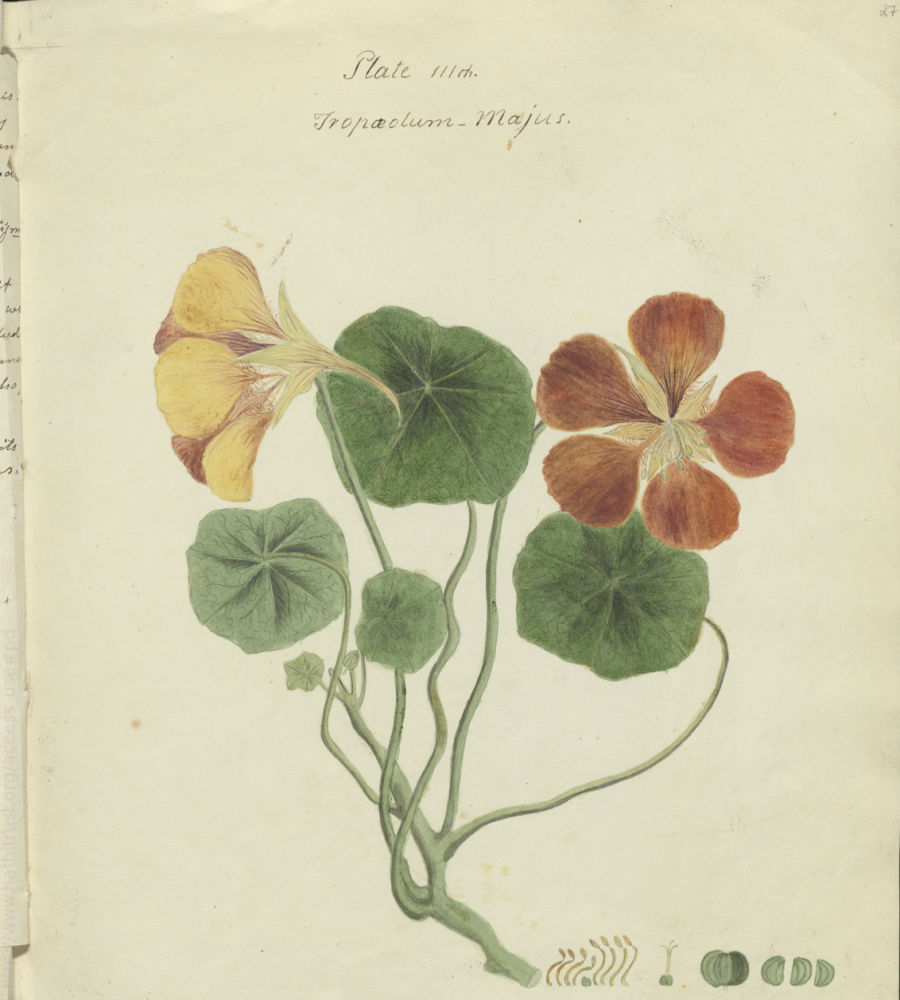
Above and below, you can see just a fraction of the illustrations from another example of a remarkable illustrated scientific book, also by a woman on the edge of being forgotten: Nancy Anne Kingsbury Wollstonecraft’s 1826 Specimens of the Plants and Fruits of the Island of Cuba.

This study of Cuban plant life might never have seen the light of day were it not for the new online edition from the HathiTrust digital library, “by way of Cornell University’s Library Division of Rare and Manuscript Collections,” notes Atlas Obscura. The book is notable for more than its obscurity, however. It is, says scholar of Cuban history and culture Emilio Cueto, “the most important corpus of plant illustrations in Cuba’s colonial history.” Its author first began work when she moved to the island after her husband, Charles Wollstonecraft (brother of Mary and uncle of Mary Shelley) died in 1817.
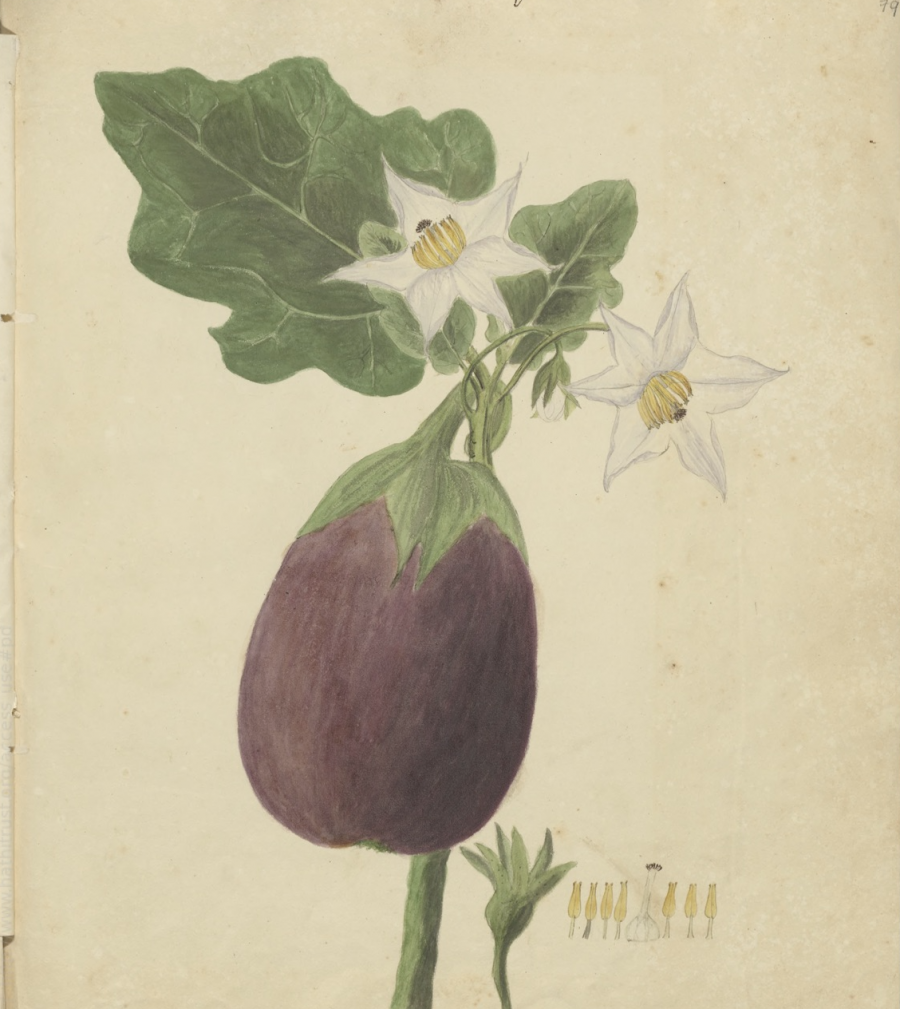
She began documenting the plant life in the region of Matanzas through the 1820s. That research became Specimens of the Plants and Fruits of the Island of Cuba, a meticulous study, full of Wollstonecraft’s vibrant, striking watercolors. After making several attempts at publication, she died in 1828, and the manuscript never appeared in public. Now, almost two centuries later, all three volumes are available to read online and download in PDF. They had been dormant at the Cornell University Library, and few people knew very much about them. Cueto, the scholar most familiar with the manuscript’s place in history, had himself searched for it for 20 years before finding it hidden away at Cornell in 2018.
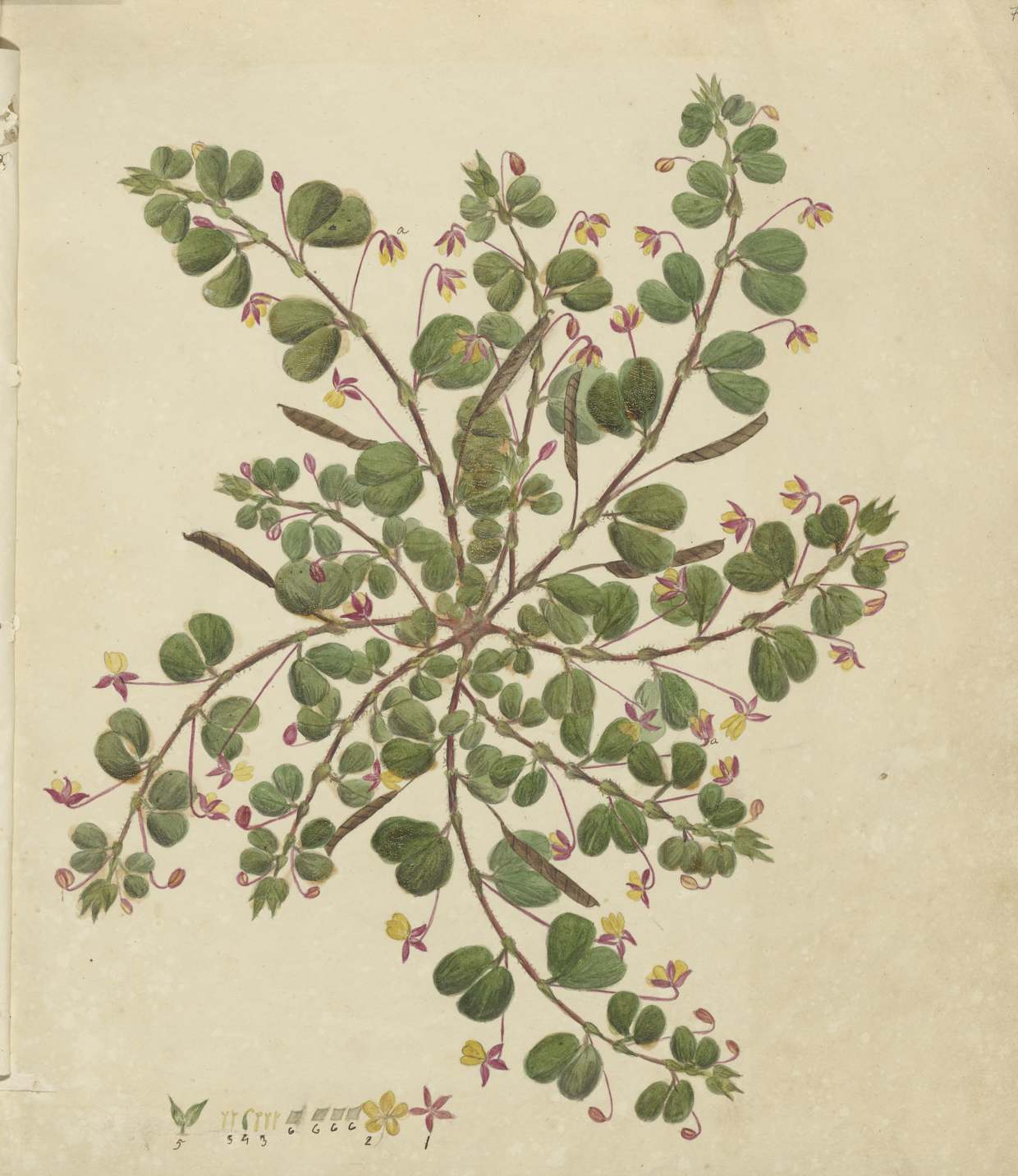
Now it is freely available to anyone and everyone online, part of an expanding, shared online archive of fascinating works by non-professional scientists and mathematicians whose work was painstakingly interpreted by artists for the benefit of a lay readership. In the case of Wollstonecraft, as with Goethe and many other contemporary scholar-artists, we have the two in one. View and download her 220-page work, with its 121 illustrated plates at the HathiTrust Digital Library.
Related Content:
Two Million Wondrous Nature Illustrations Put Online by The Biodiversity Heritage Library
Wagashi: Peruse a Digitized, Centuries-Old Catalogue of Traditional Japanese Candies
Josh Jones is a writer and musician based in Durham, NC. Follow him at @jdmagness
Read More...George Orwell’s Essay “British Cookery” is Officially Published 70 Years After It Was Rejected by the British Council (1946)

Image by BBC, via Wikimedia Commons
Voltaire once joked that Britain had “a hundred religions and only one sauce.” In my experience, that sauce is a curry, which was already a British staple in Voltaire’s time. No doubt he had something much blander in mind. Of course, it’s all hyperbolic fun until someone takes offense, as did George Orwell in 1946, when he wrote, against Voltairean stereotypes, about the misunderstood pleasures of British food. His essay, “British Cookery,” was commissioned by the British Council, but they subsequently deemed that it would be “’unwise to publish,’” reports the Daily Mail, “so soon after the hungry winter of 1946 and wartime rationing.”
Not that it matters much now, but the Council has formally apologized to the deceased Orwell, over 70 years later. Senior policy analyst Alasdair Donaldson explains they are “delighted to make amends” by publishing the essay in full, alongside “the unfortunate rejection letter.” You can read it here at the British Council site. Orwell grants that the British diet is “simple, rather heavy, perhaps slightly barbarous… with its main emphasis on sugar and animal fats…. Cheap restaurants in Britain are almost invariably bad, while in expensive restaurants the cookery is almost always French, or imitation French.”
Elsewhere, he concedes, “the British are not great eaters of salads.” Indeed, he says, “the two great shortcomings of British cookery are a failure to treat vegetables with due seriousness, and an excessive use of sugar.” He does go on at length, in fact, about what sounds like a national epidemic of sugar addiction. Such lapses of taste are also what we would now label a nutritional emergency. He may seem to grant too much to critics of British cooking. But this is mainly by contrast with spicier, more vegetable-friendly cuisines of the continent and colonies. The kind of cooking he describes makes creatively varied uses of sturdy but limited local resources (except for the sugar).
Orwell’s brutal honesty about British food’s deficiencies makes him sound like a trustworthy guide to its true delights. One of the truths he tells is that “British cookery displays more variety and more originality than foreign visitors are usually ready to allow.” The average visitor encounters British food principally in restaurants, pubs, and hotels, which, “whether cheap or expensive” are not representative of “the diet of the great mass of the people.” This may be said of many regional cuisines. But Orwell is devoted to a native British cooking which had, at the time, almost disappeared after six years of war rationing.
This cooking is rich in roast and cold meats, cheeses, breads, Yorkshire and suet puddings, potatoes and turnips. The British diet is, or was, Orwell writes, eaten by the lower and upper classes alike, under different names and prices. Seasonings are few. “Garlic, for instance, is unknown in British cookery proper.” What stands out is mint, vinegar, butter, dried fruits, jam, and marmalade.
Orwell himself included a marmalade recipe. (A handwritten note reads “Bad recipe! Too much sugar and water.”), which you can see below. Decide for yourself how much sugar to add.
ORANGE MARMALADE
Ingredients:
2 seville oranges
2 sweet oranges (no)
2 lemons (no)
8lbs of preserving sugar
8 pints of water
Method. Wash and dry the fruit. Halve them and squeeze out the juice. Remove some of the pith, then shred the fruit finely. Tie the pips in a muslin bag. Put the strained juice, rind and pips into the water and soak for 48 hours. Place in a large pan and simmer for 1/2 hours until the rind is tender. Leave to stand overnight, then add the sugar and let it dissolve before bringing to the boil. Boil rapidly until a little of the mixture will set into a jelly when placed on a cold plate. Pour into jars which have been heated beforehand, and cover with paper covers.
An increasing number of people are cutting back or quitting nearly every main ingredient in what Orwell describes as authentic British cooking: from meat to dairy to gluten to sugar to suet…. But if we are going to give it a fair shake, he argues, we must try the real thing. Or his version of it anyway. He includes several more recipes: Welsh rarebit, Yorkshire pudding, treacle tart, plum cake, and Christmas pudding.
Orwell’s “British Cookery” wars with itself and comes to terms. He fills each paragraph with frank acknowledgements of British cuisine’s shortcomings, yet he relishes its simple, solid virtues. He writes that “British cookery” is “best studied in private houses, and more particularly in the homes of the middle-class and working-class masses who have not become Europeanized in their tastes.” It’s a kind of cultural nationalism, but perhaps one suggesting those who want others to understand and appreciate a specific kind British culture should invite outsiders in to share a meal.
Related Content:
George Orwell Explains How to Make a Proper Cup of Tea
Try George Orwell’s Recipe for Christmas Pudding, from His Essay “British Cookery” (1945)
Foodie Alert: New York Public Library Presents an Archive of 17,000 Restaurant Menus (1851–2008)
Josh Jones is a writer and musician based in Durham, NC. Follow him at @jdmagness
Read More...Download Free Coloring Books from 113 Museums
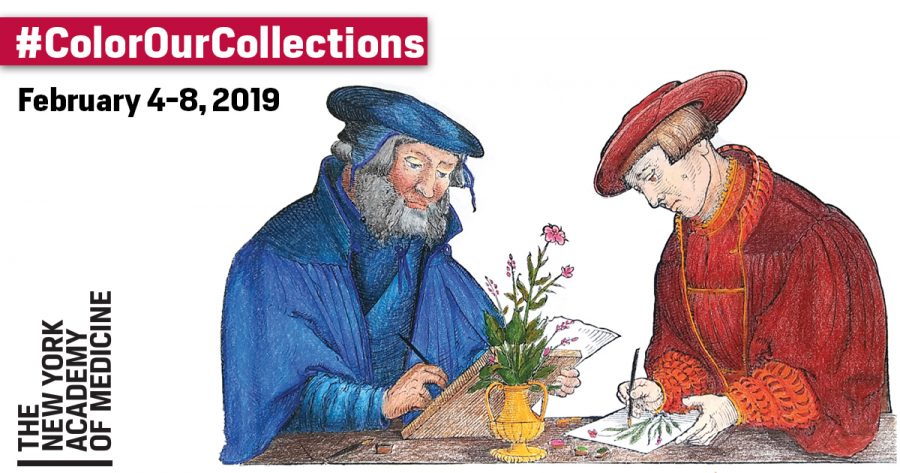
One can only color so many floral-trimmed affirmations before one begins to crave something slightly more perverse. An emaciated, naked, anthropomorphized mandrake root, say or…
Thy wish is our command, but be prepared to hustle, because today is the final day of Color Our Collections, a compellingly democratic initiative on the part of the New York Academy of Medicine.
Since 2016, the Academy has made an annual practice of inviting other libraries, archives, and cultural institutions around the world to upload PDF coloring pages based on their collections for the public’s free download.
This year 113 institutions took the bait.


Our host, the New York Academy of Medicine kicks things off with the aforementioned mandrakes, and then some.
Medical subjects are a popular theme here. You’ll find plenty of organs and other relevant details to color, compliments of Boston’s Countway Library’s Center for the History of Medicine, London’s Royal College of Physicians, and the Historical Medical Library of The College of Physicians of Philadelphia (aka the Mütter Museum).
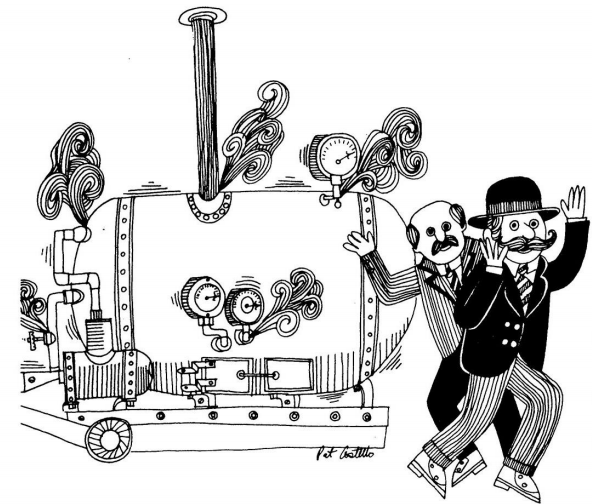
The coloring book of the Richardson-Sloane Special Collections Center at the Davenport Public Library is a bit more all-ages. They certainly remind me of my childhood. The work of native son, Patrick J. Costello, above, figures heavily here. Either he deserves a lot of credit for developing the School House Rock aesthetic, or he was one of a number of hard working illustrators tapping into the cartoon‑y, thick-nibbed zeitgeist

The Andover-Harvard Theological Library’s coloring book has some divine options for those who would use their coloring pages as DIY 16th-century bookplates or alphabet primers.

Those who need something more complex will appreciate the intricate maps of the Lithuanian Art Museum’s coloring book. Coloring Franz Hogenberg’s 1581 map of Vilnius is the emotional equivalent of walking the labyrinth for god knows how many hours.

As befits a content website-cum-digital-National-Library, the Memoria Chilena Coloring Book 2019 has something for every taste: flayed anatomical studies, 1940’s fashions, curious kitty cats, and a heaping helping of jesters.
Check out all your options here.
Once you’ve had your way with the Crayolas, please share your creations with the world, using the hashtag #ColorOurCollections.
Participating Institutions 2019
The New York Academy of Medicine Library
Royal College of Physicians, London
OHSU Historical Collections & Archives
University of Wisconsin-Milwaukee Special Collections
Swarthmore College Libraries
South Carolina State Library
Shenandoah County Library, Truban Archives
Biblioteca de la Universidad de Zaragoza
Christ’s College Library, Cambridge
Tower Hill Botanic Garden
University of Waterloo Special Collections & Archives
Wageningen University & Research
Brunel University Special Collections
Hawaii State Foundation on Culture and the Arts
Washington State Library
Saint Francis de Sales Parish United by the Most Blessed Sacrament Parish History Archives
Getty Research Institute
Auckland Museum
Loyola University Chicago Archives & Special Collections
Seton Hall University Libraries
Bibliotheque interuniversitaire de Sante, Paris
Digital Library at Villanova University
West Virginia and Regional History Center
Bass Library, Yale University Library
University of Kansas Libraries
Medical Heritage Library
The Ohio State University Health Sciences Library
University of Massachusetts Amherst Libraries
Rutgers University Special Collections and University Archives
University of British Columbia Library
National Library of Medicine
Science History Institute
Ricker Library of Architecture and Art at the University of Illinois
Chautauqua Institution Archives
Bibliotheque et Archives nationales du Quebec
The LuEsther T. Mertz Library of the New York Botanical Garden
Auburn University Special Collections and Archives
Open Museum, Academia Sinica Center for Digital Cultures
Les Champs Libres
Lithuanian Art Museum
Memoria Chilena
Barret Library, Rhodes College
Wales Higher Education Libraries Forum (WHELF)
Royal Anthropological Institute
Delaware Museum of Natural History
James Madison University Libraries
Utah State University Libraries Special Collections & Archives
Stevens Institute of Technology / Archives & Special Collections
Waring Historical Library of the Medical University of South Carolina
Bernard Becker Medical Library at Washington University in St. Louis
University of Puget Sound
Drexel University College of Medicine Legacy Center Archives and Special Collections
Queens’ College Library, Cambridge
Stadtbibliothek Koeln
Andover-Harvard Theological Library
Rare Book and Manuscript CRAI Library at University of Barcelona
Newberry Library
Historical Medical Library of The College of Physicians of Philadelphia
Lambeth Palace Library
Folger Shakespeare Library
University of Glasgow Archives and Special Collections
John J. Burns Library
Biodiversity Heritage Library
The University of Iowa Libraries, Iowa Digital Library
Tennessee State Museum
Center for the History of Medicine, Countway LIbrary
Russian State Library
South Carolina Historical Society
Library Company of Philadelphia
The Burke Library at Union Theological Seminary
Pratt Institute Archives
The Children’s Museum of Indianapolis
Wangensteen Historical Library of Biology and Medicine, University of Minnesota Libraries
Washington University Libraries Julian Edison Department of Special Collections
Libraries and Cultural Resources, University of Calgary
Leonard H. Axe Library, Pittsburg State University
Susquehanna University, Blough-Weis Library
Richardson-Sloane Special Collections Center, Davenport Public Library
Denver Public Library, Western History and Genealogy
Findlay-Hancock County Public Library
Northern Illinois University
Escuela Superior de Artes de Yucatan
Lake County Public Library
United Nations Library Geneva
Jeleniorskie Centrum Informacji i Edukacji Regionalnej Ksiaznica Karkonoska
Women and Leadership Archives, Loyola University Chicago
Grand Portage National Monument Archives Collection
Jagiellonian Library
Botanical Research Institute of Texas
University of North Texas Libraries
Lehigh University Libraries Special Collections
Rare Book and Manuscript Library at the University of Illinois at Urbana-Champaign
Massachusetts General Hospital Archives & Special Collections
Clark Special Collections, McDermott Library, USAFA
Bibliotheque nationale de France
Centre for Chinese Contemporary Art Archive & Library
Shangri La Museum of Islamic Art, Culture & Design
British Library
Western University Archives and Special Collections
Europeana
Denver Botanic Gardens
MedChi, The Maryland State Medical Society
Grinnell College Libraries
University of Maryland, Baltimore County (UMBC)
Historical Society of Pennsylvania
National Library of Russia
Eastern Kentucky University Special Collections & Archives
Numelyo
Louisiana State University Special Collections
New York State Library
North Carolina Pottery Center
Royal Horticultural Society Libraries
Library of Virginia
Related Content:
Ayun Halliday is an author, illustrator, theater maker and Chief Primatologist of the East Village Inky zine. See her onstage in New York City this Monday as host of Theater of the Apes book-based variety show, Necromancers of the Public Domain. Follow her @AyunHalliday.
Read More...In the 1920s America, Jazz Music Was Considered Harmful to Human Health, the Cause of “Neurasthenia,” “Perpetually Jerking Jaws” & More
These are some interesting stories about the Nazis and jazz, including one about a very bad jazz propaganda band created by Goebbels himself. But we need not mention these at all, or even leave the shores of jazz’s birthplace to find examples of extreme reactions to jazz by authoritarian figures who hated and feared it for exactly the same reasons as the Nazis. Chief among such American enemies of jazz was raging anti-Semite Henry Ford, who feared that jazz was, you guessed it, a Jewish plot to infect the country with racially inferior “musical slush.”
Ford used white country music and square dancing in public schools as weapons of warfare against jazz in the 1920s, thereby displacing blackface minstrelsy as the dominant form of paranoid response to black music in middle America. Another crusader, Harry Anslinger, commissioner of the Federal Bureau of Narcotics between 1930 and 1962, more or less invented the war on drugs with his reefer madness war on jazz. He said it sounded like “the jungles in the dead of night” and could “lure white women.” Anslinger relentlessly persecuted Billie Holiday and went after Thelonious Monk, Dizzy Gillespie, Duke Ellington, and Louis Armstrong.
It was within this early 20th century milieu that other institutional powers—some of the country’s most powerful—declared a war on jazz for supposed reasons of public health. (A movement, incidentally, given to an enthusiasm for eugenics and forced sterilization at the time.) Historian Russell L. Johnson has documented this campaign in the journal Health and History, and Jessie Wright-Mendoza describes many of his findings at JStor Daily.
Milwaukee’s public health commissioner claimed that the music damaged the nervous system, and a Ladies’ Home Journal article reported that it caused brain cells to atrophy. In Cincinnati, a maternity hospital successfully petitioned to have a nearby jazz club shut down, arguing that exposing newborns to the offending music would have the effect of “imperiling the happiness of future generations.”
Jazz was “unrhythmical,” opponents argued, and so was disease. Q.E.D. In 1923, the Illinois Supreme Court upheld a ruling that shut down a jazz club, citing in their opinion a belief the music “wears upon the nervous system and produces that feeling which we call ‘tired.’” Doctors warned that too much jazz could cause neurasthenia, a catch-all for anxiety, depression, headaches, fatigue, etc. But jazz could also cause patients to become “nervous and fidgety” with “perpetually jerking jaws.” Whatever it did, jazz was hazardous.
Oddly, just as in the Nazi’s fervent attempts to control jazz, as Czech writer Josef Skvorecky once described it, and as in Joseph Goebbels attempts to co-opt the music for white supremacy, the architects of America’s jazz panic found the remedy for jazz in jazz. But segregated jazz. They turned “hot jazz” into “sweet jazz,” a style “interpreted by mainly white musicians to appeal to a wider commercial audience.”
It hardly needs to be said that anyone really afflicted with a passion for jazz ignored this prescription, as did every jazz musician worth listening to. Read more about Johnson’s history of the American fear of jazz at JStor Daily.
Related Content:
How “America’s First Drug Czar” Waged War Against Billie Holiday and Other Jazz Legends
Hear the Nazi’s Bizzaro Propaganda Jazz Band, “Charlie and His Orchestra” (1940–1943)
The Nazis’ 10 Control-Freak Rules for Jazz Performers: A Strange List from World War II
Josh Jones is a writer and musician based in Durham, NC. Follow him at @jdmagness
Read More...The East German Secret Police’s Illustrated Guide for Identifying Youth Subcultures: Punks, Goths, Teds & More (1985)

Ask Germans who lived under the German Democratic Republic what they feared most in those days, and they’ll likely say the agents of the Ministry for State Security, best known as the Stasi. Ask those same Germans what they laughed at most in those days, and they may well give the same answer. As one of the most thoroughly repressive secret police forces in human history, the Stasi kept a close eye and a tight grip on East German society: as one oft-told joke goes, “Why do Stasi officers make such good taxi drivers? You get in the car and they already know your name and where you live.” But this fearsome vigilance went hand-in-hand with technological limitation as well as plain ineptitude: “How can you tell that the Stasi has bugged your apartment?” another joke asks. “There’s a new cabinet in it and a trailer with a generator in the street.”
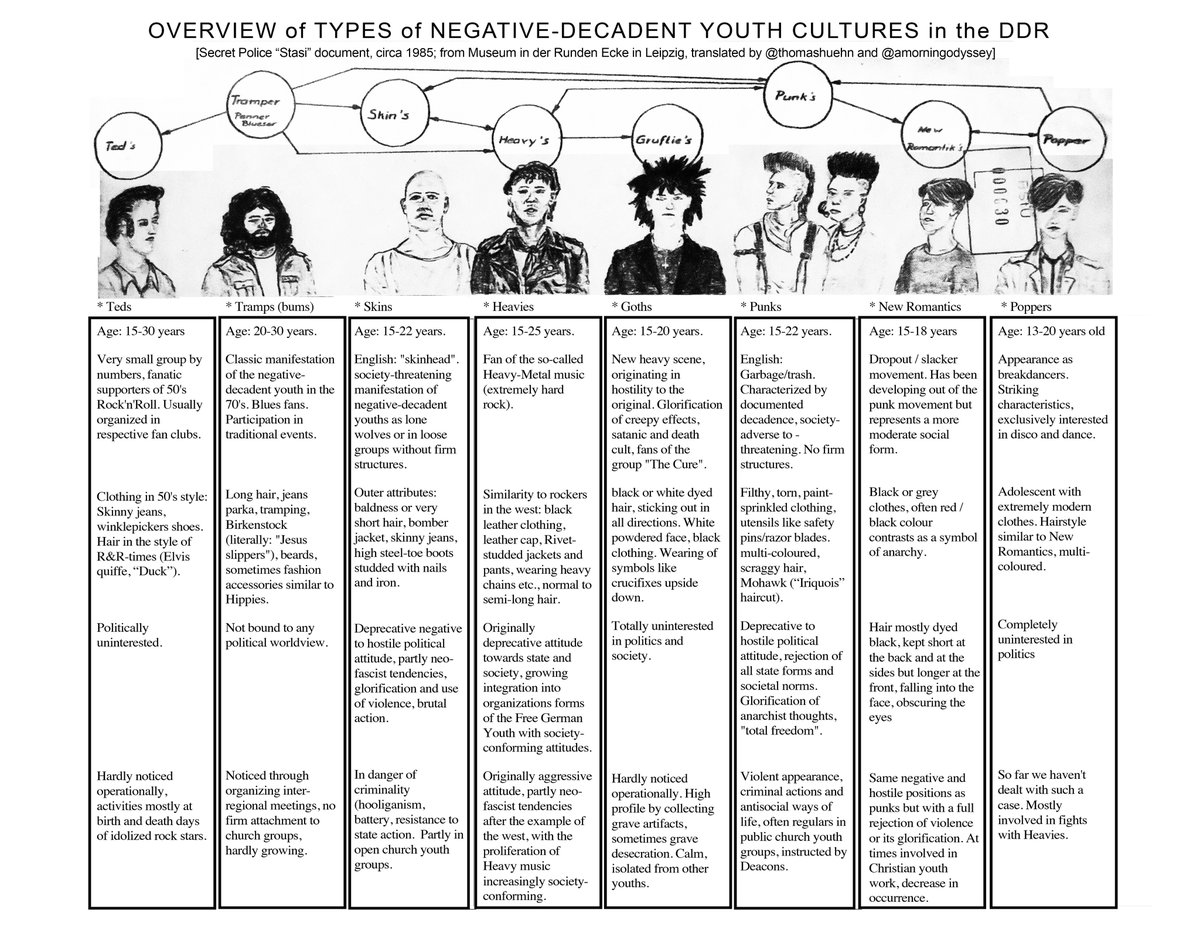
When the Stasi turned this kind of crude but intense scrutiny to certain aspects of life, the results almost satirized themselves. Take, for instance, this circa-1985 internal guide used to identify the “types of negative decadent youth cultures in the German Democratic Republic,” posted on Twitter by musician and writer S. Alexander Reed and later translated into English by a few of his followers.
The chart breaks down the supposedly decadent youth cultures of mid-1980s East Germany into eight groups, describing their interests, appearance, political inclinations, and activities in the columns below. The rock-and-roll-oriented “Teds,” dressed in a “50s style,” don’t seem to rouse themselves for anything besides “birth and death days of idolized rock stars.” The “Tramps,” a “classic manifestation of the negative-decadent youth in the 70s,” adhere to the trends of a somewhat more recent era.
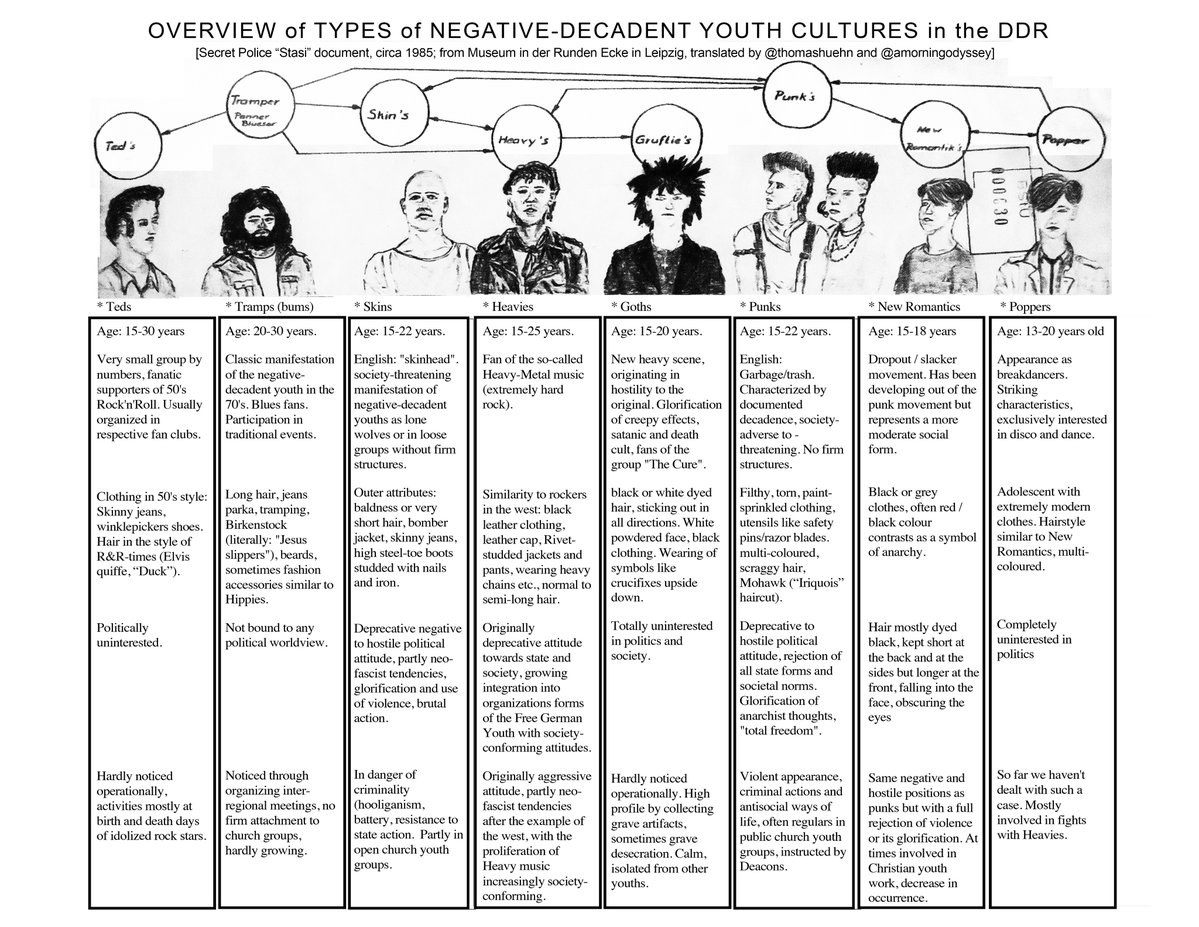
The fans of “extremely hard rock” known as “Heavies” once held a “deprecative attitude towards state and society,” but seemed at the time to become “increasingly society-conforming.” Other youth cultures considered decadent by the Stasi bore labels that might still sound familiar across the world. The “Goths,” a “satanic and death cult,” are noted for their “glorification of creepy effects” and for being “fans of the group The Cure.” Though they may have been “hardly noticed operationally,” the “punks” presented a more clear and present threat, what with their “deprecative to hostile political attitude, rejection of all state forms and societal norms,” “anarchist thoughts,” and belief in “total freedom.”
You can see the chart in a larger size here, and if you’d like to examine the real thing, you have only to visit Leipzig’s Museum in der Runden Ecke (or view it online here). The document resides in its collection of the tools of the Stasi trade, including, in the words of Atlas Obscura, “old surveillance cameras, collections of confiscated personal letters, and crisp uniforms letting visitors get a glimpse into the world of brutal state espionage.” Germans who remember all the power the Stasi could potentially wield over their lives — a power, for all they knew, about to descend on them any moment — must still feel a chill upon seeing one of those crisp uniforms. Now we know that their wearers might, upon laying eyes on Birkenstocks (“literally: ‘Jesus slippers‘”), red and black worn together (“contrasts as a symbol of anarchy”), or a mohawk (or “Iriquois”) haircut, have felt apprehensive themselves.
Related Content:
Soviets Bootlegged Western Pop Music on Discarded X‑Rays: Hear Original Audio Samples
The Nazis’ 10 Control-Freak Rules for Jazz Performers: A Strange List from World War II
The Nazis’ Philistine Grudge Against Abstract Art and The “Degenerate Art Exhibition” of 1937
1980s Metalhead Kids Are All Right: New Study Suggests They Became Well-Adjusted Adults
Based in Seoul, Colin Marshall writes and broadcasts on cities, language, and culture. His projects include the book The Stateless City: a Walk through 21st-Century Los Angeles and the video series The City in Cinema. Follow him on Twitter at @colinmarshall or on Facebook.
Read More...The Sex Pistols’ Sid Vicious Sings Frank Sinatra’s “My Way”: Is Nothing Sacred?
In the great garden of forking paths and alternative timelines there are two other versions of The Great Rock n’ Roll Swindle that Julian Temple never directed. One would have been directed by Graham Chapman of Monty Python fame, but “he behaved gloriously badly to Malcolm (McLaren)” according to John Lydon many years later. The other was to be written by film critic Roger Ebert and directed by buxom beauty lover Russ Meyer (who Lydon called “shabby” and “a senile old git.”) But you do have to wonder what the hell either of those films might have been like.
Would either of them contained the above classic scene–probably the only scene worth the price of admission–where Sid Vicious both murders the classic “My Way” and several rich people in the front row.
Killing sacred cows has long been a part of the West’s sense of humor, long before punk. Spike Jones and his City Slickers regularly destroyed classic warhorses like The Blue Danube and The Nutcracker. The Bonzo Dog Band in the UK took on “The Sound of Music” and left no survivors. And the Residents lovingly destroyed pop music of the ‘60s on Third Reich ‘n’ Roll and their cover of the Rolling Stones’ “Satisfaction.” When it comes to pop culture, nothing is sacred. Not even Frank Sinatra.
By the time Temple joined the McLaren’s film project, Lydon was not speaking to his manager. And when they got close to shooting the “My Way” sequence in Paris, Sid Vicious didn’t want to take part. Julien Temple remembered:
I would go to the studio every night and come back to report to Malcolm that the guy didn’t want to do the song. Sid would spend all the time in the studio trying to learn the bass. We would have to come back and tell Malcolm we had wasted another night’s money. Malcolm grew tired of it. He picked up the phone and started screaming at Sid about what a useless junkie he was and so on. Meanwhile, Sid had given the phone over to Nancy and while that was going on, suddenly the door of Malcolm’s hotel room flew off its hinges. Sid crashed into the room wearing his swastika underpants and motorbike boots. He dragged Malcolm out of bed and started hitting him. Then Sid chased a naked Malcolm down the corridor intent on beating the shit out of him.
Now, that might have been a more interesting scene than the theater massacre, but who knows? McLaren wanted everything in the film to be bigger than life and to his credit, this pummeling of a cover–which had a second life as the ending song to Martin Scorsese’s GoodFellas–is still a proper two-finger salute. But in a twist, it would be Sid Vicious and the flame of British punk that would be quickly snuffed out upon its release. Vicious died February 2, 1979.
If you would like to support the mission of Open Culture, consider making a donation to our site. It’s hard to rely 100% on ads, and your contributions will help us continue providing the best free cultural and educational materials to learners everywhere. You can contribute through PayPal, Patreon, and Venmo (@openculture). Thanks!
Related Content:
Ted Mills is a freelance writer on the arts who currently hosts the artist interview-based FunkZone Podcast and is the producer of KCRW’s Curious Coast. You can also follow him on Twitter at @tedmills, read his other arts writing at tedmills.com and/or watch his films here.
Read More...A Short History of How Punk Became Punk: From Late 50s Rockabilly and Garage Rock to The Ramones & Sex Pistols
Seems there was a time when the dominant story of punk was the story of British punk. If you knew nothing else, you knew the name Sid Vicious, and that seemed to sum it up. Maybe it was only in the mid-nineties, around the time Legs McNeil and Gillian McCain released Please Kill Me: the Uncensored Oral History of Punk that more people began to popularly understand the lineage of late sixties garage rock, the Velvet Underground, Detroit’s Iggy and the Stooges, and the early CBGB scene in the mid-seventies crowned by the sound of The Ramones, Patti Smith, Blondie, and Talking Heads.
Now even that story can seem oversimplified, sketched out in brief on the way to discussing the literary triumph of Patti Smith, cultural interventions of David Byrne, career highlights of punk power couple Debbie Harry and Chris Stein, or the many, always fascinating doings of Iggy Pop.
The Ramones roared back into fashion twenty years ago, and the demise of CBGB in 2007 brought on waves of marketing nostalgia of almost Disney-like proportions. Most everyone who pays attention to pop culture now knows that late-seventies punk wasn’t a movement that arrived out of nowhere, bent on destroying the past, but a continuity and evolution of earlier forms.
But the Trash Theory video at the top reaches back even earlier than garage bands like the Monks and the Sonics—typically cited as some of the earliest common ancestors of punk and rock and roll. Punk was “rock and roll bored down to its bare bones,” says the narrator, and begins with a rockabilly artist who called himself The Phantom and tried to outdo Elvis in 1958 with the raucous single “Love Me.” The Phantom himself may not have embraced the label at all, but like Link Wray, he was still something of a proto-punk. Wray’s raunchy, gritty instrumental “Rumble,” also released in 1958, inspired huge numbers of guitarists and aspiring musicians, including young Iggy Pop, who cities it as a primary reason he joined a band.
From there, we’re on to “elemental” tracks like The Kingsmen’s “Louie Louie,” The Trashmen’s “Surfin’ Bird,” The Sonic’s “Psycho,” The Monk’s “I Hate You,” and Love’s “7 and 7,” all clear progenitors of the sound. And the Mysterians, of garage classic “96 Tears,” were the first band to be described as punk by the mainstream press. The Kinks and The Who set templates in Britain while the Velvets perfected sleazy, experimental noise back in New York. The MC5 in Detroit helped bring us The Stooges. The Modern Lovers’ 1972 “Roadrunner” launched hundreds of bands.
The video is a convincing short history showing how punk arose naturally from trends in the late 50s and 60s that clearly pointed the way. Like every such history, especially one undertaken in the span of fifteen minutes, it leaves out some pretty heavyweight figures who should have a central place in the narrative. Irritated YouTube commenters have pointed out lapses like The New York Dolls (see them further up in 1973), without whom there would have been no Sex Pistols. (Proto-punk Detroit band Death does get a mention, though their influence is negligible since they went mostly unheard until 2009.)
Also needing inclusion as early punk pioneers are Television (check them out in ’78) and Richard Hell and the Voidoids (above in 1980’s Blank Generation). And these are just a few missing New York bands. Any devotee of this musical history will come up with a dozen or so more from both sides of the Atlantic who deserve mention in the early history of punk. And that’s why, I guess, that popular history keeps getting told and retold. As soon as it starts to get stale, it seems, there’s always more to add.
Related Content:
The History of Punk Rock in 200 Tracks: An 11-Hour Playlist Takes You From 1965 to 2016
Punking Out, a Short 1978 Documentary Records the Beginning of the Punk Scene at CBGB’s
Josh Jones is a writer and musician based in Durham, NC. Follow him at @jdmagness
Read More...Watch The Journey, the New Ridley Scott Short Film Teased During the Super Bowl
Established in 1933, Turkish Airlines celebrated its 85th anniversary last year with a higher profile than ever before. Born in 1937, Ridley Scott turned 81 last year and has shown no decline whatsoever in his enthusiasm for filmmaking. This year found those two institutions brought together by another, the Super Bowl, which offered the occasion to air a thirty-second teaser for The Journey, a six-minute film commissioned by Turkish Airlines and directed by Scott. (The same game also, Open Culture readers will have noticed, featured a Burger King commercial with Andy Warhol eating a Whopper.) The visually rich story of one woman pursuing another to and through Istanbul, the short marks the first commercial the Alien, Blade Runner, and Gladiator director has made in well over a decade.
“I decided to go back and click into advertising,” Scott says in the behind-the-scenes video below. “I love the chase and the speed of the job.” And in this case the job was to show off the luxury of Turkish Airlines’ first-class cabins and also the city of Istanbul itself, which Scott had never visited before.
But on his first trip there, Istanbul impressed him with its harbor, its mosques, and surely many other of the elements of which The Journey makes use, including the airport. “The Istanbul airport was modern and efficient, European, and what first struck me is how foreign it did not feel,” writes American reporter Suzy Hansen in Notes on a Foreign Country of her own first visit to Istanbul, drawing a stark contrast with “the decrepit airport in New York I had just left.”
And Hansen had flown into Istanbul’s old airport, not the new one opened just last year and designed as the largest in the world. Whether The Journey will bring more business to Turkish Airlines’ flights into and out of it (the final shot finds our heroine en route to Bali) remains to be seen, especially since the Super Bowl teaser seemed to cause confusion about what was being sold. It nevertheless fits nicely into Scott’s acclaimed body of advertising work. In its early period came a 1974 bread commercial voted England’s favorite advertisement of all time; in its middle period, of course, came the 1984 Super Bowl spot that introduced the Apple Macintosh to the world. Given the energy Scott’s work in commercials and features still exudes, it feels somehow unsuitable to use the term “late period” at all.
Related Content:
See Ridley Scott’s 1973 Bread Commercial—Voted England’s Favorite Advertisement of All Time
Ridley Scott Walks You Through His Favorite Scene from Blade Runner
Based in Seoul, Colin Marshall writes and broadcasts on cities, language, and culture. His projects include the book The Stateless City: a Walk through 21st-Century Los Angeles and the video series The City in Cinema. Follow him on Twitter at @colinmarshall or on Facebook.
Read More...The Origins of the “Amen Break,” The Most Sampled Piece of Recorded Music Ever
You may not find the reference easily in a Google search. But hang around electronic musicians, DJs, or producers long enough, and you’ll probably hear someone talk about an “Amen song.” They don’t mean gospel, not directly, but the famed “Amen break,” a six-second drum loop sampled from a 1969 soul instrumental recording of the gospel song “Amen, Brother” from the B‑Side of a Grammy-winning record by Washington, DC-based group The Winstons. Played by drummer G.C. Coleman, who died in 1996, it has likely become “the most sampled piece of recorded music ever,” as the Great Big Story video above points out.
We’ve previously featured the more extensive documentary history of the Amen break below by writer Nate Harrison. The Great Big Story video is not that, but rather a short, 4‑minute tour through the sample’s origins by way of Bronx DJ Lou Flores, “Breakbeat Lou,” who included “Amen, Brother” on a compilation of songs made specifically for DJs.
If you’ve never understood what’s so captivating about this beat, listen to Flores describe its sonic qualities. It’s “probably one of the most organic, larger-than-life, big presence style of drums… there’s so many depths to this particular track,” he says, listing the specific effect of each piece of the drum kit.
There really is “nothing else like it.” And, paradoxically, it exists everywhere, slowed down as the backbeat of early hip-hop, sped up to inhuman speeds in drum ‘n’ bass; appearing in some form or another in the repertoire of almost every contemporary artist, producer, and drummer. The Amen break has popped up in over 3,000 songs, from David Bowie to Slipknot to Skrillex to Public Enemy to N.W.A. to… well, it may be easier to name popular musicians of the last thirty years who haven’t been at least Amen-adjacent at some point in their lives. Like certain standards in jazz or movements from classical hits, everyone knows it, even if they don’t know they know it.
What’s refreshing about the brief explainer is that, rather than try to cover this kind of musicological territory in a few minutes, it focuses on the break’s first popularizer, Flores, who was drawn out of his retirement from music because of the viral phenomenon of the Amen break. He’s an affable guide to the most famous sample in history, happy that his corner of the Bronx contributed so much to the culture by helping turn sampled music into an original and inventive art form. Learn much more about the history of the Amen break in the documentary above and at our previous post here.
Related Content:
The “Amen Break”: The Most Famous 6‑Second Drum Loop & How It Spawned a Sampling Revolution
All Hail the Beat: How the 1980 Roland TR-808 Drum Machine Changed Pop Music
A Brief History of Sampling: From the Beatles to the Beastie Boys
Josh Jones is a writer and musician based in Durham, NC. Follow him at @jdmagness
Read More...A Vintage Grand Piano Gets Reengineered to Play 20 Different Instruments with a Push of Its Keys
The Ukrainian Band “Brunettes Shoot Blondes” took a broken, vintage grand piano and reengineered it, turning it into “a hybrid, containing 20 instruments.” Now, when you press the keys, the “piano hammers beat a marimba, tambourine, cymbals or even castanets. There are also special mechanical devices that allow for the playing of cello, violins and organ.” Watch it in action above…
If you would like to support the mission of Open Culture, consider making a donation to our site. It’s hard to rely 100% on ads, and your contributions will help us continue providing the best free cultural and educational materials to learners everywhere. You can contribute through PayPal, Patreon, and Venmo (@openculture). Thanks!
Related Content:
94-Year-Old Stroke Survivor Plays Jazz Piano for the First Time in Years
Read More...Support Us
We're hoping to rely on loyal readers, rather than erratic ads. Please click the Donate button and support Open Culture. You can use Paypal, Venmo, Patreon, even Crypto! We thank you!

About Us

Open Culture scours the web for the best educational media. We find the free courses and audio books you need, the language lessons & educational videos you want, and plenty of enlightenment in between.
Advertise With Us

FREE UPDATES!
GET OUR DAILY EMAIL
Get the best cultural and educational resources on the web curated for you in a daily email. We never spam. Unsubscribe at any time.
FOLLOW ON SOCIAL MEDIA

Open Culture editor Dan Colman scours the web for the best educational media. He finds the free courses and audio books you need, the language lessons & movies you want, and plenty of enlightenment in between.
Advertise With Us