Movie Accent Expert Analyzes 31 Actors Playing Other Famous People: Jamie Foxx as Ray Charles, Natalie Portman as Jackie Kennedy, Cate Blanchett as Bob Dylan, and More
Well-known figures’ voices are often as distinctive as their thousand-watt smiles and influential hairdos.
While there is some evidence as to the accents and idiosyncratic speech patterns of such historical heavy hitters as Thomas Edison, Florence Nightingale, and Harry Houdini, technological improvements have really upped the ante for those charged with impersonating real life people from the mid 20th-century onward.
Natalie Portman had to sustain her Jackie Kennedy impersonation for an entire feature-length biopic, a performance dialect coach Erik Singer gives high marks, above. Portman, he explains, has truly internalized Jackie’s idiolect, the individual quirks that add yet another layer to such signifiers as class and region.
As evidence, he submits a side-by-side comparison of the First Lady’s famous 1962 televised tour of the White House renovations she had spearheaded, and Portman’s recreation thereof.
Portman has done her homework with regard to breath pattern, pitch, and the refinement that strikes most 21st century ears as a bit stilted and strange. Most impressive to Singer is the way Portman transfers Kennedy’s oddly musical elongation of certain syllables to other words in the script. Tis no mere parrot job.
Jamie Foxx’s Oscar-winning turn as Ray Charles succeeds on copious research and his ability to inhabit Charles’ habitual smile. Obviously, the posture in which an individual holds their mouth has a lot to do with the sound of their voice, and Foxx was blessed with plenty of source material.
The 1982 epic Gandhi provided the versatile Ben Kingsley with the opportunity to showcase not one, but two, idiolects. The adult Gandhi underwent a dramatic and well documented evolution from the British accent he adopted as a young law student in London to a proudly Indian voice better suited to inspiring a nation to unify against its British colonizers.
It’s likely that many of us have never considered the speech-related building blocks Singer scrutinizes while analyzing 29 other performances for the WIRED video, above—epenthesis, tongue positions, relative degrees of emphatic muscularity, and retroflex consonants—but it’s easy to see how they play a part.
Singer invites you to expand his research and teaching library by recording yourself speaking extemporaneously and reading from two sample texts here. Pray that whoever plays you in the biopic gets it right.
Related Content:
Peter Sellers Gives a Quick Demonstration of British Accents
Why Do People Talk Funny in Old Movies?, or The Origin of the Mid-Atlantic Accent
Watch Meryl Streep Have Fun with Accents: Bronx, Polish, Irish, Australian, Yiddish & More
Ayun Halliday is an author, illustrator, theater maker and Chief Primatologist of the East Village Inky zine. See her onstage in New York City through December 20th in the 10th anniversary production of Greg Kotis’ apocalyptic holiday tale, The Truth About Santa, and the book-based variety show, Necromancers of the Public Domain. Follow her @AyunHalliday.
Read More...Andy Kaufman Reads Earnestly from The Great Gatsby and Enrages His Audience
In a 1980 appearance on David Letterman, a deadpan Andy Kaufman tells a sob story about his nonexistent family leaving him. He then “admonishes the audience for laughing,” writes William Hughes at the AV Club, and panhandles for their spare change. “The genius of the bit, as always, is that Kaufman never blinks. Even as he’s led away by the show’s staff, there’s nothing about his unemotional entreaties that suggests that what he’s doing isn’t anything but the sober-cold truth.”
He pulled a similar stunt the following year, in a guest appearance on a short-lived SNL knockoff called Fridays. After belligerently breaking character during a sketch, he appeared the following week to deliver an apology, which became a bitter, sad sack appeal for sympathy, while he stared blankly at the camera in what his writing partner Bob Zmuda called his “glazed-over hostage look.” Kaufman was “more of an antagonist of his audience than an ally,” Jake Rossen comments at Mental Floss.
Rather than punching up or down, he punched out, openly exploiting our trust and abusing our patience. Kaufman invited us to mock him, only to reroute our responses into empathy, anger, confusion, or boredom. “Many crowds had streamed into comedy clubs only to endure Kaufman napping in a sleeping bag,” writes Rossen, “or reading earnestly from The Great Gatsby, threatening to start all over again if they interrupted.” Once given a choice between him reading or playing a record, a nightclub chose the record. “It was the sound of Kaufman reading.”
Just what is the proper response to this? The emotional misdirection works so well because we know we should react a certain way, for example, to a broken man in great distress—whether he’s asking for spare change or looking for all the world like a kidnap victim. In his Gatsby reading, Kaufman pulls a different lever—drawing on our innate sense of decorum during a literary event, one conducted by a vaguely European-sounding man in a tuxedo, no less. He incites his audience by making them laugh at a situation they would, in its proper context, try to take seriously.
In the clip of Kaufman reading Gatsby at the top, he begins with a couple ruses and feints: playing a snippet of a record that makes us think we might be in for a Mighty Mouse-like routine, introducing himself as an actor who plays a screwball American comic named Andy Kaufman. Once he launches into Gatsby, however, and it becomes clear he isn’t going to stop, that the reading is the act, the audience becomes incensed, expressing a palpable sense of betrayal.
You came for comedy, he tells them in his Letterman and Fridays bits; I’m going to give you humanity. You came for comedy, he announces in the Gatsby reading; I’m going to give you culture, whether you want it or not. But it’s not me who’s misbehaving, he says (in diabolical versions of “stop hitting yourself”), it’s you. In the clip above from Man on the Moon, Jim Carrey draws out the passive aggressive impulses inherent in these maneuvers, showing Andy breaking out Gatsby as an act of retaliation against a crowd who demands that he entertain them on their terms.
Related Content:
Andy Kaufman Creates Mayhem on Late Night TV: When Comedy Becomes Performance Art (1981)
The Improbable Time When Orson Welles Interviewed Andy Kaufman (1982)
A Look Back at Andy Kaufman: Absurd Comic Performance Artist and Endearing Weirdo
Josh Jones is a writer and musician based in Durham, NC. Follow him at @jdmagness
Read More...Hunter S. Thompson, Existentialist Life Coach, Presents Tips for Finding Meaning in Life
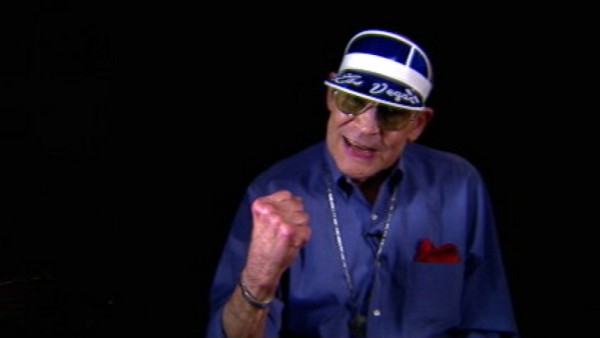
Image by Steve Anderson, via Wikimedia Commons
At first blush, Hunter S. Thompson might be the last person you would want to ask for advice. After all, his daily routine involved copious amounts of cocaine, LSD and Chivas Regal. He once raked a neighbor’s house with gunfire. And he once almost accidentally blew up Johnny Depp. Yet beneath his gonzo persona lay a man who thought deeply and often about the meaning of it all. He was someone who spent a lifetime staring into the abyss.
So in 1958, before he became a counter-culture icon, before he even started writing professionally, Thompson wrote a long letter about some of the big questions in life to his friend, Hume Logan, who was in the throes of an existential crisis.
While the first couple of paragraphs warns against the dangers of seeking advice, Hunter then expounds at length on some deep, and surprisingly level-headed truths. Below are a few pearls of wisdom:
- Whether to float with the tide, or to swim for a goal. It is a choice we must all make consciously or unconsciously at one time in our lives. So few people understand this!
- You might also try something called Being and Nothingness by Jean-Paul Sartre, and another little thing called Existentialism: From Dostoyevsky to Sartre. These are merely suggestions. If you’re genuinely satisfied with what you are and what you’re doing, then give those books a wide berth. (Let sleeping dogs lie.)
- To put our faith in tangible goals would seem to be, at best, unwise. We do not strive to be firemen, we do not strive to be bankers, nor policemen, nor doctors. WE STRIVE TO BE OURSELVES.
- Let’s assume that you think you have a choice of eight paths to follow (all pre-defined paths, of course). And let’s assume that you can’t see any real purpose in any of the eight. THEN— and here is the essence of all I’ve said— you MUST FIND A NINTH PATH.
- Is it worth giving up what I have to look for something better? I don’t know— is it? Who can make that decision but you? But even by DECIDING TO LOOK, you go a long way toward making the choice.
The letter was published in the 2013 book, Letters of Note. You can read it in its entirety below.
April 22, 1958
57 Perry Street
New York CityDear Hume,
You ask advice: ah, what a very human and very dangerous thing to do! For to give advice to a man who asks what to do with his life implies something very close to egomania. To presume to point a man to the right and ultimate goal— to point with a trembling finger in the RIGHT direction is something only a fool would take upon himself.
I am not a fool, but I respect your sincerity in asking my advice. I ask you though, in listening to what I say, to remember that all advice can only be a product of the man who gives it. What is truth to one may be disaster to another. I do not see life through your eyes, nor you through mine. If I were to attempt to give you specific advice, it would be too much like the blind leading the blind.
“To be, or not to be: that is the question: Whether ’tis nobler in the mind to suffer the slings and arrows of outrageous fortune, or to take arms against a sea of troubles … ” (Shakespeare)
And indeed, that IS the question: whether to float with the tide, or to swim for a goal. It is a choice we must all make consciously or unconsciously at one time in our lives. So few people understand this! Think of any decision you’ve ever made which had a bearing on your future: I may be wrong, but I don’t see how it could have been anything but a choice however indirect— between the two things I’ve mentioned: the floating or the swimming.
But why not float if you have no goal? That is another question. It is unquestionably better to enjoy the floating than to swim in uncertainty. So how does a man find a goal? Not a castle in the stars, but a real and tangible thing. How can a man be sure he’s not after the “big rock candy mountain,” the enticing sugar-candy goal that has little taste and no substance?
The answer— and, in a sense, the tragedy of life— is that we seek to understand the goal and not the man. We set up a goal which demands of us certain things: and we do these things. We adjust to the demands of a concept which CANNOT be valid. When you were young, let us say that you wanted to be a fireman. I feel reasonably safe in saying that you no longer want to be a fireman. Why? Because your perspective has changed. It’s not the fireman who has changed, but you. Every man is the sum total of his reactions to experience. As your experiences differ and multiply, you become a different man, and hence your perspective changes. This goes on and on. Every reaction is a learning process; every significant experience alters your perspective.
So it would seem foolish, would it not, to adjust our lives to the demands of a goal we see from a different angle every day? How could we ever hope to accomplish anything other than galloping neurosis?
The answer, then, must not deal with goals at all, or not with tangible goals, anyway. It would take reams of paper to develop this subject to fulfillment. God only knows how many books have been written on “the meaning of man” and that sort of thing, and god only knows how many people have pondered the subject. (I use the term “god only knows” purely as an expression.) There’s very little sense in my trying to give it up to you in the proverbial nutshell, because I’m the first to admit my absolute lack of qualifications for reducing the meaning of life to one or two paragraphs.
I’m going to steer clear of the word “existentialism,” but you might keep it in mind as a key of sorts. You might also try something called Being and Nothingness by Jean-Paul Sartre, and another little thing called Existentialism: From Dostoyevsky to Sartre. These are merely suggestions. If you’re genuinely satisfied with what you are and what you’re doing, then give those books a wide berth. (Let sleeping dogs lie.) But back to the answer. As I said, to put our faith in tangible goals would seem to be, at best, unwise. So we do not strive to be firemen, we do not strive to be bankers, nor policemen, nor doctors. WE STRIVE TO BE OURSELVES.
But don’t misunderstand me. I don’t mean that we can’t BE firemen, bankers, or doctors— but that we must make the goal conform to the individual, rather than make the individual conform to the goal. In every man, heredity and environment have combined to produce a creature of certain abilities and desires— including a deeply ingrained need to function in such a way that his life will be MEANINGFUL. A man has to BE something; he has to matter.
As I see it then, the formula runs something like this: a man must choose a path which will let his ABILITIES function at maximum efficiency toward the gratification of his DESIRES. In doing this, he is fulfilling a need (giving himself identity by functioning in a set pattern toward a set goal), he avoids frustrating his potential (choosing a path which puts no limit on his self-development), and he avoids the terror of seeing his goal wilt or lose its charm as he draws closer to it (rather than bending himself to meet the demands of that which he seeks, he has bent his goal to conform to his own abilities and desires).
In short, he has not dedicated his life to reaching a pre-defined goal, but he has rather chosen a way of life he KNOWS he will enjoy. The goal is absolutely secondary: it is the functioning toward the goal which is important. And it seems almost ridiculous to say that a man MUST function in a pattern of his own choosing; for to let another man define your own goals is to give up one of the most meaningful aspects of life— the definitive act of will which makes a man an individual.
Let’s assume that you think you have a choice of eight paths to follow (all pre-defined paths, of course). And let’s assume that you can’t see any real purpose in any of the eight. THEN— and here is the essence of all I’ve said— you MUST FIND A NINTH PATH.
Naturally, it isn’t as easy as it sounds. You’ve lived a relatively narrow life, a vertical rather than a horizontal existence. So it isn’t any too difficult to understand why you seem to feel the way you do. But a man who procrastinates in his CHOOSING will inevitably have his choice made for him by circumstance.
So if you now number yourself among the disenchanted, then you have no choice but to accept things as they are, or to seriously seek something else. But beware of looking for goals: look for a way of life. Decide how you want to live and then see what you can do to make a living WITHIN that way of life. But you say, “I don’t know where to look; I don’t know what to look for.”
And there’s the crux. Is it worth giving up what I have to look for something better? I don’t know— is it? Who can make that decision but you? But even by DECIDING TO LOOK, you go a long way toward making the choice.
If I don’t call this to a halt, I’m going to find myself writing a book. I hope it’s not as confusing as it looks at first glance. Keep in mind, of course, that this is MY WAY of looking at things. I happen to think that it’s pretty generally applicable, but you may not. Each of us has to create our own credo— this merely happens to be mine.
If any part of it doesn’t seem to make sense, by all means call it to my attention. I’m not trying to send you out “on the road” in search of Valhalla, but merely pointing out that it is not necessary to accept the choices handed down to you by life as you know it. There is more to it than that— no one HAS to do something he doesn’t want to do for the rest of his life. But then again, if that’s what you wind up doing, by all means convince yourself that you HAD to do it. You’ll have lots of company.
And that’s it for now. Until I hear from you again, I remain,
your friend,
Hunter
Note: An earlier version of this post appeared on our site in February 2015.
Related Content:
Read 10 Free Articles by Hunter S. Thompson That Span His Gonzo Journalist Career (1965–2005)
Jonathan Crow is a Los Angeles-based writer and filmmaker whose work has appeared in Yahoo!, The Hollywood Reporter, and other publications. You can follow him at @jonccrow. And check out his blog Veeptopus, featuring lots of pictures of badgers and even more pictures of vice presidents with octopuses on their heads. The Veeptopus store is here.
Read More...The Full Rotation of the Moon: A Beautiful, High Resolution Time Lapse Film
This is a sight to behold. Above, the moon spins in full rotation, all in high-resolution footage taken by The National Aeronautics and Space Administration.
Here’s how NASA explains what you’re seeing:
No one, presently, sees the Moon rotate like this. That’s because the Earth’s moon is tidally locked to the Earth, showing us only one side. Given modern digital technology, however, combined with many detailed images returned by the Lunar Reconnaissance Orbiter (LRO), a high resolution virtual Moon rotation movie has now been composed. The above time-lapse video starts with the standard Earth view of the Moon. Quickly, though, Mare Orientale, a large crater with a dark center that is difficult to see from the Earth, rotates into view just below the equator. From an entire lunar month condensed into 24 seconds, the video clearly shows that the Earth side of the Moon contains an abundance of dark lunar maria, while the lunar far side is dominated by bright lunar highlands.
You can find many more Lunar Reconnaissance Orbiter videos on this page, and download your own copy of the Moon Rotation Movie right here.
If you would like to support the mission of Open Culture, consider making a donation to our site. It’s hard to rely 100% on ads, and your contributions will help us continue providing the best free cultural and educational materials to learners everywhere. You can contribute through PayPal, Patreon, and Venmo (@openculture). Thanks!
Related Content:
The Source Code for the Apollo 11 Moon Landing Mission Is Now Free on Github
Read More...
Introducing the Mellotron: A Groovy 1965 Demonstration of the “Musical Computer” Used by The Beatles, Moody Blues & Other Psychedelic Pop Artists
With a name like a laid back 60s robot, the Mellotron has been most closely associated with psychedelic pop like The Beatles’ “Strawberry Fields Forever,” the Moody Blues “Nights in White Satin,” and David Bowie’s “Space Oddity.” But the early sampling keyboard, an electro-acoustic device that used pre-recorded tape strips mounted inside an organ-like keyboard, was first marketed, Gordon Reid writes at Sound on Sound, to “old-time/modern/Latin dance audiences.” It was supposed to convincingly replicate an orchestra.
The Mellotron, built and sold by Mellotronics, Ltd., was based on an earlier instrument, the Chamberlin MusicMaster, which used recorded notes from members of Lawrence Welk’s band—hardly the hippest sounds on the scene when the Mellotron MK1 debuted in 1963. By the time of the MK2, however, the device developed into a powerful multitimbral machine, with a dual keyboard, “containing more than 70 3/8‑inch tape players, a reverb unit, amplifiers and speakers.”
The rock world “took the Mellotron to its heart,” Reid comments, “and it was this that ensured its success.” It could simulate other instruments, but it did so with its own distinctive flavor (providing not only the flute intro to “Strawberry Fields” but the Spanish guitar at the beginning of The White Album’s “The Continuing Story of Buffalo Bill”). Brad Allen Williams sums up the slightly more portable Mellotron M400’s limited operations succinctly at Flypaper:
Due to the rather primitive tape mechanism (and the inherent challenges of keeping 35 playback heads and pinch rollers in good condition), Mellotrons are a little unpredictable and can be quite characterful. The action of the keyboard is stiff and unusual-feeling, so virtuosic playing is not usually in the cards. All of these “bugs” somehow become “features,” however — the quirks add up to a sonic character that’s iconic and instantly recognizable!
Like so many distinctive analog instruments from pop music’s past, the Mellotron has returned in Nord’s updated Mellotron MK VI, which “uses new mechanics and state of the art technology, but original unused stock tape heads.” That’s groovy news for musicians who dig the Mellotron’s dated idiosyncrasies. In the short film above, however, from 1965, British TV personalities Eric Robinson and David Nixon introduce the instrument to viewers as a first-rate new “musical computer.”
With built in rhythms and a wide selection of sounds—including trombone and French accordion—the Mellotron was on the cutting edge of its day. Robinson and Nixon put the device through its paces, show its internal operations, and generally show off what essentially looked like a novelty organ built for living rooms and cabarets before Lennon/McCartney & Co. got their hands on it in 1967. Just above, see McCartney give a modern audience a different sort of demonstration.
Related Content:
Visit an Online Collection of 61,761 Musical Instruments from Across the World
Josh Jones is a writer and musician based in Durham, NC. Follow him at @jdmagness
Read More...David Byrne Creates a Playlist of Eclectic Music for the Holidays: Stream It Free Online
Whose music do you put on when the holiday season comes around? Perhaps musicians like Lonnie Holley, Gurrumul, Erkin Koray, and Juan Luis Guerra? Maybe you’ve just thrilled with recognition at one or more of those names, or maybe you’ve never heard of any of them — but in either case, you should get ready for a highly unconventional holiday experience featuring their songs and those of many others, all of them curated by David Byrne. Each month the peripatetic, oft-collaborating musician and former Talking Heads frontman posts a new playlist on Radio David Byrne, and the latest, “Eclectic for the Holidays,” will get us into a kind of seasonal spirit into which we’ve never got before.
“So… who recommends this stuff to me?” Byrne asks. “I’ve known Lonnie Holley as an artist for quite some time. I saw him do a show at National Sawdust not too long ago with trombonist Dave Nelson, who toured with St. Vincent and I a few years ago.”
“I heard an orchestral interpretation of this song by Gurrumul when I was waiting to do an interview at the radio station in Melbourne, Australia. I asked, ‘Whose music is that?’ ” “Erkin Koray I heard after first hearing Barış Manço, who may have been recommended by some friends in Istanbul when I was there years ago… Turkey had a serious psychedelic period.” “Juan Luis Guerra may have been recommended many years ago by music journalist Daisann McLane at a music festival in Cartagena, Colombia.”
The 41-song journey that is “Eclectic for the Holidays,” which you can stream below or on Byrne’s official site, offers not just a chance to happen upon intriguing artists you’d never come across before — as happened to Byrne in all those chance encounters that went into its construction — but a break from the same fifteen or twenty songs that have long dominated the holiday-season rotation in homes and public spaces around the world. The holidays themselves teach us that tradition has its place, but Byrne, whose compulsion to discover new music from an ever farther-flung range of societies and subcultures, shows us that you can’t let them get you comfortable enough to close your ears.
Related Content:
Hear Paul McCartney’s Experimental Christmas Mixtape: A Rare & Forgotten Recording from 1965
Based in Seoul, Colin Marshall writes and broadcasts on cities, language, and culture. His projects include the book The Stateless City: a Walk through 21st-Century Los Angeles and the video series The City in Cinema. Follow him on Twitter at @colinmarshall or on Facebook.
Read More...See the Complete Works of Vermeer in Augmented Reality: Google Makes Them Available on Your Smartphone

No museum could ever put on a complete Vermeer exhibition. The problem isn’t quantity: thus far, only 36 works have been definitively attributed to the 17th-century Dutch painter of domestic scenes and portraits, most famously Girl with a Pearl Earring. But they all hang in collections scattered around the world, not just in places like Amsterdam and The Hague but London, New York, Paris, and elsewhere besides. Some have become too fragile to travel, and one, The Concert, was stolen in 1990 and hasn’t been seen since. But all of this makes a complete Vermeer exhibition the perfect concept to execute in virtual reality, or rather augmented reality — a concept just recently executed by the Mauritshuis museum and Google Arts & Culture.
“In total, 18 museums and private collections from seven countries contributed high-resolution images of the Vermeers in their possession, which were then compiled into a virtual museum by Google,” writes Gizmodo’s Victoria Song.
“To view the Meet Vermeer virtual museum, you can download the free Google Arts and Culture app for iOS and Android. So long as you have a smartphone with a working camera, all you have to do is point your phone at a flat surface, wave it in a circle, and voila — you, too, can have a virtual museum floating above your bed and nightstand. After that, you can pinch and zoom on each of the seven rooms to ‘enter’ the AR museum to view the paintings.” If you enter the virtual museum on a computer, you can navigate a completely virtual version of those themed rooms, of which you can catch glimpses in the GIF below.

Google’s augmented-reality technology, in other words, allows not just the creation of an entire virtual museum in which to view Vermeer’s body of work together, but the creation of such a museum in any location where you might possibly open the app. Those of us who tend toward fantasies of a high-powered art collection will, of course, want to give it a try in our homes and get a taste of what it would look like if we had the cash on hand to round up all the Vermeers in the world ourselves. Whether the impecunious Vermeer himself — impecunious in part, no doubt, due to his lack of prolificacy — entertained such dreams of wealth, history hasn’t recorded, though given the unabashed domesticity of his subjects, he might well agree that, for an exhibition of everything he ever painted, there’s no place like home.
Again, to view the Meet Vermeer virtual museum, you can download the free Google Arts and Culture app for iOS and Android.
Related Content:
Master of Light: A Close Look at the Paintings of Johannes Vermeer Narrated by Meryl Streep
Paintings by Caravaggio, Vermeer, & Other Great Masters Come to Life in a New Animated Video
Take a Virtual Reality Tour of the World’s Stolen Art
Rijksmuseum Digitizes & Makes Free Online 210,000 Works of Art, Masterpieces Included!
Based in Seoul, Colin Marshall writes and broadcasts on cities, language, and culture. His projects include the book The Stateless City: a Walk through 21st-Century Los Angeles and the video series The City in Cinema. Follow him on Twitter at @colinmarshall or on Facebook.
Read More...Download Over 325 Free Art Books From the Getty Museum

In 2014, Getty Publications announced the launch of its Virtual Library, where readers can freely browse and download 325 art books from the publisher’s backlist catalogue. The Virtual Library consists of texts associated with several Getty institutions. Readers can view extensively researched exhibition catalogues from the J. Paul Getty Museum, including Paul Cézanne’s late-life watercolours, when the painter raised the still life to a high art (Cézanne in the Studio: Still Life in Watercolors, 2004), as well as the woefully underappreciated Flemish illustrations of the 15th and 16th centuries (Illuminating the Renaissance: The Triumph of Flemish Manuscript, 2003).
The collection also contains detailed treatises on art conservation from the Getty Conservation Institute, and scholarly works from the Getty Research Institute, both of which include a multitude of books on specialized topics. Fancy reading about the relationship between Peter Paul Rubens and Jan Brueghel the Elder, the two legendary 17th century painters who lived in the Netherlands’ city of Antwerp? There’s a book on that.
Intrigued by all the prostitutes in French impressionism? Try Painted Love: Prostitution in French Art of the Impressionist Era (2003). Perhaps you’re partial to ancient vases, and have already read The Colors of Clay (2006), Pots & Plays (2007), and Greek Vases (1983)? Don’t worry, the Getty’s virtual library has at least 8 more vase-oriented books.
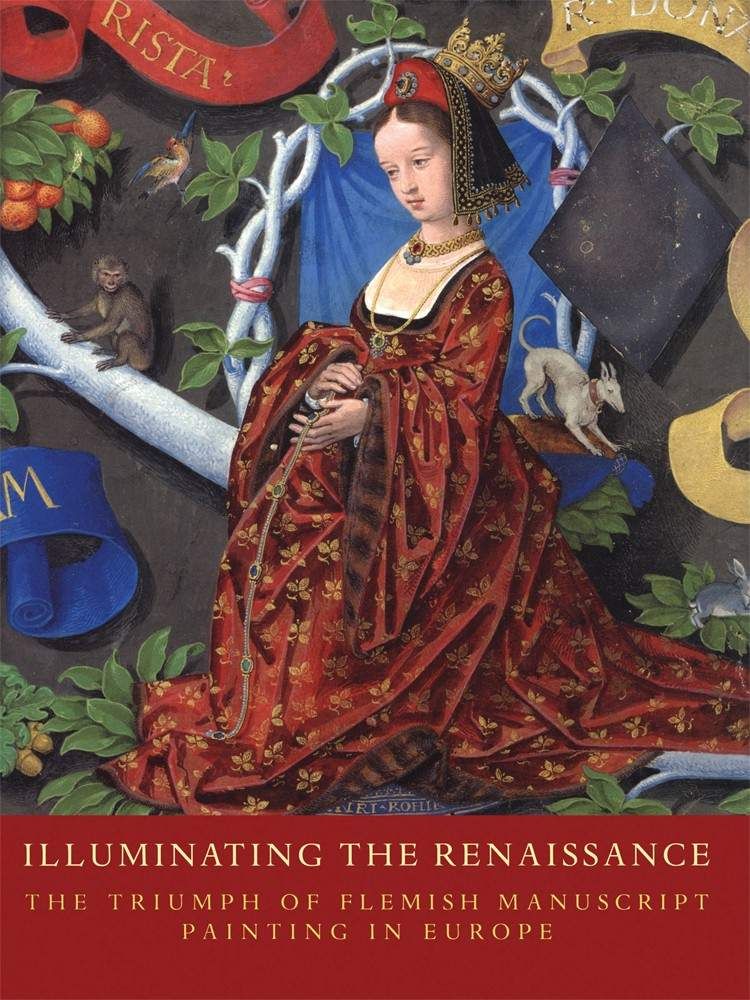
All of the Getty’s virtual library volumes are available in a downloadable PDF format. If you’re looking for more free art books, please explore the resources in the Relateds below.
Note: An earlier version of this post appeared on our site in January 2014.
Ilia Blinderman is a Montreal-based culture and science writer. Follow him at @iliablinderman.
Related Content:
Download 502 Free Art Books from The Metropolitan Museum of Art
Download 200+ Free Modern Art Books from the Guggenheim Museum
2,000+ Architecture & Art Books You Can Read Free at the Internet Archive
Read More...How Michael Jackson’s “Thriller” Video Changed Pop Culture Forever: Revisit the 13-Minute Short Film Directed by John Landis
Michael Jackson’s Thriller, the album, had spent the previous year at the top of the charts before the John Landis-directed video for the title track debuted in 1983. Two previous videos, for massive hits “Billie Jean” and “Beat It,” kept him on constant rotation on the fledgling MTV and other networks. It seemed that the “naïve, preternaturally gifted 25-year-old” couldn’t get any more internationally famous, but then, as Nancy Griffin writes at Vanity Fair, “it was the ‘Thriller’ video that pushed Jackson over the top, consolidating his position as the King of Pop.”
His naïveté was matched by a shrewd, calculating ambition, and the story of the “Thriller” video highlights both. After seeing An American Werewolf in London, he chose Landis to make a video that would goose Thriller’s sales as they started to fall. Landis, the profane, irreverent director of The Blues Brothers and Animal House, may have seemed an odd choice for the wholesome pop star, who prefaced his zombie spoof with a pious disclaimer about his “strong personal convictions.” (Shortly before the video’s release, Jackson, under pressure from the Jehovah’s Witnesses, asked Landis to destroy it.)
It turns out, however, that when Jackson called Landis, he hadn’t seen any of the director’s other films (and Landis hadn’t heard the song). It was Landis who suggested that the video be turned into a 14-minute short film, a choice that set the bar high for the form ever since. As he told Billboard’s John Branca on the video’s 35th anniversary, just days ago:
Music videos at that time were always just needle drop. Some were pretty good, but most were not, and they were commercials. Michael’s such a huge star that I said, “Maybe I can bring back the theatrical short.” I pitched him the idea, and he totally went for it. Michael was extremely enthusiastic because he wanted to make movies.
Before “Thriller” even aired, it was a high-profile event. “Marlon Brando, Fred Astaire, Rock Hudson and Jackie Kennedy Onassis all turned up on set,” notes Phil Hebblethwaite, “and Eddie Murphy, Prince and Diana Ross were spotted at the private premier.” After the video premiered on MTV at midnight on December 2nd, it sealed the network’s “reputation as a new cultural force; dissolved racial barriers in the station’s treatment of music,” and “helped create a market for VHS rentals and sales.”
“Thriller” turned the making of music videos into a “proper industry,” says Brian Grant, the British director who made videos for Tina Turner’s “Private Dancer” and Whitney Houston’s “I Wanna Dance with Somebody.” It “launched a dance craze,” Karen Bliss writes at Billboard, and “a red-jacket fashion favorite.” It won three MTV Awards, two American Music Awards, and a Grammy. In 2009, it became the first music video inducted into the Library of Congress’s National Film Registry, designated as a national treasure.
But as we look back on unprecedented historic impact “Thriller” had on pop culture, we must also look at its continued impact in the present. It remains the most popular music video of all time. “’Thriller’ is thriving on YouTube,” Griffin writes. Celebrities and ordinary people, professional and amateur dance troops, Filipino prisoners and Norwegian soldiers, routinely perform its dance moves for the camera all over the world. An entire genre of how-to videos teach viewers how to do the “Thriller” dance. This past September, it became the first music video released in IMAX 3D.
The video received the documentary treatment in Jerry Kramer’s Making Michael Jackson’s Thriller, which premiered at the Venice Film Festival last year. Landis tells Branca one story that did not make it into Kramer’s movie. After Quincy Jones refused him permission to remix the song, he and Jackson walked into the studio at night, took the tapes, duplicated them and returned them. The song that appears in the video “is very different than the record,” says Landis. “I only used a third of the lyrics. It’s a 3‑minute song; in the film, it plays for 11 minutes.” Jones and engineer Bruce Swedien didn’t even notice, says the director, they were so enthralled with what they saw onscreen.
What continues to drive “Thriller’s” popularity? The combination of good clean fun and perfectly-pitched camp horror—Vincent Price voiceover and all? The virtuoso dance moves, zombie choreography, and irresistibly sleek 80s fashions? All of the above, of course, and also some indefinable sum of all these parts, a perfect combination of cinematic depth and shiny pop culture surfaces that set the benchmark for the format for three-and-a-half decades.
Related Content:
Josh Jones is a writer and musician based in Durham, NC. Follow him at @jdmagness
Read More...Why Should We Read Kurt Vonnegut? An Animated Video Makes the Case
Beneath Kurt Vonnegut’s grim, absurdist humor beat the heart of a humanist, but not, by any stretch, an optimist. Vonnegut looked balefully at every project intended to improve the sorry state of human affairs. In Player Piano, for example, he imagines a future very much like that envisioned for us by our contemporary technocratic elite: nearly all work has been automated and the mass of unemployed are given a modest stipend for their living and funneled into what anthropologist David Graeber might call “bullshit jobs.”
“Finally,” Ed O’Loughlin writes at The Irish Times, “Vonnegut’s non-tech proles rise up against the machines that have perversely enslaved them, smashing all that they can find. For Vonnegut, ever the pessimist, this is not a happy ending; the revolution runs out of steam, collapses internally, and the remaining rebels go happily to work in the wreckage of their struggle, eagerly repairing the machines that they destroyed themselves.” This bleak satire can seem almost upbeat next to the fatalism of his most famous novel, Slaughterhouse-Five.
In this book, Vonnegut uses an alien race called the Tralfamadorians to illustrate the idea that “all moments—past, present, and future—always have existed… always will exist,” as the Mia Nacamulli-scripted TED-Ed animation above explains. The aliens keep the novel’s hero, Billy Pilgrim, in a human zoo, where they patiently explain to him the inevitability of all things, including the bombing of Dresden, an event Vonnegut personally survived, “only to be sent into the ruins as prison labor,” notes Paul Harris at The Guardian, “in order to collect and burn the corpses.”
To say that Vonnegut, who once worked as a press writer for General Electric, was skeptical of scientific plans for managing nature, human or otherwise, would be a major understatement. As he watched GE scientists embark on a project for controlling the weather (while the company’s “military collaborators have more aggressive plans in mind”), Vonnegut began to demand “an answer to one of science’s greatest ethical questions,” writes WNYC: “are scientists responsible for the pursuit of knowledge alone, or are they also responsible for the consequences of that knowledge?”
The question becomes even more complicated if we accept the premise that the future is foreordained, but without the intervention of all-seeing aliens, there is no reliable way for us to predict it. Vonnegut’s experiences at GE formed the basis of his 1963 novel Cat’s Cradle, in which a military technology called Ice-nine ends up freezing all of the world’s oceans and bringing on cataclysmic storms. Cat’s Cradle’s characters survive by adopting a religion in which they tell themselves and others deliberate lies, and by so doing, invent a kind of meaning in the midst of hopelessness.
Vonnegut stressed the importance of contingency, of “growing where you’re planted,” so to speak. The best options for his characters involve caring for the people who just happen to be around. “We are here to help each other through this thing,” he wrote, “whatever it is.” That last phrase is not an evasion; the complexities of the universe are too much for humans to grasp, Vonnegut thought. Our attempts to create stable truths and certainties—whether through abstract in-group identities or grand technological designs—seem bound to cause exponentially more suffering than they solve.
Vonnegut may have achieved far more acclaim in his lifetime than his contemporary Philip K. Dick, but he felt similarly neglected by the “literary establishment,” Harris writes. “They interpreted his simplistic style, love of science fiction and Midwestern values as being beneath serious study.” (See, for example the 1969 New York Times review of Slaughterhouse-Five.) But perhaps even more than the perennially relevant Dick, Vonnegut’s work speaks to us of our current predicament, and offers, if not optimism, at least a very limited form of hope, in our capacity to “help each through this thing,” whatever it is.
If you want to fully immerse yourself in Vonnegut’s body of work, the Library of America has created a box set that contains all 14 novels plus a selection of the best of his stories.
Related Content:
Kurt Vonnegut Maps Out the Universal Shapes of Our Favorite Stories
Kurt Vonnegut Creates a Report Card for His Novels, Ranking Them From A+ to D
Hear Kurt Vonnegut Read Slaughterhouse-Five, Cat’s Cradle & Other Novels
Josh Jones is a writer and musician based in Durham, NC. Follow him at @jdmagness
Read More...Support Us
We're hoping to rely on loyal readers, rather than erratic ads. Please click the Donate button and support Open Culture. You can use Paypal, Venmo, Patreon, even Crypto! We thank you!

About Us

Open Culture scours the web for the best educational media. We find the free courses and audio books you need, the language lessons & educational videos you want, and plenty of enlightenment in between.
Advertise With Us

FREE UPDATES!
GET OUR DAILY EMAIL
Get the best cultural and educational resources on the web curated for you in a daily email. We never spam. Unsubscribe at any time.
FOLLOW ON SOCIAL MEDIA

Open Culture editor Dan Colman scours the web for the best educational media. He finds the free courses and audio books you need, the language lessons & movies you want, and plenty of enlightenment in between.
Advertise With Us


